







 Chat with AI

Economics for Today 9th Edition by Irvin Tucker
Edition 9ISBN: 978-1305507111Economics for Today 9th Edition by Irvin Tucker
Edition 9ISBN: 978-1305507111 Exercise 33
WHY IS THAT WEB SITE YOU'RE USING FREE?
Applicable Concept: economies and diseconomies of scale
Pick the best price that you wish to pay for a product. Is zero reserved only for those who believe in Santa Claus? Recall the famous saying by economist Milton Friedman that "there's no such thing as a free lunch." Well, today more and more Web companies are using digital technology and the principles of freeconomics to make profits by giving something away free of charge. And the key to understanding this radical business model is the concept of economies of scale.
How is it possible for companies to cover their production costs with a price of zero? Don't Web businesses have huge fixed costs to buy computer servers and design Web pages? This is true, but once the servers are powered up and the sites are online, the cost of logging in each additional customer is very small. Then as the companies scale expands over time, the cost of servers, bandwidth, and software are spread out over millions of users, and the long-run cost curve declines to almost zero, which is economies of scale.
In the Web land of free payments called freemiums , the basic idea is to shift from the view of a market price matching buyers and sellers of a product to a free system with many participants and only a few who exchange cash. After customers get used to the free services, the companies hope that people will pay for more advanced services. Examples of freemiums are Adobe Reader, search engines, blogging platforms, and Skype-to-Skype phone calls. The revenue from the premiums for more powerful services covers the cost of both the premium and free activities. This is the cross-subsidy approach. A legendary example of this marketing strategy is King Gillette, who in the early 1900s was having no success selling men on the idea of shaving with disposable thin blades rather than with a straight razor. The solution was to bundle free razors with gum, coffee, marshmallows, and even new bank deposits with the slogan "Shave and Save" attached. The freebie razor without blades was useless so customers bought the blades and the rest of this success story is history.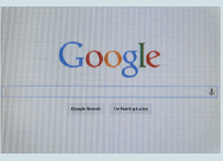
Another approach is to use free services to deliver advertising, just like traditional broadcast TV or radio. One company that has very successfully applied the advertising approach to freemiums is Google. There is no cost to use its search engine, but the results pages feature "Sponsored Links," which are advertisements paid for by Web sites related to your search terms. Google used this model to achieve impressive financial results.
Suppose a hugely successful Web company has used freeconomics, expanded its scale of operations, and spread its long-run costs over larger and larger audiences. After years of profits, the company's profits fell continuously. Using production costs theory, explain why this situation might be occurring.
Applicable Concept: economies and diseconomies of scale
Pick the best price that you wish to pay for a product. Is zero reserved only for those who believe in Santa Claus? Recall the famous saying by economist Milton Friedman that "there's no such thing as a free lunch." Well, today more and more Web companies are using digital technology and the principles of freeconomics to make profits by giving something away free of charge. And the key to understanding this radical business model is the concept of economies of scale.
How is it possible for companies to cover their production costs with a price of zero? Don't Web businesses have huge fixed costs to buy computer servers and design Web pages? This is true, but once the servers are powered up and the sites are online, the cost of logging in each additional customer is very small. Then as the companies scale expands over time, the cost of servers, bandwidth, and software are spread out over millions of users, and the long-run cost curve declines to almost zero, which is economies of scale.
In the Web land of free payments called freemiums , the basic idea is to shift from the view of a market price matching buyers and sellers of a product to a free system with many participants and only a few who exchange cash. After customers get used to the free services, the companies hope that people will pay for more advanced services. Examples of freemiums are Adobe Reader, search engines, blogging platforms, and Skype-to-Skype phone calls. The revenue from the premiums for more powerful services covers the cost of both the premium and free activities. This is the cross-subsidy approach. A legendary example of this marketing strategy is King Gillette, who in the early 1900s was having no success selling men on the idea of shaving with disposable thin blades rather than with a straight razor. The solution was to bundle free razors with gum, coffee, marshmallows, and even new bank deposits with the slogan "Shave and Save" attached. The freebie razor without blades was useless so customers bought the blades and the rest of this success story is history.
Another approach is to use free services to deliver advertising, just like traditional broadcast TV or radio. One company that has very successfully applied the advertising approach to freemiums is Google. There is no cost to use its search engine, but the results pages feature "Sponsored Links," which are advertisements paid for by Web sites related to your search terms. Google used this model to achieve impressive financial results.
Suppose a hugely successful Web company has used freeconomics, expanded its scale of operations, and spread its long-run costs over larger and larger audiences. After years of profits, the company's profits fell continuously. Using production costs theory, explain why this situation might be occurring.
Explanation Verified
Verified
In this case, if the company profits fel...

Economics for Today 9th Edition by Irvin Tucker

Why don’t you like this exercise?
Other Minimum 8 character and maximum 255 character
Character 255






