







 Chat with AI

Economics for Today 9th Edition by Irvin Tucker
Edition 9ISBN: 978-1305507111Economics for Today 9th Edition by Irvin Tucker
Edition 9ISBN: 978-1305507111 Exercise 16
IS GDP A FALSE BEACON STEERING US INTO THE ROCKS?
Applicable Concept: national income accounting "goods" and "bads"
Suppose a factory in your community has been dumping hazardous wastes into the local water supply and people develop cancer and other illnesses from drinking polluted water. The Environmental Protection Agency (EPA) discovers this pollution and, under the federal "Superfund" law, orders a cleanup and imposes a fine for the damages. The company defends itself against the EPA by hiring lawyers and experts to take the case to court. After years of trial, the company loses the case and has to pay for the cleanup and damages.
In terms of GDP, an amazing "good" result occurs. The primary measure of national economic output, GDP, increases. GDP counts the millions of dollars spent to clean up the water supply. GDP even includes the health care expenses of anyone who develops cancer or other illnesses caused by drinking polluted water. GDP also includes the money spent by the company on lawyers and experts to defend itself against the EPA. And GDP includes the money spent by the EPA to regulate the polluting company.
Now consider what happens when trees are cut down and oil and minerals are used to produce houses, cars, and other goods. The value of the wood, oil, and minerals is an intermediate good implicitly computed in GDP because the value of the final goods is explicitly computed in GDP. Using scarce resources to produce goods and services therefore raises GDP and is considered a "good" result. On the other hand, don't we lose the value of trees, oil, and minerals in the production process, so isn't this a "bad" result?
The Bureau of Economic Analysis (BEA) is an agency of the U.S. Department of Commerce. The BEA is the nation's economic accountant, and it is the source of GDP data cited throughout this text. Critics have called for a new measure designed to estimate the kinds of damage described above. These new accounts would adjust for changes in air and water quality and depletion of oil and minerals. These accounts would also adjust for changes in the stock of renewable natural resources, such as forests and fish stocks. In addition, accounts should be created to measure global warming and destruction of the ozone layer.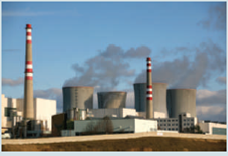
As explained in this chapter, a dollar estimate of capital depreciation is subtracted from GDP to compute national income (NI). The argument here is that a dollar estimate of the damage to the environment should also be subtracted. To ignore measuring such environmental problems, critics argue, threatens future generations. In short, conventional GDP perpetuates a false dichotomy between economic growth and environmental protection.
Critics of this approach argue that assigning a dollar value to environmental damage and resource depletion requires a methodology that is extremely subjective and complex. Nevertheless, national income accountants have not ignored these criticisms, and the National Academy of Sciences has reviewed BEA proposals for ways to account for interactions between the environment and the economy.
Suppose a nuclear power plant disaster occurs. How could GDP be a "false beacon" in this case?
Applicable Concept: national income accounting "goods" and "bads"
Suppose a factory in your community has been dumping hazardous wastes into the local water supply and people develop cancer and other illnesses from drinking polluted water. The Environmental Protection Agency (EPA) discovers this pollution and, under the federal "Superfund" law, orders a cleanup and imposes a fine for the damages. The company defends itself against the EPA by hiring lawyers and experts to take the case to court. After years of trial, the company loses the case and has to pay for the cleanup and damages.
In terms of GDP, an amazing "good" result occurs. The primary measure of national economic output, GDP, increases. GDP counts the millions of dollars spent to clean up the water supply. GDP even includes the health care expenses of anyone who develops cancer or other illnesses caused by drinking polluted water. GDP also includes the money spent by the company on lawyers and experts to defend itself against the EPA. And GDP includes the money spent by the EPA to regulate the polluting company.
Now consider what happens when trees are cut down and oil and minerals are used to produce houses, cars, and other goods. The value of the wood, oil, and minerals is an intermediate good implicitly computed in GDP because the value of the final goods is explicitly computed in GDP. Using scarce resources to produce goods and services therefore raises GDP and is considered a "good" result. On the other hand, don't we lose the value of trees, oil, and minerals in the production process, so isn't this a "bad" result?
The Bureau of Economic Analysis (BEA) is an agency of the U.S. Department of Commerce. The BEA is the nation's economic accountant, and it is the source of GDP data cited throughout this text. Critics have called for a new measure designed to estimate the kinds of damage described above. These new accounts would adjust for changes in air and water quality and depletion of oil and minerals. These accounts would also adjust for changes in the stock of renewable natural resources, such as forests and fish stocks. In addition, accounts should be created to measure global warming and destruction of the ozone layer.
As explained in this chapter, a dollar estimate of capital depreciation is subtracted from GDP to compute national income (NI). The argument here is that a dollar estimate of the damage to the environment should also be subtracted. To ignore measuring such environmental problems, critics argue, threatens future generations. In short, conventional GDP perpetuates a false dichotomy between economic growth and environmental protection.
Critics of this approach argue that assigning a dollar value to environmental damage and resource depletion requires a methodology that is extremely subjective and complex. Nevertheless, national income accountants have not ignored these criticisms, and the National Academy of Sciences has reviewed BEA proposals for ways to account for interactions between the environment and the economy.
Suppose a nuclear power plant disaster occurs. How could GDP be a "false beacon" in this case?
Explanation Verified
Verified
Here, False Beacon means misguiding or f...

Economics for Today 9th Edition by Irvin Tucker

Why don’t you like this exercise?
Other Minimum 8 character and maximum 255 character
Character 255






