







 Chat with AI

Economics for Today 9th Edition by Irvin Tucker
Edition 9ISBN: 978-1305507111Economics for Today 9th Edition by Irvin Tucker
Edition 9ISBN: 978-1305507111 Exercise 39
THE GREAT FEDERAL BUDGET SURPLUS DEBATE
Applicable Concept: federal budget surplus
As unprecedented deficit figures flowed during the Great Recession, it is hard to believe that for four years the federal budget was in surplus. After a one-year small budget surplus in 1969, it took 29 contentious years to eliminate federal budget deficits. And then surpluses occurred between 1998 and 2001, as shown in Exhibits 2 and Exhibit 3, before becoming today what seems to be a historic relic. These federal budget surpluses aroused as much controversy in their time as deficits do in their years. In short, the hotly contested debate involved whether the surplus should be saved, spent, or devoted to tax cuts. The case for tax cuts and smaller government is based on the view that a surplus is the result of excess tax collections. Proponents of tax cuts pointed out that in 2000, federal tax revenues as a percentage of GDP were the highest since during World War II. Moreover, tax rate cuts would spur the economy and result in higher future tax revenues. The argument for spending a surplus is based on "unmet needs." Instead of tax cuts, the surplus could be used to finance spending for defense, public infrastructure, research and development, and social programs such as education or health care. Also, a large proportion of American households pay no income taxes. Tax cuts therefore do not benefit people who are not prosperous enough to pay taxes.
Federal budget deficit projections (billions of dollars)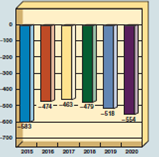
Source: Office of Management and Budget, http://www.whitehouse.gov/OMB/budget/overview, Summary Table 5.1.
An alternative to tax cuts and spending increases is paying down the national debt. Former Federal Reserve chairman Alan Greenspan supported this approach. He said Congress faced the quandary of trying to establish fiscal policy based on long-range forecasts that may prove inaccurate. He stated that if Congress cuts taxes, it also has to be prepared to cut spending significantly in the event that the forecasts on which the cuts were based are proved wrong. On the other hand using the budget surplus to fund "irrevocable spending programs" would be "the worst of all out comes." Testifying before the Sen ate Budget Committee in 2001, Greenspan suggested that the proposed tax cut bill include provisions that would limit the tax cuts if specified future targets for the budget surpluses or debt reduction were not met. These provisions were not included in the 2001 tax bill.
The outcome of the "Great Federal Budget Surplus Debate" was that President George W. Bush signed a $1.35 trillion tax cut bill in 2001 spread over ten years. It was the largest and most widespread tax cut since the 1980s, during Ronald Reagan's presidency. And in spite of the tax cuts, the outlook for surpluses in the future was optimistic. In August 2001, the Office of Management and Budget (OMB) projected continuously growing budget surpluses that would peak at about $400 billion in 2007. The actual federal budget in 2007 was a $161 billion deficit, and the OMB dramatically changed its projections to deficits that exploded to $1.4 trillion in 2009 at the conclusion of the Great Recession. As actual deficit figures become available, check the accuracy of OMB estimates reported here.
Using the Laffer curve discussed in the You're the Economist box in the chapter on fiscal policy, explain how proponents could claim that the tax cut would increase tax revenues.
Applicable Concept: federal budget surplus
As unprecedented deficit figures flowed during the Great Recession, it is hard to believe that for four years the federal budget was in surplus. After a one-year small budget surplus in 1969, it took 29 contentious years to eliminate federal budget deficits. And then surpluses occurred between 1998 and 2001, as shown in Exhibits 2 and Exhibit 3, before becoming today what seems to be a historic relic. These federal budget surpluses aroused as much controversy in their time as deficits do in their years. In short, the hotly contested debate involved whether the surplus should be saved, spent, or devoted to tax cuts. The case for tax cuts and smaller government is based on the view that a surplus is the result of excess tax collections. Proponents of tax cuts pointed out that in 2000, federal tax revenues as a percentage of GDP were the highest since during World War II. Moreover, tax rate cuts would spur the economy and result in higher future tax revenues. The argument for spending a surplus is based on "unmet needs." Instead of tax cuts, the surplus could be used to finance spending for defense, public infrastructure, research and development, and social programs such as education or health care. Also, a large proportion of American households pay no income taxes. Tax cuts therefore do not benefit people who are not prosperous enough to pay taxes.
Federal budget deficit projections (billions of dollars)
Source: Office of Management and Budget, http://www.whitehouse.gov/OMB/budget/overview, Summary Table 5.1.
An alternative to tax cuts and spending increases is paying down the national debt. Former Federal Reserve chairman Alan Greenspan supported this approach. He said Congress faced the quandary of trying to establish fiscal policy based on long-range forecasts that may prove inaccurate. He stated that if Congress cuts taxes, it also has to be prepared to cut spending significantly in the event that the forecasts on which the cuts were based are proved wrong. On the other hand using the budget surplus to fund "irrevocable spending programs" would be "the worst of all out comes." Testifying before the Sen ate Budget Committee in 2001, Greenspan suggested that the proposed tax cut bill include provisions that would limit the tax cuts if specified future targets for the budget surpluses or debt reduction were not met. These provisions were not included in the 2001 tax bill.
The outcome of the "Great Federal Budget Surplus Debate" was that President George W. Bush signed a $1.35 trillion tax cut bill in 2001 spread over ten years. It was the largest and most widespread tax cut since the 1980s, during Ronald Reagan's presidency. And in spite of the tax cuts, the outlook for surpluses in the future was optimistic. In August 2001, the Office of Management and Budget (OMB) projected continuously growing budget surpluses that would peak at about $400 billion in 2007. The actual federal budget in 2007 was a $161 billion deficit, and the OMB dramatically changed its projections to deficits that exploded to $1.4 trillion in 2009 at the conclusion of the Great Recession. As actual deficit figures become available, check the accuracy of OMB estimates reported here.
Using the Laffer curve discussed in the You're the Economist box in the chapter on fiscal policy, explain how proponents could claim that the tax cut would increase tax revenues.
Explanation Verified
Verified
The Laffer curve represents the relation...

Economics for Today 9th Edition by Irvin Tucker

Why don’t you like this exercise?
Other Minimum 8 character and maximum 255 character
Character 255






