







 Chat with AI

Economics for Today 9th Edition by Irvin Tucker
Edition 9ISBN: 978-1305507111Economics for Today 9th Edition by Irvin Tucker
Edition 9ISBN: 978-1305507111 Exercise 28
WHY A LOAN IN YAP IS HARD TO ROLL OVER
Applicable Concept: functions of money
On the tiny South Pacific island of Yap, life is easy, but the currency is hard as a rock. For nearly 2,000 years, the Yapese have used large stone wheels to pay for major purchases, such as land, canoes, and permission to marry. The people of Yap have been using stone money ever since a Yapese warrior named Anagumang used canoes to bring the huge stones over the sea in ancient times from limestone caverns on neighboring Palau. Inspired by the moon, he fashioned the stones into large circles, and the rest is history. The stone's value remained high because of the difficulty and hazards involved in obtaining them over the rough seas.
Yap is a U.S. trust territory, and the dollar is used in grocery stores and gas stations, but reliance on stone money continues. Buying property with stones is "much easier than buying it with U.S. dollars," says John Chodad, who purchased a building lot with a 30-inch stone wheel. "We don't know the value of the U.S. dollar." However, stone wheels don't make good pocket money, so Yapese use other forms of currency, such as beer for small transactions. Besides stone wheels and beer, the Yapese sometimes spend gaw, consisting of necklaces of stone beads strung together around a whale's tooth. They also buy things with yar, a currency made from large seashells, but these are small change.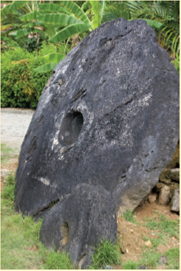
Stone disks may change ownership during marriage, transfer of land title, or other exchanges. Yapese lean the stone wheels against their houses or prop up rows of them in village "banks." Most of the stones are smaller in diameter, but some are as much as 12 feet in diameter. Each has a hole in the center so that it can be slipped onto the trunk of a fallen betel nut tree and carried. It takes 20 men to lift some wheels. Rather than risk a broken stone-or their backs-Yapese leave the larger stones where they are and make a mental accounting that the ownership has been transferred. There are some decided advantages to using massive stones for money. They are in short supply, difficult to steal, pose formidable obstacles to counterfeiting, and serve as a tourist attraction.
Explain how Yap's large stones pass the three tests in the definition of money.
Applicable Concept: functions of money
On the tiny South Pacific island of Yap, life is easy, but the currency is hard as a rock. For nearly 2,000 years, the Yapese have used large stone wheels to pay for major purchases, such as land, canoes, and permission to marry. The people of Yap have been using stone money ever since a Yapese warrior named Anagumang used canoes to bring the huge stones over the sea in ancient times from limestone caverns on neighboring Palau. Inspired by the moon, he fashioned the stones into large circles, and the rest is history. The stone's value remained high because of the difficulty and hazards involved in obtaining them over the rough seas.
Yap is a U.S. trust territory, and the dollar is used in grocery stores and gas stations, but reliance on stone money continues. Buying property with stones is "much easier than buying it with U.S. dollars," says John Chodad, who purchased a building lot with a 30-inch stone wheel. "We don't know the value of the U.S. dollar." However, stone wheels don't make good pocket money, so Yapese use other forms of currency, such as beer for small transactions. Besides stone wheels and beer, the Yapese sometimes spend gaw, consisting of necklaces of stone beads strung together around a whale's tooth. They also buy things with yar, a currency made from large seashells, but these are small change.
Stone disks may change ownership during marriage, transfer of land title, or other exchanges. Yapese lean the stone wheels against their houses or prop up rows of them in village "banks." Most of the stones are smaller in diameter, but some are as much as 12 feet in diameter. Each has a hole in the center so that it can be slipped onto the trunk of a fallen betel nut tree and carried. It takes 20 men to lift some wheels. Rather than risk a broken stone-or their backs-Yapese leave the larger stones where they are and make a mental accounting that the ownership has been transferred. There are some decided advantages to using massive stones for money. They are in short supply, difficult to steal, pose formidable obstacles to counterfeiting, and serve as a tourist attraction.
Explain how Yap's large stones pass the three tests in the definition of money.
Explanation Verified
Verified
Yap's large stones pass all three tests ...

Economics for Today 9th Edition by Irvin Tucker

Why don’t you like this exercise?
Other Minimum 8 character and maximum 255 character
Character 255






