







 Chat with AI


Economics: A Contemporary Introduction 9th Edition by William McEachern
Edition 9ISBN: 9780538453745Economics: A Contemporary Introduction 9th Edition by William McEachern
Edition 9ISBN: 9780538453745 Exercise 11
Case Study: The Market for Professional Basketball In what sense can we speak of a market for professional basketball? Who are the demanders and who are the suppliers? What are some examples of how changes in supply or demand conditions have affected this market?
Reference Case Study:
World of Business
The Market for Professional Basketball Toward the end of the 1970s, the NBA seemed on the brink of collapse. Attendance had sunk to little more than half the capacity. Some teams were nearly bankrupt. Championship games didn't even merit prime-time television coverage. But in the 1980s, three superstars turned things around. Michael Jordan, Larry Bird, and Magic Johnson added millions of fans and breathed new life into the sagging league. Successive generations of stars, including Dwayne Wade, Kevin Durant, and LeBron James, continue to fuel interest. Since 1980 the league has expanded from 22 to 30 teams and attendance has more than doubled. More importantly, league revenue from broadcast rights jumped nearly 50-fold from $19 million per year in the 1978-1982 contract to $930 million per year in the current contract, which runs to 2016. Popularity also increased around the world as international players, such as Dirk Nowitzki of Germany and Yao Ming of China, joined the league (basketball is now the most widely played team sport in China). NBA rosters now include more than 80 international players. The NBA formed marketing alliances with global companies such as Coca-Cola and McDonald's, and league playoffs are now televised in more than 200 countries in 45 languages to a potential market of 3 billion people. What's the key resource in the production of NBA games? Talented players. Exhibit 10 shows the market for NBA players, with demand and supply in 1980 as
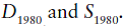 The intersection of these two curves generated an average pay in 1980 of $170,000, or $0.17 million, for the 300 or so players then in the league. Since 1980, the talent pool expanded somewhat, so the supply curve in 2010 was more like
 (almost by definition, the supply of the top few hundred players in the world is limited). But demand exploded from
 With supply relatively fixed, the greater demand boosted average pay to $6.0 million by 2010 for the 450 or so players in the league. Such pay attracts younger and younger players. Stars who entered the NBA right out of high school include Kobe Bryant, Kevin Garnett, and LeBron James. (After nine players entered the NBA draft right out of high school in 2005, the league, to stem the flow, required draft candidates to be at least 19 years old and out of high school at least one year. So talented players started turning pro after their first year of college; in 2008, for example, 12 college freshman were drafted including five of the top seven picks.)
Reference Case Study:
World of Business
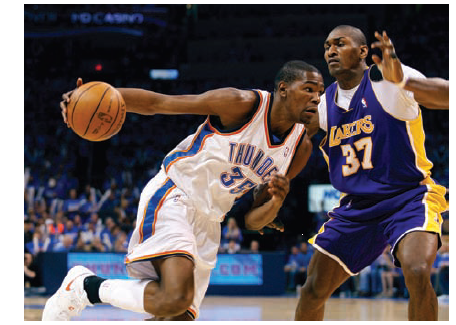
The Market for Professional Basketball Toward the end of the 1970s, the NBA seemed on the brink of collapse. Attendance had sunk to little more than half the capacity. Some teams were nearly bankrupt. Championship games didn't even merit prime-time television coverage. But in the 1980s, three superstars turned things around. Michael Jordan, Larry Bird, and Magic Johnson added millions of fans and breathed new life into the sagging league. Successive generations of stars, including Dwayne Wade, Kevin Durant, and LeBron James, continue to fuel interest. Since 1980 the league has expanded from 22 to 30 teams and attendance has more than doubled. More importantly, league revenue from broadcast rights jumped nearly 50-fold from $19 million per year in the 1978-1982 contract to $930 million per year in the current contract, which runs to 2016. Popularity also increased around the world as international players, such as Dirk Nowitzki of Germany and Yao Ming of China, joined the league (basketball is now the most widely played team sport in China). NBA rosters now include more than 80 international players. The NBA formed marketing alliances with global companies such as Coca-Cola and McDonald's, and league playoffs are now televised in more than 200 countries in 45 languages to a potential market of 3 billion people. What's the key resource in the production of NBA games? Talented players. Exhibit 10 shows the market for NBA players, with demand and supply in 1980 as
The intersection of these two curves generated an average pay in 1980 of $170,000, or $0.17 million, for the 300 or so players then in the league. Since 1980, the talent pool expanded somewhat, so the supply curve in 2010 was more like (almost by definition, the supply of the top few hundred players in the world is limited). But demand exploded from With supply relatively fixed, the greater demand boosted average pay to $6.0 million by 2010 for the 450 or so players in the league. Such pay attracts younger and younger players. Stars who entered the NBA right out of high school include Kobe Bryant, Kevin Garnett, and LeBron James. (After nine players entered the NBA draft right out of high school in 2005, the league, to stem the flow, required draft candidates to be at least 19 years old and out of high school at least one year. So talented players started turning pro after their first year of college; in 2008, for example, 12 college freshman were drafted including five of the top seven picks.)Explanation Verified
Verified
The market for professional basketball, ...

Economics: A Contemporary Introduction 9th Edition by William McEachern

Why don’t you like this exercise?
Other Minimum 8 character and maximum 255 character
Character 255






