







 Chat with AI


Economics: A Contemporary Introduction 9th Edition by William McEachern
Edition 9ISBN: 9780538453745Economics: A Contemporary Introduction 9th Edition by William McEachern
Edition 9ISBN: 9780538453745 Exercise 13
Case Study: Federal Bailout of GM, Chrysler, and the UAW How would the UAW benefit for increased demand for GM and Chrysler vehicles?
Reference Case Study:
Public Policy
Federal Bailout of GM, Chrysler, and the UAW In the 1970s, the United Auto Workers (UAW) negotiated what have been called "gold-plated benefits" for their workers and retirees. General Motors, Ford, and Chrysler, the so-called Big Three, believed that because they dominated the U.S. auto market and because they all faced the same labor costs, any higher costs could simply be passed along to car buyers. What could go wrong? Well, what went wrong was an onslaught of fierce competition from foreign automakers who would develop a reputation for high quality at competitive prices. These foreign automakers also began building plants in the United States operated by mostly nonunion workers. Pay and benefits for these nonunion workers, while still attractive, amounted to about three quarters of what UAW workers were getting (and UAW pay was double what average Americans earned).
Not only were UAW wages higher, but union work rules-some 5,000 pages detailing what each worker could and could not be asked to do-imposed expensive inefficiencies on production. If work rules were violated, a union representative could shut down the assembly line. General Motors, Ford, and Chrysler, were making costly vehicles that not enough people wanted to buy, and the companies were losing money by the truckload. GM, for example, lost over $60 billion between 2005 and 2008. Hard hit by fallout from the global financial crisis of 2008 and facing bankruptcy, the Big Three turned to the federal government for help. After some UAW pressure and political wrangling, federal officials agreed on a bailout of about $85 billion, with most of that going to GM (Ford ultimately decided not to accept federal aid).
The agreement called for GM and Chrysler to file for bankruptcy. By doing so, both companies were able to walk away from huge debt burdens built up from years of making costly products that didn't sell well enough. Those who had owned the companies, the stockholders, got wiped out in the bankruptcy-they got nothing. Bondholders and other creditors also took a beating-they would get back less than a third of what they had lent the automakers. Some suppliers were also left hanging and many dealerships were shut down. The group that benefited most from the bailout was UAW workers. They ended up owning 10 percent of the new GM and a majority of the new Chrysler. In years leading up to the bailout, many workers had taken buyouts, meaning that the company paid them a chunk of money to leave their jobs. The union also made some concessions, but mostly on the pay and benefits of workers hired in the future. Existing workers gave up little in the bailout agreement-certainly little compared to the drubbing suffered by company stockholders, creditors, suppliers, and car dealers.
The new GM emerged from bankruptcy with the federal government owning 61 percent in return for its $43 billion "investment." Much of the federal bailout money would be used to buy out existing workers and shore up the health care fund for union retirees. The Big Three are hoping to hire new workers at lower wages, but recently-laid-off workers still have first claim on any job openings, and they must be rehired at their previous high wages, not the lower wages to be paid new workers.
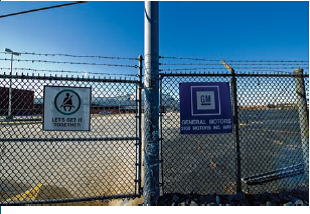
The Congressional Budget Office estimated that the government bailout would ultimately cost taxpayers $34 billion. That translates into $300 per U.S. household to support the pay and benefits of those making twice what average American workers earn. We can't necessarily blame the UAW for the demise of the American auto industry. Demanding higher pay, better benefits, and more restrictive work rules sounds like the job description of union representatives. But we can blame the managements for going along with these demands. Top auto executives lost their jobs in the bankruptcy. UAW workers gave up little in the bankruptcy.
In today's competitive marketplace, only an efficient, flexible work force will thrive. Technology advances too rapidly to drag along wages that exceed the market rate and featherbedding work rules that slow down production.
Reference Case Study:
Public Policy
Federal Bailout of GM, Chrysler, and the UAW In the 1970s, the United Auto Workers (UAW) negotiated what have been called "gold-plated benefits" for their workers and retirees. General Motors, Ford, and Chrysler, the so-called Big Three, believed that because they dominated the U.S. auto market and because they all faced the same labor costs, any higher costs could simply be passed along to car buyers. What could go wrong? Well, what went wrong was an onslaught of fierce competition from foreign automakers who would develop a reputation for high quality at competitive prices. These foreign automakers also began building plants in the United States operated by mostly nonunion workers. Pay and benefits for these nonunion workers, while still attractive, amounted to about three quarters of what UAW workers were getting (and UAW pay was double what average Americans earned).
Not only were UAW wages higher, but union work rules-some 5,000 pages detailing what each worker could and could not be asked to do-imposed expensive inefficiencies on production. If work rules were violated, a union representative could shut down the assembly line. General Motors, Ford, and Chrysler, were making costly vehicles that not enough people wanted to buy, and the companies were losing money by the truckload. GM, for example, lost over $60 billion between 2005 and 2008. Hard hit by fallout from the global financial crisis of 2008 and facing bankruptcy, the Big Three turned to the federal government for help. After some UAW pressure and political wrangling, federal officials agreed on a bailout of about $85 billion, with most of that going to GM (Ford ultimately decided not to accept federal aid).
The agreement called for GM and Chrysler to file for bankruptcy. By doing so, both companies were able to walk away from huge debt burdens built up from years of making costly products that didn't sell well enough. Those who had owned the companies, the stockholders, got wiped out in the bankruptcy-they got nothing. Bondholders and other creditors also took a beating-they would get back less than a third of what they had lent the automakers. Some suppliers were also left hanging and many dealerships were shut down. The group that benefited most from the bailout was UAW workers. They ended up owning 10 percent of the new GM and a majority of the new Chrysler. In years leading up to the bailout, many workers had taken buyouts, meaning that the company paid them a chunk of money to leave their jobs. The union also made some concessions, but mostly on the pay and benefits of workers hired in the future. Existing workers gave up little in the bailout agreement-certainly little compared to the drubbing suffered by company stockholders, creditors, suppliers, and car dealers.
The new GM emerged from bankruptcy with the federal government owning 61 percent in return for its $43 billion "investment." Much of the federal bailout money would be used to buy out existing workers and shore up the health care fund for union retirees. The Big Three are hoping to hire new workers at lower wages, but recently-laid-off workers still have first claim on any job openings, and they must be rehired at their previous high wages, not the lower wages to be paid new workers.
The Congressional Budget Office estimated that the government bailout would ultimately cost taxpayers $34 billion. That translates into $300 per U.S. household to support the pay and benefits of those making twice what average American workers earn. We can't necessarily blame the UAW for the demise of the American auto industry. Demanding higher pay, better benefits, and more restrictive work rules sounds like the job description of union representatives. But we can blame the managements for going along with these demands. Top auto executives lost their jobs in the bankruptcy. UAW workers gave up little in the bankruptcy.
In today's competitive marketplace, only an efficient, flexible work force will thrive. Technology advances too rapidly to drag along wages that exceed the market rate and featherbedding work rules that slow down production.
Explanation Verified
Verified
The United Auto Workers union is compose...

Economics: A Contemporary Introduction 9th Edition by William McEachern

Why don’t you like this exercise?
Other Minimum 8 character and maximum 255 character
Character 255






