







 Chat with AI


Economics: A Contemporary Introduction 9th Edition by William McEachern
Edition 9ISBN: 9780538453745Economics: A Contemporary Introduction 9th Edition by William McEachern
Edition 9ISBN: 9780538453745 Exercise 5
Case Study: Airline Regulation and Deregulation Consumers now treat air travel like a commodity and meals on some airlines are nonexistent. Does this mean that consumers have suffered because of airline deregulation?
Reference Case Study:
Public Policy
Airline Regulation and Deregulation The Civil Aeronautics Board (CAB), established in 1938, once tightly regulated interstate airlines. Anyone trying to enter a particular airline market first had to persuade the CAB that the route needed another airline. During the 40 years prior to deregulation, potential entrants submitted more than 150 applications for long-distance routes, but not a single new interstate airline was authorized. The CAB also enforced strict compliance with regulated prices. In effect, the CAB created a cartel that fixed prices among the 10 major airlines and blocked new entry. Airlines reflected the capture theory of regulation.
Regulation insulated the industry from price competition, allowing labor unions to secure higher wages than they could in a more competitive setting. Working less than two weeks a month, airline pilots in 1978 earned more than $325,000 a year on average (in today's dollars). Some had so much free time they pursued second careers at the same time. The CAB had no regulatory power over airlines that flew only intrastate routes-flights between Los Angeles and San Francisco, for instance. Fares on intrastate airlines were only half those on identical routes flown by regulated airlines (Southwest Airlines sharpened its competitive skills as an intrastate operator in Texas).
Despite opposition from the existing airlines and labor unions, Congress deregulated airlines in 1978, thereby allowing price competition and new entry. Airfares in inflation-adjusted dollars are now more than one-quarter below regulated prices. Competition helps keep airfares lower. The airlines could also afford to lower fares because they became more efficient by filling a greater percentage of seats.
Deregulation in the United States spurred deregulation abroad. For example, after flights between Dublin and London were deregulated in 1986, that became the busiest international route in Europe, jumping from 2 million passengers a year before deregulation to 72 million passengers a year most recently.
Critics of deregulation worried that quality and safety would deteriorate. But the Federal Aviation Administration still regulates quality and safety. Since deregulation, accident rates have declined by anywhere from 10 to 45 percent, depending on the specific measure used (worldwide, donkeys and mules kill more people than plane crashes). Also, because of lower fares, more people fly rather than drive (air passenger miles have tripled), thereby saving thousands of lives that would have been lost driving (per passenger mile, flying is about 20 times safer than driving). Researchers found that during the three months following the 9/11 attacks, people drove more and flew less, resulting in about one thousand more driving deaths.
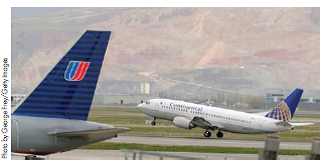
Some air passengers complain that service has declined in recent years, but that's because most people seem to prefer the lower fares of no-frills airlines. Most consumers view air travel as a commodity, and consider airlines as interchangeable. Thus, consumers seek the lowest fare. Low-cost, no-frills carriers such as Southwest Airlines and JetBlue are grabbing market share and forcing down fares wherever they fly. Competition is fierce. And even where they don't yet fly, just the threat of entry by the likes of Southwest Airlines reduces fares in that market. Many airlines have merged, disappeared, or gone bankrupt. Even with baggage fees and other new charges, major airlines still lost a total of $30 billion between 2005 and 2010. This has pushed down wages in the industry, making airline jobs across the board less attractive than during the regulated era. For example, pilot pay for major airlines now starts at about $40,000 per year, and the top pay in inflation-adjusted dollars is only half what it was prior to deregulation. Pay at regional airlines is even lower. But, on the whole, deregulation has benefited consumers by lowering fares, increasing the number of flights, and saving lives.
Reference Case Study:
Public Policy
Airline Regulation and Deregulation The Civil Aeronautics Board (CAB), established in 1938, once tightly regulated interstate airlines. Anyone trying to enter a particular airline market first had to persuade the CAB that the route needed another airline. During the 40 years prior to deregulation, potential entrants submitted more than 150 applications for long-distance routes, but not a single new interstate airline was authorized. The CAB also enforced strict compliance with regulated prices. In effect, the CAB created a cartel that fixed prices among the 10 major airlines and blocked new entry. Airlines reflected the capture theory of regulation.
Regulation insulated the industry from price competition, allowing labor unions to secure higher wages than they could in a more competitive setting. Working less than two weeks a month, airline pilots in 1978 earned more than $325,000 a year on average (in today's dollars). Some had so much free time they pursued second careers at the same time. The CAB had no regulatory power over airlines that flew only intrastate routes-flights between Los Angeles and San Francisco, for instance. Fares on intrastate airlines were only half those on identical routes flown by regulated airlines (Southwest Airlines sharpened its competitive skills as an intrastate operator in Texas).
Despite opposition from the existing airlines and labor unions, Congress deregulated airlines in 1978, thereby allowing price competition and new entry. Airfares in inflation-adjusted dollars are now more than one-quarter below regulated prices. Competition helps keep airfares lower. The airlines could also afford to lower fares because they became more efficient by filling a greater percentage of seats.
Deregulation in the United States spurred deregulation abroad. For example, after flights between Dublin and London were deregulated in 1986, that became the busiest international route in Europe, jumping from 2 million passengers a year before deregulation to 72 million passengers a year most recently.
Critics of deregulation worried that quality and safety would deteriorate. But the Federal Aviation Administration still regulates quality and safety. Since deregulation, accident rates have declined by anywhere from 10 to 45 percent, depending on the specific measure used (worldwide, donkeys and mules kill more people than plane crashes). Also, because of lower fares, more people fly rather than drive (air passenger miles have tripled), thereby saving thousands of lives that would have been lost driving (per passenger mile, flying is about 20 times safer than driving). Researchers found that during the three months following the 9/11 attacks, people drove more and flew less, resulting in about one thousand more driving deaths.
Some air passengers complain that service has declined in recent years, but that's because most people seem to prefer the lower fares of no-frills airlines. Most consumers view air travel as a commodity, and consider airlines as interchangeable. Thus, consumers seek the lowest fare. Low-cost, no-frills carriers such as Southwest Airlines and JetBlue are grabbing market share and forcing down fares wherever they fly. Competition is fierce. And even where they don't yet fly, just the threat of entry by the likes of Southwest Airlines reduces fares in that market. Many airlines have merged, disappeared, or gone bankrupt. Even with baggage fees and other new charges, major airlines still lost a total of $30 billion between 2005 and 2010. This has pushed down wages in the industry, making airline jobs across the board less attractive than during the regulated era. For example, pilot pay for major airlines now starts at about $40,000 per year, and the top pay in inflation-adjusted dollars is only half what it was prior to deregulation. Pay at regional airlines is even lower. But, on the whole, deregulation has benefited consumers by lowering fares, increasing the number of flights, and saving lives.
Explanation Verified
Verified
Prior to interstate airline deregulation...

Economics: A Contemporary Introduction 9th Edition by William McEachern

Why don’t you like this exercise?
Other Minimum 8 character and maximum 255 character
Character 255






