







 Chat with AI


Economics: A Contemporary Introduction 9th Edition by William McEachern
Edition 9ISBN: 9780538453745Economics: A Contemporary Introduction 9th Edition by William McEachern
Edition 9ISBN: 9780538453745 Exercise 6
Case Study: The Ripple Effect of 9/11 How do events, such as the World Trade Center and Pentagon attacks described in the case study "The Ripple Effects of 9/11" affect the aggregate expenditure line and the aggregate demand curve? Explain fully.
Reference Case study:
Public Policy
The Ripple Effect on the Economy of 9/11 When hijacked planes hit the World Trade Center and the Pentagon, America's sense of domestic security changed. The thousands of lives lost and the billions of dollars of property destroyed were chronicled at length in the media. Let's look at the impact of the tragedy on just one industry-air travel-to see how slumping demand there affected aggregate expenditure.
Once aviation regulators became aware of the hijackings, they grounded all nonmilitary aircraft immediately. This cost the airlines hundreds of millions of dollars a day in lost business. During the days following the attack, video of the second plane crashing into the twin towers was shown again and again, freezing this image in people's minds and heightening public concerns about airline safety. These worries, coupled with the airport delays from added security (passengers were told to arrive up to three hours before flights), reduced the demand for air travel once planes were allowed to fly again. For short flights, it became quicker and easier to drive than to fly. Two weeks after the attacks, airlines were operating only 75 percent of their flights, and these flights were only 30 percent full instead of the usual 75 percent full. Airlines requested federal support, saying they would go bankrupt otherwise. Congress quickly approved a $15 billion aid package of loans and grants.
Despite the promise of federal aid, airlines laid off 85,000 workers, or about 20 percent of their workforce. Flight reductions meant that as many as 900 aircraft would be parked indefinitely, so investment in new planes collapsed. Boeing, the major supplier of new planes and America's leading exporter, announced layoffs of 30,000 workers. This triggered layoffs among suppliers of aircraft parts, such as jet engines and electronic components. For example, Rockwell Collins, an electronics supplier, said 15 percent of its workforce would lose jobs. Other suppliers in the airline service chain also cut jobs. Sky Chef, a major airline caterer, laid off 4,800 of its 16,000 employees.
Airports began rethinking their investment plans. Half the major U.S. airports said they were reevaluating capital improvement plans to see if these investments made sense in this new environment. Honolulu airport, for example, suspended plans to add extra gates and renovate its overseas terminals.
Within three weeks after the attacks, job cuts announced in the industry exceeded 150,000. These were part of only the first round of reduced consumption and investment. In an expanding economy, job losses in one sector can be made up by job expansions in other sectors. But the U.S. economy was already in a recession at the time of the attack, having lost about a million jobs between March 2001 and September 2001. People who lost jobs or who feared for their jobs reduced their demand for housing, clothing, entertainment, restaurant meals, and other goods and services. For example, unemployed flight attendants would be less likely to buy new cars, reducing the income of autoworkers and suppliers. People who lost jobs in the auto industry would reduce their demand for goods and services. So the reductions in airline jobs had a ripple effect.
Airlines are only one part of the travel industry. With fewer people traveling, fewer needed hotel rooms, rental cars, taxi rides, and restaurant meals. Each of those sectors generated a cascade of job losses. The terrorist attacks also shook consumer confidence, which in September 2001 suffered its largest monthly drop since October 1990, on the eve of the first Persian Gulf War. Within 10 days following the attacks, the number of people filing for unemployment benefits jumped to a nine-year high. Again, these early job losses could be viewed as just part of the first round of reduced aggregate expenditure. The second round would occur when people who lost jobs or who feared they would lose their jobs started spending less. The U.S. economy continued to shed jobs for nearly two years after the attacks, losing about 2 million more jobs. Researchers estimate that business interruptions resulting from the attacks cost the U.S. economy a little over $100 billion, or about 1 percent of GDP.
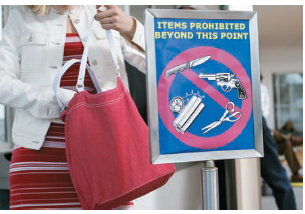
Reference Case study:
Public Policy
The Ripple Effect on the Economy of 9/11 When hijacked planes hit the World Trade Center and the Pentagon, America's sense of domestic security changed. The thousands of lives lost and the billions of dollars of property destroyed were chronicled at length in the media. Let's look at the impact of the tragedy on just one industry-air travel-to see how slumping demand there affected aggregate expenditure.
Once aviation regulators became aware of the hijackings, they grounded all nonmilitary aircraft immediately. This cost the airlines hundreds of millions of dollars a day in lost business. During the days following the attack, video of the second plane crashing into the twin towers was shown again and again, freezing this image in people's minds and heightening public concerns about airline safety. These worries, coupled with the airport delays from added security (passengers were told to arrive up to three hours before flights), reduced the demand for air travel once planes were allowed to fly again. For short flights, it became quicker and easier to drive than to fly. Two weeks after the attacks, airlines were operating only 75 percent of their flights, and these flights were only 30 percent full instead of the usual 75 percent full. Airlines requested federal support, saying they would go bankrupt otherwise. Congress quickly approved a $15 billion aid package of loans and grants.
Despite the promise of federal aid, airlines laid off 85,000 workers, or about 20 percent of their workforce. Flight reductions meant that as many as 900 aircraft would be parked indefinitely, so investment in new planes collapsed. Boeing, the major supplier of new planes and America's leading exporter, announced layoffs of 30,000 workers. This triggered layoffs among suppliers of aircraft parts, such as jet engines and electronic components. For example, Rockwell Collins, an electronics supplier, said 15 percent of its workforce would lose jobs. Other suppliers in the airline service chain also cut jobs. Sky Chef, a major airline caterer, laid off 4,800 of its 16,000 employees.
Airports began rethinking their investment plans. Half the major U.S. airports said they were reevaluating capital improvement plans to see if these investments made sense in this new environment. Honolulu airport, for example, suspended plans to add extra gates and renovate its overseas terminals.
Within three weeks after the attacks, job cuts announced in the industry exceeded 150,000. These were part of only the first round of reduced consumption and investment. In an expanding economy, job losses in one sector can be made up by job expansions in other sectors. But the U.S. economy was already in a recession at the time of the attack, having lost about a million jobs between March 2001 and September 2001. People who lost jobs or who feared for their jobs reduced their demand for housing, clothing, entertainment, restaurant meals, and other goods and services. For example, unemployed flight attendants would be less likely to buy new cars, reducing the income of autoworkers and suppliers. People who lost jobs in the auto industry would reduce their demand for goods and services. So the reductions in airline jobs had a ripple effect.
Airlines are only one part of the travel industry. With fewer people traveling, fewer needed hotel rooms, rental cars, taxi rides, and restaurant meals. Each of those sectors generated a cascade of job losses. The terrorist attacks also shook consumer confidence, which in September 2001 suffered its largest monthly drop since October 1990, on the eve of the first Persian Gulf War. Within 10 days following the attacks, the number of people filing for unemployment benefits jumped to a nine-year high. Again, these early job losses could be viewed as just part of the first round of reduced aggregate expenditure. The second round would occur when people who lost jobs or who feared they would lose their jobs started spending less. The U.S. economy continued to shed jobs for nearly two years after the attacks, losing about 2 million more jobs. Researchers estimate that business interruptions resulting from the attacks cost the U.S. economy a little over $100 billion, or about 1 percent of GDP.
Explanation Verified
Verified
After the 9/11 terrorist attacks in the ...

Economics: A Contemporary Introduction 9th Edition by William McEachern

Why don’t you like this exercise?
Other Minimum 8 character and maximum 255 character
Character 255






