







 Chat with AI

Cornerstones of Managerial Accounting 4th Edition by Maryanne Mowen, Don Hansen, Dan Heitger
Edition 4ISBN: 978-0324380767Cornerstones of Managerial Accounting 4th Edition by Maryanne Mowen, Don Hansen, Dan Heitger
Edition 4ISBN: 978-0324380767 Exercise 16
Understanding Relationships, Cash Budget, Pro Forma Balance Sheet
Ryan Richards, controller for Grange Retailers, has assembled the following data to assist in the preparation of a cash budget for the third quarter of 2012:
a. Sales: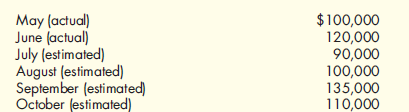
b. Each month, 30 percent of sales are for cash and 70 percent are on credit. The collection pattern for credit sales is 20 percent in the month of sale, 50 percent in the following month, and 30 percent in the second month following the sale.
c. Each month, the ending inventory exactly equals 50 percent of the cost of next month's sales. The markup on goods is 25 percent of cost.
d. Inventory purchases are paid for in the month following the purchase.
e. Recurring monthly expenses are as follows: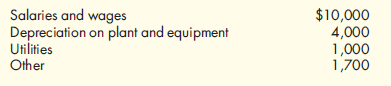
f. Property taxes of $15,000 are due and payable on July 15, 2012.
g. Advertising fees of $6,000 must be paid on August 20, 2012.
h. A lease on a new storage facility is scheduled to begin on September 2, 2012. Monthly payments are $5,000.
i. The company has a policy to maintain a minimum cash balance of $10,000. If necessary, it will borrow to meet its short-term needs. All borrowing is done at the beginning of the month. All payments on principal and interest are made at the end of a month. The annual interest rate is 9 percent. The company must borrow in multiples of $1,000.
j. A partially completed balance sheet as of June 30, 2012, follows. ( Note: Accounts payable is for inventory purchases only.)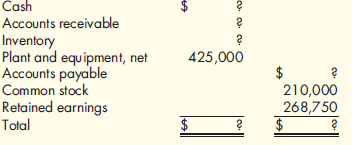
Required:
1. Complete the balance sheet given in Item j.
2. Prepare a cash budget for each month in the third quarter and for the quarter in total (the third quarter begins on July 1). Provide a supporting schedule of cash collections.
3. Prepare a pro forma balance sheet as of September 30, 2012.
4. Conceptual Connection: Form a group with two or three other students. Discuss why a bank might require a cash budget for businesses that are seeking short-term loans. Determine what other financial reports might be useful for a loan decision. Also, discuss how the reliability of cash budgets and other financial information can be determined.
Ryan Richards, controller for Grange Retailers, has assembled the following data to assist in the preparation of a cash budget for the third quarter of 2012:
a. Sales:
b. Each month, 30 percent of sales are for cash and 70 percent are on credit. The collection pattern for credit sales is 20 percent in the month of sale, 50 percent in the following month, and 30 percent in the second month following the sale.
c. Each month, the ending inventory exactly equals 50 percent of the cost of next month's sales. The markup on goods is 25 percent of cost.
d. Inventory purchases are paid for in the month following the purchase.
e. Recurring monthly expenses are as follows:
f. Property taxes of $15,000 are due and payable on July 15, 2012.
g. Advertising fees of $6,000 must be paid on August 20, 2012.
h. A lease on a new storage facility is scheduled to begin on September 2, 2012. Monthly payments are $5,000.
i. The company has a policy to maintain a minimum cash balance of $10,000. If necessary, it will borrow to meet its short-term needs. All borrowing is done at the beginning of the month. All payments on principal and interest are made at the end of a month. The annual interest rate is 9 percent. The company must borrow in multiples of $1,000.
j. A partially completed balance sheet as of June 30, 2012, follows. ( Note: Accounts payable is for inventory purchases only.)
Required:
1. Complete the balance sheet given in Item j.
2. Prepare a cash budget for each month in the third quarter and for the quarter in total (the third quarter begins on July 1). Provide a supporting schedule of cash collections.
3. Prepare a pro forma balance sheet as of September 30, 2012.
4. Conceptual Connection: Form a group with two or three other students. Discuss why a bank might require a cash budget for businesses that are seeking short-term loans. Determine what other financial reports might be useful for a loan decision. Also, discuss how the reliability of cash budgets and other financial information can be determined.
Explanation Verified
Verified
Cash budget preparation for the month of...

Cornerstones of Managerial Accounting 4th Edition by Maryanne Mowen, Don Hansen, Dan Heitger

Why don’t you like this exercise?
Other Minimum 8 character and maximum 255 character
Character 255






