







 Chat with AI


Global Business 4th Edition by Mike Peng
Edition 4ISBN: 978-1305500891Global Business 4th Edition by Mike Peng
Edition 4ISBN: 978-1305500891 Exercise 18
EMERGING MARKETS: Automobile FDI in Brazil and Mexico:
Brazil and Mexico are, respectively, the top one and two largest economies in Latin America in terms of GDP Globally, Brazil and Mexicoare, respectively, the seventh- and eighth-largest car producers and the fourth- and 16th-largest automobile markets. Almost all of their production is undertaken by global automakers via foreign direct investment (FDI). Audi Fiat
Ford, General Motors (GM), Honda, Nissan, Renault Toyota, and Volkswagen (VW) have assembly factories in both countries. In addition, Hyundai, MAN, and Mercedes- Benz produce in Brazil; and BMW, Chrysler, Isuzu, Kia, and Mitsubishi
operate assembly plants in Mexico. For multinationals striving for ownership, location, and internalization (OLI) advantages, their efforts in leveraging O and I advantages are similar in both countries. However, these two countries have pursued location (L) advantages in different ways.
Brazil attracts FDI primarily due to its largest domestic market, while Mexico pulls in FDI due to its proximity to the United States. As a result, only 13% of Brazil's vehicle production is exported (67% of such exports go to its neighbors in Mercosur-a customs union with Argentina, Paraguay, Uruguay, and Venezuela). In contrast, 64% of Mexico's vehicle production is exported to the United States, and all together 82% of its output is exported. Brazil maintains high import tariffs on cars and auto components (except when 65% of the value is imported from one of the Mercosur partners or from Mexico-with which Brazil had a bilateral free trade deal in cars and auto components). As a result, only 21% of the content of Brazil's exports is imported. This ratio of imported content among exports is 47% for Mexico, indicating a much more open and less protectionist environment in which automakers can import a great deal more components tariff-free and duty-free.
The differences in the production, export, and import patterns, of course, are not only shaped by the resources and capabilities of multinationals, but also by government policies in both host countries of FDI. Whether Brazil or Mexico gains more is subject to intense debates in these two countries and beyond. One side of the argument posits that Mexico is only leveraging its low-cost labor and has not fostered a lot of domestic suppliers. Indeed, most first-tier suppliers in Mexico are foreign owned and they import a great deal of components to be assembled into final products. As a result, most final assembly plants are maquiladora type, otherwise known as "screw driver plants." With little technology spillovers to local sup- pliers, the innovation ability of the Mexican automobile industry is thus limited.
Brazil, on the other hand, has pushed automakers to work closely with domestically owned suppliers or with foreign-owned suppliers that have to source locally. With a domestic focus, Brazilian subsidiaries of multinational automakers, aided by suppliers, have endeavored to search for solutions to meet unique local demand, such as ethanol fuel. Brazil is a world leader in ethanol-a sustainable biofuel based on sugarcane. By law, no light vehicles in Brazil are allowed to run on pure gasoline. Led by Volkswagen's Gol 1.6 Total Flex in 2003, the Brazilian automobile industry has introduced flexible-fuel vehicles that can run any combination of ethanol and gasoline. All the multinational automakers producing in Brazil have eagerly participated in the flex movement. Starting with 22% of car sales in 2004, flex cars reached a record 94% by 2010. By 2012, the cumulative production of flex cars and light vehicles reached 15 million units. Advocates of Brazil's policy argue that such success has generated opportunities to involve locally owned component producers, local research institutions, and smaller suppliers, which have specific knowledge not available elsewhere in the world.
The other side of the debate points out Mexico's shining accomplishments as an export hub with a more open trade and investment regime. Mexico has successfully leveraged its NAFTA membership and its free trade agreements with more than 40 countries. While such institution-based boosters are helpful, at the end of the day, Made-in-Mexico vehicles-from a resource-based standpoint-have to be valuable, rare, and hard-to-beat on performance and price in export markets. This is largely attributed to Mexico's persistent efforts to keep its wage levels low, its labor skills upgraded, and its infrastructure modernized. Brazil, on the other hand, suffers from the legendary (and notorious) custo Brasil (Brazil cost)-the exorbitant cost of living and doing business in Brazil (see Emerging Markets 2.1). Since President Dilma Rousseff took office in 2011, she has imposed new tariffs on shoes, textiles, chemicals, and even Barbie dolls. In the absence of protectionism, the Brazilian automobile industry, according to critics, simply cannot stand on its own. Brazil even threatened to tear up the agreement with Mexico that allowed free trade in cars and components, because Brazil- thanks to its uncompetitive automobile industry-suffered from an embarrassing trade deficit. In 2012, Brazil renegotiated the deal with Mexico, imposing import quotas on Made-in-Mexico cars and components. More recently, the Brazilian government has introduced Inovar Autos, a new automotive regime for 2013-2017 which is intended to encourage firms to hit specific targets in localization of production and R D incentivized by additional tax benefits. Critics argue that this IS just one more round of protectionism and government meddling that is ultimately counter-productive.
Sources: Based on (1) Economist, 2012, Two ways to make a car, March 10: 48-49; (2) Economist 2013 The price is wrong, September 28 (special report): 5; (3) P. Figueiredo, 2011, The role of dual embeddedness in the innovative performance of MMF subsidiaries, journal of Management Studies, 48:417-440; (4) M. Kotabe, R. Parente, J. Murray, 2007, Antecedents and outcomes of modular Production in the Brazilian automobile industry Journal of Journal of International Business Studies, 38: 84-106; (5) R. Quadros F Conseni, 2009,innovation capabilities in the Brazilian automobile industry, International Journal of Technological Learning, Innovation, and Development, 2:53-75; (6) T. Strugeon J. van Biesbrook, 2010, Effects of the crisis on the automotive industry in developing countries, Policy Research paper 5330 Washington, DC: World Bank; (7) United Nations, 2014, World Investment Report 2014 (pp. 65-69), New York Geneva- United Nations.
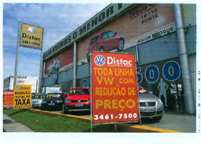
What are the costs and benefits of FDI inflows for a host country such as Brazil and Mexico
Brazil and Mexico are, respectively, the top one and two largest economies in Latin America in terms of GDP Globally, Brazil and Mexicoare, respectively, the seventh- and eighth-largest car producers and the fourth- and 16th-largest automobile markets. Almost all of their production is undertaken by global automakers via foreign direct investment (FDI). Audi Fiat
Ford, General Motors (GM), Honda, Nissan, Renault Toyota, and Volkswagen (VW) have assembly factories in both countries. In addition, Hyundai, MAN, and Mercedes- Benz produce in Brazil; and BMW, Chrysler, Isuzu, Kia, and Mitsubishi
operate assembly plants in Mexico. For multinationals striving for ownership, location, and internalization (OLI) advantages, their efforts in leveraging O and I advantages are similar in both countries. However, these two countries have pursued location (L) advantages in different ways.
Brazil attracts FDI primarily due to its largest domestic market, while Mexico pulls in FDI due to its proximity to the United States. As a result, only 13% of Brazil's vehicle production is exported (67% of such exports go to its neighbors in Mercosur-a customs union with Argentina, Paraguay, Uruguay, and Venezuela). In contrast, 64% of Mexico's vehicle production is exported to the United States, and all together 82% of its output is exported. Brazil maintains high import tariffs on cars and auto components (except when 65% of the value is imported from one of the Mercosur partners or from Mexico-with which Brazil had a bilateral free trade deal in cars and auto components). As a result, only 21% of the content of Brazil's exports is imported. This ratio of imported content among exports is 47% for Mexico, indicating a much more open and less protectionist environment in which automakers can import a great deal more components tariff-free and duty-free.
The differences in the production, export, and import patterns, of course, are not only shaped by the resources and capabilities of multinationals, but also by government policies in both host countries of FDI. Whether Brazil or Mexico gains more is subject to intense debates in these two countries and beyond. One side of the argument posits that Mexico is only leveraging its low-cost labor and has not fostered a lot of domestic suppliers. Indeed, most first-tier suppliers in Mexico are foreign owned and they import a great deal of components to be assembled into final products. As a result, most final assembly plants are maquiladora type, otherwise known as "screw driver plants." With little technology spillovers to local sup- pliers, the innovation ability of the Mexican automobile industry is thus limited.
Brazil, on the other hand, has pushed automakers to work closely with domestically owned suppliers or with foreign-owned suppliers that have to source locally. With a domestic focus, Brazilian subsidiaries of multinational automakers, aided by suppliers, have endeavored to search for solutions to meet unique local demand, such as ethanol fuel. Brazil is a world leader in ethanol-a sustainable biofuel based on sugarcane. By law, no light vehicles in Brazil are allowed to run on pure gasoline. Led by Volkswagen's Gol 1.6 Total Flex in 2003, the Brazilian automobile industry has introduced flexible-fuel vehicles that can run any combination of ethanol and gasoline. All the multinational automakers producing in Brazil have eagerly participated in the flex movement. Starting with 22% of car sales in 2004, flex cars reached a record 94% by 2010. By 2012, the cumulative production of flex cars and light vehicles reached 15 million units. Advocates of Brazil's policy argue that such success has generated opportunities to involve locally owned component producers, local research institutions, and smaller suppliers, which have specific knowledge not available elsewhere in the world.
The other side of the debate points out Mexico's shining accomplishments as an export hub with a more open trade and investment regime. Mexico has successfully leveraged its NAFTA membership and its free trade agreements with more than 40 countries. While such institution-based boosters are helpful, at the end of the day, Made-in-Mexico vehicles-from a resource-based standpoint-have to be valuable, rare, and hard-to-beat on performance and price in export markets. This is largely attributed to Mexico's persistent efforts to keep its wage levels low, its labor skills upgraded, and its infrastructure modernized. Brazil, on the other hand, suffers from the legendary (and notorious) custo Brasil (Brazil cost)-the exorbitant cost of living and doing business in Brazil (see Emerging Markets 2.1). Since President Dilma Rousseff took office in 2011, she has imposed new tariffs on shoes, textiles, chemicals, and even Barbie dolls. In the absence of protectionism, the Brazilian automobile industry, according to critics, simply cannot stand on its own. Brazil even threatened to tear up the agreement with Mexico that allowed free trade in cars and components, because Brazil- thanks to its uncompetitive automobile industry-suffered from an embarrassing trade deficit. In 2012, Brazil renegotiated the deal with Mexico, imposing import quotas on Made-in-Mexico cars and components. More recently, the Brazilian government has introduced Inovar Autos, a new automotive regime for 2013-2017 which is intended to encourage firms to hit specific targets in localization of production and R D incentivized by additional tax benefits. Critics argue that this IS just one more round of protectionism and government meddling that is ultimately counter-productive.
Sources: Based on (1) Economist, 2012, Two ways to make a car, March 10: 48-49; (2) Economist 2013 The price is wrong, September 28 (special report): 5; (3) P. Figueiredo, 2011, The role of dual embeddedness in the innovative performance of MMF subsidiaries, journal of Management Studies, 48:417-440; (4) M. Kotabe, R. Parente, J. Murray, 2007, Antecedents and outcomes of modular Production in the Brazilian automobile industry Journal of Journal of International Business Studies, 38: 84-106; (5) R. Quadros F Conseni, 2009,innovation capabilities in the Brazilian automobile industry, International Journal of Technological Learning, Innovation, and Development, 2:53-75; (6) T. Strugeon J. van Biesbrook, 2010, Effects of the crisis on the automotive industry in developing countries, Policy Research paper 5330 Washington, DC: World Bank; (7) United Nations, 2014, World Investment Report 2014 (pp. 65-69), New York Geneva- United Nations.
What are the costs and benefits of FDI inflows for a host country such as Brazil and Mexico
Explanation Verified
Verified
Brazil and Mexico are two large economie...

Global Business 4th Edition by Mike Peng

Why don’t you like this exercise?
Other Minimum 8 character and maximum 255 character
Character 255






