







 Chat with AI

Global Business 4th Edition by Mike Peng
Edition 4ISBN: 978-1305500891Global Business 4th Edition by Mike Peng
Edition 4ISBN: 978-1305500891 Exercise 4
The German Question in the European Union
Since the German unification in 1871, the German Question has never ceased to provoke debate in Germany and beyond. The question is about the proper role of Germany, which may be too big for Europe but too small for the world-as former US secretary of state Henry Kissinger famously put it. With the fourthlargest economy in the world and the largest in Europe, today's Germany accounts for one-fifth of all EU GDR generates a quarter of all EU exports, and possesses an enviably balanced budget. In 2013, Germany was the third-largest merchandise exporter with US$1.45 trillion exported, and enjoyed a record-breaking surplus (US$270 billion-the highest ever in world history by any country). Strong, united, and rich, Germany is the beacon of hope for EU member countries, such as Greece and Cyprus, infested with unsustainable debt loads. Mean, bossy, and selfish, Germany also provokes a ton of resentment from the very countries that it has rescued. Prime Minister Angela Merkel has been portrayed as a Nazi w ith Hitler-style moustache in street protests and the press in Greece, Cyprus, and elsewhere. Of course, if Germany chooses not to bail out certain member countries in trouble, it would have been resented even more.
Labeled the" reluctanthegemon" by the Economist, Germany is reluctant to play an active leadership role. But without German leadership, practically nothing gets done in the EU. This dilemma stems from two sources. First, in terms of "do's and don'ts," German history is full of lessons of "don'ts." Even the German word for leader, Fuhrer, brings up terrible memories of Nazism. Being aware of the year 2014 being the 100th anniversary of the outbreak of WWI and the 25th anniversary of the fall of the Berlin Wall, many Germans prefer their country to be a larger Switzerland: economically thriving, politically modest, and e geopolitically enjoying | splendid isolation. | Second, Germans, $ who themselves have 1 suffered from the Great o J -Recession since 2008, 2 do not @ feel compelled to bail out others. Germany itself "bit the bullet" in the early 2000s by holding wage levels down. Since German labor costs only rose by 5% in one decade (2004-2014), the country was able to largely resist offshoring and to enhance its export competitiveness. Southern Europeans, according to the Germans, got everything wrong.
Exhibit A: Greece. What led to its mess Consumer demand increase and government spending binge fueled by the 2002 adoption of the euro and the 2004 Olympics. Excessive borrowing, budget deficits (15% of GDP), and crushing national debt (€300 billion- 115% of GDP) with unserviceable payments. Widespread corruption and tax evasion. The shadow (informal) economy was estimated to be between 20% and 30% of GDP In 2010, the Greek government had to ask for help from the EU and the International Monetary Fund (IMF). "The best way to think of it is to think of Greece as a teenager," noted one expert, who continued: Many Greeks view the state with a combination of a sense of entitlement, mistrust, and dislike similar to that of teenagers vis-a-vis their parents. They expect to be funded without contributing; they often act irresponsibly without care about consequences and expect to be bailed out by the state-but that only increases their sense of dependency, which only increases their feeling of dislike for the state. And, of course, they refuse to grow up. But, like every teenager, they will.
While these comments describe the relationship between Greek citizens and the state, they also provide a great deal of insight into the relationship between Greece and the E U -in particular, Germany. But the metaphor can only go so far. At the end of the day, Germany is not Greece's parent. Although both countries belong to the "euro family," Germans are naturally furious as to why they have to foot the largest bill to bail out the profligate Greeks. In 2010, Germany led the EU (and the IMF) rescue efforts by putting together for Greece the biggest bailout package in EU history: a €110 billion bailout loan. But in 2011, Greece came back being more broke. A larger €173 billion package was put together in 2012. Every time, the harsh medicine associated with the rescue dictated that the Greek government unleash sweeping reforms to put its financial house in order. Public sector pensions and wages were cut and value added and excise taxes raised. Unemployment rose from 8% in 2008 to a record high of 25% in 2014, while youth unemployment rose from 22% to 48%. Such shock therapy generated widespread misery and protests. There were only so many austerity measures that a frustrated and largely unemployed public (especially the youth) could take. The same drama of the Greek government begging for help, of EU governments debating what to do (with all eyes fixed on Merkel), and of the Greek public protesting in the streets unfolded again and again.
While Greece was an extreme example, it was not the only EU member requesting bailouts. Bailouts had to be dished out to Hungary (2008), Latvia (2008), Romania (2009), Ireland (2010), Portugal (2011), Cyprus (2011), and Spain (2012). The lion's share of the bailout funds always came from Germany.
The tragedy was not only Greece's or Germany's, but also the EU's. It severely tested the logic of the euro, whose member countries are not only unequal economically, but also different in their spending and saving habits. Dumping the euro by individual countries was no longer unthinkable, but was increasingly discussed, especially in 2012. Leaving the euro z o n e - known as "G re x if-would allow Greece to depreciate its own currency, which would enhance its export competiveness. Dumping the euro would also relieve Germany's responsibility to honor an almost openended commitment to troubled countries. But here is tie catch: a revived Deutsche mark would certainly appreciate and undermine export competitiveness. In the end, a reluctant Germany-and a reluctant EU- had little alternative.
In addition to individual bailouts, the EU in 2012 set up a €750 billion euro zone stabilization fund (including €250 billion from the IMF), which is called European Stability Mechanism (ESM). Germany, which pledged €220 billion, demanded stronger fiscal discipline in the name of better "economic governance" from all members, and threatened sanctions (such as being fined and losing voting rights) if certain members failed to apply a "debt brake." But Germany refused to let the EU to assume all sovereign debts. "Solidarity," which in EU-speak means "German cash," plays a role, but primarily as a means of buying time and encouraging reforms-not a means to encourage moral hazard (see Chapter 2). But by imposing reforms centered on spending cuts, debt reduction, and balancing budgets, Greek GDP shrank 30% since 2010 and growth was excruciatingly slow. Critics argued that such measures would prolong the recession. In 2014, the entire euro zone suffered from deflation where prices fell and growth became more challenging. In 2015, a frustrated Greek public elected a new prime minister. His campaign platform was to break away from the previous governments' promises to the EU to embrace austerity. In other words, the new Greek government would challenge the EU-read "G e rm a n y "- by demanding that a large chunk of its debts be forgiven; that its citizens, especially the youth and the pensioners, be able to live in less misery; and that German (and other EU) taxpayers' euros be evaporated. Otherwise, the danger of a "Grexit" would be more likely than that in 2012. Emboldened by Greece, anti-austerity backlash m other PIGS countries is likely to challenge Germany- (and EU-) imposed austerity measures.
A physicist by training, Merkel is good at using data to make her point. She is fond of saying "7, 25, and 50." These numbers mean that the EU has 7% of the world's population, generates 25% of GDR but consumes 50% of social spending. Clearly by spending beyond its means, according to Merkel, the legendary European welfare state cannot sustain itself in t e long run. In other words, unless the EU shapes up (and becomes like Germany), the Greek tragedy (and other tragedies) will have a bitter ending. Overall, how the German Question is answered will to a large part depend on what role Germany chooses to play in such European drama as the Greek tragedy.
Sources: Based on (1) Bloomberg Businessweek, 2010, A more perfect union December 6: 11-12; (2) Economist, 2011, Bite the bullet, January 15: 77-78; (3) Economist, 2011, Time for Plan B, January 15: 10; (4) Economist, 2012, Currency disunion, April 7: 65; (5) Economist, 2012, Flaming February, February 18: 53; (6) Economist, 2012, Still sickly, March 31: 64; (7) Economist, 2012, Tempted, Angela August 11:9; (8) Economist, 2013, Don't make us Fuhrer, April 13: 53-54; (9) Economist, 2013, Europe's reluctant hegemon, June 15: special report; (10) Economist, 2014, Back to reality, October 25: 73-74; (11) Economist, 2014, That sinking feeling, August 30: 10; (12) Economist, 2014, The treasures of darkness, October 11: 83; (13) Economist, 2014, The world's biggest economic problem, October 25: 15; (14) Economist, 2014, Three illusions, September 27: 50; (15) Economist, 2014, Twenty-five years on, November 8: 54-55; (15) Economist, 2015, Go ahead, Angela, make my day, January 31: 9.
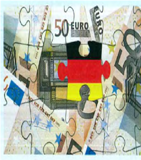
What are the benefits and costs of using a common currency for Germany, Greece, and the EU
Since the German unification in 1871, the German Question has never ceased to provoke debate in Germany and beyond. The question is about the proper role of Germany, which may be too big for Europe but too small for the world-as former US secretary of state Henry Kissinger famously put it. With the fourthlargest economy in the world and the largest in Europe, today's Germany accounts for one-fifth of all EU GDR generates a quarter of all EU exports, and possesses an enviably balanced budget. In 2013, Germany was the third-largest merchandise exporter with US$1.45 trillion exported, and enjoyed a record-breaking surplus (US$270 billion-the highest ever in world history by any country). Strong, united, and rich, Germany is the beacon of hope for EU member countries, such as Greece and Cyprus, infested with unsustainable debt loads. Mean, bossy, and selfish, Germany also provokes a ton of resentment from the very countries that it has rescued. Prime Minister Angela Merkel has been portrayed as a Nazi w ith Hitler-style moustache in street protests and the press in Greece, Cyprus, and elsewhere. Of course, if Germany chooses not to bail out certain member countries in trouble, it would have been resented even more.
Labeled the" reluctanthegemon" by the Economist, Germany is reluctant to play an active leadership role. But without German leadership, practically nothing gets done in the EU. This dilemma stems from two sources. First, in terms of "do's and don'ts," German history is full of lessons of "don'ts." Even the German word for leader, Fuhrer, brings up terrible memories of Nazism. Being aware of the year 2014 being the 100th anniversary of the outbreak of WWI and the 25th anniversary of the fall of the Berlin Wall, many Germans prefer their country to be a larger Switzerland: economically thriving, politically modest, and e geopolitically enjoying | splendid isolation. | Second, Germans, $ who themselves have 1 suffered from the Great o J -Recession since 2008, 2 do not @ feel compelled to bail out others. Germany itself "bit the bullet" in the early 2000s by holding wage levels down. Since German labor costs only rose by 5% in one decade (2004-2014), the country was able to largely resist offshoring and to enhance its export competitiveness. Southern Europeans, according to the Germans, got everything wrong.
Exhibit A: Greece. What led to its mess Consumer demand increase and government spending binge fueled by the 2002 adoption of the euro and the 2004 Olympics. Excessive borrowing, budget deficits (15% of GDP), and crushing national debt (€300 billion- 115% of GDP) with unserviceable payments. Widespread corruption and tax evasion. The shadow (informal) economy was estimated to be between 20% and 30% of GDP In 2010, the Greek government had to ask for help from the EU and the International Monetary Fund (IMF). "The best way to think of it is to think of Greece as a teenager," noted one expert, who continued: Many Greeks view the state with a combination of a sense of entitlement, mistrust, and dislike similar to that of teenagers vis-a-vis their parents. They expect to be funded without contributing; they often act irresponsibly without care about consequences and expect to be bailed out by the state-but that only increases their sense of dependency, which only increases their feeling of dislike for the state. And, of course, they refuse to grow up. But, like every teenager, they will.
While these comments describe the relationship between Greek citizens and the state, they also provide a great deal of insight into the relationship between Greece and the E U -in particular, Germany. But the metaphor can only go so far. At the end of the day, Germany is not Greece's parent. Although both countries belong to the "euro family," Germans are naturally furious as to why they have to foot the largest bill to bail out the profligate Greeks. In 2010, Germany led the EU (and the IMF) rescue efforts by putting together for Greece the biggest bailout package in EU history: a €110 billion bailout loan. But in 2011, Greece came back being more broke. A larger €173 billion package was put together in 2012. Every time, the harsh medicine associated with the rescue dictated that the Greek government unleash sweeping reforms to put its financial house in order. Public sector pensions and wages were cut and value added and excise taxes raised. Unemployment rose from 8% in 2008 to a record high of 25% in 2014, while youth unemployment rose from 22% to 48%. Such shock therapy generated widespread misery and protests. There were only so many austerity measures that a frustrated and largely unemployed public (especially the youth) could take. The same drama of the Greek government begging for help, of EU governments debating what to do (with all eyes fixed on Merkel), and of the Greek public protesting in the streets unfolded again and again.
While Greece was an extreme example, it was not the only EU member requesting bailouts. Bailouts had to be dished out to Hungary (2008), Latvia (2008), Romania (2009), Ireland (2010), Portugal (2011), Cyprus (2011), and Spain (2012). The lion's share of the bailout funds always came from Germany.
The tragedy was not only Greece's or Germany's, but also the EU's. It severely tested the logic of the euro, whose member countries are not only unequal economically, but also different in their spending and saving habits. Dumping the euro by individual countries was no longer unthinkable, but was increasingly discussed, especially in 2012. Leaving the euro z o n e - known as "G re x if-would allow Greece to depreciate its own currency, which would enhance its export competiveness. Dumping the euro would also relieve Germany's responsibility to honor an almost openended commitment to troubled countries. But here is tie catch: a revived Deutsche mark would certainly appreciate and undermine export competitiveness. In the end, a reluctant Germany-and a reluctant EU- had little alternative.
In addition to individual bailouts, the EU in 2012 set up a €750 billion euro zone stabilization fund (including €250 billion from the IMF), which is called European Stability Mechanism (ESM). Germany, which pledged €220 billion, demanded stronger fiscal discipline in the name of better "economic governance" from all members, and threatened sanctions (such as being fined and losing voting rights) if certain members failed to apply a "debt brake." But Germany refused to let the EU to assume all sovereign debts. "Solidarity," which in EU-speak means "German cash," plays a role, but primarily as a means of buying time and encouraging reforms-not a means to encourage moral hazard (see Chapter 2). But by imposing reforms centered on spending cuts, debt reduction, and balancing budgets, Greek GDP shrank 30% since 2010 and growth was excruciatingly slow. Critics argued that such measures would prolong the recession. In 2014, the entire euro zone suffered from deflation where prices fell and growth became more challenging. In 2015, a frustrated Greek public elected a new prime minister. His campaign platform was to break away from the previous governments' promises to the EU to embrace austerity. In other words, the new Greek government would challenge the EU-read "G e rm a n y "- by demanding that a large chunk of its debts be forgiven; that its citizens, especially the youth and the pensioners, be able to live in less misery; and that German (and other EU) taxpayers' euros be evaporated. Otherwise, the danger of a "Grexit" would be more likely than that in 2012. Emboldened by Greece, anti-austerity backlash m other PIGS countries is likely to challenge Germany- (and EU-) imposed austerity measures.
A physicist by training, Merkel is good at using data to make her point. She is fond of saying "7, 25, and 50." These numbers mean that the EU has 7% of the world's population, generates 25% of GDR but consumes 50% of social spending. Clearly by spending beyond its means, according to Merkel, the legendary European welfare state cannot sustain itself in t e long run. In other words, unless the EU shapes up (and becomes like Germany), the Greek tragedy (and other tragedies) will have a bitter ending. Overall, how the German Question is answered will to a large part depend on what role Germany chooses to play in such European drama as the Greek tragedy.
Sources: Based on (1) Bloomberg Businessweek, 2010, A more perfect union December 6: 11-12; (2) Economist, 2011, Bite the bullet, January 15: 77-78; (3) Economist, 2011, Time for Plan B, January 15: 10; (4) Economist, 2012, Currency disunion, April 7: 65; (5) Economist, 2012, Flaming February, February 18: 53; (6) Economist, 2012, Still sickly, March 31: 64; (7) Economist, 2012, Tempted, Angela August 11:9; (8) Economist, 2013, Don't make us Fuhrer, April 13: 53-54; (9) Economist, 2013, Europe's reluctant hegemon, June 15: special report; (10) Economist, 2014, Back to reality, October 25: 73-74; (11) Economist, 2014, That sinking feeling, August 30: 10; (12) Economist, 2014, The treasures of darkness, October 11: 83; (13) Economist, 2014, The world's biggest economic problem, October 25: 15; (14) Economist, 2014, Three illusions, September 27: 50; (15) Economist, 2014, Twenty-five years on, November 8: 54-55; (15) Economist, 2015, Go ahead, Angela, make my day, January 31: 9.
What are the benefits and costs of using a common currency for Germany, Greece, and the EU
Explanation


This question doesn’t have an expert verified answer yet, let Quizplus AI Copilot help.

Global Business 4th Edition by Mike Peng

Why don’t you like this exercise?
Other Minimum 8 character and maximum 255 character
Character 255






