







 Chat with AI


Integrated Advertising, Promotion and Marketing Communications 5th Edition by Kenneth Clow,Donald Baack
Edition 5ISBN: 978-0132538961Integrated Advertising, Promotion and Marketing Communications 5th Edition by Kenneth Clow,Donald Baack
Edition 5ISBN: 978-0132538961 Exercise 14
A New Salsa Sensation
Hector Fernandez created a salsa that became legendary within just a few years. Hector operated a successful restaurant, El Casa Grande, in Taos, New Mexico, for many years. A new chapter in his life opened when he was approached by two of his best customers, who offered to help him produce and market his salsa throughout the state, with the goal of reaching regional distribution in 5 years.
As a first step, Hector located the home office of a major advertising agency in Albuquerque. The agency positioned itself as being a "full-service" organization. Hector wondered exactly what that meant. He was introduced to Matt Barnes, who was to serve as his marketing and promotions consultant.
Matt's first questions were about Hector's salsa: "What makes your salsa better " and "Is there a way we can convince people of the difference " Hector responded that his customers often commented about both the taste and the texture of the salsa. He had a secret formula that had a few unusual seasonings that made his salsa burst with flavor. Hector also believed that it was less "runny" than others.
The next item the two discussed was potential customers. Hector noted that Tex-Mex was a popular form of dining in New Mexico as well as across the country. He believed that his salsa would appeal to a wide variety of people who enjoy Tex-Mex cuisine.
Matt's next question was simple: "Who do you think are your major competitors "
Hector responded, "That's easy, Pace and Old El Paso."
Matt then asked what Hector thought of the two companies and their products. He suggested an investigation on both a personal and competitive basis. For example, Matt asked, "What do you think of when you hear the name Pace How about Old El Paso " He noted that both brands were solid and that Hector's company would need a compelling brand in order to compete.
The next step was a visit to the Web site of each company (www.pacefoods.com and www.oldelpaso.com). They noticed that the two companies offered some products that were the same and others that were not.
Matt asked Hector what he thought about the advertising and promotions for each company and its products. Hector replied, "Well, to tell you the truth, I only remember one television ad. It said something about one of the two companies was located in New York City instead of near Mexico, but I can't remember which was which." They concluded that it was possible that these companies do not engage in a great deal of traditional media advertising or that Hector was simply too busy with his own company to notice. Hector noted that he used a DVR to watch television and that he listened to satellite radio in both his restaurant and his car.
Matt suggested that Hector should look in Sunday papers for the past several weeks to see if either company was offering price-off coupons or other promotions, such as a contest or sweepstakes. He told Hector it would be a good idea to attend events where salsa was being sampled or sold, such as at county fairs, Mexican heritage events, and at ballparks and other sports stadiums where nachos were on the menu.
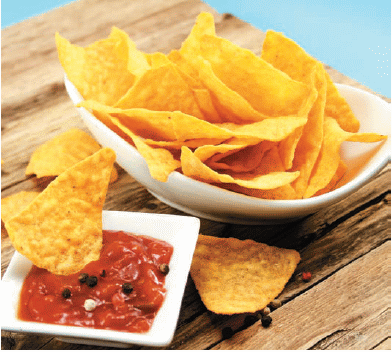
Hector had a great salsa, but no brand name and no marketing communication plan
The two then discussed a crucial issue: How could Hector's new company convince grocers and others to designate some shelf space for his salsa, thereby taking space away from some other product
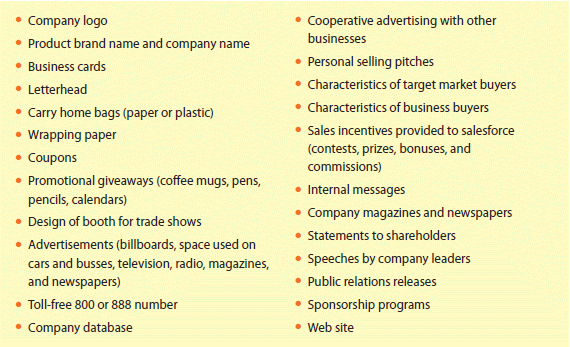
Finally, Matt handed Hector a package of materials (see Figure 1 on the next page). He asked Hector to consider how to reach every possible type of customer for his product, including grocery stores, other restaurants, and individual consumers shopping for salsa. He suggested that Hector would need to think about what type of sales tactics to use, which promotional programs were most important, and how the company should look-from its logo, to its letterhead, to the business cards handed out by sales representatives. Remember, Matt stated, "Everything communicates."
1. Can you think of a brand name that could be used not only for salsa, but for any other product related to salsa that Hector's company might sell
2. How can Hector's company compete with Pace and Old El Paso Is there a market niche the company can locate
3. What kinds of advertising and promotions tactics should the company use Will the tactics be the same in 5 years
Figure 1 Items to Be Included in an IMC Program
Hector Fernandez created a salsa that became legendary within just a few years. Hector operated a successful restaurant, El Casa Grande, in Taos, New Mexico, for many years. A new chapter in his life opened when he was approached by two of his best customers, who offered to help him produce and market his salsa throughout the state, with the goal of reaching regional distribution in 5 years.
As a first step, Hector located the home office of a major advertising agency in Albuquerque. The agency positioned itself as being a "full-service" organization. Hector wondered exactly what that meant. He was introduced to Matt Barnes, who was to serve as his marketing and promotions consultant.
Matt's first questions were about Hector's salsa: "What makes your salsa better " and "Is there a way we can convince people of the difference " Hector responded that his customers often commented about both the taste and the texture of the salsa. He had a secret formula that had a few unusual seasonings that made his salsa burst with flavor. Hector also believed that it was less "runny" than others.
The next item the two discussed was potential customers. Hector noted that Tex-Mex was a popular form of dining in New Mexico as well as across the country. He believed that his salsa would appeal to a wide variety of people who enjoy Tex-Mex cuisine.
Matt's next question was simple: "Who do you think are your major competitors "
Hector responded, "That's easy, Pace and Old El Paso."
Matt then asked what Hector thought of the two companies and their products. He suggested an investigation on both a personal and competitive basis. For example, Matt asked, "What do you think of when you hear the name Pace How about Old El Paso " He noted that both brands were solid and that Hector's company would need a compelling brand in order to compete.
The next step was a visit to the Web site of each company (www.pacefoods.com and www.oldelpaso.com). They noticed that the two companies offered some products that were the same and others that were not.
Matt asked Hector what he thought about the advertising and promotions for each company and its products. Hector replied, "Well, to tell you the truth, I only remember one television ad. It said something about one of the two companies was located in New York City instead of near Mexico, but I can't remember which was which." They concluded that it was possible that these companies do not engage in a great deal of traditional media advertising or that Hector was simply too busy with his own company to notice. Hector noted that he used a DVR to watch television and that he listened to satellite radio in both his restaurant and his car.
Matt suggested that Hector should look in Sunday papers for the past several weeks to see if either company was offering price-off coupons or other promotions, such as a contest or sweepstakes. He told Hector it would be a good idea to attend events where salsa was being sampled or sold, such as at county fairs, Mexican heritage events, and at ballparks and other sports stadiums where nachos were on the menu.
Hector had a great salsa, but no brand name and no marketing communication plan
The two then discussed a crucial issue: How could Hector's new company convince grocers and others to designate some shelf space for his salsa, thereby taking space away from some other product
Finally, Matt handed Hector a package of materials (see Figure 1 on the next page). He asked Hector to consider how to reach every possible type of customer for his product, including grocery stores, other restaurants, and individual consumers shopping for salsa. He suggested that Hector would need to think about what type of sales tactics to use, which promotional programs were most important, and how the company should look-from its logo, to its letterhead, to the business cards handed out by sales representatives. Remember, Matt stated, "Everything communicates."
1. Can you think of a brand name that could be used not only for salsa, but for any other product related to salsa that Hector's company might sell
2. How can Hector's company compete with Pace and Old El Paso Is there a market niche the company can locate
3. What kinds of advertising and promotions tactics should the company use Will the tactics be the same in 5 years
Figure 1 Items to Be Included in an IMC Program
Explanation Verified
Verified
Zappos.com can use adaptation approach i...

Integrated Advertising, Promotion and Marketing Communications 5th Edition by Kenneth Clow,Donald Baack

Why don’t you like this exercise?
Other Minimum 8 character and maximum 255 character
Character 255






