







 Chat with AI

Contemporary Marketing, 2013 Update 15th Edition by Louis Boone ,David Kurtz
Edition 15ISBN: 978-1111579715Contemporary Marketing, 2013 Update 15th Edition by Louis Boone ,David Kurtz
Edition 15ISBN: 978-1111579715 Exercise 22
This Isn't Your Father's Honda... or Is It?
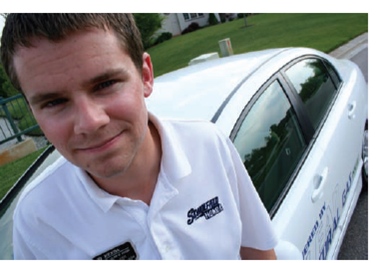
When you think about the kind of people who buy hybrid and alternative fuel cars, you're probably picturing a handful of smug, hipster vegetarians tooling around Seattle or San Francisco or Vermont. There's probably a lot of political bumper stickers on the back of the car. Maybe there's a kayak or mountain bike on the roof.
A few years ago, you'd probably be right.
When the Honda Insight, the carmaker's first consumer hybrid car hit the market in 2000, Roger Schofield, owner of Schofield Honda in Wichita, Kansas, thought he had it all figured out. For one thing, Wichita isn't exactly known as the epicenter of eco-consumerism. He'd probably sell a handful of the combination Nickel-Metal Hydride rechargeable cell/internal combustion-engine, gas-powered cars to a couple of single 20-somethings. The thing only had two seats and seemed pretty flimsy with its lightweight aluminum body. With a sticker price of $20,000, it was pretty pricey, too.
The first Insight Scholfield sold went to a 63-year-old.
The second person to buy one was 65.
As it turns out, Scholfield's experience was consistent with Honda's marketing research. They determined that the typical Insight customer was older, highly educated, probably with an engineering or science background-people who tend to be very research-driven. Nearly a decade later, almost every auto manufacturer has a hybrid car, SUV, or truck on the showroom floor.
Lee Lindquist, an employee at Schofield Honda, had always been interested in technology and the environment. As a member of the Sierra Club, an environmental group, he would often speak about the environmental impact of automobiles. He found that audiences were really interested not just in the fuel-efficient hybrids, but in alternative fuels as well. Lindquist did some research and learned that Honda had been selling a natural gas car to the City of Los Angeles since 1998. Because this car ran exclusively on natural gas, it was considered by the EPA to be the cleanest internal combustion motor in the market. Everything about the car was the same as a traditional Honda Civic-except the polluting emissions.
Lindquist asked Scholfield if he could try to bring a Natural Gas Civic GX to Wichita with the intention of selling the idea to large companies as a fleet car and to Los Angeles for municipal use. His pitch was simple. Once the municipality or company invested in the natural gas fueling station, fill-ups would be incredibly cheap-the equivalent of about $1.00 a gallon with the added plus of limiting their impact on the environment. It was a great value proposition. Selling the car to the Average Joe was another matter entirely. The fueling stations cost thousands but, even with the lower prices at the pump, it would be hard to justify that kind of expense.
When Scholfield heard the news that a tornado wiped out the small town of Greensburg, Kansas, he knew he had to help. Initially, the dealership made a generous cash donation to the relief efforts. When the news broke that the town had decided to rebuild green, Lindquist saw an opportunity to reintroduce the Civic GX to the people of Kansas. His thinking was simple. In rural farming communities, people are naturally greener than their city cousins; the environment is their livelihood, and the notion of conserving and recycling resources is a necessity, not a fad or a slogan on a T-shirt. It is not uncommon for farmers-large and small-to have propane or other sources of fuel to power their farming equipment. Kansas, and Greensburg in particular, provide a large percentage of the country's natural gas. About 100 of the county's residents lease parts of their land to gas companies to put in pumps and pipelines.
For Scholfield, it took a little more convincing. In the end, he decided to go for it. As he drove the Civic GX two hours west on Highway 54 to Greensburg, he started to have second thoughts. Wouldn't the $25,000 the car was going to set him back be better spent on a few prime-time local ads? What's a farmer going to do with a little Honda? In the end, he figured, at the very least, with all the media attention Greensburg was getting, their name would be out there.
In a well-attended ceremony, Roger Scholfield handed the keys to the natural gas Civic to Daniel Wallach of Greensburg GreenTown. Residents came to check it out. No sales were made that day, but the story broadcast on KAKE, Wichita's ABC affiliate, and was picked up nationwide. Before long, city and fleet managers from around the region, not just the city, were looking for the GX
What are the primary market(s) for the Honda Civic GX?
When you think about the kind of people who buy hybrid and alternative fuel cars, you're probably picturing a handful of smug, hipster vegetarians tooling around Seattle or San Francisco or Vermont. There's probably a lot of political bumper stickers on the back of the car. Maybe there's a kayak or mountain bike on the roof.
A few years ago, you'd probably be right.
When the Honda Insight, the carmaker's first consumer hybrid car hit the market in 2000, Roger Schofield, owner of Schofield Honda in Wichita, Kansas, thought he had it all figured out. For one thing, Wichita isn't exactly known as the epicenter of eco-consumerism. He'd probably sell a handful of the combination Nickel-Metal Hydride rechargeable cell/internal combustion-engine, gas-powered cars to a couple of single 20-somethings. The thing only had two seats and seemed pretty flimsy with its lightweight aluminum body. With a sticker price of $20,000, it was pretty pricey, too.
The first Insight Scholfield sold went to a 63-year-old.
The second person to buy one was 65.
As it turns out, Scholfield's experience was consistent with Honda's marketing research. They determined that the typical Insight customer was older, highly educated, probably with an engineering or science background-people who tend to be very research-driven. Nearly a decade later, almost every auto manufacturer has a hybrid car, SUV, or truck on the showroom floor.
Lee Lindquist, an employee at Schofield Honda, had always been interested in technology and the environment. As a member of the Sierra Club, an environmental group, he would often speak about the environmental impact of automobiles. He found that audiences were really interested not just in the fuel-efficient hybrids, but in alternative fuels as well. Lindquist did some research and learned that Honda had been selling a natural gas car to the City of Los Angeles since 1998. Because this car ran exclusively on natural gas, it was considered by the EPA to be the cleanest internal combustion motor in the market. Everything about the car was the same as a traditional Honda Civic-except the polluting emissions.
Lindquist asked Scholfield if he could try to bring a Natural Gas Civic GX to Wichita with the intention of selling the idea to large companies as a fleet car and to Los Angeles for municipal use. His pitch was simple. Once the municipality or company invested in the natural gas fueling station, fill-ups would be incredibly cheap-the equivalent of about $1.00 a gallon with the added plus of limiting their impact on the environment. It was a great value proposition. Selling the car to the Average Joe was another matter entirely. The fueling stations cost thousands but, even with the lower prices at the pump, it would be hard to justify that kind of expense.
When Scholfield heard the news that a tornado wiped out the small town of Greensburg, Kansas, he knew he had to help. Initially, the dealership made a generous cash donation to the relief efforts. When the news broke that the town had decided to rebuild green, Lindquist saw an opportunity to reintroduce the Civic GX to the people of Kansas. His thinking was simple. In rural farming communities, people are naturally greener than their city cousins; the environment is their livelihood, and the notion of conserving and recycling resources is a necessity, not a fad or a slogan on a T-shirt. It is not uncommon for farmers-large and small-to have propane or other sources of fuel to power their farming equipment. Kansas, and Greensburg in particular, provide a large percentage of the country's natural gas. About 100 of the county's residents lease parts of their land to gas companies to put in pumps and pipelines.
For Scholfield, it took a little more convincing. In the end, he decided to go for it. As he drove the Civic GX two hours west on Highway 54 to Greensburg, he started to have second thoughts. Wouldn't the $25,000 the car was going to set him back be better spent on a few prime-time local ads? What's a farmer going to do with a little Honda? In the end, he figured, at the very least, with all the media attention Greensburg was getting, their name would be out there.
In a well-attended ceremony, Roger Scholfield handed the keys to the natural gas Civic to Daniel Wallach of Greensburg GreenTown. Residents came to check it out. No sales were made that day, but the story broadcast on KAKE, Wichita's ABC affiliate, and was picked up nationwide. Before long, city and fleet managers from around the region, not just the city, were looking for the GX
What are the primary market(s) for the Honda Civic GX?
Explanation Verified
Verified
Summary:
H introduced its first hybrid ...

Contemporary Marketing, 2013 Update 15th Edition by Louis Boone ,David Kurtz

Why don’t you like this exercise?
Other Minimum 8 character and maximum 255 character
Character 255






