







 Chat with AI


Contemporary Marketing, 2013 Update 15th Edition by Louis Boone ,David Kurtz
Edition 15ISBN: 978-1111579715Contemporary Marketing, 2013 Update 15th Edition by Louis Boone ,David Kurtz
Edition 15ISBN: 978-1111579715 Exercise 1
Watt's the Deal?
Pricing on most items isn't all that mysterious. Fast food lunch: $5.37. Hamburger: $2.49; fries: $1.89; drink: $.99. Those prices pretty much break down into operating expenses, food cost, and profit. It is what it is. When it comes to pricing an alternative energy system for your home, it's a different story.
The first thing you have to understand is what you're buying. First, you pay for the materials and labor, and you can count on a 20 percent mark-up for the company's profit and operations. Next comes the idea of watts, the electric company's unit of measure for how much electricity you use. Then there are the intangibles. When pricing an energy-saving system like wind or solar, you have to look at your initial investment and what you can expect to save when the electric bill comes. If you are really good about limiting your energy use, you may be able to sell some of your extra power back to the "grid." But what if it takes ten years to pay offthe home improvement loan you took out to finance the system? What will the interest be? Is that adjusted for inflation? Is the cost of electricity always going to go up, or will it stabilize or even go down in two years? What are the maintenance and repair costs? Get through all these questions and you're still faced with the choice of wind or solar. Wind is cheaper to start, but less predictable on the return on investment-solar is the opposite.
That's just for residential. Add an Inc. after your name and there's a whole bunch of other considerations. What is the depreciation on the equipment? Can it be accelerated? Are there state, local, or federal tax credits?
John Miggins of Standard Renewable Energy in Tulsa, Oklahoma, can do these calculations in his sleep but is quick to admit they are complicated. "The people call me and say, 'I have a 2,000-square-foot house. What do I need?'" There's no way to answer that, but what he does tell them is what the average customer might want. From there, all bets are offuntil he can do a custom quote designed for the customer's home-the location, type of construction, exposure, zoning, energy needs, what the customer realistically expects to get out of a wind or solar system and, most importantly, what the customer is willing to give up to get the most out of the system he or she wants.
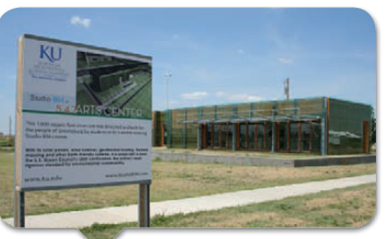
When the students at the the University of Kansas School of Architecture and Urban Planning's Studio 804 called Miggins looking for a solar and wind system for their 547 Art Center design-build in Greensburg, Kansas, the needs versus wants equation really came into play. The building, a community and art museum in the heart of Greensburg, was a unique project. 547 Art Center was the first building to be completed in the devastated town and is definitely one of, if not the greenest, buildings in Kansas. Like all projects in Greensburg, money was an issue, but building a truly sustainable, green LEED Platinum building was just as important. Add to that the fact that the building was going to be a showpiece for the town, so aesthetics couldn't suffer either. Miggins quoted the project at about $50,000. Although he would have loved to give it all away for free, the studio needed to cover his costs. As they were completing the plans for the project, the design team threw him a curveball. They wanted three smaller wind turbines to power the building rather than the one larger one Miggins recommended. "It was a ten thousand dollar difference, easily," recalls Miggins. A frugal guy himself, he couldn't understand why they would spend the extra money on an already strapped project. "A friend of mine told me architects like threes," said Miggins. "And you gotta admit, it looks really cool!" In the end, he got what they were going for and donated some of the extra labor involved in installing the three turbines so they could achieve their vision.
"We can't treat everybody like that," says Miggins. As a sales rep for the Oklahoma/Kansas region, Miggins has some wiggle room in pricing jobs. Every project is carefully reviewed, and he knows he'll get a talking to if he gives too much away. The return on investment in cool projects like Greensburg isn't lost on the finance department at Standard Renewable. Miggins was recently called by Make it Right, Brad Pitt's foundation dedicated to the sustainable rebuilding of the 9th Ward of New Orleans, the area hardest hit by Hurricane Katrina. He is now involved in designing a solar system for a neighborhood playground. Standard knows they won't make a killing on the project, but the exposure will more than make up for it.
Why is it important for Standard Renewable Energy to allow Miggins flexibility in pricing?
Pricing on most items isn't all that mysterious. Fast food lunch: $5.37. Hamburger: $2.49; fries: $1.89; drink: $.99. Those prices pretty much break down into operating expenses, food cost, and profit. It is what it is. When it comes to pricing an alternative energy system for your home, it's a different story.
The first thing you have to understand is what you're buying. First, you pay for the materials and labor, and you can count on a 20 percent mark-up for the company's profit and operations. Next comes the idea of watts, the electric company's unit of measure for how much electricity you use. Then there are the intangibles. When pricing an energy-saving system like wind or solar, you have to look at your initial investment and what you can expect to save when the electric bill comes. If you are really good about limiting your energy use, you may be able to sell some of your extra power back to the "grid." But what if it takes ten years to pay offthe home improvement loan you took out to finance the system? What will the interest be? Is that adjusted for inflation? Is the cost of electricity always going to go up, or will it stabilize or even go down in two years? What are the maintenance and repair costs? Get through all these questions and you're still faced with the choice of wind or solar. Wind is cheaper to start, but less predictable on the return on investment-solar is the opposite.
That's just for residential. Add an Inc. after your name and there's a whole bunch of other considerations. What is the depreciation on the equipment? Can it be accelerated? Are there state, local, or federal tax credits?
John Miggins of Standard Renewable Energy in Tulsa, Oklahoma, can do these calculations in his sleep but is quick to admit they are complicated. "The people call me and say, 'I have a 2,000-square-foot house. What do I need?'" There's no way to answer that, but what he does tell them is what the average customer might want. From there, all bets are offuntil he can do a custom quote designed for the customer's home-the location, type of construction, exposure, zoning, energy needs, what the customer realistically expects to get out of a wind or solar system and, most importantly, what the customer is willing to give up to get the most out of the system he or she wants.
When the students at the the University of Kansas School of Architecture and Urban Planning's Studio 804 called Miggins looking for a solar and wind system for their 547 Art Center design-build in Greensburg, Kansas, the needs versus wants equation really came into play. The building, a community and art museum in the heart of Greensburg, was a unique project. 547 Art Center was the first building to be completed in the devastated town and is definitely one of, if not the greenest, buildings in Kansas. Like all projects in Greensburg, money was an issue, but building a truly sustainable, green LEED Platinum building was just as important. Add to that the fact that the building was going to be a showpiece for the town, so aesthetics couldn't suffer either. Miggins quoted the project at about $50,000. Although he would have loved to give it all away for free, the studio needed to cover his costs. As they were completing the plans for the project, the design team threw him a curveball. They wanted three smaller wind turbines to power the building rather than the one larger one Miggins recommended. "It was a ten thousand dollar difference, easily," recalls Miggins. A frugal guy himself, he couldn't understand why they would spend the extra money on an already strapped project. "A friend of mine told me architects like threes," said Miggins. "And you gotta admit, it looks really cool!" In the end, he got what they were going for and donated some of the extra labor involved in installing the three turbines so they could achieve their vision.
"We can't treat everybody like that," says Miggins. As a sales rep for the Oklahoma/Kansas region, Miggins has some wiggle room in pricing jobs. Every project is carefully reviewed, and he knows he'll get a talking to if he gives too much away. The return on investment in cool projects like Greensburg isn't lost on the finance department at Standard Renewable. Miggins was recently called by Make it Right, Brad Pitt's foundation dedicated to the sustainable rebuilding of the 9th Ward of New Orleans, the area hardest hit by Hurricane Katrina. He is now involved in designing a solar system for a neighborhood playground. Standard knows they won't make a killing on the project, but the exposure will more than make up for it.
Why is it important for Standard Renewable Energy to allow Miggins flexibility in pricing?
Explanation Verified
Verified
1.
It is important for Standard Renewabl...

Contemporary Marketing, 2013 Update 15th Edition by Louis Boone ,David Kurtz

Why don’t you like this exercise?
Other Minimum 8 character and maximum 255 character
Character 255






