



expand icon
book Ecology 7th Edition by Manuel Molles cover

Ecology 7th Edition by Manuel Molles

Edition 7ISBN: 978-0077837280
book Ecology 7th Edition by Manuel Molles cover

Ecology 7th Edition by Manuel Molles

Edition 7ISBN: 978-0077837280
Exercise 3
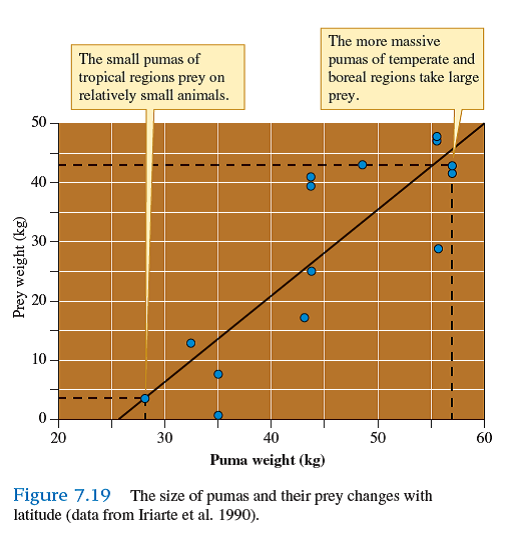
Ecologists are often interested in the relationship between two variables, which we might call X and Y. For example, in chapter 7 we reviewed a study of how the size of pumas, variable X, is related to the size of prey that they take, variable Y (see fig. 7.19 ). The scatter plot shown in figure 7.19 is one of an infinite number of possible relationships between two variables.
Ecologists are often interested in the relationship between two variables, which we might call X and Y. For example, in chapter 7 we reviewed a study of how the size of pumas, variable X, is related to the size of prey that they take, variable Y (see fig. 7.19 ). The scatter plot shown in figure 7.19 is one of an infinite number of possible relationships between two variables.     Let's consider just three of the possible relationships, which are shown in figure 1. The most basic scatter plot is one in which there is no relationship between X and Y. This situation is represented by figure 1 a , where there is no correlation between values of X and values of Y. As a result, the scatter plot forms a more or less circular pattern. In contrast the pattern     shown in figure 1 b , which represents the situation where as X increases, Y decreases, follows an approximately linear pattern that slopes downward to the right. The relationship between rainfall and green woodhoopoe reproduction we will examine in chapter 8 shows this pattern (see fig. 8.19). This type of relationship between X and Y is called a negative correlation. The opposite pattern, shown by figure 1 c , is called a positive correlation. When two variables are positively correlated, increases in X are associated with increases in Y. For instance, increased body size in populations of pumas are correlated with increased size of the prey they eat (see fig. 7.19 ).      Suppose that during a field study you find a positive correlation between some variable X and another variable Y- for example, between higher concentrations of the stable isotope 13 C in the tissues of migrating redstarts and later arrival dates on their northern breeding grounds (see chapter 1, p. 5). Does this positive correlation demonstrate that an increase in X directly causes an increase in Y
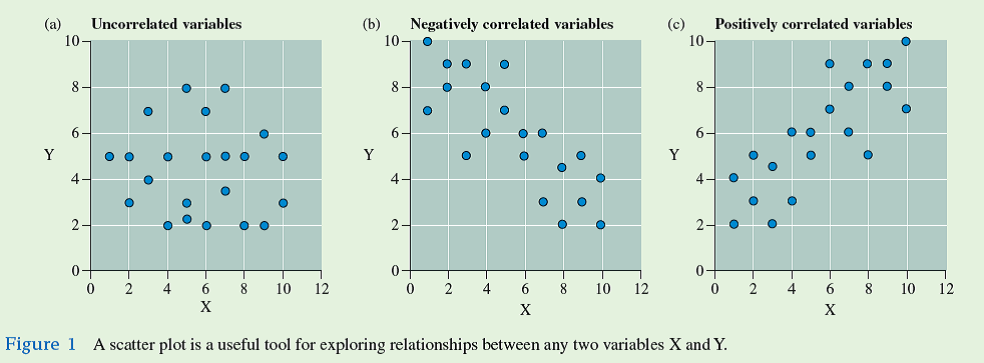
Let's consider just three of the possible relationships, which are shown in figure 1. The most basic scatter plot is one in which there is no relationship between X and Y. This situation is represented by figure 1 a , where there is no correlation between values of X and values of Y. As a result, the scatter plot forms a more or less circular pattern. In contrast the pattern
Ecologists are often interested in the relationship between two variables, which we might call X and Y. For example, in chapter 7 we reviewed a study of how the size of pumas, variable X, is related to the size of prey that they take, variable Y (see fig. 7.19 ). The scatter plot shown in figure 7.19 is one of an infinite number of possible relationships between two variables.     Let's consider just three of the possible relationships, which are shown in figure 1. The most basic scatter plot is one in which there is no relationship between X and Y. This situation is represented by figure 1 a , where there is no correlation between values of X and values of Y. As a result, the scatter plot forms a more or less circular pattern. In contrast the pattern     shown in figure 1 b , which represents the situation where as X increases, Y decreases, follows an approximately linear pattern that slopes downward to the right. The relationship between rainfall and green woodhoopoe reproduction we will examine in chapter 8 shows this pattern (see fig. 8.19). This type of relationship between X and Y is called a negative correlation. The opposite pattern, shown by figure 1 c , is called a positive correlation. When two variables are positively correlated, increases in X are associated with increases in Y. For instance, increased body size in populations of pumas are correlated with increased size of the prey they eat (see fig. 7.19 ).      Suppose that during a field study you find a positive correlation between some variable X and another variable Y- for example, between higher concentrations of the stable isotope 13 C in the tissues of migrating redstarts and later arrival dates on their northern breeding grounds (see chapter 1, p. 5). Does this positive correlation demonstrate that an increase in X directly causes an increase in Y
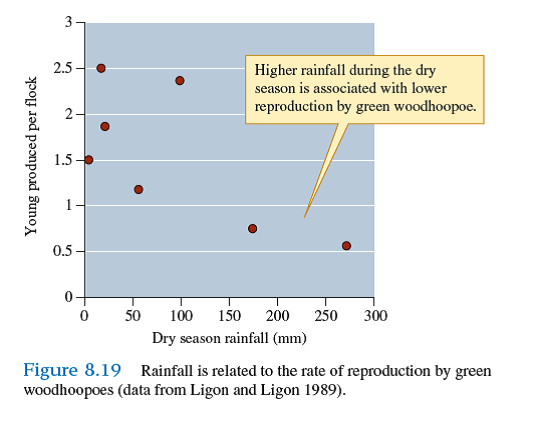
shown in figure 1 b , which represents the situation where as X increases, Y decreases, follows an approximately linear pattern that slopes downward to the right. The relationship between rainfall and green woodhoopoe reproduction we will examine in chapter 8 shows this pattern (see fig. 8.19). This type of relationship between X and Y is called a negative correlation. The opposite pattern, shown by figure 1 c , is called a positive correlation. When two variables are positively correlated, increases in X are associated with increases in Y. For instance, increased body size in populations of pumas are correlated with increased size of the prey they eat (see fig. 7.19 ).
Ecologists are often interested in the relationship between two variables, which we might call X and Y. For example, in chapter 7 we reviewed a study of how the size of pumas, variable X, is related to the size of prey that they take, variable Y (see fig. 7.19 ). The scatter plot shown in figure 7.19 is one of an infinite number of possible relationships between two variables.     Let's consider just three of the possible relationships, which are shown in figure 1. The most basic scatter plot is one in which there is no relationship between X and Y. This situation is represented by figure 1 a , where there is no correlation between values of X and values of Y. As a result, the scatter plot forms a more or less circular pattern. In contrast the pattern     shown in figure 1 b , which represents the situation where as X increases, Y decreases, follows an approximately linear pattern that slopes downward to the right. The relationship between rainfall and green woodhoopoe reproduction we will examine in chapter 8 shows this pattern (see fig. 8.19). This type of relationship between X and Y is called a negative correlation. The opposite pattern, shown by figure 1 c , is called a positive correlation. When two variables are positively correlated, increases in X are associated with increases in Y. For instance, increased body size in populations of pumas are correlated with increased size of the prey they eat (see fig. 7.19 ).      Suppose that during a field study you find a positive correlation between some variable X and another variable Y- for example, between higher concentrations of the stable isotope 13 C in the tissues of migrating redstarts and later arrival dates on their northern breeding grounds (see chapter 1, p. 5). Does this positive correlation demonstrate that an increase in X directly causes an increase in Y
Suppose that during a field study you find a positive correlation between some variable X and another variable Y- for example, between higher concentrations of the stable isotope 13 C in the tissues of migrating redstarts and later arrival dates on their northern breeding grounds (see chapter 1, p. 5). Does this positive correlation demonstrate that an increase in X directly causes an increase in Y
Explanation
Verified
like image
like image

Redstarts were analyzed for migratory ch...

close menu
Ecology 7th Edition by Manuel Molles
cross icon

