







 Chat with AI


Ecology 7th Edition by Manuel Molles
Edition 7ISBN: 978-0077837280Ecology 7th Edition by Manuel Molles
Edition 7ISBN: 978-0077837280 Exercise 8
In chapter 6 (see p. 136) we considered the number of samples necessary to obtain a reasonably precise estimate of the number of species in two simple communities. In chapter 16 (see p. 359) we reconsidered the same question in relation to very complex communities, concluding that, in some situations, the sampling efforts required for precise estimates of the number of species must be intense. In general, the sample size necessary to detect statistically significant differences, or effects, increases with the variation of the system under study. Here we consider another question, "What determines sample size " Another way of putting this question is, "What is a replicate observation or measurement "
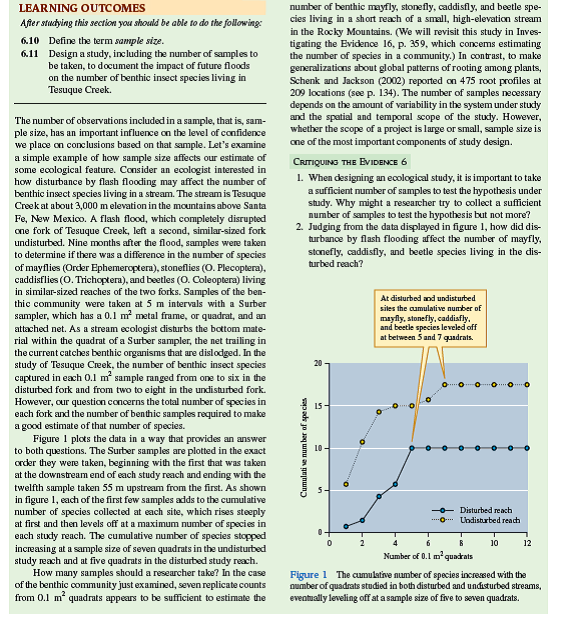
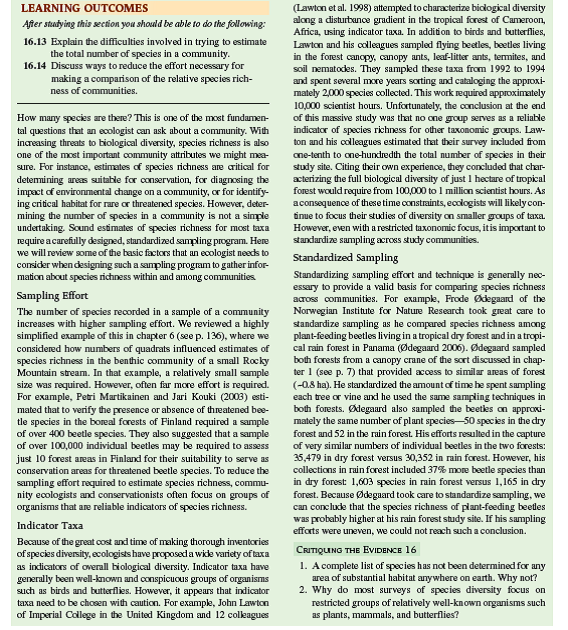
For small-scale studies, the answers to these questions are clear. For instance, in laboratory studies of the running performance of an animal species, or the photosynthetic rate of a plant species, the number of individuals measured would determine sample size. In an experimental field study of the effects of nitrogen availability on plant diversity, the number of field plots in which the investigator manipulated soil nitrogen would determine sample size. However, the answers to these questions may not be as obvious, as ecologists begin to address larger-scale ecological problems. For example, in chapter 21, we compared the standing stocks of detritus in two streams (see p. 466), one that drained a deciduous forest and one that drained a coniferous forest, and found significant differences between the two streams. In that comparison, the number of measurements of detritus standing stock in each stream, which was 7, determined the sample size.
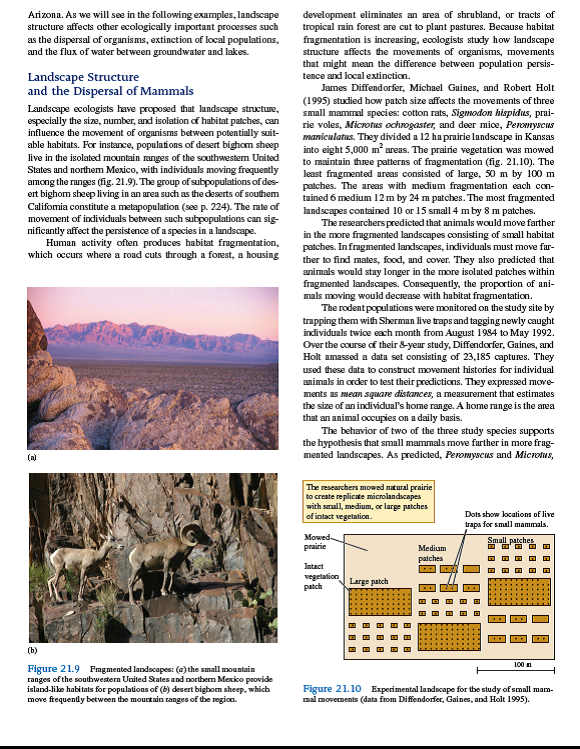
However, based on the comparison of the two study streams, can we conclude that streams draining conifer forests, in general, contain higher standing stocks of detritus compared to deciduous forest streams We cannot reach such a general conclusion. Why not The basic reason is that the study outlined in chapter 21 included only one stream draining each type of forest. In other words, relative to the general relationship between type of forest and amount of detritus in associated streams, our sample size was one. Even if we made 100 measurements of detritus in the two study streams and, as a consequence, obtained very precise estimates of the amount of detritus that each held, the sample size relative to the broader question would still be one stream of each type.
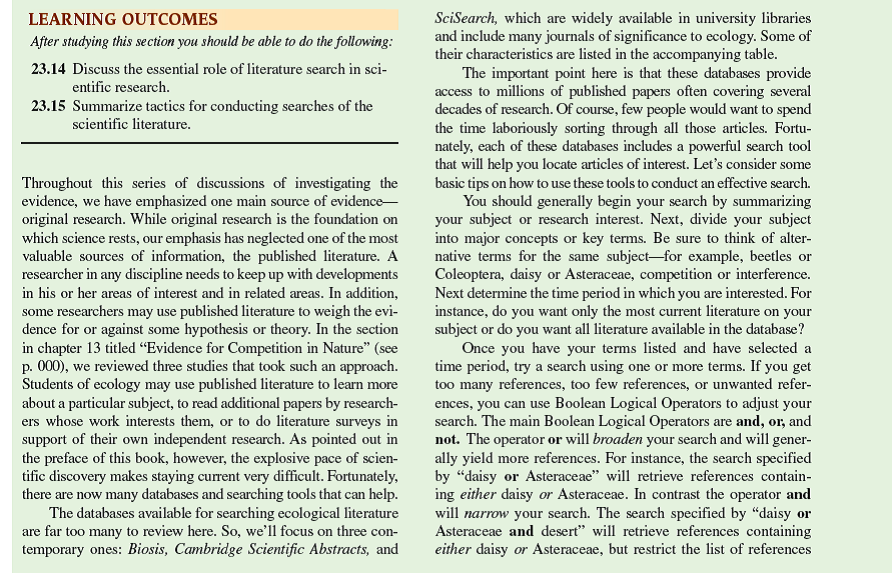
How do we increase sample size for such a study To do so we would need to locate and study several streams associated with deciduous forests and coniferous forests. Ideally, we would sample beyond a particular landscape and include streams in several landscapes throughout a region. The number of different streams of each type that we sampled within the region would determine the sample size. To make statements beyond the regional scale, we would need to sample several regions within a continent. The requirements of ecological research at very large scales soon taxes the limited resources of any single investigator or team of investigators. As a consequence, ecologists studying at large spatial scales increasingly turn to computer-based systems for data gathering and analysis, a topic discussed in the Applications section. Another way to increase our ability to make inferences is to utilize information gathered and published by other research teams. Doing so puts local and regional studies in broader contexts. In chapter 23, we discuss some approaches to searching this literature (p. 520).
How might whole-earth scale, global ecology be affected by sample size considerations
For small-scale studies, the answers to these questions are clear. For instance, in laboratory studies of the running performance of an animal species, or the photosynthetic rate of a plant species, the number of individuals measured would determine sample size. In an experimental field study of the effects of nitrogen availability on plant diversity, the number of field plots in which the investigator manipulated soil nitrogen would determine sample size. However, the answers to these questions may not be as obvious, as ecologists begin to address larger-scale ecological problems. For example, in chapter 21, we compared the standing stocks of detritus in two streams (see p. 466), one that drained a deciduous forest and one that drained a coniferous forest, and found significant differences between the two streams. In that comparison, the number of measurements of detritus standing stock in each stream, which was 7, determined the sample size.
However, based on the comparison of the two study streams, can we conclude that streams draining conifer forests, in general, contain higher standing stocks of detritus compared to deciduous forest streams We cannot reach such a general conclusion. Why not The basic reason is that the study outlined in chapter 21 included only one stream draining each type of forest. In other words, relative to the general relationship between type of forest and amount of detritus in associated streams, our sample size was one. Even if we made 100 measurements of detritus in the two study streams and, as a consequence, obtained very precise estimates of the amount of detritus that each held, the sample size relative to the broader question would still be one stream of each type.
How do we increase sample size for such a study To do so we would need to locate and study several streams associated with deciduous forests and coniferous forests. Ideally, we would sample beyond a particular landscape and include streams in several landscapes throughout a region. The number of different streams of each type that we sampled within the region would determine the sample size. To make statements beyond the regional scale, we would need to sample several regions within a continent. The requirements of ecological research at very large scales soon taxes the limited resources of any single investigator or team of investigators. As a consequence, ecologists studying at large spatial scales increasingly turn to computer-based systems for data gathering and analysis, a topic discussed in the Applications section. Another way to increase our ability to make inferences is to utilize information gathered and published by other research teams. Doing so puts local and regional studies in broader contexts. In chapter 23, we discuss some approaches to searching this literature (p. 520).
How might whole-earth scale, global ecology be affected by sample size considerations
Explanation Verified
Verified
The sample size is an important consider...

Ecology 7th Edition by Manuel Molles

Why don’t you like this exercise?
Other Minimum 8 character and maximum 255 character
Character 255






