







 Chat with AI

International Business 11th Edition by Charles Hill ,Tomas Hult
Edition 11ISBN: 978-1259578113International Business 11th Edition by Charles Hill ,Tomas Hult
Edition 11ISBN: 978-1259578113 Exercise 13
Tomato Wars
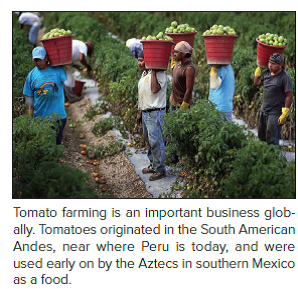
When the North American Free Trade Agreement (NAFTA) went into effect in December 1992 and tariffs on imported tomatoes were dropped U.S. tomato producers in Florida feared that they would lose business to lower-cost producers in Mexico. So they lobbied the government to set a minimum floor price for tomatoes imported from Mexico. The idea was to stop Mexican producers from cutting prices below the floor to gain share in the U.S. market. In 1996 the United States and Mexico agreed on a basic floor price of 21.69 cents a pound. At the time, both sides declared themselves to be happy with the deal. As it turns out, the deal didn't offer much protection for U.S. tomato growers. In 1992, the year before NAFTA was passed, Mexican producers exported 800 million pounds of tomatoes to the United States. By 2011 they were exporting 2.8 billion pounds of tomatoes, an increase of 3.5-fold. The value of Mexican tomato exports almost tripled over the same period to $2 billion. In contrast, tomato production in Florida has fallen by 41 percent since NAFTA went into effect. Florida growers complained that they could not compete against low
Why despite the establishment of a minimum floor price have imports from Mexico grown over the years
When the North American Free Trade Agreement (NAFTA) went into effect in December 1992 and tariffs on imported tomatoes were dropped U.S. tomato producers in Florida feared that they would lose business to lower-cost producers in Mexico. So they lobbied the government to set a minimum floor price for tomatoes imported from Mexico. The idea was to stop Mexican producers from cutting prices below the floor to gain share in the U.S. market. In 1996 the United States and Mexico agreed on a basic floor price of 21.69 cents a pound. At the time, both sides declared themselves to be happy with the deal. As it turns out, the deal didn't offer much protection for U.S. tomato growers. In 1992, the year before NAFTA was passed, Mexican producers exported 800 million pounds of tomatoes to the United States. By 2011 they were exporting 2.8 billion pounds of tomatoes, an increase of 3.5-fold. The value of Mexican tomato exports almost tripled over the same period to $2 billion. In contrast, tomato production in Florida has fallen by 41 percent since NAFTA went into effect. Florida growers complained that they could not compete against low
Why despite the establishment of a minimum floor price have imports from Mexico grown over the years
Explanation Verified
Verified
Despite the establishment of a minimum f...

International Business 11th Edition by Charles Hill ,Tomas Hult

Why don’t you like this exercise?
Other Minimum 8 character and maximum 255 character
Character 255






