







 Chat with AI


Campbell Biology 11th Edition by Lisa Urry,Michael Cain,Steven Wasserman,Peter Minorsky,Jane Reece
Edition 11ISBN: 978-0134093413Campbell Biology 11th Edition by Lisa Urry,Michael Cain,Steven Wasserman,Peter Minorsky,Jane Reece
Edition 11ISBN: 978-0134093413 Exercise 2
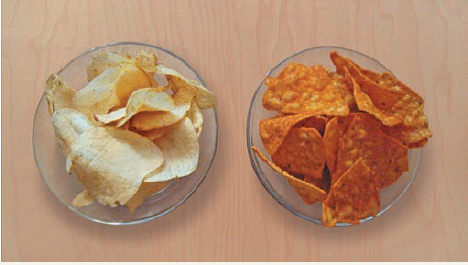
There are five basic tastes-sour, salty, sweet, bitter, and "umami." Salt is detected when the concentration of salt outside of a taste bud cell is higher than that inside of it, and ion channels allow the passive leakage of Na + into the cell. The resulting change in membrane potential (see Concept 7.4) sends the "salty" signal to the brain. Umami is a savory taste generated by glutamate (glutamic acid, found in monosodium glutamate, or MSG), which is used as a flavor enhancer in foods such as taco-flavored tortilla chips. The glutamate receptor is a GPCR, which, when bound, initiates a signaling pathway that ends with a cellular response, perceived by you as "taste." If you eat a regular potato chip and then rinse your mouth, you will no longer taste salt. But if you eat a flavored tortilla chip and then rinse, the taste persists. (Try it!) Propose a possible explanation for this difference.
Explanation Verified
Verified
For the potato chip, you "taste" the sal...

Campbell Biology 11th Edition by Lisa Urry,Michael Cain,Steven Wasserman,Peter Minorsky,Jane Reece

Why don’t you like this exercise?
Other Minimum 8 character and maximum 255 character
Character 255






