







 Chat with AI


Campbell Biology 11th Edition by Lisa Urry,Michael Cain,Steven Wasserman,Peter Minorsky,Jane Reece
Edition 11ISBN: 978-0134093413Campbell Biology 11th Edition by Lisa Urry,Michael Cain,Steven Wasserman,Peter Minorsky,Jane Reece
Edition 11ISBN: 978-0134093413 Exercise 8
Below are the amino acid sequences (using the single-letter code; see Figure 3.18) of four short segments of the FOXP2 protein from six species: chimpanzee (C), orangutan (O), gorilla (G), rhesus macaque (R), mouse (M), and human (H). These segments contain all of the amino acid differences between the FOXP2 proteins of these species. 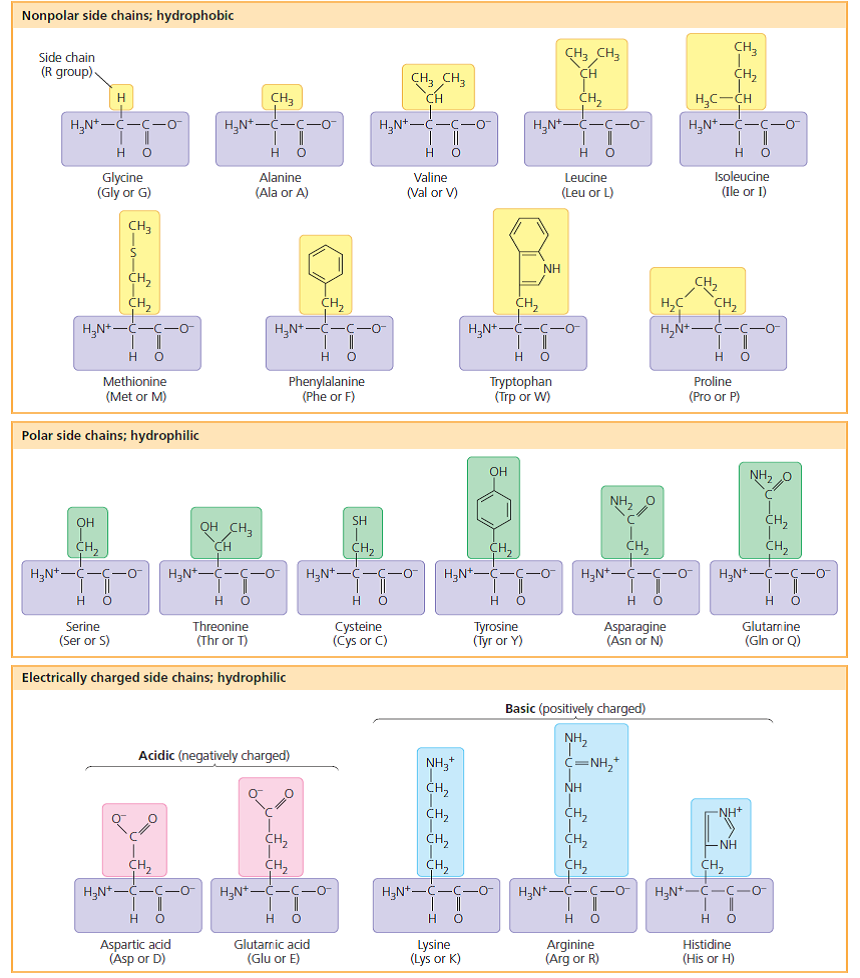
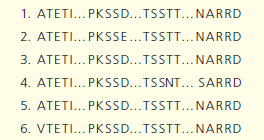
Use a highlighter to color any amino acid that varies among the species. (Color that amino acid in all sequences.)
(a) The C, G, R sequences are identical. Which lines correspond to those sequences.
(b) The H sequence differs from that of the C, G, R species at two amino acids. Underline the two differences in the H sequence.
(c) The O sequence differs from the C, G, R sequences at one amino acid (having V instead of A) and from the H sequence at three amino acids. Which line is the O sequence
(d) In the M sequence, circle the amino acid(s) that differ from the C, G, R sequences, and draw a square around those that differ from the H sequence. Describe these differences.
(e) Primates and rodents diverged between 60 and 100 million years ago, and chimpanzees and humans, about 6 million years ago. What can you conclude by comparing the amino acid differences between the mouse and the C, G, R species with those between the human and the C, G, R species What can you conclude
Use a highlighter to color any amino acid that varies among the species. (Color that amino acid in all sequences.)
(a) The C, G, R sequences are identical. Which lines correspond to those sequences.
(b) The H sequence differs from that of the C, G, R species at two amino acids. Underline the two differences in the H sequence.
(c) The O sequence differs from the C, G, R sequences at one amino acid (having V instead of A) and from the H sequence at three amino acids. Which line is the O sequence
(d) In the M sequence, circle the amino acid(s) that differ from the C, G, R sequences, and draw a square around those that differ from the H sequence. Describe these differences.
(e) Primates and rodents diverged between 60 and 100 million years ago, and chimpanzees and humans, about 6 million years ago. What can you conclude by comparing the amino acid differences between the mouse and the C, G, R species with those between the human and the C, G, R species What can you conclude
Explanation Verified
Verified
The FOXP2 protein has four short segment...

Campbell Biology 11th Edition by Lisa Urry,Michael Cain,Steven Wasserman,Peter Minorsky,Jane Reece

Why don’t you like this exercise?
Other Minimum 8 character and maximum 255 character
Character 255






