







 Chat with AI

Fundamentals of Oil & Gas Accounting 5th Edition by Rebecca Gallun, Charlotte Wright
Edition 5ISBN: 9781630181031Fundamentals of Oil & Gas Accounting 5th Edition by Rebecca Gallun, Charlotte Wright
Edition 5ISBN: 9781630181031 Exercise 12
Ameritec Oil and Gas Company completes construction of an offshore oil platform
and places it into service on January 1, 2015. Ameritec is legally required to dismantle
and remove the platform at the end of its useful life, which is estimated to be 10 years.
On January 1, 2015, Ameritec recognized a liability for an asset retirement obligation
and capitalized an amount for an asset retirement cost. It estimated the initial fair value
of the liability using an expected present value technique. The significant assumptions
used in that estimate of fair value are as follows:
a. Labor costs are based on current marketplace wages required to hire contractors
to dismantle and remove offshore oil platforms. Ameritec assigns probability
assessments to a range of cash flow estimates as follows: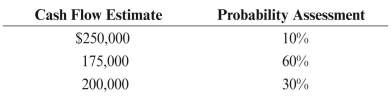 b. Ameritec estimates allocated overhead and equipment charges using the rate it
applies to labor costs for transfer pricing (60%). The entity has no reason to believe
that its overhead and equipment rate differs from that used by contractors in the
industry.
c. A contractor typically adds a markup on labor, allocated internal costs, and
equipment to provide a profit margin on the job. The entity determines the profit
that contractors in the industry generally earn to dismantle and remove offshore oil
platforms is 15%.
d. A contractor would typically demand and receive a premium (market risk
premium) for bearing the uncertainty and unforeseeable circumstances inherent in
"locking in" today's price for a project that will not occur for 10 years. The entity
estimates the amount of that premium to be 5% of the estimated inflation-adjusted
cash flows.
e. The risk-free rate of interest on January 1, 2015 is 6%. The entity adjusts that rate
by 4% to reflect the effect of its credit standing. Therefore, the credit-adjusted risk-
free rate used to compute expected present value is 10%. (Round the present value
factor to four decimal places.)
f. Ameritec assumes a rate of inflation of 4% over the 10-year period. (Round the
factor to four decimal places.)
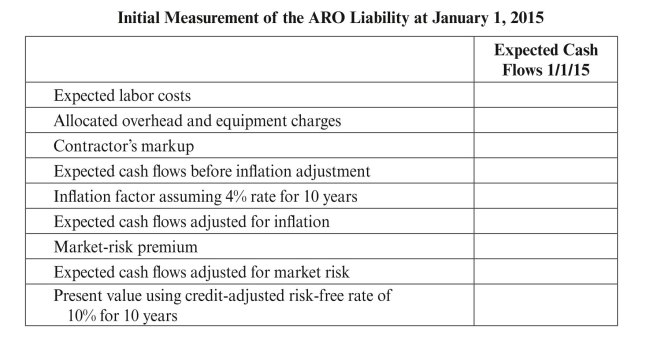
REqUIRED:
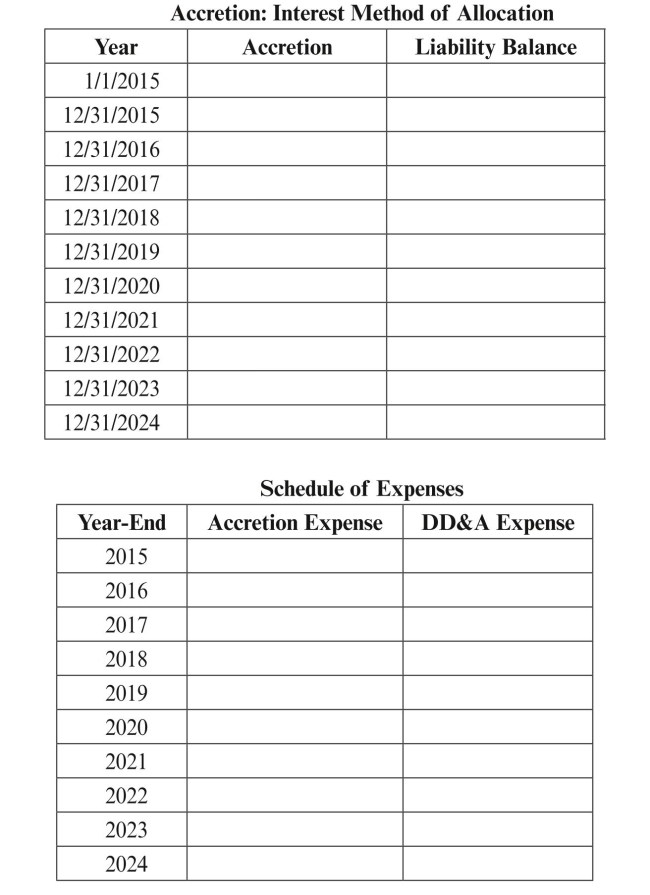
a. Complete the following tables: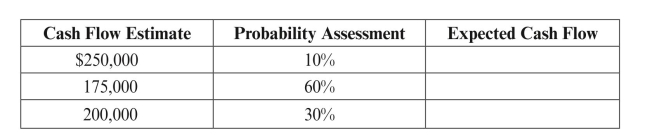
 b. Prepare the journal entry that would be made on January 1, 2015 to record the asset
retirement obligation.
c. Prepare the journal entries that would be made from December 31, 2015 to
December 31, 2024 to record the accretion expense and the amortization expense
related to the ARO.
d. On December 31, 2024, the entity settles its asset retirement obligation by using its
internal workforce at a cost of $432,000. Assume no changes during the 10-year
period in the cash flows used to estimate the obligation. Prepare the journal entry
that would be made on December 31, 2024 to record the settlement of the asset
retirement obligation.
and places it into service on January 1, 2015. Ameritec is legally required to dismantle
and remove the platform at the end of its useful life, which is estimated to be 10 years.
On January 1, 2015, Ameritec recognized a liability for an asset retirement obligation
and capitalized an amount for an asset retirement cost. It estimated the initial fair value
of the liability using an expected present value technique. The significant assumptions
used in that estimate of fair value are as follows:
a. Labor costs are based on current marketplace wages required to hire contractors
to dismantle and remove offshore oil platforms. Ameritec assigns probability
assessments to a range of cash flow estimates as follows:
b. Ameritec estimates allocated overhead and equipment charges using the rate itapplies to labor costs for transfer pricing (60%). The entity has no reason to believe
that its overhead and equipment rate differs from that used by contractors in the
industry.
c. A contractor typically adds a markup on labor, allocated internal costs, and
equipment to provide a profit margin on the job. The entity determines the profit
that contractors in the industry generally earn to dismantle and remove offshore oil
platforms is 15%.
d. A contractor would typically demand and receive a premium (market risk
premium) for bearing the uncertainty and unforeseeable circumstances inherent in
"locking in" today's price for a project that will not occur for 10 years. The entity
estimates the amount of that premium to be 5% of the estimated inflation-adjusted
cash flows.
e. The risk-free rate of interest on January 1, 2015 is 6%. The entity adjusts that rate
by 4% to reflect the effect of its credit standing. Therefore, the credit-adjusted risk-
free rate used to compute expected present value is 10%. (Round the present value
factor to four decimal places.)
f. Ameritec assumes a rate of inflation of 4% over the 10-year period. (Round the
factor to four decimal places.)
REqUIRED:
a. Complete the following tables:
b. Prepare the journal entry that would be made on January 1, 2015 to record the assetretirement obligation.
c. Prepare the journal entries that would be made from December 31, 2015 to
December 31, 2024 to record the accretion expense and the amortization expense
related to the ARO.
d. On December 31, 2024, the entity settles its asset retirement obligation by using its
internal workforce at a cost of $432,000. Assume no changes during the 10-year
period in the cash flows used to estimate the obligation. Prepare the journal entry
that would be made on December 31, 2024 to record the settlement of the asset
retirement obligation.
Explanation Verified
Verified
a.  b.Initial measurement of the ARO lia...

Fundamentals of Oil & Gas Accounting 5th Edition by Rebecca Gallun, Charlotte Wright

Why don’t you like this exercise?
Other Minimum 8 character and maximum 255 character
Character 255






