







 Chat with AI

Deck 6: Volcanoes and Other Igneous Activity
Full screen (f)

Question

Question
Question
Question
Question
Question
Question
Question
Question
Question
Question
Observe the photograph of an entire forest of trees knocked down on Mt. St. Helens. By contrast this is not the case on Kilauea. 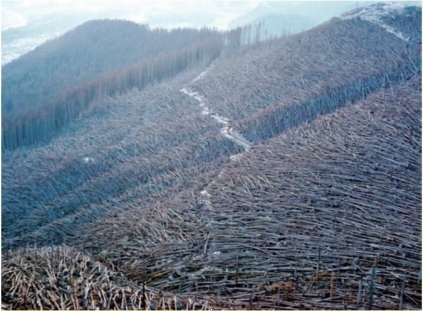 Why were so many trees knocked down during the Mt. St. Helens eruption while that was not true o Kilauea volcano?
A) The force of the blast at Kilauea vaporized all the trees, as Hawaiian volcanoes are significantly more powerful than Mt. St. Helens.
B) The force of the blast from Mt. St. Helens caused the trees to be knocked over, while the Kilauea volcano was much less violent.
C) The difference is that Mt. St. Helens produced a lot more ash, and the weight of the ash caused the trees to topple over after a few days.
D) Every volcanic eruption knocks down trees. There are no trees in Hawaii but there trees are near Mt. St. Helens, so that explains the difference.
Why were so many trees knocked down during the Mt. St. Helens eruption while that was not true o Kilauea volcano?A) The force of the blast at Kilauea vaporized all the trees, as Hawaiian volcanoes are significantly more powerful than Mt. St. Helens.
B) The force of the blast from Mt. St. Helens caused the trees to be knocked over, while the Kilauea volcano was much less violent.
C) The difference is that Mt. St. Helens produced a lot more ash, and the weight of the ash caused the trees to topple over after a few days.
D) Every volcanic eruption knocks down trees. There are no trees in Hawaii but there trees are near Mt. St. Helens, so that explains the difference.
Question
Question
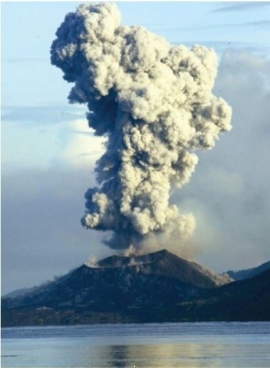 Eruption columns, such as the one pictured above, are unstable and often collapse towards the Ground because_______ .
A) they consist mostly of gases, which can cool and descend
B) they are mostly large pyroclastics and these cannot be supported by rising air
C) they are propelled by the eruption, as in the case of Pompeii
D) they are mostly liquid lava flows being lifted by updrafts
Question
Question
Question
Question
Question
Question
Question
Question
Question
Question
Question
Question
Question
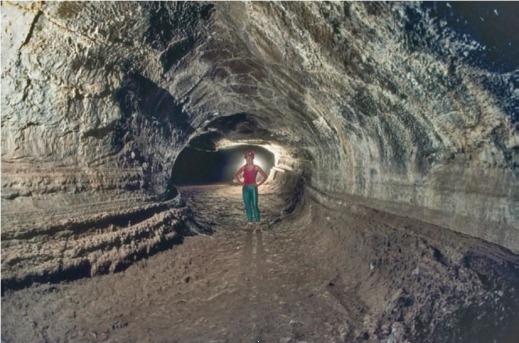 Observe the image of the individual walking through the lava tube. Why is it hollow there and not solid rock?
A) The inside of the lava tube was granite, but granite is not resistant to weathering, so has long since eroded away.
B) There are no natural openings within a lava flow. This must be a manmade feature.
C) When lava cools it contracts, leaving large gaps in the middle.
D) Lava on the inside of the tube often remains molten while the outside crystallizes. Sometimes that molten lava flows out, leaving an empty interior.
Question
Question
Question
Question
Question
Question
Question
Question
Question
Question
Question
Question
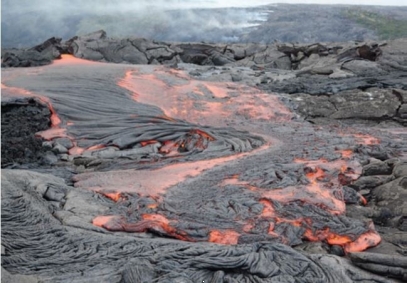 The streamlined ropy flowing lava pictured here has both orange and black parts because .
A) the black part is aa, while the orange is pahoehoe
B) the top of the lava flow cools slower than the middle of the lava flow
C) orange represents the cooler parts, which are below the surface
D) the surface cools faster than the lava below, and is black in appearance
Question
Question
Question
Question
Question
Question
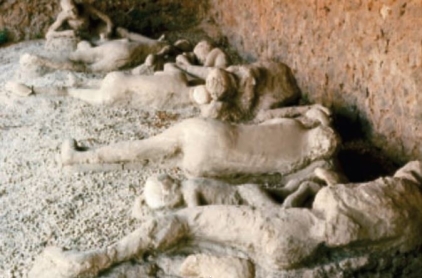 Note in the above image there are bodies buried by the pyroclastic flows from Mt. Vesuvius in 79 AD. These are not the actual bodies, as those were vaporized by the heat, but Plaster of Paris casts of individuals affected by the reaction, with casts made in the areas where the bodies were. How could this discovery help local residents to plan for the future?
A) Volcanoes never happen again in the same location, so it is an indicator that this area is now safe.
B) There may be written records buried with the bodies that could be of use.
C) The reason that the people did not survive was because they were lying down on the ground, so this can teach future residents to stand up when a pyroclastic flow comes.
D) The bodies indicate how rapidly the pyroclastic flows came, and this could be an indication of what could happen in the future.
Question
Question
Question
Question
Question
Question
Question
Question
Question
Question
Question
Question
Question
Question
Question
Question
Question
Question
Question
Question
Question
Question
Question
Question
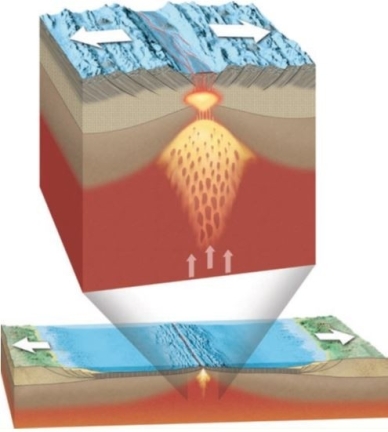 The image shows the nature of melting at the Mid- Ocean Ridge. The image indicates that melting is_______ .
A) only within the water
B) only away from the Mid- Ocean Ridge
C) localized below the Mid- Ocean Ridge
D) widespread throughout the mantle
Question
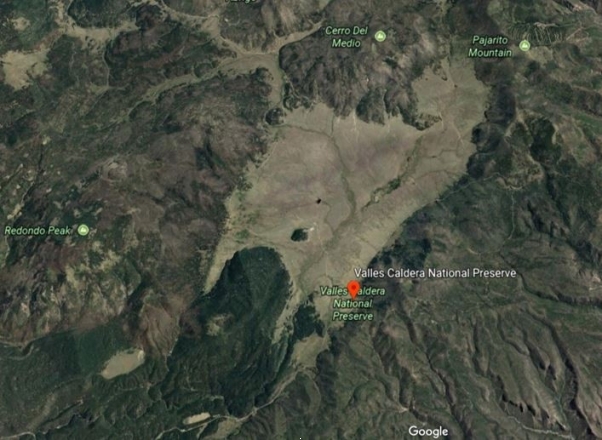 This image of the Valles Caldera in New Mexico shows a landscape in which there is a large flat meadow surrounded by rocky rims of volcanic rock. The meadow is several miles across. Why is this called a caldera?
A) It has volcanic rock.
B) It is a crater.
C) It is several miles across.
D) All of the above are correct.
Question
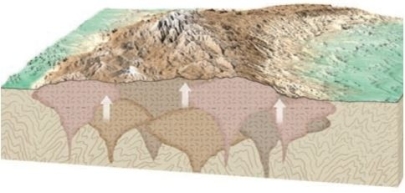 Note the image showing a series of batholiths on the landscape. How did those batholiths get exposed at the surface?
A) The batholiths were washed downhill from distant mountains and deposited here.
B) Batholiths crystallize below the surface but then flow upwards towards the surface.
C) Batholiths crystallize at the surface, so they are simply still in place.
D) Batholiths crystallize below the surface but were later exposed by way of erosion of overlying material.
Question
Question
Question
Question
Question
Question
Question
Question
Question
Question

Unlock Deck
Sign up to unlock the cards in this deck!
Unlock Deck
Unlock Deck
1/106

Play

Full screen (f)
Deck 6: Volcanoes and Other Igneous Activity
1
In 1980,_______ became the first Cascade Range volcano to erupt since Mt. Lassen in 1915- 16.
A) Mt. Rainier
B) Kilauea
C) Mt. St. Helens
D) Mt. Shasta
A) Mt. Rainier
B) Kilauea
C) Mt. St. Helens
D) Mt. Shasta
Mt. St. Helens
2
Volcano A erupts rocks with SiO2 content ranging from 49% to 52% whereas volcano B, 100km away, erupts materials with SiO2 content of 62- 68%. Which statement best characterizes these two volcanoes?
A) Volcano A is likely to be a supervolcanoes with violent eruptions, whereas volcano B is probably a shield volcano with quiescent eruptions.
B) Both volcanoes are shield type volcanoes that are characterized by quiescent eruptions.
C) Both volcanoes are violent, explosive volcanoes that spread ash continent wide.
D) Volcano A is probably a shield volcano with typically quiescent eruptions, whereas Volcano B is likely a stratovolcano characterized by violent, explosive eruptions.
A) Volcano A is likely to be a supervolcanoes with violent eruptions, whereas volcano B is probably a shield volcano with quiescent eruptions.
B) Both volcanoes are shield type volcanoes that are characterized by quiescent eruptions.
C) Both volcanoes are violent, explosive volcanoes that spread ash continent wide.
D) Volcano A is probably a shield volcano with typically quiescent eruptions, whereas Volcano B is likely a stratovolcano characterized by violent, explosive eruptions.
Volcano A is probably a shield volcano with typically quiescent eruptions, whereas Volcano B is likely a stratovolcano characterized by violent, explosive eruptions.
3
Which of the following types of magma is normally at the lowest temperature during an eruption?
A) They consist mostly of gases, which can cool and descend.
B) They are mostly liquid lava flows being lifted by updrafts.
C) They are propelled by the eruption, as in the case of Pompeii.
D) They are mostly large pyroclastics and these cannot be supported by rising air.
A) They consist mostly of gases, which can cool and descend.
B) They are mostly liquid lava flows being lifted by updrafts.
C) They are propelled by the eruption, as in the case of Pompeii.
D) They are mostly large pyroclastics and these cannot be supported by rising air.
They are propelled by the eruption, as in the case of Pompeii.
4
As magma approaches the surface, water contributes to the explosive potential of the eruption because _______ .
A) water has a lower density in its solid phase than its liquid phase which makes it explode when pressure decreases
B) water dissolved in magma flashes to steam as pressure decreases, and the volume increase leads to an explosive potential
C) water dissociates to hydrogen and oxygen at high temperatures but reacts violently at decreasing pressures to produce explosive eruptions
D) water has a large heat capacity, which allow it to keep the magma hot enough to explode
A) water has a lower density in its solid phase than its liquid phase which makes it explode when pressure decreases
B) water dissolved in magma flashes to steam as pressure decreases, and the volume increase leads to an explosive potential
C) water dissociates to hydrogen and oxygen at high temperatures but reacts violently at decreasing pressures to produce explosive eruptions
D) water has a large heat capacity, which allow it to keep the magma hot enough to explode
Unlock Deck
Unlock for access to all 106 flashcards in this deck.
Unlock Deck
k this deck
5
Which statement about the May, 1980, eruption of Mount St. Helens is false?
A) The most powerful explosive event was preceded by a massive landslide.
B) During the eruptive period, the mountain peak was substantially built up by new lava flows and pyroclastic debris.
C) Plumes of ash rose high into the atmosphere during the major eruptive events.
D) Mudflows accompanied the major eruptive events.
A) The most powerful explosive event was preceded by a massive landslide.
B) During the eruptive period, the mountain peak was substantially built up by new lava flows and pyroclastic debris.
C) Plumes of ash rose high into the atmosphere during the major eruptive events.
D) Mudflows accompanied the major eruptive events.
Unlock Deck
Unlock for access to all 106 flashcards in this deck.
Unlock Deck
k this deck
6
In the movie "Volcano" basaltic lava flows are shown running down flat streets at speeds faster than humans could run. From your knowledge of magma viscosity, is this realistic?
A) Yes, the viscosity of basalt magma is similar to water so it would flow at comparable rates.
B) No, the viscosity of basaltic magma is much higher than water, and thus, would flow much faster than water.
C) No, the viscosity of basaltic magma is much higher than water, and thus would flow much slower than water.
D) There is no way of knowing because basaltic magmas can have viscosities similar to water or higher depending on temperature and fluids, and thus there isn't enough information.
A) Yes, the viscosity of basalt magma is similar to water so it would flow at comparable rates.
B) No, the viscosity of basaltic magma is much higher than water, and thus, would flow much faster than water.
C) No, the viscosity of basaltic magma is much higher than water, and thus would flow much slower than water.
D) There is no way of knowing because basaltic magmas can have viscosities similar to water or higher depending on temperature and fluids, and thus there isn't enough information.
Unlock Deck
Unlock for access to all 106 flashcards in this deck.
Unlock Deck
k this deck
7
When Mt. St. Helens erupted in May of 1980, ash blew as far away as _______.
A) Idaho
B) New Jersey
C) Italy
D) Oklahoma
A) Idaho
B) New Jersey
C) Italy
D) Oklahoma
Unlock Deck
Unlock for access to all 106 flashcards in this deck.
Unlock Deck
k this deck
8
When you open a bottle of soda slowly it tends not to spill, whereas if you open it too rapidly, you may get a wet hand. What parallel is there with effusive versus explosive eruptions?
A) Effusive eruptions are like the slowly opened bottle. The air in such eruptions is released so it cannot build up in the magma, thus keeping the eruption non- violent.
B) Explosive eruptions are like the rapidly opened bottle. Because the gases in the magma are released all at once, the eruption is not violent.
C) Effusive eruptions are like the rapidly opened bottle. Because the gases in the magma are released all at once, the eruption is not violent.
D) Explosive eruptions are like the slowly opened bottle. The air in such eruptions is released so it cannot build up in the magma, thus keeping the eruption non- violent.
A) Effusive eruptions are like the slowly opened bottle. The air in such eruptions is released so it cannot build up in the magma, thus keeping the eruption non- violent.
B) Explosive eruptions are like the rapidly opened bottle. Because the gases in the magma are released all at once, the eruption is not violent.
C) Effusive eruptions are like the rapidly opened bottle. Because the gases in the magma are released all at once, the eruption is not violent.
D) Explosive eruptions are like the slowly opened bottle. The air in such eruptions is released so it cannot build up in the magma, thus keeping the eruption non- violent.
Unlock Deck
Unlock for access to all 106 flashcards in this deck.
Unlock Deck
k this deck
9
Which one of the following shows the correct order left to right. of decreasing magma viscosity in order of composition?
A) basalt, andesite, rhyolite
B) basalt, rhyolite, andesite
C) rhyolite, andesite, basalt
D) andesite, rhyolite, basalt
A) basalt, andesite, rhyolite
B) basalt, rhyolite, andesite
C) rhyolite, andesite, basalt
D) andesite, rhyolite, basalt
Unlock Deck
Unlock for access to all 106 flashcards in this deck.
Unlock Deck
k this deck
10
What is the connection between the amount of silica in a melt and how viscous it is?
A) Higher silica content lowers the melting temperature and since increasing the temperature of a magma decreases viscosity increasing silica content increases viscosity.
B) Silica forms strong bonds, so higher amounts of silica make for more viscous magma.
C) Higher silica content means a larger amount of water a magma can dissolve and water decreases magma viscosity, so increasing silica content decreases magma viscosity.
D) There is no correlation between silica content and magma viscosity.
A) Higher silica content lowers the melting temperature and since increasing the temperature of a magma decreases viscosity increasing silica content increases viscosity.
B) Silica forms strong bonds, so higher amounts of silica make for more viscous magma.
C) Higher silica content means a larger amount of water a magma can dissolve and water decreases magma viscosity, so increasing silica content decreases magma viscosity.
D) There is no correlation between silica content and magma viscosity.
Unlock Deck
Unlock for access to all 106 flashcards in this deck.
Unlock Deck
k this deck
11
Observe the photograph of an entire forest of trees knocked down on Mt. St. Helens. By contrast this is not the case on Kilauea. Why were so many trees knocked down during the Mt. St. Helens eruption while that was not true o Kilauea volcano?
A) The force of the blast at Kilauea vaporized all the trees, as Hawaiian volcanoes are significantly more powerful than Mt. St. Helens.
B) The force of the blast from Mt. St. Helens caused the trees to be knocked over, while the Kilauea volcano was much less violent.
C) The difference is that Mt. St. Helens produced a lot more ash, and the weight of the ash caused the trees to topple over after a few days.
D) Every volcanic eruption knocks down trees. There are no trees in Hawaii but there trees are near Mt. St. Helens, so that explains the difference.
Why were so many trees knocked down during the Mt. St. Helens eruption while that was not true o Kilauea volcano?A) The force of the blast at Kilauea vaporized all the trees, as Hawaiian volcanoes are significantly more powerful than Mt. St. Helens.
B) The force of the blast from Mt. St. Helens caused the trees to be knocked over, while the Kilauea volcano was much less violent.
C) The difference is that Mt. St. Helens produced a lot more ash, and the weight of the ash caused the trees to topple over after a few days.
D) Every volcanic eruption knocks down trees. There are no trees in Hawaii but there trees are near Mt. St. Helens, so that explains the difference.
Unlock Deck
Unlock for access to all 106 flashcards in this deck.
Unlock Deck
k this deck
12
Which of the following factors help determine whether a volcanic eruption will be violent or relatively quiescent?
A) composition of the magma
B) temperature of the magma
C) amount of dissolved gas in the magma
D) all of these
A) composition of the magma
B) temperature of the magma
C) amount of dissolved gas in the magma
D) all of these
Unlock Deck
Unlock for access to all 106 flashcards in this deck.
Unlock Deck
k this deck
13
Eruption columns, such as the one pictured above, are unstable and often collapse towards the Ground because_______ .A) they consist mostly of gases, which can cool and descend
B) they are mostly large pyroclastics and these cannot be supported by rising air
C) they are propelled by the eruption, as in the case of Pompeii
D) they are mostly liquid lava flows being lifted by updrafts
Unlock Deck
Unlock for access to all 106 flashcards in this deck.
Unlock Deck
k this deck
14
What type of volcanic material is indicative of eruption under water?
A) Aa flows
B) Pillow lavas
C) Pyroclastic flows
D) Pahoehoe flows
E) Lava aprons
A) Aa flows
B) Pillow lavas
C) Pyroclastic flows
D) Pahoehoe flows
E) Lava aprons
Unlock Deck
Unlock for access to all 106 flashcards in this deck.
Unlock Deck
k this deck
15
_______tend to increase the explosive potential of a magma body beneath a volcano.
A) Low viscosity and low dissolved gas content
B) High viscosity and high dissolved gas content
C) High viscosity and low dissolved gas content
D) Low silica content and low viscosity
A) Low viscosity and low dissolved gas content
B) High viscosity and high dissolved gas content
C) High viscosity and low dissolved gas content
D) Low silica content and low viscosity
Unlock Deck
Unlock for access to all 106 flashcards in this deck.
Unlock Deck
k this deck
16
_______is the major dissolved volatile constituent in both magmas and volcanic gases.
A) Hydrogen chloride
B) Carbon monoxide
C) Methane
D) Water
A) Hydrogen chloride
B) Carbon monoxide
C) Methane
D) Water
Unlock Deck
Unlock for access to all 106 flashcards in this deck.
Unlock Deck
k this deck
17
Which type of basaltic lava flow has a fairly smooth, unfragmented, ropy surface?
A) aa
B) pahoehoe
C) scoria
D) pegmatitic
A) aa
B) pahoehoe
C) scoria
D) pegmatitic
Unlock Deck
Unlock for access to all 106 flashcards in this deck.
Unlock Deck
k this deck
18
Volcanic bombs originate_______ .
A) as ash particles that join together in the eruptive plume and fall as cobble- sized objects
B) as blocks of volcanic rock ejected from an erupting volcanic crater
C) as enormous blocks launched in a solid form from a volcanic plug
D) as erupted magma blobs that partly congeal before falling to the ground
A) as ash particles that join together in the eruptive plume and fall as cobble- sized objects
B) as blocks of volcanic rock ejected from an erupting volcanic crater
C) as enormous blocks launched in a solid form from a volcanic plug
D) as erupted magma blobs that partly congeal before falling to the ground
Unlock Deck
Unlock for access to all 106 flashcards in this deck.
Unlock Deck
k this deck
19
Which magma type has the lowest viscosity?
A) rhyolite
B) basalt
C) dacite
D) andesite
A) rhyolite
B) basalt
C) dacite
D) andesite
Unlock Deck
Unlock for access to all 106 flashcards in this deck.
Unlock Deck
k this deck
20
Considering your knowledge of volcano types in different tectonic settings, if you had to live on a volcano, which of the following would you choose if safety was your only concern?
A) Mt Fujiyama in the Japanese island arc
B) Mt. Spurr in the Aleutian volcanic arc
C) Mt. Rainier in the Cascades just north of Mt. St. Helens
D) Mauna Loa in Hawaii, on the Big Island of Hawaii near Kilauea
A) Mt Fujiyama in the Japanese island arc
B) Mt. Spurr in the Aleutian volcanic arc
C) Mt. Rainier in the Cascades just north of Mt. St. Helens
D) Mauna Loa in Hawaii, on the Big Island of Hawaii near Kilauea
Unlock Deck
Unlock for access to all 106 flashcards in this deck.
Unlock Deck
k this deck
21
A volcanic deposit comprised of red to black lapilli- sized pyroclastic material associated with pahoehoe lava flows was probably deposited on_______ .
A) a large composite volcano
B) a satellite shield volcano on a rhyolitic caldera
C) a cinder cone
D) a shield volcano
A) a large composite volcano
B) a satellite shield volcano on a rhyolitic caldera
C) a cinder cone
D) a shield volcano
Unlock Deck
Unlock for access to all 106 flashcards in this deck.
Unlock Deck
k this deck
22
Kilauea is an example of a _______.
A) volcanic neck
B) shield volcano
C) lava dome
D) cinder cone
A) volcanic neck
B) shield volcano
C) lava dome
D) cinder cone
Unlock Deck
Unlock for access to all 106 flashcards in this deck.
Unlock Deck
k this deck
23
_______are usually the most abundant gases emitted during basaltic volcanism.
A) Neon and ammonia
B) Chlorine and sodium
C) Water and carbon dioxide
D) Oxygen and nitrogen
A) Neon and ammonia
B) Chlorine and sodium
C) Water and carbon dioxide
D) Oxygen and nitrogen
Unlock Deck
Unlock for access to all 106 flashcards in this deck.
Unlock Deck
k this deck
24
A geologist is working in an area of old volcanic rocks exposed by erosion. He finds a large rock outcrop that contains flatlying gravels in the base of the outcrop. These gravels are overlain by basalt that forms a series of layers representing flows. The uppermost basalt lava flows have a dip of about 10 degrees to the west. What does this outcrop record?
A) Gravels were initially deposited in a river valley and a cinder cone was erupted, damming the valley, before a cinder cone formed.
B) Basalt flows formed above a series of gravels, filling a river valley.
C) Basalt flows formed after gravels were deposited, covered the local terrain, and built a shield volcano with dips of about 10 degrees.
D) You can't tell anything about the history of this region from this outcrop.
A) Gravels were initially deposited in a river valley and a cinder cone was erupted, damming the valley, before a cinder cone formed.
B) Basalt flows formed above a series of gravels, filling a river valley.
C) Basalt flows formed after gravels were deposited, covered the local terrain, and built a shield volcano with dips of about 10 degrees.
D) You can't tell anything about the history of this region from this outcrop.
Unlock Deck
Unlock for access to all 106 flashcards in this deck.
Unlock Deck
k this deck
25
Where can we find the most active volcanoes in the world?
A) Italy
B) Hawaii
C) Washington State
D) Mexico
A) Italy
B) Hawaii
C) Washington State
D) Mexico
Unlock Deck
Unlock for access to all 106 flashcards in this deck.
Unlock Deck
k this deck
26
Observe the image of the individual walking through the lava tube. Why is it hollow there and not solid rock?A) The inside of the lava tube was granite, but granite is not resistant to weathering, so has long since eroded away.
B) There are no natural openings within a lava flow. This must be a manmade feature.
C) When lava cools it contracts, leaving large gaps in the middle.
D) Lava on the inside of the tube often remains molten while the outside crystallizes. Sometimes that molten lava flows out, leaving an empty interior.
Unlock Deck
Unlock for access to all 106 flashcards in this deck.
Unlock Deck
k this deck
27
Pillow lavas are_______ .
A) andesitic bombs erupted from a cinder cone that accumulate as pillow- like masses around the cone
B) basaltic lava tubes erupted on the seafloor in volcanic piles analogous to toothpaste extruded from a tube
C) rhyolite glasses that develop a banding that resembles a pillow case with internal snowflake obsidian that looks like feathers
D) basaltic magmas erupted on the seafloor as magma blobs from an explosive, submarine eruption
A) andesitic bombs erupted from a cinder cone that accumulate as pillow- like masses around the cone
B) basaltic lava tubes erupted on the seafloor in volcanic piles analogous to toothpaste extruded from a tube
C) rhyolite glasses that develop a banding that resembles a pillow case with internal snowflake obsidian that looks like feathers
D) basaltic magmas erupted on the seafloor as magma blobs from an explosive, submarine eruption
Unlock Deck
Unlock for access to all 106 flashcards in this deck.
Unlock Deck
k this deck
28
The most dangerous of the volcano types is the _______.
A) fissure eruption
B) stratovolcano
C) cinder cone
D) shield volcano
A) fissure eruption
B) stratovolcano
C) cinder cone
D) shield volcano
Unlock Deck
Unlock for access to all 106 flashcards in this deck.
Unlock Deck
k this deck
29
Which of the following is considered pyroclastic debris?
A) aa
B) water vapor
C) volcanic ash
D) pahoehoe
A) aa
B) water vapor
C) volcanic ash
D) pahoehoe
Unlock Deck
Unlock for access to all 106 flashcards in this deck.
Unlock Deck
k this deck
30
Which of the following volcano types are short lived volcanoes that last a few days to months and then shut down?
A) cinder cone
B) lava dome
C) shield volcano
D) composite volcano
A) cinder cone
B) lava dome
C) shield volcano
D) composite volcano
Unlock Deck
Unlock for access to all 106 flashcards in this deck.
Unlock Deck
k this deck
31
Section 6.5 of the chapter notes that most shield volcanoes begin as seamounts and grow from there. What is the driving force behind this action?
A) fracture zones
B) convergent boundaries
C) divergent boundaries
D) hot spot tectonics
A) fracture zones
B) convergent boundaries
C) divergent boundaries
D) hot spot tectonics
Unlock Deck
Unlock for access to all 106 flashcards in this deck.
Unlock Deck
k this deck
32
Shield volcanoes form from what type of magma?
A) low viscosity basaltic magmas
B) high viscosity aa basaltic magmas
C) high viscosity rhyolitic magmas
D) low viscosity rhyolitic magmas
A) low viscosity basaltic magmas
B) high viscosity aa basaltic magmas
C) high viscosity rhyolitic magmas
D) low viscosity rhyolitic magmas
Unlock Deck
Unlock for access to all 106 flashcards in this deck.
Unlock Deck
k this deck
33
It has been said that living near a Hawaiian volcano puts buildings in danger but not humans. Why is that the case?
A) Hawaiian volcanoes are not explosive, and the lavas flow at a slow enough speed for humans to get out of the way.
B) Hawaiian volcanoes are all dormant, so there is no danger of an eruption.
C) Hawaiian volcanoes are hot enough to damage buildings, but not hot enough to affect a human.
D) While there are some buildings built near volcanoes, no humans live anywhere close to a Hawaiian volcano.
A) Hawaiian volcanoes are not explosive, and the lavas flow at a slow enough speed for humans to get out of the way.
B) Hawaiian volcanoes are all dormant, so there is no danger of an eruption.
C) Hawaiian volcanoes are hot enough to damage buildings, but not hot enough to affect a human.
D) While there are some buildings built near volcanoes, no humans live anywhere close to a Hawaiian volcano.
Unlock Deck
Unlock for access to all 106 flashcards in this deck.
Unlock Deck
k this deck
34
The largest types of volcanoes are the_______ .
A) cinder cones
B) composite cones
C) stratocones
D) shield volcanoes
A) cinder cones
B) composite cones
C) stratocones
D) shield volcanoes
Unlock Deck
Unlock for access to all 106 flashcards in this deck.
Unlock Deck
k this deck
35
The rock pumice often floats yet the density of the rock is greater than water. Why does it float?
A) Pumice is a rock made of rhyolite glass that erupts into water, which traps water in voids and makes the material less dense than water.
B) Pumice is a pyroclastic rock comprised largely of open voids formed by gases released when the magma solidified as froth- like material.
C) Pumice is another name for dacite, a low- density rock that floats in water.
D) Pumice is a pyroclastic rock derived from rhyolite glass, and rhyolite glass has a lower density than water.
A) Pumice is a rock made of rhyolite glass that erupts into water, which traps water in voids and makes the material less dense than water.
B) Pumice is a pyroclastic rock comprised largely of open voids formed by gases released when the magma solidified as froth- like material.
C) Pumice is another name for dacite, a low- density rock that floats in water.
D) Pumice is a pyroclastic rock derived from rhyolite glass, and rhyolite glass has a lower density than water.
Unlock Deck
Unlock for access to all 106 flashcards in this deck.
Unlock Deck
k this deck
36
Cinder cones _______.
A) consist largely of pyroclastics
B) are usually less than 300 meters 1000 feet. high
C) have very steep slopes
D) All of these are correct statements about cinder cones.
A) consist largely of pyroclastics
B) are usually less than 300 meters 1000 feet. high
C) have very steep slopes
D) All of these are correct statements about cinder cones.
Unlock Deck
Unlock for access to all 106 flashcards in this deck.
Unlock Deck
k this deck
37
Which type of basaltic lava flow has its surface covered with sharp- edged, angular blocks and rubble?
A) scoria
B) pillow lava
C) pahoehoe
D) aa
A) scoria
B) pillow lava
C) pahoehoe
D) aa
Unlock Deck
Unlock for access to all 106 flashcards in this deck.
Unlock Deck
k this deck
38
The streamlined ropy flowing lava pictured here has both orange and black parts because .A) the black part is aa, while the orange is pahoehoe
B) the top of the lava flow cools slower than the middle of the lava flow
C) orange represents the cooler parts, which are below the surface
D) the surface cools faster than the lava below, and is black in appearance
Unlock Deck
Unlock for access to all 106 flashcards in this deck.
Unlock Deck
k this deck
39
Which one of the following statements concerning volcanic blocks and bombs is true?
A) Orange represents the cooler parts, which are below the surface.
B) The black part is aa, while the orange is pahoehoe.
C) The surface cools faster than the lava below, and is black in appearance.
D) The top of the lava flow cools slower than the middle of the lava flow.
A) Orange represents the cooler parts, which are below the surface.
B) The black part is aa, while the orange is pahoehoe.
C) The surface cools faster than the lava below, and is black in appearance.
D) The top of the lava flow cools slower than the middle of the lava flow.
Unlock Deck
Unlock for access to all 106 flashcards in this deck.
Unlock Deck
k this deck
40
_______magma is the most abundant type of magma erupted on Earth.
A) Granitic
B) Pegmatitic
C) Andesitic
D) Basaltic
A) Granitic
B) Pegmatitic
C) Andesitic
D) Basaltic
Unlock Deck
Unlock for access to all 106 flashcards in this deck.
Unlock Deck
k this deck
41
What volcanic events formed Crater Lake, Oregon? When did they take place?
A) Landslides and volcanic mudflows dammed the Mazama River 500 years ago.
B) The crater of a large, extinct cinder cone filled with water 5 million years ago.
C) Caldera collapse followed major ash and pyroclastic- flow eruptions 6000 years ago.
D) A powerful explosion blew away the top of a stratovolcano 10 million years ago.
A) Landslides and volcanic mudflows dammed the Mazama River 500 years ago.
B) The crater of a large, extinct cinder cone filled with water 5 million years ago.
C) Caldera collapse followed major ash and pyroclastic- flow eruptions 6000 years ago.
D) A powerful explosion blew away the top of a stratovolcano 10 million years ago.
Unlock Deck
Unlock for access to all 106 flashcards in this deck.
Unlock Deck
k this deck
42
Which of the following best describes Shiprock, a famous volcanic feature in New Mexico?
A) an extinct, highly symmetrical, composite volcanic cone
B) an extinct, massive, rhyolitic shield volcano
C) a very recently active, basaltic cinder cone
D) the eroded remains of a volcanic pipe and radiating dikes
A) an extinct, highly symmetrical, composite volcanic cone
B) an extinct, massive, rhyolitic shield volcano
C) a very recently active, basaltic cinder cone
D) the eroded remains of a volcanic pipe and radiating dikes
Unlock Deck
Unlock for access to all 106 flashcards in this deck.
Unlock Deck
k this deck
43
The slopes of most cinder cones are usually about 30 degrees because _______ .
A) cinder cones are mostly basalt and basalt is too weak to maintain a slope greater than 30 degrees
B) the loose materials ejected from the cone form slopes at that angle of repose
C) they are composites of loose material and lava and the viscosity of the lava requires the slopes to form at about 30 degrees
D) The statement is false; most cinder cones have slopes less than 10 degrees because of the low viscosity of basalt lava flows.
A) cinder cones are mostly basalt and basalt is too weak to maintain a slope greater than 30 degrees
B) the loose materials ejected from the cone form slopes at that angle of repose
C) they are composites of loose material and lava and the viscosity of the lava requires the slopes to form at about 30 degrees
D) The statement is false; most cinder cones have slopes less than 10 degrees because of the low viscosity of basalt lava flows.
Unlock Deck
Unlock for access to all 106 flashcards in this deck.
Unlock Deck
k this deck
44
Note in the above image there are bodies buried by the pyroclastic flows from Mt. Vesuvius in 79 AD. These are not the actual bodies, as those were vaporized by the heat, but Plaster of Paris casts of individuals affected by the reaction, with casts made in the areas where the bodies were. How could this discovery help local residents to plan for the future?A) Volcanoes never happen again in the same location, so it is an indicator that this area is now safe.
B) There may be written records buried with the bodies that could be of use.
C) The reason that the people did not survive was because they were lying down on the ground, so this can teach future residents to stand up when a pyroclastic flow comes.
D) The bodies indicate how rapidly the pyroclastic flows came, and this could be an indication of what could happen in the future.
Unlock Deck
Unlock for access to all 106 flashcards in this deck.
Unlock Deck
k this deck
45
The steep, upper slopes of composite volcanoes are generally produced by _______ .
A) satellite or parasitic cones that push up the top of the volcano to steep slopes
B) large landslides
C) high- viscosity, low- volume silicic magmas that are erupted from the summit
D) tilting of the summit by intrusion of high- viscosity magma directly below the summit
A) satellite or parasitic cones that push up the top of the volcano to steep slopes
B) large landslides
C) high- viscosity, low- volume silicic magmas that are erupted from the summit
D) tilting of the summit by intrusion of high- viscosity magma directly below the summit
Unlock Deck
Unlock for access to all 106 flashcards in this deck.
Unlock Deck
k this deck
46
Mt. St. Helens in the U. S. and Mt. Fujiyama in Japan are examples of _______.
A) calderas
B) shield volcanoes
C) cinder cones
D) composite volcanoes
A) calderas
B) shield volcanoes
C) cinder cones
D) composite volcanoes
Unlock Deck
Unlock for access to all 106 flashcards in this deck.
Unlock Deck
k this deck
47
Pyroclastic flows move_______ .
A) as gravity flows similar to snow avalanches
B) very rapidly, too fast to outrun on foot
C) as a dense cloud that contains hot magma particles suspended in hot gases and moves rapidly downhill
D) all of the above
E) none of the above
A) as gravity flows similar to snow avalanches
B) very rapidly, too fast to outrun on foot
C) as a dense cloud that contains hot magma particles suspended in hot gases and moves rapidly downhill
D) all of the above
E) none of the above
Unlock Deck
Unlock for access to all 106 flashcards in this deck.
Unlock Deck
k this deck
48
Mount Pelee on the Island of Martinique erupted in the early 20th century. Why is this eruption famous?
A) It produced a major lateral blast that leveled a city, killing many people.
B) It was the first caldera forming eruption observed by modern scientists.
C) The volcano produced a pyroclastic flow that swept down the mountain, killing thousands of people.
D) It was a small cinder cone on an island that erupted in a sugar cane field.
A) It produced a major lateral blast that leveled a city, killing many people.
B) It was the first caldera forming eruption observed by modern scientists.
C) The volcano produced a pyroclastic flow that swept down the mountain, killing thousands of people.
D) It was a small cinder cone on an island that erupted in a sugar cane field.
Unlock Deck
Unlock for access to all 106 flashcards in this deck.
Unlock Deck
k this deck
49
Mount Pelée on the island of Martinique killed thousands of people in_______ .
A) an ash fall that smothered the people living there
B) a caldera collapse
C) a pyroclastic flow, also called a nuee ardante Nuée Ardante
D) a cinder cone eruption
A) an ash fall that smothered the people living there
B) a caldera collapse
C) a pyroclastic flow, also called a nuee ardante Nuée Ardante
D) a cinder cone eruption
Unlock Deck
Unlock for access to all 106 flashcards in this deck.
Unlock Deck
k this deck
50
Mount Pelée on Martinique is an example of a _______ .
A) cinder cone
B) composite volcano
C) shield volcano
D) lava dome
A) cinder cone
B) composite volcano
C) shield volcano
D) lava dome
Unlock Deck
Unlock for access to all 106 flashcards in this deck.
Unlock Deck
k this deck
51
Mt. Rainier in Washington State is often thought to be the most hazardous volcano in the lower 48 states of the United States because_______ .
A) the bodies indicate how rapidly the pyroclastic flows came, and this could be an indication of what could happen in the future
B) the reason that the people did not survive was because they were lying down on the ground, so this can teach future residents to stand up when a pyroclastic flow comes
C) there may be written records buried with the bodies that could be of use
D) volcanoes never happen again in the same location, so it is an indicator that this area is now safe
A) the bodies indicate how rapidly the pyroclastic flows came, and this could be an indication of what could happen in the future
B) the reason that the people did not survive was because they were lying down on the ground, so this can teach future residents to stand up when a pyroclastic flow comes
C) there may be written records buried with the bodies that could be of use
D) volcanoes never happen again in the same location, so it is an indicator that this area is now safe
Unlock Deck
Unlock for access to all 106 flashcards in this deck.
Unlock Deck
k this deck
52
The greatest danger from pyroclastic flows is _______ .
A) being smothered by hot gases and ash
B) being incinerated by the hot gas and entrained magma
C) being buried in ash
D) not significant because they move so slowly they can be avoided
A) being smothered by hot gases and ash
B) being incinerated by the hot gas and entrained magma
C) being buried in ash
D) not significant because they move so slowly they can be avoided
Unlock Deck
Unlock for access to all 106 flashcards in this deck.
Unlock Deck
k this deck
53
Paricutin volcano in Mexico is an example of a _______ .
A) lava dome
B) shield volcano
C) composite volcano
D) cinder cone
A) lava dome
B) shield volcano
C) composite volcano
D) cinder cone
Unlock Deck
Unlock for access to all 106 flashcards in this deck.
Unlock Deck
k this deck
54
The average composition of rocks comprising a large composite cone or stratovolcano is generally_______ .
A) andesitic
B) ultramafic
C) rhyolitic
D) basaltic
A) andesitic
B) ultramafic
C) rhyolitic
D) basaltic
Unlock Deck
Unlock for access to all 106 flashcards in this deck.
Unlock Deck
k this deck
55
The composition of a composite cone or stratovolcano makes its viscosity_______ .
A) high, resulting in low volatility
B) low, resulting in low volatility
C) intermediate, resulting in high volatility
D) high, resulting in high volatility
A) high, resulting in low volatility
B) low, resulting in low volatility
C) intermediate, resulting in high volatility
D) high, resulting in high volatility
Unlock Deck
Unlock for access to all 106 flashcards in this deck.
Unlock Deck
k this deck
56
Which one of the following statements concerning cinder cones is false?
A) They are built mostly or entirely during one eruptive cycle.
B) The cinders most commonly are basaltic.
C) The cinders and other pyroclastic particles are normally consolidated into welded tuff.
D) They are small volcanoes with fairly steep sides.
A) They are built mostly or entirely during one eruptive cycle.
B) The cinders most commonly are basaltic.
C) The cinders and other pyroclastic particles are normally consolidated into welded tuff.
D) They are small volcanoes with fairly steep sides.
Unlock Deck
Unlock for access to all 106 flashcards in this deck.
Unlock Deck
k this deck
57
What type of volcano would be most likely to generate large landslides?
A) cinder cone
B) caldera
C) composite volcano
D) shield volcano
A) cinder cone
B) caldera
C) composite volcano
D) shield volcano
Unlock Deck
Unlock for access to all 106 flashcards in this deck.
Unlock Deck
k this deck
58
Which of the following is not a significant volcanic hazard?
A) a tsunami generated by a massive submarine volcanic eruption
B) being caught in a river valley and being overcome by a volcanic mudflow/lahar
C) injury or death by inhalation of air heavily laden with volcanic ash
D) being overrun by a basaltic lava flow
A) a tsunami generated by a massive submarine volcanic eruption
B) being caught in a river valley and being overcome by a volcanic mudflow/lahar
C) injury or death by inhalation of air heavily laden with volcanic ash
D) being overrun by a basaltic lava flow
Unlock Deck
Unlock for access to all 106 flashcards in this deck.
Unlock Deck
k this deck
59
The famous destruction of the Roman city of Pompeii was produced by_______ .
A) a volcanic mudflow from Mt. Vesuvius that buried the people and the city
B) a composite volcano erupted lava that buried the city, fossilizing people who were overridden by the fast moving flows
C) a large cinder cone burying the city in tephra
D) a pyroclastic eruption from a composite volcano that buried the city in ash and smothered the people living there
A) a volcanic mudflow from Mt. Vesuvius that buried the people and the city
B) a composite volcano erupted lava that buried the city, fossilizing people who were overridden by the fast moving flows
C) a large cinder cone burying the city in tephra
D) a pyroclastic eruption from a composite volcano that buried the city in ash and smothered the people living there
Unlock Deck
Unlock for access to all 106 flashcards in this deck.
Unlock Deck
k this deck
60
The Columbia Plateau in the northwestern United States is an excellent example of_______ .
A) flood basalts
B) pyroclastic flow deposits
C) an eroded shield volcano
D) silica- rich lava flows
A) flood basalts
B) pyroclastic flow deposits
C) an eroded shield volcano
D) silica- rich lava flows
Unlock Deck
Unlock for access to all 106 flashcards in this deck.
Unlock Deck
k this deck
61
The viscosities of magmas _______with increasing percentages of silica.
A) increase
B) decrease
C) are unrelated
A) increase
B) decrease
C) are unrelated
Unlock Deck
Unlock for access to all 106 flashcards in this deck.
Unlock Deck
k this deck
62
Which of the following best describes melting of the mantle at subduction zones that leads to island arc volcanoes?
A) The subducted plate subsides into the mantle and allows magma from the lower mantle magma ocean to rise toward the surface.
B) Water released from the subducting plate decreases the melting temperature in the mantle above the downgoing plate to generate magmas from the overlying mantle wedge.
C) The subducting plate is cooled as it is carried to depth and the subducted oceanic crust melts.
D) Heat is carried downward with the subducting plate and melts the mantle above the downgoing plate.
A) The subducted plate subsides into the mantle and allows magma from the lower mantle magma ocean to rise toward the surface.
B) Water released from the subducting plate decreases the melting temperature in the mantle above the downgoing plate to generate magmas from the overlying mantle wedge.
C) The subducting plate is cooled as it is carried to depth and the subducted oceanic crust melts.
D) Heat is carried downward with the subducting plate and melts the mantle above the downgoing plate.
Unlock Deck
Unlock for access to all 106 flashcards in this deck.
Unlock Deck
k this deck
63
Which of the following is emplaced over millions of years to form a composite intrusive complex?
A) batholith
B) laccolith
C) sill
D) dike
A) batholith
B) laccolith
C) sill
D) dike
Unlock Deck
Unlock for access to all 106 flashcards in this deck.
Unlock Deck
k this deck
64
In what plate tectonic setting are magmas generated predominantly by fluids from ocean waters in trenches "fluxing" the melting process by decreasing melting temperature?
A) transform faults
B) hot spots
C) convergent plate margins
D) spreading ridges
A) transform faults
B) hot spots
C) convergent plate margins
D) spreading ridges
Unlock Deck
Unlock for access to all 106 flashcards in this deck.
Unlock Deck
k this deck
65
Most granitic batholiths are generated_______ .
A) along hot spot chains beneath continents, like a welder cutting through the continent to make a linear belt of intrusive granites
B) along transform faults, which accounts for their linear geographic distribution
C) where spreading ridges occur beneath continents
D) as intrusions beneath composite volcanoes along convergent plate margins
A) along hot spot chains beneath continents, like a welder cutting through the continent to make a linear belt of intrusive granites
B) along transform faults, which accounts for their linear geographic distribution
C) where spreading ridges occur beneath continents
D) as intrusions beneath composite volcanoes along convergent plate margins
Unlock Deck
Unlock for access to all 106 flashcards in this deck.
Unlock Deck
k this deck
66
A _______is the largest discordant body of intrusive, igneous rock.
A) laccolith
B) batholith
C) pluton
D) lopolith
A) laccolith
B) batholith
C) pluton
D) lopolith
Unlock Deck
Unlock for access to all 106 flashcards in this deck.
Unlock Deck
k this deck
67
Which of the following is not an accurate statement about the melting process in the earth's interior?
A) Melting of rocks is incomplete with partial melts extracted as magma and solid residues left behind.
B) Upwelling flow in the earth's interior brings higher temperature rocks toward the surface and contributes to decompression melting.
C) The earth's mantle is entirely molten.
D) Addition of water commonly contributes to production of magma.
A) Melting of rocks is incomplete with partial melts extracted as magma and solid residues left behind.
B) Upwelling flow in the earth's interior brings higher temperature rocks toward the surface and contributes to decompression melting.
C) The earth's mantle is entirely molten.
D) Addition of water commonly contributes to production of magma.
Unlock Deck
Unlock for access to all 106 flashcards in this deck.
Unlock Deck
k this deck
68
The image shows the nature of melting at the Mid- Ocean Ridge. The image indicates that melting is_______ .A) only within the water
B) only away from the Mid- Ocean Ridge
C) localized below the Mid- Ocean Ridge
D) widespread throughout the mantle
Unlock Deck
Unlock for access to all 106 flashcards in this deck.
Unlock Deck
k this deck
69
This image of the Valles Caldera in New Mexico shows a landscape in which there is a large flat meadow surrounded by rocky rims of volcanic rock. The meadow is several miles across. Why is this called a caldera?A) It has volcanic rock.
B) It is a crater.
C) It is several miles across.
D) All of the above are correct.
Unlock Deck
Unlock for access to all 106 flashcards in this deck.
Unlock Deck
k this deck
70
Note the image showing a series of batholiths on the landscape. How did those batholiths get exposed at the surface?A) The batholiths were washed downhill from distant mountains and deposited here.
B) Batholiths crystallize below the surface but then flow upwards towards the surface.
C) Batholiths crystallize at the surface, so they are simply still in place.
D) Batholiths crystallize below the surface but were later exposed by way of erosion of overlying material.
Unlock Deck
Unlock for access to all 106 flashcards in this deck.
Unlock Deck
k this deck
71
A _______ is a near surface, intrusive igneous rock body that results from local inflation of a horizontal sill.
A) batholith
B) laccolith
C) dike
D) volcanic neck
A) batholith
B) laccolith
C) dike
D) volcanic neck
Unlock Deck
Unlock for access to all 106 flashcards in this deck.
Unlock Deck
k this deck
72
Which type of plate margin is characterized by volcanoes that include basalt, andesite, dacite and rhyolite?
A) transform faults
B) convergent plate margins
C) hot spots
D) spreading ridges
A) transform faults
B) convergent plate margins
C) hot spots
D) spreading ridges
Unlock Deck
Unlock for access to all 106 flashcards in this deck.
Unlock Deck
k this deck
73
A _ _ is an intrusive, igneous rock body that is tabular and concordant.
A) laccolith
B) dike
C) sill
D) pluton
A) laccolith
B) dike
C) sill
D) pluton
Unlock Deck
Unlock for access to all 106 flashcards in this deck.
Unlock Deck
k this deck
74
The largest percentage of total magma production on earth occurs at what plate tectonic setting?
A) transform plate margins
B) spreading ridges
C) convergent plate margins
D) hot spots like Hawaii
A) transform plate margins
B) spreading ridges
C) convergent plate margins
D) hot spots like Hawaii
Unlock Deck
Unlock for access to all 106 flashcards in this deck.
Unlock Deck
k this deck
75
Dissolved gases may comprise up to_______ of a magma.
A) about half
B) all of
C) most of
D) a few percent of
A) about half
B) all of
C) most of
D) a few percent of
Unlock Deck
Unlock for access to all 106 flashcards in this deck.
Unlock Deck
k this deck
76
Which of the following is a tabular intrusive body with subparallel intrusive contacts?
A) dike
B) columnar joints
C) laccolith
D) stock
A) dike
B) columnar joints
C) laccolith
D) stock
Unlock Deck
Unlock for access to all 106 flashcards in this deck.
Unlock Deck
k this deck
77
Most of the active volcanoes on land are located in a belt known as the _______.
A) Mid- Pacific Ridge
B) Red Sea rift
C) Ring of Fire
D) Gulf Coast zone
A) Mid- Pacific Ridge
B) Red Sea rift
C) Ring of Fire
D) Gulf Coast zone
Unlock Deck
Unlock for access to all 106 flashcards in this deck.
Unlock Deck
k this deck
78
Which of the following statements best describes the big Hawaiian volcanoes?
A) They lie directly above a transform plate boundary that cuts deeply into the mantle.
B) They lie along the crest of the East Pacific Rise, a mid- ocean ridge or spreading center.
C) They lie directly above an active subduction zone where the Pacific plate is sinking into the mantle.
D) They are situated in the interior of a large, Pacific plate above a hot spot deep in the mantle.
A) They lie directly above a transform plate boundary that cuts deeply into the mantle.
B) They lie along the crest of the East Pacific Rise, a mid- ocean ridge or spreading center.
C) They lie directly above an active subduction zone where the Pacific plate is sinking into the mantle.
D) They are situated in the interior of a large, Pacific plate above a hot spot deep in the mantle.
Unlock Deck
Unlock for access to all 106 flashcards in this deck.
Unlock Deck
k this deck
79
Which of the following best describes the bedrock in the Sierra Nevada Mountains in California?
A) Batholiths crystallize at the surface, so they are simply still in place.
B) Batholiths crystallize below the surface but were later exposed by way of erosion of overlying material.
C) The batholiths were washed downhill from distant mountains and deposited here.
D) Batholiths crystallize below the surface but then flow upwards towards the surface.
A) Batholiths crystallize at the surface, so they are simply still in place.
B) Batholiths crystallize below the surface but were later exposed by way of erosion of overlying material.
C) The batholiths were washed downhill from distant mountains and deposited here.
D) Batholiths crystallize below the surface but then flow upwards towards the surface.
Unlock Deck
Unlock for access to all 106 flashcards in this deck.
Unlock Deck
k this deck
80
Volcanic activity in Yellowstone National Park is related to_______ .
A) intraplate, hot spot volcanism
B) a divergent plate boundary
C) a transform plate boundary
D) plate subduction
A) intraplate, hot spot volcanism
B) a divergent plate boundary
C) a transform plate boundary
D) plate subduction
Unlock Deck
Unlock for access to all 106 flashcards in this deck.
Unlock Deck
k this deck
Unlock Deck
Unlock for access to all 106 flashcards in this deck.






