







 Chat with AI

Deck 11: The Cardiovascular System: Blood
Full screen (f)

Question

Question
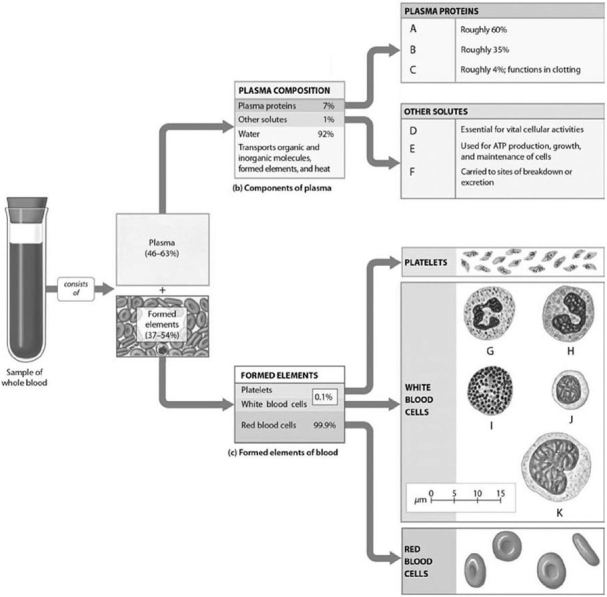 Figure 11-1 Components of Plasma and Types of WBCs
Use Figure 11-1 to identify the labeled part.
Label I represents
A) basophils.
B) neutrophils.
C) monocytes.
D) eosinophils.
E) lymphocytes.
Question
Figure 11-1 Components of Plasma and Types of WBCsUse Figure 11-1 to identify the labeled part.
Label J represents
A) basophils.
B) neutrophils.
C) monocytes.
D) eosinophils.
E) lymphocytes.
Question
Figure 11-1 Components of Plasma and Types of WBCsUse Figure 11-1 to identify the labeled part.
Label G represents
A) basophils.
B) neutrophils.
C) monocytes.
D) eosinophils.
E) lymphocytes.
Question
Question
Question
Question
Figure 11-1 Components of Plasma and Types of WBCsUse Figure 11-1 to identify the labeled part.
Label H represents
A) basophils.
B) neutrophils.
C) monocytes.
D) eosinophils.
E) lymphocytes.
Question
Question
Figure 11-1 Components of Plasma and Types of WBCsUse Figure 11-1 to identify the labeled part.
Label E represents
A) organic wastes.
B) globulins.
C) electrolytes.
D) leukocytes.
E) organic nutrients.
Question
Figure 11-1 Components of Plasma and Types of WBCsUse Figure 11-1 to identify the labeled part.
Label A represents
A) electrolytes.
B) albumins.
C) globulins.
D) fibrinogen.
E) erythrocytes.
Question
Figure 11-1 Components of Plasma and Types of WBCsUse Figure 11-1 to identify the labeled part.
Label B represents
A) electrolytes.
B) albumins.
C) globulins.
D) fibrinogen.
E) erythrocytes.
Question
Question
Question
Question
Figure 11-1 Components of Plasma and Types of WBCsUse Figure 11-1 to identify the labeled part.
Label C represents
A) electrolytes.
B) albumins.
C) globulins.
D) fibrinogen.
E) erythrocytes.
Question
Figure 11-1 Components of Plasma and Types of WBCsUse Figure 11-1 to identify the labeled part.
Label D represents
A) organic wastes.
B) globulins.
C) electrolytes.
D) leukocytes.
E) organic nutrients.
Question
Figure 11-1 Components of Plasma and Types of WBCsUse Figure 11-1 to identify the labeled part.
Label F represents
A) organic wastes.
B) globulins.
C) electrolytes.
D) leukocytes.
E) organic nutrients.
Question
Figure 11-1 Components of Plasma and Types of WBCsUse Figure 11-1 to identify the labeled part.
Label K represents
A) basophils.
B) neutrophils.
C) monocytes.
D) eosinophils.
E) lymphocytes.
Question
Question
Question
Question
Question
Question
Question
Question
Question
Question
Question
Question
Question
Question
Question
Question
Question
Question
Question
Question
Question
Question
Question
Question
Question
Question
Question
Question
Question
Question
Question
Question
Question
Question
Question
Question
Question
Question
Question
Question
Question
Question
Question
Question
Question
Question
Question
Question
Question
Question
Question
Question
Question
Question
Question
Question
Question
Question
Question
Question
Question

Unlock Deck
Sign up to unlock the cards in this deck!
Unlock Deck
Unlock Deck
1/84

Play

Full screen (f)
Deck 11: The Cardiovascular System: Blood
1
The process of blood clotting is an example of which function of blood?
A) stabilizing body temperature
B) transporting dissolved gases, nutrients, hormones, and metabolic wastes
C) defending against toxins and pathogens
D) regulating the pH and ion composition of interstitial fluids
E) restricting fluid losses at injury sites
A) stabilizing body temperature
B) transporting dissolved gases, nutrients, hormones, and metabolic wastes
C) defending against toxins and pathogens
D) regulating the pH and ion composition of interstitial fluids
E) restricting fluid losses at injury sites
E
2
Figure 11-1 Components of Plasma and Types of WBCsUse Figure 11-1 to identify the labeled part.
Label I represents
A) basophils.
B) neutrophils.
C) monocytes.
D) eosinophils.
E) lymphocytes.
A
3
Figure 11-1 Components of Plasma and Types of WBCsUse Figure 11-1 to identify the labeled part.
Label J represents
A) basophils.
B) neutrophils.
C) monocytes.
D) eosinophils.
E) lymphocytes.
E
4
Figure 11-1 Components of Plasma and Types of WBCsUse Figure 11-1 to identify the labeled part.
Label G represents
A) basophils.
B) neutrophils.
C) monocytes.
D) eosinophils.
E) lymphocytes.
Unlock Deck
Unlock for access to all 84 flashcards in this deck.
Unlock Deck
k this deck
5
Which organ synthesizes more than 90 percent of plasma proteins?
A) kidney
B) spleen
C) liver
D) bone marrow
E) thymus
A) kidney
B) spleen
C) liver
D) bone marrow
E) thymus
Unlock Deck
Unlock for access to all 84 flashcards in this deck.
Unlock Deck
k this deck
6
The term ________ refers to the combination of plasma and the formed elements together.
A) whole blood
B) hematocrit
C) thrombocyte
D) hemopoiesis
E) packed cell volume
A) whole blood
B) hematocrit
C) thrombocyte
D) hemopoiesis
E) packed cell volume
Unlock Deck
Unlock for access to all 84 flashcards in this deck.
Unlock Deck
k this deck
7
Fresh whole blood is usually collected through a procedure called
A) acupuncture.
B) transfusion.
C) venipuncture.
D) arterial puncture.
E) hematocrit.
A) acupuncture.
B) transfusion.
C) venipuncture.
D) arterial puncture.
E) hematocrit.
Unlock Deck
Unlock for access to all 84 flashcards in this deck.
Unlock Deck
k this deck
8
Figure 11-1 Components of Plasma and Types of WBCsUse Figure 11-1 to identify the labeled part.
Label H represents
A) basophils.
B) neutrophils.
C) monocytes.
D) eosinophils.
E) lymphocytes.
Unlock Deck
Unlock for access to all 84 flashcards in this deck.
Unlock Deck
k this deck
9
Blood is approximately ________ percent plasma by volume.
A) 46-63
B) 37-54
C) 12-33
D) 25-39
E) 99.9
A) 46-63
B) 37-54
C) 12-33
D) 25-39
E) 99.9
Unlock Deck
Unlock for access to all 84 flashcards in this deck.
Unlock Deck
k this deck
10
Figure 11-1 Components of Plasma and Types of WBCsUse Figure 11-1 to identify the labeled part.
Label E represents
A) organic wastes.
B) globulins.
C) electrolytes.
D) leukocytes.
E) organic nutrients.
Unlock Deck
Unlock for access to all 84 flashcards in this deck.
Unlock Deck
k this deck
11
Figure 11-1 Components of Plasma and Types of WBCsUse Figure 11-1 to identify the labeled part.
Label A represents
A) electrolytes.
B) albumins.
C) globulins.
D) fibrinogen.
E) erythrocytes.
Unlock Deck
Unlock for access to all 84 flashcards in this deck.
Unlock Deck
k this deck
12
Figure 11-1 Components of Plasma and Types of WBCsUse Figure 11-1 to identify the labeled part.
Label B represents
A) electrolytes.
B) albumins.
C) globulins.
D) fibrinogen.
E) erythrocytes.
Unlock Deck
Unlock for access to all 84 flashcards in this deck.
Unlock Deck
k this deck
13
What is the chief difference between plasma and serum?
A) amount of water
B) quantity of electrolytes
C) quantity of organic wastes
D) presence/absence of clotting proteins
E) concentration of glucose
A) amount of water
B) quantity of electrolytes
C) quantity of organic wastes
D) presence/absence of clotting proteins
E) concentration of glucose
Unlock Deck
Unlock for access to all 84 flashcards in this deck.
Unlock Deck
k this deck
14
Plasma and interstitial fluid account for most of the volume of ________ in the body.
A) serum
B) lymphatic fluid
C) whole blood
D) extracellular fluid
E) packed blood
A) serum
B) lymphatic fluid
C) whole blood
D) extracellular fluid
E) packed blood
Unlock Deck
Unlock for access to all 84 flashcards in this deck.
Unlock Deck
k this deck
15
In blood smear preparations, blood is collected from which type of vessel?
A) veins
B) peripheral capillaries
C) arteries
D) lymphatic ducts
E) venules
A) veins
B) peripheral capillaries
C) arteries
D) lymphatic ducts
E) venules
Unlock Deck
Unlock for access to all 84 flashcards in this deck.
Unlock Deck
k this deck
16
Figure 11-1 Components of Plasma and Types of WBCsUse Figure 11-1 to identify the labeled part.
Label C represents
A) electrolytes.
B) albumins.
C) globulins.
D) fibrinogen.
E) erythrocytes.
Unlock Deck
Unlock for access to all 84 flashcards in this deck.
Unlock Deck
k this deck
17
Figure 11-1 Components of Plasma and Types of WBCsUse Figure 11-1 to identify the labeled part.
Label D represents
A) organic wastes.
B) globulins.
C) electrolytes.
D) leukocytes.
E) organic nutrients.
Unlock Deck
Unlock for access to all 84 flashcards in this deck.
Unlock Deck
k this deck
18
Figure 11-1 Components of Plasma and Types of WBCsUse Figure 11-1 to identify the labeled part.
Label F represents
A) organic wastes.
B) globulins.
C) electrolytes.
D) leukocytes.
E) organic nutrients.
Unlock Deck
Unlock for access to all 84 flashcards in this deck.
Unlock Deck
k this deck
19
Figure 11-1 Components of Plasma and Types of WBCsUse Figure 11-1 to identify the labeled part.
Label K represents
A) basophils.
B) neutrophils.
C) monocytes.
D) eosinophils.
E) lymphocytes.
Unlock Deck
Unlock for access to all 84 flashcards in this deck.
Unlock Deck
k this deck
20
Plasma proteins that are necessary for blood to maintain osmotic pressure are
A) albumins.
B) fibrinogens.
C) globulins.
D) fibrin.
E) platelets.
A) albumins.
B) fibrinogens.
C) globulins.
D) fibrin.
E) platelets.
Unlock Deck
Unlock for access to all 84 flashcards in this deck.
Unlock Deck
k this deck
21
________ are the most abundant cell population of the formed elements of blood.
A) Erythrocytes
B) Platelets
C) Neutrophils
D) Lymphocytes
E) Monocytes
A) Erythrocytes
B) Platelets
C) Neutrophils
D) Lymphocytes
E) Monocytes
Unlock Deck
Unlock for access to all 84 flashcards in this deck.
Unlock Deck
k this deck
22
In the process of hemoglobin recycling, each heme molecule is stripped of its iron and converted to which pigmented organic compound?
A) urobilin
B) bilirubin
C) stercobilin
D) transferrin
E) biliverdin
A) urobilin
B) bilirubin
C) stercobilin
D) transferrin
E) biliverdin
Unlock Deck
Unlock for access to all 84 flashcards in this deck.
Unlock Deck
k this deck
23
________ is a condition in which the oxygen-carrying capacity of RBCs is reduced.
A) Erythropoiesis
B) Lymphopoiesis
C) Anemia
D) Leukopenia
E) Leukemia
A) Erythropoiesis
B) Lymphopoiesis
C) Anemia
D) Leukopenia
E) Leukemia
Unlock Deck
Unlock for access to all 84 flashcards in this deck.
Unlock Deck
k this deck
24
The function of hemoglobin is to
A) bind and transport oxygen and carbon dioxide.
B) protect the body against pathogens.
C) aid in the process of blood clotting.
D) carry nutrients from the intestine to the body's cells.
E) absorb and neutralize the acids generated by active tissues.
A) bind and transport oxygen and carbon dioxide.
B) protect the body against pathogens.
C) aid in the process of blood clotting.
D) carry nutrients from the intestine to the body's cells.
E) absorb and neutralize the acids generated by active tissues.
Unlock Deck
Unlock for access to all 84 flashcards in this deck.
Unlock Deck
k this deck
25
When large numbers of RBCs break down in the circulation, the urine can turn reddish or brown in a condition called
A) sickle cell anemia.
B) hemoglobinuria.
C) pernicious anemia.
D) leucopenia.
E) septicemia.
A) sickle cell anemia.
B) hemoglobinuria.
C) pernicious anemia.
D) leucopenia.
E) septicemia.
Unlock Deck
Unlock for access to all 84 flashcards in this deck.
Unlock Deck
k this deck
26
In adults, the stem cells responsible for the production of red and white blood cells originate primarily in the
A) liver.
B) thymus.
C) spleen.
D) red bone marrow.
E) yellow bone marrow.
A) liver.
B) thymus.
C) spleen.
D) red bone marrow.
E) yellow bone marrow.
Unlock Deck
Unlock for access to all 84 flashcards in this deck.
Unlock Deck
k this deck
27
Which condition results from abnormally high levels of bilirubin in the plasma of blood?
A) hematuria
B) hypoxia
C) hemoglobinuria
D) jaundice
E) thalassemia
A) hematuria
B) hypoxia
C) hemoglobinuria
D) jaundice
E) thalassemia
Unlock Deck
Unlock for access to all 84 flashcards in this deck.
Unlock Deck
k this deck
28
During their formation, RBCs
A) flatten.
B) multiply their mitochondria.
C) eject their nucleus.
D) are saturated with oxygen.
E) recycle hemoglobin into iron and pigment molecules.
A) flatten.
B) multiply their mitochondria.
C) eject their nucleus.
D) are saturated with oxygen.
E) recycle hemoglobin into iron and pigment molecules.
Unlock Deck
Unlock for access to all 84 flashcards in this deck.
Unlock Deck
k this deck
29
During red blood cell development, what is the term given to the first anucleate cell?
A) reticulocyte
B) erythrocyte
C) myeloid stem cell
D) hemocytoblast
E) proerythroblast
A) reticulocyte
B) erythrocyte
C) myeloid stem cell
D) hemocytoblast
E) proerythroblast
Unlock Deck
Unlock for access to all 84 flashcards in this deck.
Unlock Deck
k this deck
30
For erythropoiesis to proceed normally, protein synthesis requires adequate supplies of factors, such as vitamin B12, which is absorbed from the diet in the presence of which of the following?
A) thyroxine
B) intrinsic factor
C) Factor X
D) platelet factor
E) EPO
A) thyroxine
B) intrinsic factor
C) Factor X
D) platelet factor
E) EPO
Unlock Deck
Unlock for access to all 84 flashcards in this deck.
Unlock Deck
k this deck
31
Excess transferrins are removed in the ________, where the iron extracted from heme molecules is stored in special protein-iron complexes.
A) liver and thymus
B) liver and spleen
C) thymus and bone marrow
D) spleen and bone marrow
E) thymus and spleen
A) liver and thymus
B) liver and spleen
C) thymus and bone marrow
D) spleen and bone marrow
E) thymus and spleen
Unlock Deck
Unlock for access to all 84 flashcards in this deck.
Unlock Deck
k this deck
32
Why might women be more prone to suffering from iron-deficient anemia than men?
A) Women require about 50% more heme units per hemoglobin.
B) Hemoglobin molecules break down more readily in women.
C) Women have approximately half as many iron reserves.
D) The RBCs in women have a shorter lifespan.
E) Women absorb less iron from their diet.
A) Women require about 50% more heme units per hemoglobin.
B) Hemoglobin molecules break down more readily in women.
C) Women have approximately half as many iron reserves.
D) The RBCs in women have a shorter lifespan.
E) Women absorb less iron from their diet.
Unlock Deck
Unlock for access to all 84 flashcards in this deck.
Unlock Deck
k this deck
33
Red blood cells result from the divisions of cells called
A) hemocytoblasts.
B) lymphoblasts.
C) monoblasts.
D) myeloblasts.
E) progenitor cells.
A) hemocytoblasts.
B) lymphoblasts.
C) monoblasts.
D) myeloblasts.
E) progenitor cells.
Unlock Deck
Unlock for access to all 84 flashcards in this deck.
Unlock Deck
k this deck
34
The percentage of whole blood volume occupied by formed elements is called
A) normovolemic.
B) reticulocyte count.
C) hematocrit.
D) hemoglobin concentration.
E) differential count.
A) normovolemic.
B) reticulocyte count.
C) hematocrit.
D) hemoglobin concentration.
E) differential count.
Unlock Deck
Unlock for access to all 84 flashcards in this deck.
Unlock Deck
k this deck
35
EPO is released when
A) oxygen levels in the blood increase.
B) oxygen levels in the blood decrease.
C) carbon dioxide levels in the blood increase.
D) carbon dioxide levels in the blood decrease.
E) protein levels in the blood increase.
A) oxygen levels in the blood increase.
B) oxygen levels in the blood decrease.
C) carbon dioxide levels in the blood increase.
D) carbon dioxide levels in the blood decrease.
E) protein levels in the blood increase.
Unlock Deck
Unlock for access to all 84 flashcards in this deck.
Unlock Deck
k this deck
36
Which disease is characterized by defective hemoglobin that results from a mutation affecting the amino acid sequence of one pair of the globular proteins of the hemoglobin molecule resulting in stiff, markedly curved red blood cells?
A) sickle cell anemia
B) thalassemia
C) hematuria
D) jaundice
E) aplastic anemia
A) sickle cell anemia
B) thalassemia
C) hematuria
D) jaundice
E) aplastic anemia
Unlock Deck
Unlock for access to all 84 flashcards in this deck.
Unlock Deck
k this deck
37
________ directly stimulates red blood cell production.
A) Intrinsic factor
B) Thyroxine
C) EPO
D) Vitamin B12
E) GH
A) Intrinsic factor
B) Thyroxine
C) EPO
D) Vitamin B12
E) GH
Unlock Deck
Unlock for access to all 84 flashcards in this deck.
Unlock Deck
k this deck
38
A hemoglobin molecule contains
A) three protein chains, four heme groups, and two iron ions.
B) two protein chains, two heme groups, and four iron ions.
C) four protein chains, two heme groups, and two iron ions.
D) four protein chains, four heme groups, and four iron ions.
E) four protein chains, six heme groups, and two iron ions.
A) three protein chains, four heme groups, and two iron ions.
B) two protein chains, two heme groups, and four iron ions.
C) four protein chains, two heme groups, and two iron ions.
D) four protein chains, four heme groups, and four iron ions.
E) four protein chains, six heme groups, and two iron ions.
Unlock Deck
Unlock for access to all 84 flashcards in this deck.
Unlock Deck
k this deck
39
The average life span of a red blood cell is about
A) 1 week.
B) 1 month.
C) 4 months.
D) 6 months.
E) 1 year.
A) 1 week.
B) 1 month.
C) 4 months.
D) 6 months.
E) 1 year.
Unlock Deck
Unlock for access to all 84 flashcards in this deck.
Unlock Deck
k this deck
40
Formation of red blood cells is called
A) thrombopoiesis.
B) leukocytosis.
C) leukopoiesis.
D) erythropoiesis.
E) erythrocytosis.
A) thrombopoiesis.
B) leukocytosis.
C) leukopoiesis.
D) erythropoiesis.
E) erythrocytosis.
Unlock Deck
Unlock for access to all 84 flashcards in this deck.
Unlock Deck
k this deck
41
During the recycling of hemoglobin, what is the breakdown product of the globular proteins of each hemoglobin molecule?
A) amino acids
B) stercobilins
C) bilirubin
D) transferrin
E) urobilins
A) amino acids
B) stercobilins
C) bilirubin
D) transferrin
E) urobilins
Unlock Deck
Unlock for access to all 84 flashcards in this deck.
Unlock Deck
k this deck
42
The primary function of white blood cells is to
A) remove carbon dioxide from active cells.
B) clump together and stick to the blood vessel walls.
C) carry oxygen from the lungs to the body's cells.
D) carry nutrients from the digestive system to the body's cells.
E) help defend the body against pathogens.
A) remove carbon dioxide from active cells.
B) clump together and stick to the blood vessel walls.
C) carry oxygen from the lungs to the body's cells.
D) carry nutrients from the digestive system to the body's cells.
E) help defend the body against pathogens.
Unlock Deck
Unlock for access to all 84 flashcards in this deck.
Unlock Deck
k this deck
43
The least numerous white blood cells in peripheral circulation are the
A) neutrophils.
B) eosinophils.
C) basophils.
D) lymphocytes.
E) monocytes.
A) neutrophils.
B) eosinophils.
C) basophils.
D) lymphocytes.
E) monocytes.
Unlock Deck
Unlock for access to all 84 flashcards in this deck.
Unlock Deck
k this deck
44
The most abundant type of WBC in a normal blood sample is the
A) basophil.
B) neutrophil.
C) lymphocyte.
D) eosinophil.
E) monocyte.
A) basophil.
B) neutrophil.
C) lymphocyte.
D) eosinophil.
E) monocyte.
Unlock Deck
Unlock for access to all 84 flashcards in this deck.
Unlock Deck
k this deck
45
________ is the characteristic of WBCs that allow them to enter surrounding tissue by squeezing between adjacent epithelial cells in the capillary wall.
A) Hemotaxis
B) Positive chemotaxis
C) Hemolysis
D) Diapedesis
E) Amoeboid movement
A) Hemotaxis
B) Positive chemotaxis
C) Hemolysis
D) Diapedesis
E) Amoeboid movement
Unlock Deck
Unlock for access to all 84 flashcards in this deck.
Unlock Deck
k this deck
46
Agglutinins
A) are surface antigens on RBCs.
B) prevent blood clotting.
C) are substances that can trigger a protective defense mechanism called an immune response.
D) are antibodies that will attack surface antigens on RBCs of a different blood type.
E) contain abundant stained "granules."
A) are surface antigens on RBCs.
B) prevent blood clotting.
C) are substances that can trigger a protective defense mechanism called an immune response.
D) are antibodies that will attack surface antigens on RBCs of a different blood type.
E) contain abundant stained "granules."
Unlock Deck
Unlock for access to all 84 flashcards in this deck.
Unlock Deck
k this deck
47
Without mitochondria, RBCs are relatively inefficient in terms of energy production. However, there is an advantage to RBC function. What is this advantage?
A) It ensures that its iron component will interact with the plasma protein transferrin.
B) It stimulates the conversion of yellow bone marrow to red bone marrow.
C) It stimulates the absorption of vitamin B12.
D) It ensures that its iron component is converted to bilirubin.
E) It ensures that any oxygen the RBCs absorb will be delivered to peripheral tissues.
A) It ensures that its iron component will interact with the plasma protein transferrin.
B) It stimulates the conversion of yellow bone marrow to red bone marrow.
C) It stimulates the absorption of vitamin B12.
D) It ensures that its iron component is converted to bilirubin.
E) It ensures that any oxygen the RBCs absorb will be delivered to peripheral tissues.
Unlock Deck
Unlock for access to all 84 flashcards in this deck.
Unlock Deck
k this deck
48
Formed elements that are nucleated and capable of amoeboid movement are
A) leukocytes.
B) chondrocytes.
C) thrombocytes.
D) erythrocytes.
E) melanocytes.
A) leukocytes.
B) chondrocytes.
C) thrombocytes.
D) erythrocytes.
E) melanocytes.
Unlock Deck
Unlock for access to all 84 flashcards in this deck.
Unlock Deck
k this deck
49
Type AB blood contains
A) A agglutinins on the red blood cells.
B) agglutinogen A and agglutinogen B.
C) B agglutinogens on the red blood cells.
D) B agglutinins in the plasma.
E) agglutinin A and B.
A) A agglutinins on the red blood cells.
B) agglutinogen A and agglutinogen B.
C) B agglutinogens on the red blood cells.
D) B agglutinins in the plasma.
E) agglutinin A and B.
Unlock Deck
Unlock for access to all 84 flashcards in this deck.
Unlock Deck
k this deck
50
Which of the following is an agranulocyte?
A) erythrocyte
B) basophil
C) neutrophil
D) eosinophil
E) monocyte
A) erythrocyte
B) basophil
C) neutrophil
D) eosinophil
E) monocyte
Unlock Deck
Unlock for access to all 84 flashcards in this deck.
Unlock Deck
k this deck
51
Pus associated with infected wounds contains which type of white blood cell?
A) basophils
B) lymphocytes
C) eosinophils
D) monocytes
E) neutrophils
A) basophils
B) lymphocytes
C) eosinophils
D) monocytes
E) neutrophils
Unlock Deck
Unlock for access to all 84 flashcards in this deck.
Unlock Deck
k this deck
52
Agglutinogens of the various blood types are examples of
A) surface antibodies.
B) channel proteins.
C) leukocytes.
D) surface antigens.
E) agranulocytes.
A) surface antibodies.
B) channel proteins.
C) leukocytes.
D) surface antigens.
E) agranulocytes.
Unlock Deck
Unlock for access to all 84 flashcards in this deck.
Unlock Deck
k this deck
53
As blood flows through peripheral tissues, what occurs regarding the hemoglobin molecules of RBCs?
A) Hemoglobin binds oxygen and releases its bound carbon dioxide.
B) Hemoglobin releases carbon dioxide and oxygen.
C) Hemoglobin binds oxygen and carbon dioxide.
D) Hemoglobin binds carbon dioxide and releases its bound oxygen.
E) Hemoglobin gains an increase in its oxygen-carrying capacity.
A) Hemoglobin binds oxygen and releases its bound carbon dioxide.
B) Hemoglobin releases carbon dioxide and oxygen.
C) Hemoglobin binds oxygen and carbon dioxide.
D) Hemoglobin binds carbon dioxide and releases its bound oxygen.
E) Hemoglobin gains an increase in its oxygen-carrying capacity.
Unlock Deck
Unlock for access to all 84 flashcards in this deck.
Unlock Deck
k this deck
54
When foreign cells invade the body, one would most likely expect to see increased numbers of
A) erythrocytes.
B) eosinophils.
C) basophils.
D) lymphocytes.
E) thrombocytes.
A) erythrocytes.
B) eosinophils.
C) basophils.
D) lymphocytes.
E) thrombocytes.
Unlock Deck
Unlock for access to all 84 flashcards in this deck.
Unlock Deck
k this deck
55
A normal WBC count is about ________ cells per microliter.
A) 1,500-4,000
B) 1,800-7,300
C) 5,000-10,000
D) 150,000-500,000
E) 4.4 million-6 million.
A) 1,500-4,000
B) 1,800-7,300
C) 5,000-10,000
D) 150,000-500,000
E) 4.4 million-6 million.
Unlock Deck
Unlock for access to all 84 flashcards in this deck.
Unlock Deck
k this deck
56
Which of the following represents the correct sequence of stages in RBC maturation?
A) stem cell, erythroblast, proerythroblast, reticulocyte, RBC
B) hemocytoblast, myeloblast, reticulocyte, megakaryocyte, RBC
C) myeloid stem cell, proerythroblast, erythroblast, reticulocyte, RBC
D) monoblast, promonocyte, myelocyte, band cell, RBC
E) lymphoblast, proerythroblast, reticulocyte, band cell, RBC
A) stem cell, erythroblast, proerythroblast, reticulocyte, RBC
B) hemocytoblast, myeloblast, reticulocyte, megakaryocyte, RBC
C) myeloid stem cell, proerythroblast, erythroblast, reticulocyte, RBC
D) monoblast, promonocyte, myelocyte, band cell, RBC
E) lymphoblast, proerythroblast, reticulocyte, band cell, RBC
Unlock Deck
Unlock for access to all 84 flashcards in this deck.
Unlock Deck
k this deck
57
A toxin that blocks the stomach's ability to release intrinsic factor would most likely cause
A) hemophilia.
B) an embolism.
C) leukopenia.
D) iron deficiency anemia.
E) pernicious anemia.
A) hemophilia.
B) an embolism.
C) leukopenia.
D) iron deficiency anemia.
E) pernicious anemia.
Unlock Deck
Unlock for access to all 84 flashcards in this deck.
Unlock Deck
k this deck
58
Erythropoietin is most likely released under which of the following conditions?
A) during anemia
B) when the respiratory surfaces of the lungs are optimally enhanced
C) when the carbon dioxide content of air in the lungs declines
D) during erythrocytosis
E) when blood flow to the thymus declines
A) during anemia
B) when the respiratory surfaces of the lungs are optimally enhanced
C) when the carbon dioxide content of air in the lungs declines
D) during erythrocytosis
E) when blood flow to the thymus declines
Unlock Deck
Unlock for access to all 84 flashcards in this deck.
Unlock Deck
k this deck
59
A person's blood type is determined by the
A) size and shape of red blood cells.
B) number of antibodies in the plasma.
C) chemical character of hemoglobin.
D) presence or absence of specific surface antigens on the plasma membrane.
E) type of oxygen- and carbon dioxide-binding sites on the hemoglobin molecules.
A) size and shape of red blood cells.
B) number of antibodies in the plasma.
C) chemical character of hemoglobin.
D) presence or absence of specific surface antigens on the plasma membrane.
E) type of oxygen- and carbon dioxide-binding sites on the hemoglobin molecules.
Unlock Deck
Unlock for access to all 84 flashcards in this deck.
Unlock Deck
k this deck
60
Bill wants to determine his blood type, so he takes a few drops of blood from a puncture wound in his finger and mixes it with various antisera. His blood cells agglutinate when mixed with the anti-A serum and anti-Rh serum, but not with the anti-B serum. This means
A) Bill could receive type B blood in a transfusion.
B) Bill could donate blood to an individual with type AB blood.
C) Bill is Rh-negative.
D) Bill's plasma would cross-react with type O negative red blood cells.
E) Bill's plasma contains anti-B antibodies.
A) Bill could receive type B blood in a transfusion.
B) Bill could donate blood to an individual with type AB blood.
C) Bill is Rh-negative.
D) Bill's plasma would cross-react with type O negative red blood cells.
E) Bill's plasma contains anti-B antibodies.
Unlock Deck
Unlock for access to all 84 flashcards in this deck.
Unlock Deck
k this deck
61
Platelets
A) are phagocytic.
B) are a major component of the vascular clotting system.
C) are a component of the unformed elements of blood.
D) are lymphocytes.
E) have multi-lobed nuclei.
A) are phagocytic.
B) are a major component of the vascular clotting system.
C) are a component of the unformed elements of blood.
D) are lymphocytes.
E) have multi-lobed nuclei.
Unlock Deck
Unlock for access to all 84 flashcards in this deck.
Unlock Deck
k this deck
62
Which of the following begins with the activation of plasminogen?
A) thrombosis
B) fibrinolysis
C) agglutination
D) intrinsic pathway
E) extrinsic pathway
A) thrombosis
B) fibrinolysis
C) agglutination
D) intrinsic pathway
E) extrinsic pathway
Unlock Deck
Unlock for access to all 84 flashcards in this deck.
Unlock Deck
k this deck
63
Platelets are
A) giant, multinucleated cells.
B) cellular fragments.
C) immature leukocytes.
D) fixed macrophages.
E) surface antigens.
A) giant, multinucleated cells.
B) cellular fragments.
C) immature leukocytes.
D) fixed macrophages.
E) surface antigens.
Unlock Deck
Unlock for access to all 84 flashcards in this deck.
Unlock Deck
k this deck
64
What is a benefit of a vascular spasm at the onset of hemostasis?
A) a reduction in blood loss
B) an increase in peripheral blood flow
C) the formation of collagen fibers
D) an easier passage for neutrophils to the site of injury
E) greater availability of calcium
A) a reduction in blood loss
B) an increase in peripheral blood flow
C) the formation of collagen fibers
D) an easier passage for neutrophils to the site of injury
E) greater availability of calcium
Unlock Deck
Unlock for access to all 84 flashcards in this deck.
Unlock Deck
k this deck
65
Which of the following are the most active type of leukocytes, phagocytically, and are usually the first to arrive at an injury site?
A) neutrophils
B) eosinophils
C) basophils
D) lymphocytes
E) erythrocytes
A) neutrophils
B) eosinophils
C) basophils
D) lymphocytes
E) erythrocytes
Unlock Deck
Unlock for access to all 84 flashcards in this deck.
Unlock Deck
k this deck
66
Thrombocytopenia is defined as a deficiency of
A) antibodies.
B) erythrocytes.
C) platelets.
D) eosinophils.
E) neutrophils.
A) antibodies.
B) erythrocytes.
C) platelets.
D) eosinophils.
E) neutrophils.
Unlock Deck
Unlock for access to all 84 flashcards in this deck.
Unlock Deck
k this deck
67
The common pathway of coagulation ends with
A) the sticking of platelets to damaged tissue.
B) the activation of a proenzyme exposed to collagen.
C) the release of tissue factor by damaged endothelium.
D) the activation of a clotting factor that converts prothrombin to thrombin.
E) the activation of a clotting factor that converts fibrinogen to fibrin.
A) the sticking of platelets to damaged tissue.
B) the activation of a proenzyme exposed to collagen.
C) the release of tissue factor by damaged endothelium.
D) the activation of a clotting factor that converts prothrombin to thrombin.
E) the activation of a clotting factor that converts fibrinogen to fibrin.
Unlock Deck
Unlock for access to all 84 flashcards in this deck.
Unlock Deck
k this deck
68
The extrinsic pathway of coagulation is activated by
A) the sticking of platelets to damaged tissue.
B) the activation of proenzymes exposed to collagen.
C) the release of tissue factor by damaged endothelium.
D) the release of heparin from the liver.
E) the conversion of prothrombin to thrombin.
A) the sticking of platelets to damaged tissue.
B) the activation of proenzymes exposed to collagen.
C) the release of tissue factor by damaged endothelium.
D) the release of heparin from the liver.
E) the conversion of prothrombin to thrombin.
Unlock Deck
Unlock for access to all 84 flashcards in this deck.
Unlock Deck
k this deck
69
The white blood cells that are important in leaving the blood vessels and phagocytizing large materials, releasing chemicals that draw fibroblasts to the injured areas, are
A) neutrophils.
B) eosinophils.
C) basophils.
D) lymphocytes.
E) monocytes.
A) neutrophils.
B) eosinophils.
C) basophils.
D) lymphocytes.
E) monocytes.
Unlock Deck
Unlock for access to all 84 flashcards in this deck.
Unlock Deck
k this deck
70
A blood clot attached to the wall of a vessel is called a(n)
A) embolus.
B) thrombus.
C) plaque.
D) coagulant.
E) platelet plug.
A) embolus.
B) thrombus.
C) plaque.
D) coagulant.
E) platelet plug.
Unlock Deck
Unlock for access to all 84 flashcards in this deck.
Unlock Deck
k this deck
71
The inherited condition resulting from the inadequate production of clotting factors is termed
A) anemia.
B) thalassemia.
C) jaundice.
D) hemophilia.
E) leukopenia.
A) anemia.
B) thalassemia.
C) jaundice.
D) hemophilia.
E) leukopenia.
Unlock Deck
Unlock for access to all 84 flashcards in this deck.
Unlock Deck
k this deck
72
Which cell population of WBCs migrate to sites of injury and cross the capillary wall to accumulate within damaged tissues, where they discharge their granules into the interstitial fluids?
A) monocytes
B) eosinophils
C) basophils
D) lymphocytes
E) neutrophils
A) monocytes
B) eosinophils
C) basophils
D) lymphocytes
E) neutrophils
Unlock Deck
Unlock for access to all 84 flashcards in this deck.
Unlock Deck
k this deck
73
Neutrophils
A) are agranulocytes.
B) are not phagocytic.
C) have multiple nuclei.
D) are active in fighting bacterial infection.
E) are responsible for specific defenses.
A) are agranulocytes.
B) are not phagocytic.
C) have multiple nuclei.
D) are active in fighting bacterial infection.
E) are responsible for specific defenses.
Unlock Deck
Unlock for access to all 84 flashcards in this deck.
Unlock Deck
k this deck
74
How long do platelets circulate before being removed by phagocytes?
A) 9-12 days
B) 6-18 hours
C) 2-3 days
D) 4-8 weeks
E) 1-2 months
A) 9-12 days
B) 6-18 hours
C) 2-3 days
D) 4-8 weeks
E) 1-2 months
Unlock Deck
Unlock for access to all 84 flashcards in this deck.
Unlock Deck
k this deck
75
The intrinsic pathway of coagulation is activated by
A) the sticking of platelets to damaged tissue.
B) the activation of proenzymes exposed to collagen.
C) the release of tissue factor by damaged endothelium.
D) the release of heparin from the liver.
E) the conversion of prothrombin to thrombin.
A) the sticking of platelets to damaged tissue.
B) the activation of proenzymes exposed to collagen.
C) the release of tissue factor by damaged endothelium.
D) the release of heparin from the liver.
E) the conversion of prothrombin to thrombin.
Unlock Deck
Unlock for access to all 84 flashcards in this deck.
Unlock Deck
k this deck
76
A sample of tissue from an injury shows a large number of eosinophils. This would indicate that the tissue was
A) abscessed.
B) inflamed.
C) being rejected.
D) infected by viruses.
E) infected by parasites.
A) abscessed.
B) inflamed.
C) being rejected.
D) infected by viruses.
E) infected by parasites.
Unlock Deck
Unlock for access to all 84 flashcards in this deck.
Unlock Deck
k this deck
77
A drifting blood clot, air bubble, or fat globule is called
A) thrombus.
B) plaque.
C) clotting factor.
D) embolus.
E) hemostatic element.
A) thrombus.
B) plaque.
C) clotting factor.
D) embolus.
E) hemostatic element.
Unlock Deck
Unlock for access to all 84 flashcards in this deck.
Unlock Deck
k this deck
78
________ are large phagocytic WBCs that remain in circulation for only about 24 hours before entering peripheral tissues to become tissue macrophages.
A) Neutrophils
B) Eosinophils
C) Basophils
D) Lymphocytes
E) Monocytes
A) Neutrophils
B) Eosinophils
C) Basophils
D) Lymphocytes
E) Monocytes
Unlock Deck
Unlock for access to all 84 flashcards in this deck.
Unlock Deck
k this deck
79
The extrinsic and intrinsic pathways join at the common pathway through the activation of which clotting substance produced by the liver?
A) albumin
B) fibrinogen
C) Factor X
D) calcium
E) vitamin K
A) albumin
B) fibrinogen
C) Factor X
D) calcium
E) vitamin K
Unlock Deck
Unlock for access to all 84 flashcards in this deck.
Unlock Deck
k this deck
80
As repairs proceed, a blood clot gradually dissolves in a process that begins with the activation of
A) Factor X.
B) thrombin.
C) fibrinogen.
D) prothrombin.
E) plasminogen.
A) Factor X.
B) thrombin.
C) fibrinogen.
D) prothrombin.
E) plasminogen.
Unlock Deck
Unlock for access to all 84 flashcards in this deck.
Unlock Deck
k this deck
Unlock Deck
Unlock for access to all 84 flashcards in this deck.






