







 Chat with AI

Deck 33: Taxes: Equity Versus Efficiency
Full screen (f)

Question

Question
Question
Question
Question
Question
Question
Question
Question
Question
Question
Question
Question
Question
Question
Question
Question
Question
Question
Question
Question
Question
Question
Question
Question
Question
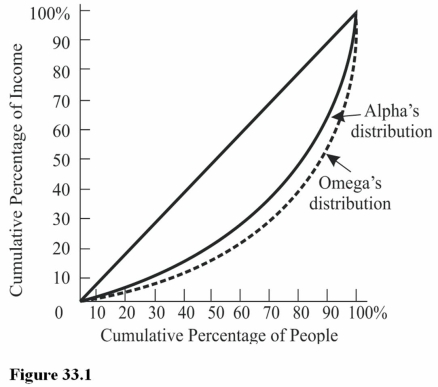
In Omega the lowest 40 percent of families receive approximately what percentage of income? (See Figure 33.1)
A)20 percent.
B)40 percent.
C)10 percent.
Question
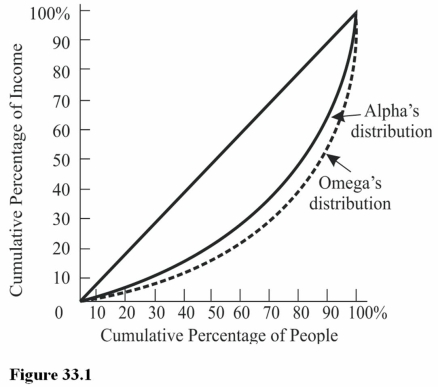
In Figure 33.1,suppose that the Gini coefficient for Omega is 0.55.The Gini coefficient for Alpha must be
A)Less than 0.55.
B)Equal to 0.55.
C)Greater than 0.55.
Question
Question
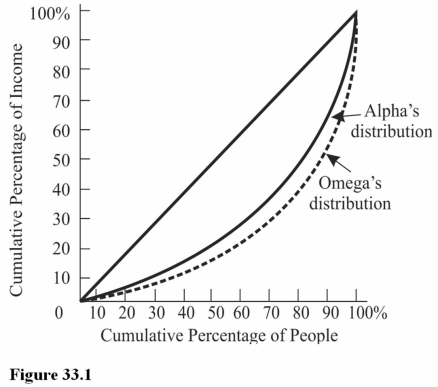
The size distribution of income in Figure 33.1 reveals that
A)Incomes are more equally distributed in Alpha than in Omega.
B)Incomes are more equally distributed in Omega than in Alpha.
C)The Gini coefficient for Alpha is larger than for Omega.
Question
Question
Question
Question
Question
Question
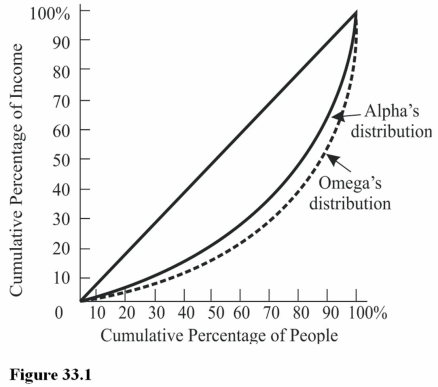
The bottom 80 percent of families in Alpha receive approximately what percentage of total income? (See Figure 33.1. )
A)80 percent.
B)60 percent.
C)50 percent.
Question
Question
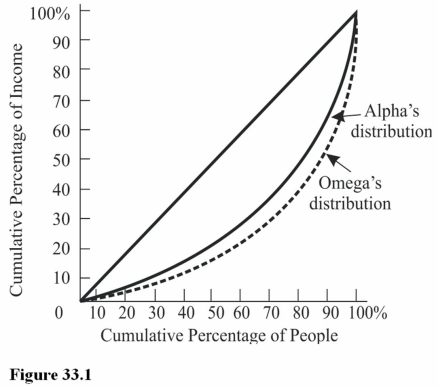
In Alpha the lowest 20 percent of families receive approximately what percentage of income? (See Figure 33.1)
A)10 percent.
B)5 percent.
C)20 percent.
Question
Question
Question
Question
Question
Question
Question
Question
Question
Question
Question
Question
Question
Question
Question
Question
Question
Question
Question
Question
Question
Question
Question
Question
Question
Question
Question
Question
Question
Question
Question
Question
Question
Question
Question
Question
Question
Question
Question
Question
Question
Question
Question

Unlock Deck
Sign up to unlock the cards in this deck!
Unlock Deck
Unlock Deck
1/117

Play

Full screen (f)
Deck 33: Taxes: Equity Versus Efficiency
1
When the Census Bureau counts the number of poor Americans,it counts
A)Only in-kind income.
B)Both in-kind and money income.
C)Only money income.
A)Only in-kind income.
B)Both in-kind and money income.
C)Only money income.
Only money income.
2
How income is distributed is typically measured using
A)In-kind income.
B)Personal income.
C)Wealth.
A)In-kind income.
B)Personal income.
C)Wealth.
Personal income.
3
According to the Census Bureau,in 2010 nearly _____________ Americans were counted as poor.
A)1 million
B)9 million
C)20 million
A)1 million
B)9 million
C)20 million
9 million
4
If the area between the diagonal line of absolute equality and the Lorenz curve is greater for the United States than for Japan,we can conclude that the
A)Distribution of income in Japan is closer to being equal than in the United States.
B)Distribution of income in Japan is as equal as in the United States.
C)Distribution of income in Japan is less equal than in the United States.
A)Distribution of income in Japan is closer to being equal than in the United States.
B)Distribution of income in Japan is as equal as in the United States.
C)Distribution of income in Japan is less equal than in the United States.
Unlock Deck
Unlock for access to all 117 flashcards in this deck.
Unlock Deck
k this deck
5
The federal income tax is designed to
A)Shift the Lorenz curve inward.
B)Shift the Lorenz curve outward.
C)Raise the Gini coefficient.
A)Shift the Lorenz curve inward.
B)Shift the Lorenz curve outward.
C)Raise the Gini coefficient.
Unlock Deck
Unlock for access to all 117 flashcards in this deck.
Unlock Deck
k this deck
6
Income is measured as
A)A flow only.
B)A stock only.
C)Both a flow and a stock.
A)A flow only.
B)A stock only.
C)Both a flow and a stock.
Unlock Deck
Unlock for access to all 117 flashcards in this deck.
Unlock Deck
k this deck
7
If income is distributed equally,the
A)Lorenz curve is a straight line.
B)Line of equality sags below the Lorenz curve.
C)Lorenz curve sags below the line of equality.
A)Lorenz curve is a straight line.
B)Line of equality sags below the Lorenz curve.
C)Lorenz curve sags below the line of equality.
Unlock Deck
Unlock for access to all 117 flashcards in this deck.
Unlock Deck
k this deck
8
Medicare is an example of
A)Free goods.
B)Personal income.
C)In-kind income.
A)Free goods.
B)Personal income.
C)In-kind income.
Unlock Deck
Unlock for access to all 117 flashcards in this deck.
Unlock Deck
k this deck
9
A mathematical summary of inequality based on the Lorenz curve is known as the
A)Okun coefficient.
B)Income distribution share.
C)Gini coefficient.
A)Okun coefficient.
B)Income distribution share.
C)Gini coefficient.
Unlock Deck
Unlock for access to all 117 flashcards in this deck.
Unlock Deck
k this deck
10
As the ________ becomes larger,the distance between the line of absolute equality and the ________ becomes greater.
A)Gini coefficient;Lorenz curve
B)Gini coefficient;production possibilities curve
C)Lorenz curve;Gini curve
A)Gini coefficient;Lorenz curve
B)Gini coefficient;production possibilities curve
C)Lorenz curve;Gini curve
Unlock Deck
Unlock for access to all 117 flashcards in this deck.
Unlock Deck
k this deck
11
Market failure exists whenever
A)Income distribution is unequal.
B)The market generates a suboptimal outcome of income distribution.
C)The government intervenes in the market.
A)Income distribution is unequal.
B)The market generates a suboptimal outcome of income distribution.
C)The government intervenes in the market.
Unlock Deck
Unlock for access to all 117 flashcards in this deck.
Unlock Deck
k this deck
12
If the Gini coefficient is greater for the United Kingdom than for Japan,we can conclude that the
A)Relative distributions of income in the two countries are the same.
B)Distribution of income in the United Kingdom is less equal than in Japan.
C)Distribution of income in the United Kingdom is as equal as it is in Japan.
A)Relative distributions of income in the two countries are the same.
B)Distribution of income in the United Kingdom is less equal than in Japan.
C)Distribution of income in the United Kingdom is as equal as it is in Japan.
Unlock Deck
Unlock for access to all 117 flashcards in this deck.
Unlock Deck
k this deck
13
If the area between the diagonal line of absolute equality and the Lorenz curve is greater for China than for the United States,we can conclude that the
A)Distribution of income in China is closer to being equal than in the United States.
B)Distribution of income in China is as equal as in the United States.
C)Distribution of income in China is less equal than in the United States.
A)Distribution of income in China is closer to being equal than in the United States.
B)Distribution of income in China is as equal as in the United States.
C)Distribution of income in China is less equal than in the United States.
Unlock Deck
Unlock for access to all 117 flashcards in this deck.
Unlock Deck
k this deck
14
The size distribution of income
A)Is the same thing as the functional distribution of income.
B)Tells how personal income is divided up among households or income classes.
C)Focuses on the distribution of income to different factors of production.
A)Is the same thing as the functional distribution of income.
B)Tells how personal income is divided up among households or income classes.
C)Focuses on the distribution of income to different factors of production.
Unlock Deck
Unlock for access to all 117 flashcards in this deck.
Unlock Deck
k this deck
15
In the United States between 1980 and 2009,the Gini coefficient
A)Increased,indicating greater income inequality.
B)Increased,indicating less income inequality.
C)Decreased,indicating greater income inequality.
A)Increased,indicating greater income inequality.
B)Increased,indicating less income inequality.
C)Decreased,indicating greater income inequality.
Unlock Deck
Unlock for access to all 117 flashcards in this deck.
Unlock Deck
k this deck
16
Public housing is an example of
A)In-kind income.
B)Free goods.
C)Money income.
A)In-kind income.
B)Free goods.
C)Money income.
Unlock Deck
Unlock for access to all 117 flashcards in this deck.
Unlock Deck
k this deck
17
If a greater portion of income is distributed to those in the highest income quintile,the
A)Lorenz curve is a straight line.
B)Line of equality sags below the Lorenz curve.
C)Lorenz curve sags below the diagonal line of absolute equality.
A)Lorenz curve is a straight line.
B)Line of equality sags below the Lorenz curve.
C)Lorenz curve sags below the diagonal line of absolute equality.
Unlock Deck
Unlock for access to all 117 flashcards in this deck.
Unlock Deck
k this deck
18
Wealth is measured as
A)A flow only.
B)A stock only.
C)Both a flow and a stock.
A)A flow only.
B)A stock only.
C)Both a flow and a stock.
Unlock Deck
Unlock for access to all 117 flashcards in this deck.
Unlock Deck
k this deck
19
The proportion of total income received by a particular group is called the group's
A)Market share.
B)Income share.
C)Gini coefficient.
A)Market share.
B)Income share.
C)Gini coefficient.
Unlock Deck
Unlock for access to all 117 flashcards in this deck.
Unlock Deck
k this deck
20
A graphic illustration of the cumulative size distribution of income is known as the
A)Size distribution of income.
B)Okun curve.
C)Lorenz curve.
A)Size distribution of income.
B)Okun curve.
C)Lorenz curve.
Unlock Deck
Unlock for access to all 117 flashcards in this deck.
Unlock Deck
k this deck
21
If an individual is taxed at a 17 percent rate for each extra dollar earned,the reference is to the
A)Marginal tax rate.
B)Nominal tax rate.
C)Average tax rate.
A)Marginal tax rate.
B)Nominal tax rate.
C)Average tax rate.
Unlock Deck
Unlock for access to all 117 flashcards in this deck.
Unlock Deck
k this deck
22
A tax elasticity of supply equal to zero indicates that
A)Employers will not hire any workers if tax rates increase.
B)Employers will hire more workers if tax rates increase.
C)Workers will not cut back on the number of hours worked if tax rates increase.
A)Employers will not hire any workers if tax rates increase.
B)Employers will hire more workers if tax rates increase.
C)Workers will not cut back on the number of hours worked if tax rates increase.
Unlock Deck
Unlock for access to all 117 flashcards in this deck.
Unlock Deck
k this deck
23
The U.S.federal income tax is classified as a
A)Regressive tax only.
B)Flat tax only.
C)Progressive tax only.
A)Regressive tax only.
B)Flat tax only.
C)Progressive tax only.
Unlock Deck
Unlock for access to all 117 flashcards in this deck.
Unlock Deck
k this deck
24
The tax elasticity of supply measures the
A)Response of workers to a change in the tax rate.
B)Response of workers to a change in prices.
C)Change in the amount of taxes workers must pay when tax rates change.
A)Response of workers to a change in the tax rate.
B)Response of workers to a change in prices.
C)Change in the amount of taxes workers must pay when tax rates change.
Unlock Deck
Unlock for access to all 117 flashcards in this deck.
Unlock Deck
k this deck
25
In general,lower marginal tax rates provide incentives to
A)Work less.
B)Produce more output.
C)Invest less.
A)Work less.
B)Produce more output.
C)Invest less.
Unlock Deck
Unlock for access to all 117 flashcards in this deck.
Unlock Deck
k this deck
26
In Omega the lowest 40 percent of families receive approximately what percentage of income? (See Figure 33.1)
A)20 percent.
B)40 percent.
C)10 percent.
Unlock Deck
Unlock for access to all 117 flashcards in this deck.
Unlock Deck
k this deck
27
In Figure 33.1,suppose that the Gini coefficient for Omega is 0.55.The Gini coefficient for Alpha must be
A)Less than 0.55.
B)Equal to 0.55.
C)Greater than 0.55.
Unlock Deck
Unlock for access to all 117 flashcards in this deck.
Unlock Deck
k this deck
28
Additional loopholes in the personal income tax law tend to
A)Make the system less progressive.
B)Increase horizontal equity.
C)Increase the tax base.
A)Make the system less progressive.
B)Increase horizontal equity.
C)Increase the tax base.
Unlock Deck
Unlock for access to all 117 flashcards in this deck.
Unlock Deck
k this deck
29
The size distribution of income in Figure 33.1 reveals that
A)Incomes are more equally distributed in Alpha than in Omega.
B)Incomes are more equally distributed in Omega than in Alpha.
C)The Gini coefficient for Alpha is larger than for Omega.
Unlock Deck
Unlock for access to all 117 flashcards in this deck.
Unlock Deck
k this deck
30
Which of the following taxes is most likely to reduce inequity?
A)A local property tax.
B)The federal income tax.
C)A gasoline tax.
A)A local property tax.
B)The federal income tax.
C)A gasoline tax.
Unlock Deck
Unlock for access to all 117 flashcards in this deck.
Unlock Deck
k this deck
31
To make a tax system more progressive,policy makers could
A)Raise marginal tax rates for higher incomes.
B)Narrow the tax base.
C)Allow all interest expenses to be deductible,not just interest on mortgages.
A)Raise marginal tax rates for higher incomes.
B)Narrow the tax base.
C)Allow all interest expenses to be deductible,not just interest on mortgages.
Unlock Deck
Unlock for access to all 117 flashcards in this deck.
Unlock Deck
k this deck
32
Assume the marginal tax rate is 10 percent for the first $30,000 of income,15 percent for income between $30,000 and $70,000,and 20 percent for any income over $70,000.If Emily has taxable income equal to $80,000 for the year,what is her tax bill?
A)$16,000.
B)$11,000.
C)$8,000.
A)$16,000.
B)$11,000.
C)$8,000.
Unlock Deck
Unlock for access to all 117 flashcards in this deck.
Unlock Deck
k this deck
33
A tax is progressive if it takes a
A)Larger number of dollars as income rises.
B)Larger number of dollars as income falls.
C)Smaller fraction of income as income falls.
A)Larger number of dollars as income rises.
B)Larger number of dollars as income falls.
C)Smaller fraction of income as income falls.
Unlock Deck
Unlock for access to all 117 flashcards in this deck.
Unlock Deck
k this deck
34
If the percentage of income paid in taxes increases as income rises,then the tax system is
A)Regressive.
B)Progressive.
C)Marginal.
A)Regressive.
B)Progressive.
C)Marginal.
Unlock Deck
Unlock for access to all 117 flashcards in this deck.
Unlock Deck
k this deck
35
The bottom 80 percent of families in Alpha receive approximately what percentage of total income? (See Figure 33.1. )
A)80 percent.
B)60 percent.
C)50 percent.
Unlock Deck
Unlock for access to all 117 flashcards in this deck.
Unlock Deck
k this deck
36
If the marginal tax rate is too high,it can cause all of the following except
A)Businesses to produce more.
B)Government tax receipts to decline.
C)The rate of saving to decline.
A)Businesses to produce more.
B)Government tax receipts to decline.
C)The rate of saving to decline.
Unlock Deck
Unlock for access to all 117 flashcards in this deck.
Unlock Deck
k this deck
37
In Alpha the lowest 20 percent of families receive approximately what percentage of income? (See Figure 33.1)
A)10 percent.
B)5 percent.
C)20 percent.
Unlock Deck
Unlock for access to all 117 flashcards in this deck.
Unlock Deck
k this deck
38
Which of the following is a progressive tax?
A)The federal income tax.
B)The Social Security tax.
C)Local sales taxes.
A)The federal income tax.
B)The Social Security tax.
C)Local sales taxes.
Unlock Deck
Unlock for access to all 117 flashcards in this deck.
Unlock Deck
k this deck
39
Assume the marginal tax rate is 12 percent for the first $40,000 of income,28 percent for income between $40,000 and $100,000,and 30 percent for any income over $100,000.If Sarah has taxable income equal to $120,000 for the year,what is her tax bill?
A)$27,600.
B)$33,600.
C)$34,000.
A)$27,600.
B)$33,600.
C)$34,000.
Unlock Deck
Unlock for access to all 117 flashcards in this deck.
Unlock Deck
k this deck
40
Assume that the marginal tax rate is 10 percent for the first $10,000 of income,20 percent for income between $10,000 and $40,000,and 30 percent for any income over $40,000.If Aaron has taxable income equal to $60,000 for the year,what is his tax bill?
A)$6,000.
B)$13,000.
C)$15,000.
A)$6,000.
B)$13,000.
C)$15,000.
Unlock Deck
Unlock for access to all 117 flashcards in this deck.
Unlock Deck
k this deck
41
Suppose a taxpayer has an income of $70,000 and a taxable income of $60,000,and pays $9,000 in taxes.If the taxpayer says she is taxed at a 15 percent tax rate,she is referring to the
A)Marginal tax rate.
B)Nominal tax rate.
C)Effective tax rate.
A)Marginal tax rate.
B)Nominal tax rate.
C)Effective tax rate.
Unlock Deck
Unlock for access to all 117 flashcards in this deck.
Unlock Deck
k this deck
42
Suppose a taxpayer has an income of $50,000 and a taxable income of $45,000,and pays $5,000 in taxes.If the taxpayer talks of being taxed at a 10 percent tax rate,she is referring to the
A)Effective tax rate.
B)Marginal tax rate.
C)Nominal tax rate.
A)Effective tax rate.
B)Marginal tax rate.
C)Nominal tax rate.
Unlock Deck
Unlock for access to all 117 flashcards in this deck.
Unlock Deck
k this deck
43
To determine horizontal equity,two taxpayers with
A)The same taxable incomes should be compared for their effective tax rates.
B)The same gross incomes should be compared for their effective tax rates.
C)Different gross incomes should be compared for their effective tax rates.
A)The same taxable incomes should be compared for their effective tax rates.
B)The same gross incomes should be compared for their effective tax rates.
C)Different gross incomes should be compared for their effective tax rates.
Unlock Deck
Unlock for access to all 117 flashcards in this deck.
Unlock Deck
k this deck
44
Suppose a taxpayer has an income of $120,000 and a taxable income of $80,000,and pays $20,000 in taxes.If the taxpayer says she is taxed at a 25 percent tax rate,she is referring to the
A)Nominal tax rate.
B)Marginal tax rate.
C)Effective tax rate.
A)Nominal tax rate.
B)Marginal tax rate.
C)Effective tax rate.
Unlock Deck
Unlock for access to all 117 flashcards in this deck.
Unlock Deck
k this deck
45
If an accountant makes $80,000 and after deductions pays $8,000 in taxes while a secretary makes $35,000 and after deductions pays $4,000 in taxes,this is an example of
A)Marginal inequity.
B)Horizontal equity.
C)Vertical equity.
A)Marginal inequity.
B)Horizontal equity.
C)Vertical equity.
Unlock Deck
Unlock for access to all 117 flashcards in this deck.
Unlock Deck
k this deck
46
The taxation principle that says people with higher incomes should pay more in taxes than those with lower incomes is called
A)A flat tax system.
B)A regressive tax system.
C)Vertical equity.
A)A flat tax system.
B)A regressive tax system.
C)Vertical equity.
Unlock Deck
Unlock for access to all 117 flashcards in this deck.
Unlock Deck
k this deck
47
Vertical equity can be determined by comparing the
A)Effective tax rate of the taxpayer with the highest nominal income to the effective tax rates of taxpayers with lower nominal incomes.
B)Marginal tax rate of the taxpayer with the highest nominal income to the marginal tax rates of taxpayers with lower nominal incomes.
C)Marginal tax rates for two taxpayers with the same nominal incomes.
A)Effective tax rate of the taxpayer with the highest nominal income to the effective tax rates of taxpayers with lower nominal incomes.
B)Marginal tax rate of the taxpayer with the highest nominal income to the marginal tax rates of taxpayers with lower nominal incomes.
C)Marginal tax rates for two taxpayers with the same nominal incomes.
Unlock Deck
Unlock for access to all 117 flashcards in this deck.
Unlock Deck
k this deck
48
Suppose Mr.Lee has total income of $120,000,has taxable income of $90,000,and pays $30,000 in taxes.Considering the information,what is Mr.Lee's nominal tax rate?
A)25 percent.
B)75 percent.
C)33.33 percent
A)25 percent.
B)75 percent.
C)33.33 percent
Unlock Deck
Unlock for access to all 117 flashcards in this deck.
Unlock Deck
k this deck
49
The taxation principle that says people with equal incomes should pay equal taxes is called
A)Horizontal equity.
B)A progressive tax system.
C)A regressive tax system.
A)Horizontal equity.
B)A progressive tax system.
C)A regressive tax system.
Unlock Deck
Unlock for access to all 117 flashcards in this deck.
Unlock Deck
k this deck
50
If a tax system has no deductions,exemptions,or other loopholes,then the effective tax rate will be
A)Greater than the nominal tax rate.
B)Equal to the nominal tax rate.
C)Less than the nominal tax rate.
A)Greater than the nominal tax rate.
B)Equal to the nominal tax rate.
C)Less than the nominal tax rate.
Unlock Deck
Unlock for access to all 117 flashcards in this deck.
Unlock Deck
k this deck
51
The many loopholes present in the federal income tax system prior to the 1986 tax reform caused all of the following except
A)Greater vertical inequity by making the income tax more regressive.
B)Greater horizontal inequity since the loopholes were more accessible to some taxpayers than others.
C)The system to be more progressive since loopholes favored those at lower income levels.
A)Greater vertical inequity by making the income tax more regressive.
B)Greater horizontal inequity since the loopholes were more accessible to some taxpayers than others.
C)The system to be more progressive since loopholes favored those at lower income levels.
Unlock Deck
Unlock for access to all 117 flashcards in this deck.
Unlock Deck
k this deck
52
If Luis makes $50,000 per year as a computer programmer and pays $6,000 in taxes while Hector makes $50,000 per year as a roofing contractor and pays $7,000 in taxes,this is an example of
A)A regressive tax system.
B)Horizontal inequity.
C)A flat tax.
A)A regressive tax system.
B)Horizontal inequity.
C)A flat tax.
Unlock Deck
Unlock for access to all 117 flashcards in this deck.
Unlock Deck
k this deck
53
The effective tax rate is
A)Equal to the taxes paid divided by taxable income.
B)The percentage of tax payable on the last dollar of income received.
C)Never higher than the nominal tax rate.
A)Equal to the taxes paid divided by taxable income.
B)The percentage of tax payable on the last dollar of income received.
C)Never higher than the nominal tax rate.
Unlock Deck
Unlock for access to all 117 flashcards in this deck.
Unlock Deck
k this deck
54
As exemptions are raised and allowable deductions are increased,there is
A)A smaller gap between effective and nominal tax rates.
B)Greater vertical inequity.
C)A smaller gap between gross income and taxable income.
A)A smaller gap between effective and nominal tax rates.
B)Greater vertical inequity.
C)A smaller gap between gross income and taxable income.
Unlock Deck
Unlock for access to all 117 flashcards in this deck.
Unlock Deck
k this deck
55
Exemptions and deductions included in the tax laws
A)Are designed to encourage specific economic activities.
B)Reduce vertical inequities.
C)Make the tax structure more progressive.
A)Are designed to encourage specific economic activities.
B)Reduce vertical inequities.
C)Make the tax structure more progressive.
Unlock Deck
Unlock for access to all 117 flashcards in this deck.
Unlock Deck
k this deck
56
If Alejandra makes $46,000 per year as a nurse and pays $7,000 in taxes while Emily makes $46,000 per year as a high school teacher and pays $6,500 in taxes,this is an example of
A)Horizontal inequity.
B)Marginal inequity.
C)A flat tax.
A)Horizontal inequity.
B)Marginal inequity.
C)A flat tax.
Unlock Deck
Unlock for access to all 117 flashcards in this deck.
Unlock Deck
k this deck
57
A tax that is designed to be progressive will improve
A)Efficiency.
B)Vertical equity.
C)Horizontal equity.
A)Efficiency.
B)Vertical equity.
C)Horizontal equity.
Unlock Deck
Unlock for access to all 117 flashcards in this deck.
Unlock Deck
k this deck
58
An increase in deductions,exemptions,and credits in the tax code will
A)Reduce the tax base.
B)Allow lower rates to raise the same tax revenues.
C)Induce economic activity to go underground.
A)Reduce the tax base.
B)Allow lower rates to raise the same tax revenues.
C)Induce economic activity to go underground.
Unlock Deck
Unlock for access to all 117 flashcards in this deck.
Unlock Deck
k this deck
59
An economy with nominal tax rates significantly higher than effective tax rates has
A)Loopholes in the tax code.
B)A regressive tax system.
C)A progressive tax system.
A)Loopholes in the tax code.
B)A regressive tax system.
C)A progressive tax system.
Unlock Deck
Unlock for access to all 117 flashcards in this deck.
Unlock Deck
k this deck
60
The nominal tax rate is
A)Lower than the effective tax rate.
B)Taxes paid divided by total economic income.
C)Taxes paid divided by taxable income.
A)Lower than the effective tax rate.
B)Taxes paid divided by total economic income.
C)Taxes paid divided by taxable income.
Unlock Deck
Unlock for access to all 117 flashcards in this deck.
Unlock Deck
k this deck
61
A 7.25 percent sales tax
A)Is a proportional tax because the rate is the same for all income groups.
B)Is a progressive tax because high-income individuals buy more goods and services than low-income individuals.
C)Is a regressive tax because poor individuals consume a higher percentage of their income than high-income individuals.
A)Is a proportional tax because the rate is the same for all income groups.
B)Is a progressive tax because high-income individuals buy more goods and services than low-income individuals.
C)Is a regressive tax because poor individuals consume a higher percentage of their income than high-income individuals.
Unlock Deck
Unlock for access to all 117 flashcards in this deck.
Unlock Deck
k this deck
62
The argument against greater equality in the distribution of income in the United States hinges basically on
A)Loss of incentives.
B)Greater productivity.
C)The loss of horizontal equity.
A)Loss of incentives.
B)Greater productivity.
C)The loss of horizontal equity.
Unlock Deck
Unlock for access to all 117 flashcards in this deck.
Unlock Deck
k this deck
63
Government failure
A)Occurs whenever the government intervenes in the market.
B)Does not occur;only market failure occurs.
C)Results when government intervention fails to improve market outcomes.
A)Occurs whenever the government intervenes in the market.
B)Does not occur;only market failure occurs.
C)Results when government intervention fails to improve market outcomes.
Unlock Deck
Unlock for access to all 117 flashcards in this deck.
Unlock Deck
k this deck
64
A tax system in which tax rates fall as incomes rise is
A)Regressive.
B)Proportional.
C)Flat.
A)Regressive.
B)Proportional.
C)Flat.
Unlock Deck
Unlock for access to all 117 flashcards in this deck.
Unlock Deck
k this deck
65
Which of the following is an example of an indirect income transfer?
A)Public schools.
B)Social Security payments.
C)Unemployment benefits.
A)Public schools.
B)Social Security payments.
C)Unemployment benefits.
Unlock Deck
Unlock for access to all 117 flashcards in this deck.
Unlock Deck
k this deck
66
The changes contained in the 1990 and 1993 tax increases
A)Increased the variation in the effective tax rates.
B)Left a lot of variation in the effective tax rates.
C)Reduced the variation in the nominal tax rates.
A)Increased the variation in the effective tax rates.
B)Left a lot of variation in the effective tax rates.
C)Reduced the variation in the nominal tax rates.
Unlock Deck
Unlock for access to all 117 flashcards in this deck.
Unlock Deck
k this deck
67
The changes contained in the Tax Reform Act (TRA)of 1986 included
A)Narrowing the tax base.
B)Lowering marginal tax rates.
C)A partial shift from corporate to personal taxes.
A)Narrowing the tax base.
B)Lowering marginal tax rates.
C)A partial shift from corporate to personal taxes.
Unlock Deck
Unlock for access to all 117 flashcards in this deck.
Unlock Deck
k this deck
68
Which of the following was a basic feature of the Tax Reform Act of 1986?
A)A shift from corporate to personal taxes.
B)Tax relief for the rich.
C)Loophole closing.
A)A shift from corporate to personal taxes.
B)Tax relief for the rich.
C)Loophole closing.
Unlock Deck
Unlock for access to all 117 flashcards in this deck.
Unlock Deck
k this deck
69
The Bush tax cuts of 2001-2010 reduced
A)The top marginal tax rate from 39.6 percent to 35 percent.
B)The marginal tax rate for the highest income class to 10 percent.
C)Incentives for education.
A)The top marginal tax rate from 39.6 percent to 35 percent.
B)The marginal tax rate for the highest income class to 10 percent.
C)Incentives for education.
Unlock Deck
Unlock for access to all 117 flashcards in this deck.
Unlock Deck
k this deck
70
The U.S.tax system as a whole is basically
A)Progressive.
B)Regressive.
C)Proportional.
A)Progressive.
B)Regressive.
C)Proportional.
Unlock Deck
Unlock for access to all 117 flashcards in this deck.
Unlock Deck
k this deck
71
The fact that landlords are able to pass the majority,but not all,of the burden of property taxes on to renters suggests that the price elasticity of demand for apartments is
A)Elastic.
B)Inelastic.
C)Perfectly elastic.
A)Elastic.
B)Inelastic.
C)Perfectly elastic.
Unlock Deck
Unlock for access to all 117 flashcards in this deck.
Unlock Deck
k this deck
72
Which of the following is a payroll tax?
A)The Social Security tax.
B)A sales tax.
C)The federal income tax.
A)The Social Security tax.
B)A sales tax.
C)The federal income tax.
Unlock Deck
Unlock for access to all 117 flashcards in this deck.
Unlock Deck
k this deck
73
Greater equality in income is supported by the argument that it
A)Increases horizontal equity.
B)Stimulates consumption.
C)Increases incentives to work for low-income earners.
A)Increases horizontal equity.
B)Stimulates consumption.
C)Increases incentives to work for low-income earners.
Unlock Deck
Unlock for access to all 117 flashcards in this deck.
Unlock Deck
k this deck
74
The marginal revenue product (MRP)establishes
A)An upper limit to the productivity of a worker.
B)An upper limit to the wage rate an employer is willing to pay.
C)A lower limit to the wage rate demands of laborers.
A)An upper limit to the productivity of a worker.
B)An upper limit to the wage rate an employer is willing to pay.
C)A lower limit to the wage rate demands of laborers.
Unlock Deck
Unlock for access to all 117 flashcards in this deck.
Unlock Deck
k this deck
75
Which of the following is an example of an explicit income transfer?
A)The check received by a person currently employed by the postal service.
B)A Social Security pension paid to a retired factory worker.
C)A payment to a member of the U.S.Army who has recently been transferred to Germany.
A)The check received by a person currently employed by the postal service.
B)A Social Security pension paid to a retired factory worker.
C)A payment to a member of the U.S.Army who has recently been transferred to Germany.
Unlock Deck
Unlock for access to all 117 flashcards in this deck.
Unlock Deck
k this deck
76
Which of the following is true about a payroll tax?
A)It shifts the labor supply curve to the right.
B)It reduces the net wage to employees.
C)It results in more workers being employed.
A)It shifts the labor supply curve to the right.
B)It reduces the net wage to employees.
C)It results in more workers being employed.
Unlock Deck
Unlock for access to all 117 flashcards in this deck.
Unlock Deck
k this deck
77
State and local governments generate most of their revenues through
A)Income taxes.
B)Sales and property taxes.
C)Corporate profit taxes.
A)Income taxes.
B)Sales and property taxes.
C)Corporate profit taxes.
Unlock Deck
Unlock for access to all 117 flashcards in this deck.
Unlock Deck
k this deck
78
The Bush tax cuts of 2001-2010 increased education incentives,and as a result,
A)New vertical inequities were introduced into the tax system.
B)Low-income households benefited more than all other households.
C)College enrollments were expected to increase significantly.
A)New vertical inequities were introduced into the tax system.
B)Low-income households benefited more than all other households.
C)College enrollments were expected to increase significantly.
Unlock Deck
Unlock for access to all 117 flashcards in this deck.
Unlock Deck
k this deck
79
Since the current tax system is fairly ineffective at redistributing income,some people think this indicates
A)Government failure.
B)A problem with externalities.
C)Market failure.
A)Government failure.
B)A problem with externalities.
C)Market failure.
Unlock Deck
Unlock for access to all 117 flashcards in this deck.
Unlock Deck
k this deck
80
Tax incidence most accurately refers to
A)Those from whom a tax is collected.
B)The distribution of the real burden of a tax.
C)The relative tax burdens of state and local governments.
A)Those from whom a tax is collected.
B)The distribution of the real burden of a tax.
C)The relative tax burdens of state and local governments.
Unlock Deck
Unlock for access to all 117 flashcards in this deck.
Unlock Deck
k this deck
Unlock Deck
Unlock for access to all 117 flashcards in this deck.






