







 Chat with AI

Deck 26: Plant Nutrition and Transport
Full screen (f)

Question

Question
Question
Question
Question
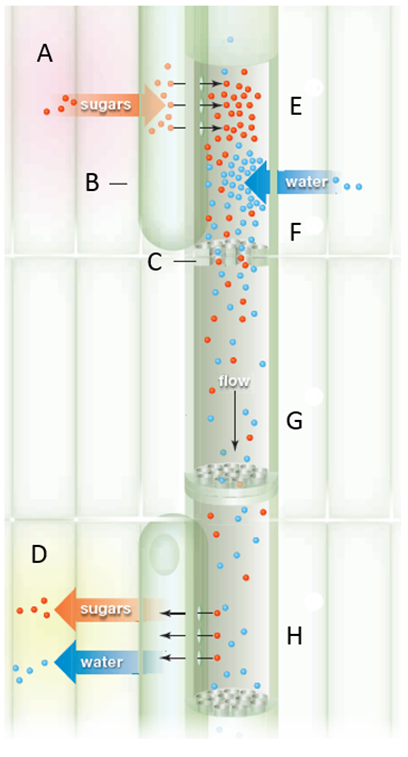
-In the accompanying figure, which letter depicts a region of plant tissue where sugars are being produced or released from storage?
A)A
B)B
C)C
D)D
E)E
Question
Question
Question
Question
Question
Question
Question
Question
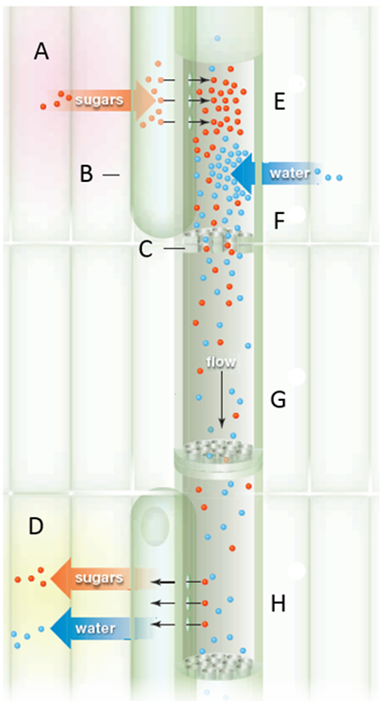
-?In the accompanying figure, which letter depicts sugars moving from sieve elements into sink cells with water following by osmosis?
A)D
B)E
C)F
D)G
E)H
Question
Question
Question
Question
Question
Question
Question
Question
Question
Question
Question
Question
Question
Question
Question
Question
Question
Question
Question
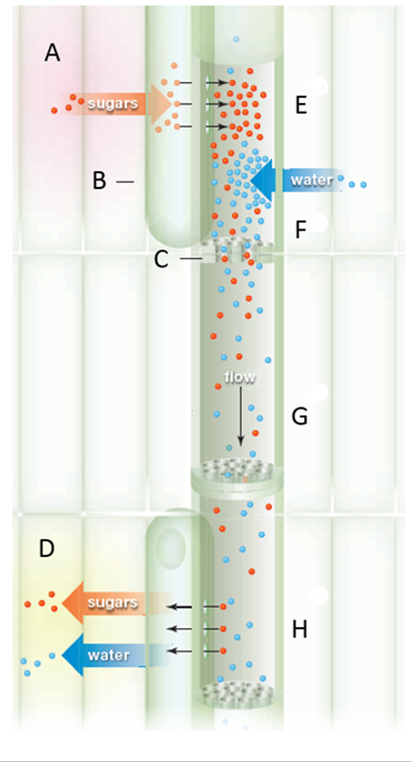
-?In the accompanying figure, the letter B depicts a ____.
A)sieve element
B)vessel element
C)companion cell
D)sink region
E)source region
Question
Question
Question
Question
Question
Question
Question
Question
Question
Question
Question
Question
Question
Question
Question
Question
Question
Question
Question
Question
Question
Question

-In the accompanying figure, which letter is most likely to depict the tissue of a developing root or fruit?
A)D
B)E
C)F
D)G
E)H
Question
Question
Question
Question
Question
Question
Question
Question
Question
Question
Question
Question
Question

Unlock Deck
Sign up to unlock the cards in this deck!
Unlock Deck
Unlock Deck
1/67

Play

Full screen (f)
Deck 26: Plant Nutrition and Transport
1
Which term describes soil with roughly equal proportions of sand, silt, and clay?
A)humus
B)loam
C)topsoil
D)A horizon
E)B horizon
A)humus
B)loam
C)topsoil
D)A horizon
E)B horizon
B
2
In terms of their xylem cells, most gymnosperms have ____ while angiosperms have ____.
A)only vessel elements; both tracheids and vessel elements
B)only tracheids; both tracheids and vessel elements
C)only tracheids; only vessel elements
D)both tracheids and vessel elements; only tracheids
E)both tracheids and vessel elements; only vessel elements
A)only vessel elements; both tracheids and vessel elements
B)only tracheids; both tracheids and vessel elements
C)only tracheids; only vessel elements
D)both tracheids and vessel elements; only tracheids
E)both tracheids and vessel elements; only vessel elements
D
3
Which factor is least likely to act as a cue to signal the opening and closing of stomata?
A)humidity of the environment
B)intensity of sunlight
C)chemical signals from other plants
D)level of CO2 inside the leaf
E)hormonal messages from other plant parts
A)humidity of the environment
B)intensity of sunlight
C)chemical signals from other plants
D)level of CO2 inside the leaf
E)hormonal messages from other plant parts
C
4
Mineral uptake in plants occurs by way of ____.
A)leaves
B)roots
C)stems
D)phloem
E)flowers
A)leaves
B)roots
C)stems
D)phloem
E)flowers
Unlock Deck
Unlock for access to all 67 flashcards in this deck.
Unlock Deck
k this deck
5
-In the accompanying figure, which letter depicts a region of plant tissue where sugars are being produced or released from storage?
A)A
B)B
C)C
D)D
E)E
Unlock Deck
Unlock for access to all 67 flashcards in this deck.
Unlock Deck
k this deck
6
The process by which water moving through soil removes and carries away nutrients is ____.
A)erosion
B)diffusion
C)leaching
D)phytoremediation
E)translocation
A)erosion
B)diffusion
C)leaching
D)phytoremediation
E)translocation
Unlock Deck
Unlock for access to all 67 flashcards in this deck.
Unlock Deck
k this deck
7
The Casparian strip is associated with the ____.
A)epidermis
B)vascular tissue
C)cortex
D)root hairs
E)endodermis
A)epidermis
B)vascular tissue
C)cortex
D)root hairs
E)endodermis
Unlock Deck
Unlock for access to all 67 flashcards in this deck.
Unlock Deck
k this deck
8
Tracheids are ____ than vessel elements and ____ at their ends.
A)wider; do not have perforation plates
B)wider; have perforation plates
C)narrower; do not have perforation plates
D)narrower; have perforation plates
E)narrower; do not have pits
A)wider; do not have perforation plates
B)wider; have perforation plates
C)narrower; do not have perforation plates
D)narrower; have perforation plates
E)narrower; do not have pits
Unlock Deck
Unlock for access to all 67 flashcards in this deck.
Unlock Deck
k this deck
9
Which soil layer, containing no organic matter and is composed of weathered rock fragments?
A)O Horizon
B)A Horizon
C)B Horizon
D)C Horizon
E)bedrock
A)O Horizon
B)A Horizon
C)B Horizon
D)C Horizon
E)bedrock
Unlock Deck
Unlock for access to all 67 flashcards in this deck.
Unlock Deck
k this deck
10
What is the waxy, waterproof band between the plasma membranes of root endodermal cells?
A)cuticle
B)plasmodesmata
C)root cell wall
D)lignin wall
E)the Casparian strip
A)cuticle
B)plasmodesmata
C)root cell wall
D)lignin wall
E)the Casparian strip
Unlock Deck
Unlock for access to all 67 flashcards in this deck.
Unlock Deck
k this deck
11
The roots of most plants grow most densely in which soil layer?
A)O horizon
B)A horizon
C)B horizon
D)C horizon
E)bedrock
A)O horizon
B)A horizon
C)B horizon
D)C horizon
E)bedrock
Unlock Deck
Unlock for access to all 67 flashcards in this deck.
Unlock Deck
k this deck
12
The upward movement of water in vascular plants occurs as a consequence of ____.
A)both evaporation and cohesion
B)both osmosis and cohesion
C)osmosis only
D)cohesion only
E)evaporation only
A)both evaporation and cohesion
B)both osmosis and cohesion
C)osmosis only
D)cohesion only
E)evaporation only
Unlock Deck
Unlock for access to all 67 flashcards in this deck.
Unlock Deck
k this deck
13
-?In the accompanying figure, which letter depicts sugars moving from sieve elements into sink cells with water following by osmosis?
A)D
B)E
C)F
D)G
E)H
Unlock Deck
Unlock for access to all 67 flashcards in this deck.
Unlock Deck
k this deck
14
Which soil components have a negative charge that attract positively charged mineral ions in soil water?
A)sand and silt
B)sand and clay
C)silt and clay
D)silt and humus
E)clay and humus
A)sand and silt
B)sand and clay
C)silt and clay
D)silt and humus
E)clay and humus
Unlock Deck
Unlock for access to all 67 flashcards in this deck.
Unlock Deck
k this deck
15
Typically, water and minerals absorbed by plant roots first enter through the ____.
A)pericycle
B)vascular tissue
C)cortex
D)epidermis
E)endodermis
A)pericycle
B)vascular tissue
C)cortex
D)epidermis
E)endodermis
Unlock Deck
Unlock for access to all 67 flashcards in this deck.
Unlock Deck
k this deck
16
Large pressure gradients arise in sieve tube systems by means of ____.
A)evaporation
B)tension
C)osmosis
D)transpiration
E)cohesion
A)evaporation
B)tension
C)osmosis
D)transpiration
E)cohesion
Unlock Deck
Unlock for access to all 67 flashcards in this deck.
Unlock Deck
k this deck
17
Tension created by transpiration pulls on entire columns of water that fill xylem tubes because water has ____.
A)cohesion due to hydrogen bonds
B)cohesion due to ionic bonds
C)cohesion due to covalent bonds
D)pressure caused by the compression of xylem cells
E)osmotic pressure caused by differences in solute concentrations
A)cohesion due to hydrogen bonds
B)cohesion due to ionic bonds
C)cohesion due to covalent bonds
D)pressure caused by the compression of xylem cells
E)osmotic pressure caused by differences in solute concentrations
Unlock Deck
Unlock for access to all 67 flashcards in this deck.
Unlock Deck
k this deck
18
What kind of trees were planted at J-Field as part of the phytoremediation strategy?
A)poplar
B)maple
C)oak
D)pine
E)willow
A)poplar
B)maple
C)oak
D)pine
E)willow
Unlock Deck
Unlock for access to all 67 flashcards in this deck.
Unlock Deck
k this deck
19
Sugars leave the source region and immediately enter into a ____, followed by direct movement into the ____.
A)pit; perforation plate
B)companion cell; sieve element
C)pit; vessel element
D)plasmodesmata; sink
E)phloem tube; companion cell
A)pit; perforation plate
B)companion cell; sieve element
C)pit; vessel element
D)plasmodesmata; sink
E)phloem tube; companion cell
Unlock Deck
Unlock for access to all 67 flashcards in this deck.
Unlock Deck
k this deck
20
In angiosperms, water flows lengthwise through tracheids by moving through ____ and lengthwise through vessel elements by moving through ____. sieve plates; perforation plates
A)pits; sieve plates
B)pits; perforation plates
C)sieve plates; perforation plates
D)sieve plates; pits
E)perforation plates; pits
A)pits; sieve plates
B)pits; perforation plates
C)sieve plates; perforation plates
D)sieve plates; pits
E)perforation plates; pits
Unlock Deck
Unlock for access to all 67 flashcards in this deck.
Unlock Deck
k this deck
21
To enter the vascular cylinder, water and dissolved minerals must move through ____.
A)conducting tubes of phloem
B)conducting tubes of xylem
C)cytoplasm of endodermal cells
D)cell walls of the endodermis
E)the Casparian strip
A)conducting tubes of phloem
B)conducting tubes of xylem
C)cytoplasm of endodermal cells
D)cell walls of the endodermis
E)the Casparian strip
Unlock Deck
Unlock for access to all 67 flashcards in this deck.
Unlock Deck
k this deck
22
What would be the effects of the accidental seepage of fungicide into the soils surrounding a plant in a mycorrhizal relationship?
A)The plant would die.
B)The plant's water and mineral supply would decrease.
C)The plant would convert nitrogen gas to ammonia on its own.
D)There would be no change in the plant.
E)The plant would lose its nitrogen-fixing partner.
A)The plant would die.
B)The plant's water and mineral supply would decrease.
C)The plant would convert nitrogen gas to ammonia on its own.
D)There would be no change in the plant.
E)The plant would lose its nitrogen-fixing partner.
Unlock Deck
Unlock for access to all 67 flashcards in this deck.
Unlock Deck
k this deck
23
Humus does not include ____.
A)feces
B)dead organisms
C)leaf litter
D)weathered rock
E)decomposing organic matter
A)feces
B)dead organisms
C)leaf litter
D)weathered rock
E)decomposing organic matter
Unlock Deck
Unlock for access to all 67 flashcards in this deck.
Unlock Deck
k this deck
24
The cells that surround stomata are called ____ cells.
A)endodermal
B)guard
C)mesophyll
D)vascular bundle
E)vessel
A)endodermal
B)guard
C)mesophyll
D)vascular bundle
E)vessel
Unlock Deck
Unlock for access to all 67 flashcards in this deck.
Unlock Deck
k this deck
25
Sieve tubes are different from vessel members because they ____.
A)carry water, not food
B)are not connected to each other
C)are alive
D)do not require companion cells
E)have pits in their walls
A)carry water, not food
B)are not connected to each other
C)are alive
D)do not require companion cells
E)have pits in their walls
Unlock Deck
Unlock for access to all 67 flashcards in this deck.
Unlock Deck
k this deck
26
What inorganic soil component has the finest particle size?
A)clay
B)gravel
C)humus
D)sand
E)silt
A)clay
B)gravel
C)humus
D)sand
E)silt
Unlock Deck
Unlock for access to all 67 flashcards in this deck.
Unlock Deck
k this deck
27
What is the best description of a mycorrhizae?
A)a specialized type of root hair
B)a bacteria-root association
C)a fungus-root associations
D)a single layer of endodermal cells
E)a swollen region of a plant root
A)a specialized type of root hair
B)a bacteria-root association
C)a fungus-root associations
D)a single layer of endodermal cells
E)a swollen region of a plant root
Unlock Deck
Unlock for access to all 67 flashcards in this deck.
Unlock Deck
k this deck
28
The openings in leaves through which gases are exchanged are called ____.
A)plasmodesmata
B)stomata
C)guard cells
D)pits
E)pores
A)plasmodesmata
B)stomata
C)guard cells
D)pits
E)pores
Unlock Deck
Unlock for access to all 67 flashcards in this deck.
Unlock Deck
k this deck
29
The phytoremediation efforts at J-Field, Aberdeen Proving Ground in Maryland were led by the U.S. Army and the ____.
A)U.S. Department of Agriculture
B)Nature Conservancy
C)Environmental Protection Agency
D)National Institutes of Health
E)University of Maryland
A)U.S. Department of Agriculture
B)Nature Conservancy
C)Environmental Protection Agency
D)National Institutes of Health
E)University of Maryland
Unlock Deck
Unlock for access to all 67 flashcards in this deck.
Unlock Deck
k this deck
30
According to the pressure flow theory of phloem transport, the source region is most often the ____.
A)root
B)flower
C)stem
D)leaf
E)soil
A)root
B)flower
C)stem
D)leaf
E)soil
Unlock Deck
Unlock for access to all 67 flashcards in this deck.
Unlock Deck
k this deck
31
What phytoremediation strategy, best for cleaning up metal pollutants, is being used at the Chernobyl nuclear power accident site in Ukraine?
A)planting trees that break down some of the toxins but release most of them to the atmosphere
B)facilitating the growth of soil microbial communities that will break down the toxins
C)using plants that break down the pollutants and release safe compounds to the soil
D)introducing nonnative plant species to increase the number of species present
E)using plants that store toxins in aboveground tissues that can be harvested for safe disposal
A)planting trees that break down some of the toxins but release most of them to the atmosphere
B)facilitating the growth of soil microbial communities that will break down the toxins
C)using plants that break down the pollutants and release safe compounds to the soil
D)introducing nonnative plant species to increase the number of species present
E)using plants that store toxins in aboveground tissues that can be harvested for safe disposal
Unlock Deck
Unlock for access to all 67 flashcards in this deck.
Unlock Deck
k this deck
32
-?In the accompanying figure, the letter B depicts a ____.
A)sieve element
B)vessel element
C)companion cell
D)sink region
E)source region
Unlock Deck
Unlock for access to all 67 flashcards in this deck.
Unlock Deck
k this deck
33
Most of the water that enters the plant ____.
A)leaves the plant through the root system
B)is lost through transpiration
C)remains in the plant, resulting in a high concentration of water in plant tissue
D)remains in the plant to function in translocation
E)is used up in cellular metabolism
A)leaves the plant through the root system
B)is lost through transpiration
C)remains in the plant, resulting in a high concentration of water in plant tissue
D)remains in the plant to function in translocation
E)is used up in cellular metabolism
Unlock Deck
Unlock for access to all 67 flashcards in this deck.
Unlock Deck
k this deck
34
Movement of soluble organic material through plants is known as ____.
A)translocation
B)active transport
C)passive transport
D)transpiration
E)cohesion-tension
A)translocation
B)active transport
C)passive transport
D)transpiration
E)cohesion-tension
Unlock Deck
Unlock for access to all 67 flashcards in this deck.
Unlock Deck
k this deck
35
At a low sugar region of a plant, sugars move from ____ into ____.
A)sieve elements; source cells
B)sieve elements; sink cells
C)xylem; phloem
D)phloem; source cells
E)the low pressure phloem; the high pressure plant tissue
A)sieve elements; source cells
B)sieve elements; sink cells
C)xylem; phloem
D)phloem; source cells
E)the low pressure phloem; the high pressure plant tissue
Unlock Deck
Unlock for access to all 67 flashcards in this deck.
Unlock Deck
k this deck
36
The partially decayed organic material found in soil is called ____.
A)clay
B)gravel
C)humus
D)sand
E)silt
A)clay
B)gravel
C)humus
D)sand
E)silt
Unlock Deck
Unlock for access to all 67 flashcards in this deck.
Unlock Deck
k this deck
37
The primary goal for using phytoremediation at J-Field, Aberdeen Proving Ground was to ____.
A)eliminate environmental contaminants from the air
B)remove environmental contaminants from the soil
C)increase plant diversity in the area
D)foster growth of microbial communities
E)protect a federally-listed endangered species
A)eliminate environmental contaminants from the air
B)remove environmental contaminants from the soil
C)increase plant diversity in the area
D)foster growth of microbial communities
E)protect a federally-listed endangered species
Unlock Deck
Unlock for access to all 67 flashcards in this deck.
Unlock Deck
k this deck
38
When the solute concentration increases at a source region, the fluid in a ____ becomes ____.
A)sieve element; hypotonic
B)sieve element; hypertonic
C)sieve element; isotonic
D)vessel element; hypotonic
E)vessel element; hypertonic
A)sieve element; hypotonic
B)sieve element; hypertonic
C)sieve element; isotonic
D)vessel element; hypotonic
E)vessel element; hypertonic
Unlock Deck
Unlock for access to all 67 flashcards in this deck.
Unlock Deck
k this deck
39
What drives a plant's uptake of water from soil?
A)evaporation
B)osmosis
C)tension
D)translocation
E)transpiration
A)evaporation
B)osmosis
C)tension
D)translocation
E)transpiration
Unlock Deck
Unlock for access to all 67 flashcards in this deck.
Unlock Deck
k this deck
40
Four of the five answers listed below are macronutrients. Select the exception.
A)phosphorus
B)sulfur
C)nitrogen
D)copper
E)magnesium
A)phosphorus
B)sulfur
C)nitrogen
D)copper
E)magnesium
Unlock Deck
Unlock for access to all 67 flashcards in this deck.
Unlock Deck
k this deck
41
Match each description to the most appropriate term.
a.theory of water movement through the xylem
b.pipelines of the xylem
c.a mutually beneficial association between a fungus and a young root
d.structures on roots that house nitrogen-fixing bacteria
e.pipelines of the phloem
f.evaporation from stems and leaves
g.actively transport sucrose into sieve tube members
h.theory of sugar movement through phloem
pressure flow theory
a.theory of water movement through the xylem
b.pipelines of the xylem
c.a mutually beneficial association between a fungus and a young root
d.structures on roots that house nitrogen-fixing bacteria
e.pipelines of the phloem
f.evaporation from stems and leaves
g.actively transport sucrose into sieve tube members
h.theory of sugar movement through phloem
pressure flow theory
Unlock Deck
Unlock for access to all 67 flashcards in this deck.
Unlock Deck
k this deck
42
How many essential elements are required by plants for their growth and survival?
A)7
B)12
C)16
D)22
E)28
A)7
B)12
C)16
D)22
E)28
Unlock Deck
Unlock for access to all 67 flashcards in this deck.
Unlock Deck
k this deck
43
Match each description to the most appropriate term.
a.theory of water movement through the xylem
b.pipelines of the xylem
c.a mutually beneficial association between a fungus and a young root
d.structures on roots that house nitrogen-fixing bacteria
e.pipelines of the phloem
f.evaporation from stems and leaves
g.actively transport sucrose into sieve tube members
h.theory of sugar movement through phloem
cohesion-tension
a.theory of water movement through the xylem
b.pipelines of the xylem
c.a mutually beneficial association between a fungus and a young root
d.structures on roots that house nitrogen-fixing bacteria
e.pipelines of the phloem
f.evaporation from stems and leaves
g.actively transport sucrose into sieve tube members
h.theory of sugar movement through phloem
cohesion-tension
Unlock Deck
Unlock for access to all 67 flashcards in this deck.
Unlock Deck
k this deck
44
Four of the five answers below are plant structures associated with roots. Select the exception.
A)mesophyll
B)Casparian strip
C)vascular cylinder
D)endodermis
E)pericycle
A)mesophyll
B)Casparian strip
C)vascular cylinder
D)endodermis
E)pericycle
Unlock Deck
Unlock for access to all 67 flashcards in this deck.
Unlock Deck
k this deck
45
Match each description to the most appropriate term.
a.theory of water movement through the xylem
b.pipelines of the xylem
c.a mutually beneficial association between a fungus and a young root
d.structures on roots that house nitrogen-fixing bacteria
e.pipelines of the phloem
f.evaporation from stems and leaves
g.actively transport sucrose into sieve tube members
h.theory of sugar movement through phloem
companion cells
a.theory of water movement through the xylem
b.pipelines of the xylem
c.a mutually beneficial association between a fungus and a young root
d.structures on roots that house nitrogen-fixing bacteria
e.pipelines of the phloem
f.evaporation from stems and leaves
g.actively transport sucrose into sieve tube members
h.theory of sugar movement through phloem
companion cells
Unlock Deck
Unlock for access to all 67 flashcards in this deck.
Unlock Deck
k this deck
46
Sugars and other organic solutes are conducted through the plant in which tissue?
A)cortex
B)parenchyma
C)xylem
D)phloem
E)cambium
A)cortex
B)parenchyma
C)xylem
D)phloem
E)cambium
Unlock Deck
Unlock for access to all 67 flashcards in this deck.
Unlock Deck
k this deck
47
If houseplants must be left unattended for a length of time, some people recommend placing plastic bags over them. What is the reasoning behind this?
A)Water tension will decrease.
B)The plants won't freeze.
C)Photosynthesis will increase because of trapped carbon dioxide.
D)Transpiration will be slowed and more water will be retained in the soil.
E)The bag will trap oxygen.
A)Water tension will decrease.
B)The plants won't freeze.
C)Photosynthesis will increase because of trapped carbon dioxide.
D)Transpiration will be slowed and more water will be retained in the soil.
E)The bag will trap oxygen.
Unlock Deck
Unlock for access to all 67 flashcards in this deck.
Unlock Deck
k this deck
48
Four of the five answers listed below are the most common sinks for sugar deposition. Select the exception.
A)immature fruits
B)roots
C)leaves
D)immature seeds
E)shoots
A)immature fruits
B)roots
C)leaves
D)immature seeds
E)shoots
Unlock Deck
Unlock for access to all 67 flashcards in this deck.
Unlock Deck
k this deck
49
Four of the five answers listed below are related to phloem. Select the exception.
A)companion cells
B)sieve tubes
C)translocation
D)sucrose
E)conducting tubes that are dead
A)companion cells
B)sieve tubes
C)translocation
D)sucrose
E)conducting tubes that are dead
Unlock Deck
Unlock for access to all 67 flashcards in this deck.
Unlock Deck
k this deck
50
The stomata on plant leaves ____.
A)are only open at night
B)are open when guard cells are swollen with water
C)close when the osmotic pressure of guard cells increases
D)are covered by the cuticle to reduce water loss
E)open and close in response to sunlight only
A)are only open at night
B)are open when guard cells are swollen with water
C)close when the osmotic pressure of guard cells increases
D)are covered by the cuticle to reduce water loss
E)open and close in response to sunlight only
Unlock Deck
Unlock for access to all 67 flashcards in this deck.
Unlock Deck
k this deck
51
What prevents soil water from diffusing through endodermal cell walls?
A)the primary xylem bordering the endoderm
B)the pericycle that surrounds the vascular cylinder
C)transport proteins in endodermal cell walls
D)the Casparian strip between endodermal cells
E)a cuticle on the outside of the endoderm
A)the primary xylem bordering the endoderm
B)the pericycle that surrounds the vascular cylinder
C)transport proteins in endodermal cell walls
D)the Casparian strip between endodermal cells
E)a cuticle on the outside of the endoderm
Unlock Deck
Unlock for access to all 67 flashcards in this deck.
Unlock Deck
k this deck
52
In a mycorrhizal relationship, fungi supply ____ and plants supply ____.
A)water; sugars
B)minerals; starch
C)minerals; sugars and nitrogen
D)sugars; minerals and water
E)sugars and nitrogen; minerals
A)water; sugars
B)minerals; starch
C)minerals; sugars and nitrogen
D)sugars; minerals and water
E)sugars and nitrogen; minerals
Unlock Deck
Unlock for access to all 67 flashcards in this deck.
Unlock Deck
k this deck
53
Match each description to the most appropriate term.
a.theory of water movement through the xylem
b.pipelines of the xylem
c.a mutually beneficial association between a fungus and a young root
d.structures on roots that house nitrogen-fixing bacteria
e.pipelines of the phloem
f.evaporation from stems and leaves
g.actively transport sucrose into sieve tube members
h.theory of sugar movement through phloem
tracheids and vessel elements
a.theory of water movement through the xylem
b.pipelines of the xylem
c.a mutually beneficial association between a fungus and a young root
d.structures on roots that house nitrogen-fixing bacteria
e.pipelines of the phloem
f.evaporation from stems and leaves
g.actively transport sucrose into sieve tube members
h.theory of sugar movement through phloem
tracheids and vessel elements
Unlock Deck
Unlock for access to all 67 flashcards in this deck.
Unlock Deck
k this deck
54
-In the accompanying figure, which letter is most likely to depict the tissue of a developing root or fruit?
A)D
B)E
C)F
D)G
E)H
Unlock Deck
Unlock for access to all 67 flashcards in this deck.
Unlock Deck
k this deck
55
Match each description to the most appropriate term.
a.theory of water movement through the xylem
b.pipelines of the xylem
c.a mutually beneficial association between a fungus and a young root
d.structures on roots that house nitrogen-fixing bacteria
e.pipelines of the phloem
f.evaporation from stems and leaves
g.actively transport sucrose into sieve tube members
h.theory of sugar movement through phloem
sieve tube members
a.theory of water movement through the xylem
b.pipelines of the xylem
c.a mutually beneficial association between a fungus and a young root
d.structures on roots that house nitrogen-fixing bacteria
e.pipelines of the phloem
f.evaporation from stems and leaves
g.actively transport sucrose into sieve tube members
h.theory of sugar movement through phloem
sieve tube members
Unlock Deck
Unlock for access to all 67 flashcards in this deck.
Unlock Deck
k this deck
56
Match each description to the most appropriate term.
a.theory of water movement through the xylem
b.pipelines of the xylem
c.a mutually beneficial association between a fungus and a young root
d.structures on roots that house nitrogen-fixing bacteria
e.pipelines of the phloem
f.evaporation from stems and leaves
g.actively transport sucrose into sieve tube members
h.theory of sugar movement through phloem
nodules
a.theory of water movement through the xylem
b.pipelines of the xylem
c.a mutually beneficial association between a fungus and a young root
d.structures on roots that house nitrogen-fixing bacteria
e.pipelines of the phloem
f.evaporation from stems and leaves
g.actively transport sucrose into sieve tube members
h.theory of sugar movement through phloem
nodules
Unlock Deck
Unlock for access to all 67 flashcards in this deck.
Unlock Deck
k this deck
57
The movement of materials already in the phloem can be described using the term(s) ____.
A)source-to-sink only
B)pressure flow only
C)cohesion only
D)both active transport and cohesion
E)both source-to-sink and pressure flow
A)source-to-sink only
B)pressure flow only
C)cohesion only
D)both active transport and cohesion
E)both source-to-sink and pressure flow
Unlock Deck
Unlock for access to all 67 flashcards in this deck.
Unlock Deck
k this deck
58
Four of the five answers listed below are related by their participation in water movement through plants. Select the exception.
A)hydrogen bonds
B)transpiration
C)cohesion
D)tension
E)phytoremediation
A)hydrogen bonds
B)transpiration
C)cohesion
D)tension
E)phytoremediation
Unlock Deck
Unlock for access to all 67 flashcards in this deck.
Unlock Deck
k this deck
59
Match each description to the most appropriate term.
a.theory of water movement through the xylem
b.pipelines of the xylem
c.a mutually beneficial association between a fungus and a young root
d.structures on roots that house nitrogen-fixing bacteria
e.pipelines of the phloem
f.evaporation from stems and leaves
g.actively transport sucrose into sieve tube members
h.theory of sugar movement through phloem
mycorrhiza
a.theory of water movement through the xylem
b.pipelines of the xylem
c.a mutually beneficial association between a fungus and a young root
d.structures on roots that house nitrogen-fixing bacteria
e.pipelines of the phloem
f.evaporation from stems and leaves
g.actively transport sucrose into sieve tube members
h.theory of sugar movement through phloem
mycorrhiza
Unlock Deck
Unlock for access to all 67 flashcards in this deck.
Unlock Deck
k this deck
60
Which soil layer is made up of organic litter, including fallen leaves?
A)O Horizon
B)A Horizon
C)B Horizon
D)C Horizon
E)bedrock
A)O Horizon
B)A Horizon
C)B Horizon
D)C Horizon
E)bedrock
Unlock Deck
Unlock for access to all 67 flashcards in this deck.
Unlock Deck
k this deck
61
How is the Casparian strip of the endoderm protective?
Unlock Deck
Unlock for access to all 67 flashcards in this deck.
Unlock Deck
k this deck
62
Match each description to the most appropriate term.
a.theory of water movement through the xylem
b.pipelines of the xylem
c.a mutually beneficial association between a fungus and a young root
d.structures on roots that house nitrogen-fixing bacteria
e.pipelines of the phloem
f.evaporation from stems and leaves
g.actively transport sucrose into sieve tube members
h.theory of sugar movement through phloem
transpiration
a.theory of water movement through the xylem
b.pipelines of the xylem
c.a mutually beneficial association between a fungus and a young root
d.structures on roots that house nitrogen-fixing bacteria
e.pipelines of the phloem
f.evaporation from stems and leaves
g.actively transport sucrose into sieve tube members
h.theory of sugar movement through phloem
transpiration
Unlock Deck
Unlock for access to all 67 flashcards in this deck.
Unlock Deck
k this deck
63
Describe the type of soil in which most plants do best. Include the proportions of sand, silt, and clay, and the amount of humus, that make for the most ideal soil conditions. Also, explain how each of these soil components contributes to the enhancement of plant growth.
Unlock Deck
Unlock for access to all 67 flashcards in this deck.
Unlock Deck
k this deck
64
Why do sieve elements require companion cells?
Unlock Deck
Unlock for access to all 67 flashcards in this deck.
Unlock Deck
k this deck
65
How do transpiration and translocation differ?
Unlock Deck
Unlock for access to all 67 flashcards in this deck.
Unlock Deck
k this deck
66
Describe two important mutualistic relationships involving plant roots.
Unlock Deck
Unlock for access to all 67 flashcards in this deck.
Unlock Deck
k this deck
67
How are poplar trees being used to remove the toxin TCE from the soil at J-field?
Unlock Deck
Unlock for access to all 67 flashcards in this deck.
Unlock Deck
k this deck
Unlock Deck
Unlock for access to all 67 flashcards in this deck.






