







 Chat with AI

Deck 25: Biochemistry
Full screen (f)

Question

Question
Question
Question
Question
Question
Question
What is the most prevalent form of the amino acid glycine (R = H)in an aqueous environment when mixed with an excess of strong acid.
A)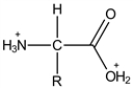
B)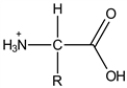
C)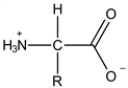
D)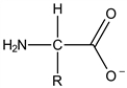
E)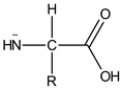
A)
B)
C)
D)
E)
Question
Which of the following amino-acids is not chiral?
A)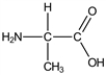
B)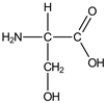
C)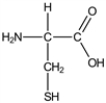
D)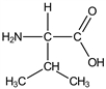
E)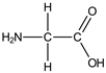
A)
B)
C)
D)
E)
Question
Question
Question
Question
Question
Question
Which of the following represents the linkage connecting amino acids in proteins?
A)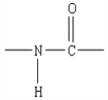
B)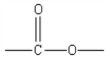
C)
D)
E)
A)
B)
C)
D)
E)
Question
Question
Question
Question
Question
Question
Question
Question
Question
Question
Question
Question
Question
Question
Question
Question
Question
Question
Question
Question
Question
Question
Question
Which DNA or RNA base is guanine?
A)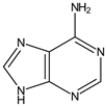
B)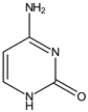
C)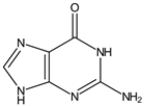
D)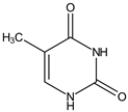
E)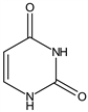
A)
B)
C)
D)
E)
Question
Question
Question
Question
Question
Question
Question
Question
Question
Question
Question

Unlock Deck
Sign up to unlock the cards in this deck!
Unlock Deck
Unlock Deck
1/48

Play

Full screen (f)
Deck 25: Biochemistry
1
A polypeptide is
A) an addition polymer of amino acids.
B) a condensation polymer of amino acids.
C) a polymer of sugar molecules.
D) a part of nucleic acids.
E) a polymer of nucleic acids.
A) an addition polymer of amino acids.
B) a condensation polymer of amino acids.
C) a polymer of sugar molecules.
D) a part of nucleic acids.
E) a polymer of nucleic acids.
a condensation polymer of amino acids.
2
Which statement concerning the twenty different α-amino acids widely found in nature is true?
A) Each α-amino acid has a different number of carbon atoms.
B) Each α-amino acid has one amino (−NH2)group.
C) Each α-amino acid has one carboxylic acid (−COOH)group.
D) These α-amino acids differ in the R groups attached to the α-carbon.
E) None of these α-amino acids are aromatic compounds.
A) Each α-amino acid has a different number of carbon atoms.
B) Each α-amino acid has one amino (−NH2)group.
C) Each α-amino acid has one carboxylic acid (−COOH)group.
D) These α-amino acids differ in the R groups attached to the α-carbon.
E) None of these α-amino acids are aromatic compounds.
These α-amino acids differ in the R groups attached to the α-carbon.
3
A disaccharide is formed when two monosaccharides are linked by the elimination of a molecule of water and the formation of an ether bond.The newly formed C⎯O bond linking the monosaccharides is called the ____ bond.
A) aldose
B) ketose
C) glycogen
D) cyclic
E) glycosidic
A) aldose
B) ketose
C) glycogen
D) cyclic
E) glycosidic
glycosidic
4
Which of the following reactions is responsible for the formation of glycosidic bonds in disaccharides?
A) An alkylation reaction
B) A condensation reaction
C) A hydrolysis reaction
D) An addition reaction
E) A substitution reaction
A) An alkylation reaction
B) A condensation reaction
C) A hydrolysis reaction
D) An addition reaction
E) A substitution reaction
Unlock Deck
Unlock for access to all 48 flashcards in this deck.
Unlock Deck
k this deck
5
What is the general formula for carbohydrates?
A) (CH2O)n
B) Cn(H2O)n+2
C) C(H2O)n
D) Cn(H2O)m
E) Cn(H2O)n+1
A) (CH2O)n
B) Cn(H2O)n+2
C) C(H2O)n
D) Cn(H2O)m
E) Cn(H2O)n+1
Unlock Deck
Unlock for access to all 48 flashcards in this deck.
Unlock Deck
k this deck
6
The side chains of nonpolar amino acids contain _____.
A) carbon and hydrogen
B) nitrogen and oxygen
C) carbon and nitrogen
D) carbon and oxygen
E) nitrogen and hydrogen
A) carbon and hydrogen
B) nitrogen and oxygen
C) carbon and nitrogen
D) carbon and oxygen
E) nitrogen and hydrogen
Unlock Deck
Unlock for access to all 48 flashcards in this deck.
Unlock Deck
k this deck
7
What is the most prevalent form of the amino acid glycine (R = H)in an aqueous environment when mixed with an excess of strong acid.
A)
B)
C)
D)
E)
A)
B)
C)
D)
E)
Unlock Deck
Unlock for access to all 48 flashcards in this deck.
Unlock Deck
k this deck
8
Which of the following amino-acids is not chiral?
A)
B)
C)
D)
E)
A)
B)
C)
D)
E)
Unlock Deck
Unlock for access to all 48 flashcards in this deck.
Unlock Deck
k this deck
9
What carbohydrate is the form in which plants store glucose for future use as cellular fuel?
A) starch
B) cellulose
C) glycogen
D) sucrose
E) fructose
A) starch
B) cellulose
C) glycogen
D) sucrose
E) fructose
Unlock Deck
Unlock for access to all 48 flashcards in this deck.
Unlock Deck
k this deck
10
The sequence of amino acids linked by peptide bonds is called the _____ structure of a protein.
A) isomeric
B) primary
C) secondary
D) tertiary
E) quaternary
A) isomeric
B) primary
C) secondary
D) tertiary
E) quaternary
Unlock Deck
Unlock for access to all 48 flashcards in this deck.
Unlock Deck
k this deck
11
Which of the following functional groups is not found in naturally occurring proteins or their amino acid building blocks?
A) carboxylic acid
B) alcohol
C) ketone
D) amide
E) amine
A) carboxylic acid
B) alcohol
C) ketone
D) amide
E) amine
Unlock Deck
Unlock for access to all 48 flashcards in this deck.
Unlock Deck
k this deck
12
A triose is a monosaccharide with three carbon atoms.The molecular formula of a triose is _____.
A) C3H6O3
B) C3H3O3
C) C3H6O6
D) C3H3O6
E) C3H2O6
A) C3H6O3
B) C3H3O3
C) C3H6O6
D) C3H3O6
E) C3H2O6
Unlock Deck
Unlock for access to all 48 flashcards in this deck.
Unlock Deck
k this deck
13
Which of the following is not a polysaccharide?
A) Glycogen
B) Lactose
C) Cellulose
D) Amylose starch
E) Amylopectin starch
A) Glycogen
B) Lactose
C) Cellulose
D) Amylose starch
E) Amylopectin starch
Unlock Deck
Unlock for access to all 48 flashcards in this deck.
Unlock Deck
k this deck
14
Which of the following represents the linkage connecting amino acids in proteins?
A)
B)
C)
D)
E)
A)
B)
C)
D)
E)
Unlock Deck
Unlock for access to all 48 flashcards in this deck.
Unlock Deck
k this deck
15
Which of the following statements concerning carbohydrates is not correct?
A) Carbohydrates are also known as sugars.
B) Monosaccharides,the simplest sugars,have the general formula Cx(H2O)x.
C) Almost all sugars are chiral and many possess more than one chiral carbon.
D) The acyclic (linear)form of monosaccharides predominates in aqueous solutions.
E) Sugars are found in RNA and DNA.
A) Carbohydrates are also known as sugars.
B) Monosaccharides,the simplest sugars,have the general formula Cx(H2O)x.
C) Almost all sugars are chiral and many possess more than one chiral carbon.
D) The acyclic (linear)form of monosaccharides predominates in aqueous solutions.
E) Sugars are found in RNA and DNA.
Unlock Deck
Unlock for access to all 48 flashcards in this deck.
Unlock Deck
k this deck
16
Which of the following concerning protein structure is not correct?
A) The primary structure of a protein is the sequence of amino acids linked together by peptide bonds.
B) Hydrogen bonds between amide linkages in the protein backbone define protein secondary structure.
C) Helices and sheets are common tertiary structures in proteins.
D) How a protein folds into its overall 3-dimensional shape is referred to as the protein tertiary structure.
E) In cases where more than one polypeptide chain makes up the protein,the interaction of the different chains is referred to as the quaternary structure.
A) The primary structure of a protein is the sequence of amino acids linked together by peptide bonds.
B) Hydrogen bonds between amide linkages in the protein backbone define protein secondary structure.
C) Helices and sheets are common tertiary structures in proteins.
D) How a protein folds into its overall 3-dimensional shape is referred to as the protein tertiary structure.
E) In cases where more than one polypeptide chain makes up the protein,the interaction of the different chains is referred to as the quaternary structure.
Unlock Deck
Unlock for access to all 48 flashcards in this deck.
Unlock Deck
k this deck
17
How many unique tripeptides can be made from two molecules of valine (val)and one molecule of alanine (ala)?
A) One
B) Two
C) Three
D) Four
E) >Five
A) One
B) Two
C) Three
D) Four
E) >Five
Unlock Deck
Unlock for access to all 48 flashcards in this deck.
Unlock Deck
k this deck
18
What is the functional group corresponding to a peptide bond?
A) amine
B) ether
C) amide
D) hemiacetal
E) carboxylic acid
A) amine
B) ether
C) amide
D) hemiacetal
E) carboxylic acid
Unlock Deck
Unlock for access to all 48 flashcards in this deck.
Unlock Deck
k this deck
19
Which of the following statements concerning proteins is not correct?
A) Some proteins provide structural support in the form of muscle and collagen.
B) Some proteins provide storage and transport.
C) Some proteins regulate chemical reactions that take place in the body.
D) Some proteins act as catalysts.
E) Nucleic acids are the building blocks of proteins.
A) Some proteins provide structural support in the form of muscle and collagen.
B) Some proteins provide storage and transport.
C) Some proteins regulate chemical reactions that take place in the body.
D) Some proteins act as catalysts.
E) Nucleic acids are the building blocks of proteins.
Unlock Deck
Unlock for access to all 48 flashcards in this deck.
Unlock Deck
k this deck
20
Which of the following functional groups are not found in carbohydrates?
A) Carboxylic acids
B) Alcohols
C) Ketones
D) Aldehydes
E) Ethers
A) Carboxylic acids
B) Alcohols
C) Ketones
D) Aldehydes
E) Ethers
Unlock Deck
Unlock for access to all 48 flashcards in this deck.
Unlock Deck
k this deck
21
An important reaction in the production of energy from sugars (glycolysis)is the reduction of pyruvate to lactate by NADH. pyruvate + NADH + H+(aq)→ lactate + NAD+ ΔrG°′ = ?
Given the following reduction potentials,
NAD+ + H+ + 2e− → NADH
Ε°′ = −0.320 V
Pyruvate + 2H+ + 2e− → lactate
Ε°′ = −0.190 V
Calculate the standard Gibbs free energy (at pH 7)for the reduction of pyruvate to lactate by NADH.(ΔrG°′ = −nFE°′; F = 96485 C/mol electrons)
A) 98.4 kJ/mol-rxn
B) −98.4 kJ/mol-rxn
C) −12.6 kJ/mol-rxn
D) 25.1 kJ/mol-rxn
E) −25.1 kJ/mol-rxn
Given the following reduction potentials,
NAD+ + H+ + 2e− → NADH
Ε°′ = −0.320 V
Pyruvate + 2H+ + 2e− → lactate
Ε°′ = −0.190 V
Calculate the standard Gibbs free energy (at pH 7)for the reduction of pyruvate to lactate by NADH.(ΔrG°′ = −nFE°′; F = 96485 C/mol electrons)
A) 98.4 kJ/mol-rxn
B) −98.4 kJ/mol-rxn
C) −12.6 kJ/mol-rxn
D) 25.1 kJ/mol-rxn
E) −25.1 kJ/mol-rxn
Unlock Deck
Unlock for access to all 48 flashcards in this deck.
Unlock Deck
k this deck
22
Saturated fats and oils have ___ melting points than unsaturated fats and oils because of greater ___ forces between molecules.
A) lower,hydrogen bonding
B) higher,London dispersion
C) higher,hydrogen bonding
D) higher,dipole-dipole
E) lower,London dispersion
A) lower,hydrogen bonding
B) higher,London dispersion
C) higher,hydrogen bonding
D) higher,dipole-dipole
E) lower,London dispersion
Unlock Deck
Unlock for access to all 48 flashcards in this deck.
Unlock Deck
k this deck
23
Which of the following is the product of transcription in protein synthesis?
A) ATP
B) Protein
C) tRNA
D) mRNA
E) DNA
A) ATP
B) Protein
C) tRNA
D) mRNA
E) DNA
Unlock Deck
Unlock for access to all 48 flashcards in this deck.
Unlock Deck
k this deck
24
How many rings are found in a steroid molecule?
A) < 3
B) 3
C) 4
D) 5
E) > 5
A) < 3
B) 3
C) 4
D) 5
E) > 5
Unlock Deck
Unlock for access to all 48 flashcards in this deck.
Unlock Deck
k this deck
25
Which of the following is not a lipid?
A) triglycerides
B) fatty acids
C) glycerol
D) steroids
E) phospholipids
A) triglycerides
B) fatty acids
C) glycerol
D) steroids
E) phospholipids
Unlock Deck
Unlock for access to all 48 flashcards in this deck.
Unlock Deck
k this deck
26
A compound which contains both a positive and negative charge is called a ____.
Unlock Deck
Unlock for access to all 48 flashcards in this deck.
Unlock Deck
k this deck
27
Aerobic respiration links the oxidation of glucose with the production of ATP form ADP. Given the following thermodynamic data,
C6H12O6(s)+ 6O2(g)→ 6CO2(g)+ 6H2O(l)
ΔrH° = −2803 kJ/mol-rxn
ATP + H2O(l)→ ADP + HPO42-(aq)
ΔrH° ≈ −24 kJ/mol-rxn
Calculate the enthalpy of reaction for the aerobic production of 25 ATP shown below.
C6H12O6(s)+ 6O2(g)+ 25ADP + 25HPO42-(aq)→ 6CO2(g)+ 25ATP + 31H2O(l)ΔrH° = ?
A) 2827 kJ/mol-rxn
B) -3403 kJ/mol-rxn
C) -2779 kJ/mol-rxn
D) -2203 kJ/mol-rxn
E) -2827 kJ/mol-rxn
C6H12O6(s)+ 6O2(g)→ 6CO2(g)+ 6H2O(l)
ΔrH° = −2803 kJ/mol-rxn
ATP + H2O(l)→ ADP + HPO42-(aq)
ΔrH° ≈ −24 kJ/mol-rxn
Calculate the enthalpy of reaction for the aerobic production of 25 ATP shown below.
C6H12O6(s)+ 6O2(g)+ 25ADP + 25HPO42-(aq)→ 6CO2(g)+ 25ATP + 31H2O(l)ΔrH° = ?
A) 2827 kJ/mol-rxn
B) -3403 kJ/mol-rxn
C) -2779 kJ/mol-rxn
D) -2203 kJ/mol-rxn
E) -2827 kJ/mol-rxn
Unlock Deck
Unlock for access to all 48 flashcards in this deck.
Unlock Deck
k this deck
28
Given the following reduction potentials, NAD+ + H+ + 2e− → NADH
Ε° = −0.105 V
2H+ + 2e− → H2
Ε° = 0.000 V
Calculate the standard reduction potential and identify the reducing agent in the following reaction.
NAD+ + H2 → NADH + 2H+
A) 0.105 V,NAD+
B) −0.105 V,NAD+
C) −0.105 V,H2
D) 0.105 V,H2
E) −0.105 V,NADH
Ε° = −0.105 V
2H+ + 2e− → H2
Ε° = 0.000 V
Calculate the standard reduction potential and identify the reducing agent in the following reaction.
NAD+ + H2 → NADH + 2H+
A) 0.105 V,NAD+
B) −0.105 V,NAD+
C) −0.105 V,H2
D) 0.105 V,H2
E) −0.105 V,NADH
Unlock Deck
Unlock for access to all 48 flashcards in this deck.
Unlock Deck
k this deck
29
Which of the following base forms hydrogen bonds with adenine in double-stranded DNA molecule?
A) Thymine
B) Guanine
C) Uracil
D) Cytosine
E) None of these
A) Thymine
B) Guanine
C) Uracil
D) Cytosine
E) None of these
Unlock Deck
Unlock for access to all 48 flashcards in this deck.
Unlock Deck
k this deck
30
One way our bodies produce ATP is to couple the formation of ATP from ADP with the hydrolysis of phosphoenopyruvate (PEP),as shown below. PEP + ADP + H+(aq)→ pyruvate + ATP ΔrG°′ = ?
Given the following thermodynamic data,
PEP + H2O(l)→ pyruvate + HPO42-(aq)
ΔrG°′ = −61.9 kJ/mol-rxn
ATP + H2O(l)→ ADP + HPO42-(aq)+ H+(aq)
ΔrG°′ = −30.5 kJ/mol-rxn
Calculate the standard Gibbs free energy of reaction for the formation of ATP from the hydrolysis of PEP.
A) 92.4 kJ/mol-rxn
B) −31.4 kJ/mol-rxn
C) −92.4 kJ/mol-rxn
D) 31.4 kJ/mol-rxn
E) −46.7 kJ/mol-rxn
Given the following thermodynamic data,
PEP + H2O(l)→ pyruvate + HPO42-(aq)
ΔrG°′ = −61.9 kJ/mol-rxn
ATP + H2O(l)→ ADP + HPO42-(aq)+ H+(aq)
ΔrG°′ = −30.5 kJ/mol-rxn
Calculate the standard Gibbs free energy of reaction for the formation of ATP from the hydrolysis of PEP.
A) 92.4 kJ/mol-rxn
B) −31.4 kJ/mol-rxn
C) −92.4 kJ/mol-rxn
D) 31.4 kJ/mol-rxn
E) −46.7 kJ/mol-rxn
Unlock Deck
Unlock for access to all 48 flashcards in this deck.
Unlock Deck
k this deck
31
Which of the following units is not found in a DNA molecule?
A) a phosphate group
B) a peptide bond
C) an organic base
D) a five-membered ring
E) a ribose sugar
A) a phosphate group
B) a peptide bond
C) an organic base
D) a five-membered ring
E) a ribose sugar
Unlock Deck
Unlock for access to all 48 flashcards in this deck.
Unlock Deck
k this deck
32
A fragment of a DNA molecule has the base sequence GACT.Which of the following is the complementary sequence of the DNA fragment?
A) TACG
B) TCAG
C) CTAG
D) CTGA
E) GACT
A) TACG
B) TCAG
C) CTAG
D) CTGA
E) GACT
Unlock Deck
Unlock for access to all 48 flashcards in this deck.
Unlock Deck
k this deck
33
Classification of a compound as a lipid is based on the _____ of the compound.
A) polarity
B) pH
C) size
D) hydrophobicity
E) solubility
A) polarity
B) pH
C) size
D) hydrophobicity
E) solubility
Unlock Deck
Unlock for access to all 48 flashcards in this deck.
Unlock Deck
k this deck
34
The fully protonated form of the amino-acid glycine (R=H)may be simply written as H2Gly+.Write the balanced acid dissociation equilibria (Ka1 and Ka2)for this acid.
Unlock Deck
Unlock for access to all 48 flashcards in this deck.
Unlock Deck
k this deck
35
Which of the following is not a step in protein synthesis?
A) translation
B) transcription
C) replication
D) A and B
E) A,B,and C
A) translation
B) transcription
C) replication
D) A and B
E) A,B,and C
Unlock Deck
Unlock for access to all 48 flashcards in this deck.
Unlock Deck
k this deck
36
A phospholipid may include all of the following except
A) ester functional groups.
B) one or more alkene functional groups.
C) a net negative charge.
D) a polar tail.
E) a phosphodiester linkage.
A) ester functional groups.
B) one or more alkene functional groups.
C) a net negative charge.
D) a polar tail.
E) a phosphodiester linkage.
Unlock Deck
Unlock for access to all 48 flashcards in this deck.
Unlock Deck
k this deck
37
Which DNA or RNA base is guanine?
A)
B)
C)
D)
E)
A)
B)
C)
D)
E)
Unlock Deck
Unlock for access to all 48 flashcards in this deck.
Unlock Deck
k this deck
38
Which of the following is not a component of DNA?
A) Cytosine
B) Phosphodiester group
C) ß-D-ribose
D) Guanine
E) Thymine
A) Cytosine
B) Phosphodiester group
C) ß-D-ribose
D) Guanine
E) Thymine
Unlock Deck
Unlock for access to all 48 flashcards in this deck.
Unlock Deck
k this deck
39
The melting point of lipids depends on the strength of the intermolecular forces present in the solid.Rank the following fatty acids in order of increasing melting point. CH3(CH2)14CO2H CH3(CH2)15CO2H CH3(CH2)11CO2H
A) CH3(CH2)11CO2H < CH3(CH2)14CO2H < CH3(CH2)15CO2H
B) CH3(CH2)14CO2H < CH3(CH2)11CO2H < CH3(CH2)15CO2H
C) CH3(CH2)14CO2H < CH3(CH2)15CO2H < CH3(CH2)11CO2H
D) CH3(CH2)15CO2H < CH3(CH2)14CO2H < CH3(CH2)11CO2H
E) CH3(CH2)11CO2H < CH3(CH2)15CO2H < CH3(CH2)14CO2H
A) CH3(CH2)11CO2H < CH3(CH2)14CO2H < CH3(CH2)15CO2H
B) CH3(CH2)14CO2H < CH3(CH2)11CO2H < CH3(CH2)15CO2H
C) CH3(CH2)14CO2H < CH3(CH2)15CO2H < CH3(CH2)11CO2H
D) CH3(CH2)15CO2H < CH3(CH2)14CO2H < CH3(CH2)11CO2H
E) CH3(CH2)11CO2H < CH3(CH2)15CO2H < CH3(CH2)14CO2H
Unlock Deck
Unlock for access to all 48 flashcards in this deck.
Unlock Deck
k this deck
40
How many RNA nucleotides comprise a codon?
A) 1
B) 2
C) 3
D) 4
E) 5
A) 1
B) 2
C) 3
D) 4
E) 5
Unlock Deck
Unlock for access to all 48 flashcards in this deck.
Unlock Deck
k this deck
41
What is the role of tRNA in protein synthesis?
Unlock Deck
Unlock for access to all 48 flashcards in this deck.
Unlock Deck
k this deck
42
The amide linkages in a protein are also called _____ bonds.
Unlock Deck
Unlock for access to all 48 flashcards in this deck.
Unlock Deck
k this deck
43
The oxygen that bridges two sugars in a disaccharide is known as a ___ bond.
Unlock Deck
Unlock for access to all 48 flashcards in this deck.
Unlock Deck
k this deck
44
Starch and cellulose are polysaccharides made up long chains of glucose linked by glycosidic bonds.Despite the identical composition,why can humans digest starch but not cellulose?
Unlock Deck
Unlock for access to all 48 flashcards in this deck.
Unlock Deck
k this deck
45
The principal compound used to store and transport energy in a cell is called adenosine 5'-triphosphate.
Unlock Deck
Unlock for access to all 48 flashcards in this deck.
Unlock Deck
k this deck
46
The process by which a double stranded of DNA is copied is called ___.In the process,a ___ strand of DNA is produced from each single strand of the original double-stranded DNA.
Unlock Deck
Unlock for access to all 48 flashcards in this deck.
Unlock Deck
k this deck
47
In the context of polymerase chain reaction,if you start with a single double-stranded DNA molecule,how many double-strabded DNA molecules will you have after 10 amplification cycles?
Unlock Deck
Unlock for access to all 48 flashcards in this deck.
Unlock Deck
k this deck
48
When a drop of the fatty acid oleic acid (CH3(CH2)7CH=CH(CH2)7CO2H)is added to water it forms a molecule thick layer on the surface of the water.What is the likely orientation of the acid on the water surface?
Unlock Deck
Unlock for access to all 48 flashcards in this deck.
Unlock Deck
k this deck
Unlock Deck
Unlock for access to all 48 flashcards in this deck.






