







 Chat with AI

Deck 6: Economic Growth
Full screen (f)

Question

Question
Question
Question
Question
Question
Question
Question
Question
Question
Question
Question
Question
Question
Question
Question
Question
Question
Question
Question
Question
Question
Question
Question
Question
Question
Question
Question
Question
Question
Question
Question
Question
Question
Question
Question
Question
Question
Question
Question
Question
Question
Question
Question
Question
Question
Question
Question
Question
Question
Question
Question
Question
Question
Question
Question
Question
Question
Question
Question
Question
Question
Question
Question
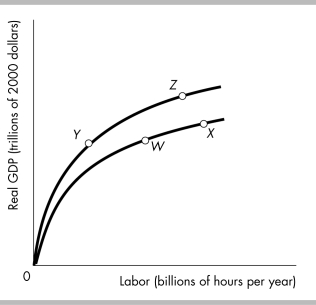
The country of Kemper is on its aggregate production function at point W in the above figure. The government of Kemper passes a law that makes 4 years of college mandatory for all citizens. After all citizens have their education, the economy will
A) move to point such as X.
B) move to point such as Y.
C) move to point such as Z.
D) remain at point W.
Question
Question
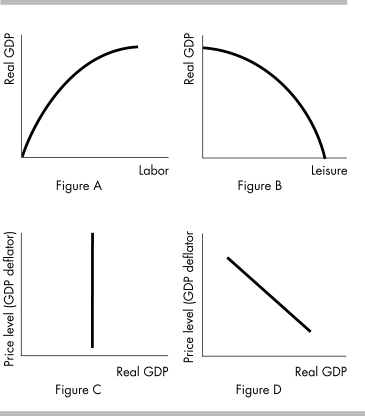
In the illustration above, which figure shows an aggregate production function?
A) Figure A
B) Figure B
C) Figure C
D) Figure D
Question
The shows how real GDP varies as the quantity of labor employed varies, other things remaining the same.
A) labor demand curve
B) aggregate production function
C) short- run aggregate supply curve
D) labor supply curve
Question
Question
The country of Kemper is on its aggregate production function at point W in the above figure. If the population increases with no change in capital or technology, the economy will
A) remain at point W.
B) move to point such as Z.
C) move to point such as X.
D) move to point such as Y.
Question
Question
Question
Question
Question
Question
Question
Question
Question
Question
Question

Unlock Deck
Sign up to unlock the cards in this deck!
Unlock Deck
Unlock Deck
1/450

Play

Full screen (f)
Deck 6: Economic Growth
1
Suppose a country is producing $20 million of real GDP. If the economy grows at 10 percent per year, approximately how many years will to take for real GDP to grow to $80 million?
A) 14
B) 30
C) 4
D) 7
A) 14
B) 30
C) 4
D) 7
A
2
If real GDP per person is growing at 4 percent per year, approximately how many years will it take to double?
A) 4
B) 17.5
C) 25
D) 8
A) 4
B) 17.5
C) 25
D) 8
B
3
Suppose a nation's population grows by 2 percent and, at the same time, its GDP grows by 5 percent. Approximately how fast will real GDP per person increase?
A) 2 percent per year
B) 3 percent per year
C) 5
D) 10 percent per year
A) 2 percent per year
B) 3 percent per year
C) 5
D) 10 percent per year
B
4
The Rule of 70 is used to
A) calculate the standard of living
B) calculate the economy's growth rate
C) estimate how much of an economy's growth rate is due to increases in capital per hour of labor
D) estimate how long it will take the level of any variable to double
A) calculate the standard of living
B) calculate the economy's growth rate
C) estimate how much of an economy's growth rate is due to increases in capital per hour of labor
D) estimate how long it will take the level of any variable to double
Unlock Deck
Unlock for access to all 450 flashcards in this deck.
Unlock Deck
k this deck
5
If a nation's population grows, then,
A) there must be an increase in real GDP per person.
B) growth in real GDP per person will be greater than the growth of real GDP.
C) there can be no economic growth.
D) growth in real GDP per person will be less than the growth of real GDP.
A) there must be an increase in real GDP per person.
B) growth in real GDP per person will be greater than the growth of real GDP.
C) there can be no economic growth.
D) growth in real GDP per person will be less than the growth of real GDP.
Unlock Deck
Unlock for access to all 450 flashcards in this deck.
Unlock Deck
k this deck
6
In 2005, Armenia had a real GDP of approximately $4.21 billion and a population of 2.98 million. In 2006, real GDP was $4.59 billion and population was 2.97 million.
In 2008, Armenia had a real GDP of $4.21 billion and a population of 2.98 million. In 2009, real GDP was $4.59 billion and population was 2.97 million. What was Armenia's economic growth rate from 2008 to 2009?
A) 8.3 percent
B) 9.0 percent
C) 3.8 percent
D) 0.38 percent
In 2008, Armenia had a real GDP of $4.21 billion and a population of 2.98 million. In 2009, real GDP was $4.59 billion and population was 2.97 million. What was Armenia's economic growth rate from 2008 to 2009?
A) 8.3 percent
B) 9.0 percent
C) 3.8 percent
D) 0.38 percent
Unlock Deck
Unlock for access to all 450 flashcards in this deck.
Unlock Deck
k this deck
7
In 2005, Armenia had a real GDP of approximately $4.21 billion and a population of 2.98 million. In 2006, real GDP was $4.59 billion and population was 2.97 million.
During 2009, the country of Economia had a real GDP of $115 billion and the population was 0.9 billion. In 2008, real GDP was 105 billion and the population was 0.85 billion. In 2008, real GDP per person was
A) $124
B) $128
C) $135
D) $117
During 2009, the country of Economia had a real GDP of $115 billion and the population was 0.9 billion. In 2008, real GDP was 105 billion and the population was 0.85 billion. In 2008, real GDP per person was
A) $124
B) $128
C) $135
D) $117
Unlock Deck
Unlock for access to all 450 flashcards in this deck.
Unlock Deck
k this deck
8
Which of the following is used to calculate the standard of living?
A) real GDP/population
B) real GDP/aggregate hours
C) the one- third rule
D) ((real GDP in the current year - real GDP in previous year)/real GDP in previous year) x 100
A) real GDP/population
B) real GDP/aggregate hours
C) the one- third rule
D) ((real GDP in the current year - real GDP in previous year)/real GDP in previous year) x 100
Unlock Deck
Unlock for access to all 450 flashcards in this deck.
Unlock Deck
k this deck
9
The best definition for economic growth is
A) a sustained expansion of consumption goods over a given period.
B) a sustained expansion of production possibilities measured as the increase in real GDP over a given period.
C) a sustained expansion of production possibilities measured as the increase in nominal GDP over a given period.
D) a sustained expansion of production goods over a given period.
A) a sustained expansion of consumption goods over a given period.
B) a sustained expansion of production possibilities measured as the increase in real GDP over a given period.
C) a sustained expansion of production possibilities measured as the increase in nominal GDP over a given period.
D) a sustained expansion of production goods over a given period.
Unlock Deck
Unlock for access to all 450 flashcards in this deck.
Unlock Deck
k this deck
10
We are interested in long- term growth primarily because it brings
A) lower price levels.
B) higher price levels.
C) higher standards of living.
D) trade wars with our trading partners.
A) lower price levels.
B) higher price levels.
C) higher standards of living.
D) trade wars with our trading partners.
Unlock Deck
Unlock for access to all 450 flashcards in this deck.
Unlock Deck
k this deck
11
In 2005, Armenia had a real GDP of approximately $4.21 billion and a population of 2.98 million. In 2006, real GDP was $4.59 billion and population was 2.97 million.
In 2008, Armenia had a real GDP of approximately $4.21 billion and a population of 2.98 million. In 2009, real GDP was $4.59 billion and population was 2.97 million. Armenia's real GDP per person in 2009 was
A) $132
B) $1,545
C) $380
D) $1,413
In 2008, Armenia had a real GDP of approximately $4.21 billion and a population of 2.98 million. In 2009, real GDP was $4.59 billion and population was 2.97 million. Armenia's real GDP per person in 2009 was
A) $132
B) $1,545
C) $380
D) $1,413
Unlock Deck
Unlock for access to all 450 flashcards in this deck.
Unlock Deck
k this deck
12
In 2005, Armenia had a real GDP of approximately $4.21 billion and a population of 2.98 million. In 2006, real GDP was $4.59 billion and population was 2.97 million.
During 2009, the country of Economia had a real GDP of $115 billion and the population was 0.9 billion. In 2008, real GDP was 105 billion and the population was 0.85 billion. In 2009, real GDP per person was
A) $124
B) $128
C) $135
D) $117
During 2009, the country of Economia had a real GDP of $115 billion and the population was 0.9 billion. In 2008, real GDP was 105 billion and the population was 0.85 billion. In 2009, real GDP per person was
A) $124
B) $128
C) $135
D) $117
Unlock Deck
Unlock for access to all 450 flashcards in this deck.
Unlock Deck
k this deck
13
Using the Rule of 70, if the country of Flowerdom's current growth rate of real GDP per person was 7 percent a year, how long would it take the country's real GDP per person to double?
A) 2 years
B) 49 years
C) 10 years
D) 1 year
A) 2 years
B) 49 years
C) 10 years
D) 1 year
Unlock Deck
Unlock for access to all 450 flashcards in this deck.
Unlock Deck
k this deck
14
Slowdonia's current growth rate of real GDP per person is 2 percent a year. How long will it take to double real GDP per person?
A) 28.6 years
B) 35 years
C) approximately 10 years
D) half a year
A) 28.6 years
B) 35 years
C) approximately 10 years
D) half a year
Unlock Deck
Unlock for access to all 450 flashcards in this deck.
Unlock Deck
k this deck
15
Real GDP per person in the country of Flip is $10,000, and the growth rate is 10 percent a year. Real GDP per person in the country of Flap is $20,000 and the growth rate is 5 percent a year. When will real GDP per person be greater in Flip than in Flap?
A) in 15 years
B) in 2 years
C) in 10 years
D) never
A) in 15 years
B) in 2 years
C) in 10 years
D) never
Unlock Deck
Unlock for access to all 450 flashcards in this deck.
Unlock Deck
k this deck
16
In 2005, Armenia had a real GDP of approximately $4.21 billion and a population of 2.98 million. In 2006, real GDP was $4.59 billion and population was 2.97 million.
During 2009, the country of Economia had a real GDP of $115 billion and the population was 0.9 billion. In 2008, real GDP was 105 billion and the population was 0.85 billion. Economia's growth rate of real GDP per person is
A) 5.88 percent
B) 3.23 percent
C) 5 percent
D) 9.52 percent
During 2009, the country of Economia had a real GDP of $115 billion and the population was 0.9 billion. In 2008, real GDP was 105 billion and the population was 0.85 billion. Economia's growth rate of real GDP per person is
A) 5.88 percent
B) 3.23 percent
C) 5 percent
D) 9.52 percent
Unlock Deck
Unlock for access to all 450 flashcards in this deck.
Unlock Deck
k this deck
17
Using the Rule of 70, if the country of Flowerdom's current growth rate of real GDP per person was 10 percent a year, how long would it take the country's real GDP per person to double?
A) 1 year
B) 7 years
C) 0.7 years
D) 10 years
A) 1 year
B) 7 years
C) 0.7 years
D) 10 years
Unlock Deck
Unlock for access to all 450 flashcards in this deck.
Unlock Deck
k this deck
18
Slowdonia's current growth rate of real GDP per person is 1 percent a year. Approximately how long will it take to double real GDP per person?
A) 35 years
B) 70 years
C) 10 year 2
D) 100 years
A) 35 years
B) 70 years
C) 10 year 2
D) 100 years
Unlock Deck
Unlock for access to all 450 flashcards in this deck.
Unlock Deck
k this deck
19
In 2005, Armenia had a real GDP of approximately $4.21 billion and a population of 2.98 million. In 2006, real GDP was $4.59 billion and population was 2.97 million.
In 2008, Armenia had a real GDP of approximately $4.21 billion and a population of 2.98 million. In 2009, real GDP was $4.59 billion and population was 2.97 million. From 2008 to 2009, Armenia's standard of living .
A) might have increased, decreased, or remained unchanged but more information is needed to determine which.
B) decreased
C) increased
D) did not change
In 2008, Armenia had a real GDP of approximately $4.21 billion and a population of 2.98 million. In 2009, real GDP was $4.59 billion and population was 2.97 million. From 2008 to 2009, Armenia's standard of living .
A) might have increased, decreased, or remained unchanged but more information is needed to determine which.
B) decreased
C) increased
D) did not change
Unlock Deck
Unlock for access to all 450 flashcards in this deck.
Unlock Deck
k this deck
20
Economic growth is measured by
A) changes in nominal GDP.
B) changes in real GDP.
C) changes in the employment rate.
D) All of the above are used to measure economic growth.
A) changes in nominal GDP.
B) changes in real GDP.
C) changes in the employment rate.
D) All of the above are used to measure economic growth.
Unlock Deck
Unlock for access to all 450 flashcards in this deck.
Unlock Deck
k this deck
21
Since 1960, which of the following countries had average growth rates in real GDP per person higher than that of the United States?
A) Singapore
B) South Korea
C) Hong Kong
D) All of the above answers are correct.
A) Singapore
B) South Korea
C) Hong Kong
D) All of the above answers are correct.
Unlock Deck
Unlock for access to all 450 flashcards in this deck.
Unlock Deck
k this deck
22
Over the past 100 years real GDP per person in the United States, on average, has
A) decreased by about 5 percent per year.
B) increased by about 5 percent per year.
C) increased by about 2 percent per year.
D) increased by about 10 percent per year.
A) decreased by about 5 percent per year.
B) increased by about 5 percent per year.
C) increased by about 2 percent per year.
D) increased by about 10 percent per year.
Unlock Deck
Unlock for access to all 450 flashcards in this deck.
Unlock Deck
k this deck
23
Looking at real GDP per person in the United States over the past 100 years, we see that real GDP
A) has usually stayed constant.
B) each year has always increased.
C) increased during most of the years but not all of them.
D) only grew after World War II.
A) has usually stayed constant.
B) each year has always increased.
C) increased during most of the years but not all of them.
D) only grew after World War II.
Unlock Deck
Unlock for access to all 450 flashcards in this deck.
Unlock Deck
k this deck
24
During the 1990s, which of the following experienced the slowest rate of growth in real GDP per person?
A) Canada
B) Japan
C) United States
D) The big 4 nations of Europe
A) Canada
B) Japan
C) United States
D) The big 4 nations of Europe
Unlock Deck
Unlock for access to all 450 flashcards in this deck.
Unlock Deck
k this deck
25
Over the last 100 years, the average U.S. growth rate in real GDP per person was about
A) 12.5 percent per year.
B) 2 percent per year.
C) 1 percent per year.
D) 6 percent per year.
A) 12.5 percent per year.
B) 2 percent per year.
C) 1 percent per year.
D) 6 percent per year.
Unlock Deck
Unlock for access to all 450 flashcards in this deck.
Unlock Deck
k this deck
26
Over the past 100 years, the average growth rate of real GDP per person in the United States was 2 percent a year. During this period, grew at a faster rate than .
A) the population; real GDP
B) GDP; the population
C) inflation; real GDP
D) real GDP; the population
A) the population; real GDP
B) GDP; the population
C) inflation; real GDP
D) real GDP; the population
Unlock Deck
Unlock for access to all 450 flashcards in this deck.
Unlock Deck
k this deck
27
Looking at the world between 1960 to 2008, over these 48 years we see that
A) the nations of Africa had the fastest economic growth rate.
B) of the rich industrial countries, Japan grew the fastest.
C) of the rich industrial nations, Canada grew the fastest.
D) of the rich industrial countries, Japan grew the slowest.
A) the nations of Africa had the fastest economic growth rate.
B) of the rich industrial countries, Japan grew the fastest.
C) of the rich industrial nations, Canada grew the fastest.
D) of the rich industrial countries, Japan grew the slowest.
Unlock Deck
Unlock for access to all 450 flashcards in this deck.
Unlock Deck
k this deck
28
In 2008, of the following _ _ had the highest real GDP per person.
A) the United States
B) Germany
C) Canada
D) Japan
A) the United States
B) Germany
C) Canada
D) Japan
Unlock Deck
Unlock for access to all 450 flashcards in this deck.
Unlock Deck
k this deck
29
In 2008, of the following which nations had the highest level of real GDP per person?
A) France.
B) Canada.
C) Japan.
D) China.
A) France.
B) Canada.
C) Japan.
D) China.
Unlock Deck
Unlock for access to all 450 flashcards in this deck.
Unlock Deck
k this deck
30
Over the past 100 years, real GDP per person in the United States has grown at an average of
Percent a year.
A) 1
B) 3
C) 2
D) 4
Percent a year.
A) 1
B) 3
C) 2
D) 4
Unlock Deck
Unlock for access to all 450 flashcards in this deck.
Unlock Deck
k this deck
31
Which of following was a period of below- average economic growth in the United States?
A) the 1930s
B) the 1920s
C) the 1960s
D) all of the above
A) the 1930s
B) the 1920s
C) the 1960s
D) all of the above
Unlock Deck
Unlock for access to all 450 flashcards in this deck.
Unlock Deck
k this deck
32
Which of the following statements are correct?
I) The average economic growth rate in real GDP per person in the United States over the last cent was 5 percent per year.
II) The United States has the highest economic growth rate of any nation.
A) I only
B) II only
C) both I and II
D) neither I nor II
I) The average economic growth rate in real GDP per person in the United States over the last cent was 5 percent per year.
II) The United States has the highest economic growth rate of any nation.
A) I only
B) II only
C) both I and II
D) neither I nor II
Unlock Deck
Unlock for access to all 450 flashcards in this deck.
Unlock Deck
k this deck
33
During the later half of the 20th century, which of the following had the lowest level of real GDP per person?
A) Central and South America
B) Central Europe
C) United States
D) Africa
A) Central and South America
B) Central Europe
C) United States
D) Africa
Unlock Deck
Unlock for access to all 450 flashcards in this deck.
Unlock Deck
k this deck
34
Which of the following statements regarding U.S. economic growth is NOT correct?
A) In the 1930s, real GDP fell well below its trend.
B) Over the past 100 years, on the average real GDP per person grew 2 percent a year.
C) The growth rate of real GDP per person accelerated between 1973 to 1984.
D) The average annual growth rate of real GDP per person was lower prior to 1929 than after World War II.
A) In the 1930s, real GDP fell well below its trend.
B) Over the past 100 years, on the average real GDP per person grew 2 percent a year.
C) The growth rate of real GDP per person accelerated between 1973 to 1984.
D) The average annual growth rate of real GDP per person was lower prior to 1929 than after World War II.
Unlock Deck
Unlock for access to all 450 flashcards in this deck.
Unlock Deck
k this deck
35
Which of the following statements about world growth during the last half of the 20th century is correct?
A) Growth rates in South American countries have exceeded those in North America.
B) Due to rapid growth, real GDP per person in China is now about 50 percent of that in the United States.
C) Real GDP per person in Hong Kong and Singapore are approaching or surpassing that in the United States.
D) In every decade, Japan has experienced faster growth than the United States.
A) Growth rates in South American countries have exceeded those in North America.
B) Due to rapid growth, real GDP per person in China is now about 50 percent of that in the United States.
C) Real GDP per person in Hong Kong and Singapore are approaching or surpassing that in the United States.
D) In every decade, Japan has experienced faster growth than the United States.
Unlock Deck
Unlock for access to all 450 flashcards in this deck.
Unlock Deck
k this deck
36
Over the past four decades,
A) U.S. real GDP per person has fallen below that of the other rich industrial countries.
B) the growth rate of GDP per person in the United States has been increasing.
C) U.S. real GDP per person has been increasing.
D) Both answers A and C are correct.
A) U.S. real GDP per person has fallen below that of the other rich industrial countries.
B) the growth rate of GDP per person in the United States has been increasing.
C) U.S. real GDP per person has been increasing.
D) Both answers A and C are correct.
Unlock Deck
Unlock for access to all 450 flashcards in this deck.
Unlock Deck
k this deck
37
The historical record for the United States for the past 100 years shows
A) growth until 1970 and then a period of constant per person real GDP.
B) growth in real GDP per person during most years.
C) economic growth for about half the years and economic decline for the other half.
D) continuous economic growth, although at different rates, throughout the entire century.
A) growth until 1970 and then a period of constant per person real GDP.
B) growth in real GDP per person during most years.
C) economic growth for about half the years and economic decline for the other half.
D) continuous economic growth, although at different rates, throughout the entire century.
Unlock Deck
Unlock for access to all 450 flashcards in this deck.
Unlock Deck
k this deck
38
Over the past 100 years, real GDP per person in the United States has grown at a rate of _ per year, on the average.
A) 3.6 percent
B) 1 percent
C) 0.5 percent
D) 2 percent
A) 3.6 percent
B) 1 percent
C) 0.5 percent
D) 2 percent
Unlock Deck
Unlock for access to all 450 flashcards in this deck.
Unlock Deck
k this deck
39
Underdeveloped countries in which real GDP per person has not grown as fast as in the United States since 1960 include
A) Canada.
B) countries in Africa.
C) Japan.
D) Hong Kong.
A) Canada.
B) countries in Africa.
C) Japan.
D) Hong Kong.
Unlock Deck
Unlock for access to all 450 flashcards in this deck.
Unlock Deck
k this deck
40
The historical record for the United States since 1900 shows
A) growth until 1970 and then a period of constant per person real GDP.
B) economic growth for about half the years and economic decline for the other half.
C) continuous economic growth for each year, although at different rates, throughout the entire century.
D) mostly positive economic growth, though the Great Depression caused actual GDP to dip well below potential GDP.
A) growth until 1970 and then a period of constant per person real GDP.
B) economic growth for about half the years and economic decline for the other half.
C) continuous economic growth for each year, although at different rates, throughout the entire century.
D) mostly positive economic growth, though the Great Depression caused actual GDP to dip well below potential GDP.
Unlock Deck
Unlock for access to all 450 flashcards in this deck.
Unlock Deck
k this deck
41
A movement along the aggregate production function is the result of a change in
A) the quantity of labor
B) capital
C) technology
D) interest rates
A) the quantity of labor
B) capital
C) technology
D) interest rates
Unlock Deck
Unlock for access to all 450 flashcards in this deck.
Unlock Deck
k this deck
42
Along the aggregate production function, as the quantity of labor rises, real GDP
A) falls
B) rises
C) may fall, rise, or stay the same
D) stays the same
A) falls
B) rises
C) may fall, rise, or stay the same
D) stays the same
Unlock Deck
Unlock for access to all 450 flashcards in this deck.
Unlock Deck
k this deck
43
The gap between real GDP per person in Africa and real GDP per person in the United States has been
A) increasing.
B) remaining fairly constant.
C) there is no gap in real GDP per person between Africa and the United States.
D) decreasing.
A) increasing.
B) remaining fairly constant.
C) there is no gap in real GDP per person between Africa and the United States.
D) decreasing.
Unlock Deck
Unlock for access to all 450 flashcards in this deck.
Unlock Deck
k this deck
44
The aggregate production function shows that an economy increases its real GDP in the short run by
A) using more labor.
B) increasing its physical capital stock.
C) exploring for new deposits of natural resources.
D) developing new technologies.
A) using more labor.
B) increasing its physical capital stock.
C) exploring for new deposits of natural resources.
D) developing new technologies.
Unlock Deck
Unlock for access to all 450 flashcards in this deck.
Unlock Deck
k this deck
45
Convergence of the income gap has been most dramatic between
A) South America and the United States.
B) Africa and the United States.
C) Hong Kong and the United States.
D) the Central European countries and the United States.
A) South America and the United States.
B) Africa and the United States.
C) Hong Kong and the United States.
D) the Central European countries and the United States.
Unlock Deck
Unlock for access to all 450 flashcards in this deck.
Unlock Deck
k this deck
46
Between which pair of countries or continents listed below has real GDP per person converged the most since 1960?
A) United States and Africa
B) Canada and South America
C) Canada and Japan
D) United States and South America
A) United States and Africa
B) Canada and South America
C) Canada and Japan
D) United States and South America
Unlock Deck
Unlock for access to all 450 flashcards in this deck.
Unlock Deck
k this deck
47
If the labor and capital grow more quickly, then real GDP will
A) stay fixed at potential GDP.
B) grow more quickly.
C) not grow fast enough.
D) grow more slowly.
A) stay fixed at potential GDP.
B) grow more quickly.
C) not grow fast enough.
D) grow more slowly.
Unlock Deck
Unlock for access to all 450 flashcards in this deck.
Unlock Deck
k this deck
48
Over the past forty years, there has been substantial closure of the gap in real GDP per person between which of the following groups of countries?
A) the United States and Japan
B) Central and South America and Africa
C) Africa and Western Europe
D) the United States and Central and South America
A) the United States and Japan
B) Central and South America and Africa
C) Africa and Western Europe
D) the United States and Central and South America
Unlock Deck
Unlock for access to all 450 flashcards in this deck.
Unlock Deck
k this deck
49
Real GDP grows when
I) the quantities of the factors of production grow.
II) persistent advances in technology make factors of production increasingly productive.
III) human capital grows.
A) only I
B) only II
C) both I and III
D) I, II, and III
I) the quantities of the factors of production grow.
II) persistent advances in technology make factors of production increasingly productive.
III) human capital grows.
A) only I
B) only II
C) both I and III
D) I, II, and III
Unlock Deck
Unlock for access to all 450 flashcards in this deck.
Unlock Deck
k this deck
50
Moving along the aggregate production function, all of the following are held constant EXCEPT
A) technology
B) labor
C) human capital
D) capital
A) technology
B) labor
C) human capital
D) capital
Unlock Deck
Unlock for access to all 450 flashcards in this deck.
Unlock Deck
k this deck
51
Moving along the production function shows the relationship between , holding all else constant.
A) capital input and real GDP
B) labor input, capital input and real GDP
C) technology and real GDP
D) labor input and real GDP
A) capital input and real GDP
B) labor input, capital input and real GDP
C) technology and real GDP
D) labor input and real GDP
Unlock Deck
Unlock for access to all 450 flashcards in this deck.
Unlock Deck
k this deck
52
The aggregate production function shows how varies with _ _.
A) leisure; labor
B) ?labor; capital
C) ?labor; leisure
D) ?real GDP; labor
A) leisure; labor
B) ?labor; capital
C) ?labor; leisure
D) ?real GDP; labor
Unlock Deck
Unlock for access to all 450 flashcards in this deck.
Unlock Deck
k this deck
53
The aggregate production function shows how varies with _ _.
A) leisure time; labor
B) real GDP; labor
C) labor; leisure time
D) labor; capital
A) leisure time; labor
B) real GDP; labor
C) labor; leisure time
D) labor; capital
Unlock Deck
Unlock for access to all 450 flashcards in this deck.
Unlock Deck
k this deck
54
An aggregate production function shows the relationship between
A) real GDP and leisure.
B) leisure and unemployment.
C) real GDP and the quantity of labor employed.
D) real GDP and unemployment.
A) real GDP and leisure.
B) leisure and unemployment.
C) real GDP and the quantity of labor employed.
D) real GDP and unemployment.
Unlock Deck
Unlock for access to all 450 flashcards in this deck.
Unlock Deck
k this deck
55
By measuring we can see that the economies of Hong Kong and Singapore are catching up to the economies of North America but that the economies of Central and South America are not.
A) inflation per person
B) real GDP
C) the population
D) real GDP per person
A) inflation per person
B) real GDP
C) the population
D) real GDP per person
Unlock Deck
Unlock for access to all 450 flashcards in this deck.
Unlock Deck
k this deck
56
Of the following Asian countries, which has the lowest level of real GDP per person?
A) China
B) Taiwan
C) Hong Kong
D) Singapore
A) China
B) Taiwan
C) Hong Kong
D) Singapore
Unlock Deck
Unlock for access to all 450 flashcards in this deck.
Unlock Deck
k this deck
57
The gaps between the United States and the Asian countries of Honk Kong, Singapore, Taiwan and China have been
A) decreasing
B) there are no gaps between these Asian countries and the United States
C) increasing
D) remaining fairly constant
A) decreasing
B) there are no gaps between these Asian countries and the United States
C) increasing
D) remaining fairly constant
Unlock Deck
Unlock for access to all 450 flashcards in this deck.
Unlock Deck
k this deck
58
An aggregate production function describes the relationship between
A) labor and leisure.
B) real GDP and the quantity of labor employed.
C) capital and labor.
D) All of the above answers are correct.
A) labor and leisure.
B) real GDP and the quantity of labor employed.
C) capital and labor.
D) All of the above answers are correct.
Unlock Deck
Unlock for access to all 450 flashcards in this deck.
Unlock Deck
k this deck
59
If a rich country grows at a faster rate than a poor one, then
A) the difference in their living standards will not change over time.
B) the gap in their standard of living will widen over time.
C) whether or not the living standards gap widens or closes over time depends on the absolute size of the relative growth rates.
D) the gap in their standard of living will close over time.
A) the difference in their living standards will not change over time.
B) the gap in their standard of living will widen over time.
C) whether or not the living standards gap widens or closes over time depends on the absolute size of the relative growth rates.
D) the gap in their standard of living will close over time.
Unlock Deck
Unlock for access to all 450 flashcards in this deck.
Unlock Deck
k this deck
60
The aggregate production function describes the relationship between
A) real GDP and the price level.
B) real GDP and the unemployment rate.
C) the rate of growth of real GDP and inflation.
D) real GDP and the quantity of labor employed.
A) real GDP and the price level.
B) real GDP and the unemployment rate.
C) the rate of growth of real GDP and inflation.
D) real GDP and the quantity of labor employed.
Unlock Deck
Unlock for access to all 450 flashcards in this deck.
Unlock Deck
k this deck
61
The curvature of the production function shows that as employment increases, the productivity of labor
A) decreases and becomes negative.
B) remains constant.
C) remains positive but decreases.
D) remains positive and increases.
A) decreases and becomes negative.
B) remains constant.
C) remains positive but decreases.
D) remains positive and increases.
Unlock Deck
Unlock for access to all 450 flashcards in this deck.
Unlock Deck
k this deck
62
The aggregate production function is graphed as
A) an upward sloping line that becomes steeper as the quantity of labor increases.
B) an upward sloping straight line.
C) a downward sloping curve.
D) an upward sloping line that becomes flatter as the quantity of labor increases.
A) an upward sloping line that becomes steeper as the quantity of labor increases.
B) an upward sloping straight line.
C) a downward sloping curve.
D) an upward sloping line that becomes flatter as the quantity of labor increases.
Unlock Deck
Unlock for access to all 450 flashcards in this deck.
Unlock Deck
k this deck
63
The aggregate production function
A) cannot show the impacts of productivity improvements.
B) shows that real GDP can increase because of increased productivity as well as increased labor hours.
C) measures the productivity of labor as leisure decreases.
D) increases only with increases in productivity.
A) cannot show the impacts of productivity improvements.
B) shows that real GDP can increase because of increased productivity as well as increased labor hours.
C) measures the productivity of labor as leisure decreases.
D) increases only with increases in productivity.
Unlock Deck
Unlock for access to all 450 flashcards in this deck.
Unlock Deck
k this deck
64
The country of Kemper is on its aggregate production function at point W in the above figure. The government of Kemper passes a law that makes 4 years of college mandatory for all citizens. After all citizens have their education, the economy will
A) move to point such as X.
B) move to point such as Y.
C) move to point such as Z.
D) remain at point W.
Unlock Deck
Unlock for access to all 450 flashcards in this deck.
Unlock Deck
k this deck
65
The decreasing slope of a production function reflects
A) rising unemployment.
B) diminishing returns.
C) decreasing costs.
D) increasing aggregate demand.
A) rising unemployment.
B) diminishing returns.
C) decreasing costs.
D) increasing aggregate demand.
Unlock Deck
Unlock for access to all 450 flashcards in this deck.
Unlock Deck
k this deck
66
In the illustration above, which figure shows an aggregate production function?
A) Figure A
B) Figure B
C) Figure C
D) Figure D
Unlock Deck
Unlock for access to all 450 flashcards in this deck.
Unlock Deck
k this deck
67
The shows how real GDP varies as the quantity of labor employed varies, other things remaining the same.
A) labor demand curve
B) aggregate production function
C) short- run aggregate supply curve
D) labor supply curve
Unlock Deck
Unlock for access to all 450 flashcards in this deck.
Unlock Deck
k this deck
68
As labor continues to increase, a nation will
A) see a movement along the aggregate production function, but real GDP will increase less and less.
B) see a movement along the aggregate production function, but real GDP will decrease less and less.
C) see a movement along the aggregate production function, but no shift in it.
D) see a shift of the aggregate production function, but no movement along it.
A) see a movement along the aggregate production function, but real GDP will increase less and less.
B) see a movement along the aggregate production function, but real GDP will decrease less and less.
C) see a movement along the aggregate production function, but no shift in it.
D) see a shift of the aggregate production function, but no movement along it.
Unlock Deck
Unlock for access to all 450 flashcards in this deck.
Unlock Deck
k this deck
69
The country of Kemper is on its aggregate production function at point W in the above figure. If the population increases with no change in capital or technology, the economy will
A) remain at point W.
B) move to point such as Z.
C) move to point such as X.
D) move to point such as Y.
Unlock Deck
Unlock for access to all 450 flashcards in this deck.
Unlock Deck
k this deck
70
An increase in labor hours will lead to
A) a shift of the aggregate production function but no movement along it.
B) neither a movement along nor a shift in the aggregate production function.
C) a movement along the aggregate production function but no shift in it.
D) both a movement along and a shift in the aggregate production function.
A) a shift of the aggregate production function but no movement along it.
B) neither a movement along nor a shift in the aggregate production function.
C) a movement along the aggregate production function but no shift in it.
D) both a movement along and a shift in the aggregate production function.
Unlock Deck
Unlock for access to all 450 flashcards in this deck.
Unlock Deck
k this deck
71
If the real wage rate is $15.00 per hour and the price level is 180, the money wage rate is
A) $16.67 per hour.
B) $27.00 per hour.
C) $18.75 per hour.
D) $20.50 per hour.
A) $16.67 per hour.
B) $27.00 per hour.
C) $18.75 per hour.
D) $20.50 per hour.
Unlock Deck
Unlock for access to all 450 flashcards in this deck.
Unlock Deck
k this deck
72
According to the law of diminishing returns, an additional unit of
A) labor decreases output.
B) capital produces more output than an additional unit of labor.
C) labor produces less output than the previous unit.
D) labor produces more output than the previous unit.
A) labor decreases output.
B) capital produces more output than an additional unit of labor.
C) labor produces less output than the previous unit.
D) labor produces more output than the previous unit.
Unlock Deck
Unlock for access to all 450 flashcards in this deck.
Unlock Deck
k this deck
73
If the money wage rate is $15.00 per hour and the price level is 120, the real wage rate is
A) $15.00 per hour.
B) $8.50 per hour.
C) $10.75 per hour.
D) $12.50 per hour.
A) $15.00 per hour.
B) $8.50 per hour.
C) $10.75 per hour.
D) $12.50 per hour.
Unlock Deck
Unlock for access to all 450 flashcards in this deck.
Unlock Deck
k this deck
74
Which of the following is TRUE regarding the real wage rate? The real wage rate
I) equals 100 × (money wage)/(price level).
II) measures the quantity of goods and services an hour's work can buy.
A) only I
B) only II
C) both I and II
D) neither I nor II
I) equals 100 × (money wage)/(price level).
II) measures the quantity of goods and services an hour's work can buy.
A) only I
B) only II
C) both I and II
D) neither I nor II
Unlock Deck
Unlock for access to all 450 flashcards in this deck.
Unlock Deck
k this deck
75
The real wage rate can best be described as the
A) dollar amount that workers are paid for a given period of work.
B) wage rate firms pay workers as a reward for their labor including all fringe benefits.
C) wage rate expressed in constant dollars.
D) wage rate expressed in variable dollars.
A) dollar amount that workers are paid for a given period of work.
B) wage rate firms pay workers as a reward for their labor including all fringe benefits.
C) wage rate expressed in constant dollars.
D) wage rate expressed in variable dollars.
Unlock Deck
Unlock for access to all 450 flashcards in this deck.
Unlock Deck
k this deck
76
If the money wage rate is $10.00 per hour and the price level is 60, the real wage rate is
A) $18.75 per hour.
B) $10.00 per hour.
C) $12.50 per hour.
D) $16.67 per hour.
A) $18.75 per hour.
B) $10.00 per hour.
C) $12.50 per hour.
D) $16.67 per hour.
Unlock Deck
Unlock for access to all 450 flashcards in this deck.
Unlock Deck
k this deck
77
The real wage rate equals
A) (100) × (price level)/(money wage rate).
B) (money wage) + (number of hours worked)/(price level).
C) (100) × (money wage rate)/(price level).
D) (money wage rate) × (price level).
A) (100) × (price level)/(money wage rate).
B) (money wage) + (number of hours worked)/(price level).
C) (100) × (money wage rate)/(price level).
D) (money wage rate) × (price level).
Unlock Deck
Unlock for access to all 450 flashcards in this deck.
Unlock Deck
k this deck
78
The real wage rate measures the
A) average weekly earnings in dollars of a worker.
B) dollar value of an hour of work.
C) dollar value of what a worker could earn in another job.
D) quantity of goods and services that an hour of work will buy.
A) average weekly earnings in dollars of a worker.
B) dollar value of an hour of work.
C) dollar value of what a worker could earn in another job.
D) quantity of goods and services that an hour of work will buy.
Unlock Deck
Unlock for access to all 450 flashcards in this deck.
Unlock Deck
k this deck
79
If the real wage rate is $10.00 per hour and the price level is 60, the money wage rate is
A) $18.50 per hour.
B) $6.00 per hour.
C) $16.75 per hour.
D) $10.00 per hour.
A) $18.50 per hour.
B) $6.00 per hour.
C) $16.75 per hour.
D) $10.00 per hour.
Unlock Deck
Unlock for access to all 450 flashcards in this deck.
Unlock Deck
k this deck
80
The aggregate production function relating real GDP to labor hours
A) has a positive slope and becomes less steep as employment increases.
B) has a negative slope.
C) has a positive slope and becomes steeper as employment increases.
D) has a constant slope.
A) has a positive slope and becomes less steep as employment increases.
B) has a negative slope.
C) has a positive slope and becomes steeper as employment increases.
D) has a constant slope.
Unlock Deck
Unlock for access to all 450 flashcards in this deck.
Unlock Deck
k this deck
Unlock Deck
Unlock for access to all 450 flashcards in this deck.






