Deck 29: Organic Polymer Chemistry

Full screen (f)
exit full mode
Question
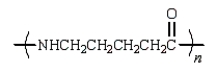
What type of polymer is shown? <strong>What type of polymer is shown?  </strong> A) polyamide B) polyurea C) polyurethane D) polyamine <div style=padding-top: 35px>

A) polyamide
B) polyurea
C) polyurethane
D) polyamine
Use Space or
up arrow
down arrow
to flip the card.
Question
Which of the following relationships is not true?

A) Tg < Tm
B) Mw ≥ Mn
C) polydispersity index ≤ 1
D) Mn = (average degree of polymerization, n) × (molecular weight of repeat unit)
Question
What type of polymer is shown? <strong>What type of polymer is shown?  </strong> A) polyamide B) polyurea C) polyurethane D) polyamine <div style=padding-top: 35px>

A) polyamide
B) polyurea
C) polyurethane
D) polyamine
Question
What is the name of the following polymer? <strong>What is the name of the following polymer?  </strong> A) poly(hexamethylene adipate) B) poly(hexamethylene adipamide) C) poly(hexamethylene succinate) D) poly(tetramethylene adipamide) <div style=padding-top: 35px>

A) poly(hexamethylene adipate)
B) poly(hexamethylene adipamide)
C) poly(hexamethylene succinate)
D) poly(tetramethylene adipamide)
Question
Which of the following combinations of terms best describes the polymerization of propene to form polypropylene?

A) step growth addition
B) step growth condensation
C) chain growth addition
D) chain growth condensation
Question
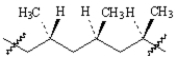
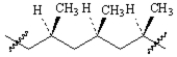
Which term describes the arrangement of substituents on the segment of polypropylene shown below? <strong>Which term describes the arrangement of substituents on the segment of polypropylene shown below?  </strong> A) atactic B) isotactic C) syndiotactic D) stereoirregular <div style=padding-top: 35px>

A) atactic
B) isotactic
C) syndiotactic
D) stereoirregular
Question
Which of the following combinations of terms best describes the polymerization of a diisocyanate (OCN−R−NCO) and a diol to form a polyurethane?

A) step growth addition
B) step growth condensation
C) chain growth addition
D) chain growth condensation
Question
Which term describes the arrangement of substituents on the segment of polypropylene shown below? <strong>Which term describes the arrangement of substituents on the segment of polypropylene shown below?  </strong> A) atactic B) isotactic C) syndiotactic D) stereoirregular <div style=padding-top: 35px>

A) atactic
B) isotactic
C) syndiotactic
D) stereoirregular
Question
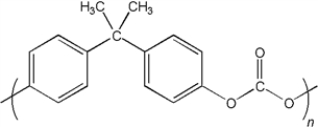
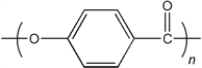
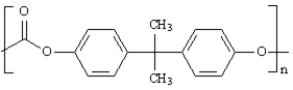
What type of polymer is shown? <strong>What type of polymer is shown?  </strong> A) polycarbonate B) polyester C) polyurethane D) polyether <div style=padding-top: 35px>

A) polycarbonate
B) polyester
C) polyurethane
D) polyether
Question
What type of intermediate is formed in the polymerization of styrene with butyllithium?

A) carbocation
B) carbanion
C) radical
D) radical anion
Question
What type of polymer is shown? <strong>What type of polymer is shown?  </strong> A) polycarbonate B) polyester C) polyurethane D) polyether <div style=padding-top: 35px>

A) polycarbonate
B) polyester
C) polyurethane
D) polyether
Question
Which of the following is not true?

A) crystalline polymers are more opaque than amorphous polymers
B) thermoplastic polymers can be melted
C) polymers become flexible above their Tg
D) elastomers are elastic below Tg
Question
What is the common name of the following polymer? <strong>What is the common name of the following polymer?  </strong> A) Kevlar B) PET C) Nylon-6 D) Nylon-6,6 <div style=padding-top: 35px>

A) Kevlar
B) PET
C) Nylon-6
D) Nylon-6,6
Question
Which type of polymerization can be used to polymerize methyl 2-cyanoacrylate, H2C=C(CN)CO2CH3?

A) anionic
B) cationic
C) radical
D) Ziegler-Natta
Question
What is the common name of the following polymer? <strong>What is the common name of the following polymer?  </strong> A) Kevlar B) PET C) Nylon-6 D) Nylon-6,6 <div style=padding-top: 35px>

A) Kevlar
B) PET
C) Nylon-6
D) Nylon-6,6
Question
What type of intermediate is formed in the polymerization of isobutylene with BF3/H2O?

A) carbocation
B) carbanion
C) radical
D) radical anion
Question
What type of intermediate is formed in the polymerization of styrene with AIBN?

A) carbocation
B) carbanion
C) radical
D) organometallic complex
Question
Which of the following combinations of terms best describes the polymerization of a diol and a diacid to form a polyester?

A) step growth addition
B) step growth condensation
C) chain growth addition
D) chain growth condensation
Question
Which term describes the arrangement of substituents on the segment of polypropylene shown below? <strong>Which term describes the arrangement of substituents on the segment of polypropylene shown below?  </strong> A) atactic B) isotactic C) syndiotactic D) stereoregular <div style=padding-top: 35px>

A) atactic
B) isotactic
C) syndiotactic
D) stereoregular
Question
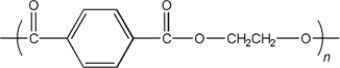
What is the name of the following polymer? <strong>What is the name of the following polymer?  </strong> A) poly(ethylene terephthalamide) B) poly(ethylene terephthalate) C) poly(ethylene succinate) D) poly(ethylene phenylate) <div style=padding-top: 35px>

A) poly(ethylene terephthalamide)
B) poly(ethylene terephthalate)
C) poly(ethylene succinate)
D) poly(ethylene phenylate)
Question
Which type of polymerization can be used to polymerize isobutylene, (CH3)2C=CH2?

A) anionic
B) cationic
C) radical
D) Ziegler-Natta
Question
High degrees of crystallinity are associated with polymers with weak intermolecular forces.
Question
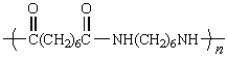
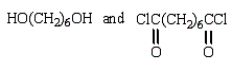
Consider the following two structures. Consider the following two structures.   The following represents the repeating unit of the polymer formed by these two substances.  <div style=padding-top: 35px> The following represents the repeating unit of the polymer formed by these two substances. Consider the following two structures.   The following represents the repeating unit of the polymer formed by these two substances.  <div style=padding-top: 35px>
Question
Consider the structure shown below. <strong>Consider the structure shown below.   This is an example of</strong> A) a polyurethane B) a polyester C) a polyamide D) a polycarbonate <div style=padding-top: 35px> This is an example of

A) a polyurethane
B) a polyester
C) a polyamide
D) a polycarbonate
Question
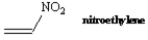
Consider the structure given below which might be found in a protein. Consider the structure given below which might be found in a protein.   Answer the following questions by filling in the blank with the appropriate word or term. Nitroethylene is expected to be _______ reactive than ethylene toward anionic polymerization.  <div style=padding-top: 35px> Answer the following questions by filling in the blank with the appropriate word or term.
Nitroethylene is expected to be _______ reactive than ethylene toward anionic polymerization. Consider the structure given below which might be found in a protein.   Answer the following questions by filling in the blank with the appropriate word or term. Nitroethylene is expected to be _______ reactive than ethylene toward anionic polymerization.  <div style=padding-top: 35px>
Question
Thermosetting polymers continue to crosslink on heating followed by cooling to irreversibly produce an extremely hard material that cannot be remelted.
Question
A polymer has the repeating unit drawn below: A polymer has the repeating unit drawn below:   The two monomers used to make the polymer are shown below.  <div style=padding-top: 35px> The two monomers used to make the polymer are shown below. A polymer has the repeating unit drawn below:   The two monomers used to make the polymer are shown below.  <div style=padding-top: 35px>
Question
Consider the structure given below which might be found in a protein. Consider the structure given below which might be found in a protein.   Answer the following questions by filling in the blank with the appropriate word or term. The number of types of monomers in this structure is _______.<div style=padding-top: 35px> Answer the following questions by filling in the blank with the appropriate word or term.
The number of types of monomers in this structure is _______.
Question
Which type of polymerization is initiated by a mixture of naphthalene and sodium metal?

A) anionic
B) cationic
C) radical
D) Ziegler-Natta
Question
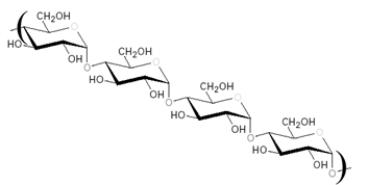
Consider the polymeric structure below for amylose (a type of starch). Consider the polymeric structure below for amylose (a type of starch).   The structure for the monomer is given below.<div style=padding-top: 35px> The structure for the monomer is given below.
Question
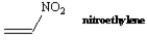
Consider the structure given below which might be found in a protein. Consider the structure given below which might be found in a protein.   Answer the following questions by filling in the blank with the appropriate word or term. Nitroethylene is expected to be _______ reactive than ethylene toward cationic polymerization.  <div style=padding-top: 35px> Answer the following questions by filling in the blank with the appropriate word or term.
Nitroethylene is expected to be _______ reactive than ethylene toward cationic polymerization. Consider the structure given below which might be found in a protein.   Answer the following questions by filling in the blank with the appropriate word or term. Nitroethylene is expected to be _______ reactive than ethylene toward cationic polymerization.  <div style=padding-top: 35px>
Question
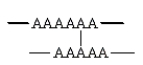
The following arrangement indicates a crosslinked polymer. The following arrangement indicates a crosslinked polymer.  <div style=padding-top: 35px>
Question
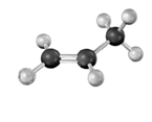
The name of the polymer formed by the molecule shown below is _________________. The name of the polymer formed by the molecule shown below is _________________.  <div style=padding-top: 35px>
Question
Consider the structure given below which might be found in a protein. Consider the structure given below which might be found in a protein.   Answer the following questions by filling in the blank with the appropriate word or term. This polymer would be classified as a poly______.<div style=padding-top: 35px> Answer the following questions by filling in the blank with the appropriate word or term.
This polymer would be classified as a poly______.
Question
Ziegler-Natta catalysts, used to prepare linear polymer molecules, consist of: organoaluminum compounds and transition metal salts.
Question
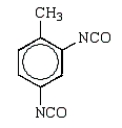
2,4-Toluene diisocyanate is a very important chemical in the synthesis of polyurethanes used in foam pillows and freezer insulation and has the following structure. 2,4-Toluene diisocyanate is a very important chemical in the synthesis of polyurethanes used in foam pillows and freezer insulation and has the following structure.  <div style=padding-top: 35px>
Question
A good initiator for a free radical addition polymerization is acetyl chloride.
Question
The following is an example of a polyurethane. The following is an example of a polyurethane.  <div style=padding-top: 35px>
Question
Which type of polymerization is used to make high density polyethylene (HDPE)?

A) anionic
B) cationic
C) radical
D) Ziegler-Natta
Question
Classify each polymer below as step-growth or chain-growth. Place the appropriate term in the blank provide
_________________ Classify each polymer below as step-growth or chain-growth. Place the appropriate term in the blank provide _________________  <div style=padding-top: 35px>
Question
Provide the mechanism for backbiting of a radical chain end of polyethylene, which results in a butyl side chain on the polymer backbone.
Question
Provide the structure of poly(ethylene succinate).
Question
MATCH a term or structure from the list below to each of the following definitions or names. Place the letter of the term or structure in the blank to the left of the definition or name which it describes.
____ Absent in amorphous domains

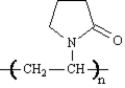
A)crystallite
B)elastomer
C)chain-growth polymer
D)Al(CH2CH3)3 + TiCl4
E)<strong>MATCH a term or structure from the list below to each of the following definitions or names. Place the letter of the term or structure in the blank to the left of the definition or name which it describes. ____ Absent in amorphous domains</strong> A)crystallite B)elastomer C)chain-growth polymer D)Al(CH<sub>2</sub>CH<sub>3</sub>)<sub>3</sub> + TiCl<sub>4</sub> E)  F)  G)thermoplastic H)homopolymer I)T<sub>m</sub> J)epoxy resins K)copolymers L)step-growth polymer M)catalyst N)T<sub>g</sub> O)  P)  ​ ​ <div style=padding-top: 35px>
F)<strong>MATCH a term or structure from the list below to each of the following definitions or names. Place the letter of the term or structure in the blank to the left of the definition or name which it describes. ____ Absent in amorphous domains</strong> A)crystallite B)elastomer C)chain-growth polymer D)Al(CH<sub>2</sub>CH<sub>3</sub>)<sub>3</sub> + TiCl<sub>4</sub> E)  F)  G)thermoplastic H)homopolymer I)T<sub>m</sub> J)epoxy resins K)copolymers L)step-growth polymer M)catalyst N)T<sub>g</sub> O)  P)  ​ ​ <div style=padding-top: 35px>
G)thermoplastic
H)homopolymer
I)Tm
J)epoxy resins
K)copolymers
L)step-growth polymer
M)"catalyst"
N)Tg
O)<strong>MATCH a term or structure from the list below to each of the following definitions or names. Place the letter of the term or structure in the blank to the left of the definition or name which it describes. ____ Absent in amorphous domains</strong> A)crystallite B)elastomer C)chain-growth polymer D)Al(CH<sub>2</sub>CH<sub>3</sub>)<sub>3</sub> + TiCl<sub>4</sub> E)  F)  G)thermoplastic H)homopolymer I)T<sub>m</sub> J)epoxy resins K)copolymers L)step-growth polymer M)catalyst N)T<sub>g</sub> O)  P)  ​ ​ <div style=padding-top: 35px>
P)<strong>MATCH a term or structure from the list below to each of the following definitions or names. Place the letter of the term or structure in the blank to the left of the definition or name which it describes. ____ Absent in amorphous domains</strong> A)crystallite B)elastomer C)chain-growth polymer D)Al(CH<sub>2</sub>CH<sub>3</sub>)<sub>3</sub> + TiCl<sub>4</sub> E)  F)  G)thermoplastic H)homopolymer I)T<sub>m</sub> J)epoxy resins K)copolymers L)step-growth polymer M)catalyst N)T<sub>g</sub> O)  P)  ​ ​ <div style=padding-top: 35px>
Question
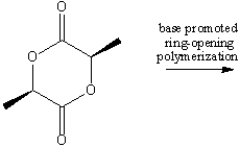
Provide the structure of the poly(lactic acid) that is formed by base catalyzed ring opening polymerization of the dilactone shown below. Provide the structure of the poly(lactic acid) that is formed by base catalyzed ring opening polymerization of the dilactone shown below.  <div style=padding-top: 35px>
Question
MATCH a term or structure from the list below to each of the following definitions or names. Place the letter of the term or structure in the blank to the left of the definition or name which it describes.
____ a Ziegler-Natta catalyst

A)crystallite
B)elastomer
C)chain-growth polymer
D)Al(CH2CH3)3 + TiCl4
E)<strong>MATCH a term or structure from the list below to each of the following definitions or names. Place the letter of the term or structure in the blank to the left of the definition or name which it describes. ____ a Ziegler-Natta catalyst</strong> A)crystallite B)elastomer C)chain-growth polymer D)Al(CH<sub>2</sub>CH<sub>3</sub>)<sub>3</sub> + TiCl<sub>4</sub> E)  F)  G)thermoplastic H)homopolymer I)T<sub>m</sub> J)epoxy resins K)copolymers L)step-growth polymer M)catalyst N)T<sub>g</sub> O)  P)  ​ ​ <div style=padding-top: 35px>
F)<strong>MATCH a term or structure from the list below to each of the following definitions or names. Place the letter of the term or structure in the blank to the left of the definition or name which it describes. ____ a Ziegler-Natta catalyst</strong> A)crystallite B)elastomer C)chain-growth polymer D)Al(CH<sub>2</sub>CH<sub>3</sub>)<sub>3</sub> + TiCl<sub>4</sub> E)  F)  G)thermoplastic H)homopolymer I)T<sub>m</sub> J)epoxy resins K)copolymers L)step-growth polymer M)catalyst N)T<sub>g</sub> O)  P)  ​ ​ <div style=padding-top: 35px>
G)thermoplastic
H)homopolymer
I)Tm
J)epoxy resins
K)copolymers
L)step-growth polymer
M)"catalyst"
N)Tg
O)<strong>MATCH a term or structure from the list below to each of the following definitions or names. Place the letter of the term or structure in the blank to the left of the definition or name which it describes. ____ a Ziegler-Natta catalyst</strong> A)crystallite B)elastomer C)chain-growth polymer D)Al(CH<sub>2</sub>CH<sub>3</sub>)<sub>3</sub> + TiCl<sub>4</sub> E)  F)  G)thermoplastic H)homopolymer I)T<sub>m</sub> J)epoxy resins K)copolymers L)step-growth polymer M)catalyst N)T<sub>g</sub> O)  P)  ​ ​ <div style=padding-top: 35px>
P)<strong>MATCH a term or structure from the list below to each of the following definitions or names. Place the letter of the term or structure in the blank to the left of the definition or name which it describes. ____ a Ziegler-Natta catalyst</strong> A)crystallite B)elastomer C)chain-growth polymer D)Al(CH<sub>2</sub>CH<sub>3</sub>)<sub>3</sub> + TiCl<sub>4</sub> E)  F)  G)thermoplastic H)homopolymer I)T<sub>m</sub> J)epoxy resins K)copolymers L)step-growth polymer M)catalyst N)T<sub>g</sub> O)  P)  ​ ​ <div style=padding-top: 35px>
Question
Provide the structure of polystyrene.
Question
MATCH a term or structure from the list below to each of the following definitions or names. Place the letter of the term or structure in the blank to the left of the definition or name which it describes.
____ Bakelite is this type of polymer.

A)crystallite
B)elastomer
C)chain-growth polymer
D)Al(CH2CH3)3 + TiCl4
E)<strong>MATCH a term or structure from the list below to each of the following definitions or names. Place the letter of the term or structure in the blank to the left of the definition or name which it describes. ____ Bakelite is this type of polymer.</strong> A)crystallite B)elastomer C)chain-growth polymer D)Al(CH<sub>2</sub>CH<sub>3</sub>)<sub>3</sub> + TiCl<sub>4</sub> E)  F)  G)thermoplastic H)homopolymer I)T<sub>m</sub> J)epoxy resins K)copolymers L)step-growth polymer M)catalyst N)T<sub>g</sub> O)  P)  ​ ​ <div style=padding-top: 35px>
F)<strong>MATCH a term or structure from the list below to each of the following definitions or names. Place the letter of the term or structure in the blank to the left of the definition or name which it describes. ____ Bakelite is this type of polymer.</strong> A)crystallite B)elastomer C)chain-growth polymer D)Al(CH<sub>2</sub>CH<sub>3</sub>)<sub>3</sub> + TiCl<sub>4</sub> E)  F)  G)thermoplastic H)homopolymer I)T<sub>m</sub> J)epoxy resins K)copolymers L)step-growth polymer M)catalyst N)T<sub>g</sub> O)  P)  ​ ​ <div style=padding-top: 35px>
G)thermoplastic
H)homopolymer
I)Tm
J)epoxy resins
K)copolymers
L)step-growth polymer
M)"catalyst"
N)Tg
O)<strong>MATCH a term or structure from the list below to each of the following definitions or names. Place the letter of the term or structure in the blank to the left of the definition or name which it describes. ____ Bakelite is this type of polymer.</strong> A)crystallite B)elastomer C)chain-growth polymer D)Al(CH<sub>2</sub>CH<sub>3</sub>)<sub>3</sub> + TiCl<sub>4</sub> E)  F)  G)thermoplastic H)homopolymer I)T<sub>m</sub> J)epoxy resins K)copolymers L)step-growth polymer M)catalyst N)T<sub>g</sub> O)  P)  ​ ​ <div style=padding-top: 35px>
P)<strong>MATCH a term or structure from the list below to each of the following definitions or names. Place the letter of the term or structure in the blank to the left of the definition or name which it describes. ____ Bakelite is this type of polymer.</strong> A)crystallite B)elastomer C)chain-growth polymer D)Al(CH<sub>2</sub>CH<sub>3</sub>)<sub>3</sub> + TiCl<sub>4</sub> E)  F)  G)thermoplastic H)homopolymer I)T<sub>m</sub> J)epoxy resins K)copolymers L)step-growth polymer M)catalyst N)T<sub>g</sub> O)  P)  ​ ​ <div style=padding-top: 35px>
Question
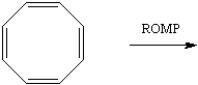
Provide the structure of polyacetylene that is formed by ring-opening metathesis polymerization of 1,3,5,7-cyclooctatetraene. Provide the structure of polyacetylene that is formed by ring-opening metathesis polymerization of 1,3,5,7-cyclooctatetraene.  <div style=padding-top: 35px>
Question
MATCH a term or structure from the list below to each of the following definitions or names. Place the letter of the term or structure in the blank to the left of the definition or name which it describes.
___ Isotactic propylene

A)crystallite
B)elastomer
C)chain-growth polymer
D)Al(CH2CH3)3 + TiCl4
E)<strong>MATCH a term or structure from the list below to each of the following definitions or names. Place the letter of the term or structure in the blank to the left of the definition or name which it describes. ___ Isotactic propylene</strong> A)crystallite B)elastomer C)chain-growth polymer D)Al(CH<sub>2</sub>CH<sub>3</sub>)<sub>3</sub> + TiCl<sub>4</sub> E)  F)  G)thermoplastic H)homopolymer I)T<sub>m</sub> J)epoxy resins K)copolymers L)step-growth polymer M)catalyst N)T<sub>g</sub> O)  P)  ​ ​ <div style=padding-top: 35px>
F)<strong>MATCH a term or structure from the list below to each of the following definitions or names. Place the letter of the term or structure in the blank to the left of the definition or name which it describes. ___ Isotactic propylene</strong> A)crystallite B)elastomer C)chain-growth polymer D)Al(CH<sub>2</sub>CH<sub>3</sub>)<sub>3</sub> + TiCl<sub>4</sub> E)  F)  G)thermoplastic H)homopolymer I)T<sub>m</sub> J)epoxy resins K)copolymers L)step-growth polymer M)catalyst N)T<sub>g</sub> O)  P)  ​ ​ <div style=padding-top: 35px>
G)thermoplastic
H)homopolymer
I)Tm
J)epoxy resins
K)copolymers
L)step-growth polymer
M)"catalyst"
N)Tg
O)<strong>MATCH a term or structure from the list below to each of the following definitions or names. Place the letter of the term or structure in the blank to the left of the definition or name which it describes. ___ Isotactic propylene</strong> A)crystallite B)elastomer C)chain-growth polymer D)Al(CH<sub>2</sub>CH<sub>3</sub>)<sub>3</sub> + TiCl<sub>4</sub> E)  F)  G)thermoplastic H)homopolymer I)T<sub>m</sub> J)epoxy resins K)copolymers L)step-growth polymer M)catalyst N)T<sub>g</sub> O)  P)  ​ ​ <div style=padding-top: 35px>
P)<strong>MATCH a term or structure from the list below to each of the following definitions or names. Place the letter of the term or structure in the blank to the left of the definition or name which it describes. ___ Isotactic propylene</strong> A)crystallite B)elastomer C)chain-growth polymer D)Al(CH<sub>2</sub>CH<sub>3</sub>)<sub>3</sub> + TiCl<sub>4</sub> E)  F)  G)thermoplastic H)homopolymer I)T<sub>m</sub> J)epoxy resins K)copolymers L)step-growth polymer M)catalyst N)T<sub>g</sub> O)  P)  ​ ​ <div style=padding-top: 35px>
Question
Classify each polymer below as step-growth or chain-growth. Place the appropriate term in the blank provide
_________________ Classify each polymer below as step-growth or chain-growth. Place the appropriate term in the blank provide _________________  <div style=padding-top: 35px>
Question
MATCH a term or structure from the list below to each of the following definitions or names. Place the letter of the term or structure in the blank to the left of the definition or name which it describes.
____ Amorphous polymers that have the ability to stretch out and spring back to their original shape.

A)crystallite
B)elastomer
C)chain-growth polymer
D)Al(CH2CH3)3 + TiCl4
E)<strong>MATCH a term or structure from the list below to each of the following definitions or names. Place the letter of the term or structure in the blank to the left of the definition or name which it describes. ____ Amorphous polymers that have the ability to stretch out and spring back to their original shape.</strong> A)crystallite B)elastomer C)chain-growth polymer D)Al(CH<sub>2</sub>CH<sub>3</sub>)<sub>3</sub> + TiCl<sub>4</sub> E)  F)  G)thermoplastic H)homopolymer I)T<sub>m</sub> J)epoxy resins K)copolymers L)step-growth polymer M)catalyst N)T<sub>g</sub> O)  P)  ​ ​ <div style=padding-top: 35px>
F)<strong>MATCH a term or structure from the list below to each of the following definitions or names. Place the letter of the term or structure in the blank to the left of the definition or name which it describes. ____ Amorphous polymers that have the ability to stretch out and spring back to their original shape.</strong> A)crystallite B)elastomer C)chain-growth polymer D)Al(CH<sub>2</sub>CH<sub>3</sub>)<sub>3</sub> + TiCl<sub>4</sub> E)  F)  G)thermoplastic H)homopolymer I)T<sub>m</sub> J)epoxy resins K)copolymers L)step-growth polymer M)catalyst N)T<sub>g</sub> O)  P)  ​ ​ <div style=padding-top: 35px>
G)thermoplastic
H)homopolymer
I)Tm
J)epoxy resins
K)copolymers
L)step-growth polymer
M)"catalyst"
N)Tg
O)<strong>MATCH a term or structure from the list below to each of the following definitions or names. Place the letter of the term or structure in the blank to the left of the definition or name which it describes. ____ Amorphous polymers that have the ability to stretch out and spring back to their original shape.</strong> A)crystallite B)elastomer C)chain-growth polymer D)Al(CH<sub>2</sub>CH<sub>3</sub>)<sub>3</sub> + TiCl<sub>4</sub> E)  F)  G)thermoplastic H)homopolymer I)T<sub>m</sub> J)epoxy resins K)copolymers L)step-growth polymer M)catalyst N)T<sub>g</sub> O)  P)  ​ ​ <div style=padding-top: 35px>
P)<strong>MATCH a term or structure from the list below to each of the following definitions or names. Place the letter of the term or structure in the blank to the left of the definition or name which it describes. ____ Amorphous polymers that have the ability to stretch out and spring back to their original shape.</strong> A)crystallite B)elastomer C)chain-growth polymer D)Al(CH<sub>2</sub>CH<sub>3</sub>)<sub>3</sub> + TiCl<sub>4</sub> E)  F)  G)thermoplastic H)homopolymer I)T<sub>m</sub> J)epoxy resins K)copolymers L)step-growth polymer M)catalyst N)T<sub>g</sub> O)  P)  ​ ​ <div style=padding-top: 35px>
Question
MATCH a term or structure from the list below to each of the following definitions or names. Place the letter of the term or structure in the blank to the left of the definition or name which it describes.
____ A polyurethane

A)crystallite
B)elastomer
C)chain-growth polymer
D)Al(CH2CH3)3 + TiCl4
E)<strong>MATCH a term or structure from the list below to each of the following definitions or names. Place the letter of the term or structure in the blank to the left of the definition or name which it describes. ____ A polyurethane</strong> A)crystallite B)elastomer C)chain-growth polymer D)Al(CH<sub>2</sub>CH<sub>3</sub>)<sub>3</sub> + TiCl<sub>4</sub> E)  F)  G)thermoplastic H)homopolymer I)T<sub>m</sub> J)epoxy resins K)copolymers L)step-growth polymer M)catalyst N)T<sub>g</sub> O)  P)  ​ ​ <div style=padding-top: 35px>
F)<strong>MATCH a term or structure from the list below to each of the following definitions or names. Place the letter of the term or structure in the blank to the left of the definition or name which it describes. ____ A polyurethane</strong> A)crystallite B)elastomer C)chain-growth polymer D)Al(CH<sub>2</sub>CH<sub>3</sub>)<sub>3</sub> + TiCl<sub>4</sub> E)  F)  G)thermoplastic H)homopolymer I)T<sub>m</sub> J)epoxy resins K)copolymers L)step-growth polymer M)catalyst N)T<sub>g</sub> O)  P)  ​ ​ <div style=padding-top: 35px>
G)thermoplastic
H)homopolymer
I)Tm
J)epoxy resins
K)copolymers
L)step-growth polymer
M)"catalyst"
N)Tg
O)<strong>MATCH a term or structure from the list below to each of the following definitions or names. Place the letter of the term or structure in the blank to the left of the definition or name which it describes. ____ A polyurethane</strong> A)crystallite B)elastomer C)chain-growth polymer D)Al(CH<sub>2</sub>CH<sub>3</sub>)<sub>3</sub> + TiCl<sub>4</sub> E)  F)  G)thermoplastic H)homopolymer I)T<sub>m</sub> J)epoxy resins K)copolymers L)step-growth polymer M)catalyst N)T<sub>g</sub> O)  P)  ​ ​ <div style=padding-top: 35px>
P)<strong>MATCH a term or structure from the list below to each of the following definitions or names. Place the letter of the term or structure in the blank to the left of the definition or name which it describes. ____ A polyurethane</strong> A)crystallite B)elastomer C)chain-growth polymer D)Al(CH<sub>2</sub>CH<sub>3</sub>)<sub>3</sub> + TiCl<sub>4</sub> E)  F)  G)thermoplastic H)homopolymer I)T<sub>m</sub> J)epoxy resins K)copolymers L)step-growth polymer M)catalyst N)T<sub>g</sub> O)  P)  ​ ​ <div style=padding-top: 35px>
Question
Provide the structure of azoisobutyronitrile, AIBN, and show the mechanism whereby it undergoes thermal decomposition to give two radicals and a molecule of N2.
Question
Provide the structure of poly(methyl methacrylate).
Question
Provide the mechanism whereby two radical chain ends undergo dispropotionation to give two dead chain ends. Provide the mechanism whereby two radical chain ends undergo dispropotionation to give two dead chain ends.  <div style=padding-top: 35px>
Question
Provide the structure of poly(butylene adipamide).
Question
MATCH a term or structure from the list below to each of the following definitions or names. Place the letter of the term or structure in the blank to the left of the definition or name which it describes.
____ Produced by reactions in which each bond in the polymer is formed independently of the others.

A)crystallite
B)elastomer
C)chain-growth polymer
D)Al(CH2CH3)3 + TiCl4
E)<strong>MATCH a term or structure from the list below to each of the following definitions or names. Place the letter of the term or structure in the blank to the left of the definition or name which it describes. ____ Produced by reactions in which each bond in the polymer is formed independently of the others.</strong> A)crystallite B)elastomer C)chain-growth polymer D)Al(CH<sub>2</sub>CH<sub>3</sub>)<sub>3</sub> + TiCl<sub>4</sub> E)  F)  G)thermoplastic H)homopolymer I)T<sub>m</sub> J)epoxy resins K)copolymers L)step-growth polymer M)catalyst N)T<sub>g</sub> O)  P)  ​ ​ <div style=padding-top: 35px>
F)<strong>MATCH a term or structure from the list below to each of the following definitions or names. Place the letter of the term or structure in the blank to the left of the definition or name which it describes. ____ Produced by reactions in which each bond in the polymer is formed independently of the others.</strong> A)crystallite B)elastomer C)chain-growth polymer D)Al(CH<sub>2</sub>CH<sub>3</sub>)<sub>3</sub> + TiCl<sub>4</sub> E)  F)  G)thermoplastic H)homopolymer I)T<sub>m</sub> J)epoxy resins K)copolymers L)step-growth polymer M)catalyst N)T<sub>g</sub> O)  P)  ​ ​ <div style=padding-top: 35px>
G)thermoplastic
H)homopolymer
I)Tm
J)epoxy resins
K)copolymers
L)step-growth polymer
M)"catalyst"
N)Tg
O)<strong>MATCH a term or structure from the list below to each of the following definitions or names. Place the letter of the term or structure in the blank to the left of the definition or name which it describes. ____ Produced by reactions in which each bond in the polymer is formed independently of the others.</strong> A)crystallite B)elastomer C)chain-growth polymer D)Al(CH<sub>2</sub>CH<sub>3</sub>)<sub>3</sub> + TiCl<sub>4</sub> E)  F)  G)thermoplastic H)homopolymer I)T<sub>m</sub> J)epoxy resins K)copolymers L)step-growth polymer M)catalyst N)T<sub>g</sub> O)  P)  ​ ​ <div style=padding-top: 35px>
P)<strong>MATCH a term or structure from the list below to each of the following definitions or names. Place the letter of the term or structure in the blank to the left of the definition or name which it describes. ____ Produced by reactions in which each bond in the polymer is formed independently of the others.</strong> A)crystallite B)elastomer C)chain-growth polymer D)Al(CH<sub>2</sub>CH<sub>3</sub>)<sub>3</sub> + TiCl<sub>4</sub> E)  F)  G)thermoplastic H)homopolymer I)T<sub>m</sub> J)epoxy resins K)copolymers L)step-growth polymer M)catalyst N)T<sub>g</sub> O)  P)  ​ ​ <div style=padding-top: 35px>
Question
MATCH a term or structure from the list below to each of the following definitions or names. Place the letter of the term or structure in the blank to the left of the definition or name which it describes.
____ Characteristic of crystallites

A)crystallite
B)elastomer
C)chain-growth polymer
D)Al(CH2CH3)3 + TiCl4
E)<strong>MATCH a term or structure from the list below to each of the following definitions or names. Place the letter of the term or structure in the blank to the left of the definition or name which it describes. ____ Characteristic of crystallites</strong> A)crystallite B)elastomer C)chain-growth polymer D)Al(CH<sub>2</sub>CH<sub>3</sub>)<sub>3</sub> + TiCl<sub>4</sub> E)  F)  G)thermoplastic H)homopolymer I)T<sub>m</sub> J)epoxy resins K)copolymers L)step-growth polymer M)catalyst N)T<sub>g</sub> O)  P)  ​ ​ <div style=padding-top: 35px>
F)<strong>MATCH a term or structure from the list below to each of the following definitions or names. Place the letter of the term or structure in the blank to the left of the definition or name which it describes. ____ Characteristic of crystallites</strong> A)crystallite B)elastomer C)chain-growth polymer D)Al(CH<sub>2</sub>CH<sub>3</sub>)<sub>3</sub> + TiCl<sub>4</sub> E)  F)  G)thermoplastic H)homopolymer I)T<sub>m</sub> J)epoxy resins K)copolymers L)step-growth polymer M)catalyst N)T<sub>g</sub> O)  P)  ​ ​ <div style=padding-top: 35px>
G)thermoplastic
H)homopolymer
I)Tm
J)epoxy resins
K)copolymers
L)step-growth polymer
M)"catalyst"
N)Tg
O)<strong>MATCH a term or structure from the list below to each of the following definitions or names. Place the letter of the term or structure in the blank to the left of the definition or name which it describes. ____ Characteristic of crystallites</strong> A)crystallite B)elastomer C)chain-growth polymer D)Al(CH<sub>2</sub>CH<sub>3</sub>)<sub>3</sub> + TiCl<sub>4</sub> E)  F)  G)thermoplastic H)homopolymer I)T<sub>m</sub> J)epoxy resins K)copolymers L)step-growth polymer M)catalyst N)T<sub>g</sub> O)  P)  ​ ​ <div style=padding-top: 35px>
P)<strong>MATCH a term or structure from the list below to each of the following definitions or names. Place the letter of the term or structure in the blank to the left of the definition or name which it describes. ____ Characteristic of crystallites</strong> A)crystallite B)elastomer C)chain-growth polymer D)Al(CH<sub>2</sub>CH<sub>3</sub>)<sub>3</sub> + TiCl<sub>4</sub> E)  F)  G)thermoplastic H)homopolymer I)T<sub>m</sub> J)epoxy resins K)copolymers L)step-growth polymer M)catalyst N)T<sub>g</sub> O)  P)  ​ ​ <div style=padding-top: 35px>
Question
MATCH a term or structure from the list below to each of the following definitions or names. Place the letter of the term or structure in the blank to the left of the definition or name which it describes.
____ Polymers obtained when two or more different monomers are allowed to polymerize together.

A)crystallite
B)elastomer
C)chain-growth polymer
D)Al(CH2CH3)3 + TiCl4
E)<strong>MATCH a term or structure from the list below to each of the following definitions or names. Place the letter of the term or structure in the blank to the left of the definition or name which it describes. ____ Polymers obtained when two or more different monomers are allowed to polymerize together.</strong> A)crystallite B)elastomer C)chain-growth polymer D)Al(CH<sub>2</sub>CH<sub>3</sub>)<sub>3</sub> + TiCl<sub>4</sub> E)  F)  G)thermoplastic H)homopolymer I)T<sub>m</sub> J)epoxy resins K)copolymers L)step-growth polymer M)catalyst N)T<sub>g</sub> O)  P)  ​ ​ <div style=padding-top: 35px>
F)<strong>MATCH a term or structure from the list below to each of the following definitions or names. Place the letter of the term or structure in the blank to the left of the definition or name which it describes. ____ Polymers obtained when two or more different monomers are allowed to polymerize together.</strong> A)crystallite B)elastomer C)chain-growth polymer D)Al(CH<sub>2</sub>CH<sub>3</sub>)<sub>3</sub> + TiCl<sub>4</sub> E)  F)  G)thermoplastic H)homopolymer I)T<sub>m</sub> J)epoxy resins K)copolymers L)step-growth polymer M)catalyst N)T<sub>g</sub> O)  P)  ​ ​ <div style=padding-top: 35px>
G)thermoplastic
H)homopolymer
I)Tm
J)epoxy resins
K)copolymers
L)step-growth polymer
M)"catalyst"
N)Tg
O)<strong>MATCH a term or structure from the list below to each of the following definitions or names. Place the letter of the term or structure in the blank to the left of the definition or name which it describes. ____ Polymers obtained when two or more different monomers are allowed to polymerize together.</strong> A)crystallite B)elastomer C)chain-growth polymer D)Al(CH<sub>2</sub>CH<sub>3</sub>)<sub>3</sub> + TiCl<sub>4</sub> E)  F)  G)thermoplastic H)homopolymer I)T<sub>m</sub> J)epoxy resins K)copolymers L)step-growth polymer M)catalyst N)T<sub>g</sub> O)  P)  ​ ​ <div style=padding-top: 35px>
P)<strong>MATCH a term or structure from the list below to each of the following definitions or names. Place the letter of the term or structure in the blank to the left of the definition or name which it describes. ____ Polymers obtained when two or more different monomers are allowed to polymerize together.</strong> A)crystallite B)elastomer C)chain-growth polymer D)Al(CH<sub>2</sub>CH<sub>3</sub>)<sub>3</sub> + TiCl<sub>4</sub> E)  F)  G)thermoplastic H)homopolymer I)T<sub>m</sub> J)epoxy resins K)copolymers L)step-growth polymer M)catalyst N)T<sub>g</sub> O)  P)  ​ ​ <div style=padding-top: 35px>
Question
Classify each polymer below as step-growth or chain-growth. Place the appropriate term in the blank provide
_________________ Classify each polymer below as step-growth or chain-growth. Place the appropriate term in the blank provide _________________  <div style=padding-top: 35px>
Question
Which of the following compounds is not a free radical initiator? ​

A) Tert-butyl hydroperoxide
B) Azoisobutyronitrile
C) Peracetic acid
D) Methyl iodide
Question
Which of the following cycloalkenes is least reactive toward ROMP?

A)
<strong>Which of the following cycloalkenes is least reactive toward ROMP?</strong> A)   B)   C)   D)   <div style=padding-top: 35px>
B)
<strong>Which of the following cycloalkenes is least reactive toward ROMP?</strong> A)   B)   C)   D)   <div style=padding-top: 35px>
C)
<strong>Which of the following cycloalkenes is least reactive toward ROMP?</strong> A)   B)   C)   D)   <div style=padding-top: 35px>
D)
<strong>Which of the following cycloalkenes is least reactive toward ROMP?</strong> A)   B)   C)   D)   <div style=padding-top: 35px>
Question
The weight average molecular weight of a polymer was found to be 30,000, and the number average molecular weight of the compound was 20,000. What is the PDI of the polymer?

A) 0.0
B) 1.0
C) 1.5
D) 0.5
Question
Identify the final product of the following reaction. ​ <strong>Identify the final product of the following reaction. ​  </strong> A) Terephthalic acid B) Kevlar C) Lexan D) Nylon 6 <div style=padding-top: 35px>

A) Terephthalic acid
B) Kevlar
C) Lexan
D) Nylon 6
Question
Rubber materials must have low _____ to behave as elastomers.
Question
Identify the compound that is not a conductive polymer.

A) Polyphenylene vinylene
B) Polyvinyl chloride
C) Polypyrrole
D) Polyacetylene
Question
The ratio of the weight average molecular weight to the number average molecular weight of a polymer was found to be 3:2. Which of the following statements is true about the polymer?

A) It is monodisperse.
B) It has chains of varying length.
C) It has chains of equal length.
D) It has a polydispersity value of less than one.
Question
Provide the structure of poly(propylene oxide) that is formed by base catalyzed ring opening polymerization of the propylene oxide shown below. Provide the structure of poly(propylene oxide) that is formed by base catalyzed ring opening polymerization of the propylene oxide shown below.  <div style=padding-top: 35px>
Unlock Deck
Sign up to unlock the cards in this deck!
Unlock Deck
Unlock Deck
1/68
auto play flashcards
Play
simple tutorial
Full screen (f)
exit full mode
Deck 29: Organic Polymer Chemistry
1
What type of polymer is shown? <strong>What type of polymer is shown?  </strong> A) polyamide B) polyurea C) polyurethane D) polyamine

A) polyamide
B) polyurea
C) polyurethane
D) polyamine
polyamide
2
Which of the following relationships is not true?

A) Tg < Tm
B) Mw ≥ Mn
C) polydispersity index ≤ 1
D) Mn = (average degree of polymerization, n) × (molecular weight of repeat unit)
polydispersity index ≤ 1
3
What type of polymer is shown? <strong>What type of polymer is shown?  </strong> A) polyamide B) polyurea C) polyurethane D) polyamine

A) polyamide
B) polyurea
C) polyurethane
D) polyamine
polyurethane
4
What is the name of the following polymer? <strong>What is the name of the following polymer?  </strong> A) poly(hexamethylene adipate) B) poly(hexamethylene adipamide) C) poly(hexamethylene succinate) D) poly(tetramethylene adipamide)

A) poly(hexamethylene adipate)
B) poly(hexamethylene adipamide)
C) poly(hexamethylene succinate)
D) poly(tetramethylene adipamide)
Unlock Deck
Unlock for access to all 68 flashcards in this deck.
Unlock Deck
k this deck
5
Which of the following combinations of terms best describes the polymerization of propene to form polypropylene?

A) step growth addition
B) step growth condensation
C) chain growth addition
D) chain growth condensation
Unlock Deck
Unlock for access to all 68 flashcards in this deck.
Unlock Deck
k this deck
6
Which term describes the arrangement of substituents on the segment of polypropylene shown below? <strong>Which term describes the arrangement of substituents on the segment of polypropylene shown below?  </strong> A) atactic B) isotactic C) syndiotactic D) stereoirregular


A) atactic
B) isotactic
C) syndiotactic
D) stereoirregular
Unlock Deck
Unlock for access to all 68 flashcards in this deck.
Unlock Deck
k this deck
7
Which of the following combinations of terms best describes the polymerization of a diisocyanate (OCN−R−NCO) and a diol to form a polyurethane?

A) step growth addition
B) step growth condensation
C) chain growth addition
D) chain growth condensation
Unlock Deck
Unlock for access to all 68 flashcards in this deck.
Unlock Deck
k this deck
8
Which term describes the arrangement of substituents on the segment of polypropylene shown below? <strong>Which term describes the arrangement of substituents on the segment of polypropylene shown below?  </strong> A) atactic B) isotactic C) syndiotactic D) stereoirregular

A) atactic
B) isotactic
C) syndiotactic
D) stereoirregular
Unlock Deck
Unlock for access to all 68 flashcards in this deck.
Unlock Deck
k this deck
9
What type of polymer is shown? <strong>What type of polymer is shown?  </strong> A) polycarbonate B) polyester C) polyurethane D) polyether

A) polycarbonate
B) polyester
C) polyurethane
D) polyether
Unlock Deck
Unlock for access to all 68 flashcards in this deck.
Unlock Deck
k this deck
10
What type of intermediate is formed in the polymerization of styrene with butyllithium?

A) carbocation
B) carbanion
C) radical
D) radical anion
Unlock Deck
Unlock for access to all 68 flashcards in this deck.
Unlock Deck
k this deck
11
What type of polymer is shown? <strong>What type of polymer is shown?  </strong> A) polycarbonate B) polyester C) polyurethane D) polyether

A) polycarbonate
B) polyester
C) polyurethane
D) polyether
Unlock Deck
Unlock for access to all 68 flashcards in this deck.
Unlock Deck
k this deck
12
Which of the following is not true?

A) crystalline polymers are more opaque than amorphous polymers
B) thermoplastic polymers can be melted
C) polymers become flexible above their Tg
D) elastomers are elastic below Tg
Unlock Deck
Unlock for access to all 68 flashcards in this deck.
Unlock Deck
k this deck
13
What is the common name of the following polymer? <strong>What is the common name of the following polymer?  </strong> A) Kevlar B) PET C) Nylon-6 D) Nylon-6,6

A) Kevlar
B) PET
C) Nylon-6
D) Nylon-6,6
Unlock Deck
Unlock for access to all 68 flashcards in this deck.
Unlock Deck
k this deck
14
Which type of polymerization can be used to polymerize methyl 2-cyanoacrylate, H2C=C(CN)CO2CH3?

A) anionic
B) cationic
C) radical
D) Ziegler-Natta
Unlock Deck
Unlock for access to all 68 flashcards in this deck.
Unlock Deck
k this deck
15
What is the common name of the following polymer? <strong>What is the common name of the following polymer?  </strong> A) Kevlar B) PET C) Nylon-6 D) Nylon-6,6

A) Kevlar
B) PET
C) Nylon-6
D) Nylon-6,6
Unlock Deck
Unlock for access to all 68 flashcards in this deck.
Unlock Deck
k this deck
16
What type of intermediate is formed in the polymerization of isobutylene with BF3/H2O?

A) carbocation
B) carbanion
C) radical
D) radical anion
Unlock Deck
Unlock for access to all 68 flashcards in this deck.
Unlock Deck
k this deck
17
What type of intermediate is formed in the polymerization of styrene with AIBN?

A) carbocation
B) carbanion
C) radical
D) organometallic complex
Unlock Deck
Unlock for access to all 68 flashcards in this deck.
Unlock Deck
k this deck
18
Which of the following combinations of terms best describes the polymerization of a diol and a diacid to form a polyester?

A) step growth addition
B) step growth condensation
C) chain growth addition
D) chain growth condensation
Unlock Deck
Unlock for access to all 68 flashcards in this deck.
Unlock Deck
k this deck
19
Which term describes the arrangement of substituents on the segment of polypropylene shown below? <strong>Which term describes the arrangement of substituents on the segment of polypropylene shown below?  </strong> A) atactic B) isotactic C) syndiotactic D) stereoregular

A) atactic
B) isotactic
C) syndiotactic
D) stereoregular
Unlock Deck
Unlock for access to all 68 flashcards in this deck.
Unlock Deck
k this deck
20
What is the name of the following polymer? <strong>What is the name of the following polymer?  </strong> A) poly(ethylene terephthalamide) B) poly(ethylene terephthalate) C) poly(ethylene succinate) D) poly(ethylene phenylate)

A) poly(ethylene terephthalamide)
B) poly(ethylene terephthalate)
C) poly(ethylene succinate)
D) poly(ethylene phenylate)
Unlock Deck
Unlock for access to all 68 flashcards in this deck.
Unlock Deck
k this deck
21
Which type of polymerization can be used to polymerize isobutylene, (CH3)2C=CH2?

A) anionic
B) cationic
C) radical
D) Ziegler-Natta
Unlock Deck
Unlock for access to all 68 flashcards in this deck.
Unlock Deck
k this deck
22
High degrees of crystallinity are associated with polymers with weak intermolecular forces.
Unlock Deck
Unlock for access to all 68 flashcards in this deck.
Unlock Deck
k this deck
23
Consider the following two structures. Consider the following two structures.   The following represents the repeating unit of the polymer formed by these two substances.  The following represents the repeating unit of the polymer formed by these two substances. Consider the following two structures.   The following represents the repeating unit of the polymer formed by these two substances.
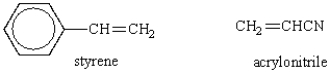
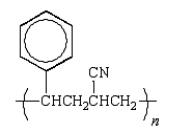
Unlock Deck
Unlock for access to all 68 flashcards in this deck.
Unlock Deck
k this deck
24
Consider the structure shown below. <strong>Consider the structure shown below.   This is an example of</strong> A) a polyurethane B) a polyester C) a polyamide D) a polycarbonate This is an example of

A) a polyurethane
B) a polyester
C) a polyamide
D) a polycarbonate
Unlock Deck
Unlock for access to all 68 flashcards in this deck.
Unlock Deck
k this deck
25
Consider the structure given below which might be found in a protein. Consider the structure given below which might be found in a protein.   Answer the following questions by filling in the blank with the appropriate word or term. Nitroethylene is expected to be _______ reactive than ethylene toward anionic polymerization.  Answer the following questions by filling in the blank with the appropriate word or term.
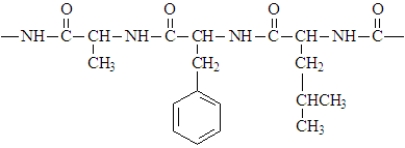
Nitroethylene is expected to be _______ reactive than ethylene toward anionic polymerization. Consider the structure given below which might be found in a protein.   Answer the following questions by filling in the blank with the appropriate word or term. Nitroethylene is expected to be _______ reactive than ethylene toward anionic polymerization.
Unlock Deck
Unlock for access to all 68 flashcards in this deck.
Unlock Deck
k this deck
26
Thermosetting polymers continue to crosslink on heating followed by cooling to irreversibly produce an extremely hard material that cannot be remelted.
Unlock Deck
Unlock for access to all 68 flashcards in this deck.
Unlock Deck
k this deck
27
A polymer has the repeating unit drawn below: A polymer has the repeating unit drawn below:   The two monomers used to make the polymer are shown below.  The two monomers used to make the polymer are shown below. A polymer has the repeating unit drawn below:   The two monomers used to make the polymer are shown below.
Unlock Deck
Unlock for access to all 68 flashcards in this deck.
Unlock Deck
k this deck
28
Consider the structure given below which might be found in a protein. Consider the structure given below which might be found in a protein.   Answer the following questions by filling in the blank with the appropriate word or term. The number of types of monomers in this structure is _______. Answer the following questions by filling in the blank with the appropriate word or term.
The number of types of monomers in this structure is _______.
Unlock Deck
Unlock for access to all 68 flashcards in this deck.
Unlock Deck
k this deck
29
Which type of polymerization is initiated by a mixture of naphthalene and sodium metal?

A) anionic
B) cationic
C) radical
D) Ziegler-Natta
Unlock Deck
Unlock for access to all 68 flashcards in this deck.
Unlock Deck
k this deck
30
Consider the polymeric structure below for amylose (a type of starch). Consider the polymeric structure below for amylose (a type of starch).   The structure for the monomer is given below. The structure for the monomer is given below.
Unlock Deck
Unlock for access to all 68 flashcards in this deck.
Unlock Deck
k this deck
31
Consider the structure given below which might be found in a protein. Consider the structure given below which might be found in a protein.   Answer the following questions by filling in the blank with the appropriate word or term. Nitroethylene is expected to be _______ reactive than ethylene toward cationic polymerization.  Answer the following questions by filling in the blank with the appropriate word or term.
Nitroethylene is expected to be _______ reactive than ethylene toward cationic polymerization. Consider the structure given below which might be found in a protein.   Answer the following questions by filling in the blank with the appropriate word or term. Nitroethylene is expected to be _______ reactive than ethylene toward cationic polymerization.
Unlock Deck
Unlock for access to all 68 flashcards in this deck.
Unlock Deck
k this deck
32
The following arrangement indicates a crosslinked polymer. The following arrangement indicates a crosslinked polymer.
Unlock Deck
Unlock for access to all 68 flashcards in this deck.
Unlock Deck
k this deck
33
The name of the polymer formed by the molecule shown below is _________________. The name of the polymer formed by the molecule shown below is _________________.
Unlock Deck
Unlock for access to all 68 flashcards in this deck.
Unlock Deck
k this deck
34
Consider the structure given below which might be found in a protein. Consider the structure given below which might be found in a protein.   Answer the following questions by filling in the blank with the appropriate word or term. This polymer would be classified as a poly______. Answer the following questions by filling in the blank with the appropriate word or term.
This polymer would be classified as a poly______.
Unlock Deck
Unlock for access to all 68 flashcards in this deck.
Unlock Deck
k this deck
35
Ziegler-Natta catalysts, used to prepare linear polymer molecules, consist of: organoaluminum compounds and transition metal salts.
Unlock Deck
Unlock for access to all 68 flashcards in this deck.
Unlock Deck
k this deck
36
2,4-Toluene diisocyanate is a very important chemical in the synthesis of polyurethanes used in foam pillows and freezer insulation and has the following structure. 2,4-Toluene diisocyanate is a very important chemical in the synthesis of polyurethanes used in foam pillows and freezer insulation and has the following structure.
Unlock Deck
Unlock for access to all 68 flashcards in this deck.
Unlock Deck
k this deck
37
A good initiator for a free radical addition polymerization is acetyl chloride.
Unlock Deck
Unlock for access to all 68 flashcards in this deck.
Unlock Deck
k this deck
38
The following is an example of a polyurethane. The following is an example of a polyurethane.
Unlock Deck
Unlock for access to all 68 flashcards in this deck.
Unlock Deck
k this deck
39
Which type of polymerization is used to make high density polyethylene (HDPE)?

A) anionic
B) cationic
C) radical
D) Ziegler-Natta
Unlock Deck
Unlock for access to all 68 flashcards in this deck.
Unlock Deck
k this deck
40
Classify each polymer below as step-growth or chain-growth. Place the appropriate term in the blank provide
_________________ Classify each polymer below as step-growth or chain-growth. Place the appropriate term in the blank provide _________________
Unlock Deck
Unlock for access to all 68 flashcards in this deck.
Unlock Deck
k this deck
41
Provide the mechanism for backbiting of a radical chain end of polyethylene, which results in a butyl side chain on the polymer backbone.
Unlock Deck
Unlock for access to all 68 flashcards in this deck.
Unlock Deck
k this deck
42
Provide the structure of poly(ethylene succinate).
Unlock Deck
Unlock for access to all 68 flashcards in this deck.
Unlock Deck
k this deck
43
MATCH a term or structure from the list below to each of the following definitions or names. Place the letter of the term or structure in the blank to the left of the definition or name which it describes.
____ Absent in amorphous domains

A)crystallite
B)elastomer
C)chain-growth polymer
D)Al(CH2CH3)3 + TiCl4
E)<strong>MATCH a term or structure from the list below to each of the following definitions or names. Place the letter of the term or structure in the blank to the left of the definition or name which it describes. ____ Absent in amorphous domains</strong> A)crystallite B)elastomer C)chain-growth polymer D)Al(CH<sub>2</sub>CH<sub>3</sub>)<sub>3</sub> + TiCl<sub>4</sub> E)  F)  G)thermoplastic H)homopolymer I)T<sub>m</sub> J)epoxy resins K)copolymers L)step-growth polymer M)catalyst N)T<sub>g</sub> O)  P)  ​ ​
F)<strong>MATCH a term or structure from the list below to each of the following definitions or names. Place the letter of the term or structure in the blank to the left of the definition or name which it describes. ____ Absent in amorphous domains</strong> A)crystallite B)elastomer C)chain-growth polymer D)Al(CH<sub>2</sub>CH<sub>3</sub>)<sub>3</sub> + TiCl<sub>4</sub> E)  F)  G)thermoplastic H)homopolymer I)T<sub>m</sub> J)epoxy resins K)copolymers L)step-growth polymer M)catalyst N)T<sub>g</sub> O)  P)  ​ ​
G)thermoplastic
H)homopolymer
I)Tm
J)epoxy resins
K)copolymers
L)step-growth polymer
M)"catalyst"
N)Tg
O)<strong>MATCH a term or structure from the list below to each of the following definitions or names. Place the letter of the term or structure in the blank to the left of the definition or name which it describes. ____ Absent in amorphous domains</strong> A)crystallite B)elastomer C)chain-growth polymer D)Al(CH<sub>2</sub>CH<sub>3</sub>)<sub>3</sub> + TiCl<sub>4</sub> E)  F)  G)thermoplastic H)homopolymer I)T<sub>m</sub> J)epoxy resins K)copolymers L)step-growth polymer M)catalyst N)T<sub>g</sub> O)  P)  ​ ​

P)<strong>MATCH a term or structure from the list below to each of the following definitions or names. Place the letter of the term or structure in the blank to the left of the definition or name which it describes. ____ Absent in amorphous domains</strong> A)crystallite B)elastomer C)chain-growth polymer D)Al(CH<sub>2</sub>CH<sub>3</sub>)<sub>3</sub> + TiCl<sub>4</sub> E)  F)  G)thermoplastic H)homopolymer I)T<sub>m</sub> J)epoxy resins K)copolymers L)step-growth polymer M)catalyst N)T<sub>g</sub> O)  P)  ​ ​
Unlock Deck
Unlock for access to all 68 flashcards in this deck.
Unlock Deck
k this deck
44
Provide the structure of the poly(lactic acid) that is formed by base catalyzed ring opening polymerization of the dilactone shown below. Provide the structure of the poly(lactic acid) that is formed by base catalyzed ring opening polymerization of the dilactone shown below.
Unlock Deck
Unlock for access to all 68 flashcards in this deck.
Unlock Deck
k this deck
45
MATCH a term or structure from the list below to each of the following definitions or names. Place the letter of the term or structure in the blank to the left of the definition or name which it describes.
____ a Ziegler-Natta catalyst

A)crystallite
B)elastomer
C)chain-growth polymer
D)Al(CH2CH3)3 + TiCl4
E)<strong>MATCH a term or structure from the list below to each of the following definitions or names. Place the letter of the term or structure in the blank to the left of the definition or name which it describes. ____ a Ziegler-Natta catalyst</strong> A)crystallite B)elastomer C)chain-growth polymer D)Al(CH<sub>2</sub>CH<sub>3</sub>)<sub>3</sub> + TiCl<sub>4</sub> E)  F)  G)thermoplastic H)homopolymer I)T<sub>m</sub> J)epoxy resins K)copolymers L)step-growth polymer M)catalyst N)T<sub>g</sub> O)  P)  ​ ​
F)<strong>MATCH a term or structure from the list below to each of the following definitions or names. Place the letter of the term or structure in the blank to the left of the definition or name which it describes. ____ a Ziegler-Natta catalyst</strong> A)crystallite B)elastomer C)chain-growth polymer D)Al(CH<sub>2</sub>CH<sub>3</sub>)<sub>3</sub> + TiCl<sub>4</sub> E)  F)  G)thermoplastic H)homopolymer I)T<sub>m</sub> J)epoxy resins K)copolymers L)step-growth polymer M)catalyst N)T<sub>g</sub> O)  P)  ​ ​
G)thermoplastic
H)homopolymer
I)Tm
J)epoxy resins
K)copolymers
L)step-growth polymer
M)"catalyst"
N)Tg
O)<strong>MATCH a term or structure from the list below to each of the following definitions or names. Place the letter of the term or structure in the blank to the left of the definition or name which it describes. ____ a Ziegler-Natta catalyst</strong> A)crystallite B)elastomer C)chain-growth polymer D)Al(CH<sub>2</sub>CH<sub>3</sub>)<sub>3</sub> + TiCl<sub>4</sub> E)  F)  G)thermoplastic H)homopolymer I)T<sub>m</sub> J)epoxy resins K)copolymers L)step-growth polymer M)catalyst N)T<sub>g</sub> O)  P)  ​ ​
P)<strong>MATCH a term or structure from the list below to each of the following definitions or names. Place the letter of the term or structure in the blank to the left of the definition or name which it describes. ____ a Ziegler-Natta catalyst</strong> A)crystallite B)elastomer C)chain-growth polymer D)Al(CH<sub>2</sub>CH<sub>3</sub>)<sub>3</sub> + TiCl<sub>4</sub> E)  F)  G)thermoplastic H)homopolymer I)T<sub>m</sub> J)epoxy resins K)copolymers L)step-growth polymer M)catalyst N)T<sub>g</sub> O)  P)  ​ ​
Unlock Deck
Unlock for access to all 68 flashcards in this deck.
Unlock Deck
k this deck
46
Provide the structure of polystyrene.
Unlock Deck
Unlock for access to all 68 flashcards in this deck.
Unlock Deck
k this deck
47
MATCH a term or structure from the list below to each of the following definitions or names. Place the letter of the term or structure in the blank to the left of the definition or name which it describes.
____ Bakelite is this type of polymer.

A)crystallite
B)elastomer
C)chain-growth polymer
D)Al(CH2CH3)3 + TiCl4
E)<strong>MATCH a term or structure from the list below to each of the following definitions or names. Place the letter of the term or structure in the blank to the left of the definition or name which it describes. ____ Bakelite is this type of polymer.</strong> A)crystallite B)elastomer C)chain-growth polymer D)Al(CH<sub>2</sub>CH<sub>3</sub>)<sub>3</sub> + TiCl<sub>4</sub> E)  F)  G)thermoplastic H)homopolymer I)T<sub>m</sub> J)epoxy resins K)copolymers L)step-growth polymer M)catalyst N)T<sub>g</sub> O)  P)  ​ ​
F)<strong>MATCH a term or structure from the list below to each of the following definitions or names. Place the letter of the term or structure in the blank to the left of the definition or name which it describes. ____ Bakelite is this type of polymer.</strong> A)crystallite B)elastomer C)chain-growth polymer D)Al(CH<sub>2</sub>CH<sub>3</sub>)<sub>3</sub> + TiCl<sub>4</sub> E)  F)  G)thermoplastic H)homopolymer I)T<sub>m</sub> J)epoxy resins K)copolymers L)step-growth polymer M)catalyst N)T<sub>g</sub> O)  P)  ​ ​
G)thermoplastic
H)homopolymer
I)Tm
J)epoxy resins
K)copolymers
L)step-growth polymer
M)"catalyst"
N)Tg
O)<strong>MATCH a term or structure from the list below to each of the following definitions or names. Place the letter of the term or structure in the blank to the left of the definition or name which it describes. ____ Bakelite is this type of polymer.</strong> A)crystallite B)elastomer C)chain-growth polymer D)Al(CH<sub>2</sub>CH<sub>3</sub>)<sub>3</sub> + TiCl<sub>4</sub> E)  F)  G)thermoplastic H)homopolymer I)T<sub>m</sub> J)epoxy resins K)copolymers L)step-growth polymer M)catalyst N)T<sub>g</sub> O)  P)  ​ ​
P)<strong>MATCH a term or structure from the list below to each of the following definitions or names. Place the letter of the term or structure in the blank to the left of the definition or name which it describes. ____ Bakelite is this type of polymer.</strong> A)crystallite B)elastomer C)chain-growth polymer D)Al(CH<sub>2</sub>CH<sub>3</sub>)<sub>3</sub> + TiCl<sub>4</sub> E)  F)  G)thermoplastic H)homopolymer I)T<sub>m</sub> J)epoxy resins K)copolymers L)step-growth polymer M)catalyst N)T<sub>g</sub> O)  P)  ​ ​
Unlock Deck
Unlock for access to all 68 flashcards in this deck.
Unlock Deck
k this deck
48
Provide the structure of polyacetylene that is formed by ring-opening metathesis polymerization of 1,3,5,7-cyclooctatetraene. Provide the structure of polyacetylene that is formed by ring-opening metathesis polymerization of 1,3,5,7-cyclooctatetraene.
Unlock Deck
Unlock for access to all 68 flashcards in this deck.
Unlock Deck
k this deck
49
MATCH a term or structure from the list below to each of the following definitions or names. Place the letter of the term or structure in the blank to the left of the definition or name which it describes.
___ Isotactic propylene

A)crystallite
B)elastomer
C)chain-growth polymer
D)Al(CH2CH3)3 + TiCl4
E)<strong>MATCH a term or structure from the list below to each of the following definitions or names. Place the letter of the term or structure in the blank to the left of the definition or name which it describes. ___ Isotactic propylene</strong> A)crystallite B)elastomer C)chain-growth polymer D)Al(CH<sub>2</sub>CH<sub>3</sub>)<sub>3</sub> + TiCl<sub>4</sub> E)  F)  G)thermoplastic H)homopolymer I)T<sub>m</sub> J)epoxy resins K)copolymers L)step-growth polymer M)catalyst N)T<sub>g</sub> O)  P)  ​ ​
F)<strong>MATCH a term or structure from the list below to each of the following definitions or names. Place the letter of the term or structure in the blank to the left of the definition or name which it describes. ___ Isotactic propylene</strong> A)crystallite B)elastomer C)chain-growth polymer D)Al(CH<sub>2</sub>CH<sub>3</sub>)<sub>3</sub> + TiCl<sub>4</sub> E)  F)  G)thermoplastic H)homopolymer I)T<sub>m</sub> J)epoxy resins K)copolymers L)step-growth polymer M)catalyst N)T<sub>g</sub> O)  P)  ​ ​
G)thermoplastic
H)homopolymer
I)Tm
J)epoxy resins
K)copolymers
L)step-growth polymer
M)"catalyst"
N)Tg
O)<strong>MATCH a term or structure from the list below to each of the following definitions or names. Place the letter of the term or structure in the blank to the left of the definition or name which it describes. ___ Isotactic propylene</strong> A)crystallite B)elastomer C)chain-growth polymer D)Al(CH<sub>2</sub>CH<sub>3</sub>)<sub>3</sub> + TiCl<sub>4</sub> E)  F)  G)thermoplastic H)homopolymer I)T<sub>m</sub> J)epoxy resins K)copolymers L)step-growth polymer M)catalyst N)T<sub>g</sub> O)  P)  ​ ​
P)<strong>MATCH a term or structure from the list below to each of the following definitions or names. Place the letter of the term or structure in the blank to the left of the definition or name which it describes. ___ Isotactic propylene</strong> A)crystallite B)elastomer C)chain-growth polymer D)Al(CH<sub>2</sub>CH<sub>3</sub>)<sub>3</sub> + TiCl<sub>4</sub> E)  F)  G)thermoplastic H)homopolymer I)T<sub>m</sub> J)epoxy resins K)copolymers L)step-growth polymer M)catalyst N)T<sub>g</sub> O)  P)  ​ ​
Unlock Deck
Unlock for access to all 68 flashcards in this deck.
Unlock Deck
k this deck
50
Classify each polymer below as step-growth or chain-growth. Place the appropriate term in the blank provide
_________________ Classify each polymer below as step-growth or chain-growth. Place the appropriate term in the blank provide _________________
Unlock Deck
Unlock for access to all 68 flashcards in this deck.
Unlock Deck
k this deck
51
MATCH a term or structure from the list below to each of the following definitions or names. Place the letter of the term or structure in the blank to the left of the definition or name which it describes.
____ Amorphous polymers that have the ability to stretch out and spring back to their original shape.

A)crystallite
B)elastomer
C)chain-growth polymer
D)Al(CH2CH3)3 + TiCl4
E)<strong>MATCH a term or structure from the list below to each of the following definitions or names. Place the letter of the term or structure in the blank to the left of the definition or name which it describes. ____ Amorphous polymers that have the ability to stretch out and spring back to their original shape.</strong> A)crystallite B)elastomer C)chain-growth polymer D)Al(CH<sub>2</sub>CH<sub>3</sub>)<sub>3</sub> + TiCl<sub>4</sub> E)  F)  G)thermoplastic H)homopolymer I)T<sub>m</sub> J)epoxy resins K)copolymers L)step-growth polymer M)catalyst N)T<sub>g</sub> O)  P)  ​ ​
F)<strong>MATCH a term or structure from the list below to each of the following definitions or names. Place the letter of the term or structure in the blank to the left of the definition or name which it describes. ____ Amorphous polymers that have the ability to stretch out and spring back to their original shape.</strong> A)crystallite B)elastomer C)chain-growth polymer D)Al(CH<sub>2</sub>CH<sub>3</sub>)<sub>3</sub> + TiCl<sub>4</sub> E)  F)  G)thermoplastic H)homopolymer I)T<sub>m</sub> J)epoxy resins K)copolymers L)step-growth polymer M)catalyst N)T<sub>g</sub> O)  P)  ​ ​
G)thermoplastic
H)homopolymer
I)Tm
J)epoxy resins
K)copolymers
L)step-growth polymer
M)"catalyst"
N)Tg
O)<strong>MATCH a term or structure from the list below to each of the following definitions or names. Place the letter of the term or structure in the blank to the left of the definition or name which it describes. ____ Amorphous polymers that have the ability to stretch out and spring back to their original shape.</strong> A)crystallite B)elastomer C)chain-growth polymer D)Al(CH<sub>2</sub>CH<sub>3</sub>)<sub>3</sub> + TiCl<sub>4</sub> E)  F)  G)thermoplastic H)homopolymer I)T<sub>m</sub> J)epoxy resins K)copolymers L)step-growth polymer M)catalyst N)T<sub>g</sub> O)  P)  ​ ​
P)<strong>MATCH a term or structure from the list below to each of the following definitions or names. Place the letter of the term or structure in the blank to the left of the definition or name which it describes. ____ Amorphous polymers that have the ability to stretch out and spring back to their original shape.</strong> A)crystallite B)elastomer C)chain-growth polymer D)Al(CH<sub>2</sub>CH<sub>3</sub>)<sub>3</sub> + TiCl<sub>4</sub> E)  F)  G)thermoplastic H)homopolymer I)T<sub>m</sub> J)epoxy resins K)copolymers L)step-growth polymer M)catalyst N)T<sub>g</sub> O)  P)  ​ ​
Unlock Deck
Unlock for access to all 68 flashcards in this deck.
Unlock Deck
k this deck
52
MATCH a term or structure from the list below to each of the following definitions or names. Place the letter of the term or structure in the blank to the left of the definition or name which it describes.
____ A polyurethane

A)crystallite
B)elastomer
C)chain-growth polymer
D)Al(CH2CH3)3 + TiCl4
E)<strong>MATCH a term or structure from the list below to each of the following definitions or names. Place the letter of the term or structure in the blank to the left of the definition or name which it describes. ____ A polyurethane</strong> A)crystallite B)elastomer C)chain-growth polymer D)Al(CH<sub>2</sub>CH<sub>3</sub>)<sub>3</sub> + TiCl<sub>4</sub> E)  F)  G)thermoplastic H)homopolymer I)T<sub>m</sub> J)epoxy resins K)copolymers L)step-growth polymer M)catalyst N)T<sub>g</sub> O)  P)  ​ ​
F)<strong>MATCH a term or structure from the list below to each of the following definitions or names. Place the letter of the term or structure in the blank to the left of the definition or name which it describes. ____ A polyurethane</strong> A)crystallite B)elastomer C)chain-growth polymer D)Al(CH<sub>2</sub>CH<sub>3</sub>)<sub>3</sub> + TiCl<sub>4</sub> E)  F)  G)thermoplastic H)homopolymer I)T<sub>m</sub> J)epoxy resins K)copolymers L)step-growth polymer M)catalyst N)T<sub>g</sub> O)  P)  ​ ​
G)thermoplastic
H)homopolymer
I)Tm
J)epoxy resins
K)copolymers
L)step-growth polymer
M)"catalyst"
N)Tg
O)<strong>MATCH a term or structure from the list below to each of the following definitions or names. Place the letter of the term or structure in the blank to the left of the definition or name which it describes. ____ A polyurethane</strong> A)crystallite B)elastomer C)chain-growth polymer D)Al(CH<sub>2</sub>CH<sub>3</sub>)<sub>3</sub> + TiCl<sub>4</sub> E)  F)  G)thermoplastic H)homopolymer I)T<sub>m</sub> J)epoxy resins K)copolymers L)step-growth polymer M)catalyst N)T<sub>g</sub> O)  P)  ​ ​
P)<strong>MATCH a term or structure from the list below to each of the following definitions or names. Place the letter of the term or structure in the blank to the left of the definition or name which it describes. ____ A polyurethane</strong> A)crystallite B)elastomer C)chain-growth polymer D)Al(CH<sub>2</sub>CH<sub>3</sub>)<sub>3</sub> + TiCl<sub>4</sub> E)  F)  G)thermoplastic H)homopolymer I)T<sub>m</sub> J)epoxy resins K)copolymers L)step-growth polymer M)catalyst N)T<sub>g</sub> O)  P)  ​ ​
Unlock Deck
Unlock for access to all 68 flashcards in this deck.
Unlock Deck
k this deck
53
Provide the structure of azoisobutyronitrile, AIBN, and show the mechanism whereby it undergoes thermal decomposition to give two radicals and a molecule of N2.
Unlock Deck
Unlock for access to all 68 flashcards in this deck.
Unlock Deck
k this deck
54
Provide the structure of poly(methyl methacrylate).
Unlock Deck
Unlock for access to all 68 flashcards in this deck.
Unlock Deck
k this deck
55
Provide the mechanism whereby two radical chain ends undergo dispropotionation to give two dead chain ends. Provide the mechanism whereby two radical chain ends undergo dispropotionation to give two dead chain ends.

Unlock Deck
Unlock for access to all 68 flashcards in this deck.
Unlock Deck
k this deck
56
Provide the structure of poly(butylene adipamide).
Unlock Deck
Unlock for access to all 68 flashcards in this deck.
Unlock Deck
k this deck
57
MATCH a term or structure from the list below to each of the following definitions or names. Place the letter of the term or structure in the blank to the left of the definition or name which it describes.
____ Produced by reactions in which each bond in the polymer is formed independently of the others.

A)crystallite
B)elastomer
C)chain-growth polymer
D)Al(CH2CH3)3 + TiCl4
E)<strong>MATCH a term or structure from the list below to each of the following definitions or names. Place the letter of the term or structure in the blank to the left of the definition or name which it describes. ____ Produced by reactions in which each bond in the polymer is formed independently of the others.</strong> A)crystallite B)elastomer C)chain-growth polymer D)Al(CH<sub>2</sub>CH<sub>3</sub>)<sub>3</sub> + TiCl<sub>4</sub> E)  F)  G)thermoplastic H)homopolymer I)T<sub>m</sub> J)epoxy resins K)copolymers L)step-growth polymer M)catalyst N)T<sub>g</sub> O)  P)  ​ ​
F)<strong>MATCH a term or structure from the list below to each of the following definitions or names. Place the letter of the term or structure in the blank to the left of the definition or name which it describes. ____ Produced by reactions in which each bond in the polymer is formed independently of the others.</strong> A)crystallite B)elastomer C)chain-growth polymer D)Al(CH<sub>2</sub>CH<sub>3</sub>)<sub>3</sub> + TiCl<sub>4</sub> E)  F)  G)thermoplastic H)homopolymer I)T<sub>m</sub> J)epoxy resins K)copolymers L)step-growth polymer M)catalyst N)T<sub>g</sub> O)  P)  ​ ​
G)thermoplastic
H)homopolymer
I)Tm
J)epoxy resins
K)copolymers
L)step-growth polymer
M)"catalyst"
N)Tg
O)<strong>MATCH a term or structure from the list below to each of the following definitions or names. Place the letter of the term or structure in the blank to the left of the definition or name which it describes. ____ Produced by reactions in which each bond in the polymer is formed independently of the others.</strong> A)crystallite B)elastomer C)chain-growth polymer D)Al(CH<sub>2</sub>CH<sub>3</sub>)<sub>3</sub> + TiCl<sub>4</sub> E)  F)  G)thermoplastic H)homopolymer I)T<sub>m</sub> J)epoxy resins K)copolymers L)step-growth polymer M)catalyst N)T<sub>g</sub> O)  P)  ​ ​
P)<strong>MATCH a term or structure from the list below to each of the following definitions or names. Place the letter of the term or structure in the blank to the left of the definition or name which it describes. ____ Produced by reactions in which each bond in the polymer is formed independently of the others.</strong> A)crystallite B)elastomer C)chain-growth polymer D)Al(CH<sub>2</sub>CH<sub>3</sub>)<sub>3</sub> + TiCl<sub>4</sub> E)  F)  G)thermoplastic H)homopolymer I)T<sub>m</sub> J)epoxy resins K)copolymers L)step-growth polymer M)catalyst N)T<sub>g</sub> O)  P)  ​ ​
Unlock Deck
Unlock for access to all 68 flashcards in this deck.
Unlock Deck
k this deck
58
MATCH a term or structure from the list below to each of the following definitions or names. Place the letter of the term or structure in the blank to the left of the definition or name which it describes.
____ Characteristic of crystallites

A)crystallite
B)elastomer
C)chain-growth polymer
D)Al(CH2CH3)3 + TiCl4
E)<strong>MATCH a term or structure from the list below to each of the following definitions or names. Place the letter of the term or structure in the blank to the left of the definition or name which it describes. ____ Characteristic of crystallites</strong> A)crystallite B)elastomer C)chain-growth polymer D)Al(CH<sub>2</sub>CH<sub>3</sub>)<sub>3</sub> + TiCl<sub>4</sub> E)  F)  G)thermoplastic H)homopolymer I)T<sub>m</sub> J)epoxy resins K)copolymers L)step-growth polymer M)catalyst N)T<sub>g</sub> O)  P)  ​ ​
F)<strong>MATCH a term or structure from the list below to each of the following definitions or names. Place the letter of the term or structure in the blank to the left of the definition or name which it describes. ____ Characteristic of crystallites</strong> A)crystallite B)elastomer C)chain-growth polymer D)Al(CH<sub>2</sub>CH<sub>3</sub>)<sub>3</sub> + TiCl<sub>4</sub> E)  F)  G)thermoplastic H)homopolymer I)T<sub>m</sub> J)epoxy resins K)copolymers L)step-growth polymer M)catalyst N)T<sub>g</sub> O)  P)  ​ ​
G)thermoplastic
H)homopolymer
I)Tm
J)epoxy resins
K)copolymers
L)step-growth polymer
M)"catalyst"
N)Tg
O)<strong>MATCH a term or structure from the list below to each of the following definitions or names. Place the letter of the term or structure in the blank to the left of the definition or name which it describes. ____ Characteristic of crystallites</strong> A)crystallite B)elastomer C)chain-growth polymer D)Al(CH<sub>2</sub>CH<sub>3</sub>)<sub>3</sub> + TiCl<sub>4</sub> E)  F)  G)thermoplastic H)homopolymer I)T<sub>m</sub> J)epoxy resins K)copolymers L)step-growth polymer M)catalyst N)T<sub>g</sub> O)  P)  ​ ​
P)<strong>MATCH a term or structure from the list below to each of the following definitions or names. Place the letter of the term or structure in the blank to the left of the definition or name which it describes. ____ Characteristic of crystallites</strong> A)crystallite B)elastomer C)chain-growth polymer D)Al(CH<sub>2</sub>CH<sub>3</sub>)<sub>3</sub> + TiCl<sub>4</sub> E)  F)  G)thermoplastic H)homopolymer I)T<sub>m</sub> J)epoxy resins K)copolymers L)step-growth polymer M)catalyst N)T<sub>g</sub> O)  P)  ​ ​
Unlock Deck
Unlock for access to all 68 flashcards in this deck.
Unlock Deck
k this deck
59
MATCH a term or structure from the list below to each of the following definitions or names. Place the letter of the term or structure in the blank to the left of the definition or name which it describes.
____ Polymers obtained when two or more different monomers are allowed to polymerize together.

A)crystallite
B)elastomer
C)chain-growth polymer
D)Al(CH2CH3)3 + TiCl4
E)<strong>MATCH a term or structure from the list below to each of the following definitions or names. Place the letter of the term or structure in the blank to the left of the definition or name which it describes. ____ Polymers obtained when two or more different monomers are allowed to polymerize together.</strong> A)crystallite B)elastomer C)chain-growth polymer D)Al(CH<sub>2</sub>CH<sub>3</sub>)<sub>3</sub> + TiCl<sub>4</sub> E)  F)  G)thermoplastic H)homopolymer I)T<sub>m</sub> J)epoxy resins K)copolymers L)step-growth polymer M)catalyst N)T<sub>g</sub> O)  P)  ​ ​
F)<strong>MATCH a term or structure from the list below to each of the following definitions or names. Place the letter of the term or structure in the blank to the left of the definition or name which it describes. ____ Polymers obtained when two or more different monomers are allowed to polymerize together.</strong> A)crystallite B)elastomer C)chain-growth polymer D)Al(CH<sub>2</sub>CH<sub>3</sub>)<sub>3</sub> + TiCl<sub>4</sub> E)  F)  G)thermoplastic H)homopolymer I)T<sub>m</sub> J)epoxy resins K)copolymers L)step-growth polymer M)catalyst N)T<sub>g</sub> O)  P)  ​ ​
G)thermoplastic
H)homopolymer
I)Tm
J)epoxy resins
K)copolymers
L)step-growth polymer
M)"catalyst"
N)Tg
O)<strong>MATCH a term or structure from the list below to each of the following definitions or names. Place the letter of the term or structure in the blank to the left of the definition or name which it describes. ____ Polymers obtained when two or more different monomers are allowed to polymerize together.</strong> A)crystallite B)elastomer C)chain-growth polymer D)Al(CH<sub>2</sub>CH<sub>3</sub>)<sub>3</sub> + TiCl<sub>4</sub> E)  F)  G)thermoplastic H)homopolymer I)T<sub>m</sub> J)epoxy resins K)copolymers L)step-growth polymer M)catalyst N)T<sub>g</sub> O)  P)  ​ ​
P)<strong>MATCH a term or structure from the list below to each of the following definitions or names. Place the letter of the term or structure in the blank to the left of the definition or name which it describes. ____ Polymers obtained when two or more different monomers are allowed to polymerize together.</strong> A)crystallite B)elastomer C)chain-growth polymer D)Al(CH<sub>2</sub>CH<sub>3</sub>)<sub>3</sub> + TiCl<sub>4</sub> E)  F)  G)thermoplastic H)homopolymer I)T<sub>m</sub> J)epoxy resins K)copolymers L)step-growth polymer M)catalyst N)T<sub>g</sub> O)  P)  ​ ​
Unlock Deck
Unlock for access to all 68 flashcards in this deck.
Unlock Deck
k this deck
60
Classify each polymer below as step-growth or chain-growth. Place the appropriate term in the blank provide
_________________ Classify each polymer below as step-growth or chain-growth. Place the appropriate term in the blank provide _________________
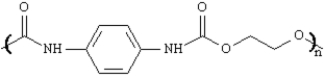
Unlock Deck
Unlock for access to all 68 flashcards in this deck.
Unlock Deck
k this deck
61
Which of the following compounds is not a free radical initiator? ​

A) Tert-butyl hydroperoxide
B) Azoisobutyronitrile
C) Peracetic acid
D) Methyl iodide
Unlock Deck
Unlock for access to all 68 flashcards in this deck.
Unlock Deck
k this deck
62
Which of the following cycloalkenes is least reactive toward ROMP?

A)
<strong>Which of the following cycloalkenes is least reactive toward ROMP?</strong> A)   B)   C)   D)
B)
<strong>Which of the following cycloalkenes is least reactive toward ROMP?</strong> A)   B)   C)   D)
C)
<strong>Which of the following cycloalkenes is least reactive toward ROMP?</strong> A)   B)   C)   D)
D)
<strong>Which of the following cycloalkenes is least reactive toward ROMP?</strong> A)   B)   C)   D)
Unlock Deck
Unlock for access to all 68 flashcards in this deck.
Unlock Deck
k this deck
63
The weight average molecular weight of a polymer was found to be 30,000, and the number average molecular weight of the compound was 20,000. What is the PDI of the polymer?

A) 0.0
B) 1.0
C) 1.5
D) 0.5
Unlock Deck
Unlock for access to all 68 flashcards in this deck.
Unlock Deck
k this deck
64
Identify the final product of the following reaction. ​ <strong>Identify the final product of the following reaction. ​  </strong> A) Terephthalic acid B) Kevlar C) Lexan D) Nylon 6
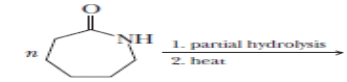
A) Terephthalic acid
B) Kevlar
C) Lexan
D) Nylon 6
Unlock Deck
Unlock for access to all 68 flashcards in this deck.
Unlock Deck
k this deck
65
Rubber materials must have low _____ to behave as elastomers.
Unlock Deck
Unlock for access to all 68 flashcards in this deck.
Unlock Deck
k this deck
66
Identify the compound that is not a conductive polymer.

A) Polyphenylene vinylene
B) Polyvinyl chloride
C) Polypyrrole
D) Polyacetylene
Unlock Deck
Unlock for access to all 68 flashcards in this deck.
Unlock Deck
k this deck
67
The ratio of the weight average molecular weight to the number average molecular weight of a polymer was found to be 3:2. Which of the following statements is true about the polymer?

A) It is monodisperse.
B) It has chains of varying length.
C) It has chains of equal length.
D) It has a polydispersity value of less than one.
Unlock Deck
Unlock for access to all 68 flashcards in this deck.
Unlock Deck
k this deck
68
Provide the structure of poly(propylene oxide) that is formed by base catalyzed ring opening polymerization of the propylene oxide shown below. Provide the structure of poly(propylene oxide) that is formed by base catalyzed ring opening polymerization of the propylene oxide shown below.
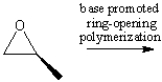
Unlock Deck
Unlock for access to all 68 flashcards in this deck.
Unlock Deck
k this deck
locked card icon
Unlock Deck
Unlock for access to all 68 flashcards in this deck.