







 Chat with AI

Deck 14: Federal Water Pollution-Control Policy
Full screen (f)

Question

Question
Question
Question
Question
Question
Question
Question
Question
Question
Figure 1: 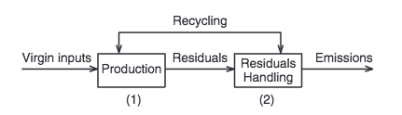
Refer to the figure above.TBESs focus on the process in
A)Figure 1
B)box (1)
C)box (2)
D)in the figure labeled 'Emissions'
Refer to the figure above.TBESs focus on the process in
A)Figure 1
B)box (1)
C)box (2)
D)in the figure labeled 'Emissions'
Question
Question
Question
Question
Figure 1:
Refer to the figure above.When pollution control is criticized for focusing on the end-of -the pipe, it refers to technology based effluent standards that focus on
A)Figure 1
B)box (1)
C)box (2)
D)recycling
Refer to the figure above.When pollution control is criticized for focusing on the end-of -the pipe, it refers to technology based effluent standards that focus on
A)Figure 1
B)box (1)
C)box (2)
D)recycling
Question
Question
Question
Question
Question
Question
Question
Question
Question
Question
Question
Question
Question
Question

Unlock Deck
Sign up to unlock the cards in this deck!
Unlock Deck
Unlock Deck
1/28

Play

Full screen (f)
Deck 14: Federal Water Pollution-Control Policy
1
In terms of human scale, radioactive waste is essentially ___________.
A)a persistent pollutant
B)a degradable pollutant
C)an episodic emission
D)none of the above
A)a persistent pollutant
B)a degradable pollutant
C)an episodic emission
D)none of the above
A
2
Although there are many types of waterborne pollutants, policy tends to differentiate between
A)Conventional and non-conventional pollutants
B)Conventional, non-conventional and toxic pollutants
C)Non-conventional pollutants and toxic pollutants
D)Toxic and non-toxic pollutants
A)Conventional and non-conventional pollutants
B)Conventional, non-conventional and toxic pollutants
C)Non-conventional pollutants and toxic pollutants
D)Toxic and non-toxic pollutants
B
3
The accident release of oil into the Gulf of Mexico or the nuclear accident at Three Mile Island are considered
A)non-natural water pollution
B)conventional water pollution
C)continuous water pollution
D)episodic emissions
A)non-natural water pollution
B)conventional water pollution
C)continuous water pollution
D)episodic emissions
D
4
__________pollutants are pollutants that remain for a longer period of time, either because they are nondegradable or because the rate of degradation is very slow.
A)Nonpersistant
B)Persistant
C)BOD
D)Toxic
A)Nonpersistant
B)Persistant
C)BOD
D)Toxic
Unlock Deck
Unlock for access to all 28 flashcards in this deck.
Unlock Deck
k this deck
5
The Clean Water Act, which has been primarily aimed at point source water pollution, has moved the United States ________ of the way toward zero-discharge levels for point sources.
A)20-30%
B)50-60%
C)70-80%
D)90-100%
A)20-30%
B)50-60%
C)70-80%
D)90-100%
Unlock Deck
Unlock for access to all 28 flashcards in this deck.
Unlock Deck
k this deck
6
High levels of _____________are associated with high-quality water, this water supports domestic water supply and quality recreational activities.
A)conventional pollutants
B)biochemical oxygen demand
C)dissolved oxygen (DO)
D)degradable pollutants
A)conventional pollutants
B)biochemical oxygen demand
C)dissolved oxygen (DO)
D)degradable pollutants
Unlock Deck
Unlock for access to all 28 flashcards in this deck.
Unlock Deck
k this deck
7
It wasn't until the creation of _______________ that a direct Federal role was established for water pollution control.
A)the US Army Corp of Engineers
B)the Environmental Protection Agency
C)the Uniform Standard Emissions Act
D)the 1965 Water Quality Act
A)the US Army Corp of Engineers
B)the Environmental Protection Agency
C)the Uniform Standard Emissions Act
D)the 1965 Water Quality Act
Unlock Deck
Unlock for access to all 28 flashcards in this deck.
Unlock Deck
k this deck
8
When people are continuously exposed to a drinking water pollutant, we would call this type of pollution
A)episodic emissions
B)continuous emissions
C)conventional source emissions
D)non-conventional source emissions
A)episodic emissions
B)continuous emissions
C)conventional source emissions
D)non-conventional source emissions
Unlock Deck
Unlock for access to all 28 flashcards in this deck.
Unlock Deck
k this deck
9
Best management practices (BMPs) are federally approved, and often subsidized, practices or techniques that reduce
A)costs associated with water pollution remediation
B)costs associated with administration of pollution control
C)runoff of non-point source water pollution
D)lack of compliance with point source technology based effluent standards
A)costs associated with water pollution remediation
B)costs associated with administration of pollution control
C)runoff of non-point source water pollution
D)lack of compliance with point source technology based effluent standards
Unlock Deck
Unlock for access to all 28 flashcards in this deck.
Unlock Deck
k this deck
10
Figure 1:
Refer to the figure above.TBESs focus on the process in
A)Figure 1
B)box (1)
C)box (2)
D)in the figure labeled 'Emissions'
Refer to the figure above.TBESs focus on the process in
A)Figure 1
B)box (1)
C)box (2)
D)in the figure labeled 'Emissions'
Unlock Deck
Unlock for access to all 28 flashcards in this deck.
Unlock Deck
k this deck
11
While technology based effluent standards help reduce point source emissions, the 1987 Water Quality Act has sought to control non-point source emissions through
A)goals of zero discharge
B)best management practices (BMPs)
C)criminal legislation
D)discharge permits
A)goals of zero discharge
B)best management practices (BMPs)
C)criminal legislation
D)discharge permits
Unlock Deck
Unlock for access to all 28 flashcards in this deck.
Unlock Deck
k this deck
12
The 1972 Water Pollution Control Act Amendments changed the policy approach of water pollution control from one of ______________ to one of _______________.
A)federal control; state control
B)municipal control; state control
C)ambient quality; technology based effluent standards
D)technology based effluent standards; ambient quality
A)federal control; state control
B)municipal control; state control
C)ambient quality; technology based effluent standards
D)technology based effluent standards; ambient quality
Unlock Deck
Unlock for access to all 28 flashcards in this deck.
Unlock Deck
k this deck
13
Municipal waste treatment plants often discharge wastewater from a single outfall.This type of water pollution is called
A)solitary
B)continuous
C)point source
D)non-point source
A)solitary
B)continuous
C)point source
D)non-point source
Unlock Deck
Unlock for access to all 28 flashcards in this deck.
Unlock Deck
k this deck
14
Figure 1:
Refer to the figure above.When pollution control is criticized for focusing on the end-of -the pipe, it refers to technology based effluent standards that focus on
A)Figure 1
B)box (1)
C)box (2)
D)recycling
Refer to the figure above.When pollution control is criticized for focusing on the end-of -the pipe, it refers to technology based effluent standards that focus on
A)Figure 1
B)box (1)
C)box (2)
D)recycling
Unlock Deck
Unlock for access to all 28 flashcards in this deck.
Unlock Deck
k this deck
15
Although TBESs are emissions standards, because specific technology is used to determine the emission standard, firms are often
A)reluctant to take a risk and explore cheaper and alternative technologies
B)unintentionally encouraged to use the technology that was used to set the standard
C)discouraged from practicing pollution prevention
D)all of the above
A)reluctant to take a risk and explore cheaper and alternative technologies
B)unintentionally encouraged to use the technology that was used to set the standard
C)discouraged from practicing pollution prevention
D)all of the above
Unlock Deck
Unlock for access to all 28 flashcards in this deck.
Unlock Deck
k this deck
16
The logic and application of the TBES (technology based effluent standards) process and its application at the national level
A)ensures that there is a balance between damages and cost control
B)ensures that all firms within an industry meet the equimarginal condition
C)all of the above
D)none of the above
A)ensures that there is a balance between damages and cost control
B)ensures that all firms within an industry meet the equimarginal condition
C)all of the above
D)none of the above
Unlock Deck
Unlock for access to all 28 flashcards in this deck.
Unlock Deck
k this deck
17
The 1899 refuse act was not an attempt to control water pollution, but an attempt to ensure
A)limited water diversion
B)water navigation
C)control of land pollution
D)building rights of the U.S.Army Corps of Engineers
A)limited water diversion
B)water navigation
C)control of land pollution
D)building rights of the U.S.Army Corps of Engineers
Unlock Deck
Unlock for access to all 28 flashcards in this deck.
Unlock Deck
k this deck
18
In Phase I of the Water Pollution Control Act of 1972, the EPA is legislated set emission standards based on
A)BPTs, best practicable technology
B)BATs, best available technology
C)BCT, best conventional technology
D)TBES, technology based effluent standards
A)BPTs, best practicable technology
B)BATs, best available technology
C)BCT, best conventional technology
D)TBES, technology based effluent standards
Unlock Deck
Unlock for access to all 28 flashcards in this deck.
Unlock Deck
k this deck
19
Best Available Technology (BAT) is generally considered _____________ than Best Practicable Technology (BPT)
A)more economical
B)more stringent
C)less stringent
D)more precise
A)more economical
B)more stringent
C)less stringent
D)more precise
Unlock Deck
Unlock for access to all 28 flashcards in this deck.
Unlock Deck
k this deck
20
The 1965 Water Quality Act encouraged states to develop ambient standards for water quality.Ambient standards are
A)a never-exceed level of pollutant in a particular water sources.
B)a method that calls for zero tolerance of water pollutants in a particular source.
C)only effective for point source pollution.
D)only effective for non-point source pollution.
A)a never-exceed level of pollutant in a particular water sources.
B)a method that calls for zero tolerance of water pollutants in a particular source.
C)only effective for point source pollution.
D)only effective for non-point source pollution.
Unlock Deck
Unlock for access to all 28 flashcards in this deck.
Unlock Deck
k this deck
21
Over the last several decades, the proportion of the U.S.population that is served by secondary or tertiary water treatment facilities has
A)decreased
B)increased
C)remained the same
D)remained unmeasured
A)decreased
B)increased
C)remained the same
D)remained unmeasured
Unlock Deck
Unlock for access to all 28 flashcards in this deck.
Unlock Deck
k this deck
22
The engineering focused approach of technology based effluent standards
A)is likely to be cost in-effective, and not consistent with the equimarginal principle
B)is subject to political interests while the EPA is required to make engineering decisions
C)is substantially undermined the requirements of monitoring and enforcement
D)all of the above
A)is likely to be cost in-effective, and not consistent with the equimarginal principle
B)is subject to political interests while the EPA is required to make engineering decisions
C)is substantially undermined the requirements of monitoring and enforcement
D)all of the above
Unlock Deck
Unlock for access to all 28 flashcards in this deck.
Unlock Deck
k this deck
23
Emissions trading for water pollutants may be more complex than emissions trading for air pollutants.Trading networks will be
A)limited to sources discharging into particular bodies of water
B)limited according to the industry and the product that the firm produces
C)unlimited geographically, but limited to domestic polluters
D)best if they are completely unlimited
A)limited to sources discharging into particular bodies of water
B)limited according to the industry and the product that the firm produces
C)unlimited geographically, but limited to domestic polluters
D)best if they are completely unlimited
Unlock Deck
Unlock for access to all 28 flashcards in this deck.
Unlock Deck
k this deck
24
Wastewater treatment plants engage in different levels of treatment for municipal water.The different degrees of treatment are designated
A)primary, secondary and tertiary.
B)BOD, activated sludge and chemical processing
C)no treatment, secondary treatment and primary treatment
D)physical, biological and chemical
A)primary, secondary and tertiary.
B)BOD, activated sludge and chemical processing
C)no treatment, secondary treatment and primary treatment
D)physical, biological and chemical
Unlock Deck
Unlock for access to all 28 flashcards in this deck.
Unlock Deck
k this deck
25
Federal subsidies for water treatment plants have encouraged
A.municipalities to build plants with excess capacity
B.state and local governments to reduce their contributions toward these public works
C.more access to secondary and tertiary treated water for U.S.citizens
D.all of the above
A.municipalities to build plants with excess capacity
B.state and local governments to reduce their contributions toward these public works
C.more access to secondary and tertiary treated water for U.S.citizens
D.all of the above
Unlock Deck
Unlock for access to all 28 flashcards in this deck.
Unlock Deck
k this deck
26
Controlling water pollution by establishing total maximum daily loads is a type of
A)technology based effluent standard
B)ambient standard
C)emissions trading system
D)best management practice
A)technology based effluent standard
B)ambient standard
C)emissions trading system
D)best management practice
Unlock Deck
Unlock for access to all 28 flashcards in this deck.
Unlock Deck
k this deck
27
After the state has established a total maximum daily load for a body of water and after that load has been distributed among the sources of emissions, a system of ________ can be developed to encourage cost effectiveness.
A)state revolving funds
B)emissions trading
C)technology based effluent standards
D)best management practices
A)state revolving funds
B)emissions trading
C)technology based effluent standards
D)best management practices
Unlock Deck
Unlock for access to all 28 flashcards in this deck.
Unlock Deck
k this deck
28
One way to control non-point source emissions is
A)determine the source of pollution and fine those who are emitting
B)request that the sources self-identify and tax those who are emitting
C)offer a reward for identifying those who are emitting
D)tax the activities or materials that lead to the emissions, rather than the emissions themselves
A)determine the source of pollution and fine those who are emitting
B)request that the sources self-identify and tax those who are emitting
C)offer a reward for identifying those who are emitting
D)tax the activities or materials that lead to the emissions, rather than the emissions themselves
Unlock Deck
Unlock for access to all 28 flashcards in this deck.
Unlock Deck
k this deck
Unlock Deck
Unlock for access to all 28 flashcards in this deck.






