Deck 16: Carbohydrates

Full screen (f)
exit full mode
Question
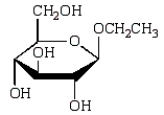
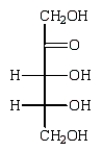
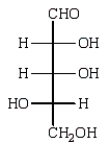
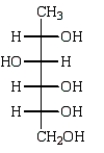
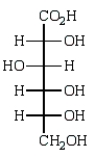
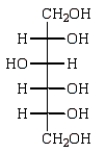
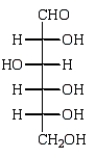
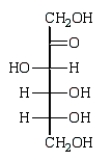
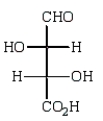
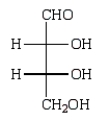
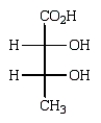
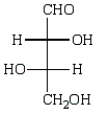
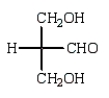
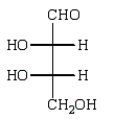
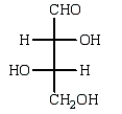
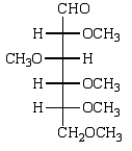
Which of the following can be classified as a ketohexose? <strong>Which of the following can be classified as a ketohexose?   _</strong> A) 1 B) 2 C) 3 D) 4 E) 1, 3, and 4 <div style=padding-top: 35px> _
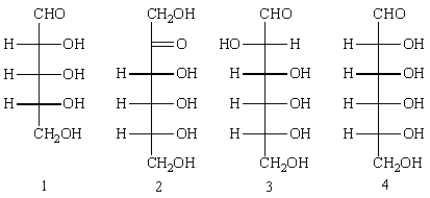
A) 1
B) 2
C) 3
D) 4
E) 1, 3, and 4
Use Space or
up arrow
down arrow
to flip the card.
Question
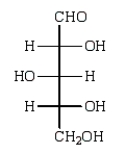
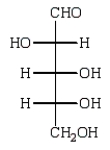
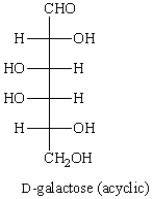
Which of the following can be classified as an aldopentose? <strong>Which of the following can be classified as an aldopentose?  </strong> A) 1 B) 2 C) 3 D) 4 E) 3 and 4 <div style=padding-top: 35px>
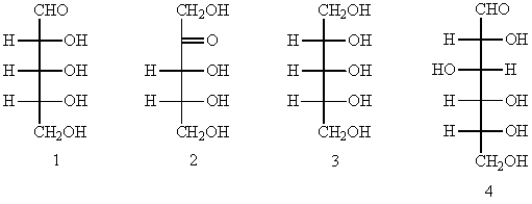
A) 1
B) 2
C) 3
D) 4
E) 3 and 4
Question
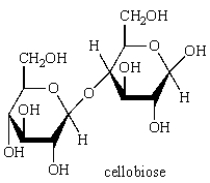
Which of the following can be considered a polysaccharide?

A) sucrose
B) cellobiose
C) lactose
D) maltose
E) cellulose
Question
Glucose can be classified as a:

A) monosaccharide
B) disaccharide
C) trisaccharide
D) polysaccharide
E) table sugar
Question
The linkage between the sugar units in starch are:

A) ( α\alpha )
B) ( β\beta )
C) ( γ\gamma )
D)( δ \delta )
E) none of these
Question
The acyclic structure of D-glucose is:  <strong>The acyclic structure of D-glucose is:   The formula for ethyl  \alpha -D-glucopyranoside is:</strong> A)   B)   C)   D)   E)   <div style=padding-top: 35px>  The formula for ethyl α\alpha -D-glucopyranoside is:
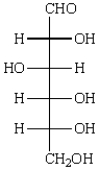
A)  <strong>The acyclic structure of D-glucose is:   The formula for ethyl  \alpha -D-glucopyranoside is:</strong> A)   B)   C)   D)   E)   <div style=padding-top: 35px>
B)  <strong>The acyclic structure of D-glucose is:   The formula for ethyl  \alpha -D-glucopyranoside is:</strong> A)   B)   C)   D)   E)   <div style=padding-top: 35px>
C)  <strong>The acyclic structure of D-glucose is:   The formula for ethyl  \alpha -D-glucopyranoside is:</strong> A)   B)   C)   D)   E)   <div style=padding-top: 35px>
D)  <strong>The acyclic structure of D-glucose is:   The formula for ethyl  \alpha -D-glucopyranoside is:</strong> A)   B)   C)   D)   E)   <div style=padding-top: 35px>
E)  <strong>The acyclic structure of D-glucose is:   The formula for ethyl  \alpha -D-glucopyranoside is:</strong> A)   B)   C)   D)   E)   <div style=padding-top: 35px>
Question
Reduction of an optically active aldopentose with NaBH4 gives an optically inactive alditol.The aldopentose could be:

A) <strong>Reduction of an optically active aldopentose with NaBH<sub>4</sub> gives an optically inactive alditol.The aldopentose could be:</strong> A)   B)   C)   D)   E)   <div style=padding-top: 35px>
B) <strong>Reduction of an optically active aldopentose with NaBH<sub>4</sub> gives an optically inactive alditol.The aldopentose could be:</strong> A)   B)   C)   D)   E)   <div style=padding-top: 35px>
C) <strong>Reduction of an optically active aldopentose with NaBH<sub>4</sub> gives an optically inactive alditol.The aldopentose could be:</strong> A)   B)   C)   D)   E)   <div style=padding-top: 35px>
D) <strong>Reduction of an optically active aldopentose with NaBH<sub>4</sub> gives an optically inactive alditol.The aldopentose could be:</strong> A)   B)   C)   D)   E)   <div style=padding-top: 35px>
E) <strong>Reduction of an optically active aldopentose with NaBH<sub>4</sub> gives an optically inactive alditol.The aldopentose could be:</strong> A)   B)   C)   D)   E)   <div style=padding-top: 35px>
Question
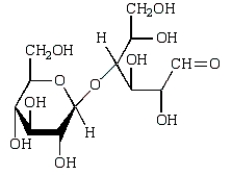
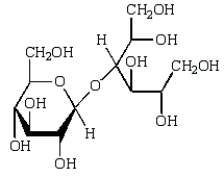
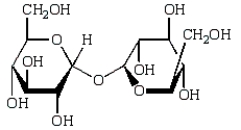
Another name for the disaccharide, 4-O-( β\beta -D-galactopyranosyl)- β\beta -glucopyranose, is:

A) sucrose
B) cellobiose
C) lactose
D) maltose
E) amylose
Question
A 1,4- β\beta -linkage between two glucose units produces a disaccharide called:

A) dextrose
B) cellobiose
C) ribose
D) maltose
E) amylose
Question
A 1,4- α\alpha -linkage between two glucose units produces a disaccharide called:

A) dextrose
B) cellobiose
C) ribose
D) maltose
E) amylose
Question
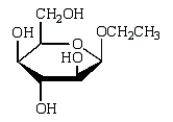
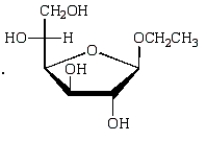
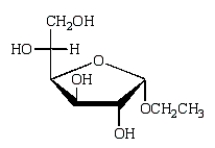
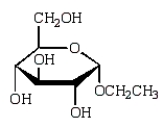
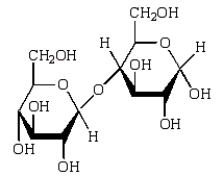
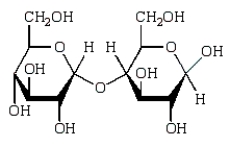
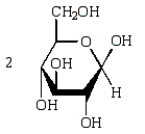
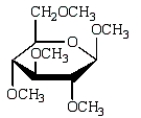
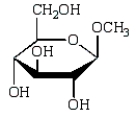
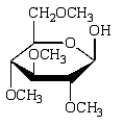
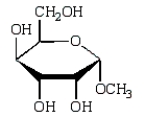
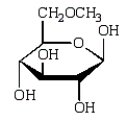
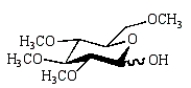
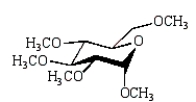
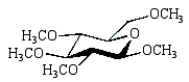
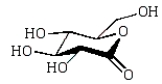
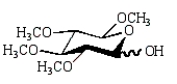
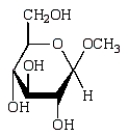
Which of the following structures represent glycosides? <strong>Which of the following structures represent glycosides?  </strong> A) only 1 B) only 2 C) only 3 D) 1 and 2 E) 1, 2, and 3 <div style=padding-top: 35px>
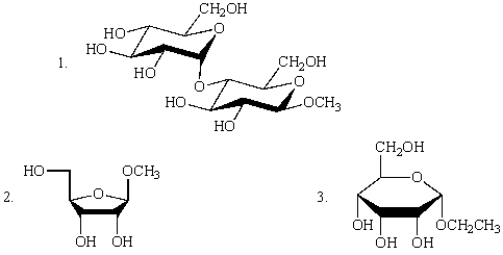
A) only 1
B) only 2
C) only 3
D) 1 and 2
E) 1, 2, and 3
Question
Hydrolysis of the disaccharide maltose produces: <strong>Hydrolysis of the disaccharide maltose produces:  </strong> A) sucrose B) glucose C) mannose D) glucose and fructose E) glucose and galactose <div style=padding-top: 35px>
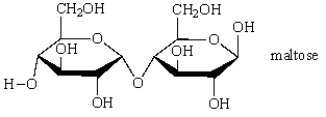
A) sucrose
B) glucose
C) mannose
D) glucose and fructose
E) glucose and galactose
Question
The difference between the pyranose and furanose forms of a given aldohexose is:

A) the ring size
B) the number of the anomeric C
C) the type of functional groups
D) the number of functional groups
E) there is no difference
Question
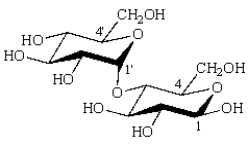
The formula for maltose is: <strong>The formula for maltose is:   The acetal carbon(s) is(are):</strong> A) C1 B) C1 and C1' C) C1 and C4 D) C1' E) C1' and C4' <div style=padding-top: 35px> The acetal carbon(s) is(are):

A) C1
B) C1 and C1'
C) C1 and C4
D) C1'
E) C1' and C4'
Question
How many hydroxyl groups are present in the pyranose form of glucose?

A) 1
B) 2
C) 3
D) 4
E) 5
Question
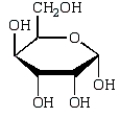
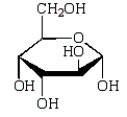
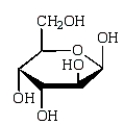
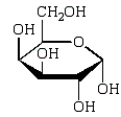
Which of the following can be classified as epimers? <strong>Which of the following can be classified as epimers?  </strong> A) 1 and 2 B) 1 and 3 C) 1 and 4 D) 3 and 4 E) none are epimers <div style=padding-top: 35px>
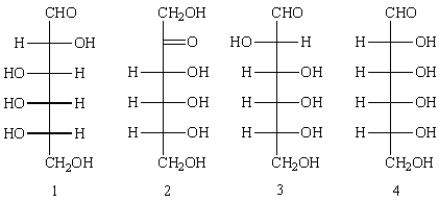
A) 1 and 2
B) 1 and 3
C) 1 and 4
D) 3 and 4
E) none are epimers
Question
The anomeric carbon of <strong>The anomeric carbon of   is:</strong> A) C1 B) C2 C) C3 D) C5 E) C6 <div style=padding-top: 35px> is:
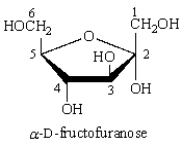
A) C1
B) C2
C) C3
D) C5
E) C6
Question
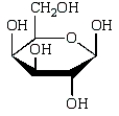
The Haworth projection formula for the pyranose form of β\beta -D-galactose is:  <strong>The Haworth projection formula for the pyranose form of  \beta -D-galactose is:  </strong> A)   B)   C)   D)   E)   <div style=padding-top: 35px>

A)  <strong>The Haworth projection formula for the pyranose form of  \beta -D-galactose is:  </strong> A)   B)   C)   D)   E)   <div style=padding-top: 35px>
B)  <strong>The Haworth projection formula for the pyranose form of  \beta -D-galactose is:  </strong> A)   B)   C)   D)   E)   <div style=padding-top: 35px>
C)  <strong>The Haworth projection formula for the pyranose form of  \beta -D-galactose is:  </strong> A)   B)   C)   D)   E)   <div style=padding-top: 35px>
D)  <strong>The Haworth projection formula for the pyranose form of  \beta -D-galactose is:  </strong> A)   B)   C)   D)   E)   <div style=padding-top: 35px>
E)  <strong>The Haworth projection formula for the pyranose form of  \beta -D-galactose is:  </strong> A)   B)   C)   D)   E)   <div style=padding-top: 35px>
Question
D-Glucose can exist in how many isomeric cyclic hemiacetal forms?

A) 1
B) 2
C) 3
D) 4
E) 5
Question
Which of the following can be considered reducing sugars? <strong>Which of the following can be considered reducing sugars?  </strong> A) 1 B) 2 C) 3 D) 4 E) 1, 2, 3, and 4 <div style=padding-top: 35px>
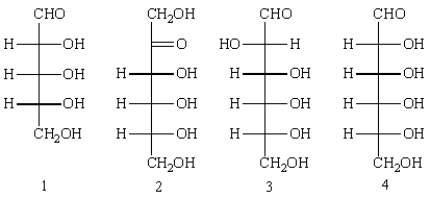
A) 1
B) 2
C) 3
D) 4
E) 1, 2, 3, and 4
Question
The product of the reaction below is: <strong>The product of the reaction below is:  </strong> A)   B)   C)   D)   E)   <div style=padding-top: 35px>
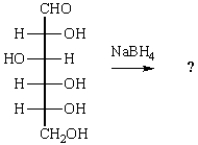
A) <strong>The product of the reaction below is:  </strong> A)   B)   C)   D)   E)   <div style=padding-top: 35px>
B) <strong>The product of the reaction below is:  </strong> A)   B)   C)   D)   E)   <div style=padding-top: 35px>
C) <strong>The product of the reaction below is:  </strong> A)   B)   C)   D)   E)   <div style=padding-top: 35px>
D) <strong>The product of the reaction below is:  </strong> A)   B)   C)   D)   E)   <div style=padding-top: 35px>
E) <strong>The product of the reaction below is:  </strong> A)   B)   C)   D)   E)   <div style=padding-top: 35px>
Question
How many stereogenic centers are in the β\beta -cyclic form of glucose?

A) 1
B) 2
C) 3
D) 4
E) 5
Question
Acid-catalyzed hydrolysis of <strong>Acid-catalyzed hydrolysis of   gives:</strong> A)   B)   C)   D)   E)   <div style=padding-top: 35px> gives:

A) <strong>Acid-catalyzed hydrolysis of   gives:</strong> A)   B)   C)   D)   E)   <div style=padding-top: 35px>
B) <strong>Acid-catalyzed hydrolysis of   gives:</strong> A)   B)   C)   D)   E)   <div style=padding-top: 35px>
C) <strong>Acid-catalyzed hydrolysis of   gives:</strong> A)   B)   C)   D)   E)   <div style=padding-top: 35px>
D) <strong>Acid-catalyzed hydrolysis of   gives:</strong> A)   B)   C)   D)   E)   <div style=padding-top: 35px>
E) <strong>Acid-catalyzed hydrolysis of   gives:</strong> A)   B)   C)   D)   E)   <div style=padding-top: 35px>
Question
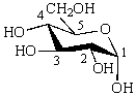
The anomeric carbon in the structure below is numbered: <strong>The anomeric carbon in the structure below is numbered:  </strong> A) 1 B) 2 C) 3 D) 4 E) 5 <div style=padding-top: 35px>
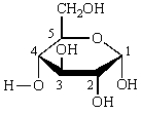
A) 1
B) 2
C) 3
D) 4
E) 5
Question
The term that best describes the relationship between <strong>The term that best describes the relationship between   is</strong> A) conformers. B) epimers. C) enantiomers. D) meso forms. E) constitutional isomers. <div style=padding-top: 35px> is
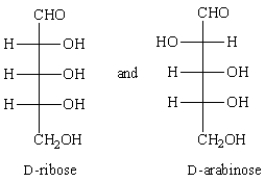
A) conformers.
B) epimers.
C) enantiomers.
D) meso forms.
E) constitutional isomers.
Question
The product of <strong>The product of   <sub> </sub> is:</strong> A)   B)   C)   D)   E)   <div style=padding-top: 35px> is:
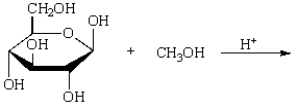
A) <strong>The product of   <sub> </sub> is:</strong> A)   B)   C)   D)   E)   <div style=padding-top: 35px>
B) <strong>The product of   <sub> </sub> is:</strong> A)   B)   C)   D)   E)   <div style=padding-top: 35px>
C) <strong>The product of   <sub> </sub> is:</strong> A)   B)   C)   D)   E)   <div style=padding-top: 35px>
D) <strong>The product of   <sub> </sub> is:</strong> A)   B)   C)   D)   E)   <div style=padding-top: 35px>
E) <strong>The product of   <sub> </sub> is:</strong> A)   B)   C)   D)   E)   <div style=padding-top: 35px>
Question
Reduction of which of the following aldoses provides an optically active alditol? <strong>Reduction of which of the following aldoses provides an optically active alditol?  </strong> A) 1 B) 2 C) 3 D) 1 and 2 E) 3 and 4 <div style=padding-top: 35px>
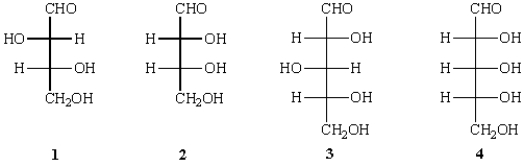
A) 1
B) 2
C) 3
D) 1 and 2
E) 3 and 4
Question
The following monosaccharide has ________ equatorial hydroxyl groups. <strong>The following monosaccharide has ________ equatorial hydroxyl groups.   _</strong> A) 1 B) 2 C) 3 D) 4 E) 5 <div style=padding-top: 35px> _
A) 1
B) 2
C) 3
D) 4
E) 5
Question
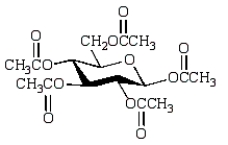
D-Glucose reacts with acetic anhydride to produce:

A) ethers
B) esters
C) carboxylic acids
D) alcohols
E) aldehydes
Question
Starch is a polysaccharide that is found in many food sources.When starch is completely hydrolyzed, the monosaccharide that is produced is:

A) glucose
B) mannose
C) maltose
D) galactose
E) amylose
Question
The equilibrium rotation of an aqueous solution of α\alpha - and β\beta -D-glucose is +50°, and the rotations of the pure α\alpha and β\beta forms are +102° and +24°, respectively. Assuming no other forms are present, the percent α\alpha form at equilibrium is:

A) 66.7%
B) 50.0%
C) 22.5%
D) 33.3%
E) 24.0%
Question
Treatment of D-(+)-mannose with Fehling's reagent (Cu+2) gives: <strong>Treatment of D-(+)-mannose with Fehling's reagent (Cu<sup>+2</sup>) gives:  </strong> A) an aldose B) a ketose C) an alditol D) an aldonic acid E) an aldaric acid <div style=padding-top: 35px>
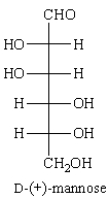
A) an aldose
B) a ketose
C) an alditol
D) an aldonic acid
E) an aldaric acid
Question
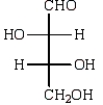
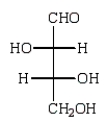
Oxidation of optically active D-erythrose with nitric acid produces optically inactive meso-tartaric acid (below).What is the structure of D-erythrose? <strong>Oxidation of optically active D-erythrose with nitric acid produces optically inactive meso-tartaric acid (below).What is the structure of D-erythrose?  </strong> A)   B)   C)   D)   E)   <div style=padding-top: 35px>
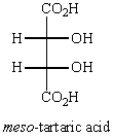
A) <strong>Oxidation of optically active D-erythrose with nitric acid produces optically inactive meso-tartaric acid (below).What is the structure of D-erythrose?  </strong> A)   B)   C)   D)   E)   <div style=padding-top: 35px>
B) <strong>Oxidation of optically active D-erythrose with nitric acid produces optically inactive meso-tartaric acid (below).What is the structure of D-erythrose?  </strong> A)   B)   C)   D)   E)   <div style=padding-top: 35px>
C) <strong>Oxidation of optically active D-erythrose with nitric acid produces optically inactive meso-tartaric acid (below).What is the structure of D-erythrose?  </strong> A)   B)   C)   D)   E)   <div style=padding-top: 35px>
D) <strong>Oxidation of optically active D-erythrose with nitric acid produces optically inactive meso-tartaric acid (below).What is the structure of D-erythrose?  </strong> A)   B)   C)   D)   E)   <div style=padding-top: 35px>
E) <strong>Oxidation of optically active D-erythrose with nitric acid produces optically inactive meso-tartaric acid (below).What is the structure of D-erythrose?  </strong> A)   B)   C)   D)   E)   <div style=padding-top: 35px>
Question
The configurations at C2, C3, and C4 of <strong>The configurations at C2, C3, and C4 of   are:</strong> A) 2R, 3R, 4R B) 2R, 3S, 4R C) 2S, 3R, 4S D) 2S, 3R, 4R E) 2R, 3S, 4S <div style=padding-top: 35px> are:
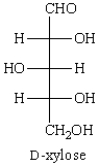
A) 2R, 3R, 4R
B) 2R, 3S, 4R
C) 2S, 3R, 4S
D) 2S, 3R, 4R
E) 2R, 3S, 4S
Question
The pyranose form of glucose is a(n):

A) linear aldehyde
B) cyclic hemiacetal
C) cyclic acetal
D) acyclic acetal
E) acyclic hemiacetal
Question
Hydrolysis of lactose gives:

A) glucose and galactose
B) glucose and fructose
C) mannose and fructose
D) galactose and fructose
E) allose and mannose
Question
A glycoside is formed upon reaction of glucopyranose with:

A) KMnO4
B) HNO3
C) Cu+2/OH-
D) CH3OH/H+
E) NaBH4
Question
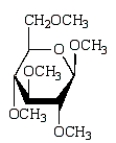
Which of the following reagents will convert the hydroxyl groups of a monosaccharide to methyl ethers?

A) H2/Ni
B) Ag2O/CH3I
C) HNO3
D) NaBH4/H2O
E) Br2/H2O
Question
The difference between α\alpha and β\beta -glucopyranose is:

A) the stereochemistry at the anomeric carbon
B) the number of carbons in the ring
C) the position of all the OH's on the ring
D) all of these reasons
E) none of these reasons
Question
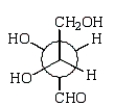
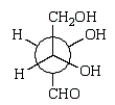
A Newman projection formula for <strong>A Newman projection formula for   is:</strong> A)   B)   C)   D)   E)   <div style=padding-top: 35px> is:
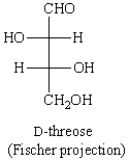
A) <strong>A Newman projection formula for   is:</strong> A)   B)   C)   D)   E)   <div style=padding-top: 35px>
B) <strong>A Newman projection formula for   is:</strong> A)   B)   C)   D)   E)   <div style=padding-top: 35px>
C) <strong>A Newman projection formula for   is:</strong> A)   B)   C)   D)   E)   <div style=padding-top: 35px>
D) <strong>A Newman projection formula for   is:</strong> A)   B)   C)   D)   E)   <div style=padding-top: 35px>
E) <strong>A Newman projection formula for   is:</strong> A)   B)   C)   D)   E)   <div style=padding-top: 35px>
Question
The product of the following reaction sequence is: <strong>The product of the following reaction sequence is:  </strong> A)   B)   C)   D)   E)   <div style=padding-top: 35px>

A) <strong>The product of the following reaction sequence is:  </strong> A)   B)   C)   D)   E)   <div style=padding-top: 35px>
B) <strong>The product of the following reaction sequence is:  </strong> A)   B)   C)   D)   E)   <div style=padding-top: 35px>
C) <strong>The product of the following reaction sequence is:  </strong> A)   B)   C)   D)   E)   <div style=padding-top: 35px>
D) <strong>The product of the following reaction sequence is:  </strong> A)   B)   C)   D)   E)   <div style=padding-top: 35px>
E) <strong>The product of the following reaction sequence is:  </strong> A)   B)   C)   D)   E)   <div style=padding-top: 35px>
Question
Which of the following compounds will give a positive Tollens' test (silver mirror)?

A) <strong>Which of the following compounds will give a positive Tollens' test (silver mirror)?</strong> A)   B)   C)   D)   E)   <div style=padding-top: 35px>
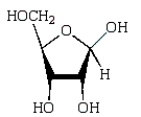
B) <strong>Which of the following compounds will give a positive Tollens' test (silver mirror)?</strong> A)   B)   C)   D)   E)   <div style=padding-top: 35px>
C) <strong>Which of the following compounds will give a positive Tollens' test (silver mirror)?</strong> A)   B)   C)   D)   E)   <div style=padding-top: 35px>
D) <strong>Which of the following compounds will give a positive Tollens' test (silver mirror)?</strong> A)   B)   C)   D)   E)   <div style=padding-top: 35px>
E) <strong>Which of the following compounds will give a positive Tollens' test (silver mirror)?</strong> A)   B)   C)   D)   E)   <div style=padding-top: 35px>
Question
Which of the following reagents will oxidize an aldose to an aldaric acid?

A) HNO3
B) Br2, H2O
C) NaBH4
D) PCC
E) Tollens' reagent
Question
The structure of an L-aldotetrose that would give an optically inactive alditol upon reduction with sodium borohydride (NaBH4) is:

A) <strong>The structure of an L-aldotetrose that would give an optically inactive alditol upon reduction with sodium borohydride (NaBH<sub>4</sub>) is:</strong> A)   B)   C)   D)   E)   <div style=padding-top: 35px>
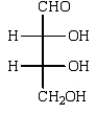
B) <strong>The structure of an L-aldotetrose that would give an optically inactive alditol upon reduction with sodium borohydride (NaBH<sub>4</sub>) is:</strong> A)   B)   C)   D)   E)   <div style=padding-top: 35px>
C) <strong>The structure of an L-aldotetrose that would give an optically inactive alditol upon reduction with sodium borohydride (NaBH<sub>4</sub>) is:</strong> A)   B)   C)   D)   E)   <div style=padding-top: 35px>
D) <strong>The structure of an L-aldotetrose that would give an optically inactive alditol upon reduction with sodium borohydride (NaBH<sub>4</sub>) is:</strong> A)   B)   C)   D)   E)   <div style=padding-top: 35px>
E) <strong>The structure of an L-aldotetrose that would give an optically inactive alditol upon reduction with sodium borohydride (NaBH<sub>4</sub>) is:</strong> A)   B)   C)   D)   E)   <div style=padding-top: 35px>
Question
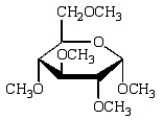
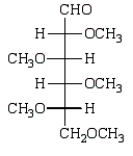
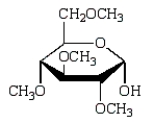
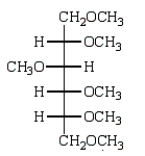
Treatment of methyl α\alpha -D-glucopyranose with silver oxide and iodomethane (Ag2O, CH3I) followed by hydrolysis (H3O+)  <strong>Treatment of methyl  \alpha -D-glucopyranose with silver oxide and iodomethane (Ag<sub>2</sub>O, CH<sub>3</sub>I) followed by hydrolysis (H<sub>3</sub>O<sup>+</sup>)    gives:</strong> A)   B)   C)   D)   E)   <div style=padding-top: 35px>  gives:
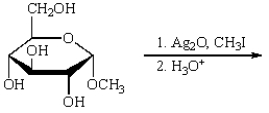
A)  <strong>Treatment of methyl  \alpha -D-glucopyranose with silver oxide and iodomethane (Ag<sub>2</sub>O, CH<sub>3</sub>I) followed by hydrolysis (H<sub>3</sub>O<sup>+</sup>)    gives:</strong> A)   B)   C)   D)   E)   <div style=padding-top: 35px>
B)  <strong>Treatment of methyl  \alpha -D-glucopyranose with silver oxide and iodomethane (Ag<sub>2</sub>O, CH<sub>3</sub>I) followed by hydrolysis (H<sub>3</sub>O<sup>+</sup>)    gives:</strong> A)   B)   C)   D)   E)   <div style=padding-top: 35px>
C)  <strong>Treatment of methyl  \alpha -D-glucopyranose with silver oxide and iodomethane (Ag<sub>2</sub>O, CH<sub>3</sub>I) followed by hydrolysis (H<sub>3</sub>O<sup>+</sup>)    gives:</strong> A)   B)   C)   D)   E)   <div style=padding-top: 35px>
D)  <strong>Treatment of methyl  \alpha -D-glucopyranose with silver oxide and iodomethane (Ag<sub>2</sub>O, CH<sub>3</sub>I) followed by hydrolysis (H<sub>3</sub>O<sup>+</sup>)    gives:</strong> A)   B)   C)   D)   E)   <div style=padding-top: 35px>
E)  <strong>Treatment of methyl  \alpha -D-glucopyranose with silver oxide and iodomethane (Ag<sub>2</sub>O, CH<sub>3</sub>I) followed by hydrolysis (H<sub>3</sub>O<sup>+</sup>)    gives:</strong> A)   B)   C)   D)   E)   <div style=padding-top: 35px>
Question
An intermediate in the following glycoside hydrolysis is: <strong>An intermediate in the following glycoside hydrolysis is:  </strong> A)   B)   C)   D)   E)   <div style=padding-top: 35px>
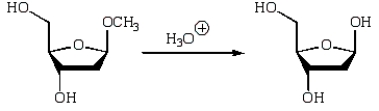
A) <strong>An intermediate in the following glycoside hydrolysis is:  </strong> A)   B)   C)   D)   E)   <div style=padding-top: 35px>
B) <strong>An intermediate in the following glycoside hydrolysis is:  </strong> A)   B)   C)   D)   E)   <div style=padding-top: 35px>
C) <strong>An intermediate in the following glycoside hydrolysis is:  </strong> A)   B)   C)   D)   E)   <div style=padding-top: 35px>
D) <strong>An intermediate in the following glycoside hydrolysis is:  </strong> A)   B)   C)   D)   E)   <div style=padding-top: 35px>
E) <strong>An intermediate in the following glycoside hydrolysis is:  </strong> A)   B)   C)   D)   E)   <div style=padding-top: 35px>
Unlock Deck
Sign up to unlock the cards in this deck!
Unlock Deck
Unlock Deck
1/46
auto play flashcards
Play
simple tutorial
Full screen (f)
exit full mode
Deck 16: Carbohydrates
1
Which of the following can be classified as a ketohexose? <strong>Which of the following can be classified as a ketohexose?   _</strong> A) 1 B) 2 C) 3 D) 4 E) 1, 3, and 4 _

A) 1
B) 2
C) 3
D) 4
E) 1, 3, and 4
2
2
Which of the following can be classified as an aldopentose? <strong>Which of the following can be classified as an aldopentose?  </strong> A) 1 B) 2 C) 3 D) 4 E) 3 and 4

A) 1
B) 2
C) 3
D) 4
E) 3 and 4
1
3
Which of the following can be considered a polysaccharide?

A) sucrose
B) cellobiose
C) lactose
D) maltose
E) cellulose
cellulose
4
Glucose can be classified as a:

A) monosaccharide
B) disaccharide
C) trisaccharide
D) polysaccharide
E) table sugar
Unlock Deck
Unlock for access to all 46 flashcards in this deck.
Unlock Deck
k this deck
5
The linkage between the sugar units in starch are:

A) ( α\alpha )
B) ( β\beta )
C) ( γ\gamma )
D)( δ \delta )
E) none of these
Unlock Deck
Unlock for access to all 46 flashcards in this deck.
Unlock Deck
k this deck
6
The acyclic structure of D-glucose is:  <strong>The acyclic structure of D-glucose is:   The formula for ethyl  \alpha -D-glucopyranoside is:</strong> A)   B)   C)   D)   E)    The formula for ethyl α\alpha -D-glucopyranoside is:

A)  <strong>The acyclic structure of D-glucose is:   The formula for ethyl  \alpha -D-glucopyranoside is:</strong> A)   B)   C)   D)   E)
B)  <strong>The acyclic structure of D-glucose is:   The formula for ethyl  \alpha -D-glucopyranoside is:</strong> A)   B)   C)   D)   E)
C)  <strong>The acyclic structure of D-glucose is:   The formula for ethyl  \alpha -D-glucopyranoside is:</strong> A)   B)   C)   D)   E)
D)  <strong>The acyclic structure of D-glucose is:   The formula for ethyl  \alpha -D-glucopyranoside is:</strong> A)   B)   C)   D)   E)
E)  <strong>The acyclic structure of D-glucose is:   The formula for ethyl  \alpha -D-glucopyranoside is:</strong> A)   B)   C)   D)   E)
Unlock Deck
Unlock for access to all 46 flashcards in this deck.
Unlock Deck
k this deck
7
Reduction of an optically active aldopentose with NaBH4 gives an optically inactive alditol.The aldopentose could be:

A) <strong>Reduction of an optically active aldopentose with NaBH<sub>4</sub> gives an optically inactive alditol.The aldopentose could be:</strong> A)   B)   C)   D)   E)
B) <strong>Reduction of an optically active aldopentose with NaBH<sub>4</sub> gives an optically inactive alditol.The aldopentose could be:</strong> A)   B)   C)   D)   E)
C) <strong>Reduction of an optically active aldopentose with NaBH<sub>4</sub> gives an optically inactive alditol.The aldopentose could be:</strong> A)   B)   C)   D)   E)
D) <strong>Reduction of an optically active aldopentose with NaBH<sub>4</sub> gives an optically inactive alditol.The aldopentose could be:</strong> A)   B)   C)   D)   E)
E) <strong>Reduction of an optically active aldopentose with NaBH<sub>4</sub> gives an optically inactive alditol.The aldopentose could be:</strong> A)   B)   C)   D)   E)
Unlock Deck
Unlock for access to all 46 flashcards in this deck.

Unlock Deck
k this deck
8
Another name for the disaccharide, 4-O-( β\beta -D-galactopyranosyl)- β\beta -glucopyranose, is:

A) sucrose
B) cellobiose
C) lactose
D) maltose
E) amylose
Unlock Deck
Unlock for access to all 46 flashcards in this deck.

Unlock Deck
k this deck
9
A 1,4- β\beta -linkage between two glucose units produces a disaccharide called:

A) dextrose
B) cellobiose
C) ribose
D) maltose
E) amylose
Unlock Deck
Unlock for access to all 46 flashcards in this deck.
Unlock Deck
k this deck
10
A 1,4- α\alpha -linkage between two glucose units produces a disaccharide called:

A) dextrose
B) cellobiose
C) ribose
D) maltose
E) amylose
Unlock Deck
Unlock for access to all 46 flashcards in this deck.
Unlock Deck
k this deck
11
Which of the following structures represent glycosides? <strong>Which of the following structures represent glycosides?  </strong> A) only 1 B) only 2 C) only 3 D) 1 and 2 E) 1, 2, and 3

A) only 1
B) only 2
C) only 3
D) 1 and 2
E) 1, 2, and 3
Unlock Deck
Unlock for access to all 46 flashcards in this deck.
Unlock Deck
k this deck
12
Hydrolysis of the disaccharide maltose produces: <strong>Hydrolysis of the disaccharide maltose produces:  </strong> A) sucrose B) glucose C) mannose D) glucose and fructose E) glucose and galactose

A) sucrose
B) glucose
C) mannose
D) glucose and fructose
E) glucose and galactose
Unlock Deck
Unlock for access to all 46 flashcards in this deck.
Unlock Deck
k this deck
13
The difference between the pyranose and furanose forms of a given aldohexose is:

A) the ring size
B) the number of the anomeric C
C) the type of functional groups
D) the number of functional groups
E) there is no difference
Unlock Deck
Unlock for access to all 46 flashcards in this deck.
Unlock Deck
k this deck
14
The formula for maltose is: <strong>The formula for maltose is:   The acetal carbon(s) is(are):</strong> A) C1 B) C1 and C1' C) C1 and C4 D) C1' E) C1' and C4' The acetal carbon(s) is(are):

A) C1
B) C1 and C1'
C) C1 and C4
D) C1'
E) C1' and C4'
Unlock Deck
Unlock for access to all 46 flashcards in this deck.
Unlock Deck
k this deck
15
How many hydroxyl groups are present in the pyranose form of glucose?

A) 1
B) 2
C) 3
D) 4
E) 5
Unlock Deck
Unlock for access to all 46 flashcards in this deck.
Unlock Deck
k this deck
16
Which of the following can be classified as epimers? <strong>Which of the following can be classified as epimers?  </strong> A) 1 and 2 B) 1 and 3 C) 1 and 4 D) 3 and 4 E) none are epimers

A) 1 and 2
B) 1 and 3
C) 1 and 4
D) 3 and 4
E) none are epimers
Unlock Deck
Unlock for access to all 46 flashcards in this deck.
Unlock Deck
k this deck
17
The anomeric carbon of <strong>The anomeric carbon of   is:</strong> A) C1 B) C2 C) C3 D) C5 E) C6 is:

A) C1
B) C2
C) C3
D) C5
E) C6
Unlock Deck
Unlock for access to all 46 flashcards in this deck.
Unlock Deck
k this deck
18
The Haworth projection formula for the pyranose form of β\beta -D-galactose is:  <strong>The Haworth projection formula for the pyranose form of  \beta -D-galactose is:  </strong> A)   B)   C)   D)   E)

A)  <strong>The Haworth projection formula for the pyranose form of  \beta -D-galactose is:  </strong> A)   B)   C)   D)   E)
B)  <strong>The Haworth projection formula for the pyranose form of  \beta -D-galactose is:  </strong> A)   B)   C)   D)   E)
C)  <strong>The Haworth projection formula for the pyranose form of  \beta -D-galactose is:  </strong> A)   B)   C)   D)   E)
D)  <strong>The Haworth projection formula for the pyranose form of  \beta -D-galactose is:  </strong> A)   B)   C)   D)   E)
E)  <strong>The Haworth projection formula for the pyranose form of  \beta -D-galactose is:  </strong> A)   B)   C)   D)   E)
Unlock Deck
Unlock for access to all 46 flashcards in this deck.
Unlock Deck
k this deck
19
D-Glucose can exist in how many isomeric cyclic hemiacetal forms?

A) 1
B) 2
C) 3
D) 4
E) 5
Unlock Deck
Unlock for access to all 46 flashcards in this deck.
Unlock Deck
k this deck
20
Which of the following can be considered reducing sugars? <strong>Which of the following can be considered reducing sugars?  </strong> A) 1 B) 2 C) 3 D) 4 E) 1, 2, 3, and 4

A) 1
B) 2
C) 3
D) 4
E) 1, 2, 3, and 4
Unlock Deck
Unlock for access to all 46 flashcards in this deck.
Unlock Deck
k this deck
21
The product of the reaction below is: <strong>The product of the reaction below is:  </strong> A)   B)   C)   D)   E)

A) <strong>The product of the reaction below is:  </strong> A)   B)   C)   D)   E)
B) <strong>The product of the reaction below is:  </strong> A)   B)   C)   D)   E)
C) <strong>The product of the reaction below is:  </strong> A)   B)   C)   D)   E)
D) <strong>The product of the reaction below is:  </strong> A)   B)   C)   D)   E)
E) <strong>The product of the reaction below is:  </strong> A)   B)   C)   D)   E)
Unlock Deck
Unlock for access to all 46 flashcards in this deck.
Unlock Deck
k this deck
22
How many stereogenic centers are in the β\beta -cyclic form of glucose?

A) 1
B) 2
C) 3
D) 4
E) 5
Unlock Deck
Unlock for access to all 46 flashcards in this deck.
Unlock Deck
k this deck
23
Acid-catalyzed hydrolysis of <strong>Acid-catalyzed hydrolysis of   gives:</strong> A)   B)   C)   D)   E)   gives:

A) <strong>Acid-catalyzed hydrolysis of   gives:</strong> A)   B)   C)   D)   E)
B) <strong>Acid-catalyzed hydrolysis of   gives:</strong> A)   B)   C)   D)   E)
C) <strong>Acid-catalyzed hydrolysis of   gives:</strong> A)   B)   C)   D)   E)
D) <strong>Acid-catalyzed hydrolysis of   gives:</strong> A)   B)   C)   D)   E)
E) <strong>Acid-catalyzed hydrolysis of   gives:</strong> A)   B)   C)   D)   E)
Unlock Deck
Unlock for access to all 46 flashcards in this deck.
Unlock Deck
k this deck
24
The anomeric carbon in the structure below is numbered: <strong>The anomeric carbon in the structure below is numbered:  </strong> A) 1 B) 2 C) 3 D) 4 E) 5

A) 1
B) 2
C) 3
D) 4
E) 5
Unlock Deck
Unlock for access to all 46 flashcards in this deck.
Unlock Deck
k this deck
25
The term that best describes the relationship between <strong>The term that best describes the relationship between   is</strong> A) conformers. B) epimers. C) enantiomers. D) meso forms. E) constitutional isomers. is

A) conformers.
B) epimers.
C) enantiomers.
D) meso forms.
E) constitutional isomers.
Unlock Deck
Unlock for access to all 46 flashcards in this deck.
Unlock Deck
k this deck
26
The product of <strong>The product of   <sub> </sub> is:</strong> A)   B)   C)   D)   E)   is:

A) <strong>The product of   <sub> </sub> is:</strong> A)   B)   C)   D)   E)
B) <strong>The product of   <sub> </sub> is:</strong> A)   B)   C)   D)   E)
C) <strong>The product of   <sub> </sub> is:</strong> A)   B)   C)   D)   E)
D) <strong>The product of   <sub> </sub> is:</strong> A)   B)   C)   D)   E)
E) <strong>The product of   <sub> </sub> is:</strong> A)   B)   C)   D)   E)
Unlock Deck
Unlock for access to all 46 flashcards in this deck.
Unlock Deck
k this deck
27
Reduction of which of the following aldoses provides an optically active alditol? <strong>Reduction of which of the following aldoses provides an optically active alditol?  </strong> A) 1 B) 2 C) 3 D) 1 and 2 E) 3 and 4

A) 1
B) 2
C) 3
D) 1 and 2
E) 3 and 4
Unlock Deck
Unlock for access to all 46 flashcards in this deck.
Unlock Deck
k this deck
28
The following monosaccharide has ________ equatorial hydroxyl groups. <strong>The following monosaccharide has ________ equatorial hydroxyl groups.   _</strong> A) 1 B) 2 C) 3 D) 4 E) 5 _

A) 1
B) 2
C) 3
D) 4
E) 5
Unlock Deck
Unlock for access to all 46 flashcards in this deck.
Unlock Deck
k this deck
29
D-Glucose reacts with acetic anhydride to produce:

A) ethers
B) esters
C) carboxylic acids
D) alcohols
E) aldehydes
Unlock Deck
Unlock for access to all 46 flashcards in this deck.
Unlock Deck
k this deck
30
Starch is a polysaccharide that is found in many food sources.When starch is completely hydrolyzed, the monosaccharide that is produced is:

A) glucose
B) mannose
C) maltose
D) galactose
E) amylose
Unlock Deck
Unlock for access to all 46 flashcards in this deck.
Unlock Deck
k this deck
31
The equilibrium rotation of an aqueous solution of α\alpha - and β\beta -D-glucose is +50°, and the rotations of the pure α\alpha and β\beta forms are +102° and +24°, respectively. Assuming no other forms are present, the percent α\alpha form at equilibrium is:

A) 66.7%
B) 50.0%
C) 22.5%
D) 33.3%
E) 24.0%
Unlock Deck
Unlock for access to all 46 flashcards in this deck.
Unlock Deck
k this deck
32
Treatment of D-(+)-mannose with Fehling's reagent (Cu+2) gives: <strong>Treatment of D-(+)-mannose with Fehling's reagent (Cu<sup>+2</sup>) gives:  </strong> A) an aldose B) a ketose C) an alditol D) an aldonic acid E) an aldaric acid

A) an aldose
B) a ketose
C) an alditol
D) an aldonic acid
E) an aldaric acid
Unlock Deck
Unlock for access to all 46 flashcards in this deck.
Unlock Deck
k this deck
33
Oxidation of optically active D-erythrose with nitric acid produces optically inactive meso-tartaric acid (below).What is the structure of D-erythrose? <strong>Oxidation of optically active D-erythrose with nitric acid produces optically inactive meso-tartaric acid (below).What is the structure of D-erythrose?  </strong> A)   B)   C)   D)   E)

A) <strong>Oxidation of optically active D-erythrose with nitric acid produces optically inactive meso-tartaric acid (below).What is the structure of D-erythrose?  </strong> A)   B)   C)   D)   E)
B) <strong>Oxidation of optically active D-erythrose with nitric acid produces optically inactive meso-tartaric acid (below).What is the structure of D-erythrose?  </strong> A)   B)   C)   D)   E)
C) <strong>Oxidation of optically active D-erythrose with nitric acid produces optically inactive meso-tartaric acid (below).What is the structure of D-erythrose?  </strong> A)   B)   C)   D)   E)
D) <strong>Oxidation of optically active D-erythrose with nitric acid produces optically inactive meso-tartaric acid (below).What is the structure of D-erythrose?  </strong> A)   B)   C)   D)   E)
E) <strong>Oxidation of optically active D-erythrose with nitric acid produces optically inactive meso-tartaric acid (below).What is the structure of D-erythrose?  </strong> A)   B)   C)   D)   E)
Unlock Deck
Unlock for access to all 46 flashcards in this deck.
Unlock Deck
k this deck
34
The configurations at C2, C3, and C4 of <strong>The configurations at C2, C3, and C4 of   are:</strong> A) 2R, 3R, 4R B) 2R, 3S, 4R C) 2S, 3R, 4S D) 2S, 3R, 4R E) 2R, 3S, 4S are:

A) 2R, 3R, 4R
B) 2R, 3S, 4R
C) 2S, 3R, 4S
D) 2S, 3R, 4R
E) 2R, 3S, 4S
Unlock Deck
Unlock for access to all 46 flashcards in this deck.
Unlock Deck
k this deck
35
The pyranose form of glucose is a(n):

A) linear aldehyde
B) cyclic hemiacetal
C) cyclic acetal
D) acyclic acetal
E) acyclic hemiacetal
Unlock Deck
Unlock for access to all 46 flashcards in this deck.
Unlock Deck
k this deck
36
Hydrolysis of lactose gives:

A) glucose and galactose
B) glucose and fructose
C) mannose and fructose
D) galactose and fructose
E) allose and mannose
Unlock Deck
Unlock for access to all 46 flashcards in this deck.
Unlock Deck
k this deck
37
A glycoside is formed upon reaction of glucopyranose with:

A) KMnO4
B) HNO3
C) Cu+2/OH-
D) CH3OH/H+
E) NaBH4
Unlock Deck
Unlock for access to all 46 flashcards in this deck.
Unlock Deck
k this deck
38
Which of the following reagents will convert the hydroxyl groups of a monosaccharide to methyl ethers?

A) H2/Ni
B) Ag2O/CH3I
C) HNO3
D) NaBH4/H2O
E) Br2/H2O
Unlock Deck
Unlock for access to all 46 flashcards in this deck.
Unlock Deck
k this deck
39
The difference between α\alpha and β\beta -glucopyranose is:

A) the stereochemistry at the anomeric carbon
B) the number of carbons in the ring
C) the position of all the OH's on the ring
D) all of these reasons
E) none of these reasons
Unlock Deck
Unlock for access to all 46 flashcards in this deck.
Unlock Deck
k this deck
40
A Newman projection formula for <strong>A Newman projection formula for   is:</strong> A)   B)   C)   D)   E)   is:

A) <strong>A Newman projection formula for   is:</strong> A)   B)   C)   D)   E)
B) <strong>A Newman projection formula for   is:</strong> A)   B)   C)   D)   E)
C) <strong>A Newman projection formula for   is:</strong> A)   B)   C)   D)   E)
D) <strong>A Newman projection formula for   is:</strong> A)   B)   C)   D)   E)
E) <strong>A Newman projection formula for   is:</strong> A)   B)   C)   D)   E)
Unlock Deck
Unlock for access to all 46 flashcards in this deck.
Unlock Deck
k this deck
41
The product of the following reaction sequence is: <strong>The product of the following reaction sequence is:  </strong> A)   B)   C)   D)   E)

A) <strong>The product of the following reaction sequence is:  </strong> A)   B)   C)   D)   E)
B) <strong>The product of the following reaction sequence is:  </strong> A)   B)   C)   D)   E)
C) <strong>The product of the following reaction sequence is:  </strong> A)   B)   C)   D)   E)
D) <strong>The product of the following reaction sequence is:  </strong> A)   B)   C)   D)   E)
E) <strong>The product of the following reaction sequence is:  </strong> A)   B)   C)   D)   E)
Unlock Deck
Unlock for access to all 46 flashcards in this deck.
Unlock Deck
k this deck
42
Which of the following compounds will give a positive Tollens' test (silver mirror)?

A) <strong>Which of the following compounds will give a positive Tollens' test (silver mirror)?</strong> A)   B)   C)   D)   E)
B) <strong>Which of the following compounds will give a positive Tollens' test (silver mirror)?</strong> A)   B)   C)   D)   E)
C) <strong>Which of the following compounds will give a positive Tollens' test (silver mirror)?</strong> A)   B)   C)   D)   E)
D) <strong>Which of the following compounds will give a positive Tollens' test (silver mirror)?</strong> A)   B)   C)   D)   E)
E) <strong>Which of the following compounds will give a positive Tollens' test (silver mirror)?</strong> A)   B)   C)   D)   E)
Unlock Deck
Unlock for access to all 46 flashcards in this deck.
Unlock Deck
k this deck
43
Which of the following reagents will oxidize an aldose to an aldaric acid?

A) HNO3
B) Br2, H2O
C) NaBH4
D) PCC
E) Tollens' reagent
Unlock Deck
Unlock for access to all 46 flashcards in this deck.
Unlock Deck
k this deck
44
The structure of an L-aldotetrose that would give an optically inactive alditol upon reduction with sodium borohydride (NaBH4) is:

A) <strong>The structure of an L-aldotetrose that would give an optically inactive alditol upon reduction with sodium borohydride (NaBH<sub>4</sub>) is:</strong> A)   B)   C)   D)   E)
B) <strong>The structure of an L-aldotetrose that would give an optically inactive alditol upon reduction with sodium borohydride (NaBH<sub>4</sub>) is:</strong> A)   B)   C)   D)   E)
C) <strong>The structure of an L-aldotetrose that would give an optically inactive alditol upon reduction with sodium borohydride (NaBH<sub>4</sub>) is:</strong> A)   B)   C)   D)   E)
D) <strong>The structure of an L-aldotetrose that would give an optically inactive alditol upon reduction with sodium borohydride (NaBH<sub>4</sub>) is:</strong> A)   B)   C)   D)   E)
E) <strong>The structure of an L-aldotetrose that would give an optically inactive alditol upon reduction with sodium borohydride (NaBH<sub>4</sub>) is:</strong> A)   B)   C)   D)   E)
Unlock Deck
Unlock for access to all 46 flashcards in this deck.
Unlock Deck
k this deck
45
Treatment of methyl α\alpha -D-glucopyranose with silver oxide and iodomethane (Ag2O, CH3I) followed by hydrolysis (H3O+)  <strong>Treatment of methyl  \alpha -D-glucopyranose with silver oxide and iodomethane (Ag<sub>2</sub>O, CH<sub>3</sub>I) followed by hydrolysis (H<sub>3</sub>O<sup>+</sup>)    gives:</strong> A)   B)   C)   D)   E)    gives:

A)  <strong>Treatment of methyl  \alpha -D-glucopyranose with silver oxide and iodomethane (Ag<sub>2</sub>O, CH<sub>3</sub>I) followed by hydrolysis (H<sub>3</sub>O<sup>+</sup>)    gives:</strong> A)   B)   C)   D)   E)
B)  <strong>Treatment of methyl  \alpha -D-glucopyranose with silver oxide and iodomethane (Ag<sub>2</sub>O, CH<sub>3</sub>I) followed by hydrolysis (H<sub>3</sub>O<sup>+</sup>)    gives:</strong> A)   B)   C)   D)   E)
C)  <strong>Treatment of methyl  \alpha -D-glucopyranose with silver oxide and iodomethane (Ag<sub>2</sub>O, CH<sub>3</sub>I) followed by hydrolysis (H<sub>3</sub>O<sup>+</sup>)    gives:</strong> A)   B)   C)   D)   E)
D)  <strong>Treatment of methyl  \alpha -D-glucopyranose with silver oxide and iodomethane (Ag<sub>2</sub>O, CH<sub>3</sub>I) followed by hydrolysis (H<sub>3</sub>O<sup>+</sup>)    gives:</strong> A)   B)   C)   D)   E)
E)  <strong>Treatment of methyl  \alpha -D-glucopyranose with silver oxide and iodomethane (Ag<sub>2</sub>O, CH<sub>3</sub>I) followed by hydrolysis (H<sub>3</sub>O<sup>+</sup>)    gives:</strong> A)   B)   C)   D)   E)
Unlock Deck
Unlock for access to all 46 flashcards in this deck.
Unlock Deck
k this deck
46
An intermediate in the following glycoside hydrolysis is: <strong>An intermediate in the following glycoside hydrolysis is:  </strong> A)   B)   C)   D)   E)

A) <strong>An intermediate in the following glycoside hydrolysis is:  </strong> A)   B)   C)   D)   E)
B) <strong>An intermediate in the following glycoside hydrolysis is:  </strong> A)   B)   C)   D)   E)
C) <strong>An intermediate in the following glycoside hydrolysis is:  </strong> A)   B)   C)   D)   E)
D) <strong>An intermediate in the following glycoside hydrolysis is:  </strong> A)   B)   C)   D)   E)
E) <strong>An intermediate in the following glycoside hydrolysis is:  </strong> A)   B)   C)   D)   E)
Unlock Deck
Unlock for access to all 46 flashcards in this deck.
Unlock Deck
k this deck
locked card icon
Unlock Deck
Unlock for access to all 46 flashcards in this deck.