Deck 8: Ethers and Epoxides

Full screen (f)
exit full mode
Question
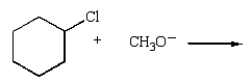
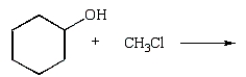
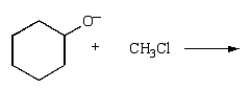
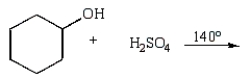
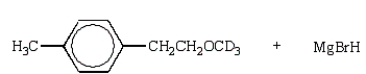
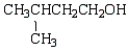
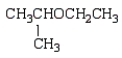
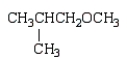
The best Williamson synthesis of cyclohexyl methyl ether involves the following reaction:

A) <strong>The best Williamson synthesis of cyclohexyl methyl ether involves the following reaction:</strong> A)   B)   C)   D)   E)   <div style=padding-top: 35px>
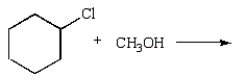
B) <strong>The best Williamson synthesis of cyclohexyl methyl ether involves the following reaction:</strong> A)   B)   C)   D)   E)   <div style=padding-top: 35px>
C) <strong>The best Williamson synthesis of cyclohexyl methyl ether involves the following reaction:</strong> A)   B)   C)   D)   E)   <div style=padding-top: 35px>
D) <strong>The best Williamson synthesis of cyclohexyl methyl ether involves the following reaction:</strong> A)   B)   C)   D)   E)   <div style=padding-top: 35px>
E) <strong>The best Williamson synthesis of cyclohexyl methyl ether involves the following reaction:</strong> A)   B)   C)   D)   E)   <div style=padding-top: 35px>
Use Space or
up arrow
down arrow
to flip the card.
Question
The mechanism by which ethers are cleaved in concentrated HI is:

A) SN1
B) SN2
C) E1
D) E2
E) none of these
Question
The synthesis of dipropyl ether can be accomplished using 1-propanol.What reactants and conditions are necessary for this to occur?

A) Na and 180°
B) PBr3 and 140°
C) H2SO4 and 140°
D) Zn and H+
E) PCC and 180°
Question
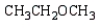
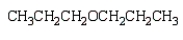
What is a correct name for CH3CH2OCH2CH2CH3?

A) diethyl ether
B) dipropyl ether
C) 1-propoxyethane
D) 1-ethoxypropane
E) 3-oxypentane
Question
The products of the following are: <strong>The products of the following are:  </strong> A)   B)   C)   D)   E)   <div style=padding-top: 35px>

A) <strong>The products of the following are:  </strong> A)   B)   C)   D)   E)   <div style=padding-top: 35px>
B) <strong>The products of the following are:  </strong> A)   B)   C)   D)   E)   <div style=padding-top: 35px>
C) <strong>The products of the following are:  </strong> A)   B)   C)   D)   E)   <div style=padding-top: 35px>
D) <strong>The products of the following are:  </strong> A)   B)   C)   D)   E)   <div style=padding-top: 35px>
E) <strong>The products of the following are:  </strong> A)   B)   C)   D)   E)   <div style=padding-top: 35px>
Question
Which one of the following molecules has the highest boiling point?

A) 3-methoxy-1-propanol
B) 1,2-dimethoxyethane
C) 1,4-butanediol
D) 1,1-dimethoxyethane
E) 2-methoxy-1-propanol
Question
The best route to CH3OC(CH3)3 is

A) <strong>The best route to CH<sub>3</sub>OC(CH<sub>3</sub>)<sub>3</sub> is</strong> A)   B)   C)   D)   E)   <div style=padding-top: 35px>

B) <strong>The best route to CH<sub>3</sub>OC(CH<sub>3</sub>)<sub>3</sub> is</strong> A)   B)   C)   D)   E)   <div style=padding-top: 35px>
C) <strong>The best route to CH<sub>3</sub>OC(CH<sub>3</sub>)<sub>3</sub> is</strong> A)   B)   C)   D)   E)   <div style=padding-top: 35px>
D) <strong>The best route to CH<sub>3</sub>OC(CH<sub>3</sub>)<sub>3</sub> is</strong> A)   B)   C)   D)   E)   <div style=padding-top: 35px>
E) <strong>The best route to CH<sub>3</sub>OC(CH<sub>3</sub>)<sub>3</sub> is</strong> A)   B)   C)   D)   E)   <div style=padding-top: 35px>
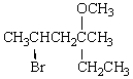
Question
What is the IUPAC name for the following molecule? <strong>What is the IUPAC name for the following molecule?  </strong> A) 2-bromo-4-ethyl-4-methoxypentane B) 4-bromo-2-ethyl-2-methoxypentane C) 2-bromo-4-methoxy-4-methylhexane D) 2-bromo-3-methoxy-3-methylhexane E) ethyl methyl propyl ether <div style=padding-top: 35px>
A) 2-bromo-4-ethyl-4-methoxypentane
B) 4-bromo-2-ethyl-2-methoxypentane
C) 2-bromo-4-methoxy-4-methylhexane
D) 2-bromo-3-methoxy-3-methylhexane
E) ethyl methyl propyl ether
Question
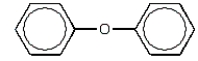
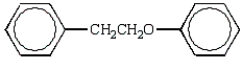
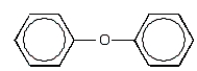
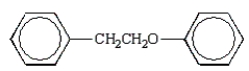
Which of the following molecules is correctly named diphenyl ether?

A) <strong>Which of the following molecules is correctly named diphenyl ether?</strong> A)   B)   C)   D)   E)   <div style=padding-top: 35px>

B) <strong>Which of the following molecules is correctly named diphenyl ether?</strong> A)   B)   C)   D)   E)   <div style=padding-top: 35px>
C) <strong>Which of the following molecules is correctly named diphenyl ether?</strong> A)   B)   C)   D)   E)   <div style=padding-top: 35px>
D) <strong>Which of the following molecules is correctly named diphenyl ether?</strong> A)   B)   C)   D)   E)   <div style=padding-top: 35px>
E) <strong>Which of the following molecules is correctly named diphenyl ether?</strong> A)   B)   C)   D)   E)   <div style=padding-top: 35px>
Question
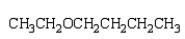
The formula for 1-ethoxybutane is

A) <strong>The formula for 1-ethoxybutane is</strong> A)   B)   C)   D)   E)   <div style=padding-top: 35px>
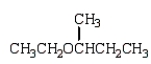
B) <strong>The formula for 1-ethoxybutane is</strong> A)   B)   C)   D)   E)   <div style=padding-top: 35px>
C) <strong>The formula for 1-ethoxybutane is</strong> A)   B)   C)   D)   E)   <div style=padding-top: 35px>
D) <strong>The formula for 1-ethoxybutane is</strong> A)   B)   C)   D)   E)   <div style=padding-top: 35px>
E) <strong>The formula for 1-ethoxybutane is</strong> A)   B)   C)   D)   E)   <div style=padding-top: 35px>
Question
Which reaction will yield CH3CH2CH2D?

A) CH3CH2CH3 + D2O
B)CH3CH2CH2MgCl + D2O
C)CH3CH2CH2OLi + D2O
D)CH3CH2CH2OH + D2O
E) more than one of these
Question
Which of the following molecules is named oxirane?

A) <strong>Which of the following molecules is named oxirane?</strong> A)   B)   C)   D)   E)   <div style=padding-top: 35px>
B) <strong>Which of the following molecules is named oxirane?</strong> A)   B)   C)   D)   E)   <div style=padding-top: 35px>
C) <strong>Which of the following molecules is named oxirane?</strong> A)   B)   C)   D)   E)   <div style=padding-top: 35px>
D) <strong>Which of the following molecules is named oxirane?</strong> A)   B)   C)   D)   E)   <div style=padding-top: 35px>
E) <strong>Which of the following molecules is named oxirane?</strong> A)   B)   C)   D)   E)   <div style=padding-top: 35px>
Question
A crown ether named [18]crown-6 has a total of carbons and oxygens .

A) 18, 6
B) 6, 18
C) 24, 6
D) 6, 24
E) 12, 6
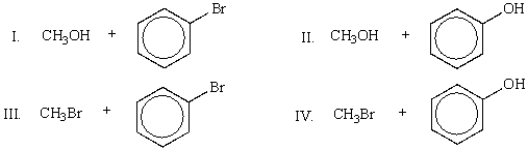
Question
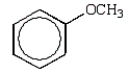
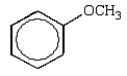
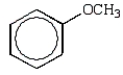
When anisole (methyl phenyl ether) is treated with concentrated HBr, which of the following products are produced? <strong>When anisole (methyl phenyl ether) is treated with concentrated HBr, which of the following products are produced?  </strong> A) I B) II C) III D) IV E) I and IV <div style=padding-top: 35px>
A) I
B) II
C) III
D) IV
E) I and IV
Question
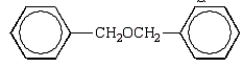
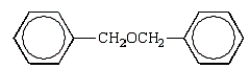
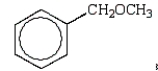
Which of the following molecules is the correct structure for dibenzyl ether?

A) <strong>Which of the following molecules is the correct structure for dibenzyl ether?</strong> A)   B)   C)   D)   E)   <div style=padding-top: 35px>
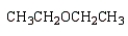
B) <strong>Which of the following molecules is the correct structure for dibenzyl ether?</strong> A)   B)   C)   D)   E)   <div style=padding-top: 35px>
C) <strong>Which of the following molecules is the correct structure for dibenzyl ether?</strong> A)   B)   C)   D)   E)   <div style=padding-top: 35px>
D) <strong>Which of the following molecules is the correct structure for dibenzyl ether?</strong> A)   B)   C)   D)   E)   <div style=padding-top: 35px>
E) <strong>Which of the following molecules is the correct structure for dibenzyl ether?</strong> A)   B)   C)   D)   E)   <div style=padding-top: 35px>
Question
What is the correct IUPAC name for the following molecule? <strong>What is the correct IUPAC name for the following molecule?  </strong> A) 1,2-dimethyloxirane B) trans-1,2-dimethyloxirane C) 2-butene oxide D) cis-1,2-dimethyloxirane E) oxobutane <div style=padding-top: 35px>
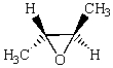
A) 1,2-dimethyloxirane
B) trans-1,2-dimethyloxirane
C) 2-butene oxide
D) cis-1,2-dimethyloxirane
E) oxobutane
Question
Which of the following is a Grignard reagent?

A) CH3MgCl
B) CH3Li
C) (CH3)2 CuLi
D) CH3Na
E) (CH3)2 Zn
Question
What alkene reacts with methanol in an acid catalyzed reaction to produce t-butyl methyl ether?

A) ethylene
B) 2-methylpropene
C) 2-butene
D) propene
E) 1-butene
Question
What is the correct name for the following crown ether? <strong>What is the correct name for the following crown ether?  </strong> A) [8]crown-4 B) [12]crown-4 C) [4]crown-4 D) [15]crown-5 E) [18]crown-6 <div style=padding-top: 35px>

A) [8]crown-4
B) [12]crown-4
C) [4]crown-4
D) [15]crown-5
E) [18]crown-6
Question
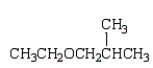
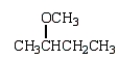
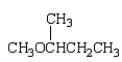
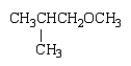
What is a name for the following molecule? <strong>What is a name for the following molecule?  </strong> A) 3-ethoxy-3-methylpropane B) ethyl isobutyl ether C) butyl ethyl ether D) 2-ethoxybutane E) 3-ethoxybutane <div style=padding-top: 35px>
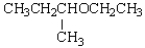
A) 3-ethoxy-3-methylpropane
B) ethyl isobutyl ether
C) butyl ethyl ether
D) 2-ethoxybutane
E) 3-ethoxybutane
Question
The first step in the mechanism of acid catalyzed ring opening of oxirane is:

A) protonation of the oxygen in the oxirane.
B) anion attack of the carbon in the oxirane.
C) cation attack of the carbon in the oxirane.
D) formation of a stable carbocation.
E) none of the above.
Question
Adding Br2 in H2O will distinguish which of following pairs of compounds?

A) diisopropyl ether and hexane
B) ethyl phenyl ether and allyl phenyl ether
C) 1-butanol and methyl propyl ether
D) diethyl ether and ethanol
E) toluene and anisole
Question
What is the final product of the following sequence of reactions? <strong>What is the final product of the following sequence of reactions?  </strong> A)   B)   C)   D)   E)   <div style=padding-top: 35px>
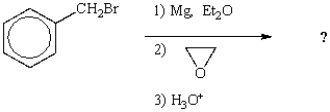
A) <strong>What is the final product of the following sequence of reactions?  </strong> A)   B)   C)   D)   E)   <div style=padding-top: 35px>
B) <strong>What is the final product of the following sequence of reactions?  </strong> A)   B)   C)   D)   E)   <div style=padding-top: 35px>
C) <strong>What is the final product of the following sequence of reactions?  </strong> A)   B)   C)   D)   E)   <div style=padding-top: 35px>
D) <strong>What is the final product of the following sequence of reactions?  </strong> A)   B)   C)   D)   E)   <div style=padding-top: 35px>
E) <strong>What is the final product of the following sequence of reactions?  </strong> A)   B)   C)   D)   E)   <div style=padding-top: 35px>
Question
Which of the following ethers are unsymmetrical?

A) CH3OCH2CH3
B) (CH3)2CHOCH2CH(CH3)2
C) CH3OCH3
D) CH2CH3OCH2CH3
E) both A and B
Question
Which of the following molecules is classified as an organic peroxy acid?

A) <strong>Which of the following molecules is classified as an organic peroxy acid?</strong> A)   B)   C)   D)   E)   <div style=padding-top: 35px>
B) <strong>Which of the following molecules is classified as an organic peroxy acid?</strong> A)   B)   C)   D)   E)   <div style=padding-top: 35px>
C) <strong>Which of the following molecules is classified as an organic peroxy acid?</strong> A)   B)   C)   D)   E)   <div style=padding-top: 35px>
D) <strong>Which of the following molecules is classified as an organic peroxy acid?</strong> A)   B)   C)   D)   E)   <div style=padding-top: 35px>
E) <strong>Which of the following molecules is classified as an organic peroxy acid?</strong> A)   B)   C)   D)   E)   <div style=padding-top: 35px>
Question
Which of the following ethers will cleave the fastest with H2O and H+?

A) <strong>Which of the following ethers will cleave the fastest with H<sub>2</sub>O and H<sup>+</sup>?</strong> A)   B)   C)   D)   E)   <div style=padding-top: 35px>
B) <strong>Which of the following ethers will cleave the fastest with H<sub>2</sub>O and H<sup>+</sup>?</strong> A)   B)   C)   D)   E)   <div style=padding-top: 35px>
C) <strong>Which of the following ethers will cleave the fastest with H<sub>2</sub>O and H<sup>+</sup>?</strong> A)   B)   C)   D)   E)   <div style=padding-top: 35px>
D) <strong>Which of the following ethers will cleave the fastest with H<sub>2</sub>O and H<sup>+</sup>?</strong> A)   B)   C)   D)   E)   <div style=padding-top: 35px>
E) <strong>Which of the following ethers will cleave the fastest with H<sub>2</sub>O and H<sup>+</sup>?</strong> A)   B)   C)   D)   E)   <div style=padding-top: 35px>
Question
A reaction that would give n-butyllithium is

A) CH3CH2CH2CH3 + Li
B) CH3CH2CH2CH2Br + 2 Li
C) CH3CH2CH2CH2Br + LiBr
D) CH3CH2CH2CH2OH + Li
E) CH3CH2CH2CH3 + CH3Li
Question
When cyclopentene is treated with peroxyacetic acid, the product that forms is:

A) 1,2-cyclopentanediol
B) 1,2-pentanediol
C) pentanol
D) cyclopentene oxide
E) dicyclopentyl ether
Question
The organic products of the reaction below are <strong>The organic products of the reaction below are   are:</strong> A) ethanol and iodobenzene. B) ethyl iodide and iodobenzene. C) ethanol and phenol. D) ethyl iodide and phenol. E) ethylene oxide and phenol. <div style=padding-top: 35px> are:

A) ethanol and iodobenzene.
B) ethyl iodide and iodobenzene.
C) ethanol and phenol.
D) ethyl iodide and phenol.
E) ethylene oxide and phenol.
Question
What is the final product in the following reaction sequence? <strong>What is the final product in the following reaction sequence?  </strong> A)   B)   C)   D)   E) none of these <div style=padding-top: 35px>

A) <strong>What is the final product in the following reaction sequence?  </strong> A)   B)   C)   D)   E) none of these <div style=padding-top: 35px>
B) <strong>What is the final product in the following reaction sequence?  </strong> A)   B)   C)   D)   E) none of these <div style=padding-top: 35px>
C) <strong>What is the final product in the following reaction sequence?  </strong> A)   B)   C)   D)   E) none of these <div style=padding-top: 35px>
D) <strong>What is the final product in the following reaction sequence?  </strong> A)   B)   C)   D)   E) none of these <div style=padding-top: 35px>
E) none of these
Question
Which reagent will accomplish the following reaction? <strong>Which reagent will accomplish the following reaction?  </strong> A) NaOH B) CH<sub>3</sub>CO<sub>3</sub>H C) H<sub>2</sub>O, H<sub>2</sub>SO<sub>4</sub> D) (a) BH<sub>3</sub> (b) NaOH, H<sub>2</sub>O<sub>2</sub> E) CH<sub>3</sub>CO<sub>2</sub>H <div style=padding-top: 35px>
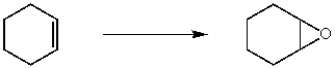
A) NaOH
B) CH3CO3H
C) H2O, H2SO4
D) (a) BH3 (b) NaOH, H2O2
E) CH3CO2H
Question
Which of following ethers will cleave by an SN1 mechanism?

A) <strong>Which of following ethers will cleave by an S<sub>N</sub>1 mechanism?</strong> A)   B)   C)   D)   E)   <div style=padding-top: 35px>
B) <strong>Which of following ethers will cleave by an S<sub>N</sub>1 mechanism?</strong> A)   B)   C)   D)   E)   <div style=padding-top: 35px>
C) <strong>Which of following ethers will cleave by an S<sub>N</sub>1 mechanism?</strong> A)   B)   C)   D)   E)   <div style=padding-top: 35px>
D) <strong>Which of following ethers will cleave by an S<sub>N</sub>1 mechanism?</strong> A)   B)   C)   D)   E)   <div style=padding-top: 35px>
E) <strong>Which of following ethers will cleave by an S<sub>N</sub>1 mechanism?</strong> A)   B)   C)   D)   E)   <div style=padding-top: 35px>
Question
Which of the following statements about ethylene oxide is false?

A) Adds HBr according to Markovnikov's rule.
B) Can act as a Lewis base.
C) Reacts with Grignard reagents to give primary alcohols.
D) Can be made from ethene, oxygen, and a catalyst.
E) Can be hydrated to ethylene glycol.
Question
The correct structure for peroxyacetic acid is:

A) <strong>The correct structure for peroxyacetic acid is:</strong> A)   B)   C)   D)   E)   <div style=padding-top: 35px>
B) <strong>The correct structure for peroxyacetic acid is:</strong> A)   B)   C)   D)   E)   <div style=padding-top: 35px>
C) <strong>The correct structure for peroxyacetic acid is:</strong> A)   B)   C)   D)   E)   <div style=padding-top: 35px>
D) <strong>The correct structure for peroxyacetic acid is:</strong> A)   B)   C)   D)   E)   <div style=padding-top: 35px>
E) <strong>The correct structure for peroxyacetic acid is:</strong> A)   B)   C)   D)   E)   <div style=padding-top: 35px>
Unlock Deck
Sign up to unlock the cards in this deck!
Unlock Deck
Unlock Deck
1/34
auto play flashcards
Play
simple tutorial
Full screen (f)
exit full mode
Deck 8: Ethers and Epoxides
1
The best Williamson synthesis of cyclohexyl methyl ether involves the following reaction:

A) <strong>The best Williamson synthesis of cyclohexyl methyl ether involves the following reaction:</strong> A)   B)   C)   D)   E)
B) <strong>The best Williamson synthesis of cyclohexyl methyl ether involves the following reaction:</strong> A)   B)   C)   D)   E)
C) <strong>The best Williamson synthesis of cyclohexyl methyl ether involves the following reaction:</strong> A)   B)   C)   D)   E)
D) <strong>The best Williamson synthesis of cyclohexyl methyl ether involves the following reaction:</strong> A)   B)   C)   D)   E)
E) <strong>The best Williamson synthesis of cyclohexyl methyl ether involves the following reaction:</strong> A)   B)   C)   D)   E)
2
The mechanism by which ethers are cleaved in concentrated HI is:

A) SN1
B) SN2
C) E1
D) E2
E) none of these
SN2
3
The synthesis of dipropyl ether can be accomplished using 1-propanol.What reactants and conditions are necessary for this to occur?

A) Na and 180°
B) PBr3 and 140°
C) H2SO4 and 140°
D) Zn and H+
E) PCC and 180°
H2SO4 and 140°
4
What is a correct name for CH3CH2OCH2CH2CH3?

A) diethyl ether
B) dipropyl ether
C) 1-propoxyethane
D) 1-ethoxypropane
E) 3-oxypentane
Unlock Deck
Unlock for access to all 34 flashcards in this deck.
Unlock Deck
k this deck
5
The products of the following are: <strong>The products of the following are:  </strong> A)   B)   C)   D)   E)

A) <strong>The products of the following are:  </strong> A)   B)   C)   D)   E)
B) <strong>The products of the following are:  </strong> A)   B)   C)   D)   E)
C) <strong>The products of the following are:  </strong> A)   B)   C)   D)   E)
D) <strong>The products of the following are:  </strong> A)   B)   C)   D)   E)
E) <strong>The products of the following are:  </strong> A)   B)   C)   D)   E)
Unlock Deck
Unlock for access to all 34 flashcards in this deck.
Unlock Deck
k this deck
6
Which one of the following molecules has the highest boiling point?

A) 3-methoxy-1-propanol
B) 1,2-dimethoxyethane
C) 1,4-butanediol
D) 1,1-dimethoxyethane
E) 2-methoxy-1-propanol
Unlock Deck
Unlock for access to all 34 flashcards in this deck.
Unlock Deck
k this deck
7
The best route to CH3OC(CH3)3 is

A) <strong>The best route to CH<sub>3</sub>OC(CH<sub>3</sub>)<sub>3</sub> is</strong> A)   B)   C)   D)   E)
B) <strong>The best route to CH<sub>3</sub>OC(CH<sub>3</sub>)<sub>3</sub> is</strong> A)   B)   C)   D)   E)
C) <strong>The best route to CH<sub>3</sub>OC(CH<sub>3</sub>)<sub>3</sub> is</strong> A)   B)   C)   D)   E)
D) <strong>The best route to CH<sub>3</sub>OC(CH<sub>3</sub>)<sub>3</sub> is</strong> A)   B)   C)   D)   E)
E) <strong>The best route to CH<sub>3</sub>OC(CH<sub>3</sub>)<sub>3</sub> is</strong> A)   B)   C)   D)   E)
Unlock Deck
Unlock for access to all 34 flashcards in this deck.

Unlock Deck
k this deck
8
What is the IUPAC name for the following molecule? <strong>What is the IUPAC name for the following molecule?  </strong> A) 2-bromo-4-ethyl-4-methoxypentane B) 4-bromo-2-ethyl-2-methoxypentane C) 2-bromo-4-methoxy-4-methylhexane D) 2-bromo-3-methoxy-3-methylhexane E) ethyl methyl propyl ether

A) 2-bromo-4-ethyl-4-methoxypentane
B) 4-bromo-2-ethyl-2-methoxypentane
C) 2-bromo-4-methoxy-4-methylhexane
D) 2-bromo-3-methoxy-3-methylhexane
E) ethyl methyl propyl ether
Unlock Deck
Unlock for access to all 34 flashcards in this deck.

Unlock Deck
k this deck
9
Which of the following molecules is correctly named diphenyl ether?

A) <strong>Which of the following molecules is correctly named diphenyl ether?</strong> A)   B)   C)   D)   E)
B) <strong>Which of the following molecules is correctly named diphenyl ether?</strong> A)   B)   C)   D)   E)
C) <strong>Which of the following molecules is correctly named diphenyl ether?</strong> A)   B)   C)   D)   E)
D) <strong>Which of the following molecules is correctly named diphenyl ether?</strong> A)   B)   C)   D)   E)
E) <strong>Which of the following molecules is correctly named diphenyl ether?</strong> A)   B)   C)   D)   E)
Unlock Deck
Unlock for access to all 34 flashcards in this deck.
Unlock Deck
k this deck
10
The formula for 1-ethoxybutane is

A) <strong>The formula for 1-ethoxybutane is</strong> A)   B)   C)   D)   E)
B) <strong>The formula for 1-ethoxybutane is</strong> A)   B)   C)   D)   E)
C) <strong>The formula for 1-ethoxybutane is</strong> A)   B)   C)   D)   E)
D) <strong>The formula for 1-ethoxybutane is</strong> A)   B)   C)   D)   E)
E) <strong>The formula for 1-ethoxybutane is</strong> A)   B)   C)   D)   E)
Unlock Deck
Unlock for access to all 34 flashcards in this deck.
Unlock Deck
k this deck
11
Which reaction will yield CH3CH2CH2D?

A) CH3CH2CH3 + D2O
B)CH3CH2CH2MgCl + D2O
C)CH3CH2CH2OLi + D2O
D)CH3CH2CH2OH + D2O
E) more than one of these
Unlock Deck
Unlock for access to all 34 flashcards in this deck.
Unlock Deck
k this deck
12
Which of the following molecules is named oxirane?

A) <strong>Which of the following molecules is named oxirane?</strong> A)   B)   C)   D)   E)
B) <strong>Which of the following molecules is named oxirane?</strong> A)   B)   C)   D)   E)
C) <strong>Which of the following molecules is named oxirane?</strong> A)   B)   C)   D)   E)
D) <strong>Which of the following molecules is named oxirane?</strong> A)   B)   C)   D)   E)
E) <strong>Which of the following molecules is named oxirane?</strong> A)   B)   C)   D)   E)
Unlock Deck
Unlock for access to all 34 flashcards in this deck.
Unlock Deck
k this deck
13
A crown ether named [18]crown-6 has a total of carbons and oxygens .

A) 18, 6
B) 6, 18
C) 24, 6
D) 6, 24
E) 12, 6
Unlock Deck
Unlock for access to all 34 flashcards in this deck.
Unlock Deck
k this deck
14
When anisole (methyl phenyl ether) is treated with concentrated HBr, which of the following products are produced? <strong>When anisole (methyl phenyl ether) is treated with concentrated HBr, which of the following products are produced?  </strong> A) I B) II C) III D) IV E) I and IV

A) I
B) II
C) III
D) IV
E) I and IV
Unlock Deck
Unlock for access to all 34 flashcards in this deck.
Unlock Deck
k this deck
15
Which of the following molecules is the correct structure for dibenzyl ether?

A) <strong>Which of the following molecules is the correct structure for dibenzyl ether?</strong> A)   B)   C)   D)   E)
B) <strong>Which of the following molecules is the correct structure for dibenzyl ether?</strong> A)   B)   C)   D)   E)
C) <strong>Which of the following molecules is the correct structure for dibenzyl ether?</strong> A)   B)   C)   D)   E)
D) <strong>Which of the following molecules is the correct structure for dibenzyl ether?</strong> A)   B)   C)   D)   E)
E) <strong>Which of the following molecules is the correct structure for dibenzyl ether?</strong> A)   B)   C)   D)   E)
Unlock Deck
Unlock for access to all 34 flashcards in this deck.
Unlock Deck
k this deck
16
What is the correct IUPAC name for the following molecule? <strong>What is the correct IUPAC name for the following molecule?  </strong> A) 1,2-dimethyloxirane B) trans-1,2-dimethyloxirane C) 2-butene oxide D) cis-1,2-dimethyloxirane E) oxobutane

A) 1,2-dimethyloxirane
B) trans-1,2-dimethyloxirane
C) 2-butene oxide
D) cis-1,2-dimethyloxirane
E) oxobutane
Unlock Deck
Unlock for access to all 34 flashcards in this deck.
Unlock Deck
k this deck
17
Which of the following is a Grignard reagent?

A) CH3MgCl
B) CH3Li
C) (CH3)2 CuLi
D) CH3Na
E) (CH3)2 Zn
Unlock Deck
Unlock for access to all 34 flashcards in this deck.
Unlock Deck
k this deck
18
What alkene reacts with methanol in an acid catalyzed reaction to produce t-butyl methyl ether?

A) ethylene
B) 2-methylpropene
C) 2-butene
D) propene
E) 1-butene
Unlock Deck
Unlock for access to all 34 flashcards in this deck.
Unlock Deck
k this deck
19
What is the correct name for the following crown ether? <strong>What is the correct name for the following crown ether?  </strong> A) [8]crown-4 B) [12]crown-4 C) [4]crown-4 D) [15]crown-5 E) [18]crown-6

A) [8]crown-4
B) [12]crown-4
C) [4]crown-4
D) [15]crown-5
E) [18]crown-6
Unlock Deck
Unlock for access to all 34 flashcards in this deck.
Unlock Deck
k this deck
20
What is a name for the following molecule? <strong>What is a name for the following molecule?  </strong> A) 3-ethoxy-3-methylpropane B) ethyl isobutyl ether C) butyl ethyl ether D) 2-ethoxybutane E) 3-ethoxybutane

A) 3-ethoxy-3-methylpropane
B) ethyl isobutyl ether
C) butyl ethyl ether
D) 2-ethoxybutane
E) 3-ethoxybutane
Unlock Deck
Unlock for access to all 34 flashcards in this deck.
Unlock Deck
k this deck
21
The first step in the mechanism of acid catalyzed ring opening of oxirane is:

A) protonation of the oxygen in the oxirane.
B) anion attack of the carbon in the oxirane.
C) cation attack of the carbon in the oxirane.
D) formation of a stable carbocation.
E) none of the above.
Unlock Deck
Unlock for access to all 34 flashcards in this deck.
Unlock Deck
k this deck
22
Adding Br2 in H2O will distinguish which of following pairs of compounds?

A) diisopropyl ether and hexane
B) ethyl phenyl ether and allyl phenyl ether
C) 1-butanol and methyl propyl ether
D) diethyl ether and ethanol
E) toluene and anisole
Unlock Deck
Unlock for access to all 34 flashcards in this deck.
Unlock Deck
k this deck
23
What is the final product of the following sequence of reactions? <strong>What is the final product of the following sequence of reactions?  </strong> A)   B)   C)   D)   E)

A) <strong>What is the final product of the following sequence of reactions?  </strong> A)   B)   C)   D)   E)
B) <strong>What is the final product of the following sequence of reactions?  </strong> A)   B)   C)   D)   E)
C) <strong>What is the final product of the following sequence of reactions?  </strong> A)   B)   C)   D)   E)
D) <strong>What is the final product of the following sequence of reactions?  </strong> A)   B)   C)   D)   E)
E) <strong>What is the final product of the following sequence of reactions?  </strong> A)   B)   C)   D)   E)
Unlock Deck
Unlock for access to all 34 flashcards in this deck.
Unlock Deck
k this deck
24
Which of the following ethers are unsymmetrical?

A) CH3OCH2CH3
B) (CH3)2CHOCH2CH(CH3)2
C) CH3OCH3
D) CH2CH3OCH2CH3
E) both A and B
Unlock Deck
Unlock for access to all 34 flashcards in this deck.
Unlock Deck
k this deck
25
Which of the following molecules is classified as an organic peroxy acid?

A) <strong>Which of the following molecules is classified as an organic peroxy acid?</strong> A)   B)   C)   D)   E)
B) <strong>Which of the following molecules is classified as an organic peroxy acid?</strong> A)   B)   C)   D)   E)
C) <strong>Which of the following molecules is classified as an organic peroxy acid?</strong> A)   B)   C)   D)   E)
D) <strong>Which of the following molecules is classified as an organic peroxy acid?</strong> A)   B)   C)   D)   E)
E) <strong>Which of the following molecules is classified as an organic peroxy acid?</strong> A)   B)   C)   D)   E)
Unlock Deck
Unlock for access to all 34 flashcards in this deck.
Unlock Deck
k this deck
26
Which of the following ethers will cleave the fastest with H2O and H+?

A) <strong>Which of the following ethers will cleave the fastest with H<sub>2</sub>O and H<sup>+</sup>?</strong> A)   B)   C)   D)   E)
B) <strong>Which of the following ethers will cleave the fastest with H<sub>2</sub>O and H<sup>+</sup>?</strong> A)   B)   C)   D)   E)
C) <strong>Which of the following ethers will cleave the fastest with H<sub>2</sub>O and H<sup>+</sup>?</strong> A)   B)   C)   D)   E)
D) <strong>Which of the following ethers will cleave the fastest with H<sub>2</sub>O and H<sup>+</sup>?</strong> A)   B)   C)   D)   E)
E) <strong>Which of the following ethers will cleave the fastest with H<sub>2</sub>O and H<sup>+</sup>?</strong> A)   B)   C)   D)   E)
Unlock Deck
Unlock for access to all 34 flashcards in this deck.
Unlock Deck
k this deck
27
A reaction that would give n-butyllithium is

A) CH3CH2CH2CH3 + Li
B) CH3CH2CH2CH2Br + 2 Li
C) CH3CH2CH2CH2Br + LiBr
D) CH3CH2CH2CH2OH + Li
E) CH3CH2CH2CH3 + CH3Li
Unlock Deck
Unlock for access to all 34 flashcards in this deck.
Unlock Deck
k this deck
28
When cyclopentene is treated with peroxyacetic acid, the product that forms is:

A) 1,2-cyclopentanediol
B) 1,2-pentanediol
C) pentanol
D) cyclopentene oxide
E) dicyclopentyl ether
Unlock Deck
Unlock for access to all 34 flashcards in this deck.
Unlock Deck
k this deck
29
The organic products of the reaction below are <strong>The organic products of the reaction below are   are:</strong> A) ethanol and iodobenzene. B) ethyl iodide and iodobenzene. C) ethanol and phenol. D) ethyl iodide and phenol. E) ethylene oxide and phenol. are:

A) ethanol and iodobenzene.
B) ethyl iodide and iodobenzene.
C) ethanol and phenol.
D) ethyl iodide and phenol.
E) ethylene oxide and phenol.
Unlock Deck
Unlock for access to all 34 flashcards in this deck.
Unlock Deck
k this deck
30
What is the final product in the following reaction sequence? <strong>What is the final product in the following reaction sequence?  </strong> A)   B)   C)   D)   E) none of these

A) <strong>What is the final product in the following reaction sequence?  </strong> A)   B)   C)   D)   E) none of these
B) <strong>What is the final product in the following reaction sequence?  </strong> A)   B)   C)   D)   E) none of these
C) <strong>What is the final product in the following reaction sequence?  </strong> A)   B)   C)   D)   E) none of these
D) <strong>What is the final product in the following reaction sequence?  </strong> A)   B)   C)   D)   E) none of these
E) none of these
Unlock Deck
Unlock for access to all 34 flashcards in this deck.
Unlock Deck
k this deck
31
Which reagent will accomplish the following reaction? <strong>Which reagent will accomplish the following reaction?  </strong> A) NaOH B) CH<sub>3</sub>CO<sub>3</sub>H C) H<sub>2</sub>O, H<sub>2</sub>SO<sub>4</sub> D) (a) BH<sub>3</sub> (b) NaOH, H<sub>2</sub>O<sub>2</sub> E) CH<sub>3</sub>CO<sub>2</sub>H

A) NaOH
B) CH3CO3H
C) H2O, H2SO4
D) (a) BH3 (b) NaOH, H2O2
E) CH3CO2H
Unlock Deck
Unlock for access to all 34 flashcards in this deck.
Unlock Deck
k this deck
32
Which of following ethers will cleave by an SN1 mechanism?

A) <strong>Which of following ethers will cleave by an S<sub>N</sub>1 mechanism?</strong> A)   B)   C)   D)   E)
B) <strong>Which of following ethers will cleave by an S<sub>N</sub>1 mechanism?</strong> A)   B)   C)   D)   E)
C) <strong>Which of following ethers will cleave by an S<sub>N</sub>1 mechanism?</strong> A)   B)   C)   D)   E)
D) <strong>Which of following ethers will cleave by an S<sub>N</sub>1 mechanism?</strong> A)   B)   C)   D)   E)
E) <strong>Which of following ethers will cleave by an S<sub>N</sub>1 mechanism?</strong> A)   B)   C)   D)   E)
Unlock Deck
Unlock for access to all 34 flashcards in this deck.
Unlock Deck
k this deck
33
Which of the following statements about ethylene oxide is false?

A) Adds HBr according to Markovnikov's rule.
B) Can act as a Lewis base.
C) Reacts with Grignard reagents to give primary alcohols.
D) Can be made from ethene, oxygen, and a catalyst.
E) Can be hydrated to ethylene glycol.
Unlock Deck
Unlock for access to all 34 flashcards in this deck.
Unlock Deck
k this deck
34
The correct structure for peroxyacetic acid is:

A) <strong>The correct structure for peroxyacetic acid is:</strong> A)   B)   C)   D)   E)
B) <strong>The correct structure for peroxyacetic acid is:</strong> A)   B)   C)   D)   E)
C) <strong>The correct structure for peroxyacetic acid is:</strong> A)   B)   C)   D)   E)
D) <strong>The correct structure for peroxyacetic acid is:</strong> A)   B)   C)   D)   E)
E) <strong>The correct structure for peroxyacetic acid is:</strong> A)   B)   C)   D)   E)
Unlock Deck
Unlock for access to all 34 flashcards in this deck.
Unlock Deck
k this deck
locked card icon
Unlock Deck
Unlock for access to all 34 flashcards in this deck.