







 Chat with AI

Deck 3: Everyday Chemistry of Life
Full screen (f)

Question

Question
Question
Question
Question
Question
Question
Question
Question
Question
Question
Question
Question
Question
Question
Question
Question
What is the name of the bond shown here? 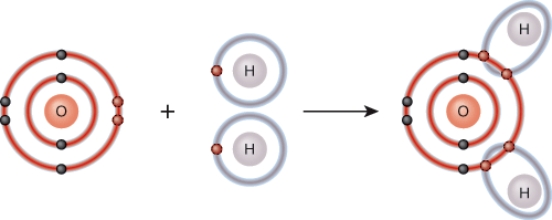
A) Hydrogen
B) Polar covalent
C) Ionic
D) Van der Waals forces
A) Hydrogen
B) Polar covalent
C) Ionic
D) Van der Waals forces
Question
Question
Question
Question
Question
Which type of organic molecule is pictured here? 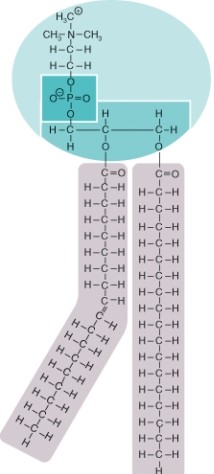
A) Carbohydrate
B) Lipid
C) Nucleic acid
D) Protein
A) Carbohydrate
B) Lipid
C) Nucleic acid
D) Protein
Question
The arrow is pointing to a pH that is: 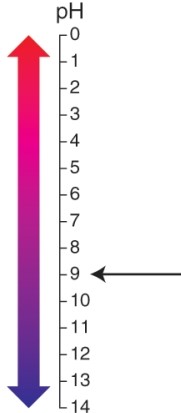
A) acidic.
B) neutral.
C) basic.
D) a buffer.
A) acidic.
B) neutral.
C) basic.
D) a buffer.
Question
Why is this organic molecule important in living organisms? 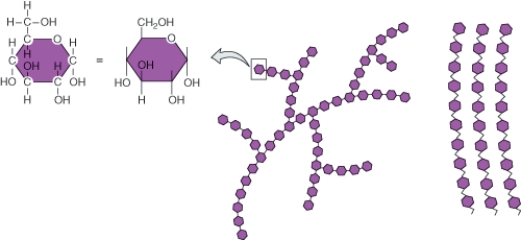
A) Structural component for most parts of a cell
B) Stores genetic information
C) Insulation
D) Biological energy
A) Structural component for most parts of a cell
B) Stores genetic information
C) Insulation
D) Biological energy
Question
Question
Question
What does the number 6 mean in this diagram? 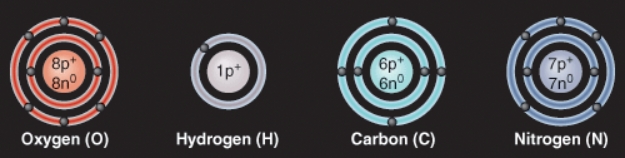
A) The weight of a carbon atom
B) The number of protons in a carbon atom
C) The number of electrons in a carbon ion
D) How many bonds carbon will form
A) The weight of a carbon atom
B) The number of protons in a carbon atom
C) The number of electrons in a carbon ion
D) How many bonds carbon will form
Question
How many electrons are in the valence shell of the atom shown here? 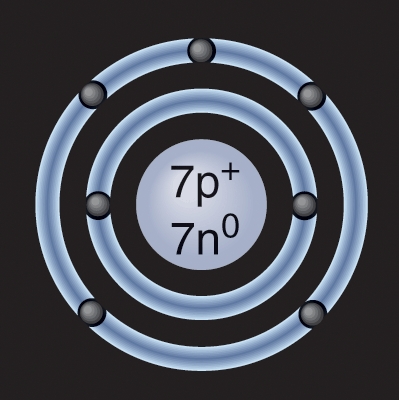
A) two
B) five
C) seven
D) four
A) two
B) five
C) seven
D) four
Question
Question
What kind of a bond is depicted in this diagram? 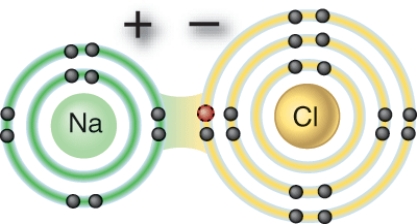
A) Covalent
B) Hydrogen
C) Ionic
D) Nonpolar
A) Covalent
B) Hydrogen
C) Ionic
D) Nonpolar
Question
Question
Question
What does the letter C represent in this diagram? 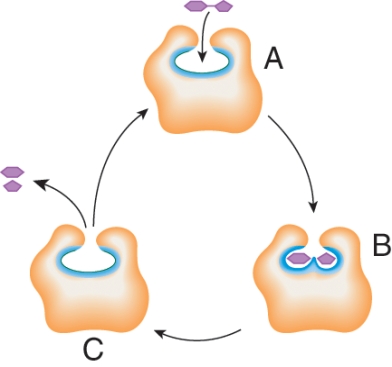
A) Enzyme
B) Product
C) Substrate
D) Acid
A) Enzyme
B) Product
C) Substrate
D) Acid
Question
What does the letter A represent in this diagram? 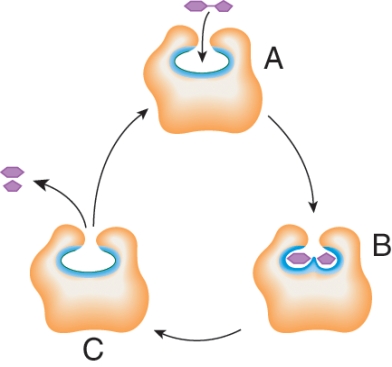
A) Enzyme
B) Energy
C) Products
D) Substrates
A) Enzyme
B) Energy
C) Products
D) Substrates
Question
Using the numbers given in the diagram, how many neutrons does a carbon atom have? 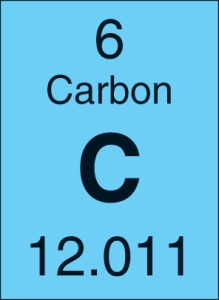
A) 4
B) 6
C) 18
D) 72
A) 4
B) 6
C) 18
D) 72
Question
The negatively charged particle labeled C is called a(n) ________. 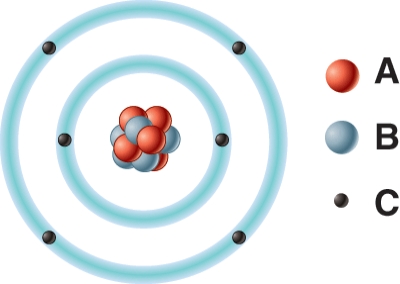
A) electron
B) neutron
C) proton
D) oxygen
A) electron
B) neutron
C) proton
D) oxygen
Question
The positively charged particle labeled A is called a(n) ____. 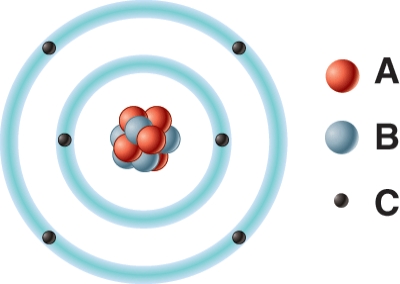
A) electron
B) neutron
C) proton
D) hydrogen
A) electron
B) neutron
C) proton
D) hydrogen
Question
Question
What kind of bond is indicated by the arrow in this diagram? 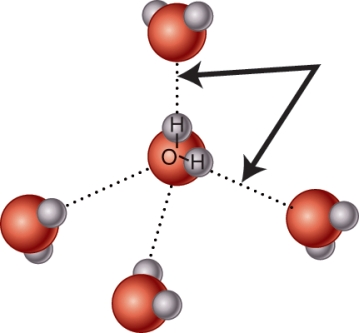
A) Covalent
B) Hydrogen
C) Ionic
D) Nonpolar
A) Covalent
B) Hydrogen
C) Ionic
D) Nonpolar
Question
Question
Question
Question
Question
Question
Question
Question
Question
Question
Question
Question
Question
Question
Question
Question
Question
Question
Question
Question
Question
Question
Question
Question
Question
Question
Question
Question

Unlock Deck
Sign up to unlock the cards in this deck!
Unlock Deck
Unlock Deck
1/67

Play

Full screen (f)
Deck 3: Everyday Chemistry of Life
1
Which bond is the weakest?
A) Peptide
B) Ionic
C) Covalent
D) Hydrogen
A) Peptide
B) Ionic
C) Covalent
D) Hydrogen
D
2
Which of the following have approximately the same mass?
A) Protons and proteins
B) Neutrons and nuclei
C) Protons and neutrons
D) Protons and electrons
A) Protons and proteins
B) Neutrons and nuclei
C) Protons and neutrons
D) Protons and electrons
C
3
How can one tell how many electrons are in the outer energy level of an element?
A) Atomic mass
B) Atomic number
C) Roman numeral above each column in the periodic table
D) Subtract the atomic number from the atomic mass
A) Atomic mass
B) Atomic number
C) Roman numeral above each column in the periodic table
D) Subtract the atomic number from the atomic mass
C
4
Which description of Ca2+ is most accurate?
A) A positive ion that has lost 2 electrons.
B) A positive ion that has gained 2 protons.
C) An isotope with 2 extra neutrons.
D) An atom that has gained 2 electrons.
A) A positive ion that has lost 2 electrons.
B) A positive ion that has gained 2 protons.
C) An isotope with 2 extra neutrons.
D) An atom that has gained 2 electrons.
Unlock Deck
Unlock for access to all 67 flashcards in this deck.
Unlock Deck
k this deck
5
Sweating is a good example of which of water's properties?
A) It is cohesive.
B) It is a good solvent.
C) It has a high heat of vaporization.
D) It has a high specific heat.
A) It is cohesive.
B) It is a good solvent.
C) It has a high heat of vaporization.
D) It has a high specific heat.
Unlock Deck
Unlock for access to all 67 flashcards in this deck.
Unlock Deck
k this deck
6
The atomic number equals:
A) the number of electrons
B) the number of protons
C) the mass of the protons
D) the number of neutrons
A) the number of electrons
B) the number of protons
C) the mass of the protons
D) the number of neutrons
Unlock Deck
Unlock for access to all 67 flashcards in this deck.
Unlock Deck
k this deck
7
The bond holding NaCl together is a(n):
A) covalent bond.
B) ionic bond.
C) hydrogen bond.
D) salt bond.
A) covalent bond.
B) ionic bond.
C) hydrogen bond.
D) salt bond.
Unlock Deck
Unlock for access to all 67 flashcards in this deck.
Unlock Deck
k this deck
8
Select the most accurate description of an atom.
A) A nucleus of neutrons orbited by protons.
B) A nucleus of neutrons and protons orbited by electrons.
C) A nucleus of electrons orbited by neutrons and protons.
D) Protons orbiting around electrons.
A) A nucleus of neutrons orbited by protons.
B) A nucleus of neutrons and protons orbited by electrons.
C) A nucleus of electrons orbited by neutrons and protons.
D) Protons orbiting around electrons.
Unlock Deck
Unlock for access to all 67 flashcards in this deck.
Unlock Deck
k this deck
9
Water's high specific heat makes it:
A) a good temperature buffer.
B) a good solvent.
C) liquid at room temperature.
D) easy to boil.
A) a good temperature buffer.
B) a good solvent.
C) liquid at room temperature.
D) easy to boil.
Unlock Deck
Unlock for access to all 67 flashcards in this deck.
Unlock Deck
k this deck
10
What is a nonpolar molecule?
A) The atoms share the electrons equally
B) Ions that become neutral from bonding
C) Water is a nonpolar molecule
D) The atoms bond by neutrons instead of electrons
A) The atoms share the electrons equally
B) Ions that become neutral from bonding
C) Water is a nonpolar molecule
D) The atoms bond by neutrons instead of electrons
Unlock Deck
Unlock for access to all 67 flashcards in this deck.
Unlock Deck
k this deck
11
What is the difference between Carbon-12 and Carbon-14?
A) Carbon-14 is older.
B) Carbon-14 has more neutrons.
C) Carbon-14 has more protons.
D) Carbon-14 has a half-life of 14 years.
A) Carbon-14 is older.
B) Carbon-14 has more neutrons.
C) Carbon-14 has more protons.
D) Carbon-14 has a half-life of 14 years.
Unlock Deck
Unlock for access to all 67 flashcards in this deck.
Unlock Deck
k this deck
12
What makes an acid different from a base?
A) Acids contain more hydrogen ions than hydroxide ions.
B) Acids have a pH of 7 or greater.
C) Acids taste sweet.
D) Acids have equal amounts of hydrogen and hydroxide ions.
A) Acids contain more hydrogen ions than hydroxide ions.
B) Acids have a pH of 7 or greater.
C) Acids taste sweet.
D) Acids have equal amounts of hydrogen and hydroxide ions.
Unlock Deck
Unlock for access to all 67 flashcards in this deck.
Unlock Deck
k this deck
13
Which collection of elements are the most common in living organisms?
A) Oxygen, carbon, hydrogen, and nitrogen
B) Oxygen, sulfur, nitrogen, and carbon
C) Carbon, hydrogen, neon, and nitrogen
D) Oxygen, hydrogen, neon, and sulfur
A) Oxygen, carbon, hydrogen, and nitrogen
B) Oxygen, sulfur, nitrogen, and carbon
C) Carbon, hydrogen, neon, and nitrogen
D) Oxygen, hydrogen, neon, and sulfur
Unlock Deck
Unlock for access to all 67 flashcards in this deck.
Unlock Deck
k this deck
14
A change in which ion concentration would severely affect heart rate and the nervous system?
A) Bicarbonate
B) Sodium
C) Potassium
D) Chloride
A) Bicarbonate
B) Sodium
C) Potassium
D) Chloride
Unlock Deck
Unlock for access to all 67 flashcards in this deck.
Unlock Deck
k this deck
15
Which of the following is an element?
A) Carbohydrates
B) Lipids
C) H2O
D) Carbon
A) Carbohydrates
B) Lipids
C) H2O
D) Carbon
Unlock Deck
Unlock for access to all 67 flashcards in this deck.
Unlock Deck
k this deck
16
Which of the following is considered a base?
A) Ammonia
B) Lemon juice
C) Vinegar
D) Stomach acid
A) Ammonia
B) Lemon juice
C) Vinegar
D) Stomach acid
Unlock Deck
Unlock for access to all 67 flashcards in this deck.
Unlock Deck
k this deck
17
What is the name of the bond shown here?
A) Hydrogen
B) Polar covalent
C) Ionic
D) Van der Waals forces
A) Hydrogen
B) Polar covalent
C) Ionic
D) Van der Waals forces
Unlock Deck
Unlock for access to all 67 flashcards in this deck.
Unlock Deck
k this deck
18
Which element is the most common in humans?
A) Chloride
B) Phosphorus
C) Hydrogen
D) Sulfur
A) Chloride
B) Phosphorus
C) Hydrogen
D) Sulfur
Unlock Deck
Unlock for access to all 67 flashcards in this deck.
Unlock Deck
k this deck
19
Which of the following would dissolve most easily in water?
A) Fat
B) Salt
C) Oil
D) Butter
A) Fat
B) Salt
C) Oil
D) Butter
Unlock Deck
Unlock for access to all 67 flashcards in this deck.
Unlock Deck
k this deck
20
The atomic mass is calculated by:
A) adding the mass of the neutrons and protons.
B) subtracting the mass of electrons from the mass of the protons.
C) weighing individual atoms on microscales.
D) multiplying the mass of neutrons by the mass of the protons.
A) adding the mass of the neutrons and protons.
B) subtracting the mass of electrons from the mass of the protons.
C) weighing individual atoms on microscales.
D) multiplying the mass of neutrons by the mass of the protons.
Unlock Deck
Unlock for access to all 67 flashcards in this deck.
Unlock Deck
k this deck
21
Which type of lipid is a key component of the cell membrane?
A) Steroid
B) Phospholipid
C) Triglyceride
D) Fatty acid
A) Steroid
B) Phospholipid
C) Triglyceride
D) Fatty acid
Unlock Deck
Unlock for access to all 67 flashcards in this deck.
Unlock Deck
k this deck
22
Which type of organic molecule is pictured here?
A) Carbohydrate
B) Lipid
C) Nucleic acid
D) Protein
A) Carbohydrate
B) Lipid
C) Nucleic acid
D) Protein
Unlock Deck
Unlock for access to all 67 flashcards in this deck.
Unlock Deck
k this deck
23
The arrow is pointing to a pH that is:
A) acidic.
B) neutral.
C) basic.
D) a buffer.
A) acidic.
B) neutral.
C) basic.
D) a buffer.
Unlock Deck
Unlock for access to all 67 flashcards in this deck.
Unlock Deck
k this deck
24
Why is this organic molecule important in living organisms?
A) Structural component for most parts of a cell
B) Stores genetic information
C) Insulation
D) Biological energy
A) Structural component for most parts of a cell
B) Stores genetic information
C) Insulation
D) Biological energy
Unlock Deck
Unlock for access to all 67 flashcards in this deck.
Unlock Deck
k this deck
25
Translation coverts the information stored in ____ into ____.
A) RNA, DNA
B) DNA, a polypeptide
C) RNA, a polypeptide
D) DNA, RNA
A) RNA, DNA
B) DNA, a polypeptide
C) RNA, a polypeptide
D) DNA, RNA
Unlock Deck
Unlock for access to all 67 flashcards in this deck.
Unlock Deck
k this deck
26
Which carbohydrate category does glucose belong to?
A) Polysaccharide
B) Disaccharide
C) Monosaccharide
D) Glycogen
A) Polysaccharide
B) Disaccharide
C) Monosaccharide
D) Glycogen
Unlock Deck
Unlock for access to all 67 flashcards in this deck.
Unlock Deck
k this deck
27
What does the number 6 mean in this diagram?
A) The weight of a carbon atom
B) The number of protons in a carbon atom
C) The number of electrons in a carbon ion
D) How many bonds carbon will form
A) The weight of a carbon atom
B) The number of protons in a carbon atom
C) The number of electrons in a carbon ion
D) How many bonds carbon will form
Unlock Deck
Unlock for access to all 67 flashcards in this deck.
Unlock Deck
k this deck
28
How many electrons are in the valence shell of the atom shown here?
A) two
B) five
C) seven
D) four
A) two
B) five
C) seven
D) four
Unlock Deck
Unlock for access to all 67 flashcards in this deck.
Unlock Deck
k this deck
29
Which of the following organic chemicals is the most abundant in your body?
A) Proteins
B) Lipids
C) Carbohydrates
D) Nucleic acids
A) Proteins
B) Lipids
C) Carbohydrates
D) Nucleic acids
Unlock Deck
Unlock for access to all 67 flashcards in this deck.
Unlock Deck
k this deck
30
What kind of a bond is depicted in this diagram?
A) Covalent
B) Hydrogen
C) Ionic
D) Nonpolar
A) Covalent
B) Hydrogen
C) Ionic
D) Nonpolar
Unlock Deck
Unlock for access to all 67 flashcards in this deck.
Unlock Deck
k this deck
31
How are starch and cellulose different?
A) They are actually the same chemical known by two different names.
B) The branching pattern is different.
C) Animals make cellulose.
D) Plants use only starch.
A) They are actually the same chemical known by two different names.
B) The branching pattern is different.
C) Animals make cellulose.
D) Plants use only starch.
Unlock Deck
Unlock for access to all 67 flashcards in this deck.
Unlock Deck
k this deck
32
During transcription
A) a molecule of mRNA is made from the DNA template.
B) a new protein/polypeptide is made from RNA directions.
C) tRNA molecules pick up nucleotides in the nucleus.
D) a new molecule of DNA is made so there are two exact copies.
A) a molecule of mRNA is made from the DNA template.
B) a new protein/polypeptide is made from RNA directions.
C) tRNA molecules pick up nucleotides in the nucleus.
D) a new molecule of DNA is made so there are two exact copies.
Unlock Deck
Unlock for access to all 67 flashcards in this deck.
Unlock Deck
k this deck
33
What does the letter C represent in this diagram?
A) Enzyme
B) Product
C) Substrate
D) Acid
A) Enzyme
B) Product
C) Substrate
D) Acid
Unlock Deck
Unlock for access to all 67 flashcards in this deck.
Unlock Deck
k this deck
34
What does the letter A represent in this diagram?
A) Enzyme
B) Energy
C) Products
D) Substrates
A) Enzyme
B) Energy
C) Products
D) Substrates
Unlock Deck
Unlock for access to all 67 flashcards in this deck.
Unlock Deck
k this deck
35
Using the numbers given in the diagram, how many neutrons does a carbon atom have?
A) 4
B) 6
C) 18
D) 72
A) 4
B) 6
C) 18
D) 72
Unlock Deck
Unlock for access to all 67 flashcards in this deck.
Unlock Deck
k this deck
36
The negatively charged particle labeled C is called a(n) ________.
A) electron
B) neutron
C) proton
D) oxygen
A) electron
B) neutron
C) proton
D) oxygen
Unlock Deck
Unlock for access to all 67 flashcards in this deck.
Unlock Deck
k this deck
37
The positively charged particle labeled A is called a(n) ____.
A) electron
B) neutron
C) proton
D) hydrogen
A) electron
B) neutron
C) proton
D) hydrogen
Unlock Deck
Unlock for access to all 67 flashcards in this deck.
Unlock Deck
k this deck
38
What would happen if the active site of an enzyme had a different shape?
A) Nothing would change
B) The process would happen in reverse
C) The enzyme would die
D) The enzyme would not be functional
A) Nothing would change
B) The process would happen in reverse
C) The enzyme would die
D) The enzyme would not be functional
Unlock Deck
Unlock for access to all 67 flashcards in this deck.
Unlock Deck
k this deck
39
What kind of bond is indicated by the arrow in this diagram?
A) Covalent
B) Hydrogen
C) Ionic
D) Nonpolar
A) Covalent
B) Hydrogen
C) Ionic
D) Nonpolar
Unlock Deck
Unlock for access to all 67 flashcards in this deck.
Unlock Deck
k this deck
40
Which of the following organic molecules can serve as a library of genetic information?
A) Glucose
B) RNA
C) DNA
D) Phospholipid
A) Glucose
B) RNA
C) DNA
D) Phospholipid
Unlock Deck
Unlock for access to all 67 flashcards in this deck.
Unlock Deck
k this deck
41
Lye is a basic substance.
Unlock Deck
Unlock for access to all 67 flashcards in this deck.
Unlock Deck
k this deck
42
The valence shell of an atom determines how many bonds it can form.
Unlock Deck
Unlock for access to all 67 flashcards in this deck.
Unlock Deck
k this deck
43
All the millions of different proteins are formed by just ____ amino acids.
Unlock Deck
Unlock for access to all 67 flashcards in this deck.
Unlock Deck
k this deck
44
Exothermic reactions like burning hydrogen fuel release energy.
Unlock Deck
Unlock for access to all 67 flashcards in this deck.
Unlock Deck
k this deck
45
A positively charged ion is formed when an atom gains electrons.
Unlock Deck
Unlock for access to all 67 flashcards in this deck.
Unlock Deck
k this deck
46
Unsaturated fats are liquid at room temperature.
Unlock Deck
Unlock for access to all 67 flashcards in this deck.
Unlock Deck
k this deck
47
Which base and sugar is found in RNA but not DNA?
A) adenine, ribose
B) adenine, deoxyribose
C) uracil, ribose
D) uracil, deoxyribose
A) adenine, ribose
B) adenine, deoxyribose
C) uracil, ribose
D) uracil, deoxyribose
Unlock Deck
Unlock for access to all 67 flashcards in this deck.
Unlock Deck
k this deck
48
Hydrogen is not an atom because it does not have any neutrons.
Unlock Deck
Unlock for access to all 67 flashcards in this deck.
Unlock Deck
k this deck
49
Water is both ___________ and adhesive, allowing it to fill vessels and spaces within the body.
Unlock Deck
Unlock for access to all 67 flashcards in this deck.
Unlock Deck
k this deck
50
A subunit, like -COOH, when attached to an organic molecule will determine how it reacts with other chemicals. The subunit is known as a(n) ___________.
Unlock Deck
Unlock for access to all 67 flashcards in this deck.
Unlock Deck
k this deck
51
Storing sugar as long chains for later use is an example of a(n) ____________ reaction.
Unlock Deck
Unlock for access to all 67 flashcards in this deck.
Unlock Deck
k this deck
52
Carbohydrates are water soluble and a good source of energy for the human body.
Unlock Deck
Unlock for access to all 67 flashcards in this deck.
Unlock Deck
k this deck
53
Water is a good example of a _________ molecule since it is like a tiny magnet with positive and negative ends.
Unlock Deck
Unlock for access to all 67 flashcards in this deck.
Unlock Deck
k this deck
54
An imbalance of the common ions found in the human body is life threatening.
Unlock Deck
Unlock for access to all 67 flashcards in this deck.
Unlock Deck
k this deck
55
Ice floats because it is less dense than liquid water.
Unlock Deck
Unlock for access to all 67 flashcards in this deck.
Unlock Deck
k this deck
56
The ______________ is the outermost energy level of electrons.
Unlock Deck
Unlock for access to all 67 flashcards in this deck.
Unlock Deck
k this deck
57
Since carbon has 4 electrons in the outer energy level, it can form 4 covalent bonds.
Unlock Deck
Unlock for access to all 67 flashcards in this deck.
Unlock Deck
k this deck
58
Water makes up about 33% of total body weight in humans.
Unlock Deck
Unlock for access to all 67 flashcards in this deck.
Unlock Deck
k this deck
59
Hydrogen bonds hold the hydrogen and oxygen together in water molecules.
Unlock Deck
Unlock for access to all 67 flashcards in this deck.
Unlock Deck
k this deck
60
This molecule is single stranded and involved in regulation and transfer of information.
A) Lipid
B) RNA
C) DNA
D) Carbohydrate
A) Lipid
B) RNA
C) DNA
D) Carbohydrate
Unlock Deck
Unlock for access to all 67 flashcards in this deck.
Unlock Deck
k this deck
61
The energy-laden molecule that is used to power cell functions is called ___________.
Unlock Deck
Unlock for access to all 67 flashcards in this deck.
Unlock Deck
k this deck
62
___________ matters to the human body because it affects the rate of most chemical reactions and the concentration of many chemicals
Unlock Deck
Unlock for access to all 67 flashcards in this deck.
Unlock Deck
k this deck
63
Describe the four levels of organization of proteins.
Unlock Deck
Unlock for access to all 67 flashcards in this deck.
Unlock Deck
k this deck
64
What are the properties of water that are important to life?
Unlock Deck
Unlock for access to all 67 flashcards in this deck.
Unlock Deck
k this deck
65
Describe the structure, function, and location of DNA.
Unlock Deck
Unlock for access to all 67 flashcards in this deck.
Unlock Deck
k this deck
66
Describe how buffers work in the human body. Also explain their significance using a specific example.
Unlock Deck
Unlock for access to all 67 flashcards in this deck.
Unlock Deck
k this deck
67
List the three kinds of RNA and describe their functions.
Unlock Deck
Unlock for access to all 67 flashcards in this deck.
Unlock Deck
k this deck
Unlock Deck
Unlock for access to all 67 flashcards in this deck.






