







 Chat with AI

Deck 32: Drugs for Hematopoietic Disorders
Full screen (f)

Question

Question
Question
Question
Question
Question
Question
Question
Question
Question
Question
Question
Question
Question
Question
Question
Question
Question
Question
Question
Question
Question
Question
Question
Question
Question
The nurse is using this diagram to explain why the patient is receiving a drug that modifies hematopoiesis. Mark the cells that would be increased by administering oprelvekin (Neumega). 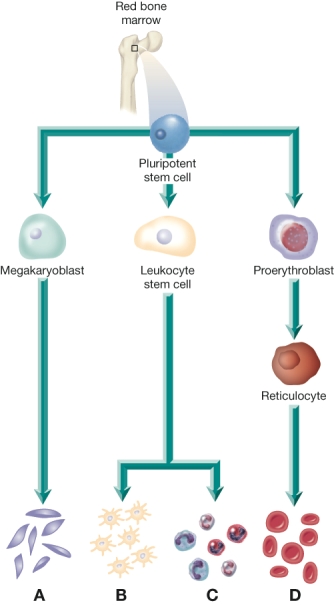
A) A
B) B
C) C
D) D
A) A
B) B
C) C
D) D
Question
Question
Question
Question

Unlock Deck
Sign up to unlock the cards in this deck!
Unlock Deck
Unlock Deck
1/30

Play

Full screen (f)
Deck 32: Drugs for Hematopoietic Disorders
1
The mechanism of action of colony-stimulating factors, such as filgrastim (Neupogen), is to
A) increase neutrophil production.
B) supplement iron in the body.
C) replace vitamin B12 factor.
D) increase erythrocyte production.
A) increase neutrophil production.
B) supplement iron in the body.
C) replace vitamin B12 factor.
D) increase erythrocyte production.
increase neutrophil production.
2
The client is pregnant and has been told by her physician that she needs cyanocobalamin (Nascobal). She asks the nurse, "Will this hurt my baby?" What is the best response by the nurse?
A) "No, this medication will not hurt your baby as long as you take it with ascorbic acid."
B) "No, this is safe as long as long as you take it in pill form; it is a Pregnancy Category A drug, which means it is safe for your baby."
C) "No, this medication will not hurt your baby as long as you take the pills only in the third trimester."
D) "No, this is safe in either pill or injectable form; it is a Pregnancy Category A drug which means it is safe for your baby."
A) "No, this medication will not hurt your baby as long as you take it with ascorbic acid."
B) "No, this is safe as long as long as you take it in pill form; it is a Pregnancy Category A drug, which means it is safe for your baby."
C) "No, this medication will not hurt your baby as long as you take the pills only in the third trimester."
D) "No, this is safe in either pill or injectable form; it is a Pregnancy Category A drug which means it is safe for your baby."
"No, this is safe as long as long as you take it in pill form; it is a Pregnancy Category A drug, which means it is safe for your baby."
3
The client receives chemotherapy as therapy for cancer. The physician orders epoetin alfa (Procrit) subcutaneously. The client asks the nurse if this drug is also chemotherapy. What is the best response by the nurse?
A) "No, but it works with your chemotherapy to make it more effective."
B) "No, this drug helps to counteract the nausea and vomiting caused by your chemotherapy."
C) "No, it will stimulate your immune system to help you battle the cancer."
D) "No, this drug will help prevent anemia that can be caused by your chemotherapy."
A) "No, but it works with your chemotherapy to make it more effective."
B) "No, this drug helps to counteract the nausea and vomiting caused by your chemotherapy."
C) "No, it will stimulate your immune system to help you battle the cancer."
D) "No, this drug will help prevent anemia that can be caused by your chemotherapy."
"No, this drug will help prevent anemia that can be caused by your chemotherapy."
4
The client is receiving chemotherapy for cancer. The physician has prescribed oprelvekin (Neumega). The nurse has completed medication education and evaluates it as effective when the client makes which statement?
A) "This medication will help my chemotherapy work better."
B) "This medication will help increase my platelet count."
C) "This medication will help me regain the weight I have lost."
D) "This medication will help increase my red blood cell count."
A) "This medication will help my chemotherapy work better."
B) "This medication will help increase my platelet count."
C) "This medication will help me regain the weight I have lost."
D) "This medication will help increase my red blood cell count."
Unlock Deck
Unlock for access to all 30 flashcards in this deck.
Unlock Deck
k this deck
5
The process for regulating hematopoiesis occurs via
A) white bone marrow.
B) hematopoietic stem cell.
C) hormones.
D) essential vitamins and nutrients.
A) white bone marrow.
B) hematopoietic stem cell.
C) hormones.
D) essential vitamins and nutrients.
Unlock Deck
Unlock for access to all 30 flashcards in this deck.
Unlock Deck
k this deck
6
In monitoring clients receiving erythropoiesis-stimulating agents, it is most important for the nurse to monitor for
A) thromboembolus.
B) TIA (transient ischemic attack).
C) MI (myocardial infarction).
D) stroke.
A) thromboembolus.
B) TIA (transient ischemic attack).
C) MI (myocardial infarction).
D) stroke.
Unlock Deck
Unlock for access to all 30 flashcards in this deck.
Unlock Deck
k this deck
7
The client is receiving medication for the treatment of anemia. The nurse has taught the client about this drug and about anemia. The nurse evaluates that learning has occurred when the client makes which statement?
A) "My anemia could be caused by blood loss somewhere, but there are other causes too."
B) "My anemia was caused by drinking too many carbonated beverages with caffeine."
C) "There are many causes for anemia; mine was caused by heart failure and fluid overload."
D) "I think my anemia occurred when I started that vegetarian diet."
A) "My anemia could be caused by blood loss somewhere, but there are other causes too."
B) "My anemia was caused by drinking too many carbonated beverages with caffeine."
C) "There are many causes for anemia; mine was caused by heart failure and fluid overload."
D) "I think my anemia occurred when I started that vegetarian diet."
Unlock Deck
Unlock for access to all 30 flashcards in this deck.
Unlock Deck
k this deck
8
The client receives epoetin alfa (Epogen) subcutaneously, and says to the nurse, "My doctor said I have anemia. Are there little red blood cells in that shot?" What are the best responses by the nurse?
A) "No, we do not give blood for anemia anymore."
B) "No, this medication stimulates your body to make red blood cells."
C) " Yes, this small amount of red blood cells will stimulate your bone marrow to produce more cells in the kidney."
D) "No, this medication promotes clotting so you will not lose even more red blood cells."
A) "No, we do not give blood for anemia anymore."
B) "No, this medication stimulates your body to make red blood cells."
C) " Yes, this small amount of red blood cells will stimulate your bone marrow to produce more cells in the kidney."
D) "No, this medication promotes clotting so you will not lose even more red blood cells."
Unlock Deck
Unlock for access to all 30 flashcards in this deck.
Unlock Deck
k this deck
9
Per classification of anemias, the morphology for pernicious anemia or folate-deficiency anemia results in
A) hematocytic-hematochromic erythrocytes.
B) microcytic-hypochromic erythrocytes.
C) macrocytic-normochromic erythrocytes.
D) normocytic-normochromic erythrocytes.
A) hematocytic-hematochromic erythrocytes.
B) microcytic-hypochromic erythrocytes.
C) macrocytic-normochromic erythrocytes.
D) normocytic-normochromic erythrocytes.
Unlock Deck
Unlock for access to all 30 flashcards in this deck.
Unlock Deck
k this deck
10
Colony-stimulating factors (CSFs) are named according to
A) type of blood cell stimulated.
B) type of hormone secreted.
C) type of homeostatic control.
D) type of stem cell stimulated.
A) type of blood cell stimulated.
B) type of hormone secreted.
C) type of homeostatic control.
D) type of stem cell stimulated.
Unlock Deck
Unlock for access to all 30 flashcards in this deck.
Unlock Deck
k this deck
11
The nurse is teaching a class on how red blood cell formation is regulated by the body to a group of clients who have AIDS. The nurse evaluates that learning has occurred when the clients make which statements?
A) "Red blood cell formation is regulated through chemicals called colony-stimulating factors that come from white blood cells."
B) "Red blood cell formation is regulated through messages from the hormone, secretin, which is located in the kidney."
C) "Red blood cell formation is regulated through specific liver enzymes and a process called hemochromatosis."
D) "Red blood cell formation is regulated through messages from the hormone erythropoietin."
A) "Red blood cell formation is regulated through chemicals called colony-stimulating factors that come from white blood cells."
B) "Red blood cell formation is regulated through messages from the hormone, secretin, which is located in the kidney."
C) "Red blood cell formation is regulated through specific liver enzymes and a process called hemochromatosis."
D) "Red blood cell formation is regulated through messages from the hormone erythropoietin."
Unlock Deck
Unlock for access to all 30 flashcards in this deck.
Unlock Deck
k this deck
12
The client had stomach cancer and a surgical removal of his stomach several years ago. The physician prescribed cyanocobalamin (Nascobal). The client stopped this drug several months ago. What will the nurse most likely assess in this client?
A) Memory loss, numbness in the limbs, and depression
B) A gradual decrease in red blood cell counts
C) Jaundice and tarry stools
D) Low hemoglobin and hematocrit counts
A) Memory loss, numbness in the limbs, and depression
B) A gradual decrease in red blood cell counts
C) Jaundice and tarry stools
D) Low hemoglobin and hematocrit counts
Unlock Deck
Unlock for access to all 30 flashcards in this deck.
Unlock Deck
k this deck
13
The physician has ordered sargramostim (Leukine) intravenously for the client. What is a priority plan by the nurse prior to administering this drug?
A) Plan to monitor the client's ECG readings.
B) Plan to insert a Foley catheter and monitor urine output.
C) Plan to administer 10% oxygen during the infusion.
D) Plan to have a white blood cell (WBC) count drawn every 30 minutes.
A) Plan to monitor the client's ECG readings.
B) Plan to insert a Foley catheter and monitor urine output.
C) Plan to administer 10% oxygen during the infusion.
D) Plan to have a white blood cell (WBC) count drawn every 30 minutes.
Unlock Deck
Unlock for access to all 30 flashcards in this deck.
Unlock Deck
k this deck
14
The client complains of constipation while receiving ferrous sulfate (Feosol). What is the best plan by the nurse to assist the client in resolving this common side effect?
A) Plan to teach the client about which laxatives are the safest to use.
B) Plan to teach the client to increase fluids and high-fiber foods in the diet.
C) Plan to teach the client to self-administer Fleets enemas.
D) Plan to teach the client to increase exercise.
A) Plan to teach the client about which laxatives are the safest to use.
B) Plan to teach the client to increase fluids and high-fiber foods in the diet.
C) Plan to teach the client to self-administer Fleets enemas.
D) Plan to teach the client to increase exercise.
Unlock Deck
Unlock for access to all 30 flashcards in this deck.
Unlock Deck
k this deck
15
A patient has been prescribed ferrous sulfate (Feosol). What should the nurse teach the patient about taking this medication?
A) Take this medication with milk.
B) It is okay to take this medication along with your other medications, such as calcium.
C) Take this medication with orange juice.
D) Take this medication with water.
A) Take this medication with milk.
B) It is okay to take this medication along with your other medications, such as calcium.
C) Take this medication with orange juice.
D) Take this medication with water.
Unlock Deck
Unlock for access to all 30 flashcards in this deck.
Unlock Deck
k this deck
16
The nurse teaches a class on iron-deficiency anemia to a group of pregnant clients. The nurse evaluates that additional learning is needed when the clients make which statement?
A) "Most iron in our bodies is stored on hemoglobin in the red blood cell."
B) "Transferrin is a protein that transports iron to places in our bodies where it is needed."
C) "We need extra iron because when our red blood cells die, all their iron is excreted from the body."
D) "The most common cause of nutritional anemia is iron deficiency."
A) "Most iron in our bodies is stored on hemoglobin in the red blood cell."
B) "Transferrin is a protein that transports iron to places in our bodies where it is needed."
C) "We need extra iron because when our red blood cells die, all their iron is excreted from the body."
D) "The most common cause of nutritional anemia is iron deficiency."
Unlock Deck
Unlock for access to all 30 flashcards in this deck.
Unlock Deck
k this deck
17
The client has chronic alcoholism. He asks the nurse why his doctor put him on folic acid (Folvite) since he promised the doctor that he would stop drinking. What is the best response by the nurse?
A) "You should ask your doctor since you promised him that you would not drink anymore."
B) "You have been drinking instead of eating, and alcohol interferes with folate metabolism in your liver."
C) "You need folic acid to make up for the vitamin B12 deficiency that was caused by your alcoholism."
D) "You need folic acid because you have not been compliant with taking your vitamins and attending Alcoholics Anonymous (AA) meetings."
A) "You should ask your doctor since you promised him that you would not drink anymore."
B) "You have been drinking instead of eating, and alcohol interferes with folate metabolism in your liver."
C) "You need folic acid to make up for the vitamin B12 deficiency that was caused by your alcoholism."
D) "You need folic acid because you have not been compliant with taking your vitamins and attending Alcoholics Anonymous (AA) meetings."
Unlock Deck
Unlock for access to all 30 flashcards in this deck.
Unlock Deck
k this deck
18
The physician has prescribed epoetin alfa (Epogen) for the client. What is the priority assessment by the nurse?
A) The client's blood pressure
B) The client's report of a headache, indicating a stroke
C) The client's ability to use the proper injection techniques for self-administration
D) The client's hemoglobin and hematocrit levels
A) The client's blood pressure
B) The client's report of a headache, indicating a stroke
C) The client's ability to use the proper injection techniques for self-administration
D) The client's hemoglobin and hematocrit levels
Unlock Deck
Unlock for access to all 30 flashcards in this deck.
Unlock Deck
k this deck
19
The client calls the nurse and is very frantic. "I think something is wrong! My stools are black, and they have never been this color before!" The client is receiving ferrous sulfate (Feosol). What is the best response by the nurse?
A) "This is an expected side effect of ferrous sulfate (Feosol); it is okay."
B) "This sounds serious; you may have started bleeding again."
C) "Do you have hemorrhoids? That could be the problem."
D) "I will speak with your doctor and call you right back."
A) "This is an expected side effect of ferrous sulfate (Feosol); it is okay."
B) "This sounds serious; you may have started bleeding again."
C) "Do you have hemorrhoids? That could be the problem."
D) "I will speak with your doctor and call you right back."
Unlock Deck
Unlock for access to all 30 flashcards in this deck.
Unlock Deck
k this deck
20
The client receives filgrastim (Neupogen). He asks the nurse, "That is such a funny name; where do you suppose it comes from?" What is the best response by the nurse?
A) "It comes from the interleukins it stimulates; this one stimulates neuocytes."
B) "It comes from the blood cell it stimulates; this one stimulates neutrophils."
C) "It comes from the stem cells it stimulates, such as filgrastims."
D) "It is a complicated process; the drug companies are secretive about it."
A) "It comes from the interleukins it stimulates; this one stimulates neuocytes."
B) "It comes from the blood cell it stimulates; this one stimulates neutrophils."
C) "It comes from the stem cells it stimulates, such as filgrastims."
D) "It is a complicated process; the drug companies are secretive about it."
Unlock Deck
Unlock for access to all 30 flashcards in this deck.
Unlock Deck
k this deck
21
A patient is being treated for an iron overdose after taking a bottle of over-the-counter multiple vitamins with iron. Which information will the nurse provide to the family about treatment of this overdose?
A) "The antidote for iron overdose is a folic acid."
B) "The antidote is given via a retention enema."
C) "We will know that the antidote is working when the patient's urine turns a bluish color."
D) "Success of this medication depends on the patient having good kidney function."
E) "Iron overdose is extremely dangerous."
A) "The antidote for iron overdose is a folic acid."
B) "The antidote is given via a retention enema."
C) "We will know that the antidote is working when the patient's urine turns a bluish color."
D) "Success of this medication depends on the patient having good kidney function."
E) "Iron overdose is extremely dangerous."
Unlock Deck
Unlock for access to all 30 flashcards in this deck.
Unlock Deck
k this deck
22
A client is scheduled to have chemotherapy Thursday at 9 a.m. Filgrastim (Neupogen) has also been ordered. The nurse should plan which dosing time for the Neupogen?
A) No later than 9 a.m. on Wednesday
B) At the time of the chemotherapy infusion
C) Immediately following the chemotherapy
D) No earlier than 9 a.m. Friday
E) Immediately before the chemotherapy
A) No later than 9 a.m. on Wednesday
B) At the time of the chemotherapy infusion
C) Immediately following the chemotherapy
D) No earlier than 9 a.m. Friday
E) Immediately before the chemotherapy
Unlock Deck
Unlock for access to all 30 flashcards in this deck.
Unlock Deck
k this deck
23
The nurse is educating a patient about the development of red blood cells. The nurse would list the steps of this development in which correct order?
A) Action of erythropoietin
B) Proerythroblast
C) Stem cell
D) Reticulocyte
E) Erythrocyte
A) Action of erythropoietin
B) Proerythroblast
C) Stem cell
D) Reticulocyte
E) Erythrocyte
Unlock Deck
Unlock for access to all 30 flashcards in this deck.
Unlock Deck
k this deck
24
A 19-year-old athlete is admitted to the emergency department in hypertensive crisis. It is determined that this patient has been "blood doping" to prepare for a championship game. How does the nurse explain this practice to the patient's parents?
A) "Having additional red blood cells may put an athlete at an advantage as more oxygen is available for cells."
B) "This process may include transfusion of blood products."
C) "Some athletes take epoetin alfa to increase their competitive edge."
D) "Blood doping helps to increase white blood cells that help to repair tissue damage."
E) "The injection of blood deep into muscles is thought to improve their strength."
A) "Having additional red blood cells may put an athlete at an advantage as more oxygen is available for cells."
B) "This process may include transfusion of blood products."
C) "Some athletes take epoetin alfa to increase their competitive edge."
D) "Blood doping helps to increase white blood cells that help to repair tissue damage."
E) "The injection of blood deep into muscles is thought to improve their strength."
Unlock Deck
Unlock for access to all 30 flashcards in this deck.
Unlock Deck
k this deck
25
A client is to receive darbepoetin alfa (Aranesp) adjunctive medication during chemotherapy. The client says, "Not another drug. Why do I need this one?" How should the nurse respond?
A) "I know you are tired of drugs, but this is just one more."
B) "This drug will help you grow red blood cells."
C) "This drug will help keep you from getting infections."
D) "This is an erythropoiesis-stimulating factor."
E) "This drug will help you get more oxygen around to your tissues so you feel better."
A) "I know you are tired of drugs, but this is just one more."
B) "This drug will help you grow red blood cells."
C) "This drug will help keep you from getting infections."
D) "This is an erythropoiesis-stimulating factor."
E) "This drug will help you get more oxygen around to your tissues so you feel better."
Unlock Deck
Unlock for access to all 30 flashcards in this deck.
Unlock Deck
k this deck
26
The nurse is using this diagram to explain why the patient is receiving a drug that modifies hematopoiesis. Mark the cells that would be increased by administering oprelvekin (Neumega).
A) A
B) B
C) C
D) D
A) A
B) B
C) C
D) D
Unlock Deck
Unlock for access to all 30 flashcards in this deck.
Unlock Deck
k this deck
27
A client's blood work shows an anemia that was not present at the last clinic visit 6 months ago. Which questions should the nurse ask this client?
A) "Have you had a significant dietary change in the last 6 months?"
B) "Do you handle chemicals in your new job?"
C) "Have your stools changed in appearance?"
D) "Have you been eating more carbohydrates than usual?"
E) "Are your menstrual periods heavier than normal for you?"
A) "Have you had a significant dietary change in the last 6 months?"
B) "Do you handle chemicals in your new job?"
C) "Have your stools changed in appearance?"
D) "Have you been eating more carbohydrates than usual?"
E) "Are your menstrual periods heavier than normal for you?"
Unlock Deck
Unlock for access to all 30 flashcards in this deck.
Unlock Deck
k this deck
28
A nurse is preparing to administer ferrous sulfate IM to a client with anemia. What should the nurse consider when giving this injection?
A) Give the injection in the deltoid muscle.
B) Iron is best absorbed if given subcutaneously.
C) Iron is irritating to the tissues.
D) The z-track method should be used.
E) Iron preparations should be administered through a needle gauge 16 or larger.
A) Give the injection in the deltoid muscle.
B) Iron is best absorbed if given subcutaneously.
C) Iron is irritating to the tissues.
D) The z-track method should be used.
E) Iron preparations should be administered through a needle gauge 16 or larger.
Unlock Deck
Unlock for access to all 30 flashcards in this deck.
Unlock Deck
k this deck
29
The nurse is teaching a patient how to self-administer an erythropoiesis-stimulating drug. Which instruction should the nurse include?
A) "Shake the vial to mix the contents before use."
B) "Draw up what is needed and discard the rest of the vial."
C) "Place your stock of medication in your refrigerator."
D) "Hold the vial in your hand a few minutes before drawing up the medication."
E) "Give the medication deeply into a muscle."
A) "Shake the vial to mix the contents before use."
B) "Draw up what is needed and discard the rest of the vial."
C) "Place your stock of medication in your refrigerator."
D) "Hold the vial in your hand a few minutes before drawing up the medication."
E) "Give the medication deeply into a muscle."
Unlock Deck
Unlock for access to all 30 flashcards in this deck.
Unlock Deck
k this deck
30
A client has been treated with an erythropoiesis-stimulating factor. Which client assessment would the nurse interpret as indicating the goal of this treatment has been reached?
A) The client's hemoglobin values have risen.
B) The client reports less shortness of breath on exertion.
C) The client has not had an episode of epistaxis in over 3 weeks.
D) The client reports enjoying a walk with family for the first time in months.
E) The client has not had a fever since treatment began.
A) The client's hemoglobin values have risen.
B) The client reports less shortness of breath on exertion.
C) The client has not had an episode of epistaxis in over 3 weeks.
D) The client reports enjoying a walk with family for the first time in months.
E) The client has not had a fever since treatment began.
Unlock Deck
Unlock for access to all 30 flashcards in this deck.
Unlock Deck
k this deck
Unlock Deck
Unlock for access to all 30 flashcards in this deck.






