







 Chat with AI

Deck 29: Nationalism in Asia, 1914-1939
Full screen (f)

Question

Question
Why are the children representing the Philippines and Cuba labeled "Guerilla" and "Cuban Ex-patriot" being disciplined by Uncle Sam in this illustration? 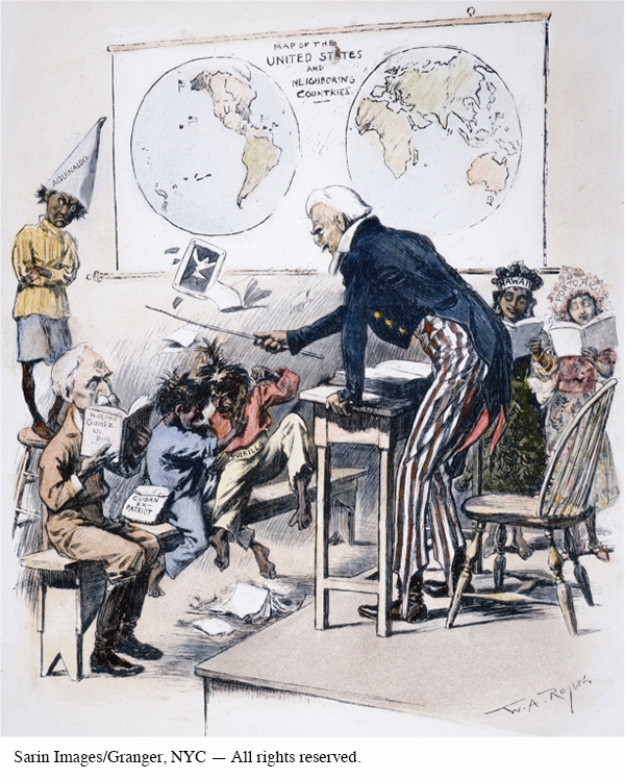
A) Many believed they were unfit for self-government.
B) They had been part of the rebellion against Spain that led to the Spanish-American War.
C) They were negatively influencing events in Hawaii and Puerto Rico.
D) They had resisted attempts at an American takeover of their governments.
A) Many believed they were unfit for self-government.
B) They had been part of the rebellion against Spain that led to the Spanish-American War.
C) They were negatively influencing events in Hawaii and Puerto Rico.
D) They had resisted attempts at an American takeover of their governments.
Question
Question
Question
Question
Question
Question
Question
Question
Question
Question
Question
Question
Question
Question
Question
Question
Question
Question
Question
According to Map 29.2, "The Chinese Communist Movement and the War with Japan, 1927-1938," Japan's occupation of Manchuria and Korea protected it from which of the following? 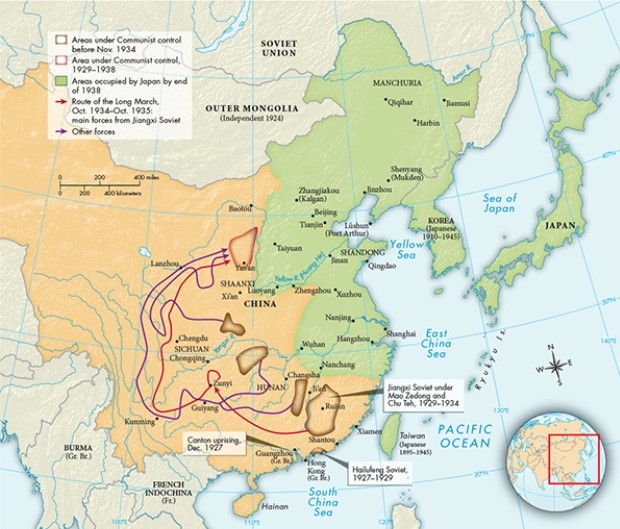
A) Mongolia
B) China
C) Taiwan
D) Soviet Union
A) Mongolia
B) China
C) Taiwan
D) Soviet Union
Question
Question
The modern nation of Iraq, shown in Map 29.1, occupies territory that was once part of which of the following? 
A) Ancient Egypt
B) Indus civilization
C) Ancient Mesopotamia
D) The Balkans
A) Ancient Egypt
B) Indus civilization
C) Ancient Mesopotamia
D) The Balkans
Question
Question
Question
Question
Question
Question
What can be said of Mao Zedong's relationship with Chinese peasants based upon this photograph? 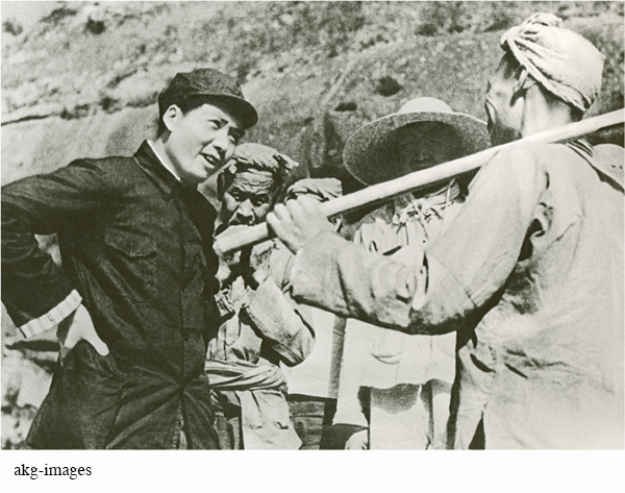
A) Local peasants supported Mao and his forces.
B) Mao's Communist forces had an antagonistic relationship with local peasants.
C) Mao saw little, if any, use for peasants.
D) Mao's manner of dress suggests a desire to assimilate into peasant culture.
A) Local peasants supported Mao and his forces.
B) Mao's Communist forces had an antagonistic relationship with local peasants.
C) Mao saw little, if any, use for peasants.
D) Mao's manner of dress suggests a desire to assimilate into peasant culture.
Question
Question
Question
According to Map 29.1, "The Partition of the Ottoman Empire, 1914-1923," which of the following is true of the states of Syria and Iraq? 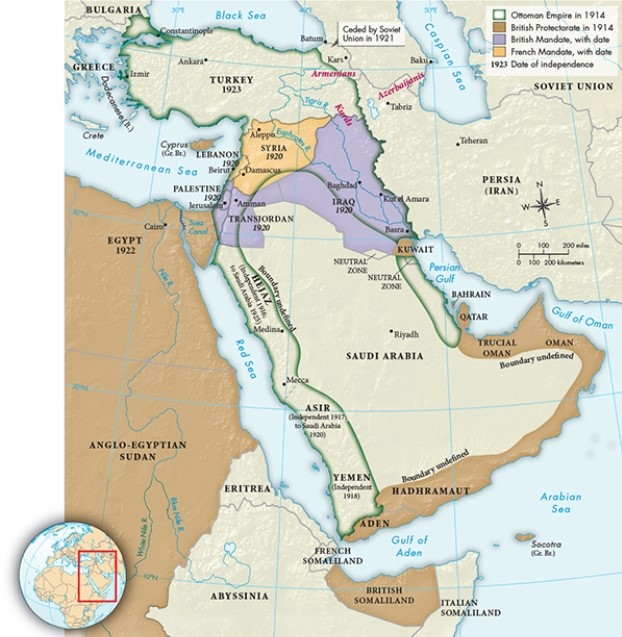
A) They are located within the region typically referred to as the Balkans.
B) As mandates they were examples of postwar European imperialism in the Middle East.
C) It was within these states that most historians believe the First World War began.
D) They blocked Soviet access to the oil-rich Caucasus.
A) They are located within the region typically referred to as the Balkans.
B) As mandates they were examples of postwar European imperialism in the Middle East.
C) It was within these states that most historians believe the First World War began.
D) They blocked Soviet access to the oil-rich Caucasus.
Question
Question
Question
Question
Question
Question
Question
Question
Question
Question
Question
Question
Question
Question
Question
Question
Question
Question
Question
Question
Question
Question
Question
Question
Question
Question
Question
Question
Question
Question
Question
Question
Question
Question
Question
Question
Question
Question
Question
Question
Question
Question
Question
Question

Unlock Deck
Sign up to unlock the cards in this deck!
Unlock Deck
Unlock Deck
1/76

Play

Full screen (f)
Deck 29: Nationalism in Asia, 1914-1939
1
Why did Arab nationalists fight for the British in World War I?
A) They were promised a salary during the war and a pension after.
B) They were promised a home within the British Empire.
C) They were promised an independent Arab homeland.
D) They were promised passage to Australia.
A) They were promised a salary during the war and a pension after.
B) They were promised a home within the British Empire.
C) They were promised an independent Arab homeland.
D) They were promised passage to Australia.
They were promised an independent Arab homeland.
2
Why are the children representing the Philippines and Cuba labeled "Guerilla" and "Cuban Ex-patriot" being disciplined by Uncle Sam in this illustration?
A) Many believed they were unfit for self-government.
B) They had been part of the rebellion against Spain that led to the Spanish-American War.
C) They were negatively influencing events in Hawaii and Puerto Rico.
D) They had resisted attempts at an American takeover of their governments.
A) Many believed they were unfit for self-government.
B) They had been part of the rebellion against Spain that led to the Spanish-American War.
C) They were negatively influencing events in Hawaii and Puerto Rico.
D) They had resisted attempts at an American takeover of their governments.
Many believed they were unfit for self-government.
3
What did some British Cabinet members hope would occur if they created a Jewish homeland in Palestine?
A) They hoped that someday the Jews would help them protect the Suez Canal.
B) They hoped that Jews would allow the British to establish military bases in their country.
C) They hoped they could use the Jews to negotiate lower oil prices.
D) They hoped that someday the Jews might want to settle in India.
A) They hoped that someday the Jews would help them protect the Suez Canal.
B) They hoped that Jews would allow the British to establish military bases in their country.
C) They hoped they could use the Jews to negotiate lower oil prices.
D) They hoped that someday the Jews might want to settle in India.
They hoped that someday the Jews would help them protect the Suez Canal.
4
For Asians, what was the most important aspect of President Wilson's Fourteen Points?
A) Educated Asians were particularly interested in Wilson's idea of national self-determination.
B) Most Asians were very excited about the prospect of the League of Nations.
C) West Asians, in particular, were very supportive of the mandates system.
D) The most important aspect to Asians was the promise of open diplomacy.
A) Educated Asians were particularly interested in Wilson's idea of national self-determination.
B) Most Asians were very excited about the prospect of the League of Nations.
C) West Asians, in particular, were very supportive of the mandates system.
D) The most important aspect to Asians was the promise of open diplomacy.
Unlock Deck
Unlock for access to all 76 flashcards in this deck.
Unlock Deck
k this deck
5
What was Persia renamed in 1935?
A) Iran
B) Afghanistan
C) Turkmenistan
D) Azerbaijan
A) Iran
B) Afghanistan
C) Turkmenistan
D) Azerbaijan
Unlock Deck
Unlock for access to all 76 flashcards in this deck.
Unlock Deck
k this deck
6
Mustafa Kemal believed the restoration of Turkey should be based on which of the following?
A) Marxism-Leninism
B) Islamic fundamentalism
C) A constitutional monarchy
D) Modernization and secularization
A) Marxism-Leninism
B) Islamic fundamentalism
C) A constitutional monarchy
D) Modernization and secularization
Unlock Deck
Unlock for access to all 76 flashcards in this deck.
Unlock Deck
k this deck
7
Which of the following appeared to be an immediate consequence of Arab cooperation with the British in World War I?
A) Arabs displaced Turks as the dominant group in the Ottoman Empire.
B) A large, independent Arab state was established.
C) Several independent Arab states were established.
D) Western imperialism took the place of Turkish rule in the Middle East.
A) Arabs displaced Turks as the dominant group in the Ottoman Empire.
B) A large, independent Arab state was established.
C) Several independent Arab states were established.
D) Western imperialism took the place of Turkish rule in the Middle East.
Unlock Deck
Unlock for access to all 76 flashcards in this deck.
Unlock Deck
k this deck
8
What was the stated intention of the mandates system?
A) To allow Western nations to trade mandates with each other
B) To fully absorb the mandates into European countries
C) To completely free mandates of any European presence
D) To prepare the mandates to be self-governing
A) To allow Western nations to trade mandates with each other
B) To fully absorb the mandates into European countries
C) To completely free mandates of any European presence
D) To prepare the mandates to be self-governing
Unlock Deck
Unlock for access to all 76 flashcards in this deck.
Unlock Deck
k this deck
9
Mustafa Kemal took the surname Atatürk, which meant
A) "defender of the people."
B) "fighter of infidels."
C) "father of the Turks."
D) "leader."
A) "defender of the people."
B) "fighter of infidels."
C) "father of the Turks."
D) "leader."
Unlock Deck
Unlock for access to all 76 flashcards in this deck.
Unlock Deck
k this deck
10
Who was responsible for the wholesale slaughter of Armenians during World War I?
A) Allied soldiers
B) The Turkish government
C) Serbian nationalists
D) Russian Bolsheviks
A) Allied soldiers
B) The Turkish government
C) Serbian nationalists
D) Russian Bolsheviks
Unlock Deck
Unlock for access to all 76 flashcards in this deck.
Unlock Deck
k this deck
11
Mustafa Kemal declared that Turkish law was going to be based on which of the following?
A) European secular law
B) Sacred shari'a law
C) The new Soviet law code
D) Traditional Turkish customs
A) European secular law
B) Sacred shari'a law
C) The new Soviet law code
D) Traditional Turkish customs
Unlock Deck
Unlock for access to all 76 flashcards in this deck.
Unlock Deck
k this deck
12
Which two groups forged an alliance in the Lucknow Pact?
A) Japanese military officers and Japan's central government
B) Filipino rebels and the Spanish government
C) The British government and Indian leaders
D) Indian Hindus and Muslims
A) Japanese military officers and Japan's central government
B) Filipino rebels and the Spanish government
C) The British government and Indian leaders
D) Indian Hindus and Muslims
Unlock Deck
Unlock for access to all 76 flashcards in this deck.
Unlock Deck
k this deck
13
What was one of the goals of the Young Turks?
A) They were determined to destroy the Ottoman Empire.
B) They wanted to defeat Serbia, Greece, and Bulgaria.
C) They wanted to form an alliance with France to defend against Russian aggression.
D) They wanted to modernize, but still maintain, the Ottoman Empire.
A) They were determined to destroy the Ottoman Empire.
B) They wanted to defeat Serbia, Greece, and Bulgaria.
C) They wanted to form an alliance with France to defend against Russian aggression.
D) They wanted to modernize, but still maintain, the Ottoman Empire.
Unlock Deck
Unlock for access to all 76 flashcards in this deck.
Unlock Deck
k this deck
14
The Sykes-Picot Agreement between England and France called for which of the following?
A) The establishment of a Jewish state in Palestine
B) The division of the Ottoman Empire between the two Western powers
C) The establishment of the mandates system
D) The peaceful decolonization of western Asia
A) The establishment of a Jewish state in Palestine
B) The division of the Ottoman Empire between the two Western powers
C) The establishment of the mandates system
D) The peaceful decolonization of western Asia
Unlock Deck
Unlock for access to all 76 flashcards in this deck.
Unlock Deck
k this deck
15
How could Western imperialism be regarded in 1918?
A) It was much stronger than it had been in 1914.
B) It was essentially over in Asia but continuing in Africa.
C) It was weakened, but still very much alive.
D) It was essentially over in Africa but continuing in Asia.
A) It was much stronger than it had been in 1914.
B) It was essentially over in Asia but continuing in Africa.
C) It was weakened, but still very much alive.
D) It was essentially over in Africa but continuing in Asia.
Unlock Deck
Unlock for access to all 76 flashcards in this deck.
Unlock Deck
k this deck
16
Mustafa Kemal sought to limit the influence of which of these on Turkish daily life?
A) The state
B) The military
C) Religion
D) Science
A) The state
B) The military
C) Religion
D) Science
Unlock Deck
Unlock for access to all 76 flashcards in this deck.
Unlock Deck
k this deck
17
What treaty formally recognized Turkish independence?
A) The Treaty of Versailles
B) The Treaty of Lausanne
C) The Balfour Declaration
D) The Sykes-Picot Agreement
A) The Treaty of Versailles
B) The Treaty of Lausanne
C) The Balfour Declaration
D) The Sykes-Picot Agreement
Unlock Deck
Unlock for access to all 76 flashcards in this deck.
Unlock Deck
k this deck
18
What document called for the establishment of the Jewish state in Palestine?
A) Woodrow Wilson's Fourteen Points
B) The Versailles peace settlement
C) The Balfour Declaration
D) The Lucknow Agreement
A) Woodrow Wilson's Fourteen Points
B) The Versailles peace settlement
C) The Balfour Declaration
D) The Lucknow Agreement
Unlock Deck
Unlock for access to all 76 flashcards in this deck.
Unlock Deck
k this deck
19
Which of the following was true of the mandates system in the League of Nations?
A) It demonstrated that the West was committed to the modernization of its colonies.
B) It showed that the Europeans were committed to maintaining the imperial system.
C) It was generally well-received in Asia.
D) It was included at the request of Indian nationalists.
A) It demonstrated that the West was committed to the modernization of its colonies.
B) It showed that the Europeans were committed to maintaining the imperial system.
C) It was generally well-received in Asia.
D) It was included at the request of Indian nationalists.
Unlock Deck
Unlock for access to all 76 flashcards in this deck.
Unlock Deck
k this deck
20
What did Lenin declare about the Asian inhabitants of the new Soviet Union in 1917?
A) He said they were incapable of becoming real Communists.
B) He said they were the single greatest threat to Soviet security.
C) He said that they were complete equals of the Russians.
D) He said they could remain only if they were segregated from the rest of the population.
A) He said they were incapable of becoming real Communists.
B) He said they were the single greatest threat to Soviet security.
C) He said that they were complete equals of the Russians.
D) He said they could remain only if they were segregated from the rest of the population.
Unlock Deck
Unlock for access to all 76 flashcards in this deck.
Unlock Deck
k this deck
21
According to Map 29.2, "The Chinese Communist Movement and the War with Japan, 1927-1938," Japan's occupation of Manchuria and Korea protected it from which of the following?
A) Mongolia
B) China
C) Taiwan
D) Soviet Union
A) Mongolia
B) China
C) Taiwan
D) Soviet Union
Unlock Deck
Unlock for access to all 76 flashcards in this deck.
Unlock Deck
k this deck
22
Which of the following is a loose translation of satyagraha?
A) "Soul force"
B) "Great soul"
C) "Self-rule"
D) "Free will"
A) "Soul force"
B) "Great soul"
C) "Self-rule"
D) "Free will"
Unlock Deck
Unlock for access to all 76 flashcards in this deck.
Unlock Deck
k this deck
23
The modern nation of Iraq, shown in Map 29.1, occupies territory that was once part of which of the following?
A) Ancient Egypt
B) Indus civilization
C) Ancient Mesopotamia
D) The Balkans
A) Ancient Egypt
B) Indus civilization
C) Ancient Mesopotamia
D) The Balkans
Unlock Deck
Unlock for access to all 76 flashcards in this deck.
Unlock Deck
k this deck
24
How did the Rowlatt Acts allow the British to rule India?
A) Through "emergency measures"
B) Along the lines of Hindu morality
C) By strictly capitalist interest
D) According to new liberal ideals
A) Through "emergency measures"
B) Along the lines of Hindu morality
C) By strictly capitalist interest
D) According to new liberal ideals
Unlock Deck
Unlock for access to all 76 flashcards in this deck.
Unlock Deck
k this deck
25
How did South African leaders respond to Indians' demands for greater rights in 1914?
A) They began arresting and imprisoning scores of prominent Indians.
B) They executed more than four hundred Indians.
C) They responded by drafting thousands of Indians into the military.
D) After a long resistance, they agreed to many of the Indians' demands.
A) They began arresting and imprisoning scores of prominent Indians.
B) They executed more than four hundred Indians.
C) They responded by drafting thousands of Indians into the military.
D) After a long resistance, they agreed to many of the Indians' demands.
Unlock Deck
Unlock for access to all 76 flashcards in this deck.
Unlock Deck
k this deck
26
According to the terms of Faisal bin Hussein's negotiations with the British, he became the ruler of Iraq and the British received what in return?
A) All tax revenues from the kingdom
B) More soldiers for their army
C) Control of the Iraqi oil fields
D) Protection for the Suez Canal
A) All tax revenues from the kingdom
B) More soldiers for their army
C) Control of the Iraqi oil fields
D) Protection for the Suez Canal
Unlock Deck
Unlock for access to all 76 flashcards in this deck.
Unlock Deck
k this deck
27
Reza Shah Pahlavi proclaimed himself shah following which event?
A) The Kemal reforms in Turkey
B) The discovery of oil in Persia
C) His conversion to Christianity
D) A British attempt to take over Persia
A) The Kemal reforms in Turkey
B) The discovery of oil in Persia
C) His conversion to Christianity
D) A British attempt to take over Persia
Unlock Deck
Unlock for access to all 76 flashcards in this deck.
Unlock Deck
k this deck
28
Why were the reforms of Reza Shah Pahlavi less successful than those of Kemal?
A) Persia lacked sufficient resources to finance Pahlavi's reform efforts.
B) There were too few European-educated elites in Persia to carry out secular changes.
C) Persia's religious leadership rejected his Marxist approach.
D) The German militarily interfered with Pahlavi's rule.
A) Persia lacked sufficient resources to finance Pahlavi's reform efforts.
B) There were too few European-educated elites in Persia to carry out secular changes.
C) Persia's religious leadership rejected his Marxist approach.
D) The German militarily interfered with Pahlavi's rule.
Unlock Deck
Unlock for access to all 76 flashcards in this deck.
Unlock Deck
k this deck
29
What can be said of Mao Zedong's relationship with Chinese peasants based upon this photograph?
A) Local peasants supported Mao and his forces.
B) Mao's Communist forces had an antagonistic relationship with local peasants.
C) Mao saw little, if any, use for peasants.
D) Mao's manner of dress suggests a desire to assimilate into peasant culture.
A) Local peasants supported Mao and his forces.
B) Mao's Communist forces had an antagonistic relationship with local peasants.
C) Mao saw little, if any, use for peasants.
D) Mao's manner of dress suggests a desire to assimilate into peasant culture.
Unlock Deck
Unlock for access to all 76 flashcards in this deck.
Unlock Deck
k this deck
30
The British commander who ordered what became known as the Amritsar Massacre acted because Indians had gathered
A) on the day all public meetings had been banned.
B) to hear Mohandas "Mahatma" Gandhi speak.
C) to protest British repression.
D) in open defiance of the Rowlatt Acts.
A) on the day all public meetings had been banned.
B) to hear Mohandas "Mahatma" Gandhi speak.
C) to protest British repression.
D) in open defiance of the Rowlatt Acts.
Unlock Deck
Unlock for access to all 76 flashcards in this deck.
Unlock Deck
k this deck
31
Why did Palestine become the destination of most Jewish immigrants after 1921?
A) The educated Arab population living there welcomed Jewish intellectuals.
B) The United States placed severe limits on immigration from eastern Europe.
C) Anti-Semitism among Arabs was in decline and businesses were cheap.
D) The Balfour Declaration was revoked by the League of Nations.
A) The educated Arab population living there welcomed Jewish intellectuals.
B) The United States placed severe limits on immigration from eastern Europe.
C) Anti-Semitism among Arabs was in decline and businesses were cheap.
D) The Balfour Declaration was revoked by the League of Nations.
Unlock Deck
Unlock for access to all 76 flashcards in this deck.
Unlock Deck
k this deck
32
According to Map 29.1, "The Partition of the Ottoman Empire, 1914-1923," which of the following is true of the states of Syria and Iraq?
A) They are located within the region typically referred to as the Balkans.
B) As mandates they were examples of postwar European imperialism in the Middle East.
C) It was within these states that most historians believe the First World War began.
D) They blocked Soviet access to the oil-rich Caucasus.
A) They are located within the region typically referred to as the Balkans.
B) As mandates they were examples of postwar European imperialism in the Middle East.
C) It was within these states that most historians believe the First World War began.
D) They blocked Soviet access to the oil-rich Caucasus.
Unlock Deck
Unlock for access to all 76 flashcards in this deck.
Unlock Deck
k this deck
33
As a result of discriminatory laws passed by British settlers, poor Indians in South Africa had to either return to India or do which of the following?
A) Enroll in an English-language school
B) Work on a plantation
C) Tend to cattle
D) Work as laborers in the diamond mines
A) Enroll in an English-language school
B) Work on a plantation
C) Tend to cattle
D) Work as laborers in the diamond mines
Unlock Deck
Unlock for access to all 76 flashcards in this deck.
Unlock Deck
k this deck
34
Afghanistan became an independent state under the rule of what leader?
A) Emir Amanullah
B) Mustafa Kemal
C) Mahatma Gandhi
D) Abdulla ibn-Ali
A) Emir Amanullah
B) Mustafa Kemal
C) Mahatma Gandhi
D) Abdulla ibn-Ali
Unlock Deck
Unlock for access to all 76 flashcards in this deck.
Unlock Deck
k this deck
35
What were Theodor Herzl's beliefs with regard to Judaism?
A) That Zionism was a grave threat to European Judaism
B) That the security of Jews could be obtained only if they moved to the United States
C) That all of Palestine should be given to the Jews
D) That only a Jewish state could guarantee Jews their dignity and security
A) That Zionism was a grave threat to European Judaism
B) That the security of Jews could be obtained only if they moved to the United States
C) That all of Palestine should be given to the Jews
D) That only a Jewish state could guarantee Jews their dignity and security
Unlock Deck
Unlock for access to all 76 flashcards in this deck.
Unlock Deck
k this deck
36
How did the Indian nationalist movement change under Mahatma Gandhi's leadership?
A) It became more violent and more militant.
B) Its appeal was restricted to the poor.
C) Its appeal was restricted to elites.
D) It appealed to Indians of all social classes.
A) It became more violent and more militant.
B) Its appeal was restricted to the poor.
C) Its appeal was restricted to elites.
D) It appealed to Indians of all social classes.
Unlock Deck
Unlock for access to all 76 flashcards in this deck.
Unlock Deck
k this deck
37
In 1916 leaders of the Congress Party and India's Muslim League signed what agreement?
A) The Bombay Agreement
B) The Rowlatt Acts
C) The Lucknow Pact
D) The Hyderabad Treaty
A) The Bombay Agreement
B) The Rowlatt Acts
C) The Lucknow Pact
D) The Hyderabad Treaty
Unlock Deck
Unlock for access to all 76 flashcards in this deck.
Unlock Deck
k this deck
38
After 1936, the British in Egypt agreed to keep their troops in what location?
A) Near the Nile
B) A base in Cairo
C) A base in the Sinai
D) The Suez Canal Zone
A) Near the Nile
B) A base in Cairo
C) A base in the Sinai
D) The Suez Canal Zone
Unlock Deck
Unlock for access to all 76 flashcards in this deck.
Unlock Deck
k this deck
39
In 1931 Gandhi and tens of thousands of Indians were beaten and jailed for what reason?
A) They had refused to take jobs working for the British.
B) They had refused to buy English cloth.
C) They were involved in a massive resistance campaign against the tax on salt.
D) They were protesting the liquor tax.
A) They had refused to take jobs working for the British.
B) They had refused to buy English cloth.
C) They were involved in a massive resistance campaign against the tax on salt.
D) They were protesting the liquor tax.
Unlock Deck
Unlock for access to all 76 flashcards in this deck.
Unlock Deck
k this deck
40
Who was Yuan Shigai?
A) The founder of Chinese communism
B) The leader of the Boxer Rebellion
C) Jiang Jieshi's best general
D) A former Manchu general who led the first Chinese republic
A) The founder of Chinese communism
B) The leader of the Boxer Rebellion
C) Jiang Jieshi's best general
D) A former Manchu general who led the first Chinese republic
Unlock Deck
Unlock for access to all 76 flashcards in this deck.
Unlock Deck
k this deck
41
What challenges did Reza Shah Pahlavi face as he attempted to reform Persia?
Unlock Deck
Unlock for access to all 76 flashcards in this deck.
Unlock Deck
k this deck
42
In China, what was the Long March?
A) The Communist offensive that ended with their taking of Beijing
B) The effort of 50,000 troops to defend the main Communist army at Kunlun Pass
C) Mao Zedong's symbolic description of the Communists' rise to power
D) A tactical Communist retreat during which tens of thousands lost their lives
A) The Communist offensive that ended with their taking of Beijing
B) The effort of 50,000 troops to defend the main Communist army at Kunlun Pass
C) Mao Zedong's symbolic description of the Communists' rise to power
D) A tactical Communist retreat during which tens of thousands lost their lives
Unlock Deck
Unlock for access to all 76 flashcards in this deck.
Unlock Deck
k this deck
43
How did Mustafa Kemal's reforms of Turkey change the lives of women? Were any of the changes negative?
Unlock Deck
Unlock for access to all 76 flashcards in this deck.
Unlock Deck
k this deck
44
Above all else, what did the Japanese ultranationalists support?
A) Overseas expansion
B) A complete rejection of Chinese Buddhism
C) Strict isolationism
D) The restoration of the emperor to power
A) Overseas expansion
B) A complete rejection of Chinese Buddhism
C) Strict isolationism
D) The restoration of the emperor to power
Unlock Deck
Unlock for access to all 76 flashcards in this deck.
Unlock Deck
k this deck
45
Describe the impact of World War I and the postwar settlement on the political boundaries and conflicts in the Middle East.
Unlock Deck
Unlock for access to all 76 flashcards in this deck.
Unlock Deck
k this deck
46
What was the purpose of the Balfour Declaration, and what were its immediate complications?
Unlock Deck
Unlock for access to all 76 flashcards in this deck.
Unlock Deck
k this deck
47
In the 1920s and 1930s, Japanese ultranationalists could be characterized by the fact that they
A) embraced large corporations.
B) sought to coexist with Marxists.
C) attempted to break from old cultural traditions and practices.
D) were violently anti-Western.
A) embraced large corporations.
B) sought to coexist with Marxists.
C) attempted to break from old cultural traditions and practices.
D) were violently anti-Western.
Unlock Deck
Unlock for access to all 76 flashcards in this deck.
Unlock Deck
k this deck
48
Why did the Arabs feel betrayed by the British and the French at the end of World War I?
Unlock Deck
Unlock for access to all 76 flashcards in this deck.
Unlock Deck
k this deck
49
What was the philosophical focus of China's New Culture Movement?
A) It advocated new, anti-Confucian virtues such as individualism.
B) It rejected Marxism-Leninism.
C) It sought a return to Confucian ethical government and society.
D) It promoted an ideological reconciliation between China and Japan.
A) It advocated new, anti-Confucian virtues such as individualism.
B) It rejected Marxism-Leninism.
C) It sought a return to Confucian ethical government and society.
D) It promoted an ideological reconciliation between China and Japan.
Unlock Deck
Unlock for access to all 76 flashcards in this deck.
Unlock Deck
k this deck
50
In the late nineteenth century, 80 percent of the Filipino population practiced what faith?
A) Catholicism
B) Buddhism
C) Islam
D) Hinduism
A) Catholicism
B) Buddhism
C) Islam
D) Hinduism
Unlock Deck
Unlock for access to all 76 flashcards in this deck.
Unlock Deck
k this deck
51
What were the external factors that gave rise to ultranationalists in Japan?
Unlock Deck
Unlock for access to all 76 flashcards in this deck.
Unlock Deck
k this deck
52
Where did the Chinese Nationalists establish their new capital in 1928?
A) Beijing
B) Nanjing
C) Shanghai
D) Canton
A) Beijing
B) Nanjing
C) Shanghai
D) Canton
Unlock Deck
Unlock for access to all 76 flashcards in this deck.
Unlock Deck
k this deck
53
Japan resigned from the League of Nations after the League objected to Japanese aggression in what country?
A) Korea
B) Vietnam
C) Manchuria
D) The Philippines
A) Korea
B) Vietnam
C) Manchuria
D) The Philippines
Unlock Deck
Unlock for access to all 76 flashcards in this deck.
Unlock Deck
k this deck
54
Why was Gandhi able to win concessions from Great Britain using nonviolent tactics?
Unlock Deck
Unlock for access to all 76 flashcards in this deck.
Unlock Deck
k this deck
55
How did the Young Turks inadvertently create Arab nationalism?
Unlock Deck
Unlock for access to all 76 flashcards in this deck.
Unlock Deck
k this deck
56
Why was Turkey better able to modernize than Persia (Iran) after World War I?
Unlock Deck
Unlock for access to all 76 flashcards in this deck.
Unlock Deck
k this deck
57
What event allowed the ultranationalists to assume a dominant position in Japan?
A) The signing of the Treaty of Versailles
B) The U.S. acquisition of the Philippines
C) The Japanese attack on Manchuria
D) The Great Depression
A) The signing of the Treaty of Versailles
B) The U.S. acquisition of the Philippines
C) The Japanese attack on Manchuria
D) The Great Depression
Unlock Deck
Unlock for access to all 76 flashcards in this deck.
Unlock Deck
k this deck
58
In the first decades of the twentieth century, the Western ideologies of nationalism and Marxism were used by many Asians as weapons against Western imperialism. Why were these two ideologies useful in the struggle against imperialism? How does the history of China in this era exemplify this?
Unlock Deck
Unlock for access to all 76 flashcards in this deck.
Unlock Deck
k this deck
59
In the first decades of the twentieth century, the British offered Indians several compromises to full self-rule. What were the British intentions?
Unlock Deck
Unlock for access to all 76 flashcards in this deck.
Unlock Deck
k this deck
60
Who was the May Fourth Movement directed against?
A) Foreign missionaries
B) Chinese Communists
C) Warlords and imperialists
D) The Manchu Dynasty
A) Foreign missionaries
B) Chinese Communists
C) Warlords and imperialists
D) The Manchu Dynasty
Unlock Deck
Unlock for access to all 76 flashcards in this deck.
Unlock Deck
k this deck
61
Use the following to answer questions:
Sykes-Picot Agreement
A)A committee created by the League of Nations to oversee the developed nations' fulfillment of their international responsibility toward their decrees.
B)The 1916 secret agreement between Britain and France that divided up the Arab lands of Lebanon, Syria, southern Turkey, Palestine, Jordan, and Iraq.
C)A 1917 statement by the British foreign secretary that supported the idea of a Jewish homeland in Palestine.
D)The 1923 treaty that ended the Turkish war and recognized the territorial integrity of a truly independent Turkey.
E)The national assembly established by the despotic shah of Iran in 1906.
F)A Jewish collective farm, first established by Zionists in Palestine, on which each member shared equally in the work, rewards, and defense.
G)A 1916 alliance between the Hindus leading the Indian National Congress and the Muslim League.
H)Loosely translated as "soul force," which Gandhi believed was the means of striving for truth and social justice through love, suffering, and conversion of the oppressor.
I)A Chinese nationalist movement against foreign imperialists and warlord rule; it began as a 1919 student protest against the decision of the Paris Peace Conference to leave the Shandong Peninsula in the hands of Japan.
J)An intellectual revolution beginning in 1916 that attacked traditional Chinese, particularly Confucian, culture and promoted Western ideas of science, democracy, and individualism.
K)Giant conglomerate firms established in Japan beginning in the Meiji period and lasting until the end of World War II.
L)The 6,000-mile retreat of the Chinese Communist army in 1934 to a remote region on the northwestern border of China, during which tens of thousands lost their lives.
Sykes-Picot Agreement
A)A committee created by the League of Nations to oversee the developed nations' fulfillment of their international responsibility toward their decrees.
B)The 1916 secret agreement between Britain and France that divided up the Arab lands of Lebanon, Syria, southern Turkey, Palestine, Jordan, and Iraq.
C)A 1917 statement by the British foreign secretary that supported the idea of a Jewish homeland in Palestine.
D)The 1923 treaty that ended the Turkish war and recognized the territorial integrity of a truly independent Turkey.
E)The national assembly established by the despotic shah of Iran in 1906.
F)A Jewish collective farm, first established by Zionists in Palestine, on which each member shared equally in the work, rewards, and defense.
G)A 1916 alliance between the Hindus leading the Indian National Congress and the Muslim League.
H)Loosely translated as "soul force," which Gandhi believed was the means of striving for truth and social justice through love, suffering, and conversion of the oppressor.
I)A Chinese nationalist movement against foreign imperialists and warlord rule; it began as a 1919 student protest against the decision of the Paris Peace Conference to leave the Shandong Peninsula in the hands of Japan.
J)An intellectual revolution beginning in 1916 that attacked traditional Chinese, particularly Confucian, culture and promoted Western ideas of science, democracy, and individualism.
K)Giant conglomerate firms established in Japan beginning in the Meiji period and lasting until the end of World War II.
L)The 6,000-mile retreat of the Chinese Communist army in 1934 to a remote region on the northwestern border of China, during which tens of thousands lost their lives.
Unlock Deck
Unlock for access to all 76 flashcards in this deck.
Unlock Deck
k this deck
62
Use the following to answer questions:
zaibatsu
A)A committee created by the League of Nations to oversee the developed nations' fulfillment of their international responsibility toward their decrees.
B)The 1916 secret agreement between Britain and France that divided up the Arab lands of Lebanon, Syria, southern Turkey, Palestine, Jordan, and Iraq.
C)A 1917 statement by the British foreign secretary that supported the idea of a Jewish homeland in Palestine.
D)The 1923 treaty that ended the Turkish war and recognized the territorial integrity of a truly independent Turkey.
E)The national assembly established by the despotic shah of Iran in 1906.
F)A Jewish collective farm, first established by Zionists in Palestine, on which each member shared equally in the work, rewards, and defense.
G)A 1916 alliance between the Hindus leading the Indian National Congress and the Muslim League.
H)Loosely translated as "soul force," which Gandhi believed was the means of striving for truth and social justice through love, suffering, and conversion of the oppressor.
I)A Chinese nationalist movement against foreign imperialists and warlord rule; it began as a 1919 student protest against the decision of the Paris Peace Conference to leave the Shandong Peninsula in the hands of Japan.
J)An intellectual revolution beginning in 1916 that attacked traditional Chinese, particularly Confucian, culture and promoted Western ideas of science, democracy, and individualism.
K)Giant conglomerate firms established in Japan beginning in the Meiji period and lasting until the end of World War II.
L)The 6,000-mile retreat of the Chinese Communist army in 1934 to a remote region on the northwestern border of China, during which tens of thousands lost their lives.
zaibatsu
A)A committee created by the League of Nations to oversee the developed nations' fulfillment of their international responsibility toward their decrees.
B)The 1916 secret agreement between Britain and France that divided up the Arab lands of Lebanon, Syria, southern Turkey, Palestine, Jordan, and Iraq.
C)A 1917 statement by the British foreign secretary that supported the idea of a Jewish homeland in Palestine.
D)The 1923 treaty that ended the Turkish war and recognized the territorial integrity of a truly independent Turkey.
E)The national assembly established by the despotic shah of Iran in 1906.
F)A Jewish collective farm, first established by Zionists in Palestine, on which each member shared equally in the work, rewards, and defense.
G)A 1916 alliance between the Hindus leading the Indian National Congress and the Muslim League.
H)Loosely translated as "soul force," which Gandhi believed was the means of striving for truth and social justice through love, suffering, and conversion of the oppressor.
I)A Chinese nationalist movement against foreign imperialists and warlord rule; it began as a 1919 student protest against the decision of the Paris Peace Conference to leave the Shandong Peninsula in the hands of Japan.
J)An intellectual revolution beginning in 1916 that attacked traditional Chinese, particularly Confucian, culture and promoted Western ideas of science, democracy, and individualism.
K)Giant conglomerate firms established in Japan beginning in the Meiji period and lasting until the end of World War II.
L)The 6,000-mile retreat of the Chinese Communist army in 1934 to a remote region on the northwestern border of China, during which tens of thousands lost their lives.
Unlock Deck
Unlock for access to all 76 flashcards in this deck.
Unlock Deck
k this deck
63
How did Mustafa Kemal transform Turkey? Was he successful?
Unlock Deck
Unlock for access to all 76 flashcards in this deck.
Unlock Deck
k this deck
64
Use the following to answer questions:
New Culture Movement
A)A committee created by the League of Nations to oversee the developed nations' fulfillment of their international responsibility toward their decrees.
B)The 1916 secret agreement between Britain and France that divided up the Arab lands of Lebanon, Syria, southern Turkey, Palestine, Jordan, and Iraq.
C)A 1917 statement by the British foreign secretary that supported the idea of a Jewish homeland in Palestine.
D)The 1923 treaty that ended the Turkish war and recognized the territorial integrity of a truly independent Turkey.
E)The national assembly established by the despotic shah of Iran in 1906.
F)A Jewish collective farm, first established by Zionists in Palestine, on which each member shared equally in the work, rewards, and defense.
G)A 1916 alliance between the Hindus leading the Indian National Congress and the Muslim League.
H)Loosely translated as "soul force," which Gandhi believed was the means of striving for truth and social justice through love, suffering, and conversion of the oppressor.
I)A Chinese nationalist movement against foreign imperialists and warlord rule; it began as a 1919 student protest against the decision of the Paris Peace Conference to leave the Shandong Peninsula in the hands of Japan.
J)An intellectual revolution beginning in 1916 that attacked traditional Chinese, particularly Confucian, culture and promoted Western ideas of science, democracy, and individualism.
K)Giant conglomerate firms established in Japan beginning in the Meiji period and lasting until the end of World War II.
L)The 6,000-mile retreat of the Chinese Communist army in 1934 to a remote region on the northwestern border of China, during which tens of thousands lost their lives.
New Culture Movement
A)A committee created by the League of Nations to oversee the developed nations' fulfillment of their international responsibility toward their decrees.
B)The 1916 secret agreement between Britain and France that divided up the Arab lands of Lebanon, Syria, southern Turkey, Palestine, Jordan, and Iraq.
C)A 1917 statement by the British foreign secretary that supported the idea of a Jewish homeland in Palestine.
D)The 1923 treaty that ended the Turkish war and recognized the territorial integrity of a truly independent Turkey.
E)The national assembly established by the despotic shah of Iran in 1906.
F)A Jewish collective farm, first established by Zionists in Palestine, on which each member shared equally in the work, rewards, and defense.
G)A 1916 alliance between the Hindus leading the Indian National Congress and the Muslim League.
H)Loosely translated as "soul force," which Gandhi believed was the means of striving for truth and social justice through love, suffering, and conversion of the oppressor.
I)A Chinese nationalist movement against foreign imperialists and warlord rule; it began as a 1919 student protest against the decision of the Paris Peace Conference to leave the Shandong Peninsula in the hands of Japan.
J)An intellectual revolution beginning in 1916 that attacked traditional Chinese, particularly Confucian, culture and promoted Western ideas of science, democracy, and individualism.
K)Giant conglomerate firms established in Japan beginning in the Meiji period and lasting until the end of World War II.
L)The 6,000-mile retreat of the Chinese Communist army in 1934 to a remote region on the northwestern border of China, during which tens of thousands lost their lives.
Unlock Deck
Unlock for access to all 76 flashcards in this deck.
Unlock Deck
k this deck
65
Use the following to answer questions:
Treaty of Lausanne
A)A committee created by the League of Nations to oversee the developed nations' fulfillment of their international responsibility toward their decrees.
B)The 1916 secret agreement between Britain and France that divided up the Arab lands of Lebanon, Syria, southern Turkey, Palestine, Jordan, and Iraq.
C)A 1917 statement by the British foreign secretary that supported the idea of a Jewish homeland in Palestine.
D)The 1923 treaty that ended the Turkish war and recognized the territorial integrity of a truly independent Turkey.
E)The national assembly established by the despotic shah of Iran in 1906.
F)A Jewish collective farm, first established by Zionists in Palestine, on which each member shared equally in the work, rewards, and defense.
G)A 1916 alliance between the Hindus leading the Indian National Congress and the Muslim League.
H)Loosely translated as "soul force," which Gandhi believed was the means of striving for truth and social justice through love, suffering, and conversion of the oppressor.
I)A Chinese nationalist movement against foreign imperialists and warlord rule; it began as a 1919 student protest against the decision of the Paris Peace Conference to leave the Shandong Peninsula in the hands of Japan.
J)An intellectual revolution beginning in 1916 that attacked traditional Chinese, particularly Confucian, culture and promoted Western ideas of science, democracy, and individualism.
K)Giant conglomerate firms established in Japan beginning in the Meiji period and lasting until the end of World War II.
L)The 6,000-mile retreat of the Chinese Communist army in 1934 to a remote region on the northwestern border of China, during which tens of thousands lost their lives.
Treaty of Lausanne
A)A committee created by the League of Nations to oversee the developed nations' fulfillment of their international responsibility toward their decrees.
B)The 1916 secret agreement between Britain and France that divided up the Arab lands of Lebanon, Syria, southern Turkey, Palestine, Jordan, and Iraq.
C)A 1917 statement by the British foreign secretary that supported the idea of a Jewish homeland in Palestine.
D)The 1923 treaty that ended the Turkish war and recognized the territorial integrity of a truly independent Turkey.
E)The national assembly established by the despotic shah of Iran in 1906.
F)A Jewish collective farm, first established by Zionists in Palestine, on which each member shared equally in the work, rewards, and defense.
G)A 1916 alliance between the Hindus leading the Indian National Congress and the Muslim League.
H)Loosely translated as "soul force," which Gandhi believed was the means of striving for truth and social justice through love, suffering, and conversion of the oppressor.
I)A Chinese nationalist movement against foreign imperialists and warlord rule; it began as a 1919 student protest against the decision of the Paris Peace Conference to leave the Shandong Peninsula in the hands of Japan.
J)An intellectual revolution beginning in 1916 that attacked traditional Chinese, particularly Confucian, culture and promoted Western ideas of science, democracy, and individualism.
K)Giant conglomerate firms established in Japan beginning in the Meiji period and lasting until the end of World War II.
L)The 6,000-mile retreat of the Chinese Communist army in 1934 to a remote region on the northwestern border of China, during which tens of thousands lost their lives.
Unlock Deck
Unlock for access to all 76 flashcards in this deck.
Unlock Deck
k this deck
66
Use the following to answer questions:
Permanent Mandates Commission
A)A committee created by the League of Nations to oversee the developed nations' fulfillment of their international responsibility toward their decrees.
B)The 1916 secret agreement between Britain and France that divided up the Arab lands of Lebanon, Syria, southern Turkey, Palestine, Jordan, and Iraq.
C)A 1917 statement by the British foreign secretary that supported the idea of a Jewish homeland in Palestine.
D)The 1923 treaty that ended the Turkish war and recognized the territorial integrity of a truly independent Turkey.
E)The national assembly established by the despotic shah of Iran in 1906.
F)A Jewish collective farm, first established by Zionists in Palestine, on which each member shared equally in the work, rewards, and defense.
G)A 1916 alliance between the Hindus leading the Indian National Congress and the Muslim League.
H)Loosely translated as "soul force," which Gandhi believed was the means of striving for truth and social justice through love, suffering, and conversion of the oppressor.
I)A Chinese nationalist movement against foreign imperialists and warlord rule; it began as a 1919 student protest against the decision of the Paris Peace Conference to leave the Shandong Peninsula in the hands of Japan.
J)An intellectual revolution beginning in 1916 that attacked traditional Chinese, particularly Confucian, culture and promoted Western ideas of science, democracy, and individualism.
K)Giant conglomerate firms established in Japan beginning in the Meiji period and lasting until the end of World War II.
L)The 6,000-mile retreat of the Chinese Communist army in 1934 to a remote region on the northwestern border of China, during which tens of thousands lost their lives.
Permanent Mandates Commission
A)A committee created by the League of Nations to oversee the developed nations' fulfillment of their international responsibility toward their decrees.
B)The 1916 secret agreement between Britain and France that divided up the Arab lands of Lebanon, Syria, southern Turkey, Palestine, Jordan, and Iraq.
C)A 1917 statement by the British foreign secretary that supported the idea of a Jewish homeland in Palestine.
D)The 1923 treaty that ended the Turkish war and recognized the territorial integrity of a truly independent Turkey.
E)The national assembly established by the despotic shah of Iran in 1906.
F)A Jewish collective farm, first established by Zionists in Palestine, on which each member shared equally in the work, rewards, and defense.
G)A 1916 alliance between the Hindus leading the Indian National Congress and the Muslim League.
H)Loosely translated as "soul force," which Gandhi believed was the means of striving for truth and social justice through love, suffering, and conversion of the oppressor.
I)A Chinese nationalist movement against foreign imperialists and warlord rule; it began as a 1919 student protest against the decision of the Paris Peace Conference to leave the Shandong Peninsula in the hands of Japan.
J)An intellectual revolution beginning in 1916 that attacked traditional Chinese, particularly Confucian, culture and promoted Western ideas of science, democracy, and individualism.
K)Giant conglomerate firms established in Japan beginning in the Meiji period and lasting until the end of World War II.
L)The 6,000-mile retreat of the Chinese Communist army in 1934 to a remote region on the northwestern border of China, during which tens of thousands lost their lives.
Unlock Deck
Unlock for access to all 76 flashcards in this deck.
Unlock Deck
k this deck
67
Use the following to answer questions:
Majlis
A)A committee created by the League of Nations to oversee the developed nations' fulfillment of their international responsibility toward their decrees.
B)The 1916 secret agreement between Britain and France that divided up the Arab lands of Lebanon, Syria, southern Turkey, Palestine, Jordan, and Iraq.
C)A 1917 statement by the British foreign secretary that supported the idea of a Jewish homeland in Palestine.
D)The 1923 treaty that ended the Turkish war and recognized the territorial integrity of a truly independent Turkey.
E)The national assembly established by the despotic shah of Iran in 1906.
F)A Jewish collective farm, first established by Zionists in Palestine, on which each member shared equally in the work, rewards, and defense.
G)A 1916 alliance between the Hindus leading the Indian National Congress and the Muslim League.
H)Loosely translated as "soul force," which Gandhi believed was the means of striving for truth and social justice through love, suffering, and conversion of the oppressor.
I)A Chinese nationalist movement against foreign imperialists and warlord rule; it began as a 1919 student protest against the decision of the Paris Peace Conference to leave the Shandong Peninsula in the hands of Japan.
J)An intellectual revolution beginning in 1916 that attacked traditional Chinese, particularly Confucian, culture and promoted Western ideas of science, democracy, and individualism.
K)Giant conglomerate firms established in Japan beginning in the Meiji period and lasting until the end of World War II.
L)The 6,000-mile retreat of the Chinese Communist army in 1934 to a remote region on the northwestern border of China, during which tens of thousands lost their lives.
Majlis
A)A committee created by the League of Nations to oversee the developed nations' fulfillment of their international responsibility toward their decrees.
B)The 1916 secret agreement between Britain and France that divided up the Arab lands of Lebanon, Syria, southern Turkey, Palestine, Jordan, and Iraq.
C)A 1917 statement by the British foreign secretary that supported the idea of a Jewish homeland in Palestine.
D)The 1923 treaty that ended the Turkish war and recognized the territorial integrity of a truly independent Turkey.
E)The national assembly established by the despotic shah of Iran in 1906.
F)A Jewish collective farm, first established by Zionists in Palestine, on which each member shared equally in the work, rewards, and defense.
G)A 1916 alliance between the Hindus leading the Indian National Congress and the Muslim League.
H)Loosely translated as "soul force," which Gandhi believed was the means of striving for truth and social justice through love, suffering, and conversion of the oppressor.
I)A Chinese nationalist movement against foreign imperialists and warlord rule; it began as a 1919 student protest against the decision of the Paris Peace Conference to leave the Shandong Peninsula in the hands of Japan.
J)An intellectual revolution beginning in 1916 that attacked traditional Chinese, particularly Confucian, culture and promoted Western ideas of science, democracy, and individualism.
K)Giant conglomerate firms established in Japan beginning in the Meiji period and lasting until the end of World War II.
L)The 6,000-mile retreat of the Chinese Communist army in 1934 to a remote region on the northwestern border of China, during which tens of thousands lost their lives.
Unlock Deck
Unlock for access to all 76 flashcards in this deck.
Unlock Deck
k this deck
68
Use the following to answer questions:
satyagraha
A)A committee created by the League of Nations to oversee the developed nations' fulfillment of their international responsibility toward their decrees.
B)The 1916 secret agreement between Britain and France that divided up the Arab lands of Lebanon, Syria, southern Turkey, Palestine, Jordan, and Iraq.
C)A 1917 statement by the British foreign secretary that supported the idea of a Jewish homeland in Palestine.
D)The 1923 treaty that ended the Turkish war and recognized the territorial integrity of a truly independent Turkey.
E)The national assembly established by the despotic shah of Iran in 1906.
F)A Jewish collective farm, first established by Zionists in Palestine, on which each member shared equally in the work, rewards, and defense.
G)A 1916 alliance between the Hindus leading the Indian National Congress and the Muslim League.
H)Loosely translated as "soul force," which Gandhi believed was the means of striving for truth and social justice through love, suffering, and conversion of the oppressor.
I)A Chinese nationalist movement against foreign imperialists and warlord rule; it began as a 1919 student protest against the decision of the Paris Peace Conference to leave the Shandong Peninsula in the hands of Japan.
J)An intellectual revolution beginning in 1916 that attacked traditional Chinese, particularly Confucian, culture and promoted Western ideas of science, democracy, and individualism.
K)Giant conglomerate firms established in Japan beginning in the Meiji period and lasting until the end of World War II.
L)The 6,000-mile retreat of the Chinese Communist army in 1934 to a remote region on the northwestern border of China, during which tens of thousands lost their lives.
satyagraha
A)A committee created by the League of Nations to oversee the developed nations' fulfillment of their international responsibility toward their decrees.
B)The 1916 secret agreement between Britain and France that divided up the Arab lands of Lebanon, Syria, southern Turkey, Palestine, Jordan, and Iraq.
C)A 1917 statement by the British foreign secretary that supported the idea of a Jewish homeland in Palestine.
D)The 1923 treaty that ended the Turkish war and recognized the territorial integrity of a truly independent Turkey.
E)The national assembly established by the despotic shah of Iran in 1906.
F)A Jewish collective farm, first established by Zionists in Palestine, on which each member shared equally in the work, rewards, and defense.
G)A 1916 alliance between the Hindus leading the Indian National Congress and the Muslim League.
H)Loosely translated as "soul force," which Gandhi believed was the means of striving for truth and social justice through love, suffering, and conversion of the oppressor.
I)A Chinese nationalist movement against foreign imperialists and warlord rule; it began as a 1919 student protest against the decision of the Paris Peace Conference to leave the Shandong Peninsula in the hands of Japan.
J)An intellectual revolution beginning in 1916 that attacked traditional Chinese, particularly Confucian, culture and promoted Western ideas of science, democracy, and individualism.
K)Giant conglomerate firms established in Japan beginning in the Meiji period and lasting until the end of World War II.
L)The 6,000-mile retreat of the Chinese Communist army in 1934 to a remote region on the northwestern border of China, during which tens of thousands lost their lives.
Unlock Deck
Unlock for access to all 76 flashcards in this deck.
Unlock Deck
k this deck
69
Use the following to answer questions:
May Fourth Movement
A)A committee created by the League of Nations to oversee the developed nations' fulfillment of their international responsibility toward their decrees.
B)The 1916 secret agreement between Britain and France that divided up the Arab lands of Lebanon, Syria, southern Turkey, Palestine, Jordan, and Iraq.
C)A 1917 statement by the British foreign secretary that supported the idea of a Jewish homeland in Palestine.
D)The 1923 treaty that ended the Turkish war and recognized the territorial integrity of a truly independent Turkey.
E)The national assembly established by the despotic shah of Iran in 1906.
F)A Jewish collective farm, first established by Zionists in Palestine, on which each member shared equally in the work, rewards, and defense.
G)A 1916 alliance between the Hindus leading the Indian National Congress and the Muslim League.
H)Loosely translated as "soul force," which Gandhi believed was the means of striving for truth and social justice through love, suffering, and conversion of the oppressor.
I)A Chinese nationalist movement against foreign imperialists and warlord rule; it began as a 1919 student protest against the decision of the Paris Peace Conference to leave the Shandong Peninsula in the hands of Japan.
J)An intellectual revolution beginning in 1916 that attacked traditional Chinese, particularly Confucian, culture and promoted Western ideas of science, democracy, and individualism.
K)Giant conglomerate firms established in Japan beginning in the Meiji period and lasting until the end of World War II.
L)The 6,000-mile retreat of the Chinese Communist army in 1934 to a remote region on the northwestern border of China, during which tens of thousands lost their lives.
May Fourth Movement
A)A committee created by the League of Nations to oversee the developed nations' fulfillment of their international responsibility toward their decrees.
B)The 1916 secret agreement between Britain and France that divided up the Arab lands of Lebanon, Syria, southern Turkey, Palestine, Jordan, and Iraq.
C)A 1917 statement by the British foreign secretary that supported the idea of a Jewish homeland in Palestine.
D)The 1923 treaty that ended the Turkish war and recognized the territorial integrity of a truly independent Turkey.
E)The national assembly established by the despotic shah of Iran in 1906.
F)A Jewish collective farm, first established by Zionists in Palestine, on which each member shared equally in the work, rewards, and defense.
G)A 1916 alliance between the Hindus leading the Indian National Congress and the Muslim League.
H)Loosely translated as "soul force," which Gandhi believed was the means of striving for truth and social justice through love, suffering, and conversion of the oppressor.
I)A Chinese nationalist movement against foreign imperialists and warlord rule; it began as a 1919 student protest against the decision of the Paris Peace Conference to leave the Shandong Peninsula in the hands of Japan.
J)An intellectual revolution beginning in 1916 that attacked traditional Chinese, particularly Confucian, culture and promoted Western ideas of science, democracy, and individualism.
K)Giant conglomerate firms established in Japan beginning in the Meiji period and lasting until the end of World War II.
L)The 6,000-mile retreat of the Chinese Communist army in 1934 to a remote region on the northwestern border of China, during which tens of thousands lost their lives.
Unlock Deck
Unlock for access to all 76 flashcards in this deck.
Unlock Deck
k this deck
70
"As in the West, Asian nationalism was both a creative and destructive force." Discuss this quote critically, being sure to indicate the positive and negative consequences of the movement.
Unlock Deck
Unlock for access to all 76 flashcards in this deck.
Unlock Deck
k this deck
71
Use the following to answer questions:
Lucknow Pact
A)A committee created by the League of Nations to oversee the developed nations' fulfillment of their international responsibility toward their decrees.
B)The 1916 secret agreement between Britain and France that divided up the Arab lands of Lebanon, Syria, southern Turkey, Palestine, Jordan, and Iraq.
C)A 1917 statement by the British foreign secretary that supported the idea of a Jewish homeland in Palestine.
D)The 1923 treaty that ended the Turkish war and recognized the territorial integrity of a truly independent Turkey.
E)The national assembly established by the despotic shah of Iran in 1906.
F)A Jewish collective farm, first established by Zionists in Palestine, on which each member shared equally in the work, rewards, and defense.
G)A 1916 alliance between the Hindus leading the Indian National Congress and the Muslim League.
H)Loosely translated as "soul force," which Gandhi believed was the means of striving for truth and social justice through love, suffering, and conversion of the oppressor.
I)A Chinese nationalist movement against foreign imperialists and warlord rule; it began as a 1919 student protest against the decision of the Paris Peace Conference to leave the Shandong Peninsula in the hands of Japan.
J)An intellectual revolution beginning in 1916 that attacked traditional Chinese, particularly Confucian, culture and promoted Western ideas of science, democracy, and individualism.
K)Giant conglomerate firms established in Japan beginning in the Meiji period and lasting until the end of World War II.
L)The 6,000-mile retreat of the Chinese Communist army in 1934 to a remote region on the northwestern border of China, during which tens of thousands lost their lives.
Lucknow Pact
A)A committee created by the League of Nations to oversee the developed nations' fulfillment of their international responsibility toward their decrees.
B)The 1916 secret agreement between Britain and France that divided up the Arab lands of Lebanon, Syria, southern Turkey, Palestine, Jordan, and Iraq.
C)A 1917 statement by the British foreign secretary that supported the idea of a Jewish homeland in Palestine.
D)The 1923 treaty that ended the Turkish war and recognized the territorial integrity of a truly independent Turkey.
E)The national assembly established by the despotic shah of Iran in 1906.
F)A Jewish collective farm, first established by Zionists in Palestine, on which each member shared equally in the work, rewards, and defense.
G)A 1916 alliance between the Hindus leading the Indian National Congress and the Muslim League.
H)Loosely translated as "soul force," which Gandhi believed was the means of striving for truth and social justice through love, suffering, and conversion of the oppressor.
I)A Chinese nationalist movement against foreign imperialists and warlord rule; it began as a 1919 student protest against the decision of the Paris Peace Conference to leave the Shandong Peninsula in the hands of Japan.
J)An intellectual revolution beginning in 1916 that attacked traditional Chinese, particularly Confucian, culture and promoted Western ideas of science, democracy, and individualism.
K)Giant conglomerate firms established in Japan beginning in the Meiji period and lasting until the end of World War II.
L)The 6,000-mile retreat of the Chinese Communist army in 1934 to a remote region on the northwestern border of China, during which tens of thousands lost their lives.
Unlock Deck
Unlock for access to all 76 flashcards in this deck.
Unlock Deck
k this deck
72
From 1911 until 1949, China was in a state of chaos. Why was it so difficult to rebuild a stable Chinese state after the collapse of the Qing Dynasty?
Unlock Deck
Unlock for access to all 76 flashcards in this deck.
Unlock Deck
k this deck
73
Use the following to answer questions:
kibbutz
A)A committee created by the League of Nations to oversee the developed nations' fulfillment of their international responsibility toward their decrees.
B)The 1916 secret agreement between Britain and France that divided up the Arab lands of Lebanon, Syria, southern Turkey, Palestine, Jordan, and Iraq.
C)A 1917 statement by the British foreign secretary that supported the idea of a Jewish homeland in Palestine.
D)The 1923 treaty that ended the Turkish war and recognized the territorial integrity of a truly independent Turkey.
E)The national assembly established by the despotic shah of Iran in 1906.
F)A Jewish collective farm, first established by Zionists in Palestine, on which each member shared equally in the work, rewards, and defense.
G)A 1916 alliance between the Hindus leading the Indian National Congress and the Muslim League.
H)Loosely translated as "soul force," which Gandhi believed was the means of striving for truth and social justice through love, suffering, and conversion of the oppressor.
I)A Chinese nationalist movement against foreign imperialists and warlord rule; it began as a 1919 student protest against the decision of the Paris Peace Conference to leave the Shandong Peninsula in the hands of Japan.
J)An intellectual revolution beginning in 1916 that attacked traditional Chinese, particularly Confucian, culture and promoted Western ideas of science, democracy, and individualism.
K)Giant conglomerate firms established in Japan beginning in the Meiji period and lasting until the end of World War II.
L)The 6,000-mile retreat of the Chinese Communist army in 1934 to a remote region on the northwestern border of China, during which tens of thousands lost their lives.
kibbutz
A)A committee created by the League of Nations to oversee the developed nations' fulfillment of their international responsibility toward their decrees.
B)The 1916 secret agreement between Britain and France that divided up the Arab lands of Lebanon, Syria, southern Turkey, Palestine, Jordan, and Iraq.
C)A 1917 statement by the British foreign secretary that supported the idea of a Jewish homeland in Palestine.
D)The 1923 treaty that ended the Turkish war and recognized the territorial integrity of a truly independent Turkey.
E)The national assembly established by the despotic shah of Iran in 1906.
F)A Jewish collective farm, first established by Zionists in Palestine, on which each member shared equally in the work, rewards, and defense.
G)A 1916 alliance between the Hindus leading the Indian National Congress and the Muslim League.
H)Loosely translated as "soul force," which Gandhi believed was the means of striving for truth and social justice through love, suffering, and conversion of the oppressor.
I)A Chinese nationalist movement against foreign imperialists and warlord rule; it began as a 1919 student protest against the decision of the Paris Peace Conference to leave the Shandong Peninsula in the hands of Japan.
J)An intellectual revolution beginning in 1916 that attacked traditional Chinese, particularly Confucian, culture and promoted Western ideas of science, democracy, and individualism.
K)Giant conglomerate firms established in Japan beginning in the Meiji period and lasting until the end of World War II.
L)The 6,000-mile retreat of the Chinese Communist army in 1934 to a remote region on the northwestern border of China, during which tens of thousands lost their lives.
Unlock Deck
Unlock for access to all 76 flashcards in this deck.
Unlock Deck
k this deck
74
Use the following to answer questions:
Long March
A)A committee created by the League of Nations to oversee the developed nations' fulfillment of their international responsibility toward their decrees.
B)The 1916 secret agreement between Britain and France that divided up the Arab lands of Lebanon, Syria, southern Turkey, Palestine, Jordan, and Iraq.
C)A 1917 statement by the British foreign secretary that supported the idea of a Jewish homeland in Palestine.
D)The 1923 treaty that ended the Turkish war and recognized the territorial integrity of a truly independent Turkey.
E)The national assembly established by the despotic shah of Iran in 1906.
F)A Jewish collective farm, first established by Zionists in Palestine, on which each member shared equally in the work, rewards, and defense.
G)A 1916 alliance between the Hindus leading the Indian National Congress and the Muslim League.
H)Loosely translated as "soul force," which Gandhi believed was the means of striving for truth and social justice through love, suffering, and conversion of the oppressor.
I)A Chinese nationalist movement against foreign imperialists and warlord rule; it began as a 1919 student protest against the decision of the Paris Peace Conference to leave the Shandong Peninsula in the hands of Japan.
J)An intellectual revolution beginning in 1916 that attacked traditional Chinese, particularly Confucian, culture and promoted Western ideas of science, democracy, and individualism.
K)Giant conglomerate firms established in Japan beginning in the Meiji period and lasting until the end of World War II.
L)The 6,000-mile retreat of the Chinese Communist army in 1934 to a remote region on the northwestern border of China, during which tens of thousands lost their lives.
Long March
A)A committee created by the League of Nations to oversee the developed nations' fulfillment of their international responsibility toward their decrees.
B)The 1916 secret agreement between Britain and France that divided up the Arab lands of Lebanon, Syria, southern Turkey, Palestine, Jordan, and Iraq.
C)A 1917 statement by the British foreign secretary that supported the idea of a Jewish homeland in Palestine.
D)The 1923 treaty that ended the Turkish war and recognized the territorial integrity of a truly independent Turkey.
E)The national assembly established by the despotic shah of Iran in 1906.
F)A Jewish collective farm, first established by Zionists in Palestine, on which each member shared equally in the work, rewards, and defense.
G)A 1916 alliance between the Hindus leading the Indian National Congress and the Muslim League.
H)Loosely translated as "soul force," which Gandhi believed was the means of striving for truth and social justice through love, suffering, and conversion of the oppressor.
I)A Chinese nationalist movement against foreign imperialists and warlord rule; it began as a 1919 student protest against the decision of the Paris Peace Conference to leave the Shandong Peninsula in the hands of Japan.
J)An intellectual revolution beginning in 1916 that attacked traditional Chinese, particularly Confucian, culture and promoted Western ideas of science, democracy, and individualism.
K)Giant conglomerate firms established in Japan beginning in the Meiji period and lasting until the end of World War II.
L)The 6,000-mile retreat of the Chinese Communist army in 1934 to a remote region on the northwestern border of China, during which tens of thousands lost their lives.
Unlock Deck
Unlock for access to all 76 flashcards in this deck.
Unlock Deck
k this deck
75
Use the following to answer questions:
Balfour Declaration
A)A committee created by the League of Nations to oversee the developed nations' fulfillment of their international responsibility toward their decrees.
B)The 1916 secret agreement between Britain and France that divided up the Arab lands of Lebanon, Syria, southern Turkey, Palestine, Jordan, and Iraq.
C)A 1917 statement by the British foreign secretary that supported the idea of a Jewish homeland in Palestine.
D)The 1923 treaty that ended the Turkish war and recognized the territorial integrity of a truly independent Turkey.
E)The national assembly established by the despotic shah of Iran in 1906.
F)A Jewish collective farm, first established by Zionists in Palestine, on which each member shared equally in the work, rewards, and defense.
G)A 1916 alliance between the Hindus leading the Indian National Congress and the Muslim League.
H)Loosely translated as "soul force," which Gandhi believed was the means of striving for truth and social justice through love, suffering, and conversion of the oppressor.
I)A Chinese nationalist movement against foreign imperialists and warlord rule; it began as a 1919 student protest against the decision of the Paris Peace Conference to leave the Shandong Peninsula in the hands of Japan.
J)An intellectual revolution beginning in 1916 that attacked traditional Chinese, particularly Confucian, culture and promoted Western ideas of science, democracy, and individualism.
K)Giant conglomerate firms established in Japan beginning in the Meiji period and lasting until the end of World War II.
L)The 6,000-mile retreat of the Chinese Communist army in 1934 to a remote region on the northwestern border of China, during which tens of thousands lost their lives.
Balfour Declaration
A)A committee created by the League of Nations to oversee the developed nations' fulfillment of their international responsibility toward their decrees.
B)The 1916 secret agreement between Britain and France that divided up the Arab lands of Lebanon, Syria, southern Turkey, Palestine, Jordan, and Iraq.
C)A 1917 statement by the British foreign secretary that supported the idea of a Jewish homeland in Palestine.
D)The 1923 treaty that ended the Turkish war and recognized the territorial integrity of a truly independent Turkey.
E)The national assembly established by the despotic shah of Iran in 1906.
F)A Jewish collective farm, first established by Zionists in Palestine, on which each member shared equally in the work, rewards, and defense.
G)A 1916 alliance between the Hindus leading the Indian National Congress and the Muslim League.
H)Loosely translated as "soul force," which Gandhi believed was the means of striving for truth and social justice through love, suffering, and conversion of the oppressor.
I)A Chinese nationalist movement against foreign imperialists and warlord rule; it began as a 1919 student protest against the decision of the Paris Peace Conference to leave the Shandong Peninsula in the hands of Japan.
J)An intellectual revolution beginning in 1916 that attacked traditional Chinese, particularly Confucian, culture and promoted Western ideas of science, democracy, and individualism.
K)Giant conglomerate firms established in Japan beginning in the Meiji period and lasting until the end of World War II.
L)The 6,000-mile retreat of the Chinese Communist army in 1934 to a remote region on the northwestern border of China, during which tens of thousands lost their lives.
Unlock Deck
Unlock for access to all 76 flashcards in this deck.
Unlock Deck
k this deck
76
World War I and the Treaty of Versailles had a profound impact on the historical development of Asia. Describe this impact. Can an argument be made that even without the experience of World War I and the Versailles settlement, independence and change would have taken place in Asia anyway?
Unlock Deck
Unlock for access to all 76 flashcards in this deck.
Unlock Deck
k this deck
Unlock Deck
Unlock for access to all 76 flashcards in this deck.






