







 Chat with AI

Deck 3: The Foundation of Indian Society, to 300 Ce
Full screen (f)

Question

Question
Question
Question
Question
Question
Question
Question
Question
Question
Question
Question
Question
Question
Question
Question
Question
In the photograph "Gandharan Frieze Depicting the Buddha's Enlightenment," the serene appearance of Buddha, despite his being surrounded by enemies, is evidence of his having attained which of the following? 
A) Noble status
B) Eternal life
C) Enlightenment
D) Rebirth
A) Noble status
B) Eternal life
C) Enlightenment
D) Rebirth
Question
Question
Question
Question
Question
Question
What evidence in this photograph of the brick ruins of Mohenjo-daro reinforces the belief of some historians that no king or queen ruled over the people of Mohenjo-daro? 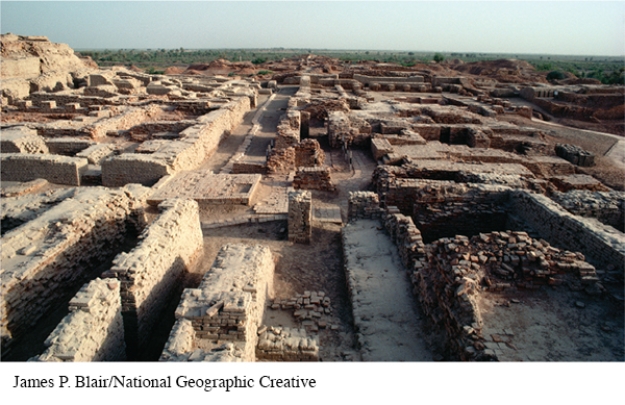
A) The close-knit nature of the dwellings
B) The narrow passageways between structure
C) The absence of a large temple or palace
D) The relatively small size of the settlement
A) The close-knit nature of the dwellings
B) The narrow passageways between structure
C) The absence of a large temple or palace
D) The relatively small size of the settlement
Question
Question
Why are the people depicted in this statue keeping their gaze turned inward as they circumambulate the stupa? 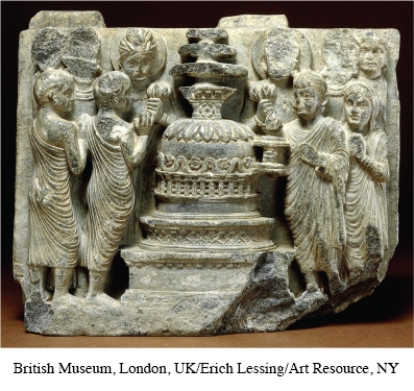
A) To display respect for one another
B) To keep Buddhism's teachings at the center of their lives
C) To display reverence to Buddhist monks
D) To attain enlightenment
A) To display respect for one another
B) To keep Buddhism's teachings at the center of their lives
C) To display reverence to Buddhist monks
D) To attain enlightenment
Question
Question
Question
Question
Question
Question
The symmetry of the ruins of Mohejo-daro pictured here is indicative of the possibility that this settlement was 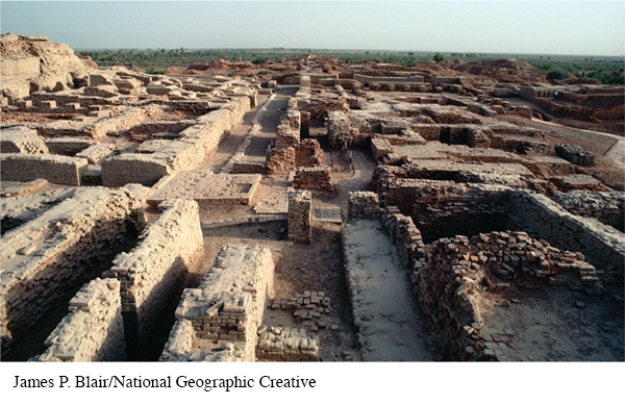
A) started by a migratory people.
B) ruled by a power king or queen.
C) not typically in contact with outsiders.
D) well-planned.
A) started by a migratory people.
B) ruled by a power king or queen.
C) not typically in contact with outsiders.
D) well-planned.
Question
Question
Question
Question
Question
Question
Question
Question
Question
Question
Question
Question
Question
Question
Question
Question
Question
Question
Question
Question
Question
Some of the materials used in the Harappan jewelry pictured here are indicative of the 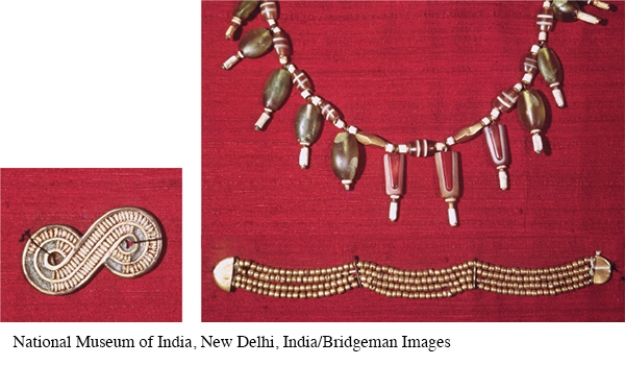
A) style of jewelry likely worn throughout the Indus Valley as well as neighboring territories.
B) influence of ancient Chinese civilization.
C) materials in which the Harappan likely traded.
D) lack of skilled craftsmanship among the Harappan.
A) style of jewelry likely worn throughout the Indus Valley as well as neighboring territories.
B) influence of ancient Chinese civilization.
C) materials in which the Harappan likely traded.
D) lack of skilled craftsmanship among the Harappan.
Question
Question
Question
Question
Question
Question
Question
Question
Question
Question
Question
Question
Question
Question
Question
Question
Question
Question
Question
Question
Question
Question
Question
Question
Question
Question
Question
Question

Unlock Deck
Sign up to unlock the cards in this deck!
Unlock Deck
Unlock Deck
1/81

Play

Full screen (f)
Deck 3: The Foundation of Indian Society, to 300 Ce
1
What was the Rig Veda?
A) An oral collection of military stories
B) The name given to Harappan texts
C) An oral collection of ritual texts, treatises, and hymns
D) A collection of Greek epics borrowed by the Aryans
A) An oral collection of military stories
B) The name given to Harappan texts
C) An oral collection of ritual texts, treatises, and hymns
D) A collection of Greek epics borrowed by the Aryans
An oral collection of ritual texts, treatises, and hymns
2
On which of the following did the prosperity of the Indus (Harappan) civilization depend?
A) Extensive trade with China
B) Intensive cultivation of the fertile river valley
C) The religious toleration shown to conquered peoples
D) Their skill in making and trading jewelry
A) Extensive trade with China
B) Intensive cultivation of the fertile river valley
C) The religious toleration shown to conquered peoples
D) Their skill in making and trading jewelry
Intensive cultivation of the fertile river valley
3
What was one of the most unique features of Harappan cities?
A) Assembly halls
B) Wide roads
C) Communal wells
D) Drainage systems
A) Assembly halls
B) Wide roads
C) Communal wells
D) Drainage systems
Drainage systems
4
What was one of the first crops to be developed in India?
A) Rice
B) Lentils
C) Cotton
D) Wheat
A) Rice
B) Lentils
C) Cotton
D) Wheat
Unlock Deck
Unlock for access to all 81 flashcards in this deck.
Unlock Deck
k this deck
5
Compared to ancient Egyptian and Sumerian civilizations, what makes the Indus civilization unique?
A) It was nearly twice as large in territory.
B) It lasted less than three hundred years.
C) Its people did not grow cotton.
D) It was not a literate society.
A) It was nearly twice as large in territory.
B) It lasted less than three hundred years.
C) Its people did not grow cotton.
D) It was not a literate society.
Unlock Deck
Unlock for access to all 81 flashcards in this deck.
Unlock Deck
k this deck
6
Who were the "untouchables" in the varna system?
A) Women who belonged to the lowest caste
B) Outsiders who were considered "impure"
C) The nobility
D) Child slaves
A) Women who belonged to the lowest caste
B) Outsiders who were considered "impure"
C) The nobility
D) Child slaves
Unlock Deck
Unlock for access to all 81 flashcards in this deck.
Unlock Deck
k this deck
7
What did the Aryans use to ease the difficult task of clearing the jungle?
A) Fire
B) Iron tools
C) Pesticides
D) Wooden plows
A) Fire
B) Iron tools
C) Pesticides
D) Wooden plows
Unlock Deck
Unlock for access to all 81 flashcards in this deck.
Unlock Deck
k this deck
8
In terms of India's geography, what regions have been home to its great empires?
A) Fertile plains in the river valleys
B) Forests at the foot of the Himalayas
C) Deserts of the Rajasthan regions
D) Jungles of the Vindhya Mountains
A) Fertile plains in the river valleys
B) Forests at the foot of the Himalayas
C) Deserts of the Rajasthan regions
D) Jungles of the Vindhya Mountains
Unlock Deck
Unlock for access to all 81 flashcards in this deck.
Unlock Deck
k this deck
9
Which of the following was true of the Aryans?
A) They were the native people of the Ganges Valley.
B) They were a warrior people who destroyed the Indus civilization.
C) They put an end to the strict Harappan caste system.
D) They spoke an Indo-European language.
A) They were the native people of the Ganges Valley.
B) They were a warrior people who destroyed the Indus civilization.
C) They put an end to the strict Harappan caste system.
D) They spoke an Indo-European language.
Unlock Deck
Unlock for access to all 81 flashcards in this deck.
Unlock Deck
k this deck
10
What are priests referred to as in the Indian caste system?
A) Brahmins
B) Jains
C) Buddhas
D) Shudras
A) Brahmins
B) Jains
C) Buddhas
D) Shudras
Unlock Deck
Unlock for access to all 81 flashcards in this deck.
Unlock Deck
k this deck
11
Harappan houses were built around what feature?
A) A household shrine
B) A burial site
C) A cooking hearth
D) A courtyard
A) A household shrine
B) A burial site
C) A cooking hearth
D) A courtyard
Unlock Deck
Unlock for access to all 81 flashcards in this deck.
Unlock Deck
k this deck
12
The Aryans spoke an early form of what language?
A) Sanskrit
B) Hindi
C) Persian
D) Tamil
A) Sanskrit
B) Hindi
C) Persian
D) Tamil
Unlock Deck
Unlock for access to all 81 flashcards in this deck.
Unlock Deck
k this deck
13
The first Indian civilization-the Harappan civilization-is also known as which of the following?
A) The Mauryan Empire
B) The Indus Valley civilization
C) The Indo-Aryan civilization
D) Mesopotamia
A) The Mauryan Empire
B) The Indus Valley civilization
C) The Indo-Aryan civilization
D) Mesopotamia
Unlock Deck
Unlock for access to all 81 flashcards in this deck.
Unlock Deck
k this deck
14
Who was at the head of each Aryan tribal group?
A) A raja or chief
B) A head priest
C) An assembly of tribesmen
D) A god-king
A) A raja or chief
B) A head priest
C) An assembly of tribesmen
D) A god-king
Unlock Deck
Unlock for access to all 81 flashcards in this deck.
Unlock Deck
k this deck
15
The earliest Indian civilization developed along what river?
A) Nile
B) Euphrates
C) Ganges
D) Indus
A) Nile
B) Euphrates
C) Ganges
D) Indus
Unlock Deck
Unlock for access to all 81 flashcards in this deck.
Unlock Deck
k this deck
16
Like early Mesopotamian and Egyptian civilization, Harappan civilization depended on what annually?
A) Visitation from the gods to provide for abundance during harvest
B) A short but wet growing season
C) Attending the Tigris River Valley seed market
D) Floods and irrigation to sustain agriculture
A) Visitation from the gods to provide for abundance during harvest
B) A short but wet growing season
C) Attending the Tigris River Valley seed market
D) Floods and irrigation to sustain agriculture
Unlock Deck
Unlock for access to all 81 flashcards in this deck.
Unlock Deck
k this deck
17
In the photograph "Gandharan Frieze Depicting the Buddha's Enlightenment," the serene appearance of Buddha, despite his being surrounded by enemies, is evidence of his having attained which of the following?
A) Noble status
B) Eternal life
C) Enlightenment
D) Rebirth
A) Noble status
B) Eternal life
C) Enlightenment
D) Rebirth
Unlock Deck
Unlock for access to all 81 flashcards in this deck.
Unlock Deck
k this deck
18
What is unusual about the written language of the Harappan people?
A) It consisted of only four hundred letters.
B) It was very similar to Sumerian cuneiform.
C) No one has yet deciphered it.
D) It was written on papyrus and silk.
A) It consisted of only four hundred letters.
B) It was very similar to Sumerian cuneiform.
C) No one has yet deciphered it.
D) It was written on papyrus and silk.
Unlock Deck
Unlock for access to all 81 flashcards in this deck.
Unlock Deck
k this deck
19
As in Egypt, Harappan agriculture was aided by which of the following?
A) A long, hot growing season
B) Monsoon rains
C) Man-made lakes
D) Mild temperatures
A) A long, hot growing season
B) Monsoon rains
C) Man-made lakes
D) Mild temperatures
Unlock Deck
Unlock for access to all 81 flashcards in this deck.
Unlock Deck
k this deck
20
Harappan craftsmen are the first known producers of what cloth?
A) Wool
B) Linen
C) Cotton
D) Silk
A) Wool
B) Linen
C) Cotton
D) Silk
Unlock Deck
Unlock for access to all 81 flashcards in this deck.
Unlock Deck
k this deck
21
According to Mahavira, what kinds of objects have souls?
A) Only human beings have souls.
B) All objects, living or inanimate, have souls.
C) Only living creatures, human and animal, have souls.
D) All animate objects, but only some inanimate objects, have souls.
A) Only human beings have souls.
B) All objects, living or inanimate, have souls.
C) Only living creatures, human and animal, have souls.
D) All animate objects, but only some inanimate objects, have souls.
Unlock Deck
Unlock for access to all 81 flashcards in this deck.
Unlock Deck
k this deck
22
Which of the following is associated with Jainism?
A) Personal liberty
B) Gender equality
C) Democracy
D) Nonviolence
A) Personal liberty
B) Gender equality
C) Democracy
D) Nonviolence
Unlock Deck
Unlock for access to all 81 flashcards in this deck.
Unlock Deck
k this deck
23
What evidence in this photograph of the brick ruins of Mohenjo-daro reinforces the belief of some historians that no king or queen ruled over the people of Mohenjo-daro?
A) The close-knit nature of the dwellings
B) The narrow passageways between structure
C) The absence of a large temple or palace
D) The relatively small size of the settlement
A) The close-knit nature of the dwellings
B) The narrow passageways between structure
C) The absence of a large temple or palace
D) The relatively small size of the settlement
Unlock Deck
Unlock for access to all 81 flashcards in this deck.
Unlock Deck
k this deck
24
What enabled India to make contact with the outside world in the sixth century B.C.E.?
A) Alexander the Great's conquest brought knowledge of the Mediterranean world.
B) As the Persian Empire expanded, it made territorial conquests in the Indus Valley.
C) Great expansion of overseas trade by Indian merchants and a new merchant fleet led to outside contact.
D) Significant technological improvements in sailing led to greater communication and travel.
A) Alexander the Great's conquest brought knowledge of the Mediterranean world.
B) As the Persian Empire expanded, it made territorial conquests in the Indus Valley.
C) Great expansion of overseas trade by Indian merchants and a new merchant fleet led to outside contact.
D) Significant technological improvements in sailing led to greater communication and travel.
Unlock Deck
Unlock for access to all 81 flashcards in this deck.
Unlock Deck
k this deck
25
Why are the people depicted in this statue keeping their gaze turned inward as they circumambulate the stupa?
A) To display respect for one another
B) To keep Buddhism's teachings at the center of their lives
C) To display reverence to Buddhist monks
D) To attain enlightenment
A) To display respect for one another
B) To keep Buddhism's teachings at the center of their lives
C) To display reverence to Buddhist monks
D) To attain enlightenment
Unlock Deck
Unlock for access to all 81 flashcards in this deck.
Unlock Deck
k this deck
26
What is the ultimate goal of Hinduism?
A) Wealth and earthly prosperity
B) Becoming a priest
C) Union with Brahman
D) Physical immortality
A) Wealth and earthly prosperity
B) Becoming a priest
C) Union with Brahman
D) Physical immortality
Unlock Deck
Unlock for access to all 81 flashcards in this deck.
Unlock Deck
k this deck
27
What was the main ritual performed in Buddhist monasteries?
A) Extreme asceticism
B) Pilgrimage to Nepal
C) Growing one's own food
D) Communal recitation of sutras
A) Extreme asceticism
B) Pilgrimage to Nepal
C) Growing one's own food
D) Communal recitation of sutras
Unlock Deck
Unlock for access to all 81 flashcards in this deck.
Unlock Deck
k this deck
28
Buddha taught that individuals could triumph over human weakness by
A) following an ascetic lifestyle.
B) following the Eightfold Path.
C) entering a monastery.
D) properly observing the rituals of Hinduism.
A) following an ascetic lifestyle.
B) following the Eightfold Path.
C) entering a monastery.
D) properly observing the rituals of Hinduism.
Unlock Deck
Unlock for access to all 81 flashcards in this deck.
Unlock Deck
k this deck
29
What is the Hindu concept of dharma?
A) The rejection of ritualism
B) The belief in reincarnation
C) The balance sheet of good and bad deeds
D) The moral law that Hindus are to observe
A) The rejection of ritualism
B) The belief in reincarnation
C) The balance sheet of good and bad deeds
D) The moral law that Hindus are to observe
Unlock Deck
Unlock for access to all 81 flashcards in this deck.
Unlock Deck
k this deck
30
What is the last step in Buddhism's Eightfold Path?
A) Contemplation
B) Conduct
C) Awareness
D) Endeavor
A) Contemplation
B) Conduct
C) Awareness
D) Endeavor
Unlock Deck
Unlock for access to all 81 flashcards in this deck.
Unlock Deck
k this deck
31
The symmetry of the ruins of Mohejo-daro pictured here is indicative of the possibility that this settlement was
A) started by a migratory people.
B) ruled by a power king or queen.
C) not typically in contact with outsiders.
D) well-planned.
A) started by a migratory people.
B) ruled by a power king or queen.
C) not typically in contact with outsiders.
D) well-planned.
Unlock Deck
Unlock for access to all 81 flashcards in this deck.
Unlock Deck
k this deck
32
What qualified Bodhisattvas to help guide Buddhist believers to enlightenment?
A) They had already achieved enlightenment.
B) They were descendants of the Buddha himself.
C) They were once Brahmin priests before converting.
D) They could recite the most prayers from memory.
A) They had already achieved enlightenment.
B) They were descendants of the Buddha himself.
C) They were once Brahmin priests before converting.
D) They could recite the most prayers from memory.
Unlock Deck
Unlock for access to all 81 flashcards in this deck.
Unlock Deck
k this deck
33
Who commonly performed the important ritual sacrifice of animals in Brahmanism?
A) Untouchables
B) Teenagers, because they were considered pure
C) Male rulers only
D) The priestly caste
A) Untouchables
B) Teenagers, because they were considered pure
C) Male rulers only
D) The priestly caste
Unlock Deck
Unlock for access to all 81 flashcards in this deck.
Unlock Deck
k this deck
34
Which of the following statements is true about women in ancient Aryan society?
A) Women could never remarry if widowed.
B) Almost all females were married while they were still children.
C) Women lived in patrilineal and patriarchal tribal groups.
D) Women were economically equal to men and could hold property.
A) Women could never remarry if widowed.
B) Almost all females were married while they were still children.
C) Women lived in patrilineal and patriarchal tribal groups.
D) Women were economically equal to men and could hold property.
Unlock Deck
Unlock for access to all 81 flashcards in this deck.
Unlock Deck
k this deck
35
Mahavira was the founder of what Indian religion?
A) Jainism
B) Buddhism
C) Hinduism
D) Sikhism
A) Jainism
B) Buddhism
C) Hinduism
D) Sikhism
Unlock Deck
Unlock for access to all 81 flashcards in this deck.
Unlock Deck
k this deck
36
What Hindu text urges action in this world?
A) The Sutras
B) Rig Veda
C) Ramayana
D) Bhagavad Gita
A) The Sutras
B) Rig Veda
C) Ramayana
D) Bhagavad Gita
Unlock Deck
Unlock for access to all 81 flashcards in this deck.
Unlock Deck
k this deck
37
What are sutras in the Buddhist tradition?
A) The steps on the Eightfold Path
B) Animals sacrificed to the Buddha
C) The written teachings of the Buddha
D) Sacred names taken by monks
A) The steps on the Eightfold Path
B) Animals sacrificed to the Buddha
C) The written teachings of the Buddha
D) Sacred names taken by monks
Unlock Deck
Unlock for access to all 81 flashcards in this deck.
Unlock Deck
k this deck
38
To what does the term asceticism refer?
A) What Brahmans refer to as the individual soul
B) The practice of severe self-discipline and self-denial
C) The rejection of anthropomorphic gods
D) All of the Brahman faith's sacrificial rites
A) What Brahmans refer to as the individual soul
B) The practice of severe self-discipline and self-denial
C) The rejection of anthropomorphic gods
D) All of the Brahman faith's sacrificial rites
Unlock Deck
Unlock for access to all 81 flashcards in this deck.
Unlock Deck
k this deck
39
According to the Upanishads, what is moksha?
A) Human reincarnation as a lower animal
B) A cleansing fire ritual for women after childbirth
C) Release from the wheel of life and freedom from reincarnation
D) The cosmic tally of one's deeds
A) Human reincarnation as a lower animal
B) A cleansing fire ritual for women after childbirth
C) Release from the wheel of life and freedom from reincarnation
D) The cosmic tally of one's deeds
Unlock Deck
Unlock for access to all 81 flashcards in this deck.
Unlock Deck
k this deck
40
With what sacred text did the Aryan religion shift to a more ascetic and philosophical religion?
A) Rig Veda
B) Sutras
C) Upanishads
D) Mahabharata
A) Rig Veda
B) Sutras
C) Upanishads
D) Mahabharata
Unlock Deck
Unlock for access to all 81 flashcards in this deck.
Unlock Deck
k this deck
41
How do the personal stories and ideas of Mahavira and Siddhartha compare, and how did their experiences influence their respective religions?
Unlock Deck
Unlock for access to all 81 flashcards in this deck.
Unlock Deck
k this deck
42
Which Persian emperor conquered the Indus Valley and Kashmir about 513 B.C.E.?
A) Xerxes
B) Darius
C) Cyrus
D) Cambyses
A) Xerxes
B) Darius
C) Cyrus
D) Cambyses
Unlock Deck
Unlock for access to all 81 flashcards in this deck.
Unlock Deck
k this deck
43
During the Kushan period, Indian art was strongly influenced by the art of what society?
A) Egyptian
B) Greek
C) Chinese
D) Turkish
A) Egyptian
B) Greek
C) Chinese
D) Turkish
Unlock Deck
Unlock for access to all 81 flashcards in this deck.
Unlock Deck
k this deck
44
After the fall of the Mauryans, what new empire emerged in the region that is now Afghanistan, Pakistan, and west India?
A) Taxila
B) Cholas
C) Kushan
D) Magadha
A) Taxila
B) Cholas
C) Kushan
D) Magadha
Unlock Deck
Unlock for access to all 81 flashcards in this deck.
Unlock Deck
k this deck
45
Who was Kautilya?
A) India's greatest general
B) The founder of Jainism
C) Chandragupta's minister
D) An Aryan chieftain
A) India's greatest general
B) The founder of Jainism
C) Chandragupta's minister
D) An Aryan chieftain
Unlock Deck
Unlock for access to all 81 flashcards in this deck.
Unlock Deck
k this deck
46
Who was Chandragupta?
A) The leader of Buddhist reform in India
B) The military leader who defeated Alexander the Great at Taxila
C) The founder of the Mauryan Empire
D) A famous Greek ambassador who was sent to the Mauryan court
A) The leader of Buddhist reform in India
B) The military leader who defeated Alexander the Great at Taxila
C) The founder of the Mauryan Empire
D) A famous Greek ambassador who was sent to the Mauryan court
Unlock Deck
Unlock for access to all 81 flashcards in this deck.
Unlock Deck
k this deck
47
Describe the caste system's effect on the social and economic aspects of Indian life.
Unlock Deck
Unlock for access to all 81 flashcards in this deck.
Unlock Deck
k this deck
48
What evidence indicates that the city-states of the Harappan civilization represent either a unified state or at least a connected culture?
Unlock Deck
Unlock for access to all 81 flashcards in this deck.
Unlock Deck
k this deck
49
What Persian methods did Chandragupta use in building this empire?
Unlock Deck
Unlock for access to all 81 flashcards in this deck.
Unlock Deck
k this deck
50
How did Hinduism incorporate personal devotion to the gods?
Unlock Deck
Unlock for access to all 81 flashcards in this deck.
Unlock Deck
k this deck
51
What gave the Aryans military advantages over the people they defeated in India?
Unlock Deck
Unlock for access to all 81 flashcards in this deck.
Unlock Deck
k this deck
52
Some of the materials used in the Harappan jewelry pictured here are indicative of the
A) style of jewelry likely worn throughout the Indus Valley as well as neighboring territories.
B) influence of ancient Chinese civilization.
C) materials in which the Harappan likely traded.
D) lack of skilled craftsmanship among the Harappan.
A) style of jewelry likely worn throughout the Indus Valley as well as neighboring territories.
B) influence of ancient Chinese civilization.
C) materials in which the Harappan likely traded.
D) lack of skilled craftsmanship among the Harappan.
Unlock Deck
Unlock for access to all 81 flashcards in this deck.
Unlock Deck
k this deck
53
What personal change did Ashoka make following the conquest of Kalinga?
A) He converted to Jainism and became an ascetic monk.
B) He divorced his wife and married a Kalingan princess.
C) He became a paranoid, reclusive emperor.
D) He converted to Buddhism after witnessing the horror of war.
A) He converted to Jainism and became an ascetic monk.
B) He divorced his wife and married a Kalingan princess.
C) He became a paranoid, reclusive emperor.
D) He converted to Buddhism after witnessing the horror of war.
Unlock Deck
Unlock for access to all 81 flashcards in this deck.
Unlock Deck
k this deck
54
What role did Kautilya play in the formation of the Mauryan Empire?
Unlock Deck
Unlock for access to all 81 flashcards in this deck.
Unlock Deck
k this deck
55
Describe some of the qualities of the Aryans gods of the Vedas.
Unlock Deck
Unlock for access to all 81 flashcards in this deck.
Unlock Deck
k this deck
56
How did Buddhism influence Ashoka's rule?
A) He required all of his people to convert to the faith even though he was a Jainist.
B) He appointed officials to oversee the moral welfare of the realm.
C) He banned all other forms of religious thought.
D) He began a series of religious wars against non-Buddhists.
A) He required all of his people to convert to the faith even though he was a Jainist.
B) He appointed officials to oversee the moral welfare of the realm.
C) He banned all other forms of religious thought.
D) He began a series of religious wars against non-Buddhists.
Unlock Deck
Unlock for access to all 81 flashcards in this deck.
Unlock Deck
k this deck
57
How did Roman and Greek civilizations influence India?
Unlock Deck
Unlock for access to all 81 flashcards in this deck.
Unlock Deck
k this deck
58
Ashoka's religious policies
A) were directed at the suppression of Jainism.
B) supported orthodoxy in Buddhism.
C) spurned all other religions except Buddhism.
D) weakened the central government of the empire.
A) were directed at the suppression of Jainism.
B) supported orthodoxy in Buddhism.
C) spurned all other religions except Buddhism.
D) weakened the central government of the empire.
Unlock Deck
Unlock for access to all 81 flashcards in this deck.
Unlock Deck
k this deck
59
How did Ashoka incorporate Buddhism into his imperial administration?
Unlock Deck
Unlock for access to all 81 flashcards in this deck.
Unlock Deck
k this deck
60
How did Chandragupta control the outlying areas of his empire?
A) He trusted local kings to continue on if they took a pledge of loyalty.
B) He sent agents to the provinces to oversee government and keep him informed.
C) He forced the migration of loyal supporters to distant realms.
D) He did not try to control the areas but instead collected taxes.
A) He trusted local kings to continue on if they took a pledge of loyalty.
B) He sent agents to the provinces to oversee government and keep him informed.
C) He forced the migration of loyal supporters to distant realms.
D) He did not try to control the areas but instead collected taxes.
Unlock Deck
Unlock for access to all 81 flashcards in this deck.
Unlock Deck
k this deck
61
Describe the essential teachings of Buddha. How did Buddhism modify Hinduism? How can we explain the appeal of Buddhism?
Unlock Deck
Unlock for access to all 81 flashcards in this deck.
Unlock Deck
k this deck
62
Use the following to answer questions :
karma
A)Indian religion whose followers consider all life sacred and avoid destroying other life.
B)Buddhas-to-be who stayed in the world after enlightenment to help others on the path to salvation.
C)The eight-step code of conduct set forth by the Buddha in his first sermon, beginning with "right conduct" and ending with "right contemplation."
D)The first Indian empire founded by Chandragupta.
E)The transmigration of souls by a continual process of rebirth.
F)The codification of early Indian law that lays down family, caste, and commercial law.
G)The tally of good and bad deeds that determines the status of an individual's next life.
H)The dominant people in north India after the decline of the Indus Valley civilization; they spoke an early form of Sanskrit.
I)The unchanging ultimate reality, according to the Upanishads.
J)The first Indian civilization; also known as the Indus Valley civilization.
K)The earliest collection of Indian hymns, ritual texts, and philosophical treatises, it is the central source of information on early Aryans.
L)The Buddha's message that pain and suffering are inescapable parts of life; suffering and anxiety are caused by human desires and attachments; people can understand and triumph over these weaknesses; and the triumph is made possible by following a simple code of conduct.
M)The "Great Vehicle," a tradition of Buddhism that aspires to be more inclusive.
N)Priests of the Aryans; they supported the growth of royal power in return for royal confirmation of their own religious rights, power, and status.
O)The Sanskrit word for moral law, central to both Buddhist and Hindu teachings.
P)The Indian system of dividing society into hereditary groups whose members interacted primarily within the group, and especially married within the group.
karma
A)Indian religion whose followers consider all life sacred and avoid destroying other life.
B)Buddhas-to-be who stayed in the world after enlightenment to help others on the path to salvation.
C)The eight-step code of conduct set forth by the Buddha in his first sermon, beginning with "right conduct" and ending with "right contemplation."
D)The first Indian empire founded by Chandragupta.
E)The transmigration of souls by a continual process of rebirth.
F)The codification of early Indian law that lays down family, caste, and commercial law.
G)The tally of good and bad deeds that determines the status of an individual's next life.
H)The dominant people in north India after the decline of the Indus Valley civilization; they spoke an early form of Sanskrit.
I)The unchanging ultimate reality, according to the Upanishads.
J)The first Indian civilization; also known as the Indus Valley civilization.
K)The earliest collection of Indian hymns, ritual texts, and philosophical treatises, it is the central source of information on early Aryans.
L)The Buddha's message that pain and suffering are inescapable parts of life; suffering and anxiety are caused by human desires and attachments; people can understand and triumph over these weaknesses; and the triumph is made possible by following a simple code of conduct.
M)The "Great Vehicle," a tradition of Buddhism that aspires to be more inclusive.
N)Priests of the Aryans; they supported the growth of royal power in return for royal confirmation of their own religious rights, power, and status.
O)The Sanskrit word for moral law, central to both Buddhist and Hindu teachings.
P)The Indian system of dividing society into hereditary groups whose members interacted primarily within the group, and especially married within the group.
Unlock Deck
Unlock for access to all 81 flashcards in this deck.
Unlock Deck
k this deck
63
What are possible theories about the cause of the Harappan civilization's collapse?
Unlock Deck
Unlock for access to all 81 flashcards in this deck.
Unlock Deck
k this deck
64
Use the following to answer questions :
Mauryan Empire
A)Indian religion whose followers consider all life sacred and avoid destroying other life.
B)Buddhas-to-be who stayed in the world after enlightenment to help others on the path to salvation.
C)The eight-step code of conduct set forth by the Buddha in his first sermon, beginning with "right conduct" and ending with "right contemplation."
D)The first Indian empire founded by Chandragupta.
E)The transmigration of souls by a continual process of rebirth.
F)The codification of early Indian law that lays down family, caste, and commercial law.
G)The tally of good and bad deeds that determines the status of an individual's next life.
H)The dominant people in north India after the decline of the Indus Valley civilization; they spoke an early form of Sanskrit.
I)The unchanging ultimate reality, according to the Upanishads.
J)The first Indian civilization; also known as the Indus Valley civilization.
K)The earliest collection of Indian hymns, ritual texts, and philosophical treatises, it is the central source of information on early Aryans.
L)The Buddha's message that pain and suffering are inescapable parts of life; suffering and anxiety are caused by human desires and attachments; people can understand and triumph over these weaknesses; and the triumph is made possible by following a simple code of conduct.
M)The "Great Vehicle," a tradition of Buddhism that aspires to be more inclusive.
N)Priests of the Aryans; they supported the growth of royal power in return for royal confirmation of their own religious rights, power, and status.
O)The Sanskrit word for moral law, central to both Buddhist and Hindu teachings.
P)The Indian system of dividing society into hereditary groups whose members interacted primarily within the group, and especially married within the group.
Mauryan Empire
A)Indian religion whose followers consider all life sacred and avoid destroying other life.
B)Buddhas-to-be who stayed in the world after enlightenment to help others on the path to salvation.
C)The eight-step code of conduct set forth by the Buddha in his first sermon, beginning with "right conduct" and ending with "right contemplation."
D)The first Indian empire founded by Chandragupta.
E)The transmigration of souls by a continual process of rebirth.
F)The codification of early Indian law that lays down family, caste, and commercial law.
G)The tally of good and bad deeds that determines the status of an individual's next life.
H)The dominant people in north India after the decline of the Indus Valley civilization; they spoke an early form of Sanskrit.
I)The unchanging ultimate reality, according to the Upanishads.
J)The first Indian civilization; also known as the Indus Valley civilization.
K)The earliest collection of Indian hymns, ritual texts, and philosophical treatises, it is the central source of information on early Aryans.
L)The Buddha's message that pain and suffering are inescapable parts of life; suffering and anxiety are caused by human desires and attachments; people can understand and triumph over these weaknesses; and the triumph is made possible by following a simple code of conduct.
M)The "Great Vehicle," a tradition of Buddhism that aspires to be more inclusive.
N)Priests of the Aryans; they supported the growth of royal power in return for royal confirmation of their own religious rights, power, and status.
O)The Sanskrit word for moral law, central to both Buddhist and Hindu teachings.
P)The Indian system of dividing society into hereditary groups whose members interacted primarily within the group, and especially married within the group.
Unlock Deck
Unlock for access to all 81 flashcards in this deck.
Unlock Deck
k this deck
65
Why might the Aryans have been able to assume authority in northern India?
Unlock Deck
Unlock for access to all 81 flashcards in this deck.
Unlock Deck
k this deck
66
Use the following to answer questions :
Four Noble Truths
A)Indian religion whose followers consider all life sacred and avoid destroying other life.
B)Buddhas-to-be who stayed in the world after enlightenment to help others on the path to salvation.
C)The eight-step code of conduct set forth by the Buddha in his first sermon, beginning with "right conduct" and ending with "right contemplation."
D)The first Indian empire founded by Chandragupta.
E)The transmigration of souls by a continual process of rebirth.
F)The codification of early Indian law that lays down family, caste, and commercial law.
G)The tally of good and bad deeds that determines the status of an individual's next life.
H)The dominant people in north India after the decline of the Indus Valley civilization; they spoke an early form of Sanskrit.
I)The unchanging ultimate reality, according to the Upanishads.
J)The first Indian civilization; also known as the Indus Valley civilization.
K)The earliest collection of Indian hymns, ritual texts, and philosophical treatises, it is the central source of information on early Aryans.
L)The Buddha's message that pain and suffering are inescapable parts of life; suffering and anxiety are caused by human desires and attachments; people can understand and triumph over these weaknesses; and the triumph is made possible by following a simple code of conduct.
M)The "Great Vehicle," a tradition of Buddhism that aspires to be more inclusive.
N)Priests of the Aryans; they supported the growth of royal power in return for royal confirmation of their own religious rights, power, and status.
O)The Sanskrit word for moral law, central to both Buddhist and Hindu teachings.
P)The Indian system of dividing society into hereditary groups whose members interacted primarily within the group, and especially married within the group.
Four Noble Truths
A)Indian religion whose followers consider all life sacred and avoid destroying other life.
B)Buddhas-to-be who stayed in the world after enlightenment to help others on the path to salvation.
C)The eight-step code of conduct set forth by the Buddha in his first sermon, beginning with "right conduct" and ending with "right contemplation."
D)The first Indian empire founded by Chandragupta.
E)The transmigration of souls by a continual process of rebirth.
F)The codification of early Indian law that lays down family, caste, and commercial law.
G)The tally of good and bad deeds that determines the status of an individual's next life.
H)The dominant people in north India after the decline of the Indus Valley civilization; they spoke an early form of Sanskrit.
I)The unchanging ultimate reality, according to the Upanishads.
J)The first Indian civilization; also known as the Indus Valley civilization.
K)The earliest collection of Indian hymns, ritual texts, and philosophical treatises, it is the central source of information on early Aryans.
L)The Buddha's message that pain and suffering are inescapable parts of life; suffering and anxiety are caused by human desires and attachments; people can understand and triumph over these weaknesses; and the triumph is made possible by following a simple code of conduct.
M)The "Great Vehicle," a tradition of Buddhism that aspires to be more inclusive.
N)Priests of the Aryans; they supported the growth of royal power in return for royal confirmation of their own religious rights, power, and status.
O)The Sanskrit word for moral law, central to both Buddhist and Hindu teachings.
P)The Indian system of dividing society into hereditary groups whose members interacted primarily within the group, and especially married within the group.
Unlock Deck
Unlock for access to all 81 flashcards in this deck.
Unlock Deck
k this deck
67
Use the following to answer questions :
Harappan
A)Indian religion whose followers consider all life sacred and avoid destroying other life.
B)Buddhas-to-be who stayed in the world after enlightenment to help others on the path to salvation.
C)The eight-step code of conduct set forth by the Buddha in his first sermon, beginning with "right conduct" and ending with "right contemplation."
D)The first Indian empire founded by Chandragupta.
E)The transmigration of souls by a continual process of rebirth.
F)The codification of early Indian law that lays down family, caste, and commercial law.
G)The tally of good and bad deeds that determines the status of an individual's next life.
H)The dominant people in north India after the decline of the Indus Valley civilization; they spoke an early form of Sanskrit.
I)The unchanging ultimate reality, according to the Upanishads.
J)The first Indian civilization; also known as the Indus Valley civilization.
K)The earliest collection of Indian hymns, ritual texts, and philosophical treatises, it is the central source of information on early Aryans.
L)The Buddha's message that pain and suffering are inescapable parts of life; suffering and anxiety are caused by human desires and attachments; people can understand and triumph over these weaknesses; and the triumph is made possible by following a simple code of conduct.
M)The "Great Vehicle," a tradition of Buddhism that aspires to be more inclusive.
N)Priests of the Aryans; they supported the growth of royal power in return for royal confirmation of their own religious rights, power, and status.
O)The Sanskrit word for moral law, central to both Buddhist and Hindu teachings.
P)The Indian system of dividing society into hereditary groups whose members interacted primarily within the group, and especially married within the group.
Harappan
A)Indian religion whose followers consider all life sacred and avoid destroying other life.
B)Buddhas-to-be who stayed in the world after enlightenment to help others on the path to salvation.
C)The eight-step code of conduct set forth by the Buddha in his first sermon, beginning with "right conduct" and ending with "right contemplation."
D)The first Indian empire founded by Chandragupta.
E)The transmigration of souls by a continual process of rebirth.
F)The codification of early Indian law that lays down family, caste, and commercial law.
G)The tally of good and bad deeds that determines the status of an individual's next life.
H)The dominant people in north India after the decline of the Indus Valley civilization; they spoke an early form of Sanskrit.
I)The unchanging ultimate reality, according to the Upanishads.
J)The first Indian civilization; also known as the Indus Valley civilization.
K)The earliest collection of Indian hymns, ritual texts, and philosophical treatises, it is the central source of information on early Aryans.
L)The Buddha's message that pain and suffering are inescapable parts of life; suffering and anxiety are caused by human desires and attachments; people can understand and triumph over these weaknesses; and the triumph is made possible by following a simple code of conduct.
M)The "Great Vehicle," a tradition of Buddhism that aspires to be more inclusive.
N)Priests of the Aryans; they supported the growth of royal power in return for royal confirmation of their own religious rights, power, and status.
O)The Sanskrit word for moral law, central to both Buddhist and Hindu teachings.
P)The Indian system of dividing society into hereditary groups whose members interacted primarily within the group, and especially married within the group.
Unlock Deck
Unlock for access to all 81 flashcards in this deck.
Unlock Deck
k this deck
68
Use the following to answer questions :
samsara
A)Indian religion whose followers consider all life sacred and avoid destroying other life.
B)Buddhas-to-be who stayed in the world after enlightenment to help others on the path to salvation.
C)The eight-step code of conduct set forth by the Buddha in his first sermon, beginning with "right conduct" and ending with "right contemplation."
D)The first Indian empire founded by Chandragupta.
E)The transmigration of souls by a continual process of rebirth.
F)The codification of early Indian law that lays down family, caste, and commercial law.
G)The tally of good and bad deeds that determines the status of an individual's next life.
H)The dominant people in north India after the decline of the Indus Valley civilization; they spoke an early form of Sanskrit.
I)The unchanging ultimate reality, according to the Upanishads.
J)The first Indian civilization; also known as the Indus Valley civilization.
K)The earliest collection of Indian hymns, ritual texts, and philosophical treatises, it is the central source of information on early Aryans.
L)The Buddha's message that pain and suffering are inescapable parts of life; suffering and anxiety are caused by human desires and attachments; people can understand and triumph over these weaknesses; and the triumph is made possible by following a simple code of conduct.
M)The "Great Vehicle," a tradition of Buddhism that aspires to be more inclusive.
N)Priests of the Aryans; they supported the growth of royal power in return for royal confirmation of their own religious rights, power, and status.
O)The Sanskrit word for moral law, central to both Buddhist and Hindu teachings.
P)The Indian system of dividing society into hereditary groups whose members interacted primarily within the group, and especially married within the group.
samsara
A)Indian religion whose followers consider all life sacred and avoid destroying other life.
B)Buddhas-to-be who stayed in the world after enlightenment to help others on the path to salvation.
C)The eight-step code of conduct set forth by the Buddha in his first sermon, beginning with "right conduct" and ending with "right contemplation."
D)The first Indian empire founded by Chandragupta.
E)The transmigration of souls by a continual process of rebirth.
F)The codification of early Indian law that lays down family, caste, and commercial law.
G)The tally of good and bad deeds that determines the status of an individual's next life.
H)The dominant people in north India after the decline of the Indus Valley civilization; they spoke an early form of Sanskrit.
I)The unchanging ultimate reality, according to the Upanishads.
J)The first Indian civilization; also known as the Indus Valley civilization.
K)The earliest collection of Indian hymns, ritual texts, and philosophical treatises, it is the central source of information on early Aryans.
L)The Buddha's message that pain and suffering are inescapable parts of life; suffering and anxiety are caused by human desires and attachments; people can understand and triumph over these weaknesses; and the triumph is made possible by following a simple code of conduct.
M)The "Great Vehicle," a tradition of Buddhism that aspires to be more inclusive.
N)Priests of the Aryans; they supported the growth of royal power in return for royal confirmation of their own religious rights, power, and status.
O)The Sanskrit word for moral law, central to both Buddhist and Hindu teachings.
P)The Indian system of dividing society into hereditary groups whose members interacted primarily within the group, and especially married within the group.
Unlock Deck
Unlock for access to all 81 flashcards in this deck.
Unlock Deck
k this deck
69
Use the following to answer questions :
Jainism
A)Indian religion whose followers consider all life sacred and avoid destroying other life.
B)Buddhas-to-be who stayed in the world after enlightenment to help others on the path to salvation.
C)The eight-step code of conduct set forth by the Buddha in his first sermon, beginning with "right conduct" and ending with "right contemplation."
D)The first Indian empire founded by Chandragupta.
E)The transmigration of souls by a continual process of rebirth.
F)The codification of early Indian law that lays down family, caste, and commercial law.
G)The tally of good and bad deeds that determines the status of an individual's next life.
H)The dominant people in north India after the decline of the Indus Valley civilization; they spoke an early form of Sanskrit.
I)The unchanging ultimate reality, according to the Upanishads.
J)The first Indian civilization; also known as the Indus Valley civilization.
K)The earliest collection of Indian hymns, ritual texts, and philosophical treatises, it is the central source of information on early Aryans.
L)The Buddha's message that pain and suffering are inescapable parts of life; suffering and anxiety are caused by human desires and attachments; people can understand and triumph over these weaknesses; and the triumph is made possible by following a simple code of conduct.
M)The "Great Vehicle," a tradition of Buddhism that aspires to be more inclusive.
N)Priests of the Aryans; they supported the growth of royal power in return for royal confirmation of their own religious rights, power, and status.
O)The Sanskrit word for moral law, central to both Buddhist and Hindu teachings.
P)The Indian system of dividing society into hereditary groups whose members interacted primarily within the group, and especially married within the group.
Jainism
A)Indian religion whose followers consider all life sacred and avoid destroying other life.
B)Buddhas-to-be who stayed in the world after enlightenment to help others on the path to salvation.
C)The eight-step code of conduct set forth by the Buddha in his first sermon, beginning with "right conduct" and ending with "right contemplation."
D)The first Indian empire founded by Chandragupta.
E)The transmigration of souls by a continual process of rebirth.
F)The codification of early Indian law that lays down family, caste, and commercial law.
G)The tally of good and bad deeds that determines the status of an individual's next life.
H)The dominant people in north India after the decline of the Indus Valley civilization; they spoke an early form of Sanskrit.
I)The unchanging ultimate reality, according to the Upanishads.
J)The first Indian civilization; also known as the Indus Valley civilization.
K)The earliest collection of Indian hymns, ritual texts, and philosophical treatises, it is the central source of information on early Aryans.
L)The Buddha's message that pain and suffering are inescapable parts of life; suffering and anxiety are caused by human desires and attachments; people can understand and triumph over these weaknesses; and the triumph is made possible by following a simple code of conduct.
M)The "Great Vehicle," a tradition of Buddhism that aspires to be more inclusive.
N)Priests of the Aryans; they supported the growth of royal power in return for royal confirmation of their own religious rights, power, and status.
O)The Sanskrit word for moral law, central to both Buddhist and Hindu teachings.
P)The Indian system of dividing society into hereditary groups whose members interacted primarily within the group, and especially married within the group.
Unlock Deck
Unlock for access to all 81 flashcards in this deck.
Unlock Deck
k this deck
70
Use the following to answer questions :
Code of Manu
A)Indian religion whose followers consider all life sacred and avoid destroying other life.
B)Buddhas-to-be who stayed in the world after enlightenment to help others on the path to salvation.
C)The eight-step code of conduct set forth by the Buddha in his first sermon, beginning with "right conduct" and ending with "right contemplation."
D)The first Indian empire founded by Chandragupta.
E)The transmigration of souls by a continual process of rebirth.
F)The codification of early Indian law that lays down family, caste, and commercial law.
G)The tally of good and bad deeds that determines the status of an individual's next life.
H)The dominant people in north India after the decline of the Indus Valley civilization; they spoke an early form of Sanskrit.
I)The unchanging ultimate reality, according to the Upanishads.
J)The first Indian civilization; also known as the Indus Valley civilization.
K)The earliest collection of Indian hymns, ritual texts, and philosophical treatises, it is the central source of information on early Aryans.
L)The Buddha's message that pain and suffering are inescapable parts of life; suffering and anxiety are caused by human desires and attachments; people can understand and triumph over these weaknesses; and the triumph is made possible by following a simple code of conduct.
M)The "Great Vehicle," a tradition of Buddhism that aspires to be more inclusive.
N)Priests of the Aryans; they supported the growth of royal power in return for royal confirmation of their own religious rights, power, and status.
O)The Sanskrit word for moral law, central to both Buddhist and Hindu teachings.
P)The Indian system of dividing society into hereditary groups whose members interacted primarily within the group, and especially married within the group.
Code of Manu
A)Indian religion whose followers consider all life sacred and avoid destroying other life.
B)Buddhas-to-be who stayed in the world after enlightenment to help others on the path to salvation.
C)The eight-step code of conduct set forth by the Buddha in his first sermon, beginning with "right conduct" and ending with "right contemplation."
D)The first Indian empire founded by Chandragupta.
E)The transmigration of souls by a continual process of rebirth.
F)The codification of early Indian law that lays down family, caste, and commercial law.
G)The tally of good and bad deeds that determines the status of an individual's next life.
H)The dominant people in north India after the decline of the Indus Valley civilization; they spoke an early form of Sanskrit.
I)The unchanging ultimate reality, according to the Upanishads.
J)The first Indian civilization; also known as the Indus Valley civilization.
K)The earliest collection of Indian hymns, ritual texts, and philosophical treatises, it is the central source of information on early Aryans.
L)The Buddha's message that pain and suffering are inescapable parts of life; suffering and anxiety are caused by human desires and attachments; people can understand and triumph over these weaknesses; and the triumph is made possible by following a simple code of conduct.
M)The "Great Vehicle," a tradition of Buddhism that aspires to be more inclusive.
N)Priests of the Aryans; they supported the growth of royal power in return for royal confirmation of their own religious rights, power, and status.
O)The Sanskrit word for moral law, central to both Buddhist and Hindu teachings.
P)The Indian system of dividing society into hereditary groups whose members interacted primarily within the group, and especially married within the group.
Unlock Deck
Unlock for access to all 81 flashcards in this deck.
Unlock Deck
k this deck
71
Use the following to answer questions :
Rig Veda
A)Indian religion whose followers consider all life sacred and avoid destroying other life.
B)Buddhas-to-be who stayed in the world after enlightenment to help others on the path to salvation.
C)The eight-step code of conduct set forth by the Buddha in his first sermon, beginning with "right conduct" and ending with "right contemplation."
D)The first Indian empire founded by Chandragupta.
E)The transmigration of souls by a continual process of rebirth.
F)The codification of early Indian law that lays down family, caste, and commercial law.
G)The tally of good and bad deeds that determines the status of an individual's next life.
H)The dominant people in north India after the decline of the Indus Valley civilization; they spoke an early form of Sanskrit.
I)The unchanging ultimate reality, according to the Upanishads.
J)The first Indian civilization; also known as the Indus Valley civilization.
K)The earliest collection of Indian hymns, ritual texts, and philosophical treatises, it is the central source of information on early Aryans.
L)The Buddha's message that pain and suffering are inescapable parts of life; suffering and anxiety are caused by human desires and attachments; people can understand and triumph over these weaknesses; and the triumph is made possible by following a simple code of conduct.
M)The "Great Vehicle," a tradition of Buddhism that aspires to be more inclusive.
N)Priests of the Aryans; they supported the growth of royal power in return for royal confirmation of their own religious rights, power, and status.
O)The Sanskrit word for moral law, central to both Buddhist and Hindu teachings.
P)The Indian system of dividing society into hereditary groups whose members interacted primarily within the group, and especially married within the group.
Rig Veda
A)Indian religion whose followers consider all life sacred and avoid destroying other life.
B)Buddhas-to-be who stayed in the world after enlightenment to help others on the path to salvation.
C)The eight-step code of conduct set forth by the Buddha in his first sermon, beginning with "right conduct" and ending with "right contemplation."
D)The first Indian empire founded by Chandragupta.
E)The transmigration of souls by a continual process of rebirth.
F)The codification of early Indian law that lays down family, caste, and commercial law.
G)The tally of good and bad deeds that determines the status of an individual's next life.
H)The dominant people in north India after the decline of the Indus Valley civilization; they spoke an early form of Sanskrit.
I)The unchanging ultimate reality, according to the Upanishads.
J)The first Indian civilization; also known as the Indus Valley civilization.
K)The earliest collection of Indian hymns, ritual texts, and philosophical treatises, it is the central source of information on early Aryans.
L)The Buddha's message that pain and suffering are inescapable parts of life; suffering and anxiety are caused by human desires and attachments; people can understand and triumph over these weaknesses; and the triumph is made possible by following a simple code of conduct.
M)The "Great Vehicle," a tradition of Buddhism that aspires to be more inclusive.
N)Priests of the Aryans; they supported the growth of royal power in return for royal confirmation of their own religious rights, power, and status.
O)The Sanskrit word for moral law, central to both Buddhist and Hindu teachings.
P)The Indian system of dividing society into hereditary groups whose members interacted primarily within the group, and especially married within the group.
Unlock Deck
Unlock for access to all 81 flashcards in this deck.
Unlock Deck
k this deck
72
India was both protected from invasions and yet open to trade with other civilizations. Which geographical features provided protection from invasions, and which fostered trade with other civilizations?
Unlock Deck
Unlock for access to all 81 flashcards in this deck.
Unlock Deck
k this deck
73
Use the following to answer questions :
Aryans
A)Indian religion whose followers consider all life sacred and avoid destroying other life.
B)Buddhas-to-be who stayed in the world after enlightenment to help others on the path to salvation.
C)The eight-step code of conduct set forth by the Buddha in his first sermon, beginning with "right conduct" and ending with "right contemplation."
D)The first Indian empire founded by Chandragupta.
E)The transmigration of souls by a continual process of rebirth.
F)The codification of early Indian law that lays down family, caste, and commercial law.
G)The tally of good and bad deeds that determines the status of an individual's next life.
H)The dominant people in north India after the decline of the Indus Valley civilization; they spoke an early form of Sanskrit.
I)The unchanging ultimate reality, according to the Upanishads.
J)The first Indian civilization; also known as the Indus Valley civilization.
K)The earliest collection of Indian hymns, ritual texts, and philosophical treatises, it is the central source of information on early Aryans.
L)The Buddha's message that pain and suffering are inescapable parts of life; suffering and anxiety are caused by human desires and attachments; people can understand and triumph over these weaknesses; and the triumph is made possible by following a simple code of conduct.
M)The "Great Vehicle," a tradition of Buddhism that aspires to be more inclusive.
N)Priests of the Aryans; they supported the growth of royal power in return for royal confirmation of their own religious rights, power, and status.
O)The Sanskrit word for moral law, central to both Buddhist and Hindu teachings.
P)The Indian system of dividing society into hereditary groups whose members interacted primarily within the group, and especially married within the group.
Aryans
A)Indian religion whose followers consider all life sacred and avoid destroying other life.
B)Buddhas-to-be who stayed in the world after enlightenment to help others on the path to salvation.
C)The eight-step code of conduct set forth by the Buddha in his first sermon, beginning with "right conduct" and ending with "right contemplation."
D)The first Indian empire founded by Chandragupta.
E)The transmigration of souls by a continual process of rebirth.
F)The codification of early Indian law that lays down family, caste, and commercial law.
G)The tally of good and bad deeds that determines the status of an individual's next life.
H)The dominant people in north India after the decline of the Indus Valley civilization; they spoke an early form of Sanskrit.
I)The unchanging ultimate reality, according to the Upanishads.
J)The first Indian civilization; also known as the Indus Valley civilization.
K)The earliest collection of Indian hymns, ritual texts, and philosophical treatises, it is the central source of information on early Aryans.
L)The Buddha's message that pain and suffering are inescapable parts of life; suffering and anxiety are caused by human desires and attachments; people can understand and triumph over these weaknesses; and the triumph is made possible by following a simple code of conduct.
M)The "Great Vehicle," a tradition of Buddhism that aspires to be more inclusive.
N)Priests of the Aryans; they supported the growth of royal power in return for royal confirmation of their own religious rights, power, and status.
O)The Sanskrit word for moral law, central to both Buddhist and Hindu teachings.
P)The Indian system of dividing society into hereditary groups whose members interacted primarily within the group, and especially married within the group.
Unlock Deck
Unlock for access to all 81 flashcards in this deck.
Unlock Deck
k this deck
74
In what ways did Indian civilizations interact with those outside India? What impact did contact with other civilizations have on the development of Indian civilization?
Unlock Deck
Unlock for access to all 81 flashcards in this deck.
Unlock Deck
k this deck
75
Use the following to answer questions :
dharma
A)Indian religion whose followers consider all life sacred and avoid destroying other life.
B)Buddhas-to-be who stayed in the world after enlightenment to help others on the path to salvation.
C)The eight-step code of conduct set forth by the Buddha in his first sermon, beginning with "right conduct" and ending with "right contemplation."
D)The first Indian empire founded by Chandragupta.
E)The transmigration of souls by a continual process of rebirth.
F)The codification of early Indian law that lays down family, caste, and commercial law.
G)The tally of good and bad deeds that determines the status of an individual's next life.
H)The dominant people in north India after the decline of the Indus Valley civilization; they spoke an early form of Sanskrit.
I)The unchanging ultimate reality, according to the Upanishads.
J)The first Indian civilization; also known as the Indus Valley civilization.
K)The earliest collection of Indian hymns, ritual texts, and philosophical treatises, it is the central source of information on early Aryans.
L)The Buddha's message that pain and suffering are inescapable parts of life; suffering and anxiety are caused by human desires and attachments; people can understand and triumph over these weaknesses; and the triumph is made possible by following a simple code of conduct.
M)The "Great Vehicle," a tradition of Buddhism that aspires to be more inclusive.
N)Priests of the Aryans; they supported the growth of royal power in return for royal confirmation of their own religious rights, power, and status.
O)The Sanskrit word for moral law, central to both Buddhist and Hindu teachings.
P)The Indian system of dividing society into hereditary groups whose members interacted primarily within the group, and especially married within the group.
dharma
A)Indian religion whose followers consider all life sacred and avoid destroying other life.
B)Buddhas-to-be who stayed in the world after enlightenment to help others on the path to salvation.
C)The eight-step code of conduct set forth by the Buddha in his first sermon, beginning with "right conduct" and ending with "right contemplation."
D)The first Indian empire founded by Chandragupta.
E)The transmigration of souls by a continual process of rebirth.
F)The codification of early Indian law that lays down family, caste, and commercial law.
G)The tally of good and bad deeds that determines the status of an individual's next life.
H)The dominant people in north India after the decline of the Indus Valley civilization; they spoke an early form of Sanskrit.
I)The unchanging ultimate reality, according to the Upanishads.
J)The first Indian civilization; also known as the Indus Valley civilization.
K)The earliest collection of Indian hymns, ritual texts, and philosophical treatises, it is the central source of information on early Aryans.
L)The Buddha's message that pain and suffering are inescapable parts of life; suffering and anxiety are caused by human desires and attachments; people can understand and triumph over these weaknesses; and the triumph is made possible by following a simple code of conduct.
M)The "Great Vehicle," a tradition of Buddhism that aspires to be more inclusive.
N)Priests of the Aryans; they supported the growth of royal power in return for royal confirmation of their own religious rights, power, and status.
O)The Sanskrit word for moral law, central to both Buddhist and Hindu teachings.
P)The Indian system of dividing society into hereditary groups whose members interacted primarily within the group, and especially married within the group.
Unlock Deck
Unlock for access to all 81 flashcards in this deck.
Unlock Deck
k this deck
76
Use the following to answer questions :
brahmins
A)Indian religion whose followers consider all life sacred and avoid destroying other life.
B)Buddhas-to-be who stayed in the world after enlightenment to help others on the path to salvation.
C)The eight-step code of conduct set forth by the Buddha in his first sermon, beginning with "right conduct" and ending with "right contemplation."
D)The first Indian empire founded by Chandragupta.
E)The transmigration of souls by a continual process of rebirth.
F)The codification of early Indian law that lays down family, caste, and commercial law.
G)The tally of good and bad deeds that determines the status of an individual's next life.
H)The dominant people in north India after the decline of the Indus Valley civilization; they spoke an early form of Sanskrit.
I)The unchanging ultimate reality, according to the Upanishads.
J)The first Indian civilization; also known as the Indus Valley civilization.
K)The earliest collection of Indian hymns, ritual texts, and philosophical treatises, it is the central source of information on early Aryans.
L)The Buddha's message that pain and suffering are inescapable parts of life; suffering and anxiety are caused by human desires and attachments; people can understand and triumph over these weaknesses; and the triumph is made possible by following a simple code of conduct.
M)The "Great Vehicle," a tradition of Buddhism that aspires to be more inclusive.
N)Priests of the Aryans; they supported the growth of royal power in return for royal confirmation of their own religious rights, power, and status.
O)The Sanskrit word for moral law, central to both Buddhist and Hindu teachings.
P)The Indian system of dividing society into hereditary groups whose members interacted primarily within the group, and especially married within the group.
brahmins
A)Indian religion whose followers consider all life sacred and avoid destroying other life.
B)Buddhas-to-be who stayed in the world after enlightenment to help others on the path to salvation.
C)The eight-step code of conduct set forth by the Buddha in his first sermon, beginning with "right conduct" and ending with "right contemplation."
D)The first Indian empire founded by Chandragupta.
E)The transmigration of souls by a continual process of rebirth.
F)The codification of early Indian law that lays down family, caste, and commercial law.
G)The tally of good and bad deeds that determines the status of an individual's next life.
H)The dominant people in north India after the decline of the Indus Valley civilization; they spoke an early form of Sanskrit.
I)The unchanging ultimate reality, according to the Upanishads.
J)The first Indian civilization; also known as the Indus Valley civilization.
K)The earliest collection of Indian hymns, ritual texts, and philosophical treatises, it is the central source of information on early Aryans.
L)The Buddha's message that pain and suffering are inescapable parts of life; suffering and anxiety are caused by human desires and attachments; people can understand and triumph over these weaknesses; and the triumph is made possible by following a simple code of conduct.
M)The "Great Vehicle," a tradition of Buddhism that aspires to be more inclusive.
N)Priests of the Aryans; they supported the growth of royal power in return for royal confirmation of their own religious rights, power, and status.
O)The Sanskrit word for moral law, central to both Buddhist and Hindu teachings.
P)The Indian system of dividing society into hereditary groups whose members interacted primarily within the group, and especially married within the group.
Unlock Deck
Unlock for access to all 81 flashcards in this deck.
Unlock Deck
k this deck
77
Use the following to answer questions :
Mahayana
A)Indian religion whose followers consider all life sacred and avoid destroying other life.
B)Buddhas-to-be who stayed in the world after enlightenment to help others on the path to salvation.
C)The eight-step code of conduct set forth by the Buddha in his first sermon, beginning with "right conduct" and ending with "right contemplation."
D)The first Indian empire founded by Chandragupta.
E)The transmigration of souls by a continual process of rebirth.
F)The codification of early Indian law that lays down family, caste, and commercial law.
G)The tally of good and bad deeds that determines the status of an individual's next life.
H)The dominant people in north India after the decline of the Indus Valley civilization; they spoke an early form of Sanskrit.
I)The unchanging ultimate reality, according to the Upanishads.
J)The first Indian civilization; also known as the Indus Valley civilization.
K)The earliest collection of Indian hymns, ritual texts, and philosophical treatises, it is the central source of information on early Aryans.
L)The Buddha's message that pain and suffering are inescapable parts of life; suffering and anxiety are caused by human desires and attachments; people can understand and triumph over these weaknesses; and the triumph is made possible by following a simple code of conduct.
M)The "Great Vehicle," a tradition of Buddhism that aspires to be more inclusive.
N)Priests of the Aryans; they supported the growth of royal power in return for royal confirmation of their own religious rights, power, and status.
O)The Sanskrit word for moral law, central to both Buddhist and Hindu teachings.
P)The Indian system of dividing society into hereditary groups whose members interacted primarily within the group, and especially married within the group.
Mahayana
A)Indian religion whose followers consider all life sacred and avoid destroying other life.
B)Buddhas-to-be who stayed in the world after enlightenment to help others on the path to salvation.
C)The eight-step code of conduct set forth by the Buddha in his first sermon, beginning with "right conduct" and ending with "right contemplation."
D)The first Indian empire founded by Chandragupta.
E)The transmigration of souls by a continual process of rebirth.
F)The codification of early Indian law that lays down family, caste, and commercial law.
G)The tally of good and bad deeds that determines the status of an individual's next life.
H)The dominant people in north India after the decline of the Indus Valley civilization; they spoke an early form of Sanskrit.
I)The unchanging ultimate reality, according to the Upanishads.
J)The first Indian civilization; also known as the Indus Valley civilization.
K)The earliest collection of Indian hymns, ritual texts, and philosophical treatises, it is the central source of information on early Aryans.
L)The Buddha's message that pain and suffering are inescapable parts of life; suffering and anxiety are caused by human desires and attachments; people can understand and triumph over these weaknesses; and the triumph is made possible by following a simple code of conduct.
M)The "Great Vehicle," a tradition of Buddhism that aspires to be more inclusive.
N)Priests of the Aryans; they supported the growth of royal power in return for royal confirmation of their own religious rights, power, and status.
O)The Sanskrit word for moral law, central to both Buddhist and Hindu teachings.
P)The Indian system of dividing society into hereditary groups whose members interacted primarily within the group, and especially married within the group.
Unlock Deck
Unlock for access to all 81 flashcards in this deck.
Unlock Deck
k this deck
78
Use the following to answer questions :
caste system
A)Indian religion whose followers consider all life sacred and avoid destroying other life.
B)Buddhas-to-be who stayed in the world after enlightenment to help others on the path to salvation.
C)The eight-step code of conduct set forth by the Buddha in his first sermon, beginning with "right conduct" and ending with "right contemplation."
D)The first Indian empire founded by Chandragupta.
E)The transmigration of souls by a continual process of rebirth.
F)The codification of early Indian law that lays down family, caste, and commercial law.
G)The tally of good and bad deeds that determines the status of an individual's next life.
H)The dominant people in north India after the decline of the Indus Valley civilization; they spoke an early form of Sanskrit.
I)The unchanging ultimate reality, according to the Upanishads.
J)The first Indian civilization; also known as the Indus Valley civilization.
K)The earliest collection of Indian hymns, ritual texts, and philosophical treatises, it is the central source of information on early Aryans.
L)The Buddha's message that pain and suffering are inescapable parts of life; suffering and anxiety are caused by human desires and attachments; people can understand and triumph over these weaknesses; and the triumph is made possible by following a simple code of conduct.
M)The "Great Vehicle," a tradition of Buddhism that aspires to be more inclusive.
N)Priests of the Aryans; they supported the growth of royal power in return for royal confirmation of their own religious rights, power, and status.
O)The Sanskrit word for moral law, central to both Buddhist and Hindu teachings.
P)The Indian system of dividing society into hereditary groups whose members interacted primarily within the group, and especially married within the group.
caste system
A)Indian religion whose followers consider all life sacred and avoid destroying other life.
B)Buddhas-to-be who stayed in the world after enlightenment to help others on the path to salvation.
C)The eight-step code of conduct set forth by the Buddha in his first sermon, beginning with "right conduct" and ending with "right contemplation."
D)The first Indian empire founded by Chandragupta.
E)The transmigration of souls by a continual process of rebirth.
F)The codification of early Indian law that lays down family, caste, and commercial law.
G)The tally of good and bad deeds that determines the status of an individual's next life.
H)The dominant people in north India after the decline of the Indus Valley civilization; they spoke an early form of Sanskrit.
I)The unchanging ultimate reality, according to the Upanishads.
J)The first Indian civilization; also known as the Indus Valley civilization.
K)The earliest collection of Indian hymns, ritual texts, and philosophical treatises, it is the central source of information on early Aryans.
L)The Buddha's message that pain and suffering are inescapable parts of life; suffering and anxiety are caused by human desires and attachments; people can understand and triumph over these weaknesses; and the triumph is made possible by following a simple code of conduct.
M)The "Great Vehicle," a tradition of Buddhism that aspires to be more inclusive.
N)Priests of the Aryans; they supported the growth of royal power in return for royal confirmation of their own religious rights, power, and status.
O)The Sanskrit word for moral law, central to both Buddhist and Hindu teachings.
P)The Indian system of dividing society into hereditary groups whose members interacted primarily within the group, and especially married within the group.
Unlock Deck
Unlock for access to all 81 flashcards in this deck.
Unlock Deck
k this deck
79
Use the following to answer questions :
bodhisattvas
A)Indian religion whose followers consider all life sacred and avoid destroying other life.
B)Buddhas-to-be who stayed in the world after enlightenment to help others on the path to salvation.
C)The eight-step code of conduct set forth by the Buddha in his first sermon, beginning with "right conduct" and ending with "right contemplation."
D)The first Indian empire founded by Chandragupta.
E)The transmigration of souls by a continual process of rebirth.
F)The codification of early Indian law that lays down family, caste, and commercial law.
G)The tally of good and bad deeds that determines the status of an individual's next life.
H)The dominant people in north India after the decline of the Indus Valley civilization; they spoke an early form of Sanskrit.
I)The unchanging ultimate reality, according to the Upanishads.
J)The first Indian civilization; also known as the Indus Valley civilization.
K)The earliest collection of Indian hymns, ritual texts, and philosophical treatises, it is the central source of information on early Aryans.
L)The Buddha's message that pain and suffering are inescapable parts of life; suffering and anxiety are caused by human desires and attachments; people can understand and triumph over these weaknesses; and the triumph is made possible by following a simple code of conduct.
M)The "Great Vehicle," a tradition of Buddhism that aspires to be more inclusive.
N)Priests of the Aryans; they supported the growth of royal power in return for royal confirmation of their own religious rights, power, and status.
O)The Sanskrit word for moral law, central to both Buddhist and Hindu teachings.
P)The Indian system of dividing society into hereditary groups whose members interacted primarily within the group, and especially married within the group.
bodhisattvas
A)Indian religion whose followers consider all life sacred and avoid destroying other life.
B)Buddhas-to-be who stayed in the world after enlightenment to help others on the path to salvation.
C)The eight-step code of conduct set forth by the Buddha in his first sermon, beginning with "right conduct" and ending with "right contemplation."
D)The first Indian empire founded by Chandragupta.
E)The transmigration of souls by a continual process of rebirth.
F)The codification of early Indian law that lays down family, caste, and commercial law.
G)The tally of good and bad deeds that determines the status of an individual's next life.
H)The dominant people in north India after the decline of the Indus Valley civilization; they spoke an early form of Sanskrit.
I)The unchanging ultimate reality, according to the Upanishads.
J)The first Indian civilization; also known as the Indus Valley civilization.
K)The earliest collection of Indian hymns, ritual texts, and philosophical treatises, it is the central source of information on early Aryans.
L)The Buddha's message that pain and suffering are inescapable parts of life; suffering and anxiety are caused by human desires and attachments; people can understand and triumph over these weaknesses; and the triumph is made possible by following a simple code of conduct.
M)The "Great Vehicle," a tradition of Buddhism that aspires to be more inclusive.
N)Priests of the Aryans; they supported the growth of royal power in return for royal confirmation of their own religious rights, power, and status.
O)The Sanskrit word for moral law, central to both Buddhist and Hindu teachings.
P)The Indian system of dividing society into hereditary groups whose members interacted primarily within the group, and especially married within the group.
Unlock Deck
Unlock for access to all 81 flashcards in this deck.
Unlock Deck
k this deck
80
Use the following to answer questions :
brahman
A)Indian religion whose followers consider all life sacred and avoid destroying other life.
B)Buddhas-to-be who stayed in the world after enlightenment to help others on the path to salvation.
C)The eight-step code of conduct set forth by the Buddha in his first sermon, beginning with "right conduct" and ending with "right contemplation."
D)The first Indian empire founded by Chandragupta.
E)The transmigration of souls by a continual process of rebirth.
F)The codification of early Indian law that lays down family, caste, and commercial law.
G)The tally of good and bad deeds that determines the status of an individual's next life.
H)The dominant people in north India after the decline of the Indus Valley civilization; they spoke an early form of Sanskrit.
I)The unchanging ultimate reality, according to the Upanishads.
J)The first Indian civilization; also known as the Indus Valley civilization.
K)The earliest collection of Indian hymns, ritual texts, and philosophical treatises, it is the central source of information on early Aryans.
L)The Buddha's message that pain and suffering are inescapable parts of life; suffering and anxiety are caused by human desires and attachments; people can understand and triumph over these weaknesses; and the triumph is made possible by following a simple code of conduct.
M)The "Great Vehicle," a tradition of Buddhism that aspires to be more inclusive.
N)Priests of the Aryans; they supported the growth of royal power in return for royal confirmation of their own religious rights, power, and status.
O)The Sanskrit word for moral law, central to both Buddhist and Hindu teachings.
P)The Indian system of dividing society into hereditary groups whose members interacted primarily within the group, and especially married within the group.
brahman
A)Indian religion whose followers consider all life sacred and avoid destroying other life.
B)Buddhas-to-be who stayed in the world after enlightenment to help others on the path to salvation.
C)The eight-step code of conduct set forth by the Buddha in his first sermon, beginning with "right conduct" and ending with "right contemplation."
D)The first Indian empire founded by Chandragupta.
E)The transmigration of souls by a continual process of rebirth.
F)The codification of early Indian law that lays down family, caste, and commercial law.
G)The tally of good and bad deeds that determines the status of an individual's next life.
H)The dominant people in north India after the decline of the Indus Valley civilization; they spoke an early form of Sanskrit.
I)The unchanging ultimate reality, according to the Upanishads.
J)The first Indian civilization; also known as the Indus Valley civilization.
K)The earliest collection of Indian hymns, ritual texts, and philosophical treatises, it is the central source of information on early Aryans.
L)The Buddha's message that pain and suffering are inescapable parts of life; suffering and anxiety are caused by human desires and attachments; people can understand and triumph over these weaknesses; and the triumph is made possible by following a simple code of conduct.
M)The "Great Vehicle," a tradition of Buddhism that aspires to be more inclusive.
N)Priests of the Aryans; they supported the growth of royal power in return for royal confirmation of their own religious rights, power, and status.
O)The Sanskrit word for moral law, central to both Buddhist and Hindu teachings.
P)The Indian system of dividing society into hereditary groups whose members interacted primarily within the group, and especially married within the group.
Unlock Deck
Unlock for access to all 81 flashcards in this deck.
Unlock Deck
k this deck
Unlock Deck
Unlock for access to all 81 flashcards in this deck.






