







 Chat with AI

Deck 14: Environmental Economics
Full screen (f)

Question

Question
Question
Question
Question
Question
Question
Question
Question
Question
Question
Question
Question
Question
Question
Question
Question
Question
Question
Question
Question
Question
Question
Question
Question
Question
Question
Question
Question
Question
Question
Question
Question
Question
Question
Question
Question
Question
Question
Question
Question
Question
Question
Question
Question
Question
Question
Question
Question
Question
Question
Question
Question
Question
Question
Question
Exhibit 14-1 Private and social cost 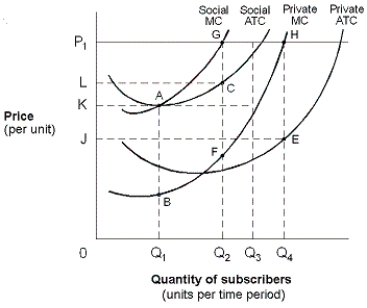
The perfectly competitive profit-maximizing firm in Exhibit 14-1 creates water and air pollution as a consequence of producing its output of pigs. If pollution costs are borne by third parties, the firm will maximize economic profit by choosing to:
A) voluntarily incur costs to reduce its pollution.
B) produce at output rate Q3.
C) produce at output rate Q2.
D) produce at output rate Q4.
The perfectly competitive profit-maximizing firm in Exhibit 14-1 creates water and air pollution as a consequence of producing its output of pigs. If pollution costs are borne by third parties, the firm will maximize economic profit by choosing to:
A) voluntarily incur costs to reduce its pollution.
B) produce at output rate Q3.
C) produce at output rate Q2.
D) produce at output rate Q4.
Question
Question
Question
Question
Question
Question
Question
Question
Question
Question
Question
Question
Question
Question
Question
Question
Question
Question
Question
Question
Question
Question
Question
Question

Unlock Deck
Sign up to unlock the cards in this deck!
Unlock Deck
Unlock Deck
1/106

Play

Full screen (f)
Deck 14: Environmental Economics
1
Suppose a state discovered chemical compounds in their water. The source of these chemicals is the waste discharges of industrial plants in another state. This is an example of a(n):
A) market failure where the market price of the output of these industrial plants does not fully reflect the social cost of producing these goods.
B) external cost imposed by the industrial plants of another state.
C) externality where the marginal social costs of producing these industrial goods differ from the marginal private costs.
D) all of these.
A) market failure where the market price of the output of these industrial plants does not fully reflect the social cost of producing these goods.
B) external cost imposed by the industrial plants of another state.
C) externality where the marginal social costs of producing these industrial goods differ from the marginal private costs.
D) all of these.
D
2
Negative externalities:
A) are found only in large cities.
B) occur whenever individual health is harmed in the production process.
C) impose most of their costs directly on consumers of polluting processes.
D) impose most of their costs on individuals other than consumers of the polluting product.
A) are found only in large cities.
B) occur whenever individual health is harmed in the production process.
C) impose most of their costs directly on consumers of polluting processes.
D) impose most of their costs on individuals other than consumers of the polluting product.
D
3
Negative externalities impose most of their costs:
A) directly on consumers of polluting processes.
B) whenever individual health is harmed in the production process.
C) only in large cities.
D) on individuals other than consumers of the polluting product.
A) directly on consumers of polluting processes.
B) whenever individual health is harmed in the production process.
C) only in large cities.
D) on individuals other than consumers of the polluting product.
D
4
If some firms internalize their external costs by being a cleaner and more "environmentally friendly" producers than other firms that do not, then which of the following offers the best and most complete description of this situation?
A) The environmentally friendly firm will be operating at a higher marginal and average cost than those firms that shift some costs to society in the form of external costs.
B) In a long-run competitive equilibrium in which consumers do not distinguish between environmentally friendly and standard producers, the environmentally producers will receive negative economic profits and be forced to change or exit.
C) Without regulations requiring firms to internalize their external costs, producers can only afford to be environmentally friendly if consumers reward them with a price premium.
D) None of the above is correct.
A) The environmentally friendly firm will be operating at a higher marginal and average cost than those firms that shift some costs to society in the form of external costs.
B) In a long-run competitive equilibrium in which consumers do not distinguish between environmentally friendly and standard producers, the environmentally producers will receive negative economic profits and be forced to change or exit.
C) Without regulations requiring firms to internalize their external costs, producers can only afford to be environmentally friendly if consumers reward them with a price premium.
D) None of the above is correct.
Unlock Deck
Unlock for access to all 106 flashcards in this deck.
Unlock Deck
k this deck
5
To maximize social welfare in the presence of a negative externality, marginal ____ must equal marginal ____.
A) social cost; private cost
B) private cost; social cost
C) social cost; social benefit
D) private cost; social benefit
A) social cost; private cost
B) private cost; social cost
C) social cost; social benefit
D) private cost; social benefit
Unlock Deck
Unlock for access to all 106 flashcards in this deck.
Unlock Deck
k this deck
6
Recently, the State of Tennessee discovered chemical compounds in their drinking water which may cause cancer. Since Tennessee's drinking water comes from the Pigeon River in North Carolina, the source of these chemicals is the waste discharges of industrial paper plants in North Carolina. This is an example of a(n):
A) external cost imposed on the citizens of Tennessee by the industrial plants of North Carolina.
B) market failure where the market price of the output of these industrial plants does not fully reflect the social cost of producing these goods.
C) externality where the marginal social costs of producing these industrial goods differ from the marginal private costs.
D) all of these.
A) external cost imposed on the citizens of Tennessee by the industrial plants of North Carolina.
B) market failure where the market price of the output of these industrial plants does not fully reflect the social cost of producing these goods.
C) externality where the marginal social costs of producing these industrial goods differ from the marginal private costs.
D) all of these.
Unlock Deck
Unlock for access to all 106 flashcards in this deck.
Unlock Deck
k this deck
7
The costs of an economic activity borne by the producers are:
A) always less than social costs.
B) the full resource costs of an economic activity.
C) private costs.
D) all of these.
A) always less than social costs.
B) the full resource costs of an economic activity.
C) private costs.
D) all of these.
Unlock Deck
Unlock for access to all 106 flashcards in this deck.
Unlock Deck
k this deck
8
At the market output and price for a good whose production causes pollution:
A) pollution is eliminated.
B) the marginal social cost of production exceeds the marginal social benefit of production
C) the private cost of production equals the private benefit of production.
D) the marginal social benefit of production equals the marginal social cost of production.
A) pollution is eliminated.
B) the marginal social cost of production exceeds the marginal social benefit of production
C) the private cost of production equals the private benefit of production.
D) the marginal social benefit of production equals the marginal social cost of production.
Unlock Deck
Unlock for access to all 106 flashcards in this deck.
Unlock Deck
k this deck
9
If firms pollute when they produce:
A) marginal social cost equals marginal private cost.
B) marginal private cost exceeds marginal social cost.
C) marginal social cost exceeds marginal private cost.
D) marginal social cost equals marginal external cost.
A) marginal social cost equals marginal private cost.
B) marginal private cost exceeds marginal social cost.
C) marginal social cost exceeds marginal private cost.
D) marginal social cost equals marginal external cost.
Unlock Deck
Unlock for access to all 106 flashcards in this deck.
Unlock Deck
k this deck
10
Which of the following best describes social costs?
A) The external costs borne by other members of society, ignoring the private costs to market participants.
B) The sum of external costs and private costs.
C) External costs minus private costs.
D) Private costs minus external costs.
A) The external costs borne by other members of society, ignoring the private costs to market participants.
B) The sum of external costs and private costs.
C) External costs minus private costs.
D) Private costs minus external costs.
Unlock Deck
Unlock for access to all 106 flashcards in this deck.
Unlock Deck
k this deck
11
The socially efficient level of output is determined where:
A) marginal social cost equals marginal social benefit.
B) marginal private cost equals marginal social benefit.
C) average social cost equals average social benefit.
D) average private cost equals average social benefit.
A) marginal social cost equals marginal social benefit.
B) marginal private cost equals marginal social benefit.
C) average social cost equals average social benefit.
D) average private cost equals average social benefit.
Unlock Deck
Unlock for access to all 106 flashcards in this deck.
Unlock Deck
k this deck
12
Which of the following best describes social benefits?
A) The external benefits to other members of society, ignoring the private benefits to market participants.
B) The sum of external benefits and private benefits.
C) External benefits minus benefits.
D) Private benefits minus external benefits.
A) The external benefits to other members of society, ignoring the private benefits to market participants.
B) The sum of external benefits and private benefits.
C) External benefits minus benefits.
D) Private benefits minus external benefits.
Unlock Deck
Unlock for access to all 106 flashcards in this deck.
Unlock Deck
k this deck
13
At the efficient level of pollution, the:
A) total social costs and total social benefits of reduction are equal.
B) marginal social costs and marginal social benefits are equal.
C) marginal private costs and marginal private benefits are equal.
D) total private costs and total private benefits are equal.
A) total social costs and total social benefits of reduction are equal.
B) marginal social costs and marginal social benefits are equal.
C) marginal private costs and marginal private benefits are equal.
D) total private costs and total private benefits are equal.
Unlock Deck
Unlock for access to all 106 flashcards in this deck.
Unlock Deck
k this deck
14
People are unlikely to choose to pay extra for a low-emissions automobile, because they:
A) do not fully understand the environmental benefits of lower emissions.
B) are better off "free-riding" on others' attempts to reduce emissions.
C) would have to sacrifice fuel efficiency and automotive performance.
D) cannot afford the extra expense of "green" technology.
A) do not fully understand the environmental benefits of lower emissions.
B) are better off "free-riding" on others' attempts to reduce emissions.
C) would have to sacrifice fuel efficiency and automotive performance.
D) cannot afford the extra expense of "green" technology.
Unlock Deck
Unlock for access to all 106 flashcards in this deck.
Unlock Deck
k this deck
15
Private costs are:
A) the full resource costs of an economic activity.
B) always less than social costs.
C) the costs of an economic activity borne by the producer.
D) all of these.
A) the full resource costs of an economic activity.
B) always less than social costs.
C) the costs of an economic activity borne by the producer.
D) all of these.
Unlock Deck
Unlock for access to all 106 flashcards in this deck.
Unlock Deck
k this deck
16
Economists view pollution as an economic problem that arises because:
A) private enterprise always minimizes the amount of pollution produced.
B) profitable firms rarely pollute.
C) as the economy grows, the level of pollution declines.
D) firms that pollute do not pay the full social cost of producing their output.
A) private enterprise always minimizes the amount of pollution produced.
B) profitable firms rarely pollute.
C) as the economy grows, the level of pollution declines.
D) firms that pollute do not pay the full social cost of producing their output.
Unlock Deck
Unlock for access to all 106 flashcards in this deck.
Unlock Deck
k this deck
17
Firms that emit toxins into the air:
A) underproduce because the private cost of production exceeds the social cost.
B) overproduce because the social cost of production exceeds the private cost.
C) produce the same as nonpolluting firms.
D) produce at the socially optimal amount.
A) underproduce because the private cost of production exceeds the social cost.
B) overproduce because the social cost of production exceeds the private cost.
C) produce the same as nonpolluting firms.
D) produce at the socially optimal amount.
Unlock Deck
Unlock for access to all 106 flashcards in this deck.
Unlock Deck
k this deck
18
A profit-maximizing firm will base its supply decisions on its marginal:
A) private cost.
B) social cost.
C) external cost.
D) transactions cost.
A) private cost.
B) social cost.
C) external cost.
D) transactions cost.
Unlock Deck
Unlock for access to all 106 flashcards in this deck.
Unlock Deck
k this deck
19
The optimal level of pollution is:
A) the level at which the marginal social cost of air quality equals the marginal social benefit.
B) the level at which the average social cost of air quality equals the average social benefit.
C) the level at which the total social cost of air quality equals the total social benefit.
D) zero.
A) the level at which the marginal social cost of air quality equals the marginal social benefit.
B) the level at which the average social cost of air quality equals the average social benefit.
C) the level at which the total social cost of air quality equals the total social benefit.
D) zero.
Unlock Deck
Unlock for access to all 106 flashcards in this deck.
Unlock Deck
k this deck
20
When negative externalities like pollution exist, competition leads to:
A) a socially efficient outcome.
B) too few goods being bought and sold.
C) a market equilibrium price that is too high.
D) more production than would be efficient.
A) a socially efficient outcome.
B) too few goods being bought and sold.
C) a market equilibrium price that is too high.
D) more production than would be efficient.
Unlock Deck
Unlock for access to all 106 flashcards in this deck.
Unlock Deck
k this deck
21
Which of the following offers the best economic justification for subsidizing vaccinations for infectious disease on the basis of efficiency?
A) Vaccinations create a positive externality for society because they reduce the chances the scope of epidemics.
B) Vaccinations are a type of pollution that increase the chances and the scope of epidemics.
C) A politician offering subsidized vaccinations may be able to get more votes from lower income people and get elected.
D) None of the answers above are correct.
A) Vaccinations create a positive externality for society because they reduce the chances the scope of epidemics.
B) Vaccinations are a type of pollution that increase the chances and the scope of epidemics.
C) A politician offering subsidized vaccinations may be able to get more votes from lower income people and get elected.
D) None of the answers above are correct.
Unlock Deck
Unlock for access to all 106 flashcards in this deck.
Unlock Deck
k this deck
22
In a perfectly competitive industry, which of the following is true?
A) The competitive price is higher and quantity higher than the socially efficient point.
B) The competitive price is higher and quantity lower than the socially efficient point.
C) Since the industry is perfectly competitive, price and quantity are at the socially efficient levels.
D) The competitive price is lower and quantity higher than the socially efficient point.
A) The competitive price is higher and quantity higher than the socially efficient point.
B) The competitive price is higher and quantity lower than the socially efficient point.
C) Since the industry is perfectly competitive, price and quantity are at the socially efficient levels.
D) The competitive price is lower and quantity higher than the socially efficient point.
Unlock Deck
Unlock for access to all 106 flashcards in this deck.
Unlock Deck
k this deck
23
Which of the following is the environmental approach found in the Clean Air Act of 1990?
A) Marketable pollution permits.
B) Price caps.
C) Command-and-control regulation.
D) EPA marginal social permits.
A) Marketable pollution permits.
B) Price caps.
C) Command-and-control regulation.
D) EPA marginal social permits.
Unlock Deck
Unlock for access to all 106 flashcards in this deck.
Unlock Deck
k this deck
24
Which of the following provides an example of command-and-control regulation?
A) Taxing producers based on the external costs created by their pollution, thus internalizing external costs.
B) Requiring firms to reduce their pollution by 50 percent, thus allowing them to emit 50 percent of their historical emissions, and allowing them to freely buy and sell allowances.
C) Requiring firms to use a particular type of pollution-control technology, such as smokestack scrubbers or catalytic converters.
D) Subsidizing firms that exceed their pollution-control targets.
A) Taxing producers based on the external costs created by their pollution, thus internalizing external costs.
B) Requiring firms to reduce their pollution by 50 percent, thus allowing them to emit 50 percent of their historical emissions, and allowing them to freely buy and sell allowances.
C) Requiring firms to use a particular type of pollution-control technology, such as smokestack scrubbers or catalytic converters.
D) Subsidizing firms that exceed their pollution-control targets.
Unlock Deck
Unlock for access to all 106 flashcards in this deck.
Unlock Deck
k this deck
25
According to most economists, reducing automobile emissions to zero would be:
A) optimal.
B) inefficient.
C) beneficial.
D) impossible.
A) optimal.
B) inefficient.
C) beneficial.
D) impossible.
Unlock Deck
Unlock for access to all 106 flashcards in this deck.
Unlock Deck
k this deck
26
As a general rule, if pollution costs are external, firms will produce:
A) too little of a polluting good.
B) too much of a polluting good.
C) an optimal amount of a polluting good.
D) cannot be determined without additional information.
A) too little of a polluting good.
B) too much of a polluting good.
C) an optimal amount of a polluting good.
D) cannot be determined without additional information.
Unlock Deck
Unlock for access to all 106 flashcards in this deck.
Unlock Deck
k this deck
27
Consider a competitive industry in which a "green" company uses a cleaner but costlier production method than is used by other firms. In the long run, the "green" company will:
A) earn more profit than will the typical firm in the industry.
B) drive its competitors out of business.
C) have economic losses and exit the industry.
D) charge a higher-than-average price for its product.
A) earn more profit than will the typical firm in the industry.
B) drive its competitors out of business.
C) have economic losses and exit the industry.
D) charge a higher-than-average price for its product.
Unlock Deck
Unlock for access to all 106 flashcards in this deck.
Unlock Deck
k this deck
28
The ozone layer:
A) protects us from ultraviolet rays which can cause cancer and blindness.
B) has been damaged as a result of the Montreal Protocol.
C) has been damaged as a result of the ban on CFCs.
D) is another term for the greenhouse effect.
A) protects us from ultraviolet rays which can cause cancer and blindness.
B) has been damaged as a result of the Montreal Protocol.
C) has been damaged as a result of the ban on CFCs.
D) is another term for the greenhouse effect.
Unlock Deck
Unlock for access to all 106 flashcards in this deck.
Unlock Deck
k this deck
29
If government taxes a firm which pollutes this will:
A) increase the demand for the good produced.
B) decrease the supply of the good produced.
C) increase the equilibrium quantity of the good produced in the market.
D) decrease the equilibrium price of the good produced in the market.
E) all of these.
A) increase the demand for the good produced.
B) decrease the supply of the good produced.
C) increase the equilibrium quantity of the good produced in the market.
D) decrease the equilibrium price of the good produced in the market.
E) all of these.
Unlock Deck
Unlock for access to all 106 flashcards in this deck.
Unlock Deck
k this deck
30
The pig farm industry is perfectly competitive. Which of the following is true?
A) Since the industry is perfectly competitive, price and quantity are at the socially efficient levels.
B) The competitive price is higher and quantity lower than the socially efficient point.
C) The competitive price is higher and quantity higher than the socially efficient point.
D) The competitive price is lower and quantity higher than the socially efficient point.
A) Since the industry is perfectly competitive, price and quantity are at the socially efficient levels.
B) The competitive price is higher and quantity lower than the socially efficient point.
C) The competitive price is higher and quantity higher than the socially efficient point.
D) The competitive price is lower and quantity higher than the socially efficient point.
Unlock Deck
Unlock for access to all 106 flashcards in this deck.
Unlock Deck
k this deck
31
Which of the following is not an obstacle to achieving environmental efficiency through markets?
A) Transactions costs.
B) Income effects.
C) Free-rider problems.
D) Private negotiations.
A) Transactions costs.
B) Income effects.
C) Free-rider problems.
D) Private negotiations.
Unlock Deck
Unlock for access to all 106 flashcards in this deck.
Unlock Deck
k this deck
32
Which of the following is true when profit-maximizing firms in a competitive market are allowed to freely emit negative externalities on society?
A) Consumers are paying a market equilibrium price that reflects the full social marginal cost of production.
B) Consumers are paying a market equilibrium price that reflects only the external marginal cost of production.
C) Consumers are paying a market equilibrium price that is less than the socially efficient price, and consuming more than the socially efficient quantity. This means society is implicitly subsidizing producers by allowing them to pollute.
D) None of the above is correct.
A) Consumers are paying a market equilibrium price that reflects the full social marginal cost of production.
B) Consumers are paying a market equilibrium price that reflects only the external marginal cost of production.
C) Consumers are paying a market equilibrium price that is less than the socially efficient price, and consuming more than the socially efficient quantity. This means society is implicitly subsidizing producers by allowing them to pollute.
D) None of the above is correct.
Unlock Deck
Unlock for access to all 106 flashcards in this deck.
Unlock Deck
k this deck
33
From an economic perspective, the socially best amount of pollution control is that amount in which:
A) there is zero pollution.
B) the private plus external marginal costs are equal to the private plus external marginal benefits.
C) the private plus external marginal costs are less than the private plus external marginal benefits.
D) the private marginal costs are equal to the private marginal benefits.
E) the external costs equal the external benefits.
A) there is zero pollution.
B) the private plus external marginal costs are equal to the private plus external marginal benefits.
C) the private plus external marginal costs are less than the private plus external marginal benefits.
D) the private marginal costs are equal to the private marginal benefits.
E) the external costs equal the external benefits.
Unlock Deck
Unlock for access to all 106 flashcards in this deck.
Unlock Deck
k this deck
34
Which of the following is an example of a positive externality?
A) A firm emits pollution into the air, harming members of society.
B) An auto body shop makes a lot of noise, reducing the property values of nearby homes.
C) A coastal dairy farmer's undeveloped land offers unimpeded views of the ocean for a nearby neighborhood.
D) You go to a store and pay $0.65 for a candy bar that you then eat.
A) A firm emits pollution into the air, harming members of society.
B) An auto body shop makes a lot of noise, reducing the property values of nearby homes.
C) A coastal dairy farmer's undeveloped land offers unimpeded views of the ocean for a nearby neighborhood.
D) You go to a store and pay $0.65 for a candy bar that you then eat.
Unlock Deck
Unlock for access to all 106 flashcards in this deck.
Unlock Deck
k this deck
35
The environmental approach found in the Clean Air Act of 1990 is:
A) marketable pollution permits.
B) price caps.
C) command-and-control regulation.
D) a thousand points of light.
A) marketable pollution permits.
B) price caps.
C) command-and-control regulation.
D) a thousand points of light.
Unlock Deck
Unlock for access to all 106 flashcards in this deck.
Unlock Deck
k this deck
36
From an economic viewpoint, the optimal amount of pollution:
A) is zero since all pollution imposes costs on society.
B) is that amount which firms create when they maximize economic profits by setting their marginal private costs equal to market price.
C) is that amount where the marginal social costs of producing a good precisely equals the price of the good.
D) b and c are correct.
A) is zero since all pollution imposes costs on society.
B) is that amount which firms create when they maximize economic profits by setting their marginal private costs equal to market price.
C) is that amount where the marginal social costs of producing a good precisely equals the price of the good.
D) b and c are correct.
Unlock Deck
Unlock for access to all 106 flashcards in this deck.
Unlock Deck
k this deck
37
If a good is produced up to the point where marginal social benefit equals marginal social cost, then:
A) social welfare is maximized.
B) the good is overproduced and the market is inefficient.
C) firms are earning zero profits.
D) all externalities have been eliminated.
A) social welfare is maximized.
B) the good is overproduced and the market is inefficient.
C) firms are earning zero profits.
D) all externalities have been eliminated.
Unlock Deck
Unlock for access to all 106 flashcards in this deck.
Unlock Deck
k this deck
38
All of the following are examples of negative externalities except one. Which is the exception?
A) Water pollution.
B) Your roommate going on a diet.
C) Second-hand smoke.
D) Loud conversation in the workplace.
A) Water pollution.
B) Your roommate going on a diet.
C) Second-hand smoke.
D) Loud conversation in the workplace.
Unlock Deck
Unlock for access to all 106 flashcards in this deck.
Unlock Deck
k this deck
39
From society's point of view, the amount of air and water pollution that currently exists is excessive. Which of the following statements are explanations of this excessive pollution?
A) Firms that cause air and water pollution are not paying the full social costs of producing their output.
B) Consumers, who purchase goods from firms that pollute, are not paying a price for these goods which totally reflect the social costs of producing the goods.
C) Private property rights for clear air and clean water are not currently well defined by the judicial system; hence private individuals cannot charge polluters for the external costs these polluters impose on private individuals.
D) All of these.
A) Firms that cause air and water pollution are not paying the full social costs of producing their output.
B) Consumers, who purchase goods from firms that pollute, are not paying a price for these goods which totally reflect the social costs of producing the goods.
C) Private property rights for clear air and clean water are not currently well defined by the judicial system; hence private individuals cannot charge polluters for the external costs these polluters impose on private individuals.
D) All of these.
Unlock Deck
Unlock for access to all 106 flashcards in this deck.
Unlock Deck
k this deck
40
When consumption of a good or service produces benefits or costs that are not reflected in the market price for the good, this is known as a(n):
A) externality.
B) common pool problem.
C) nonexcludable resource.
D) public good.
A) externality.
B) common pool problem.
C) nonexcludable resource.
D) public good.
Unlock Deck
Unlock for access to all 106 flashcards in this deck.
Unlock Deck
k this deck
41
A pollution tax is:
A) a positive externality used to offset a negative one
B) a price per unit of discharge of pollution
C) a tax on pollution control equipment
D) itself a form of negative externality
A) a positive externality used to offset a negative one
B) a price per unit of discharge of pollution
C) a tax on pollution control equipment
D) itself a form of negative externality
Unlock Deck
Unlock for access to all 106 flashcards in this deck.
Unlock Deck
k this deck
42
Government regulations that set an environmental goal and dictate how the goal will be achieved are called:
A) effluent-offset regulations.
B) incentive-based regulations.
C) Coasian regulations.
D) command-and-control-regulations.
A) effluent-offset regulations.
B) incentive-based regulations.
C) Coasian regulations.
D) command-and-control-regulations.
Unlock Deck
Unlock for access to all 106 flashcards in this deck.
Unlock Deck
k this deck
43
Use Exhibit 14-1 to answer the following question. To maximize social welfare, the firm should produce at the output rate:
A) zero.
B) Q2.
C) Q3.
D) Q4.
A) zero.
B) Q2.
C) Q3.
D) Q4.
Unlock Deck
Unlock for access to all 106 flashcards in this deck.
Unlock Deck
k this deck
44
Which of the following statements is true?
A) Competitive markets result in the socially efficient price and quantity when externalities exist.
B) Command-and-control regulations set an environmental goal and dictate how the goal will be achieved.
C) Economists prefer command-and-control regulations to incentive-based pollution programs.
D) An effluent tax is a tax imposed on rich people.
A) Competitive markets result in the socially efficient price and quantity when externalities exist.
B) Command-and-control regulations set an environmental goal and dictate how the goal will be achieved.
C) Economists prefer command-and-control regulations to incentive-based pollution programs.
D) An effluent tax is a tax imposed on rich people.
Unlock Deck
Unlock for access to all 106 flashcards in this deck.
Unlock Deck
k this deck
45
Incentive-based regulations:
A) set an environmental goal, but are flexible on how to achieve the goal.
B) obtain more efficiency gains is obtainable from CAC regulations.
C) effluent taxes are an example of incentive-based regulations.
D) all of the above are true.
E) none of the above are true.
A) set an environmental goal, but are flexible on how to achieve the goal.
B) obtain more efficiency gains is obtainable from CAC regulations.
C) effluent taxes are an example of incentive-based regulations.
D) all of the above are true.
E) none of the above are true.
Unlock Deck
Unlock for access to all 106 flashcards in this deck.
Unlock Deck
k this deck
46
In order to achieve social efficiency, the size of an effluent tax should be based on:
A) the external cost created by the pollutant.
B) people's willingness to pay for a cleaner environment.
C) the expense of installing new "green" equipment.
D) the number of free riders in the industry.
A) the external cost created by the pollutant.
B) people's willingness to pay for a cleaner environment.
C) the expense of installing new "green" equipment.
D) the number of free riders in the industry.
Unlock Deck
Unlock for access to all 106 flashcards in this deck.
Unlock Deck
k this deck
47
Markets for pollution rights:
A) have never been tried in the United States.
B) assign property rights to those who value them least.
C) allow the government to assign property rights.
D) enable those who value them most to pollute.
A) have never been tried in the United States.
B) assign property rights to those who value them least.
C) allow the government to assign property rights.
D) enable those who value them most to pollute.
Unlock Deck
Unlock for access to all 106 flashcards in this deck.
Unlock Deck
k this deck
48
Which of the following is the best example of a command-and-control regulation?
A) Effluent taxes on pollutants.
B) Emissions trading.
C) Requiring automobiles to have catalytic converters.
D) Offset programs.
A) Effluent taxes on pollutants.
B) Emissions trading.
C) Requiring automobiles to have catalytic converters.
D) Offset programs.
Unlock Deck
Unlock for access to all 106 flashcards in this deck.
Unlock Deck
k this deck
49
An example of the command-and-control approach to environmental policy is:
A) allowing individuals to sue freon producers if CFC emissions exceed a government-set standard.
B) allowing coal producers to buy and sell permits to allow CFC emissions.
C) placing a tax on freon to reduce its use and the corresponding CFC emissions (which contribute to the ozone hole).
D) none of these.
A) allowing individuals to sue freon producers if CFC emissions exceed a government-set standard.
B) allowing coal producers to buy and sell permits to allow CFC emissions.
C) placing a tax on freon to reduce its use and the corresponding CFC emissions (which contribute to the ozone hole).
D) none of these.
Unlock Deck
Unlock for access to all 106 flashcards in this deck.
Unlock Deck
k this deck
50
A government passes a new law allowing only 1,000 tons of pollution per day to be generated and simultaneously sells 1,000 transferable rights to emit one ton each of pollution per day. Which of the following is true?
A) The pollution will be created by those least willing and able to pay the damages.
B) The pollution will be created by those most willing and able to pay for the right to pollute.
C) The funds collected by the government will be enough to compensate any individuals harmed by the pollution.
D) Pollution will increase from zero to 1,000 units per day.
A) The pollution will be created by those least willing and able to pay the damages.
B) The pollution will be created by those most willing and able to pay for the right to pollute.
C) The funds collected by the government will be enough to compensate any individuals harmed by the pollution.
D) Pollution will increase from zero to 1,000 units per day.
Unlock Deck
Unlock for access to all 106 flashcards in this deck.
Unlock Deck
k this deck
51
Incentive-based regulatory approaches:
A) are viewed favorably by most economists as a way to control pollution.
B) provide less flexibility than the command-and-control approach.
C) tend to hurt wealthier people more than poor people.
D) require that the government specify certain types of pollution control technology that firms must adopt.
A) are viewed favorably by most economists as a way to control pollution.
B) provide less flexibility than the command-and-control approach.
C) tend to hurt wealthier people more than poor people.
D) require that the government specify certain types of pollution control technology that firms must adopt.
Unlock Deck
Unlock for access to all 106 flashcards in this deck.
Unlock Deck
k this deck
52
Which of the following is not a reason why marketable permits may fail to achieve efficiency?
A) Some firms can reduce emissions at a lower cost than other firms.
B) A market with a small number of buyers and sellers.
C) Imperfect information exists on the value of a permit.
D) There are concerns about the value of permits in the future.
A) Some firms can reduce emissions at a lower cost than other firms.
B) A market with a small number of buyers and sellers.
C) Imperfect information exists on the value of a permit.
D) There are concerns about the value of permits in the future.
Unlock Deck
Unlock for access to all 106 flashcards in this deck.
Unlock Deck
k this deck
53
Solar vehicles that operate on photovoltaic cells:
A) are economically efficient today as compared to gasoline vehicles.
B) are not economically efficient because they create greater negative externalities than gasoline vehicles.
C) are not economically efficient even though they create fewer negative externalities than gasoline vehicles.
D) should be subsidized by government so that they cost less than gasoline automobiles.
A) are economically efficient today as compared to gasoline vehicles.
B) are not economically efficient because they create greater negative externalities than gasoline vehicles.
C) are not economically efficient even though they create fewer negative externalities than gasoline vehicles.
D) should be subsidized by government so that they cost less than gasoline automobiles.
Unlock Deck
Unlock for access to all 106 flashcards in this deck.
Unlock Deck
k this deck
54
Command-and-control regulation, as compared to incentive-based regulation, is:
A) efficient in the short run and in the long run.
B) efficient in the short run, but not in the long run.
C) inefficient in the short run, but efficient in the long run.
D) inefficient in the short run and long run.
A) efficient in the short run and in the long run.
B) efficient in the short run, but not in the long run.
C) inefficient in the short run, but efficient in the long run.
D) inefficient in the short run and long run.
Unlock Deck
Unlock for access to all 106 flashcards in this deck.
Unlock Deck
k this deck
55
In order to increase society's total welfare (social efficiency), a production process that produces a negative externality should be:
A) taxed.
B) provided by the government.
C) ignored.
D) subsidized.
A) taxed.
B) provided by the government.
C) ignored.
D) subsidized.
Unlock Deck
Unlock for access to all 106 flashcards in this deck.
Unlock Deck
k this deck
56
Exhibit 14-1 Private and social cost
The perfectly competitive profit-maximizing firm in Exhibit 14-1 creates water and air pollution as a consequence of producing its output of pigs. If pollution costs are borne by third parties, the firm will maximize economic profit by choosing to:
A) voluntarily incur costs to reduce its pollution.
B) produce at output rate Q3.
C) produce at output rate Q2.
D) produce at output rate Q4.
The perfectly competitive profit-maximizing firm in Exhibit 14-1 creates water and air pollution as a consequence of producing its output of pigs. If pollution costs are borne by third parties, the firm will maximize economic profit by choosing to:
A) voluntarily incur costs to reduce its pollution.
B) produce at output rate Q3.
C) produce at output rate Q2.
D) produce at output rate Q4.
Unlock Deck
Unlock for access to all 106 flashcards in this deck.
Unlock Deck
k this deck
57
An example of the command-and-control approach to environmental policy is:
A) placing a tax on freon to reduce its use and the corresponding CFC emissions (which contribute to the ozone hole).
B) requiring car producers to install new air conditioners that do not use freon.
C) allowing coal producers to buy and sell permits to allow CFC emissions.
D) allowing individuals to sue freon producers if CFC emissions exceed a government-set standard.
A) placing a tax on freon to reduce its use and the corresponding CFC emissions (which contribute to the ozone hole).
B) requiring car producers to install new air conditioners that do not use freon.
C) allowing coal producers to buy and sell permits to allow CFC emissions.
D) allowing individuals to sue freon producers if CFC emissions exceed a government-set standard.
Unlock Deck
Unlock for access to all 106 flashcards in this deck.
Unlock Deck
k this deck
58
When using the traditional command-and-control approach to environmental regulation, the government attempts to:
A) set a minimum requirement and then allows the firm to determine the most efficient method for achieving this requirement.
B) determine the most efficient method for different industries.
C) make allowances for differences across industries and between firms.
D) set standards that are applicable to all situations and does not recognize unique circumstances.
A) set a minimum requirement and then allows the firm to determine the most efficient method for achieving this requirement.
B) determine the most efficient method for different industries.
C) make allowances for differences across industries and between firms.
D) set standards that are applicable to all situations and does not recognize unique circumstances.
Unlock Deck
Unlock for access to all 106 flashcards in this deck.
Unlock Deck
k this deck
59
Command-and-control legislation, as compared to incentive-based regulation:
A) encourages the use of comparative advantage in the short run, and the development of new technology in the long run.
B) encourages the use of comparative advantage in the short run, but discourages the development of new technology in the long run.
C) discourages the use of comparative advantage in the short run, but encourages the development of new technology in the long run.
D) discourages the use of comparative advantage in the short run, and discourages the development of new technology in the long run.
A) encourages the use of comparative advantage in the short run, and the development of new technology in the long run.
B) encourages the use of comparative advantage in the short run, but discourages the development of new technology in the long run.
C) discourages the use of comparative advantage in the short run, but encourages the development of new technology in the long run.
D) discourages the use of comparative advantage in the short run, and discourages the development of new technology in the long run.
Unlock Deck
Unlock for access to all 106 flashcards in this deck.
Unlock Deck
k this deck
60
A government policy that charges coal producers a fee per ton of coal produced (an "effluent charge"), where the fee is determined by the amount of pollutants discharged into the air or water, will lead to a(n):
A) decrease in the market equilibrium quantity of coal produced.
B) decrease in the market equilibrium price of coal.
C) increase in the market equilibrium price of coal.
D) a and c are correct.
A) decrease in the market equilibrium quantity of coal produced.
B) decrease in the market equilibrium price of coal.
C) increase in the market equilibrium price of coal.
D) a and c are correct.
Unlock Deck
Unlock for access to all 106 flashcards in this deck.
Unlock Deck
k this deck
61
Exhibit 14-2 Cigarette smoking data
Jack enjoys smoking, while Jill fears that second-hand smoke will shorten her life. The following table shows the value Jack places on each cigarette he smokes, and the value Jill places on her shortened life. Use the table to answer the following question(s):
-As shown in Exhibit 14-2, if non-smokers have a right to a smoke-free environment, and smokers have the right to negotiate, how many days of life will Jill lose?
A) 0.
B) 1.
C) 3.
D) 5.
Jack enjoys smoking, while Jill fears that second-hand smoke will shorten her life. The following table shows the value Jack places on each cigarette he smokes, and the value Jill places on her shortened life. Use the table to answer the following question(s):
-As shown in Exhibit 14-2, if non-smokers have a right to a smoke-free environment, and smokers have the right to negotiate, how many days of life will Jill lose?
A) 0.
B) 1.
C) 3.
D) 5.
Unlock Deck
Unlock for access to all 106 flashcards in this deck.
Unlock Deck
k this deck
62
According the Coase Theorem, the private sector can achieve social efficiency if the government:
A) establishes and enforces property rights.
B) imposes taxes to serve as proxies for external costs.
C) set rigorous environmental standards.
D) encourages competition with antitrust laws.
A) establishes and enforces property rights.
B) imposes taxes to serve as proxies for external costs.
C) set rigorous environmental standards.
D) encourages competition with antitrust laws.
Unlock Deck
Unlock for access to all 106 flashcards in this deck.
Unlock Deck
k this deck
63
Exhibit 14-3 Impact of flights on house value
Each time Orville flies over Wilber's house, the noise reduces the value of Wilbur's house. The table shows the profits to Orville of each flight, and the value of Wilbur's house.
-As shown in Exhibit 14-3, if Wilbur has the property right to have no planes flying over his house, but Orville is allowed to negotiate with Wilber, what will be the number of flights?
A) 2.
B) 3.
C) 4.
D) 5.
Each time Orville flies over Wilber's house, the noise reduces the value of Wilbur's house. The table shows the profits to Orville of each flight, and the value of Wilbur's house.
-As shown in Exhibit 14-3, if Wilbur has the property right to have no planes flying over his house, but Orville is allowed to negotiate with Wilber, what will be the number of flights?
A) 2.
B) 3.
C) 4.
D) 5.
Unlock Deck
Unlock for access to all 106 flashcards in this deck.
Unlock Deck
k this deck
64
Exhibit 14-3 Impact of flights on house value
Each time Orville flies over Wilber's house, the noise reduces the value of Wilbur's house. The table shows the profits to Orville of each flight, and the value of Wilbur's house.
-As shown in Exhibit 14-3, if Orville has the property right to fly over Wilbur's house, but Wilbur is allowed to negotiate with Orville on the number of flights, what will be the number of flights?
A) 2.
B) 3.
C) 4.
D) 5.
Each time Orville flies over Wilber's house, the noise reduces the value of Wilbur's house. The table shows the profits to Orville of each flight, and the value of Wilbur's house.
-As shown in Exhibit 14-3, if Orville has the property right to fly over Wilbur's house, but Wilbur is allowed to negotiate with Orville on the number of flights, what will be the number of flights?
A) 2.
B) 3.
C) 4.
D) 5.
Unlock Deck
Unlock for access to all 106 flashcards in this deck.
Unlock Deck
k this deck
65
According to Garrett Hardin's view of The Tragedy of the Commons:
A) Externalities will be internalized by the market.
B) Individuals will use the commons up to the point where marginal benefits equal marginal social costs.
C) Individuals will create institutions to prevent the collapse of the commons.
D) Individual will use the commons beyond the socially efficient point.
A) Externalities will be internalized by the market.
B) Individuals will use the commons up to the point where marginal benefits equal marginal social costs.
C) Individuals will create institutions to prevent the collapse of the commons.
D) Individual will use the commons beyond the socially efficient point.
Unlock Deck
Unlock for access to all 106 flashcards in this deck.
Unlock Deck
k this deck
66
The Coase theorem says that, if the appropriate property right is assigned to ____, an efficient solution to an externality problem will be achieved.
A) the party causing the externality
B) the victim of the externality
C) the party that can avoid the externality at the higher cost
D) either one of the parties involved
A) the party causing the externality
B) the victim of the externality
C) the party that can avoid the externality at the higher cost
D) either one of the parties involved
Unlock Deck
Unlock for access to all 106 flashcards in this deck.
Unlock Deck
k this deck
67
Transactions costs are defined to be the costs of:
A) negotiating and enforcing contracts.
B) complying with environmental regulations.
C) eliminating market and government failures.
D) finding and obtaining offsets.
A) negotiating and enforcing contracts.
B) complying with environmental regulations.
C) eliminating market and government failures.
D) finding and obtaining offsets.
Unlock Deck
Unlock for access to all 106 flashcards in this deck.
Unlock Deck
k this deck
68
Which of the following statements is true?
A) Emissions-trading is trading that allows firms to buy and sell the right to pollute.
B) The Coase Theorem is the proposition that private markets can rarely ever achieve social efficiency.
C) The free-rider problem refers to those who ride on public transit systems without paying.
D) Government failure has never occurred in the United States.
A) Emissions-trading is trading that allows firms to buy and sell the right to pollute.
B) The Coase Theorem is the proposition that private markets can rarely ever achieve social efficiency.
C) The free-rider problem refers to those who ride on public transit systems without paying.
D) Government failure has never occurred in the United States.
Unlock Deck
Unlock for access to all 106 flashcards in this deck.
Unlock Deck
k this deck
69
The hot spot problem is:
A) the U.S. obtains the majority of its oil supplies from politically unfriendly countries.
B) some air pollutants such as sulfur dioxide have a greater effect nearby than further away.
C) some air pollutants such as carbon dioxide have an equal effect nearby and further away.
D) nuclear plants heat up nearby water, causing a decline in the native fish population.
A) the U.S. obtains the majority of its oil supplies from politically unfriendly countries.
B) some air pollutants such as sulfur dioxide have a greater effect nearby than further away.
C) some air pollutants such as carbon dioxide have an equal effect nearby and further away.
D) nuclear plants heat up nearby water, causing a decline in the native fish population.
Unlock Deck
Unlock for access to all 106 flashcards in this deck.
Unlock Deck
k this deck
70
Exhibit 14-2 Cigarette smoking data
Jack enjoys smoking, while Jill fears that second-hand smoke will shorten her life. The following table shows the value Jack places on each cigarette he smokes, and the value Jill places on her shortened life. Use the table to answer the following question(s):
-As shown in Exhibit 14-2, what is the socially efficient number of cigarettes?
A) 0.
B) 1.
C) 3.
D) 5.
Jack enjoys smoking, while Jill fears that second-hand smoke will shorten her life. The following table shows the value Jack places on each cigarette he smokes, and the value Jill places on her shortened life. Use the table to answer the following question(s):
-As shown in Exhibit 14-2, what is the socially efficient number of cigarettes?
A) 0.
B) 1.
C) 3.
D) 5.
Unlock Deck
Unlock for access to all 106 flashcards in this deck.
Unlock Deck
k this deck
71
The social marginal cost curve is higher than the private marginal cost curve.
Unlock Deck
Unlock for access to all 106 flashcards in this deck.
Unlock Deck
k this deck
72
Competitive firms consider private costs, but disregard external costs, when making their economic decisions.
Unlock Deck
Unlock for access to all 106 flashcards in this deck.
Unlock Deck
k this deck
73
According to Elinor Ostrom's view of The Tragedy of the Commons:
A) The only way to prevent the collapse of the commons is government intervention.
B) The only way to prevent the collapse of the commons is to privatize the commons so that it is owned by a single individual.
C) Individuals will create institutions to prevent the collapse of the commons.
D) Individuals will use the commons beyond the socially efficient point.
A) The only way to prevent the collapse of the commons is government intervention.
B) The only way to prevent the collapse of the commons is to privatize the commons so that it is owned by a single individual.
C) Individuals will create institutions to prevent the collapse of the commons.
D) Individuals will use the commons beyond the socially efficient point.
Unlock Deck
Unlock for access to all 106 flashcards in this deck.
Unlock Deck
k this deck
74
Exhibit 14-2 Cigarette smoking data
Jack enjoys smoking, while Jill fears that second-hand smoke will shorten her life. The following table shows the value Jack places on each cigarette he smokes, and the value Jill places on her shortened life. Use the table to answer the following question(s):
-As shown in Exhibit 14-2, if smokers have the right to smoke as many cigarettes as they wish, and non-smokers have the right to negotiate, how many cigarettes will Jack smoke?
A) 1.
B) 3.
C) 5.
D) more than 5.
Jack enjoys smoking, while Jill fears that second-hand smoke will shorten her life. The following table shows the value Jack places on each cigarette he smokes, and the value Jill places on her shortened life. Use the table to answer the following question(s):
-As shown in Exhibit 14-2, if smokers have the right to smoke as many cigarettes as they wish, and non-smokers have the right to negotiate, how many cigarettes will Jack smoke?
A) 1.
B) 3.
C) 5.
D) more than 5.
Unlock Deck
Unlock for access to all 106 flashcards in this deck.
Unlock Deck
k this deck
75
Exhibit 14-3 Impact of flights on house value
Each time Orville flies over Wilber's house, the noise reduces the value of Wilbur's house. The table shows the profits to Orville of each flight, and the value of Wilbur's house.
-As shown in Exhibit 14-3, at the socially efficient number of flights, what will be the market value of Orville's house?
A) $100,000.
B) $95,000.
C) $90,000.
D) $85,000.
Each time Orville flies over Wilber's house, the noise reduces the value of Wilbur's house. The table shows the profits to Orville of each flight, and the value of Wilbur's house.
-As shown in Exhibit 14-3, at the socially efficient number of flights, what will be the market value of Orville's house?
A) $100,000.
B) $95,000.
C) $90,000.
D) $85,000.
Unlock Deck
Unlock for access to all 106 flashcards in this deck.
Unlock Deck
k this deck
76
Ronald Coase's analysis of externalities emphasizes the importance of:
A) command-and-control regulations.
B) effluent taxes.
C) property rights.
D) international sovereignty.
A) command-and-control regulations.
B) effluent taxes.
C) property rights.
D) international sovereignty.
Unlock Deck
Unlock for access to all 106 flashcards in this deck.
Unlock Deck
k this deck
77
When externalities exist, economic efficiency is achieved when marginal private benefit equals marginal private cost.
Unlock Deck
Unlock for access to all 106 flashcards in this deck.
Unlock Deck
k this deck
78
Tennessee emits sulfur dioxide that flows into North Carolina. In meeting sulfur emissions regulations, the Tennessee Valley Authority (TVA), which produces electricity, buys sulfur emission permits from Wyoming. The resulting hot spot problem is:
A) The citizens of Wyoming will experience higher sulfur emissions as a result of the emissions trading program.
B) The citizens of Wyoming will experience lower sulfur emissions as a result of the emissions trading program.
C) The citizens of Tennessee will pay more to reduce sulfur emissions than if the government used a command-and-control approach.
D) The citizens of North Carolina will suffer higher emissions as a result of the emissions trading program.
A) The citizens of Wyoming will experience higher sulfur emissions as a result of the emissions trading program.
B) The citizens of Wyoming will experience lower sulfur emissions as a result of the emissions trading program.
C) The citizens of Tennessee will pay more to reduce sulfur emissions than if the government used a command-and-control approach.
D) The citizens of North Carolina will suffer higher emissions as a result of the emissions trading program.
Unlock Deck
Unlock for access to all 106 flashcards in this deck.
Unlock Deck
k this deck
79
Exhibit 14-2 Cigarette smoking data
Jack enjoys smoking, while Jill fears that second-hand smoke will shorten her life. The following table shows the value Jack places on each cigarette he smokes, and the value Jill places on her shortened life. Use the table to answer the following question(s):
-Factors that prevent the Coase Theorem from working include all of the following, except:
A) private property rights.
B) transaction costs.
C) income effects.
D) more than two individuals affected.
Jack enjoys smoking, while Jill fears that second-hand smoke will shorten her life. The following table shows the value Jack places on each cigarette he smokes, and the value Jill places on her shortened life. Use the table to answer the following question(s):
-Factors that prevent the Coase Theorem from working include all of the following, except:
A) private property rights.
B) transaction costs.
C) income effects.
D) more than two individuals affected.
Unlock Deck
Unlock for access to all 106 flashcards in this deck.
Unlock Deck
k this deck
80
Suppose a firm wants to build a new factory that would add pollution to an already polluted area. Under an offset program, the firm must:
A) install scrubbers and other government-mandated equipment.
B) purchase pollution permits from the government.
C) reduce or eliminate an old pollution source in the area.
D) pay a tax which depends on the amount of pollution created.
A) install scrubbers and other government-mandated equipment.
B) purchase pollution permits from the government.
C) reduce or eliminate an old pollution source in the area.
D) pay a tax which depends on the amount of pollution created.
Unlock Deck
Unlock for access to all 106 flashcards in this deck.
Unlock Deck
k this deck
Unlock Deck
Unlock for access to all 106 flashcards in this deck.






