







 Chat with AI

Deck 17: Equilibrium: the Extent of Chemical Reactions
Full screen (f)

Question

Question
Question
Question
Question
Question
Question
Question
Question
Question
Question
Question
Question
Question
Question
Question
Question
Question
Question
Question
Question
Write the mass-action expression, Qc, for the following chemical reaction. 3ClO2−(aq) ⇄ 2ClO3−(aq) + Cl−(aq)
A)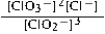
B)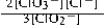
C)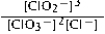
D)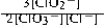
E)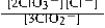
A)
B)
C)
D)
E)
Question
Question
Write the mass-action expression, Qc, for the following chemical reaction equation. 2C6H6(g) + 15O2(g) ⇄ 12CO2(g) + 6H2O(g)
A)
B)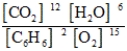
C)
D)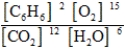
E)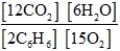
A)
B)
C)
D)
E)
Question
Question
Question
What is the mass-action expression, Qc, for the following chemical reaction? 4H3O+(aq) + 2Cl−(aq) + MnO2(s) ⇄ Mn2+(aq) + 6H2O(l) + Cl2(g)
A)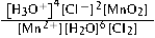
B)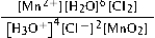
C)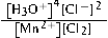
D)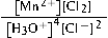
E)None of these choices are correct.
A)
B)
C)
D)
E)None of these choices are correct.
Question
Question
Question
Question
What is the mass-action expression, Qc, for the following chemical reaction? PbO(s) + CO(g) ⇄ Pb(l) + CO2(g)
A)
B)
C)
D)
E)None of these choices are correct.
A)
B)
C)
D)
E)None of these choices are correct.
Question
Write the mass-action expression, Qc, for the following chemical reaction. MgO(s) + SO2(g) + ½O2(g) ⇄ MgSO4(s)
A)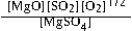
B)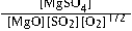
C)
D)
E)None of these choices are correct.
A)
B)
C)
D)
E)None of these choices are correct.
Question
Question
Write the mass-action expression, Qc, for the following chemical reaction. 2Cu2+(aq) + 4I−(aq) ⇄ 2CuI(s) + I2(aq)
A)
B)
C)
D)
E)
A)
B)
C)
D)
E)
Question
Write the mass-action expression, Qc, for the following chemical reaction. Fe3+(aq) + 3OH−(aq) ⇄ Fe(OH)3(s)
A)
B)
C)
D)
E)
A)
B)
C)
D)
E)
Question
What is the mass-action expression, Qp, for the following reaction? SbF5(g) + 4Cl2(g) ⇄ SbCl3(g) + 5ClF(g)
A)
B)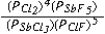
C)
D)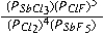
E)None of these choices are correct.
A)
B)
C)
D)
E)None of these choices are correct.
Question
What is the mass-action expression, Qc, for the following chemical reaction? Cu2+(aq) + 4NH3(aq) ⇄ Cu(NH3)42+(aq)
A)
B)
C)
D)
E)None of these choices are correct.
A)
B)
C)
D)
E)None of these choices are correct.
Question
Question
Question
Write the mass-action expression, Qc, for the following chemical reaction. Zn(s) + 2Ag+(aq) ⇄ Zn2+(aq) + 2Ag(s)
A)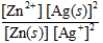
B)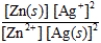
C)
D)
E)
A)
B)
C)
D)
E)
Question
Write the mass-action expression, Qc, for the following chemical reaction. NO(g) + ½Br2(g) ⇄ NOBr(g)
A)
B)
C)
D)
E)
A)
B)
C)
D)
E)
Question
Question
Question
Question
Question
Question
Question
Question
Nitric oxide and bromine were allowed to react in a sealed container. When equilibrium was reached PNO = 0.526 atm,  = 1.59 atm, and PNOBr = 7.68 atm. Calculate Kp for the reaction.
2NO(g) + Br2(g) ⇄ 2NOBr(g)
A)7.45 × 10 −3
B)0.109
C)9.18
D)91.8
E)134
= 1.59 atm, and PNOBr = 7.68 atm. Calculate Kp for the reaction.2NO(g) + Br2(g) ⇄ 2NOBr(g)
A)7.45 × 10 −3
B)0.109
C)9.18
D)91.8
E)134
Question
Question
Question
Question
Write the mass-action expression, Qc, for the following chemical reaction. Sn2+(aq) + ½O2(g) + 3H2O(l) ⇄ SnO2(s) + 2H3O+(aq)
A)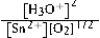
B)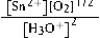
C)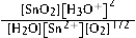
D)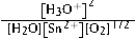
E)None of these choices are correct.
A)
B)
C)
D)
E)None of these choices are correct.
Question
Question
Question
Question
Question
Question
Question
Question
Question
Question
Question
Question
Question
Question
Question
Question
Question
Question
Question
Question
Question
Question
Question
Question
Question
Question
Question
Question

Unlock Deck
Sign up to unlock the cards in this deck!
Unlock Deck
Unlock Deck
1/98

Play

Full screen (f)
Deck 17: Equilibrium: the Extent of Chemical Reactions
1
There is a direct correlation between the speed of a reaction and its equilibrium constant.
False
2
Consider the equilibrium reaction shown below. B2(g) ⇄ 2B(g)
If the rate constants are: kfwd = 7.00 × 10⁻⁵s−1 and krev = 2.00 × 10⁻⁵ L mol−1 s−1, what is the value of Kc under these conditions?
A)1.75 × 10 5
B)3.50
C)0.286
D)5.71 × 10 −6
E)1.40 × 10 −10
If the rate constants are: kfwd = 7.00 × 10⁻⁵s−1 and krev = 2.00 × 10⁻⁵ L mol−1 s−1, what is the value of Kc under these conditions?
A)1.75 × 10 5
B)3.50
C)0.286
D)5.71 × 10 −6
E)1.40 × 10 −10
3.50
3
If all of the coefficients in the balanced equation for an equilibrium reaction are doubled, then the value of the equilibrium constant, Kc, will also be doubled.
False
4
Changing the amount of a solid reactant or product in an equilibrium reaction will not affect the amounts of the other reactants and products present at equilibrium.
Unlock Deck
Unlock for access to all 98 flashcards in this deck.
Unlock Deck
k this deck
5
Increasing the initial amount of the limiting reactant in a reaction will increase the value of the equilibrium constant, Kc.
Unlock Deck
Unlock for access to all 98 flashcards in this deck.
Unlock Deck
k this deck
6
For a gas-phase equilibrium, a change in the pressure of any single reactant or product will affect the amounts of other substances involved in the equilibrium.
Unlock Deck
Unlock for access to all 98 flashcards in this deck.
Unlock Deck
k this deck
7
Although a system may be at equilibrium, the rate constants of the forward and reverse reactions will in general be different.
Unlock Deck
Unlock for access to all 98 flashcards in this deck.
Unlock Deck
k this deck
8
For some gas-phase reactions, Kp = Kc.
Unlock Deck
Unlock for access to all 98 flashcards in this deck.
Unlock Deck
k this deck
9
In a chemical reaction, if the starting concentrations of reactants are increased, then the equilibrium constant Kc will also increase.
Unlock Deck
Unlock for access to all 98 flashcards in this deck.
Unlock Deck
k this deck
10
For a solution equilibrium, a change in concentration of a reactant or product does not change Kc.
Unlock Deck
Unlock for access to all 98 flashcards in this deck.
Unlock Deck
k this deck
11
If Q > K, more products need to be formed as the reaction proceeds to equilibrium.
Unlock Deck
Unlock for access to all 98 flashcards in this deck.
Unlock Deck
k this deck
12
A good catalyst for a reaction will speed up the forward reaction and slow down the reverse reaction.
Unlock Deck
Unlock for access to all 98 flashcards in this deck.
Unlock Deck
k this deck
13
When a reaction system reaches equilibrium, the forward and reverse reactions stop.
Unlock Deck
Unlock for access to all 98 flashcards in this deck.
Unlock Deck
k this deck
14
For a gas-phase equilibrium, a change in the pressure of any single reactant or product will change Kp.
Unlock Deck
Unlock for access to all 98 flashcards in this deck.
Unlock Deck
k this deck
15
Chemical reactions generally reach equilibrium because one of the reactants is used up.
Unlock Deck
Unlock for access to all 98 flashcards in this deck.
Unlock Deck
k this deck
16
If all the reactants and products in an equilibrium reaction are in the gas phase, then Kp = Kc.
Unlock Deck
Unlock for access to all 98 flashcards in this deck.
Unlock Deck
k this deck
17
Once a reaction system reaches equilibrium, the concentrations of reactions and products no longer change.
Unlock Deck
Unlock for access to all 98 flashcards in this deck.
Unlock Deck
k this deck
18
A chemical reaction will reach equilibrium when the limiting reactant is used up.
Unlock Deck
Unlock for access to all 98 flashcards in this deck.
Unlock Deck
k this deck
19
An equilibrium is established in which both the forward (fwd) and the reverse (rev) reactions are elementary. If the equilibrium constant Kc = 1.6 × 10⁻² and the rate constant kfwd = 8.0 × 10⁻⁷ s−1 what is the value of krev?
A)1.3 × 10 −8 s −1
B)7.8 × 10 7 s −1
C)2 × 10 4 s −1
D)5.0 × 10 −5 s −1
E)None of these choices are correct.
A)1.3 × 10 −8 s −1
B)7.8 × 10 7 s −1
C)2 × 10 4 s −1
D)5.0 × 10 −5 s −1
E)None of these choices are correct.
Unlock Deck
Unlock for access to all 98 flashcards in this deck.
Unlock Deck
k this deck
20
Unless ΔH°rxn = 0, a change in temperature will affect the value of the equilibrium constant Kc.
Unlock Deck
Unlock for access to all 98 flashcards in this deck.
Unlock Deck
k this deck
21
Write the mass-action expression, Qc, for the following chemical reaction. 3ClO2−(aq) ⇄ 2ClO3−(aq) + Cl−(aq)
A)
B)
C)
D)
E)
A)
B)
C)
D)
E)
Unlock Deck
Unlock for access to all 98 flashcards in this deck.
Unlock Deck
k this deck
22
Which of the following has an effect on the magnitude of the equilibrium constant?
A)Removing products as they are formed
B)Adding more of a reactant
C)Adding a catalyst
D)Increasing the pressure, in a gas-phase reaction
E)Change in temperature
A)Removing products as they are formed
B)Adding more of a reactant
C)Adding a catalyst
D)Increasing the pressure, in a gas-phase reaction
E)Change in temperature
Unlock Deck
Unlock for access to all 98 flashcards in this deck.
Unlock Deck
k this deck
23
Write the mass-action expression, Qc, for the following chemical reaction equation. 2C6H6(g) + 15O2(g) ⇄ 12CO2(g) + 6H2O(g)
A)
B)
C)
D)
E)
A)
B)
C)
D)
E)
Unlock Deck
Unlock for access to all 98 flashcards in this deck.
Unlock Deck
k this deck
24
The two equilibrium constants for the same reaction, Kc and Kp, will always equal one another when
A)all of the reactants and products are gases.
B)in the reaction equation, the number of moles of gaseous products equals the number of moles of gaseous reactants.
C)in the reaction equation, the number of moles of gaseous products is greater than the number of moles of gaseous reactants.
D)in the reaction equation, the number of moles of gaseous products is smaller than the number of moles of gaseous reactants.
E)in the reaction equation, the total number of moles of reactants equals that of the products.
A)all of the reactants and products are gases.
B)in the reaction equation, the number of moles of gaseous products equals the number of moles of gaseous reactants.
C)in the reaction equation, the number of moles of gaseous products is greater than the number of moles of gaseous reactants.
D)in the reaction equation, the number of moles of gaseous products is smaller than the number of moles of gaseous reactants.
E)in the reaction equation, the total number of moles of reactants equals that of the products.
Unlock Deck
Unlock for access to all 98 flashcards in this deck.
Unlock Deck
k this deck
25
The reaction quotient for a gas phase reaction has a value of 2000. If the number of moles of reactants in the reaction equation is equal to that of the products, which of the following statements is definitely TRUE?
A)The reaction must proceed to the left to establish equilibrium.
B)The reaction must proceed to the right to establish equilibrium.
C)When the system is at equilibrium, the concentrations of the products will be much larger than the concentrations of the reactants.
D)The concentrations of the products are generally larger than the concentrations of the reactants.
E)None of these choices are correct.
A)The reaction must proceed to the left to establish equilibrium.
B)The reaction must proceed to the right to establish equilibrium.
C)When the system is at equilibrium, the concentrations of the products will be much larger than the concentrations of the reactants.
D)The concentrations of the products are generally larger than the concentrations of the reactants.
E)None of these choices are correct.
Unlock Deck
Unlock for access to all 98 flashcards in this deck.
Unlock Deck
k this deck
26
What is the mass-action expression, Qc, for the following chemical reaction? 4H3O+(aq) + 2Cl−(aq) + MnO2(s) ⇄ Mn2+(aq) + 6H2O(l) + Cl2(g)
A)
B)
C)
D)
E)None of these choices are correct.
A)
B)
C)
D)
E)None of these choices are correct.
Unlock Deck
Unlock for access to all 98 flashcards in this deck.
Unlock Deck
k this deck
27
A chemical reaction has an equilibrium constant of 2 × 10⁶. If this reaction is at equilibrium, select the one correct conclusion that can be made about the reaction.
A)The forward and back reactions have stopped.
B)The limiting reactant has been used up.
C)The forward and reverse rate constants are equal.
D)The forward and reverse reaction rates are equal.
E)None of these choices are correct.
A)The forward and back reactions have stopped.
B)The limiting reactant has been used up.
C)The forward and reverse rate constants are equal.
D)The forward and reverse reaction rates are equal.
E)None of these choices are correct.
Unlock Deck
Unlock for access to all 98 flashcards in this deck.
Unlock Deck
k this deck
28
Carbon monoxide and chlorine combine in an equilibrium reaction to produce the highly toxic product, phosgene (COCl2) CO(g) + Cl2(g) ⇄ COCl2(g)
If the equilibrium constant for this reaction is Kc = 248, predict, if possible, what will happen when the reactants and product are combined with the concentrations shown.
[CO] = [Cl2] = 0.010 M; [COCl2] = 0.070 M
A)The reaction will proceed to the right.
B)The reaction will proceed to the left.
C)The reaction is at equilibrium, and no change in concentrations will occur.
D)The container volume needs to be specified before a prediction can be made.
E)The temperature needs to be specified before a prediction can be made.
If the equilibrium constant for this reaction is Kc = 248, predict, if possible, what will happen when the reactants and product are combined with the concentrations shown.
[CO] = [Cl2] = 0.010 M; [COCl2] = 0.070 M
A)The reaction will proceed to the right.
B)The reaction will proceed to the left.
C)The reaction is at equilibrium, and no change in concentrations will occur.
D)The container volume needs to be specified before a prediction can be made.
E)The temperature needs to be specified before a prediction can be made.
Unlock Deck
Unlock for access to all 98 flashcards in this deck.
Unlock Deck
k this deck
29
The reaction quotient, Qc, for a reaction has a value of 75 while the equilibrium constant, Kc, has a value of 195. Which of the following statements is accurate?
A)The reaction must proceed to the left to establish equilibrium.
B)The reaction must proceed to the right to establish equilibrium.
C)The concentrations of the products will be much smaller than the concentrations of the reactants when the system is at equilibrium.
D)The concentrations of the products will be about the same as the concentrations of the reactants when the system is at equilibrium.
E)None of these choices are correct.
A)The reaction must proceed to the left to establish equilibrium.
B)The reaction must proceed to the right to establish equilibrium.
C)The concentrations of the products will be much smaller than the concentrations of the reactants when the system is at equilibrium.
D)The concentrations of the products will be about the same as the concentrations of the reactants when the system is at equilibrium.
E)None of these choices are correct.
Unlock Deck
Unlock for access to all 98 flashcards in this deck.
Unlock Deck
k this deck
30
What is the mass-action expression, Qc, for the following chemical reaction? PbO(s) + CO(g) ⇄ Pb(l) + CO2(g)
A)
B)
C)
D)
E)None of these choices are correct.
A)
B)
C)
D)
E)None of these choices are correct.
Unlock Deck
Unlock for access to all 98 flashcards in this deck.
Unlock Deck
k this deck
31
Write the mass-action expression, Qc, for the following chemical reaction. MgO(s) + SO2(g) + ½O2(g) ⇄ MgSO4(s)
A)
B)
C)
D)
E)None of these choices are correct.
A)
B)
C)
D)
E)None of these choices are correct.
Unlock Deck
Unlock for access to all 98 flashcards in this deck.
Unlock Deck
k this deck
32
In order to write the correct mass-action expression for a reaction one must
A)know the kinetic rate law for the reaction.
B)know the mechanism for the reaction.
C)have a properly balanced chemical equation.
D)have values for the concentrations of the reactants.
E)know the limiting reactant.
A)know the kinetic rate law for the reaction.
B)know the mechanism for the reaction.
C)have a properly balanced chemical equation.
D)have values for the concentrations of the reactants.
E)know the limiting reactant.
Unlock Deck
Unlock for access to all 98 flashcards in this deck.
Unlock Deck
k this deck
33
Write the mass-action expression, Qc, for the following chemical reaction. 2Cu2+(aq) + 4I−(aq) ⇄ 2CuI(s) + I2(aq)
A)
B)
C)
D)
E)
A)
B)
C)
D)
E)
Unlock Deck
Unlock for access to all 98 flashcards in this deck.
Unlock Deck
k this deck
34
Write the mass-action expression, Qc, for the following chemical reaction. Fe3+(aq) + 3OH−(aq) ⇄ Fe(OH)3(s)
A)
B)
C)
D)
E)
A)
B)
C)
D)
E)
Unlock Deck
Unlock for access to all 98 flashcards in this deck.
Unlock Deck
k this deck
35
What is the mass-action expression, Qp, for the following reaction? SbF5(g) + 4Cl2(g) ⇄ SbCl3(g) + 5ClF(g)
A)
B)
C)
D)
E)None of these choices are correct.
A)
B)
C)
D)
E)None of these choices are correct.
Unlock Deck
Unlock for access to all 98 flashcards in this deck.
Unlock Deck
k this deck
36
What is the mass-action expression, Qc, for the following chemical reaction? Cu2+(aq) + 4NH3(aq) ⇄ Cu(NH3)42+(aq)
A)
B)
C)
D)
E)None of these choices are correct.
A)
B)
C)
D)
E)None of these choices are correct.
Unlock Deck
Unlock for access to all 98 flashcards in this deck.
Unlock Deck
k this deck
37
Carbon monoxide and chlorine combine in an equilibrium reaction to produce the highly toxic product, phosgene (COCl2) CO(g) + Cl2(g) ⇄ COCl2(g)
If the equilibrium constant for this reaction is Kc = 248, predict, if possible, what will happen when the reactants and product are combined with the concentrations shown.
[CO] = [Cl2] = 0.0200 M; [COCl2] = 0.0992 M
A)The reaction will proceed to the right.
B)The reaction will proceed to the left.
C)The reaction is at equilibrium, and no change in concentrations will occur.
D)The container volume needs to be specified before a prediction can be made.
E)The temperature needs to be specified before a prediction can be made.
If the equilibrium constant for this reaction is Kc = 248, predict, if possible, what will happen when the reactants and product are combined with the concentrations shown.
[CO] = [Cl2] = 0.0200 M; [COCl2] = 0.0992 M
A)The reaction will proceed to the right.
B)The reaction will proceed to the left.
C)The reaction is at equilibrium, and no change in concentrations will occur.
D)The container volume needs to be specified before a prediction can be made.
E)The temperature needs to be specified before a prediction can be made.
Unlock Deck
Unlock for access to all 98 flashcards in this deck.
Unlock Deck
k this deck
38
When a chemical system is at equilibrium,
A)the concentrations of the reactants are equal to the concentrations of the products.
B)the concentrations of the reactants and products have reached constant values.
C)the forward and reverse reactions have stopped.
D)the reaction quotient, Q, has reached a maximum.
E)the reaction quotient, Q, has reached a minimum.
A)the concentrations of the reactants are equal to the concentrations of the products.
B)the concentrations of the reactants and products have reached constant values.
C)the forward and reverse reactions have stopped.
D)the reaction quotient, Q, has reached a maximum.
E)the reaction quotient, Q, has reached a minimum.
Unlock Deck
Unlock for access to all 98 flashcards in this deck.
Unlock Deck
k this deck
39
Write the mass-action expression, Qc, for the following chemical reaction. Zn(s) + 2Ag+(aq) ⇄ Zn2+(aq) + 2Ag(s)
A)
B)
C)
D)
E)
A)
B)
C)
D)
E)
Unlock Deck
Unlock for access to all 98 flashcards in this deck.
Unlock Deck
k this deck
40
Write the mass-action expression, Qc, for the following chemical reaction. NO(g) + ½Br2(g) ⇄ NOBr(g)
A)
B)
C)
D)
E)
A)
B)
C)
D)
E)
Unlock Deck
Unlock for access to all 98 flashcards in this deck.
Unlock Deck
k this deck
41
Consider the equilibrium reaction: H2(g) + Br2(g) ⇄ 2HBr(g) Which of the following correctly describes the relationship between Kc and Kp for the reaction?
A)K p = K c
B)K p = ( RT)K c
C)K p = ( RT)2 K c
D)K p = K c / RT
E)K p = K c / ( RT)2
A)K p = K c
B)K p = ( RT)K c
C)K p = ( RT)2 K c
D)K p = K c / RT
E)K p = K c / ( RT)2
Unlock Deck
Unlock for access to all 98 flashcards in this deck.
Unlock Deck
k this deck
42
The equilibrium constant for the reaction of bromine with chlorine to form bromine monochloride is 58.0 at a certain temperature. Br2(g) + Cl2(g) ⇄ 2BrCl(g)
What is the equilibrium constant for the following reaction?
BrCl(g) ⇄ ½Br2(g) + ½Cl2(g)
A)2.97 × 10 −4
B)1.72 × 10 −2
C)3.45 × 10 −2
D)1.31 × 10 −1
E)> 1.00
What is the equilibrium constant for the following reaction?
BrCl(g) ⇄ ½Br2(g) + ½Cl2(g)
A)2.97 × 10 −4
B)1.72 × 10 −2
C)3.45 × 10 −2
D)1.31 × 10 −1
E)> 1.00
Unlock Deck
Unlock for access to all 98 flashcards in this deck.
Unlock Deck
k this deck
43
About half of the sodium carbonate produced is used in making glass products because it lowers the melting point of sand, the major component of glass. When sodium carbonate is added to water it hydrolyses according to the following reactions. CO32−(aq) + H2O(l) ⇄ HCO3−(aq) + OH−(aq) K1
HCO3(aq) + H2O(l) ⇄ H2CO3(aq) + OH−(aq) K2
These can be combined to yield
CO32−(aq) + 2H2O(l) ⇄ H2CO3(aq) + 2OH−(aq) K3
What is the value of K3?
A)K 1 × K 2
B)K 1 ÷ K 2
C)K 1 + K 2
D)K 1 − K 2
E)( K 1 K 2)2
HCO3(aq) + H2O(l) ⇄ H2CO3(aq) + OH−(aq) K2
These can be combined to yield
CO32−(aq) + 2H2O(l) ⇄ H2CO3(aq) + 2OH−(aq) K3
What is the value of K3?
A)K 1 × K 2
B)K 1 ÷ K 2
C)K 1 + K 2
D)K 1 − K 2
E)( K 1 K 2)2
Unlock Deck
Unlock for access to all 98 flashcards in this deck.
Unlock Deck
k this deck
44
At 500°C the equilibrium constant, Kp, is 4.00 × 10⁻⁴ for the equilibrium: 2HCN(g) ⇄ H2(g) + C2N2(g)
What is Kp for the following reaction?
H2(g) + C2N2(g) ⇄ 2HCN(g)
A)2.00 × 10 −4
B)−4.00 × 10 −4
C)1.25 × 10 3
D)2.50 × 10 3
E)4.00 × 10 4
What is Kp for the following reaction?
H2(g) + C2N2(g) ⇄ 2HCN(g)
A)2.00 × 10 −4
B)−4.00 × 10 −4
C)1.25 × 10 3
D)2.50 × 10 3
E)4.00 × 10 4
Unlock Deck
Unlock for access to all 98 flashcards in this deck.
Unlock Deck
k this deck
45
The equilibrium constant for reaction (1) below is 276. Under the same conditions, what is the equilibrium constant of reaction (2)? (1) ½X2(g) + ½Y2(g) ⇄ XY(g)
(2) 2XY(g) ⇄ X2(g) + Y2(g)
A)6.02 × 10 −2
B)7.25 × 10 −3
C)3.62 × 10 −3
D)1.31 × 10 −5
E)None of these choices are correct.
(2) 2XY(g) ⇄ X2(g) + Y2(g)
A)6.02 × 10 −2
B)7.25 × 10 −3
C)3.62 × 10 −3
D)1.31 × 10 −5
E)None of these choices are correct.
Unlock Deck
Unlock for access to all 98 flashcards in this deck.
Unlock Deck
k this deck
46
In water, the following equilibrium exists: H+(aq) + OH−(aq) ⇄ H2O(l)
In pure water at 25°C, the concentration of H+ ions is 1.00 × 10⁻⁷ mol/L. Calculate the value of the equilibrium constant for the reaction as written above.
A)1.00 × 10 14
B)1.00 × 10 12
C)1.00 × 10 −14
D)1.00 × 10 −12
E)5.55 × 10 15
In pure water at 25°C, the concentration of H+ ions is 1.00 × 10⁻⁷ mol/L. Calculate the value of the equilibrium constant for the reaction as written above.
A)1.00 × 10 14
B)1.00 × 10 12
C)1.00 × 10 −14
D)1.00 × 10 −12
E)5.55 × 10 15
Unlock Deck
Unlock for access to all 98 flashcards in this deck.
Unlock Deck
k this deck
47
N2(g) + O2(g) ⇄ 2NO(g) Kc = 4.8 × 10⁻³¹ 2NOBr(g) ⇄ 2NO(g) + Br2(g) Kc = 0.50
Given the above equilibrium constant data at 25°C, what is the value of Kc at this temperature for the reaction
2NOBr(g) ⇄ N2(g) + O2(g) + Br2(g)?
A)2.4 × 10 −31
B)9.6 × 10 −31
C)1.0 × 10 30
D)4.2 × 10 30
E)None of these choices are correct.
Given the above equilibrium constant data at 25°C, what is the value of Kc at this temperature for the reaction
2NOBr(g) ⇄ N2(g) + O2(g) + Br2(g)?
A)2.4 × 10 −31
B)9.6 × 10 −31
C)1.0 × 10 30
D)4.2 × 10 30
E)None of these choices are correct.
Unlock Deck
Unlock for access to all 98 flashcards in this deck.
Unlock Deck
k this deck
48
Nitric oxide and bromine were allowed to react in a sealed container. When equilibrium was reached PNO = 0.526 atm, = 1.59 atm, and PNOBr = 7.68 atm. Calculate Kp for the reaction.
2NO(g) + Br2(g) ⇄ 2NOBr(g)
A)7.45 × 10 −3
B)0.109
C)9.18
D)91.8
E)134
= 1.59 atm, and PNOBr = 7.68 atm. Calculate Kp for the reaction.2NO(g) + Br2(g) ⇄ 2NOBr(g)
A)7.45 × 10 −3
B)0.109
C)9.18
D)91.8
E)134
Unlock Deck
Unlock for access to all 98 flashcards in this deck.
Unlock Deck
k this deck
49
The equilibrium constant, Kp, for the reaction H2(g) + I2(g) ⇄ 2HI(g)
Is 55.2 at 425°C. A rigid cylinder at that temperature contains 0.127 atm of hydrogen, 0.134 atm of iodine, and 1.055 atm of hydrogen iodide. Is the system at equilibrium?
A)Yes.
B)No, the forward reaction must proceed to establish equilibrium.
C)No, the reverse reaction must proceed to establish equilibrium.
D)Need to know the volume of the container before deciding.
E)Need to know the starting concentrations of all substances before deciding.
Is 55.2 at 425°C. A rigid cylinder at that temperature contains 0.127 atm of hydrogen, 0.134 atm of iodine, and 1.055 atm of hydrogen iodide. Is the system at equilibrium?
A)Yes.
B)No, the forward reaction must proceed to establish equilibrium.
C)No, the reverse reaction must proceed to establish equilibrium.
D)Need to know the volume of the container before deciding.
E)Need to know the starting concentrations of all substances before deciding.
Unlock Deck
Unlock for access to all 98 flashcards in this deck.
Unlock Deck
k this deck
50
The equilibrium constant, Kp, has a value of 6.5 × 10⁻⁴ at 308 K for the reaction of nitrogen monoxide with chlorine. 2NO(g) + Cl2(g) ⇄ 2NOCl(g)
What is the value of Kc?
A)2.5 × 10 −7
B)6.5 × 10 −4
C)1.6 × 10 −2
D)1.7
E)None of these choices are correct.
What is the value of Kc?
A)2.5 × 10 −7
B)6.5 × 10 −4
C)1.6 × 10 −2
D)1.7
E)None of these choices are correct.
Unlock Deck
Unlock for access to all 98 flashcards in this deck.
Unlock Deck
k this deck
51
Nitrogen dioxide decomposes according to the reaction 2NO2(g) ⇄ 2NO(g) + O2(g)
Where Kp = 4.48 × 10⁻¹³ at 25°C. What is the value for Kc?
A)1.81 × 10 −16
B)1.83 × 10 −14
C)4.48 × 10 −13
D)1.10 × 10 −11
E)1.11 × 10 −9
Where Kp = 4.48 × 10⁻¹³ at 25°C. What is the value for Kc?
A)1.81 × 10 −16
B)1.83 × 10 −14
C)4.48 × 10 −13
D)1.10 × 10 −11
E)1.11 × 10 −9
Unlock Deck
Unlock for access to all 98 flashcards in this deck.
Unlock Deck
k this deck
52
Write the mass-action expression, Qc, for the following chemical reaction. Sn2+(aq) + ½O2(g) + 3H2O(l) ⇄ SnO2(s) + 2H3O+(aq)
A)
B)
C)
D)
E)None of these choices are correct.
A)
B)
C)
D)
E)None of these choices are correct.
Unlock Deck
Unlock for access to all 98 flashcards in this deck.
Unlock Deck
k this deck
53
Hydrogen sulfide will react with water as shown in the following reactions. H2S(g) + H2O(l) ⇄ H3O+(aq) + HS−(aq) K1 = 1.0 × 10⁻⁷
HS−(aq) + H2O(l) ⇄ H3O+(aq) + S2−(aq) K2 = ?
H2S(g) + 2H2O(l) ⇄ 2H3O+(aq) + S2−(aq) K3 = 1.3 × 10⁻²⁰
What is the value of K2?
A)1.3 × 10 −27
B)2.3 × 10 −7
C)1.3 × 10 −13
D)7.7 × 10 12
E)7.7 × 10 26
HS−(aq) + H2O(l) ⇄ H3O+(aq) + S2−(aq) K2 = ?
H2S(g) + 2H2O(l) ⇄ 2H3O+(aq) + S2−(aq) K3 = 1.3 × 10⁻²⁰
What is the value of K2?
A)1.3 × 10 −27
B)2.3 × 10 −7
C)1.3 × 10 −13
D)7.7 × 10 12
E)7.7 × 10 26
Unlock Deck
Unlock for access to all 98 flashcards in this deck.
Unlock Deck
k this deck
54
Consider the following two equilibria and their respective equilibrium constants: (1) NO(g) + ½O2(g) ⇄ NO2(g)
(2) 2NO2(g) ⇄ 2NO(g) + O2(g)
Which one of the following is the correct relationship between the equilibrium constants K1 and K2?
A)K 2 = 2/ K 1
B)K 2 = (1/ K 1)2
C)K 2 = − K 1/2
D)K 2 = 1/(2 K 1)
E)K 2 = 1/(2 K 1)2
(2) 2NO2(g) ⇄ 2NO(g) + O2(g)
Which one of the following is the correct relationship between the equilibrium constants K1 and K2?
A)K 2 = 2/ K 1
B)K 2 = (1/ K 1)2
C)K 2 = − K 1/2
D)K 2 = 1/(2 K 1)
E)K 2 = 1/(2 K 1)2
Unlock Deck
Unlock for access to all 98 flashcards in this deck.
Unlock Deck
k this deck
55
The reaction of nitrogen with oxygen to form nitrogen monoxide can be represented by the following equation. N2(g) + O2(g) ⇄ 2NO(g)
At 2000°C, the equilibrium constant, Kc, has a value of 4.10 × 10⁻⁴. What is the value of Kp?
A)2.17 × 10 −8
B)4.10 × 10 −4
C)7.65 × 10 −2
D)7.75
E)None of these choices are correct.
At 2000°C, the equilibrium constant, Kc, has a value of 4.10 × 10⁻⁴. What is the value of Kp?
A)2.17 × 10 −8
B)4.10 × 10 −4
C)7.65 × 10 −2
D)7.75
E)None of these choices are correct.
Unlock Deck
Unlock for access to all 98 flashcards in this deck.
Unlock Deck
k this deck
56
The equilibrium constant, Kp, for the reaction CO(g) + H2O(g) ⇄ CO2(g) + H2(g)
At 986°C is 0.63. A rigid cylinder at that temperature contains 1.2 atm of carbon monoxide, 0.20 atm of water vapor, 0.30 atm of carbon dioxide, and 0.27 atm of hydrogen. Is the system at equilibrium?
A)Yes.
B)No, the forward reaction must proceed to establish equilibrium.
C)No, the reverse reaction must proceed to establish equilibrium.
D)Need to know the volume of the container before deciding.
E)Need to know the starting concentrations of all substances before deciding.
At 986°C is 0.63. A rigid cylinder at that temperature contains 1.2 atm of carbon monoxide, 0.20 atm of water vapor, 0.30 atm of carbon dioxide, and 0.27 atm of hydrogen. Is the system at equilibrium?
A)Yes.
B)No, the forward reaction must proceed to establish equilibrium.
C)No, the reverse reaction must proceed to establish equilibrium.
D)Need to know the volume of the container before deciding.
E)Need to know the starting concentrations of all substances before deciding.
Unlock Deck
Unlock for access to all 98 flashcards in this deck.
Unlock Deck
k this deck
57
H2SO3(aq) ⇄ HSO3(aq) + H+(aq) Kc = 1.4 × 10⁻² H2SO3(aq) ⇄ SO32−(aq) + 2H+(aq) Kc = 9.1 × 10⁻¹⁰
Given the above equilibrium constant data at 25°C, what is the value of Kc at this temperature for the reaction
HSO3−(aq) ⇄ SO32−(aq) + H+(aq)?
A)6.5 ×10 −8
B)1.3 × 10 −11
C)7.8 × 10 10
D)1.5 × 10 7
E)None of these choices are correct.
Given the above equilibrium constant data at 25°C, what is the value of Kc at this temperature for the reaction
HSO3−(aq) ⇄ SO32−(aq) + H+(aq)?
A)6.5 ×10 −8
B)1.3 × 10 −11
C)7.8 × 10 10
D)1.5 × 10 7
E)None of these choices are correct.
Unlock Deck
Unlock for access to all 98 flashcards in this deck.
Unlock Deck
k this deck
58
Consider the reactions of cadmium with the thiosulfate anion. Cd2+(aq) + S2O32−(aq) ⇄ Cd(S2O3)(aq) K1 = 8.3 × 10³
Cd(S2O3)(aq) + S2O32−(aq) ⇄ Cd(S2O3)22−(aq) K2 = 2.5 × 10²
What is the value for the equilibrium constant for the following reaction?
Cd2+(aq) + 2S2O32−(aq) ⇄ Cd(S2O3)22−(aq)
A)0.030
B)33
C)8.1 × 10 3
D)8.6 × 10 3
E)2.1 × 10 6
Cd(S2O3)(aq) + S2O32−(aq) ⇄ Cd(S2O3)22−(aq) K2 = 2.5 × 10²
What is the value for the equilibrium constant for the following reaction?
Cd2+(aq) + 2S2O32−(aq) ⇄ Cd(S2O3)22−(aq)
A)0.030
B)33
C)8.1 × 10 3
D)8.6 × 10 3
E)2.1 × 10 6
Unlock Deck
Unlock for access to all 98 flashcards in this deck.
Unlock Deck
k this deck
59
Consider the equilibrium reaction: N2O4(g) ⇄ 2NO2(g) Which of the following correctly describes the relationship between Kc and Kp for the reaction?
A)K p = K c
B)K p = RT × K c
C)K p = ( RT × K c)−1
D)K p = K c / RT
E)K p = RT / K c
A)K p = K c
B)K p = RT × K c
C)K p = ( RT × K c)−1
D)K p = K c / RT
E)K p = RT / K c
Unlock Deck
Unlock for access to all 98 flashcards in this deck.
Unlock Deck
k this deck
60
The equilibrium constant, Kc, for the decomposition of COBr2 COBr2(g) ⇄ CO(g) + Br2(g)
Is 0.190. What is Kc for the following reaction?
2CO(g) + 2Br2(g) ⇄ 2COBr2(g)
A)0.0361
B)2.63
C)5.62
D)10.5
E)27.7
Is 0.190. What is Kc for the following reaction?
2CO(g) + 2Br2(g) ⇄ 2COBr2(g)
A)0.0361
B)2.63
C)5.62
D)10.5
E)27.7
Unlock Deck
Unlock for access to all 98 flashcards in this deck.
Unlock Deck
k this deck
61
Compounds A, B, and C react according to the following equation. 3A(g) + 2B(g) ⇄ 2C(g)
At 100°C a mixture of these gases at equilibrium showed that [A] = 0.855 M, [B] = 1.23 M, and [C] = 1.75 M. What is the value of Kc for this reaction?
A)0.309
B)0.601
C)1.66
D)3.24
E)> 10
At 100°C a mixture of these gases at equilibrium showed that [A] = 0.855 M, [B] = 1.23 M, and [C] = 1.75 M. What is the value of Kc for this reaction?
A)0.309
B)0.601
C)1.66
D)3.24
E)> 10
Unlock Deck
Unlock for access to all 98 flashcards in this deck.
Unlock Deck
k this deck
62
10.0 mL of a 0.100 mol L−1 solution of a metal ion M2+ is mixed with 10.0 mL of a 0.100 mol L−1 solution of a substance L. The following equilibrium is established: M2+(aq) + 2L(aq) ⇄ ML22+(aq)
At equilibrium the concentration of L is found to be 0.0100 mol L−1. What is the equilibrium concentration of ML22+, in mol L−1?
A)0.100 mol L −1
B)0.050 mol L −1
C)0.025 mol L −1
D)0.0200 mol L −1
E)0.0100 mol L −1
At equilibrium the concentration of L is found to be 0.0100 mol L−1. What is the equilibrium concentration of ML22+, in mol L−1?
A)0.100 mol L −1
B)0.050 mol L −1
C)0.025 mol L −1
D)0.0200 mol L −1
E)0.0100 mol L −1
Unlock Deck
Unlock for access to all 98 flashcards in this deck.
Unlock Deck
k this deck
63
SO2 reacts with O2 to produce SO3. If 86.0 g of SO2 is placed in a reaction vessel along with excess oxygen gas, how many moles of SO2 remain when 50.0 g of SO3 have been formed?
A)0.56 mol
B)0.62 mol
C)0.72 mol
D)0.78 mol
E)1.34 mol
A)0.56 mol
B)0.62 mol
C)0.72 mol
D)0.78 mol
E)1.34 mol
Unlock Deck
Unlock for access to all 98 flashcards in this deck.
Unlock Deck
k this deck
64
Nitric oxide is formed in automobile exhaust when nitrogen and oxygen in air react at high temperatures. N2(g) + O2(g) ⇄ 2NO(g)
The equilibrium constant Kp for the reaction is 0.0025 at 2127°C. If a container is charged with 8.00 atm of nitrogen and 5.00 atm of oxygen and the mixture is allowed to reach equilibrium, what will be the equilibrium partial pressure of nitrogen?
A)0.16 atm
B)0.31 atm
C)3.1 atm
D)7.7 atm
E)7.8 atm
The equilibrium constant Kp for the reaction is 0.0025 at 2127°C. If a container is charged with 8.00 atm of nitrogen and 5.00 atm of oxygen and the mixture is allowed to reach equilibrium, what will be the equilibrium partial pressure of nitrogen?
A)0.16 atm
B)0.31 atm
C)3.1 atm
D)7.7 atm
E)7.8 atm
Unlock Deck
Unlock for access to all 98 flashcards in this deck.
Unlock Deck
k this deck
65
Hydrogen iodide, HI, is formed in an equilibrium reaction when gaseous hydrogen and iodine gas are heated together. If 20.0 g of hydrogen and 20.0 g of iodine are heated, forming 10.0 g of hydrogen iodide, what mass of hydrogen remains unreacted?
A)10.0 g hydrogen remains
B)10.9 g hydrogen remains
C)15.0 g hydrogen remains
D)19.9 g hydrogen remains
E)Need to know the equilibrium constant in order to calculate the answer.
A)10.0 g hydrogen remains
B)10.9 g hydrogen remains
C)15.0 g hydrogen remains
D)19.9 g hydrogen remains
E)Need to know the equilibrium constant in order to calculate the answer.
Unlock Deck
Unlock for access to all 98 flashcards in this deck.
Unlock Deck
k this deck
66
At 25°C, the equilibrium constant Kc for the reaction 2A(aq) ⇄ B(aq) + C(aq)
Is 65. If 2.50 mol of A is added to enough water to prepare 1.00 L of solution, what will the equilibrium concentration of A be?
A)0.038 M
B)0.14 M
C)0.28 M
D)1.18 M
E)2.4 M
Is 65. If 2.50 mol of A is added to enough water to prepare 1.00 L of solution, what will the equilibrium concentration of A be?
A)0.038 M
B)0.14 M
C)0.28 M
D)1.18 M
E)2.4 M
Unlock Deck
Unlock for access to all 98 flashcards in this deck.
Unlock Deck
k this deck
67
The reaction system POCl3(g) ⇄ POCl(g) + Cl2(g)
Is at equilibrium. Which of the following statements describes the behavior of the system if POCl is added to the container?
A)The forward reaction will proceed to establish equilibrium.
B)The reverse reaction will proceed to establish equilibrium.
C)The partial pressures of POCl 3 and POCl will remain steady while the partial pressure of chlorine increases.
D)The partial pressure of chlorine remains steady while the partial pressures of POCl 3 and POCl increase.
E)The partial pressure of chlorine will increase while the partial pressure of POCl decreases.
Is at equilibrium. Which of the following statements describes the behavior of the system if POCl is added to the container?
A)The forward reaction will proceed to establish equilibrium.
B)The reverse reaction will proceed to establish equilibrium.
C)The partial pressures of POCl 3 and POCl will remain steady while the partial pressure of chlorine increases.
D)The partial pressure of chlorine remains steady while the partial pressures of POCl 3 and POCl increase.
E)The partial pressure of chlorine will increase while the partial pressure of POCl decreases.
Unlock Deck
Unlock for access to all 98 flashcards in this deck.
Unlock Deck
k this deck
68
A mixture of 0.600 mol of bromine and 1.600 mol of iodine is placed into a rigid 1.000-L container at 350°C. Br2(g) + I2(g) ⇄ 2IBr(g)
When the mixture has come to equilibrium, the concentration of iodine monobromide is 1.190 M. What is the equilibrium constant for this reaction at 350°C?
A)3.55 × 10 −3
B)1.24
C)1.47
D)282
E)325
When the mixture has come to equilibrium, the concentration of iodine monobromide is 1.190 M. What is the equilibrium constant for this reaction at 350°C?
A)3.55 × 10 −3
B)1.24
C)1.47
D)282
E)325
Unlock Deck
Unlock for access to all 98 flashcards in this deck.
Unlock Deck
k this deck
69
The equilibrium constant Kc for the reaction PCl3(g) + Cl2(g) ⇄ PCl5(g)
Is 49 at 230°C. If 0.70 mol of PCl3 is added to 0.70 mol of Cl2 in a 1.00-L reaction vessel at 230°C, what is the concentration of PCl3 when equilibrium has been established?
A)0.049 M
B)0.11 M
C)0.30 M
D)0.59 M
E)0.83 M
Is 49 at 230°C. If 0.70 mol of PCl3 is added to 0.70 mol of Cl2 in a 1.00-L reaction vessel at 230°C, what is the concentration of PCl3 when equilibrium has been established?
A)0.049 M
B)0.11 M
C)0.30 M
D)0.59 M
E)0.83 M
Unlock Deck
Unlock for access to all 98 flashcards in this deck.
Unlock Deck
k this deck
70
The equilibrium constant Kc for the reaction A(g) + B(g) ⇄ C(g)
Is 0.76 at 150°C. If 0.800 mol of A is added to 0.600 mol of B in a 1.00-L container at 150°C, what will be the equilibrium concentration of C?
A)0.19 M
B)0.29 M
C)0.36 M
D)0.41 M
E)0.51 M
Is 0.76 at 150°C. If 0.800 mol of A is added to 0.600 mol of B in a 1.00-L container at 150°C, what will be the equilibrium concentration of C?
A)0.19 M
B)0.29 M
C)0.36 M
D)0.41 M
E)0.51 M
Unlock Deck
Unlock for access to all 98 flashcards in this deck.
Unlock Deck
k this deck
71
Consider the reversible reaction: 2NO2(g) ⇄ N2O4(g) If the concentrations of both NO2 and N2O4 are 0.016 mol L−1, what is the value of Qc?
A)0.016
B)0.50
C)1.0
D)2.0
E)63
A)0.016
B)0.50
C)1.0
D)2.0
E)63
Unlock Deck
Unlock for access to all 98 flashcards in this deck.
Unlock Deck
k this deck
72
The following reaction, in CCl4 solvent, has been studied at 25°C. 2BrCl ⇄ Br2 + Cl2
The equilibrium constant Kc is known to be 0.141. If the initial concentration of chlorine is 0.0300 M and of bromine monochloride is 0.0200 M, what is the equilibrium concentration of bromine?
A)1.35 × 10 −3 M
B)2.70 × 10 −3 M
C)8.82 × 10 −3 M
D)9.70 × 10 −2 M
E)None of these choices are correct.
The equilibrium constant Kc is known to be 0.141. If the initial concentration of chlorine is 0.0300 M and of bromine monochloride is 0.0200 M, what is the equilibrium concentration of bromine?
A)1.35 × 10 −3 M
B)2.70 × 10 −3 M
C)8.82 × 10 −3 M
D)9.70 × 10 −2 M
E)None of these choices are correct.
Unlock Deck
Unlock for access to all 98 flashcards in this deck.
Unlock Deck
k this deck
73
The reaction system POCl3(g) ⇄ POCl(g) + Cl2(g)
Is at equilibrium. Which of the following statements describes the behavior of the system if the partial pressure of chlorine is reduced by 50%?
A)POCl 3 will be consumed as equilibrium is established.
B)POCl will be consumed as equilibrium is established.
C)Chlorine will be consumed as equilibrium is established.
D)The partial pressure of POCl will decrease while the partial pressure of Cl 2 increases as equilibrium is established.
E)The volume will have to decrease before equilibrium can be reestablished.
Is at equilibrium. Which of the following statements describes the behavior of the system if the partial pressure of chlorine is reduced by 50%?
A)POCl 3 will be consumed as equilibrium is established.
B)POCl will be consumed as equilibrium is established.
C)Chlorine will be consumed as equilibrium is established.
D)The partial pressure of POCl will decrease while the partial pressure of Cl 2 increases as equilibrium is established.
E)The volume will have to decrease before equilibrium can be reestablished.
Unlock Deck
Unlock for access to all 98 flashcards in this deck.
Unlock Deck
k this deck
74
At high temperatures, carbon reacts with O2 to produce CO as follows: C(s) + O2(g) ⇄ 2CO(g).
When 0.350 mol of O2 and excess carbon were placed in a 5.00-L container and heated, the equilibrium concentration of CO was found to be 0.060 M. What is the equilibrium constant, Kc, for this reaction?
A)0.010
B)0.072
C)0.090
D)0.17
E)1.2
When 0.350 mol of O2 and excess carbon were placed in a 5.00-L container and heated, the equilibrium concentration of CO was found to be 0.060 M. What is the equilibrium constant, Kc, for this reaction?
A)0.010
B)0.072
C)0.090
D)0.17
E)1.2
Unlock Deck
Unlock for access to all 98 flashcards in this deck.
Unlock Deck
k this deck
75
At 25°C, the equilibrium constant Kc for the reaction 2A(g) ⇄ B(g) + C(g)
Is 0.035. A mixture of 8.00 moles of B and 12.00 moles of C in a 20.0 L container is allowed to come to equilibrium. What is the equilibrium concentration of A?
A)< 0.100 M
B)0.339 M
C)0.678 M
D)6.78 M
E)13.56 M
Is 0.035. A mixture of 8.00 moles of B and 12.00 moles of C in a 20.0 L container is allowed to come to equilibrium. What is the equilibrium concentration of A?
A)< 0.100 M
B)0.339 M
C)0.678 M
D)6.78 M
E)13.56 M
Unlock Deck
Unlock for access to all 98 flashcards in this deck.
Unlock Deck
k this deck
76
At 850°C, the equilibrium constant Kp for the reaction C(s) + CO2(g) ⇄ 2CO(g)
Has a value of 10.7. If the total pressure in the system at equilibrium is 1.000 atm, what is the partial pressure of carbon monoxide?
A)0.362 atm
B)0.489 atm
C)0.667 atm
D)0.915 atm
E)0.921 atm
Has a value of 10.7. If the total pressure in the system at equilibrium is 1.000 atm, what is the partial pressure of carbon monoxide?
A)0.362 atm
B)0.489 atm
C)0.667 atm
D)0.915 atm
E)0.921 atm
Unlock Deck
Unlock for access to all 98 flashcards in this deck.
Unlock Deck
k this deck
77
At a certain temperature the reaction CO2(g) + H2(g) ⇄ CO(g) + H2O(g)2
Has Kc = 2.50. If 2.00 mol of carbon dioxide and 1.5 mol of hydrogen are placed in a 5.00 L vessel and equilibrium is established, what will be the concentration of carbon monoxide?
A)0.091 M
B)0.191 M
C)0.209 M
D)0.913 M
E)1.05 M
Has Kc = 2.50. If 2.00 mol of carbon dioxide and 1.5 mol of hydrogen are placed in a 5.00 L vessel and equilibrium is established, what will be the concentration of carbon monoxide?
A)0.091 M
B)0.191 M
C)0.209 M
D)0.913 M
E)1.05 M
Unlock Deck
Unlock for access to all 98 flashcards in this deck.
Unlock Deck
k this deck
78
The reaction system CS2(g) + 4H2(g) ⇄ CH4(g) + 2H2S(g)
Is at equilibrium. Which of the following statements describes the behavior of the system if the partial pressure of hydrogen is doubled?
A)As equilibrium is reestablished, the partial pressure of carbon disulfide increases.
B)As equilibrium is reestablished, the partial pressure of methane, CH 4, decreases.
C)As equilibrium is reestablished, the partial pressure of hydrogen decreases.
D)As equilibrium is reestablished, the partial pressure of hydrogen sulfide decreases.
E)As equilibrium is reestablished, all the partial pressures will decrease.
Is at equilibrium. Which of the following statements describes the behavior of the system if the partial pressure of hydrogen is doubled?
A)As equilibrium is reestablished, the partial pressure of carbon disulfide increases.
B)As equilibrium is reestablished, the partial pressure of methane, CH 4, decreases.
C)As equilibrium is reestablished, the partial pressure of hydrogen decreases.
D)As equilibrium is reestablished, the partial pressure of hydrogen sulfide decreases.
E)As equilibrium is reestablished, all the partial pressures will decrease.
Unlock Deck
Unlock for access to all 98 flashcards in this deck.
Unlock Deck
k this deck
79
Ammonium iodide dissociates reversibly to ammonia and hydrogen iodide. NH4I(s) ⇄ NH3(g) + HI(g)
At 400°C, Kp = 0.215. Calculate the partial pressure of ammonia at equilibrium when a sufficient quantity of ammonium iodide is heated to 400°C.
A)0.103 atm
B)0.215 atm
C)0.232 atm
D)0.464 atm
E)2.00 atm
At 400°C, Kp = 0.215. Calculate the partial pressure of ammonia at equilibrium when a sufficient quantity of ammonium iodide is heated to 400°C.
A)0.103 atm
B)0.215 atm
C)0.232 atm
D)0.464 atm
E)2.00 atm
Unlock Deck
Unlock for access to all 98 flashcards in this deck.
Unlock Deck
k this deck
80
A mixture of 0.500 mole of carbon monoxide and 0.400 mole of bromine was placed into a rigid 1.00-L container and the system was allowed to come to equilibrium. The equilibrium concentration of COBr2 was 0.233 M. What is the value of Kc for this reaction? CO(g) + Br2(g) ⇄ COBr2(g)
A)5.23
B)1.22
C)1.165
D)0.858
E)0.191
A)5.23
B)1.22
C)1.165
D)0.858
E)0.191
Unlock Deck
Unlock for access to all 98 flashcards in this deck.
Unlock Deck
k this deck
Unlock Deck
Unlock for access to all 98 flashcards in this deck.






