







 Chat with AI

Deck 21: Income Inequity and Poverty
Full screen (f)

Question

Question
Question
Question
Question
Question
Question
Question
Question
Question
Question
Question
Question
Question
Question
Question
Question
Question
Question
Question
Question
Question
Question
Question
Question
Question
Question
Question
Question
Question
Question
Question
Question
Question
Question
Question
Question
Question
Question
Question
Question
Question
Question
Question
Question
Question
Question
Question
Question
Question
Question
Question
Question
Question
Question
Question
Question
Question
Question
Question
Question
Question
Graph 21-1
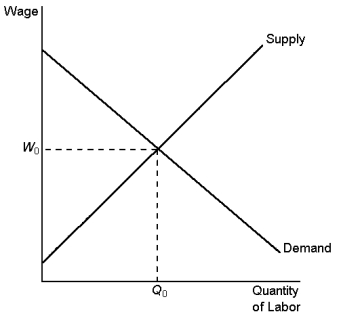
Refer to Graph 21-1. According to the graph, if the government imposes a minimum wage below Wo, it is likely to:
A) have no effect on employment
B) provide more income to the working poor than they collectively received before the minimum wage was set
C) reduce employment to a level below Qo
D) increase employment to a level above Qo
Refer to Graph 21-1. According to the graph, if the government imposes a minimum wage below Wo, it is likely to:
A) have no effect on employment
B) provide more income to the working poor than they collectively received before the minimum wage was set
C) reduce employment to a level below Qo
D) increase employment to a level above Qo
Question
Question
Question
Question
Question
Question
Question
Question
Question
Question
Question
Question
Question
Question
Table 21-1

Given Table 21-1, which country has a more equally distributed income? Explain your answer.
Given Table 21-1, which country has a more equally distributed income? Explain your answer.
Question
Question
Question
Question
Graph 21-1
Refer to Graph 21-1. Advocates of minimum wage legislation would suggest that an effective minimum wage would be set at a level:
A) below Wo, and employment would rise above Qo
B) above Wo, and employment would fall below Qo
C) above Wo, and employment would rise above Qo
D) below Wo, and employment would fall below Qo
Refer to Graph 21-1. Advocates of minimum wage legislation would suggest that an effective minimum wage would be set at a level:
A) below Wo, and employment would rise above Qo
B) above Wo, and employment would fall below Qo
C) above Wo, and employment would rise above Qo
D) below Wo, and employment would fall below Qo

Unlock Deck
Sign up to unlock the cards in this deck!
Unlock Deck
Unlock Deck
1/85

Play

Full screen (f)
Deck 21: Income Inequity and Poverty
1
Because people can borrow and save to smooth out life-cycle changes in income, their standard of living in any year depends more on lifetime income than on that year's income.
True
2
According to utilitarians, the government should continue to redistribute income until everyone in society has exactly the same income.
False
3
Poverty is correlated with race, age and family composition.
True
4
Trends over time support the view that the decline of the two-parent family is largely the effect of the welfare system.
Unlock Deck
Unlock for access to all 85 flashcards in this deck.
Unlock Deck
k this deck
5
In Australia, the share of pre-tax income going to the bottom fifth of families in the income distribution has been:
A) rising
B) falling
C) roughly steady
D) no data is available
A) rising
B) falling
C) roughly steady
D) no data is available
Unlock Deck
Unlock for access to all 85 flashcards in this deck.
Unlock Deck
k this deck
6
Advocates of direct cash payment assistance to the poor argue that although in-kind transfers are generally respectful of individual preferences, such transfers are inefficient.
Unlock Deck
Unlock for access to all 85 flashcards in this deck.
Unlock Deck
k this deck
7
A person's earnings depend on:
A) how well the economy is doing
B) whether or not the economy is experiencing inflation
C) the supply and demand for that person's labour
D) how much profit that person's employer is able to make
A) how well the economy is doing
B) whether or not the economy is experiencing inflation
C) the supply and demand for that person's labour
D) how much profit that person's employer is able to make
Unlock Deck
Unlock for access to all 85 flashcards in this deck.
Unlock Deck
k this deck
8
Political philosophers agree in their views about the role of government in altering the distribution of income.
Unlock Deck
Unlock for access to all 85 flashcards in this deck.
Unlock Deck
k this deck
9
The invisible hand of the marketplace acts to allocate resources efficiently as well as equitably.
Unlock Deck
Unlock for access to all 85 flashcards in this deck.
Unlock Deck
k this deck
10
The income distribution in a society is:
A) mostly determined by government taxation policies
B) mostly determined by rental income
C) mostly determined by the geographical location of taxpayers
D) mostly determined by factors that determine wages
A) mostly determined by government taxation policies
B) mostly determined by rental income
C) mostly determined by the geographical location of taxpayers
D) mostly determined by factors that determine wages
Unlock Deck
Unlock for access to all 85 flashcards in this deck.
Unlock Deck
k this deck
11
Rawls would determine the distribution of income as if we were behind a veil of ignorance that prevented us from knowing our own stations in life.
Unlock Deck
Unlock for access to all 85 flashcards in this deck.
Unlock Deck
k this deck
12
One way to measure the poverty rate is by calculating the percentage of the population whose family income is below the poverty line.
Unlock Deck
Unlock for access to all 85 flashcards in this deck.
Unlock Deck
k this deck
13
Libertarians conclude that equality of incomes is more important than equality of opportunity.
Unlock Deck
Unlock for access to all 85 flashcards in this deck.
Unlock Deck
k this deck
14
Minimum-wage legislation is likely to be least effective in reducing poverty when the demand for labour is inelastic.
Unlock Deck
Unlock for access to all 85 flashcards in this deck.
Unlock Deck
k this deck
15
Many policies to help the poor are effective at encouraging the poor to escape from poverty.
Unlock Deck
Unlock for access to all 85 flashcards in this deck.
Unlock Deck
k this deck
16
Under a negative income tax, it is likely for a person who does not earn income to receive assistance from the government.
Unlock Deck
Unlock for access to all 85 flashcards in this deck.
Unlock Deck
k this deck
17
A measure of permanent income would be similar to a person's average or 'normal' income.
Unlock Deck
Unlock for access to all 85 flashcards in this deck.
Unlock Deck
k this deck
18
If cash is transferred to the poor, this is known as an in-kind transfer.
Unlock Deck
Unlock for access to all 85 flashcards in this deck.
Unlock Deck
k this deck
19
The distortionary effect of government redistribution programs means that perfect utility maximising outcomes are unattainable.
Unlock Deck
Unlock for access to all 85 flashcards in this deck.
Unlock Deck
k this deck
20
The increase in women's workforce participation rate over the last 50 years has been more pronounced for higher income groups. This trend has tended to increase inequality.
Unlock Deck
Unlock for access to all 85 flashcards in this deck.
Unlock Deck
k this deck
21
A family's ability to buy goods and services depends largely on its:
A) permanent income
B) transitory income
C) lifetime income
D) in-kind transfers
A) permanent income
B) transitory income
C) lifetime income
D) in-kind transfers
Unlock Deck
Unlock for access to all 85 flashcards in this deck.
Unlock Deck
k this deck
22
Suppose income was equally distributed across all families, then:
A) 60 per cent of the families would receive exactly 60 per cent of the income
B) the relative share of income would decline as the number of families are increased
C) the relative share of income would increase as the number of families are increased
D) all families would more likely be rich than poor
A) 60 per cent of the families would receive exactly 60 per cent of the income
B) the relative share of income would decline as the number of families are increased
C) the relative share of income would increase as the number of families are increased
D) all families would more likely be rich than poor
Unlock Deck
Unlock for access to all 85 flashcards in this deck.
Unlock Deck
k this deck
23
Out of the following countries, the share of total income going to the poorest fifth of the population is highest in:
A) Australia
B) Japan
C) USA
D) Brazil
A) Australia
B) Japan
C) USA
D) Brazil
Unlock Deck
Unlock for access to all 85 flashcards in this deck.
Unlock Deck
k this deck
24
Measures of poverty that fail to account for the value of in-kind transfers:
A) understate the actual poverty rate
B) have little effect on the validity of reported poverty rates
C) are generally more reliable in accounting for annual variation in actual poverty rates
D) overstate the actual poverty rate
A) understate the actual poverty rate
B) have little effect on the validity of reported poverty rates
C) are generally more reliable in accounting for annual variation in actual poverty rates
D) overstate the actual poverty rate
Unlock Deck
Unlock for access to all 85 flashcards in this deck.
Unlock Deck
k this deck
25
Because people can borrow when they are young, the life cycle theory would suggest that a standard of living depends on:
A) aggregate income rather than annual personal income
B) income averaged across seasons rather than across years
C) annual extended family income rather than annual personal income
D) lifetime income rather than annual income
A) aggregate income rather than annual personal income
B) income averaged across seasons rather than across years
C) annual extended family income rather than annual personal income
D) lifetime income rather than annual income
Unlock Deck
Unlock for access to all 85 flashcards in this deck.
Unlock Deck
k this deck
26
In Australia, the share of pre-tax income going to the top fifth of families is roughly ______ times the share of income going to the bottom fifth of families in the income distribution:
A) five
B) ten
C) twenty
D) one-hundred
A) five
B) ten
C) twenty
D) one-hundred
Unlock Deck
Unlock for access to all 85 flashcards in this deck.
Unlock Deck
k this deck
27
Out of the following countries, the share of total income going to the richest fifth of the population is highest in:
A) Australia
B) Japan
C) USA
D) Brazil
A) Australia
B) Japan
C) USA
D) Brazil
Unlock Deck
Unlock for access to all 85 flashcards in this deck.
Unlock Deck
k this deck
28
People have their highest saving rates when they are:
A) young and single
B) married with young children
C) middle-aged
D) retired
A) young and single
B) married with young children
C) middle-aged
D) retired
Unlock Deck
Unlock for access to all 85 flashcards in this deck.
Unlock Deck
k this deck
29
Economic mobility refers to the:
A) ability of families to freely relocate to find good jobs
B) movement of resources from one industry to another
C) government's attempt to distribute monetary assistance to areas most in need
D) movement of people among income classes
A) ability of families to freely relocate to find good jobs
B) movement of resources from one industry to another
C) government's attempt to distribute monetary assistance to areas most in need
D) movement of people among income classes
Unlock Deck
Unlock for access to all 85 flashcards in this deck.
Unlock Deck
k this deck
30
The most commonly used approach to define the poverty line in Australia is to follow the definition of the Henderson Commission, conducted in 1975. This sets the poverty line at:
A) 75.5 per cent of average weekly earnings
B) 56.5 per cent of average weekly earnings
C) 50 per cent of average weekly earnings
D) 25 per cent of average weekly earnings
A) 75.5 per cent of average weekly earnings
B) 56.5 per cent of average weekly earnings
C) 50 per cent of average weekly earnings
D) 25 per cent of average weekly earnings
Unlock Deck
Unlock for access to all 85 flashcards in this deck.
Unlock Deck
k this deck
31
The life cycle effect characterises a lifetime income profile in which income:
A) falls during the early years of market activity and peaks at retirement
B) rises and falls in conjunction with the business cycle
C) rises as a worker gains maturity and experience
D) tends to follow a seasonal pattern
A) falls during the early years of market activity and peaks at retirement
B) rises and falls in conjunction with the business cycle
C) rises as a worker gains maturity and experience
D) tends to follow a seasonal pattern
Unlock Deck
Unlock for access to all 85 flashcards in this deck.
Unlock Deck
k this deck
32
A person's permanent income is:
A) the base level of income which they need to support their standard of living
B) the base level of income which their employer pays
C) the guaranteed income provided by the welfare system
D) a person's average income over time
A) the base level of income which they need to support their standard of living
B) the base level of income which their employer pays
C) the guaranteed income provided by the welfare system
D) a person's average income over time
Unlock Deck
Unlock for access to all 85 flashcards in this deck.
Unlock Deck
k this deck
33
In Australia, the share of pre-tax income going to the top fifth of families in the income distribution has been:
A) rising
B) falling
C) roughly steady
D) no data is available
A) rising
B) falling
C) roughly steady
D) no data is available
Unlock Deck
Unlock for access to all 85 flashcards in this deck.
Unlock Deck
k this deck
34
Economists refer to the regular pattern of income variation over a person's lifetime as the:
A) life pattern effect
B) cyclical redundancy effect
C) periodic cycle effect
D) life cycle effect
A) life pattern effect
B) cyclical redundancy effect
C) periodic cycle effect
D) life cycle effect
Unlock Deck
Unlock for access to all 85 flashcards in this deck.
Unlock Deck
k this deck
35
Over the past few years, growth in average income has:
A) failed to decrease the poverty rate
B) decreased the poverty rate
C) eliminated poverty
D) increased the poverty rate in some years and decreased it in other years
A) failed to decrease the poverty rate
B) decreased the poverty rate
C) eliminated poverty
D) increased the poverty rate in some years and decreased it in other years
Unlock Deck
Unlock for access to all 85 flashcards in this deck.
Unlock Deck
k this deck
36
Income inequality in an economy is traditionally measured by:
A) calculating the bell curve of ability, effort and chance that exists in an economy
B) calculating the percentage of families that fall into broad income classifications
C) referring to standard international distribution tables
D) using something like the normal distribution
A) calculating the bell curve of ability, effort and chance that exists in an economy
B) calculating the percentage of families that fall into broad income classifications
C) referring to standard international distribution tables
D) using something like the normal distribution
Unlock Deck
Unlock for access to all 85 flashcards in this deck.
Unlock Deck
k this deck
37
A permanent income theory suggests that a person's income is composed of predictable life cycle variation and:
A) permanent changes that reflect the seasonal capacity of the economy
B) structural change in the economy
C) aggregate variation resulting from predictable business cycles
D) random and transitory forces in the economy
A) permanent changes that reflect the seasonal capacity of the economy
B) structural change in the economy
C) aggregate variation resulting from predictable business cycles
D) random and transitory forces in the economy
Unlock Deck
Unlock for access to all 85 flashcards in this deck.
Unlock Deck
k this deck
38
According to the Henderson Commission, the poverty line in Australia was set at:
A) 25 per cent of average weekly earnings
B) 56.5 per cent of average weekly earnings
C) 65.5 per cent of average weekly earnings
D) 75 per cent of average weekly earnings
A) 25 per cent of average weekly earnings
B) 56.5 per cent of average weekly earnings
C) 65.5 per cent of average weekly earnings
D) 75 per cent of average weekly earnings
Unlock Deck
Unlock for access to all 85 flashcards in this deck.
Unlock Deck
k this deck
39
Evidence suggests that the women's movement has:
A) decreased income inequality across households
B) increased income inequality across households
C) had no effect on the distribution of income across households
D) decreased the importance of traditional measures of income inequality
A) decreased income inequality across households
B) increased income inequality across households
C) had no effect on the distribution of income across households
D) decreased the importance of traditional measures of income inequality
Unlock Deck
Unlock for access to all 85 flashcards in this deck.
Unlock Deck
k this deck
40
Income mobility studies suggest that poverty:
A) is not a long-term problem for most families
B) is a long-term problem for a relatively large number of families
C) cannot be alleviated by government sponsored anti-poverty programs
D) cannot be alleviated by privately sponsored anti-poverty programs
A) is not a long-term problem for most families
B) is a long-term problem for a relatively large number of families
C) cannot be alleviated by government sponsored anti-poverty programs
D) cannot be alleviated by privately sponsored anti-poverty programs
Unlock Deck
Unlock for access to all 85 flashcards in this deck.
Unlock Deck
k this deck
41
The political philosophy according to which the government should choose policies that maximise the total utility of everyone in society is called:
A) utilitarianism
B) utility maximisation
C) libertarianism
D) rawlsianism
A) utilitarianism
B) utility maximisation
C) libertarianism
D) rawlsianism
Unlock Deck
Unlock for access to all 85 flashcards in this deck.
Unlock Deck
k this deck
42
The utilitarian case for redistributing income is based on the assumption of:
A) a notion of fairness engendered by equality
B) diminishing marginal utility
C) rising marginal utility
D) collective consensus
A) a notion of fairness engendered by equality
B) diminishing marginal utility
C) rising marginal utility
D) collective consensus
Unlock Deck
Unlock for access to all 85 flashcards in this deck.
Unlock Deck
k this deck
43
Brian earns more than Lynne. A benevolent legislator has proposed taxing Bill in order to supplement Lynne's income. A libertarian would view this proposal as:
A) an inappropriate role for government, since government cannot morally redistribute income that is not its own
B) a way to enhance Lynne's income in a socially responsible way
C) a way to increase social justice
D) validation of the superiority of a libertarian maximin criterion over Rawlsian social justice
A) an inappropriate role for government, since government cannot morally redistribute income that is not its own
B) a way to enhance Lynne's income in a socially responsible way
C) a way to increase social justice
D) validation of the superiority of a libertarian maximin criterion over Rawlsian social justice
Unlock Deck
Unlock for access to all 85 flashcards in this deck.
Unlock Deck
k this deck
44
Libertarianism identifies a role for government when:
A) an egalitarian distribution of income is inconsistent with market outcomes
B) attorneys are required to facilitate a free market exchange
C) the income distribution is altered by illegal means (e.g. theft)
D) workers lose their jobs as a result of structural changes in the economy
A) an egalitarian distribution of income is inconsistent with market outcomes
B) attorneys are required to facilitate a free market exchange
C) the income distribution is altered by illegal means (e.g. theft)
D) workers lose their jobs as a result of structural changes in the economy
Unlock Deck
Unlock for access to all 85 flashcards in this deck.
Unlock Deck
k this deck
45
Amy currently earns $80 000 a year, while John earns $30 000 a year. Suppose that both of their incomes are subject to diminishing marginal utility. From a utilitarian perspective taking a dollar from Amy and giving it to John will:
A) lower Amy's marginal utility of income
B) increase John's marginal utility of income
C) increase society's total utility
D) do none of the above
A) lower Amy's marginal utility of income
B) increase John's marginal utility of income
C) increase society's total utility
D) do none of the above
Unlock Deck
Unlock for access to all 85 flashcards in this deck.
Unlock Deck
k this deck
46
The concept of utility is fundamental to utilitarianism and describes the:
A) method whereby wealth is stored
B) method by which society chooses to allocate resources
C) optimal distribution of wealth in society
D) level of satisfaction derived from a person's circumstances
A) method whereby wealth is stored
B) method by which society chooses to allocate resources
C) optimal distribution of wealth in society
D) level of satisfaction derived from a person's circumstances
Unlock Deck
Unlock for access to all 85 flashcards in this deck.
Unlock Deck
k this deck
47
According to utilitarians, the ultimate objective of private and public actions is to:
A) ensure an egalitarian distribution of income
B) provide for the betterment of the poor
C) maximise the sum of individual utility
D) enhance the income of the rich
A) ensure an egalitarian distribution of income
B) provide for the betterment of the poor
C) maximise the sum of individual utility
D) enhance the income of the rich
Unlock Deck
Unlock for access to all 85 flashcards in this deck.
Unlock Deck
k this deck
48
According to Rawls, principles of justice are the result of:
A) command-and-control policies
B) domination of the powerful by the weak
C) workers owning the factors of production
D) fair agreement and bargain
A) command-and-control policies
B) domination of the powerful by the weak
C) workers owning the factors of production
D) fair agreement and bargain
Unlock Deck
Unlock for access to all 85 flashcards in this deck.
Unlock Deck
k this deck
49
In general, which of the following would libertarians conclude is more important than equality?
A) income
B) entrepreneurial compensation
C) capital compensation
D) opportunity
A) income
B) entrepreneurial compensation
C) capital compensation
D) opportunity
Unlock Deck
Unlock for access to all 85 flashcards in this deck.
Unlock Deck
k this deck
50
The maximin criterion suggests that the focus of social policy would be to:
A) elevate the wellbeing of all workers
B) elevate the wellbeing of those at the bottom of the income distribution
C) ensure an egalitarian distribution of income
D) expropriate the factors of production from the capitalist class
A) elevate the wellbeing of all workers
B) elevate the wellbeing of those at the bottom of the income distribution
C) ensure an egalitarian distribution of income
D) expropriate the factors of production from the capitalist class
Unlock Deck
Unlock for access to all 85 flashcards in this deck.
Unlock Deck
k this deck
51
Diminishing marginal utility suggests that:
A) the poor receive more satisfaction than the rich from the last dollar they respectively spend
B) more is always preferred to less
C) the poor are less efficient at spending money than the rich
D) the wellbeing of society is maximised when the distribution of income is equal
A) the poor receive more satisfaction than the rich from the last dollar they respectively spend
B) more is always preferred to less
C) the poor are less efficient at spending money than the rich
D) the wellbeing of society is maximised when the distribution of income is equal
Unlock Deck
Unlock for access to all 85 flashcards in this deck.
Unlock Deck
k this deck
52
When incentives to earn income are distorted by income redistribution programs:
A) total income in an economy can fall
B) total aggregate utility in society can fall
C) losses can exceed potential gains from greater equality of income
D) all of the above can occur
A) total income in an economy can fall
B) total aggregate utility in society can fall
C) losses can exceed potential gains from greater equality of income
D) all of the above can occur
Unlock Deck
Unlock for access to all 85 flashcards in this deck.
Unlock Deck
k this deck
53
What is the political philosophy called in which government should choose policies deemed to be just, as evaluate by an impartial observer behind a 'veil of ignorance':
A) utilitarianism
B) Rawlsianism
C) libertarianism
D) 'veil of ignorance' criterion
A) utilitarianism
B) Rawlsianism
C) libertarianism
D) 'veil of ignorance' criterion
Unlock Deck
Unlock for access to all 85 flashcards in this deck.
Unlock Deck
k this deck
54
Permanent income is distributed between income groups ________:
A) more evenly than current income
B) less evenly than current income
C) about the same as current income
D) higher than current income
A) more evenly than current income
B) less evenly than current income
C) about the same as current income
D) higher than current income
Unlock Deck
Unlock for access to all 85 flashcards in this deck.
Unlock Deck
k this deck
55
Whether or not policymakers should try to make our society more egalitarian is largely a matter of:
A) political philosophy
B) economic efficiency
C) altruistic concern for others
D) common sense
A) political philosophy
B) economic efficiency
C) altruistic concern for others
D) common sense
Unlock Deck
Unlock for access to all 85 flashcards in this deck.
Unlock Deck
k this deck
56
A libertarian is likely to argue that:
A) only individual members of society can earn income
B) outcomes always dominate processes
C) society is responsible for ensuring an equal distribution of income
D) government has no role in the economy
A) only individual members of society can earn income
B) outcomes always dominate processes
C) society is responsible for ensuring an equal distribution of income
D) government has no role in the economy
Unlock Deck
Unlock for access to all 85 flashcards in this deck.
Unlock Deck
k this deck
57
The veil of ignorance refers to:
A) the fact that most people are unaware of their place in society
B) the Rawlsianism argument that justice can never be agreed upon
C) a thought experiment when designing policy where one does not know where he/she will end up in society
D) the claim that government should maximise the wellbeing of the least well off in society
A) the fact that most people are unaware of their place in society
B) the Rawlsianism argument that justice can never be agreed upon
C) a thought experiment when designing policy where one does not know where he/she will end up in society
D) the claim that government should maximise the wellbeing of the least well off in society
Unlock Deck
Unlock for access to all 85 flashcards in this deck.
Unlock Deck
k this deck
58
As a result of the trade-off between income equality and incentives to work, an optimal redistribution policy:
A) must always achieve a full egalitarian society
B) is only consistent with transfers to the middle class
C) always falls short of a full egalitarian society
D) can never be funded through taxes on wage income
A) must always achieve a full egalitarian society
B) is only consistent with transfers to the middle class
C) always falls short of a full egalitarian society
D) can never be funded through taxes on wage income
Unlock Deck
Unlock for access to all 85 flashcards in this deck.
Unlock Deck
k this deck
59
Which of the following reasons suggests that income-based measures of poverty are not ideal when considering the poverty rates of young people:
A) the economic life cycle of an adult suggests that you will supplement your income when young with borrowing
B) young people tend to have lower standards and expectations than older people and retirees
C) young people are not as geographically mobile as older people and therefore then to be stuck in low paying jobs
D) the incomes of young people is more volatile than average and therefore any one year is not a good measure of income
A) the economic life cycle of an adult suggests that you will supplement your income when young with borrowing
B) young people tend to have lower standards and expectations than older people and retirees
C) young people are not as geographically mobile as older people and therefore then to be stuck in low paying jobs
D) the incomes of young people is more volatile than average and therefore any one year is not a good measure of income
Unlock Deck
Unlock for access to all 85 flashcards in this deck.
Unlock Deck
k this deck
60
In the parable of the leaky bucket, a fundamental problem with government redistribution programs is identified. As long as the government only has 'leaky buckets' at its disposal:
A) full egalitarian policies will always dominate competing policy options
B) affirmative action programs are doomed to failure
C) equality of economic opportunity is an unattainable goal
D) it should not try to reach complete equality in income
A) full egalitarian policies will always dominate competing policy options
B) affirmative action programs are doomed to failure
C) equality of economic opportunity is an unattainable goal
D) it should not try to reach complete equality in income
Unlock Deck
Unlock for access to all 85 flashcards in this deck.
Unlock Deck
k this deck
61
There are 100 people in society and they have to decide on an income distribution from behind the veil of ignorance. Use the maximin principle to decide which of the following income distributions would be selected by a Rawlsian liberal. Explain your answer.
In state A, eight people earn $10m, 92 people earn $5m
In state B, 40 people earn $10m and 59 people earn $7m and 1 person earns $1m.
In state A, eight people earn $10m, 92 people earn $5m
In state B, 40 people earn $10m and 59 people earn $7m and 1 person earns $1m.
Unlock Deck
Unlock for access to all 85 flashcards in this deck.
Unlock Deck
k this deck
62
Graph 21-1
Refer to Graph 21-1. According to the graph, if the government imposes a minimum wage below Wo, it is likely to:
A) have no effect on employment
B) provide more income to the working poor than they collectively received before the minimum wage was set
C) reduce employment to a level below Qo
D) increase employment to a level above Qo
Refer to Graph 21-1. According to the graph, if the government imposes a minimum wage below Wo, it is likely to:
A) have no effect on employment
B) provide more income to the working poor than they collectively received before the minimum wage was set
C) reduce employment to a level below Qo
D) increase employment to a level above Qo
Unlock Deck
Unlock for access to all 85 flashcards in this deck.
Unlock Deck
k this deck
63
For most government programs that are designed to help the poor:
A) being poor is typically sufficient to qualify for assistance
B) being poor, by itself, is typically not sufficient to qualify for assistance
C) the poor may not receive assistance because the poverty line varies so much that it makes them difficult to identify
D) recipients of government assistance are often declared ineligible to receive assistance from private sources
A) being poor is typically sufficient to qualify for assistance
B) being poor, by itself, is typically not sufficient to qualify for assistance
C) the poor may not receive assistance because the poverty line varies so much that it makes them difficult to identify
D) recipients of government assistance are often declared ineligible to receive assistance from private sources
Unlock Deck
Unlock for access to all 85 flashcards in this deck.
Unlock Deck
k this deck
64
Explain what is meant by 'in-kind transfer' programs. Briefly outline the pros and cons associated with an in-kind transfer program.
Unlock Deck
Unlock for access to all 85 flashcards in this deck.
Unlock Deck
k this deck
65
What is meant by a perfectly equal distribution of income? Use a graph to depict such a situation.
Unlock Deck
Unlock for access to all 85 flashcards in this deck.
Unlock Deck
k this deck
66
What effect has increased workforce participation by women since the 1950s had on income inequality in Australia? Why is this the case?
Unlock Deck
Unlock for access to all 85 flashcards in this deck.
Unlock Deck
k this deck
67
What are some of the problems associated with measuring inequality?
Unlock Deck
Unlock for access to all 85 flashcards in this deck.
Unlock Deck
k this deck
68
Opponents of legislation that proposes to limit the time a family can receive welfare benefits are most likely to argue that time limits are undesirable because:
A) children will become innocent victims if parents are forced off welfare
B) the money saved will be diverted to defence spending
C) long periods on welfare erode work skills
D) there is no evidence to suggest a pattern of welfare dependency
A) children will become innocent victims if parents are forced off welfare
B) the money saved will be diverted to defence spending
C) long periods on welfare erode work skills
D) there is no evidence to suggest a pattern of welfare dependency
Unlock Deck
Unlock for access to all 85 flashcards in this deck.
Unlock Deck
k this deck
69
Evidence suggests that:
A) the best way to deter immigrants is to make legal aliens ineligible for many welfare benefits
B) legislation designed to limit the time a family can be on welfare will never be passed
C) welfare dependency is embraced by over 80 per cent of new welfare recipients
D) the longer a family is on welfare, the harder it is to get off welfare
A) the best way to deter immigrants is to make legal aliens ineligible for many welfare benefits
B) legislation designed to limit the time a family can be on welfare will never be passed
C) welfare dependency is embraced by over 80 per cent of new welfare recipients
D) the longer a family is on welfare, the harder it is to get off welfare
Unlock Deck
Unlock for access to all 85 flashcards in this deck.
Unlock Deck
k this deck
70
Many people have been critical of statistics that are used to characterise income inequality on the grounds that as long as the average income of the poor is increasing, their position relative to the rich should not matter. Evaluate this critique.
Unlock Deck
Unlock for access to all 85 flashcards in this deck.
Unlock Deck
k this deck
71
A tax system that collects revenue from high-income households and gives transfers and tax concessions to low-income households is known as:
A) social security
B) negative income tax
C) minimum wage laws
D) in-kind transfers
A) social security
B) negative income tax
C) minimum wage laws
D) in-kind transfers
Unlock Deck
Unlock for access to all 85 flashcards in this deck.
Unlock Deck
k this deck
72
Do Libertarians and Rawlsian liberals agree that governments should redistribute income? Briefly explain your answer.
Unlock Deck
Unlock for access to all 85 flashcards in this deck.
Unlock Deck
k this deck
73
Discuss the life cycle hypothesis of income distribution.
Unlock Deck
Unlock for access to all 85 flashcards in this deck.
Unlock Deck
k this deck
74
Discuss the permanent income hypothesis of income distribution.
Unlock Deck
Unlock for access to all 85 flashcards in this deck.
Unlock Deck
k this deck
75
Explain the concept of diminishing marginal utility and describe the role that it plays in the utilitarian argument for redistribution of income.
Unlock Deck
Unlock for access to all 85 flashcards in this deck.
Unlock Deck
k this deck
76
Table 21-1
Given Table 21-1, which country has a more equally distributed income? Explain your answer.
Given Table 21-1, which country has a more equally distributed income? Explain your answer.
Unlock Deck
Unlock for access to all 85 flashcards in this deck.
Unlock Deck
k this deck
77
A school voucher system introduced in the United States has lead to:
A) less low income households sending their children to private schools
B) more low income households sending their children to private schools
C) no change in the number of low income households sending their children to private schools
D) decrease in the number of private school schools
A) less low income households sending their children to private schools
B) more low income households sending their children to private schools
C) no change in the number of low income households sending their children to private schools
D) decrease in the number of private school schools
Unlock Deck
Unlock for access to all 85 flashcards in this deck.
Unlock Deck
k this deck
78
Suppose the government proposes a negative income tax that calculates taxes owed according to the formula TAXES OWED = (1/4 * INCOME) - $15 000. Suppose a family only earns $20 000. How much tax would they pay?
A) they will pay a tax of $5000
B) they will pay a tax of $1250
C) they will receive a net income subsidy of $5000
D) they will receive a net income subsidy of $10 000
A) they will pay a tax of $5000
B) they will pay a tax of $1250
C) they will receive a net income subsidy of $5000
D) they will receive a net income subsidy of $10 000
Unlock Deck
Unlock for access to all 85 flashcards in this deck.
Unlock Deck
k this deck
79
Suppose the government proposes a negative income tax that calculates taxes owed according to the formula TAXES OWED = (1/2 * INCOME) - $5000. A family that earns an income of $30 000 will:
A) pay a tax of $10 000
B) receive an income subsidy of $10 000
C) neither pay taxes nor receive an income subsidy
D) pay $15 000 in taxes
A) pay a tax of $10 000
B) receive an income subsidy of $10 000
C) neither pay taxes nor receive an income subsidy
D) pay $15 000 in taxes
Unlock Deck
Unlock for access to all 85 flashcards in this deck.
Unlock Deck
k this deck
80
Graph 21-1
Refer to Graph 21-1. Advocates of minimum wage legislation would suggest that an effective minimum wage would be set at a level:
A) below Wo, and employment would rise above Qo
B) above Wo, and employment would fall below Qo
C) above Wo, and employment would rise above Qo
D) below Wo, and employment would fall below Qo
Refer to Graph 21-1. Advocates of minimum wage legislation would suggest that an effective minimum wage would be set at a level:
A) below Wo, and employment would rise above Qo
B) above Wo, and employment would fall below Qo
C) above Wo, and employment would rise above Qo
D) below Wo, and employment would fall below Qo
Unlock Deck
Unlock for access to all 85 flashcards in this deck.
Unlock Deck
k this deck
Unlock Deck
Unlock for access to all 85 flashcards in this deck.






