







 Chat with AI

Deck 8: America Secedes From the Empire, 1775-1783
Full screen (f)

Question

Question
Question
Question
Question
Question
Question
Question
Question
Question
Question
Question
Question
Question
Question
Question
Question
Question
Question
Question
Question
Question
Question
Locate the following places by reference number on the map:
The American Revolutionary War in the North and the South, 1775-1781
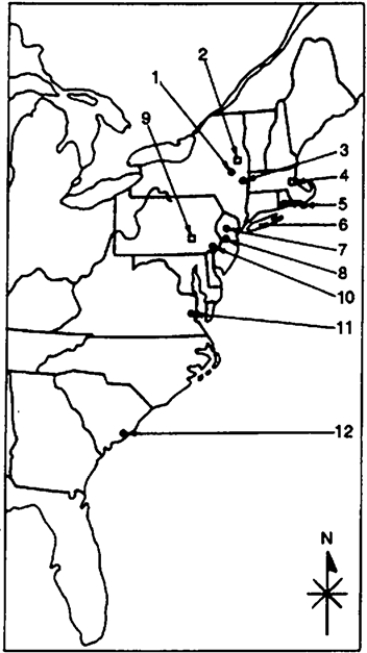
____ Bunker Hill
The American Revolutionary War in the North and the South, 1775-1781
____ Bunker Hill
Question
Question
Question
Question
Question
Question
Locate the following places by reference number on the map:
The American Revolutionary War in the North and the South, 1775-1781
____ Ticonderoga
The American Revolutionary War in the North and the South, 1775-1781
____ Ticonderoga
Question
Question
Question
Question
Question
Locate the following places by reference number on the map:
The American Revolutionary War in the North and the South, 1775-1781
____ Long Island
The American Revolutionary War in the North and the South, 1775-1781
____ Long Island
Question
Question
Question
Question
Question
Question
Locate the following places by reference number on the map:
The American Revolutionary War in the North and the South, 1775-1781
____ Trenton
The American Revolutionary War in the North and the South, 1775-1781
____ Trenton
Question
Locate the following places by reference number on the map:
The American Revolutionary War in the North and the South, 1775-1781
____ Princeton
The American Revolutionary War in the North and the South, 1775-1781
____ Princeton
Question
Locate the following places by reference number on the map:
The American Revolutionary War in the North and the South, 1775-1781
____ Yorktown
The American Revolutionary War in the North and the South, 1775-1781
____ Yorktown
Question
Question
Locate the following places by reference number on the map:
The American Revolutionary War in the North and the South, 1775-1781
____ Albany
The American Revolutionary War in the North and the South, 1775-1781
____ Albany
Question
Question
Question
Question
Question
Question
Locate the following places by reference number on the map:
The American Revolutionary War in the North and the South, 1775-1781
____ Valley Forge
The American Revolutionary War in the North and the South, 1775-1781
____ Valley Forge
Question
Question
Question
Locate the following places by reference number on the map:
The American Revolutionary War in the North and the South, 1775-1781
____ Saratoga
The American Revolutionary War in the North and the South, 1775-1781
____ Saratoga
Question
Locate the following places by reference number on the map:
The American Revolutionary War in the North and the South, 1775-1781
____ Newport
The American Revolutionary War in the North and the South, 1775-1781
____ Newport
Question
Question
Question
Question
Question
Locate the following places by reference number on the map:
The American Revolutionary War in the North and the South, 1775-1781
____ Philadelphia
The American Revolutionary War in the North and the South, 1775-1781
____ Philadelphia
Question
Locate the following places by reference number on the map:
The American Revolutionary War in the North and the South, 1775-1781
____ Charleston
The American Revolutionary War in the North and the South, 1775-1781
____ Charleston
Question
Question
Question
Question
Question
Question
Question
Question
Question
Question
Question
Question
Question
Question
Question
Question
Question
Question
Question
Question

Unlock Deck
Sign up to unlock the cards in this deck!
Unlock Deck
Unlock Deck
1/112

Play

Full screen (f)
Deck 8: America Secedes From the Empire, 1775-1783
1
Identify and state the historical significance of the following:
Comte de Rochambeau
Comte de Rochambeau
Student answers will vary.
2
Identify and state the historical significance of the following:
Horatio Gates
Horatio Gates
Student answers will vary.
3
Identify and state the historical significance of the following:
Richard Henry Lee
Richard Henry Lee
Student answers will vary.
4
Identify and state the historical significance of the following:
Charles Cornwallis
Charles Cornwallis
Unlock Deck
Unlock for access to all 112 flashcards in this deck.
Unlock Deck
k this deck
5
Identify and state the historical significance of the following:
John Paul Jones
John Paul Jones
Unlock Deck
Unlock for access to all 112 flashcards in this deck.
Unlock Deck
k this deck
6
Identify and state the historical significance of the following:
Benedict Arnold
Benedict Arnold
Unlock Deck
Unlock for access to all 112 flashcards in this deck.
Unlock Deck
k this deck
7
Identify and state the historical significance of the following:
Richard Montgomery
Richard Montgomery
Unlock Deck
Unlock for access to all 112 flashcards in this deck.
Unlock Deck
k this deck
8
Identify and state the historical significance of the following:
George Washington
George Washington
Unlock Deck
Unlock for access to all 112 flashcards in this deck.
Unlock Deck
k this deck
9
Identify and state the historical significance of the following:
Nathanael Greene
Nathanael Greene
Unlock Deck
Unlock for access to all 112 flashcards in this deck.
Unlock Deck
k this deck
10
Identify and state the historical significance of the following:
William Howe
William Howe
Unlock Deck
Unlock for access to all 112 flashcards in this deck.
Unlock Deck
k this deck
11
Identify and state the historical significance of the following:
Abigail Adams
Abigail Adams
Unlock Deck
Unlock for access to all 112 flashcards in this deck.
Unlock Deck
k this deck
12
Identify and state the historical significance of the following:
Thomas Jefferson
Thomas Jefferson
Unlock Deck
Unlock for access to all 112 flashcards in this deck.
Unlock Deck
k this deck
13
Identify and state the historical significance of the following:
George III
George III
Unlock Deck
Unlock for access to all 112 flashcards in this deck.
Unlock Deck
k this deck
14
Identify and state the historical significance of the following:
Thomas Paine
Thomas Paine
Unlock Deck
Unlock for access to all 112 flashcards in this deck.
Unlock Deck
k this deck
15
Identify and state the historical significance of the following:
John Burgoyne
John Burgoyne
Unlock Deck
Unlock for access to all 112 flashcards in this deck.
Unlock Deck
k this deck
16
Identify and state the historical significance of the following:
Ethan Allen
Ethan Allen
Unlock Deck
Unlock for access to all 112 flashcards in this deck.
Unlock Deck
k this deck
17
Identify and state the historical significance of the following:
George Rogers Clark
George Rogers Clark
Unlock Deck
Unlock for access to all 112 flashcards in this deck.
Unlock Deck
k this deck
18
Identify and state the historical significance of the following:
Admiral de Grasse
Admiral de Grasse
Unlock Deck
Unlock for access to all 112 flashcards in this deck.
Unlock Deck
k this deck
19
Identify and state the historical significance of the following:
John Jay
John Jay
Unlock Deck
Unlock for access to all 112 flashcards in this deck.
Unlock Deck
k this deck
20
Identify and state the historical significance of the following:
Patrick Henry
Patrick Henry
Unlock Deck
Unlock for access to all 112 flashcards in this deck.
Unlock Deck
k this deck
21
Identify and state the historical significance of the following:
Hessians
Hessians
Unlock Deck
Unlock for access to all 112 flashcards in this deck.
Unlock Deck
k this deck
22
Identify and state the historical significance of the following:
civic virtue
civic virtue
Unlock Deck
Unlock for access to all 112 flashcards in this deck.
Unlock Deck
k this deck
23
Locate the following places by reference number on the map:
The American Revolutionary War in the North and the South, 1775-1781
____ Bunker Hill
The American Revolutionary War in the North and the South, 1775-1781
____ Bunker Hill
Unlock Deck
Unlock for access to all 112 flashcards in this deck.
Unlock Deck
k this deck
24
Identify and state the historical significance of the following:
Patriots/Whigs
Patriots/Whigs
Unlock Deck
Unlock for access to all 112 flashcards in this deck.
Unlock Deck
k this deck
25
Identify and state the historical significance of the following:
Second Continental Congress
Second Continental Congress
Unlock Deck
Unlock for access to all 112 flashcards in this deck.
Unlock Deck
k this deck
26
Identify and state the historical significance of the following:
popular consent
popular consent
Unlock Deck
Unlock for access to all 112 flashcards in this deck.
Unlock Deck
k this deck
27
Identify and state the historical significance of the following:
natural aristocracy
natural aristocracy
Unlock Deck
Unlock for access to all 112 flashcards in this deck.
Unlock Deck
k this deck
28
Identify and state the historical significance of the following:
Declaration of Independence
Declaration of Independence
Unlock Deck
Unlock for access to all 112 flashcards in this deck.
Unlock Deck
k this deck
29
Locate the following places by reference number on the map:
The American Revolutionary War in the North and the South, 1775-1781
____ Ticonderoga
The American Revolutionary War in the North and the South, 1775-1781
____ Ticonderoga
Unlock Deck
Unlock for access to all 112 flashcards in this deck.
Unlock Deck
k this deck
30
Identify and state the historical significance of the following:
Common Sense
Common Sense
Unlock Deck
Unlock for access to all 112 flashcards in this deck.
Unlock Deck
k this deck
31
Identify and state the historical significance of the following:
Battle of Saratoga
Battle of Saratoga
Unlock Deck
Unlock for access to all 112 flashcards in this deck.
Unlock Deck
k this deck
32
Identify and state the historical significance of the following:
privateering
privateering
Unlock Deck
Unlock for access to all 112 flashcards in this deck.
Unlock Deck
k this deck
33
Identify and state the historical significance of the following:
Battle of Yorktown
Battle of Yorktown
Unlock Deck
Unlock for access to all 112 flashcards in this deck.
Unlock Deck
k this deck
34
Locate the following places by reference number on the map:
The American Revolutionary War in the North and the South, 1775-1781
____ Long Island
The American Revolutionary War in the North and the South, 1775-1781
____ Long Island
Unlock Deck
Unlock for access to all 112 flashcards in this deck.
Unlock Deck
k this deck
35
Identify and state the historical significance of the following:
republicanism
republicanism
Unlock Deck
Unlock for access to all 112 flashcards in this deck.
Unlock Deck
k this deck
36
Identify and state the historical significance of the following:
Loyalists/Tories
Loyalists/Tories
Unlock Deck
Unlock for access to all 112 flashcards in this deck.
Unlock Deck
k this deck
37
Identify and state the historical significance of the following:
Treaty of Paris of 1783
Treaty of Paris of 1783
Unlock Deck
Unlock for access to all 112 flashcards in this deck.
Unlock Deck
k this deck
38
Identify and state the historical significance of the following:
Bunker Hill
Bunker Hill
Unlock Deck
Unlock for access to all 112 flashcards in this deck.
Unlock Deck
k this deck
39
Identify and state the historical significance of the following:
natural rights
natural rights
Unlock Deck
Unlock for access to all 112 flashcards in this deck.
Unlock Deck
k this deck
40
Locate the following places by reference number on the map:
The American Revolutionary War in the North and the South, 1775-1781
____ Trenton
The American Revolutionary War in the North and the South, 1775-1781
____ Trenton
Unlock Deck
Unlock for access to all 112 flashcards in this deck.
Unlock Deck
k this deck
41
Locate the following places by reference number on the map:
The American Revolutionary War in the North and the South, 1775-1781
____ Princeton
The American Revolutionary War in the North and the South, 1775-1781
____ Princeton
Unlock Deck
Unlock for access to all 112 flashcards in this deck.
Unlock Deck
k this deck
42
Locate the following places by reference number on the map:
The American Revolutionary War in the North and the South, 1775-1781
____ Yorktown
The American Revolutionary War in the North and the South, 1775-1781
____ Yorktown
Unlock Deck
Unlock for access to all 112 flashcards in this deck.
Unlock Deck
k this deck
43
As commander of America's Revolutionary army, George Washington exhibited all of the following except
A)unparalled strategic military genius.
B)personal courage.
C)a sense of justice.
D)moral force and self-discipline.
E)patience and loyalty to the Patriot cause.
A)unparalled strategic military genius.
B)personal courage.
C)a sense of justice.
D)moral force and self-discipline.
E)patience and loyalty to the Patriot cause.
Unlock Deck
Unlock for access to all 112 flashcards in this deck.
Unlock Deck
k this deck
44
Locate the following places by reference number on the map:
The American Revolutionary War in the North and the South, 1775-1781
____ Albany
The American Revolutionary War in the North and the South, 1775-1781
____ Albany
Unlock Deck
Unlock for access to all 112 flashcards in this deck.
Unlock Deck
k this deck
45
Arrange the following events in chronological order: (A) Battle of Bunker Hill, (B) convening of the Second Continental Congress, (C) publication of Common Sense, and (D) adoption of the Declaration of Independence.
A)B, C, A, D
B)A, B, C, D
C)A, C, D, B
D)C, D, A, B
E)A, B, D, C
A)B, C, A, D
B)A, B, C, D
C)A, C, D, B
D)C, D, A, B
E)A, B, D, C
Unlock Deck
Unlock for access to all 112 flashcards in this deck.
Unlock Deck
k this deck
46
The Revolutionary War began with fighting in ____; then in 1777-1778, fighting was concentrated in ____; and the fighting concluded in ____.
A)the South, the middle colonies, New England
B)the middle colonies, New England, the South
C)New England, the South, the middle colonies
D)New England, the middle colonies, the South
E)the middle colonies, the South, New England
A)the South, the middle colonies, New England
B)the middle colonies, New England, the South
C)New England, the South, the middle colonies
D)New England, the middle colonies, the South
E)the middle colonies, the South, New England
Unlock Deck
Unlock for access to all 112 flashcards in this deck.
Unlock Deck
k this deck
47
The colonial army eventually lost the Battle of Bunker Hill because its troops were
A)outnumbered.
B)short of gunpowder.
C)poorly organized.
D)poor shots.
E)lacking in courage.
A)outnumbered.
B)short of gunpowder.
C)poorly organized.
D)poor shots.
E)lacking in courage.
Unlock Deck
Unlock for access to all 112 flashcards in this deck.
Unlock Deck
k this deck
48
Perhaps the most important single action of the Second Continental Congress was to
A)select George Washington to head the army.
B)draft new appeals to the king.
C)adopt measures to raise money.
D)postpone an immediate demand for independence.
E)support independence.
A)select George Washington to head the army.
B)draft new appeals to the king.
C)adopt measures to raise money.
D)postpone an immediate demand for independence.
E)support independence.
Unlock Deck
Unlock for access to all 112 flashcards in this deck.
Unlock Deck
k this deck
49
The colonists delayed declaring their independence until July 4, 1776, for all of the following reasons except
A)lack of military victories.
B)support for the tradition of loyalty to the empire.
C)the realization that the colonies were not united.
D)fear of British military reprisals.
E)a continued belief that America was part of the transatlantic community.
A)lack of military victories.
B)support for the tradition of loyalty to the empire.
C)the realization that the colonies were not united.
D)fear of British military reprisals.
E)a continued belief that America was part of the transatlantic community.
Unlock Deck
Unlock for access to all 112 flashcards in this deck.
Unlock Deck
k this deck
50
Locate the following places by reference number on the map:
The American Revolutionary War in the North and the South, 1775-1781
____ Valley Forge
The American Revolutionary War in the North and the South, 1775-1781
____ Valley Forge
Unlock Deck
Unlock for access to all 112 flashcards in this deck.
Unlock Deck
k this deck
51
The following were purposes of Jefferson's Declaration of Independence except
A)enlist other British colonies in the Americas to support the cause of American independence.
B)ask for an end to slavery throughout America.
C)invite assistance from foreign nations.
D)explain to the rest of the world why the colonies had revolted.
E)rally military, political, and economic resistance to British rule in America.
A)enlist other British colonies in the Americas to support the cause of American independence.
B)ask for an end to slavery throughout America.
C)invite assistance from foreign nations.
D)explain to the rest of the world why the colonies had revolted.
E)rally military, political, and economic resistance to British rule in America.
Unlock Deck
Unlock for access to all 112 flashcards in this deck.
Unlock Deck
k this deck
52
In March 1776, this event is still celebrated today and it is known as Evacuation Day.What happened on this day?
A)Capture of Ft.Ticonderoga
B)Retreat of Bunker Hill
C)Signing of the Olive Branch Petition
D)Capture of Quebec
E)British evacuation of Boston
A)Capture of Ft.Ticonderoga
B)Retreat of Bunker Hill
C)Signing of the Olive Branch Petition
D)Capture of Quebec
E)British evacuation of Boston
Unlock Deck
Unlock for access to all 112 flashcards in this deck.
Unlock Deck
k this deck
53
Locate the following places by reference number on the map:
The American Revolutionary War in the North and the South, 1775-1781
____ Saratoga
The American Revolutionary War in the North and the South, 1775-1781
____ Saratoga
Unlock Deck
Unlock for access to all 112 flashcards in this deck.
Unlock Deck
k this deck
54
Locate the following places by reference number on the map:
The American Revolutionary War in the North and the South, 1775-1781
____ Newport
The American Revolutionary War in the North and the South, 1775-1781
____ Newport
Unlock Deck
Unlock for access to all 112 flashcards in this deck.
Unlock Deck
k this deck
55
King George III officially declared the colonies in rebellion just after
A)the armed clash at Lexington and Concord.
B)the First Continental Congress convened.
C)the Battle of Bunker Hill.
D)Benedict Arnold's forces' captured Ticonderoga and Crown Point.
E)hiring Hessian solders to fight in America.
A)the armed clash at Lexington and Concord.
B)the First Continental Congress convened.
C)the Battle of Bunker Hill.
D)Benedict Arnold's forces' captured Ticonderoga and Crown Point.
E)hiring Hessian solders to fight in America.
Unlock Deck
Unlock for access to all 112 flashcards in this deck.
Unlock Deck
k this deck
56
Colonists considered the British use of European mercenaries, Hessians, as paid soldiers
A)a smart strategy.
B)to be an extreme, unwarranted, and unpatriotic utilization of foreign nationals in this conflict between American colonists and their British cousins.
C)a pathetic way to build an army.
D)a sign of British desperation.
E)none of these choices are correct.
A)a smart strategy.
B)to be an extreme, unwarranted, and unpatriotic utilization of foreign nationals in this conflict between American colonists and their British cousins.
C)a pathetic way to build an army.
D)a sign of British desperation.
E)none of these choices are correct.
Unlock Deck
Unlock for access to all 112 flashcards in this deck.
Unlock Deck
k this deck
57
The Olive Branch Petition
A)was passed by Parliament.
B)was an expression of King George III's desire for peace.
C)promised no treason charges if colonists stopped fighting.
D)was an attempt by the colonists to gain support of Native Americans.
E)was an effort by the Continental Congress to seek a political accommodation with King George III and prevent further hostilities with British military authorities.
A)was passed by Parliament.
B)was an expression of King George III's desire for peace.
C)promised no treason charges if colonists stopped fighting.
D)was an attempt by the colonists to gain support of Native Americans.
E)was an effort by the Continental Congress to seek a political accommodation with King George III and prevent further hostilities with British military authorities.
Unlock Deck
Unlock for access to all 112 flashcards in this deck.
Unlock Deck
k this deck
58
When the Second Continental Congress met in 1775
A)its members felt a strong desire for independence.
B)it cut off communications with the British government.
C)it continued to stall on the creation of an army and navy.
D)there was no well-defined sentiment for independence.
E)the conservative element was weakened.
A)its members felt a strong desire for independence.
B)it cut off communications with the British government.
C)it continued to stall on the creation of an army and navy.
D)there was no well-defined sentiment for independence.
E)the conservative element was weakened.
Unlock Deck
Unlock for access to all 112 flashcards in this deck.
Unlock Deck
k this deck
59
Locate the following places by reference number on the map:
The American Revolutionary War in the North and the South, 1775-1781
____ Philadelphia
The American Revolutionary War in the North and the South, 1775-1781
____ Philadelphia
Unlock Deck
Unlock for access to all 112 flashcards in this deck.
Unlock Deck
k this deck
60
Locate the following places by reference number on the map:
The American Revolutionary War in the North and the South, 1775-1781
____ Charleston
The American Revolutionary War in the North and the South, 1775-1781
____ Charleston
Unlock Deck
Unlock for access to all 112 flashcards in this deck.
Unlock Deck
k this deck
61
Some Patriots responded to Paine's vision of an ultra-democratic American republic in all of the following ways except
A)by enthusiastically embracing civic virtue fundamental to realizing Paine's republican vision for America.
B)by favoring the creation of a republic ruled by a "natural aristocracy" of talented elites.
C)by cautioning that the fervor for liberty would overwhelm the stability of the social order.
D)by affirming that the collective overall good of the "people" should matter more than the private rights and interests of individuals.
E)by wholly supporting a radical upheaval on the social classes, leaving poorer farmers, tenants, and laboring classes with enhanced political and economic influence.
A)by enthusiastically embracing civic virtue fundamental to realizing Paine's republican vision for America.
B)by favoring the creation of a republic ruled by a "natural aristocracy" of talented elites.
C)by cautioning that the fervor for liberty would overwhelm the stability of the social order.
D)by affirming that the collective overall good of the "people" should matter more than the private rights and interests of individuals.
E)by wholly supporting a radical upheaval on the social classes, leaving poorer farmers, tenants, and laboring classes with enhanced political and economic influence.
Unlock Deck
Unlock for access to all 112 flashcards in this deck.
Unlock Deck
k this deck
62
The Armed Neutrality League was started by
A)Louis XIV of France.
B)Charles V of Spain.
C)Catherine the Great of Russia.
D)King Leopold of Belgium.
E)George III of Britain.
A)Louis XIV of France.
B)Charles V of Spain.
C)Catherine the Great of Russia.
D)King Leopold of Belgium.
E)George III of Britain.
Unlock Deck
Unlock for access to all 112 flashcards in this deck.
Unlock Deck
k this deck
63
The resolution that "These United Colonies are, and of right ought to be, free and independent states..." was introduced into the Second Continental Congress by Virginia delegate
A)Patrick Henry.
B)Thomas Jefferson.
C)Richard Henry Lee.
D)Thomas Paine.
E)John Adams.
A)Patrick Henry.
B)Thomas Jefferson.
C)Richard Henry Lee.
D)Thomas Paine.
E)John Adams.
Unlock Deck
Unlock for access to all 112 flashcards in this deck.
Unlock Deck
k this deck
64
The Loyalists who continued to support the crown after independence had been declared were more likely to be all of the following except
A)well educated.
B)from among the older generation.
C)affiliated with the Anglican Church.
D)from New England.
E)wealthy.
A)well educated.
B)from among the older generation.
C)affiliated with the Anglican Church.
D)from New England.
E)wealthy.
Unlock Deck
Unlock for access to all 112 flashcards in this deck.
Unlock Deck
k this deck
65
To help the British, colonial Loyalists did all of the following except
A)fight for the British.
B)serve as spies.
C)pay extra taxes to fund the war.
D)keep Patriot soldiers at home to protect their families.
E)galvanized support for the British cause from Indian tribes.
A)fight for the British.
B)serve as spies.
C)pay extra taxes to fund the war.
D)keep Patriot soldiers at home to protect their families.
E)galvanized support for the British cause from Indian tribes.
Unlock Deck
Unlock for access to all 112 flashcards in this deck.
Unlock Deck
k this deck
66
General William Howe did not pursue and defeat George Washington's army after the Battle of Long Island for all of the following reasons except
A)he remembered the slaughter of Bunker Hill.
B)the country was rough.
C)supplies were slow in coming.
D)he did not relish the rigors of a winter campaign.
E)he lacked sufficient naval support.
A)he remembered the slaughter of Bunker Hill.
B)the country was rough.
C)supplies were slow in coming.
D)he did not relish the rigors of a winter campaign.
E)he lacked sufficient naval support.
Unlock Deck
Unlock for access to all 112 flashcards in this deck.
Unlock Deck
k this deck
67
Which of these is not a true statement about African Americans' support of the Loyalist cause?
A)Some believed the British would grant them freedom from slavery.
B)Those who fled to British lines served as soldiers, servants, workers and spies.
C)The British used them in all-black regiments battling the Patriots.
D)Thousands of black Loyalist supporters were promised and given parcels of land in exchange for service.
E)Some were sold back into slavery after the war ended.
A)Some believed the British would grant them freedom from slavery.
B)Those who fled to British lines served as soldiers, servants, workers and spies.
C)The British used them in all-black regiments battling the Patriots.
D)Thousands of black Loyalist supporters were promised and given parcels of land in exchange for service.
E)Some were sold back into slavery after the war ended.
Unlock Deck
Unlock for access to all 112 flashcards in this deck.
Unlock Deck
k this deck
68
The basic military strategy of the British in 1777 was to try to
A)control the entire Delaware Valley.
B)to cede the West as a minor, unimportant geographical region which lacked Indian allies who could help cause difficulties for Americans in the western areas.
C)sever New England from the rest of the states and paralyze the American cause.
D)hold all the colonial cities and let colonists control the countryside.
E)isolate the South with an early, lightning invasion of all of the southern colonies.
A)control the entire Delaware Valley.
B)to cede the West as a minor, unimportant geographical region which lacked Indian allies who could help cause difficulties for Americans in the western areas.
C)sever New England from the rest of the states and paralyze the American cause.
D)hold all the colonial cities and let colonists control the countryside.
E)isolate the South with an early, lightning invasion of all of the southern colonies.
Unlock Deck
Unlock for access to all 112 flashcards in this deck.
Unlock Deck
k this deck
69
Arrange these battles in chronological order: (A) Trenton, (B) Saratoga, (C) Long Island, and (D) Charleston.
A)B, C, A, D
B)C, A, B, D
C)C, B, A, D
D)C, B, D, A
E)A, B, C, D
A)B, C, A, D
B)C, A, B, D
C)C, B, A, D
D)C, B, D, A
E)A, B, C, D
Unlock Deck
Unlock for access to all 112 flashcards in this deck.
Unlock Deck
k this deck
70
Jefferson was selected to draft the Declaration of Independence because
A)he volunteered.
B)he was already recognized as a brilliant writer.
C)the other members of the Continental Congress were all busy with other tasks.
D)he believed the colonies' independence should be celebrated with fireworks each year.
E)he was a renowned Virginia newspaperman.
A)he volunteered.
B)he was already recognized as a brilliant writer.
C)the other members of the Continental Congress were all busy with other tasks.
D)he believed the colonies' independence should be celebrated with fireworks each year.
E)he was a renowned Virginia newspaperman.
Unlock Deck
Unlock for access to all 112 flashcards in this deck.
Unlock Deck
k this deck
71
Which individual privately advocated equality for women?
A)Betsy Ross
B)Thomas Jefferson
C)Martha Washington
D)Benjamin Franklin
E)Abigail Adams
A)Betsy Ross
B)Thomas Jefferson
C)Martha Washington
D)Benjamin Franklin
E)Abigail Adams
Unlock Deck
Unlock for access to all 112 flashcards in this deck.
Unlock Deck
k this deck
72
Who was the American diplomat that negotiated the Model Treaty with France?
A)John Adams
B)Thomas Jefferson
C)Thomas Paine
D)Benjamin Franklin
E)Patrick Henry
A)John Adams
B)Thomas Jefferson
C)Thomas Paine
D)Benjamin Franklin
E)Patrick Henry
Unlock Deck
Unlock for access to all 112 flashcards in this deck.
Unlock Deck
k this deck
73
Loyalists made up about ____ percent of the American people.
A)8
B)16
C)28
D)39
E)52
A)8
B)16
C)28
D)39
E)52
Unlock Deck
Unlock for access to all 112 flashcards in this deck.
Unlock Deck
k this deck
74
The basic principles of the Model Treaty and the new philosophy behind American international affairs entailed all of the following except
A)an idealistic hope that the bonds of mutual commercial interests would guarantee peaceful relations among nations.
B)an idealistic hope that the American Revolution would mark a turning point in history that would signal the end of military conflict among nations, which would heretofore focus on fostering commerical relations among each other.
C)a rejection of the realpolitik system of political diplomacy practiced by Great Britain and the European states.
D)an attempt to downplay and deemphasize the importance of building and sustaining economic connections in international diplomacy.
E)an idealistic effort to uphold the rule of law, free trade, and freedom of the seas as guiding principles in international affairs.
A)an idealistic hope that the bonds of mutual commercial interests would guarantee peaceful relations among nations.
B)an idealistic hope that the American Revolution would mark a turning point in history that would signal the end of military conflict among nations, which would heretofore focus on fostering commerical relations among each other.
C)a rejection of the realpolitik system of political diplomacy practiced by Great Britain and the European states.
D)an attempt to downplay and deemphasize the importance of building and sustaining economic connections in international diplomacy.
E)an idealistic effort to uphold the rule of law, free trade, and freedom of the seas as guiding principles in international affairs.
Unlock Deck
Unlock for access to all 112 flashcards in this deck.
Unlock Deck
k this deck
75
The basic principles in the Model Treaty
A)were considered old-fashioned and outdated.
B)were viewed as naive, highly idealistic, and utopian by experienced practicioners of international diplomacy in Great Britain and Europe.
C)were not popular among most enlightened figures in America.
D)held that military conflict would still determine international relations among countries.
E)infused an element of realism into American attitudes toward international affairs that proved short-sighted and inconsistent.
A)were considered old-fashioned and outdated.
B)were viewed as naive, highly idealistic, and utopian by experienced practicioners of international diplomacy in Great Britain and Europe.
C)were not popular among most enlightened figures in America.
D)held that military conflict would still determine international relations among countries.
E)infused an element of realism into American attitudes toward international affairs that proved short-sighted and inconsistent.
Unlock Deck
Unlock for access to all 112 flashcards in this deck.
Unlock Deck
k this deck
76
The Declaration of Independence did all of the following except
A)invoke the natural rights of humankind to justify revolt.
B)catalog the tyrannical actions of King George III.
C)argue that royal tyranny justified revolt.
D)offer the British one last chance at reconciliation.
E)accuse the British of violating the natural rights of the Americans.
A)invoke the natural rights of humankind to justify revolt.
B)catalog the tyrannical actions of King George III.
C)argue that royal tyranny justified revolt.
D)offer the British one last chance at reconciliation.
E)accuse the British of violating the natural rights of the Americans.
Unlock Deck
Unlock for access to all 112 flashcards in this deck.
Unlock Deck
k this deck
77
Examples of colonial experience with self-governance, which prepared Americans for a republic, included all of the following except
A)New England town meetings.
B)committees of correspondence.
C)militia service.
D)the relative equality of landowning farmers.
E)the absence of a hereditary aristocracy.
A)New England town meetings.
B)committees of correspondence.
C)militia service.
D)the relative equality of landowning farmers.
E)the absence of a hereditary aristocracy.
Unlock Deck
Unlock for access to all 112 flashcards in this deck.
Unlock Deck
k this deck
78
France came to America's aid in the Revolution because
A)French officials supported the cause of democracy.
B)it hoped to gain access to the American fur trade.
C)it perceived that succesfully assisting the American cause could lead to achieving their ultimate goal of breaking up the British Empire.
D)it could use America to test new military tactics.
E)its new alliance with Britain would be a surprise to both militaries.
A)French officials supported the cause of democracy.
B)it hoped to gain access to the American fur trade.
C)it perceived that succesfully assisting the American cause could lead to achieving their ultimate goal of breaking up the British Empire.
D)it could use America to test new military tactics.
E)its new alliance with Britain would be a surprise to both militaries.
Unlock Deck
Unlock for access to all 112 flashcards in this deck.
Unlock Deck
k this deck
79
Most Americans considered which of the following to be fundamental for any successful republican government?
A)A wealthy class to govern
B)The primacy of the property rights of individuals
C)Primacy of the interests of individuals
D)Retention of a constitutional monarchy
E)Civic virtue
A)A wealthy class to govern
B)The primacy of the property rights of individuals
C)Primacy of the interests of individuals
D)Retention of a constitutional monarchy
E)Civic virtue
Unlock Deck
Unlock for access to all 112 flashcards in this deck.
Unlock Deck
k this deck
80
The Patriot militia played a crucial role in the Revolution in all of the following ways except
A)taking up the task of political education.
B)raising funds to support the war effort.
C)convincing people that the British army was an unreliable friend.
D)mercilessly harassing small British detachments.
E)as effective agents of Revolutionary ideas.
A)taking up the task of political education.
B)raising funds to support the war effort.
C)convincing people that the British army was an unreliable friend.
D)mercilessly harassing small British detachments.
E)as effective agents of Revolutionary ideas.
Unlock Deck
Unlock for access to all 112 flashcards in this deck.
Unlock Deck
k this deck
Unlock Deck
Unlock for access to all 112 flashcards in this deck.






