







 Chat with AI

Deck 52: Animal Behavior
Full screen (f)

Question

Question
Question
Question
Question
Figure 52-1
Use the figure to answer the corresponding question(s).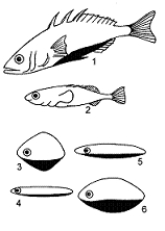
Which of the models in Figure 52-1 would elicit an attack response from another male stickleback?
A) 1 and 2
B) 1, 2, 4, and 5
C) 2, 3, and 5
D) 1, 3, 4, 5, and 6
E) 1 through 6
Use the figure to answer the corresponding question(s).
Which of the models in Figure 52-1 would elicit an attack response from another male stickleback?
A) 1 and 2
B) 1, 2, 4, and 5
C) 2, 3, and 5
D) 1, 3, 4, 5, and 6
E) 1 through 6
Question
Question
Question
Question
Question
Question
Question
Question
Question
Question
Question
Question
Question
Question
Question
Question
Question
Question
Figure 52-2
Use the figure to answer the corresponding question(s).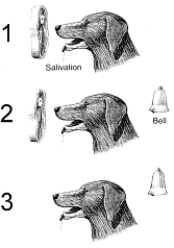
Refer to Figure 52-2.In this sequence of events the bell is serving as:
A) a motor stimulus.
B) the conditioned stimulus.
C) a cognition stimulus.
D) a sign stimulus.
E) the unconditioned stimulus.
Use the figure to answer the corresponding question(s).
Refer to Figure 52-2.In this sequence of events the bell is serving as:
A) a motor stimulus.
B) the conditioned stimulus.
C) a cognition stimulus.
D) a sign stimulus.
E) the unconditioned stimulus.
Question
Question
Question
Question
Question
Question
Question
Question
Question
Question
Question
Question
Figure 52-2
Use the figure to answer the corresponding question(s).
The sequence in Figure 52-2 illustrates:
A) classical conditioning.
B) habituation.
C) imprinting.
D) insight.
E) operant conditioning.
Use the figure to answer the corresponding question(s).
The sequence in Figure 52-2 illustrates:
A) classical conditioning.
B) habituation.
C) imprinting.
D) insight.
E) operant conditioning.
Question
Question
Question
Question
Question
Figure 52-2
Use the figure to answer the corresponding question(s).
The first panel of the sequence in Figure 52-2 reflects:
A) trial-and-error.
B) negative reinforcement.
C) an irrelevant stimulus.
D) the conditioned response.
E) the unconditioned response.
Use the figure to answer the corresponding question(s).
The first panel of the sequence in Figure 52-2 reflects:
A) trial-and-error.
B) negative reinforcement.
C) an irrelevant stimulus.
D) the conditioned response.
E) the unconditioned response.
Question
Question
Question
Question
Question
Question
Figure 52-3
Use the figure to answer the corresponding question(s).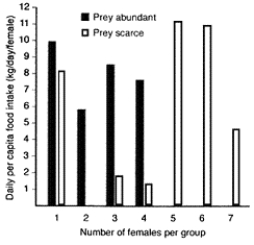
Which of the following statements accurately reflects the data in Figure 52-3?
A) Successful foraging is independent of prey density.
B) Hunting groups of two to three individuals are more effective at low prey densities.
C) Larger hunting groups are more effective at low prey densities.
D) Hunting groups of two to three individuals are more effective at all prey densities.
E) Successful foraging is independent of hunting group size.
Use the figure to answer the corresponding question(s).
Which of the following statements accurately reflects the data in Figure 52-3?
A) Successful foraging is independent of prey density.
B) Hunting groups of two to three individuals are more effective at low prey densities.
C) Larger hunting groups are more effective at low prey densities.
D) Hunting groups of two to three individuals are more effective at all prey densities.
E) Successful foraging is independent of hunting group size.
Question
Question
Question
Question
Question
Question
Question
Question
Question
Question
Question
Question
Question
Question
Question
Question
Question
Question
Question
Question
Question
Question
Question
Question
Question
Question
Question
Question
Question
Question
Question

Unlock Deck
Sign up to unlock the cards in this deck!
Unlock Deck
Unlock Deck
1/77

Play

Full screen (f)
Deck 52: Animal Behavior
1
Which of the following paired terms are incorrectly matched?
A) classical conditioning-extinction
B) habituation-relevant stimuli
C) imprinting-behavioral bonding
D) insight-trial and error
E) operant conditioning-reward
A) classical conditioning-extinction
B) habituation-relevant stimuli
C) imprinting-behavioral bonding
D) insight-trial and error
E) operant conditioning-reward
habituation-relevant stimuli
2
You see an advertisement on the television with a very good looking person showing off a new, shiny, powerful car.You seriously think about buying that particular car.Therefore, the person in the advertisement could best be described as the:
A) sign stimulus.
B) operant conditioner.
C) imprinter.
D) classic conditioner.
E) negative reinforcer.
A) sign stimulus.
B) operant conditioner.
C) imprinter.
D) classic conditioner.
E) negative reinforcer.
A
3
Persistent changes in behavior that result from experience are called:
A) instincts.
B) learned behaviors.
C) proximate causes.
D) ultimate causes.
E) innate behaviors.
A) instincts.
B) learned behaviors.
C) proximate causes.
D) ultimate causes.
E) innate behaviors.
B
4
The two body systems that play the largest role in animal behavior are:
A) reproductive and digestive.
B) reproductive and endocrine.
C) nervous and reproductive.
D) nervous and endocrine.
E) reproductive and muscular.
A) reproductive and digestive.
B) reproductive and endocrine.
C) nervous and reproductive.
D) nervous and endocrine.
E) reproductive and muscular.
Unlock Deck
Unlock for access to all 77 flashcards in this deck.
Unlock Deck
k this deck
5
Figure 52-1
Use the figure to answer the corresponding question(s).
Which of the models in Figure 52-1 would elicit an attack response from another male stickleback?
A) 1 and 2
B) 1, 2, 4, and 5
C) 2, 3, and 5
D) 1, 3, 4, 5, and 6
E) 1 through 6
Use the figure to answer the corresponding question(s).
Which of the models in Figure 52-1 would elicit an attack response from another male stickleback?
A) 1 and 2
B) 1, 2, 4, and 5
C) 2, 3, and 5
D) 1, 3, 4, 5, and 6
E) 1 through 6
Unlock Deck
Unlock for access to all 77 flashcards in this deck.
Unlock Deck
k this deck
6
A behavioral pattern is triggered by:
A) a circadian rhythm.
B) an environmental stimulus.
C) a positive reinforcement.
D) a psychological stimulus.
E) a sign stimulus.
A) a circadian rhythm.
B) an environmental stimulus.
C) a positive reinforcement.
D) a psychological stimulus.
E) a sign stimulus.
Unlock Deck
Unlock for access to all 77 flashcards in this deck.
Unlock Deck
k this deck
7
The best definition of learning is:
A) a conditioned response to a repetitive stimulus.
B) a long-term change in behavior due to experience.
C) a trial and error response to negative feedback.
D) the ability to ignore unwanted or irrelevant stimuli.
E) communication with another member of a society for mutual benefit.
A) a conditioned response to a repetitive stimulus.
B) a long-term change in behavior due to experience.
C) a trial and error response to negative feedback.
D) the ability to ignore unwanted or irrelevant stimuli.
E) communication with another member of a society for mutual benefit.
Unlock Deck
Unlock for access to all 77 flashcards in this deck.
Unlock Deck
k this deck
8
This is best described as how an animal responds to stimuli in its environment:
A) behavior.
B) learning.
C) proximate causes.
D) ultimate causes.
E) direct fitness..
A) behavior.
B) learning.
C) proximate causes.
D) ultimate causes.
E) direct fitness..
Unlock Deck
Unlock for access to all 77 flashcards in this deck.
Unlock Deck
k this deck
9
Proximate causes of behavior are causes that include all of the following except:
A) genetic processes.
B) developmental processes.
C) physiological processes.
D) evolutionary pressures.
E) immediate causes.
A) genetic processes.
B) developmental processes.
C) physiological processes.
D) evolutionary pressures.
E) immediate causes.
Unlock Deck
Unlock for access to all 77 flashcards in this deck.
Unlock Deck
k this deck
10
The brief length of time when mammals and birds learn the appearance of a parent is called:
A) imprinting.
B) habituation.
C) classical conditioning.
D) operant conditioning.
E) insight learning.
A) imprinting.
B) habituation.
C) classical conditioning.
D) operant conditioning.
E) insight learning.
Unlock Deck
Unlock for access to all 77 flashcards in this deck.
Unlock Deck
k this deck
11
All of the following factors influence the development of song in male white-crowned sparrows except:
A) acoustical stimuli.
B) genetics.
C) visual stimuli.
D) social interactions.
E) innate behaviors.
A) acoustical stimuli.
B) genetics.
C) visual stimuli.
D) social interactions.
E) innate behaviors.
Unlock Deck
Unlock for access to all 77 flashcards in this deck.
Unlock Deck
k this deck
12
Reproductive success is measured by:
A) the body mass of an organism.
B) the number of viable offspring.
C) the longevity of an organism.
D) the population size.
E) the amount of food it eats.
A) the body mass of an organism.
B) the number of viable offspring.
C) the longevity of an organism.
D) the population size.
E) the amount of food it eats.
Unlock Deck
Unlock for access to all 77 flashcards in this deck.
Unlock Deck
k this deck
13
A cat and a dog share a space in the barn.The cat gives birth to kittens in the dog's bed and then leaves them alone.Later, you notice that the kittens follow the dog around during the day.This is an example of which type of behavior?
A) imprinting
B) habituation
C) classical conditioning
D) operant conditioning
E) insight learning
A) imprinting
B) habituation
C) classical conditioning
D) operant conditioning
E) insight learning
Unlock Deck
Unlock for access to all 77 flashcards in this deck.
Unlock Deck
k this deck
14
An animal must be physiologically ready before it can exhibit a behavior pattern.This is illustrated by all of the following, except:
A) a 2-day-old human being not being able to walk.
B) a bald eagle not being able to fly at birth.
C) a sand wasp pupa not being able to lay an egg.
D) a taxi driver not being able to locate an address.
E) a sparrow not being able to sing immediately after hatching.
A) a 2-day-old human being not being able to walk.
B) a bald eagle not being able to fly at birth.
C) a sand wasp pupa not being able to lay an egg.
D) a taxi driver not being able to locate an address.
E) a sparrow not being able to sing immediately after hatching.
Unlock Deck
Unlock for access to all 77 flashcards in this deck.
Unlock Deck
k this deck
15
The study of behavior in natural environments from an evolutionary perspective is called:
A) ethology.
B) animal behavior.
C) behavioral ecology.
D) behavioral ethology.
E) direct fitness.
A) ethology.
B) animal behavior.
C) behavioral ecology.
D) behavioral ethology.
E) direct fitness.
Unlock Deck
Unlock for access to all 77 flashcards in this deck.
Unlock Deck
k this deck
16
Which of the following terms is most closely associated with ultimate causes of behavior?
A) physiological changes
B) genetic causes
C) evolutionary pressures
D) developmental processes
E) climatic pressures
A) physiological changes
B) genetic causes
C) evolutionary pressures
D) developmental processes
E) climatic pressures
Unlock Deck
Unlock for access to all 77 flashcards in this deck.
Unlock Deck
k this deck
17
Which of the following would not be a study of an organism in its natural environment?
A) a copperhead snake in an eastern deciduous forest
B) a fruit fly at a picnic
C) a child in a park
D) a clown fish in an aquarium
E) a lion on the African savanna.
A) a copperhead snake in an eastern deciduous forest
B) a fruit fly at a picnic
C) a child in a park
D) a clown fish in an aquarium
E) a lion on the African savanna.
Unlock Deck
Unlock for access to all 77 flashcards in this deck.
Unlock Deck
k this deck
18
Which of the following behaviors is not rigidly genetically programmed for the wasp Philanthus?
A) how to kill bees
B) how to dig a burrow
C) how to locate the burrow
D) how to cover a burrow
E) how to capture a bee
A) how to kill bees
B) how to dig a burrow
C) how to locate the burrow
D) how to cover a burrow
E) how to capture a bee
Unlock Deck
Unlock for access to all 77 flashcards in this deck.
Unlock Deck
k this deck
19
Which of the following terms is not applied to innate behavior?
A) inborn
B) learned
C) genetically programmed
D) instinctive
E) inherited
A) inborn
B) learned
C) genetically programmed
D) instinctive
E) inherited
Unlock Deck
Unlock for access to all 77 flashcards in this deck.
Unlock Deck
k this deck
20
A squirrel is born and raised in captivity.Once released into the wild, it immediately begins to bury nuts.This is an example of:
A) direct fitness.
B) learning.
C) proximate causes.
D) ultimate causes.
E) habituation.
A) direct fitness.
B) learning.
C) proximate causes.
D) ultimate causes.
E) habituation.
Unlock Deck
Unlock for access to all 77 flashcards in this deck.
Unlock Deck
k this deck
21
As the sun is setting, you notice bats coming out of a cave.In the very early morning several days later you notice them entering the cave.Which circadian rhythm would best explain this observation?
A) crepuscular
B) nocturnal
C) diurnal
D) lunar
E) asynchronous
A) crepuscular
B) nocturnal
C) diurnal
D) lunar
E) asynchronous
Unlock Deck
Unlock for access to all 77 flashcards in this deck.
Unlock Deck
k this deck
22
In mammals, the master clock is located in the:
A) pineal gland.
B) suprachiasmatic nucleus.
C) crepuscular gland.
D) biological clock.
E) pituitary gland.
A) pineal gland.
B) suprachiasmatic nucleus.
C) crepuscular gland.
D) biological clock.
E) pituitary gland.
Unlock Deck
Unlock for access to all 77 flashcards in this deck.
Unlock Deck
k this deck
23
Figure 52-2
Use the figure to answer the corresponding question(s).
Refer to Figure 52-2.In this sequence of events the bell is serving as:
A) a motor stimulus.
B) the conditioned stimulus.
C) a cognition stimulus.
D) a sign stimulus.
E) the unconditioned stimulus.
Use the figure to answer the corresponding question(s).
Refer to Figure 52-2.In this sequence of events the bell is serving as:
A) a motor stimulus.
B) the conditioned stimulus.
C) a cognition stimulus.
D) a sign stimulus.
E) the unconditioned stimulus.
Unlock Deck
Unlock for access to all 77 flashcards in this deck.
Unlock Deck
k this deck
24
The ability of an infant organism to be able to keep track of the location of its mother is an example of which type of behavior?
A) classical conditioning
B) habituation
C) imprinting
D) insight
E) operant conditioning
A) classical conditioning
B) habituation
C) imprinting
D) insight
E) operant conditioning
Unlock Deck
Unlock for access to all 77 flashcards in this deck.
Unlock Deck
k this deck
25
Animals, like fiddler crabs, that are busiest at dawn or dusk are termed:
A) crepuscular.
B) nocturnal.
C) diurnal.
D) lunar.
E) asynchronous.
A) crepuscular.
B) nocturnal.
C) diurnal.
D) lunar.
E) asynchronous.
Unlock Deck
Unlock for access to all 77 flashcards in this deck.
Unlock Deck
k this deck
26
You place ant traps around the house.You notice after a period of time that the ants do not enter the traps and the population size is greater than it was originally.This experience would best be explained by:
A) classical conditioning.
B) habituation.
C) proximate cause.
D) innate behavior.
E) operant conditioning.
A) classical conditioning.
B) habituation.
C) proximate cause.
D) innate behavior.
E) operant conditioning.
Unlock Deck
Unlock for access to all 77 flashcards in this deck.
Unlock Deck
k this deck
27
Which of the following statements concerning play is false?
A) It may be an example of imprinting.
B) It may be a way of learning to coordinate movements.
C) It may help animals learn social skills.
D) It may be a way to practice adult behavior.
E) It may function as a means of exercise.
A) It may be an example of imprinting.
B) It may be a way of learning to coordinate movements.
C) It may help animals learn social skills.
D) It may be a way to practice adult behavior.
E) It may function as a means of exercise.
Unlock Deck
Unlock for access to all 77 flashcards in this deck.
Unlock Deck
k this deck
28
Consider a rat that has had one bad experience with a poisoned food that caused it to become sick.This rat will now avoid that food due to a behavior known as:
A) classical conditioning.
B) habituation.
C) imprinting.
D) insight.
E) operant conditioning.
A) classical conditioning.
B) habituation.
C) imprinting.
D) insight.
E) operant conditioning.
Unlock Deck
Unlock for access to all 77 flashcards in this deck.
Unlock Deck
k this deck
29
When some animals mature, they then migrate long distances to their breeding grounds or to escape harsh weather.A signal for this type of behavior is often:
A) a conditioned stimulus.
B) day length.
C) negative reinforcement.
D) a sign stimulus.
E) territoriality.
A) a conditioned stimulus.
B) day length.
C) negative reinforcement.
D) a sign stimulus.
E) territoriality.
Unlock Deck
Unlock for access to all 77 flashcards in this deck.
Unlock Deck
k this deck
30
Which of the following statements about biological clocks is false?
A) They are limited to vertebrates.
B) They are regulated by clock proteins that act both within and outside the nervous system.
C) They have complex feedback loops.
D) They are controlled by genes.
E) They are capable of sustaining biological rhythms independently of environmental cues.
A) They are limited to vertebrates.
B) They are regulated by clock proteins that act both within and outside the nervous system.
C) They have complex feedback loops.
D) They are controlled by genes.
E) They are capable of sustaining biological rhythms independently of environmental cues.
Unlock Deck
Unlock for access to all 77 flashcards in this deck.
Unlock Deck
k this deck
31
The optimal foraging theory states that when animals forage, they maximize their _____ per unit of foraging time.
A) migration rates
B) energy intake
C) ability to capture prey
D) interaction with predators
E) ability to hide from predators
A) migration rates
B) energy intake
C) ability to capture prey
D) interaction with predators
E) ability to hide from predators
Unlock Deck
Unlock for access to all 77 flashcards in this deck.
Unlock Deck
k this deck
32
Which of the terms describes an animal whose behavior is tied to a circadian rhythm?
A) carnivore
B) crepuscular
C) parasitic
D) reptilian
E) symbiotic
A) carnivore
B) crepuscular
C) parasitic
D) reptilian
E) symbiotic
Unlock Deck
Unlock for access to all 77 flashcards in this deck.
Unlock Deck
k this deck
33
Which animals exhibit insight learning?
A) all vertebrates
B) a few vertebrates, including primates
C) only primates
D) only humans
E) all vertebrates, and a few invertebrates
A) all vertebrates
B) a few vertebrates, including primates
C) only primates
D) only humans
E) all vertebrates, and a few invertebrates
Unlock Deck
Unlock for access to all 77 flashcards in this deck.
Unlock Deck
k this deck
34
Mothers with small children often do not seem to hear their noisy children.This is an example of:
A) imprinting.
B) habituation.
C) classical conditioning.
D) operant conditioning.
E) insight learning.
A) imprinting.
B) habituation.
C) classical conditioning.
D) operant conditioning.
E) insight learning.
Unlock Deck
Unlock for access to all 77 flashcards in this deck.
Unlock Deck
k this deck
35
Figure 52-2
Use the figure to answer the corresponding question(s).
The sequence in Figure 52-2 illustrates:
A) classical conditioning.
B) habituation.
C) imprinting.
D) insight.
E) operant conditioning.
Use the figure to answer the corresponding question(s).
The sequence in Figure 52-2 illustrates:
A) classical conditioning.
B) habituation.
C) imprinting.
D) insight.
E) operant conditioning.
Unlock Deck
Unlock for access to all 77 flashcards in this deck.
Unlock Deck
k this deck
36
What secretes melatonin, a hormone that promotes sleep, in human beings?
A) pineal gland
B) suprachiasmatic nucleus
C) crepuscular gland
D) biological clock
E) hypothalamus
A) pineal gland
B) suprachiasmatic nucleus
C) crepuscular gland
D) biological clock
E) hypothalamus
Unlock Deck
Unlock for access to all 77 flashcards in this deck.
Unlock Deck
k this deck
37
The typical waking and sleeping cycles of most people can be described as:
A) crepuscular.
B) nocturnal.
C) diurnal.
D) lunar.
E) annual.
A) crepuscular.
B) nocturnal.
C) diurnal.
D) lunar.
E) annual.
Unlock Deck
Unlock for access to all 77 flashcards in this deck.
Unlock Deck
k this deck
38
How does the availability of milkweed plants affect the migration of monarch butterflies?
A) Without milkweed plants, the female monarch would starve.
B) Without milkweed plants, the monarch larvae would starve.
C) Without milkweed plants, the male monarch would starve.
D) When milkweed plants are abundant, monarch predators would thrive
E) When milkweed plants are abundant, the male monarch could not find a mate.
A) Without milkweed plants, the female monarch would starve.
B) Without milkweed plants, the monarch larvae would starve.
C) Without milkweed plants, the male monarch would starve.
D) When milkweed plants are abundant, monarch predators would thrive
E) When milkweed plants are abundant, the male monarch could not find a mate.
Unlock Deck
Unlock for access to all 77 flashcards in this deck.
Unlock Deck
k this deck
39
Which of the following is not used by animals as a guide for navigation?
A) gravity
B) odors
C) magnetic fields
D) sun
E) stars
A) gravity
B) odors
C) magnetic fields
D) sun
E) stars
Unlock Deck
Unlock for access to all 77 flashcards in this deck.
Unlock Deck
k this deck
40
Figure 52-2
Use the figure to answer the corresponding question(s).
The first panel of the sequence in Figure 52-2 reflects:
A) trial-and-error.
B) negative reinforcement.
C) an irrelevant stimulus.
D) the conditioned response.
E) the unconditioned response.
Use the figure to answer the corresponding question(s).
The first panel of the sequence in Figure 52-2 reflects:
A) trial-and-error.
B) negative reinforcement.
C) an irrelevant stimulus.
D) the conditioned response.
E) the unconditioned response.
Unlock Deck
Unlock for access to all 77 flashcards in this deck.
Unlock Deck
k this deck
41
The field of sociobiology was much expanded by the book, Sociobiology: The New Synthesis, written by:
A) K.Lorenz.
B) N.Tinbergen.
C) W.Hamilton.
D) W.Dilger.
E) E.O.Wilson.
A) K.Lorenz.
B) N.Tinbergen.
C) W.Hamilton.
D) W.Dilger.
E) E.O.Wilson.
Unlock Deck
Unlock for access to all 77 flashcards in this deck.
Unlock Deck
k this deck
42
Distinguish between diurnal, nocturnal, and crepuscular animals, and give an example of each.
Unlock Deck
Unlock for access to all 77 flashcards in this deck.
Unlock Deck
k this deck
43
One of the drawbacks to using pheromones for communication is:
A) they are effective only at night.
B) they can only affect unrelated species.
C) they are toxic to unrelated species.
D) they require little energy for production.
E) they can transmit only a limited amount of information.
A) they are effective only at night.
B) they can only affect unrelated species.
C) they are toxic to unrelated species.
D) they require little energy for production.
E) they can transmit only a limited amount of information.
Unlock Deck
Unlock for access to all 77 flashcards in this deck.
Unlock Deck
k this deck
44
Identify two different types of mating systems and list the advantages and disadvantages of each.
Unlock Deck
Unlock for access to all 77 flashcards in this deck.
Unlock Deck
k this deck
45
Parental care of offspring:
A) for many animals has a lower cost than benefit.
B) results in a decreased probability that each offspring will survive.
C) is more common in species in which the female produces two or more times during a breeding season.
D) is more common among male animals than among females.
E) is more common among male fishes.
A) for many animals has a lower cost than benefit.
B) results in a decreased probability that each offspring will survive.
C) is more common in species in which the female produces two or more times during a breeding season.
D) is more common among male animals than among females.
E) is more common among male fishes.
Unlock Deck
Unlock for access to all 77 flashcards in this deck.
Unlock Deck
k this deck
46
Figure 52-3
Use the figure to answer the corresponding question(s).
Which of the following statements accurately reflects the data in Figure 52-3?
A) Successful foraging is independent of prey density.
B) Hunting groups of two to three individuals are more effective at low prey densities.
C) Larger hunting groups are more effective at low prey densities.
D) Hunting groups of two to three individuals are more effective at all prey densities.
E) Successful foraging is independent of hunting group size.
Use the figure to answer the corresponding question(s).
Which of the following statements accurately reflects the data in Figure 52-3?
A) Successful foraging is independent of prey density.
B) Hunting groups of two to three individuals are more effective at low prey densities.
C) Larger hunting groups are more effective at low prey densities.
D) Hunting groups of two to three individuals are more effective at all prey densities.
E) Successful foraging is independent of hunting group size.
Unlock Deck
Unlock for access to all 77 flashcards in this deck.
Unlock Deck
k this deck
47
Dominance, sexual behavior, and territoriality can all be related in song birds.This is because:
A) the establishment of a territory by singing tends to reduce conflict.
B) the establishment of a territory encourages use of the entire habitat and regulates the size of the breeding area.
C) competing species are eliminated.
D) only individuals that successfully defend their territory can mate.
E) females sing but males do not.
A) the establishment of a territory by singing tends to reduce conflict.
B) the establishment of a territory encourages use of the entire habitat and regulates the size of the breeding area.
C) competing species are eliminated.
D) only individuals that successfully defend their territory can mate.
E) females sing but males do not.
Unlock Deck
Unlock for access to all 77 flashcards in this deck.
Unlock Deck
k this deck
48
Dominance hierarchies:
A) are limited to primate societies.
B) are only characteristic of males defending territories.
C) in chimpanzees, cannot be passed from one generation to the next.
D) in chimpanzees, are independent of nutrition and maternal care.
E) in female chimpanzees, impact the survival and development of their offspring.
A) are limited to primate societies.
B) are only characteristic of males defending territories.
C) in chimpanzees, cannot be passed from one generation to the next.
D) in chimpanzees, are independent of nutrition and maternal care.
E) in female chimpanzees, impact the survival and development of their offspring.
Unlock Deck
Unlock for access to all 77 flashcards in this deck.
Unlock Deck
k this deck
49
Many types of social behavior involve cooperative behavior.The major purpose of a pair bond is to form a stable relationship for the purpose of:
A) securing food.
B) defending territory.
C) kin selection.
D) mating and caring for young.
E) selection of a mate.
A) securing food.
B) defending territory.
C) kin selection.
D) mating and caring for young.
E) selection of a mate.
Unlock Deck
Unlock for access to all 77 flashcards in this deck.
Unlock Deck
k this deck
50
Males of some animal species have a display area where they compete for reproductively available females.This area is known as:
A) a lek.
B) a home range.
C) a pride.
D) a territory.
E) a hive.
A) a lek.
B) a home range.
C) a pride.
D) a territory.
E) a hive.
Unlock Deck
Unlock for access to all 77 flashcards in this deck.
Unlock Deck
k this deck
51
Which of the following vertebrates has a social structure most closely resembling social insects?
A) the phalarope
B) lions
C) the naked mole rats
D) Siberian tigers
E) chimpanzees
A) the phalarope
B) lions
C) the naked mole rats
D) Siberian tigers
E) chimpanzees
Unlock Deck
Unlock for access to all 77 flashcards in this deck.
Unlock Deck
k this deck
52
In some animals, such as the marsh wren, one male bird mates with several females.This is known as:
A) polygyny.
B) polyandry.
C) monogamy.
D) a dominance hierarchy.
E) codominance.
A) polygyny.
B) polyandry.
C) monogamy.
D) a dominance hierarchy.
E) codominance.
Unlock Deck
Unlock for access to all 77 flashcards in this deck.
Unlock Deck
k this deck
53
When a honey bee scout returns to the hive, it will perform a round dance to indicate that the nectar is close, while the waggle dance indicates the nectar is distant to the hive.This dance is an example of:
A) sign stimuli linked to social interaction.
B) migratory behavior stimulated by environmental changes.
C) insight learning based on trial and error.
D) a physiologically meaningful stimulus (food) and an irrelevant stimulus (dance).
E) optimal foraging dependent on cooperative social behavior.
A) sign stimuli linked to social interaction.
B) migratory behavior stimulated by environmental changes.
C) insight learning based on trial and error.
D) a physiologically meaningful stimulus (food) and an irrelevant stimulus (dance).
E) optimal foraging dependent on cooperative social behavior.
Unlock Deck
Unlock for access to all 77 flashcards in this deck.
Unlock Deck
k this deck
54
Some members of an animal society may have greater success at reproduction as a result of:
A) dominance hierarchy.
B) sexual selection.
C) reproductive isolating mechanisms.
D) dominance hierarchy along with sexual selection.
E) dominance hierarchy along with sexual selection and reproductive isolating mechanisms.
A) dominance hierarchy.
B) sexual selection.
C) reproductive isolating mechanisms.
D) dominance hierarchy along with sexual selection.
E) dominance hierarchy along with sexual selection and reproductive isolating mechanisms.
Unlock Deck
Unlock for access to all 77 flashcards in this deck.
Unlock Deck
k this deck
55
A soldier ant dies defending the ant colony from invading termites.Which of the following terms best describes this event?
A) suprachiasmatic protection
B) sociobiology
C) ultimate cause
D) inclusive fitness
E) altruism
A) suprachiasmatic protection
B) sociobiology
C) ultimate cause
D) inclusive fitness
E) altruism
Unlock Deck
Unlock for access to all 77 flashcards in this deck.
Unlock Deck
k this deck
56
Which of the following is the most important in order for organisms to facilitate social behavior?
A) There must be a large population.
B) All present must be of the same species.
C) All present must have the same genetic imprinting.
D) There must be a mechanism for communication.
E) No outsiders can be allowed to enter the group.
A) There must be a large population.
B) All present must be of the same species.
C) All present must have the same genetic imprinting.
D) There must be a mechanism for communication.
E) No outsiders can be allowed to enter the group.
Unlock Deck
Unlock for access to all 77 flashcards in this deck.
Unlock Deck
k this deck
57
Sexual selection:
A) is the basis for establishing elaborate societies.
B) leads to a reproductive advantage for some individuals over others of the same sex and species.
C) favors monogamous mating systems.
D) leads to the investment of parental care of offspring.
E) is not a type of natural selection.
A) is the basis for establishing elaborate societies.
B) leads to a reproductive advantage for some individuals over others of the same sex and species.
C) favors monogamous mating systems.
D) leads to the investment of parental care of offspring.
E) is not a type of natural selection.
Unlock Deck
Unlock for access to all 77 flashcards in this deck.
Unlock Deck
k this deck
58
The difference between a society and an aggregation is that aggregations are characterized by:
A) communication between all animals present.
B) individuals present only for breeding.
C) a lack of intentional interaction between those animals present.
D) confinement; while in a society the individuals are free to enter and exit.
E) genetically determined behavioral responses required to bring these individuals together.
A) communication between all animals present.
B) individuals present only for breeding.
C) a lack of intentional interaction between those animals present.
D) confinement; while in a society the individuals are free to enter and exit.
E) genetically determined behavioral responses required to bring these individuals together.
Unlock Deck
Unlock for access to all 77 flashcards in this deck.
Unlock Deck
k this deck
59
For an animal to respond to a pheromone it must:
A) have a specific receptor.
B) be able to see it coming.
C) be able to smell it with its nose.
D) have a thin epidermis or hair so it can penetrate.
E) be of the opposite sex of the individual from which it was produced.
A) have a specific receptor.
B) be able to see it coming.
C) be able to smell it with its nose.
D) have a thin epidermis or hair so it can penetrate.
E) be of the opposite sex of the individual from which it was produced.
Unlock Deck
Unlock for access to all 77 flashcards in this deck.
Unlock Deck
k this deck
60
Many organisms have different reproductive strategies.Which of the following most accurately reflects altruistic behavior?
A) courtship rituals
B) dominance hierarchy
C) optimal foraging strategies
D) infant care of related offspring
E) territoriality
A) courtship rituals
B) dominance hierarchy
C) optimal foraging strategies
D) infant care of related offspring
E) territoriality
Unlock Deck
Unlock for access to all 77 flashcards in this deck.
Unlock Deck
k this deck
61
In the mammalian biological clock, the "master clock" is located in the pineal gland.
____________________
____________________
Unlock Deck
Unlock for access to all 77 flashcards in this deck.
Unlock Deck
k this deck
62
Imprinting is a type of social learning based on an early experience.
____________________
____________________
Unlock Deck
Unlock for access to all 77 flashcards in this deck.
Unlock Deck
k this deck
63
In polygyny, one female mates with several males.
____________________
____________________
Unlock Deck
Unlock for access to all 77 flashcards in this deck.
Unlock Deck
k this deck
64
Navigation requires both compass sense and map sense.
____________________
____________________
Unlock Deck
Unlock for access to all 77 flashcards in this deck.
Unlock Deck
k this deck
65
Proximate causes of behavior have evolutionary explanations.
____________________
____________________
Unlock Deck
Unlock for access to all 77 flashcards in this deck.
Unlock Deck
k this deck
66
By definition, pheromones are chemical signals secreted into the bloodstream.
____________________
____________________
Unlock Deck
Unlock for access to all 77 flashcards in this deck.
Unlock Deck
k this deck
67
If the food supply is far from a beehive, the scout bee performs a waggle dance.
____________________
____________________
Unlock Deck
Unlock for access to all 77 flashcards in this deck.
Unlock Deck
k this deck
68
In classical conditioning, an animal must do something to gain a reward or avoid punishment.
____________________
____________________
Unlock Deck
Unlock for access to all 77 flashcards in this deck.
Unlock Deck
k this deck
69
Discuss the concept of inclusive fitness.
Unlock Deck
Unlock for access to all 77 flashcards in this deck.
Unlock Deck
k this deck
70
The salivating response to a bell is what Pavlov called an unconditioned response.
____________________
____________________
Unlock Deck
Unlock for access to all 77 flashcards in this deck.
Unlock Deck
k this deck
71
In a honeybee society, the worker bees are all male.
____________________
____________________
Unlock Deck
Unlock for access to all 77 flashcards in this deck.
Unlock Deck
k this deck
72
The egg rolling behavior in the European graylag goose is an example of a motor program.
____________________
____________________
Unlock Deck
Unlock for access to all 77 flashcards in this deck.
Unlock Deck
k this deck
73
Aposematic coloration is also called habituation.
____________________
____________________
Unlock Deck
Unlock for access to all 77 flashcards in this deck.
Unlock Deck
k this deck
74
Diurnal animals are most active at night.
____________________
____________________
Unlock Deck
Unlock for access to all 77 flashcards in this deck.
Unlock Deck
k this deck
75
Develop a scenario different from that in the book that demonstrates a survival benefit of each of the following types of learning: classical conditioning, operant conditioning habituation, imprinting, and insight.
Unlock Deck
Unlock for access to all 77 flashcards in this deck.
Unlock Deck
k this deck
76
Instinct is another name for innate behavior.
____________________
____________________
Unlock Deck
Unlock for access to all 77 flashcards in this deck.
Unlock Deck
k this deck
77
Hansen's rule is a mathematical model dealing with altruism.
____________________
____________________
Unlock Deck
Unlock for access to all 77 flashcards in this deck.
Unlock Deck
k this deck
Unlock Deck
Unlock for access to all 77 flashcards in this deck.






