







 Chat with AI

Deck 16: Human Genetics and the Human Genome
Full screen (f)

Question

Question
Question
Question
Question
Question
Question
Question
Figure 16-2
Use the figure to answer the corresponding question(s).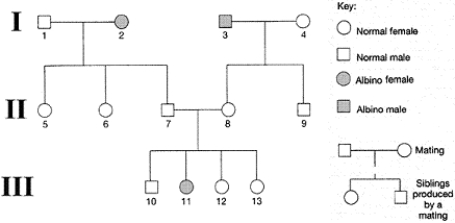
In genomic imprinting:
A) a gene is imprinted with the phenotype of the parent, passing it to a progeny.
B) the expression of a gene depends on the parental phenotype.
C) a gene is imprinted with the age of the parent, passing it to the progeny.
D) the expression of a gene depends on which parent it is inherited from.
E) is a place where a part of a chromatid is attached to a chromosome
Use the figure to answer the corresponding question(s).
In genomic imprinting:
A) a gene is imprinted with the phenotype of the parent, passing it to a progeny.
B) the expression of a gene depends on the parental phenotype.
C) a gene is imprinted with the age of the parent, passing it to the progeny.
D) the expression of a gene depends on which parent it is inherited from.
E) is a place where a part of a chromatid is attached to a chromosome
Question
Question
Figure 16-2
Use the figure to answer the corresponding question(s).
Refer to Figure 16-2.Based on the phenotypes of the third generation, the genotype of the father in the second generation must be:
A) homozygous for albinism.
B) heterozygous for hair color.
C) heterozygous for albinism.
D) X-linked.
E) dominant.
Use the figure to answer the corresponding question(s).
Refer to Figure 16-2.Based on the phenotypes of the third generation, the genotype of the father in the second generation must be:
A) homozygous for albinism.
B) heterozygous for hair color.
C) heterozygous for albinism.
D) X-linked.
E) dominant.
Question
Question
Figure 16-2
Use the figure to answer the corresponding question(s).
The genotypes of the normal females in the second generation in Figure 16-2 are:
A) homozygous for albinism.
B) heterozygous for hair color.
C) heterozygous for albinism.
D) X-linked.
E) unknown.
Use the figure to answer the corresponding question(s).
The genotypes of the normal females in the second generation in Figure 16-2 are:
A) homozygous for albinism.
B) heterozygous for hair color.
C) heterozygous for albinism.
D) X-linked.
E) unknown.
Question
Question
Question
Question
Question
Question
Figure 16-2
Use the figure to answer the corresponding question(s).
The inheritance pattern demonstrated by the pedigree in Figure 16-2 is:
A) autosomal recessive.
B) autosomal dominant.
C) X-linked recessive.
D) X-linked dominant.
E) unknown from these data.
Use the figure to answer the corresponding question(s).
The inheritance pattern demonstrated by the pedigree in Figure 16-2 is:
A) autosomal recessive.
B) autosomal dominant.
C) X-linked recessive.
D) X-linked dominant.
E) unknown from these data.
Question
Question
Question
Question
Question
Question
Question
Question
Question
Question
Question
Question
Question
Question
Question
Question
Question
Question
Question
Question
Question
Question
The sperm in the figure below were most likely produced by: 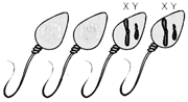
A) nondisjunction.
B) mutation.
C) X-linkage.
D) translocation.
E) normal meiosis.
A) nondisjunction.
B) mutation.
C) X-linkage.
D) translocation.
E) normal meiosis.
Question
Question
Question
Question
Question
Question
Question
Question
Question
Question
Question
Question
Question
Question
Question
Question
Question
Question
Question
Question
Question
Question
Question
Question
Question
Question
Question
Question
Question
Question
Question
Question
Question
Question
Question
Question
Question
Question

Unlock Deck
Sign up to unlock the cards in this deck!
Unlock Deck
Unlock Deck
1/78

Play

Full screen (f)
Deck 16: Human Genetics and the Human Genome
1
Gene targeting has been used in mice to produce strains that were either homozygous or heterozygous for __________.
A) PKU
B) cystic fibrosis
C) Huntington's disease
D) sickle cell anemia
E) Tays Sachs Disease
A) PKU
B) cystic fibrosis
C) Huntington's disease
D) sickle cell anemia
E) Tays Sachs Disease
B
2
The position of a specific gene on a chromosome can be determined by:
A) preparing a karyotype.
B) southern blotting.
C) genomic hybridization.
D) chromosome sorting.
E) fluorescent in situ hybridization.
A) preparing a karyotype.
B) southern blotting.
C) genomic hybridization.
D) chromosome sorting.
E) fluorescent in situ hybridization.
E
3
Polyploidy is:
A) the presence of more than two of a certain chromosome.
B) more than two of a certain chromosome.
C) more than one chromosome.
D) the presence of multiple sets of chromosomes.
E) the general term for conditions such as Down or Turner syndrome.
A) the presence of more than two of a certain chromosome.
B) more than two of a certain chromosome.
C) more than one chromosome.
D) the presence of multiple sets of chromosomes.
E) the general term for conditions such as Down or Turner syndrome.
D
4
The normal human karyotype contains __________ chromosomes.
A) 22
B) 23
C) 44
D) 46
E) 54
A) 22
B) 23
C) 44
D) 46
E) 54
Unlock Deck
Unlock for access to all 78 flashcards in this deck.
Unlock Deck
k this deck
5
The human genome contains about __________ genes.
A) 25,000
B) 45,000
C) 60,000
D) 80,000
E) 120,000
A) 25,000
B) 45,000
C) 60,000
D) 80,000
E) 120,000
Unlock Deck
Unlock for access to all 78 flashcards in this deck.
Unlock Deck
k this deck
6
An individual who inherited the specific chromosome __________ deletion from the __________ would most likely have Prader-Willi syndrome rather than Angelman syndrome.
A) 15; mother
B) 15; father
C) 21; mother
D) 21; father
E) 12; father
A) 15; mother
B) 15; father
C) 21; mother
D) 21; father
E) 12; father
Unlock Deck
Unlock for access to all 78 flashcards in this deck.
Unlock Deck
k this deck
7
Karyotyping is useful for determining:
A) the number of chromosomes in an individual.
B) if recessive traits are present.
C) if a specific gene is missing from a chromosome.
D) if gene mutations have occurred.
E) the presence of sickle cell anemia.
A) the number of chromosomes in an individual.
B) if recessive traits are present.
C) if a specific gene is missing from a chromosome.
D) if gene mutations have occurred.
E) the presence of sickle cell anemia.
Unlock Deck
Unlock for access to all 78 flashcards in this deck.
Unlock Deck
k this deck
8
Figure 16-2
Use the figure to answer the corresponding question(s).
In genomic imprinting:
A) a gene is imprinted with the phenotype of the parent, passing it to a progeny.
B) the expression of a gene depends on the parental phenotype.
C) a gene is imprinted with the age of the parent, passing it to the progeny.
D) the expression of a gene depends on which parent it is inherited from.
E) is a place where a part of a chromatid is attached to a chromosome
Use the figure to answer the corresponding question(s).
In genomic imprinting:
A) a gene is imprinted with the phenotype of the parent, passing it to a progeny.
B) the expression of a gene depends on the parental phenotype.
C) a gene is imprinted with the age of the parent, passing it to the progeny.
D) the expression of a gene depends on which parent it is inherited from.
E) is a place where a part of a chromatid is attached to a chromosome
Unlock Deck
Unlock for access to all 78 flashcards in this deck.
Unlock Deck
k this deck
9
Human genetics can be effectively studied using:
A) offspring raised under controlled conditions.
B) experimental matings between true-breeding strains.
C) controlled matings.
D) population studies of large extended families.
E) population studies of small extended families.
A) offspring raised under controlled conditions.
B) experimental matings between true-breeding strains.
C) controlled matings.
D) population studies of large extended families.
E) population studies of small extended families.
Unlock Deck
Unlock for access to all 78 flashcards in this deck.
Unlock Deck
k this deck
10
Figure 16-2
Use the figure to answer the corresponding question(s).
Refer to Figure 16-2.Based on the phenotypes of the third generation, the genotype of the father in the second generation must be:
A) homozygous for albinism.
B) heterozygous for hair color.
C) heterozygous for albinism.
D) X-linked.
E) dominant.
Use the figure to answer the corresponding question(s).
Refer to Figure 16-2.Based on the phenotypes of the third generation, the genotype of the father in the second generation must be:
A) homozygous for albinism.
B) heterozygous for hair color.
C) heterozygous for albinism.
D) X-linked.
E) dominant.
Unlock Deck
Unlock for access to all 78 flashcards in this deck.
Unlock Deck
k this deck
11
Comparing the human and mouse genomes has revealed that
A) the mouse and human share few genes.
B) the mouse and human genomes are identical.
C) the mouse and human genomes have no genes in common.
D) the mouse and human share most genes.
E) the mouse and human genomes have identical noncoding DNA
A) the mouse and human share few genes.
B) the mouse and human genomes are identical.
C) the mouse and human genomes have no genes in common.
D) the mouse and human share most genes.
E) the mouse and human genomes have identical noncoding DNA
Unlock Deck
Unlock for access to all 78 flashcards in this deck.
Unlock Deck
k this deck
12
Figure 16-2
Use the figure to answer the corresponding question(s).
The genotypes of the normal females in the second generation in Figure 16-2 are:
A) homozygous for albinism.
B) heterozygous for hair color.
C) heterozygous for albinism.
D) X-linked.
E) unknown.
Use the figure to answer the corresponding question(s).
The genotypes of the normal females in the second generation in Figure 16-2 are:
A) homozygous for albinism.
B) heterozygous for hair color.
C) heterozygous for albinism.
D) X-linked.
E) unknown.
Unlock Deck
Unlock for access to all 78 flashcards in this deck.
Unlock Deck
k this deck
13
Polyploidy:
A) may be the result of more than one sperm fertilizing an egg.
B) is not lethal in humans.
C) may be the result of the failure of a chromosome to separate during meiosis.
D) can be due to nondisjunction for a chromosome.
E) is the mechanism of dosage compensation
A) may be the result of more than one sperm fertilizing an egg.
B) is not lethal in humans.
C) may be the result of the failure of a chromosome to separate during meiosis.
D) can be due to nondisjunction for a chromosome.
E) is the mechanism of dosage compensation
Unlock Deck
Unlock for access to all 78 flashcards in this deck.
Unlock Deck
k this deck
14
About what percentage of the human DNA codes for polypeptides?
A) 2%
B) 5%
C) 8%
D) 50%
E) 86%
A) 2%
B) 5%
C) 8%
D) 50%
E) 86%
Unlock Deck
Unlock for access to all 78 flashcards in this deck.
Unlock Deck
k this deck
15
The Human Genome Project accomplishes all of the following except:
A) sequencing the entire human genome.
B) identifying all of the genes in the human genome.
C) the foundation for studying gene function in humans.
D) basis for studying variations in gene sequences related to illness.
E) imprinting a gene with the phenotype of the parent
A) sequencing the entire human genome.
B) identifying all of the genes in the human genome.
C) the foundation for studying gene function in humans.
D) basis for studying variations in gene sequences related to illness.
E) imprinting a gene with the phenotype of the parent
Unlock Deck
Unlock for access to all 78 flashcards in this deck.
Unlock Deck
k this deck
16
Autosomal aneuploidies arise by:
A) chromosome breakage and rejoining.
B) nondisjunction.
C) errors in crossing-over.
D) mistakes in chromosome replication.
E) mutations.
A) chromosome breakage and rejoining.
B) nondisjunction.
C) errors in crossing-over.
D) mistakes in chromosome replication.
E) mutations.
Unlock Deck
Unlock for access to all 78 flashcards in this deck.
Unlock Deck
k this deck
17
Aneuploidies describe:
A) a phenomenon that only occurs in plants.
B) a condition in which an extra chromosome is present or one is absent.
C) a defect that is always fatal in humans.
D) an uncommon condition in humans.
E) mutations that almost always have a beneficial effect on an individual.
A) a phenomenon that only occurs in plants.
B) a condition in which an extra chromosome is present or one is absent.
C) a defect that is always fatal in humans.
D) an uncommon condition in humans.
E) mutations that almost always have a beneficial effect on an individual.
Unlock Deck
Unlock for access to all 78 flashcards in this deck.
Unlock Deck
k this deck
18
Figure 16-2
Use the figure to answer the corresponding question(s).
The inheritance pattern demonstrated by the pedigree in Figure 16-2 is:
A) autosomal recessive.
B) autosomal dominant.
C) X-linked recessive.
D) X-linked dominant.
E) unknown from these data.
Use the figure to answer the corresponding question(s).
The inheritance pattern demonstrated by the pedigree in Figure 16-2 is:
A) autosomal recessive.
B) autosomal dominant.
C) X-linked recessive.
D) X-linked dominant.
E) unknown from these data.
Unlock Deck
Unlock for access to all 78 flashcards in this deck.
Unlock Deck
k this deck
19
Colchicine is a drug that:
A) arrests cells in mitotic telophase.
B) stimulates meiosis.
C) prevents DNA replication.
D) arrests cells in mitotic metaphase.
E) prevents cells from entering prophase.
A) arrests cells in mitotic telophase.
B) stimulates meiosis.
C) prevents DNA replication.
D) arrests cells in mitotic metaphase.
E) prevents cells from entering prophase.
Unlock Deck
Unlock for access to all 78 flashcards in this deck.
Unlock Deck
k this deck
20
The normal human karyotype contains __________ autosomes.
A) 22
B) 23
C) 44
D) 46
E) 54
A) 22
B) 23
C) 44
D) 46
E) 54
Unlock Deck
Unlock for access to all 78 flashcards in this deck.
Unlock Deck
k this deck
21
Persons having an XO karyotype are sterile females.They have __________ syndrome.
A) Turner
B) Klinefelter
C) Down (trisomy form)
D) Phenylketonuria
E) Down (translocation form)
A) Turner
B) Klinefelter
C) Down (trisomy form)
D) Phenylketonuria
E) Down (translocation form)
Unlock Deck
Unlock for access to all 78 flashcards in this deck.
Unlock Deck
k this deck
22
Why are most infants with phenylketonuria usually healthy at birth?
A) The defect causing the condition has usually been repaired by that time.
B) The mother breaks down phenylalanine for both herself and her fetus.
C) The infant can produce sufficient quantities of the enzymes needed by birth.
D) Phenylalanine can be completely excreted in infants.
E) Phenylalanine is completely metabolized in infants.
A) The defect causing the condition has usually been repaired by that time.
B) The mother breaks down phenylalanine for both herself and her fetus.
C) The infant can produce sufficient quantities of the enzymes needed by birth.
D) Phenylalanine can be completely excreted in infants.
E) Phenylalanine is completely metabolized in infants.
Unlock Deck
Unlock for access to all 78 flashcards in this deck.
Unlock Deck
k this deck
23
Down syndrome is an example of a __________ condition.
A) monosomic
B) disomic
C) trisomic
D) polyploid
E) transgenic
A) monosomic
B) disomic
C) trisomic
D) polyploid
E) transgenic
Unlock Deck
Unlock for access to all 78 flashcards in this deck.
Unlock Deck
k this deck
24
Which of the following statements concerning Down syndrome is FALSE?
A) Down syndrome involves nondisjunction.
B) Down syndrome individuals have 47 chromosomes per somatic cell.
C) Down syndrome incidence increases with increasing material age.
D) Down syndrome individuals have an extra chromosome 22.
E) Down syndrome is variable in expression.
A) Down syndrome involves nondisjunction.
B) Down syndrome individuals have 47 chromosomes per somatic cell.
C) Down syndrome incidence increases with increasing material age.
D) Down syndrome individuals have an extra chromosome 22.
E) Down syndrome is variable in expression.
Unlock Deck
Unlock for access to all 78 flashcards in this deck.
Unlock Deck
k this deck
25
In a chromosomal inversion a segment of a chromosome is:
A) reversed.
B) duplicated.
C) lost.
D) attached to a nonhomologous chromosome.
E) deleted
A) reversed.
B) duplicated.
C) lost.
D) attached to a nonhomologous chromosome.
E) deleted
Unlock Deck
Unlock for access to all 78 flashcards in this deck.
Unlock Deck
k this deck
26
Persons having an XXY karyotype are nearly normal males but produce few or no sperm.They have __________ syndrome.
A) Turner
B) Klinefelter
C) Down (trisomy form)
D) Phenylketonuria
E) Down (translocation form)
A) Turner
B) Klinefelter
C) Down (trisomy form)
D) Phenylketonuria
E) Down (translocation form)
Unlock Deck
Unlock for access to all 78 flashcards in this deck.
Unlock Deck
k this deck
27
A karyotype reveals that an individual is XYY.Based on your knowledge of human genetics you correctly conclude that this individual is phenotypically __________ and __________.
A) female; with criminal tendencies
B) female; sterile
C) female; fertile
D) male; sterile
E) male; fertile
A) female; with criminal tendencies
B) female; sterile
C) female; fertile
D) male; sterile
E) male; fertile
Unlock Deck
Unlock for access to all 78 flashcards in this deck.
Unlock Deck
k this deck
28
Which of the following are inborn errors of metabolism?
A) PKU and alkaptonuria
B) sickle cell anemia and hemophilia
C) cystic fibrosis and Tay-Sachs disease
D) Huntington's disease and fragile X syndrome
E) cri-du-chat syndrome and Down syndrome
A) PKU and alkaptonuria
B) sickle cell anemia and hemophilia
C) cystic fibrosis and Tay-Sachs disease
D) Huntington's disease and fragile X syndrome
E) cri-du-chat syndrome and Down syndrome
Unlock Deck
Unlock for access to all 78 flashcards in this deck.
Unlock Deck
k this deck
29
Which of the following abnormalities is most likely to be lethal to a cell?
A) X chromosome monosomy
B) Y chromosome disomy
C) X chromosome trisomy
D) autosomal trisomy
E) autosomal monosomy
A) X chromosome monosomy
B) Y chromosome disomy
C) X chromosome trisomy
D) autosomal trisomy
E) autosomal monosomy
Unlock Deck
Unlock for access to all 78 flashcards in this deck.
Unlock Deck
k this deck
30
Autosomal monosomy is not seen in live births because:
A) its effects are so small as to be overlooked.
B) its effects do not set in until adulthood.
C) its effects are so lethal as to cause spontaneous abortion early in pregnancy.
D) it only occurs in sex chromosomes and therefore does affect nonreproductive function.
E) they lead to the establishment of a clone of abnormal cells
A) its effects are so small as to be overlooked.
B) its effects do not set in until adulthood.
C) its effects are so lethal as to cause spontaneous abortion early in pregnancy.
D) it only occurs in sex chromosomes and therefore does affect nonreproductive function.
E) they lead to the establishment of a clone of abnormal cells
Unlock Deck
Unlock for access to all 78 flashcards in this deck.
Unlock Deck
k this deck
31
Which of the following statements about fragile X syndrome is not correct?
A) It results in learning and attention disabilities in males.
B) It results in hyperactivity in males.
C) The location of the fragile X site is exactly the same in all of an individual's cells.
D) It results in the formation of shorter-than-normal sequences of CGG.
E) Females are usually heterozygous and are therefore more likely to have a normal phenotype.
A) It results in learning and attention disabilities in males.
B) It results in hyperactivity in males.
C) The location of the fragile X site is exactly the same in all of an individual's cells.
D) It results in the formation of shorter-than-normal sequences of CGG.
E) Females are usually heterozygous and are therefore more likely to have a normal phenotype.
Unlock Deck
Unlock for access to all 78 flashcards in this deck.
Unlock Deck
k this deck
32
A fragile site
A) is found only on the X chromosome.
B) occurs in only one of the sister chromatids.
C) is associated with cancerous cells.
D) is usually not inherited.
E) is the result of genomic imprinting
A) is found only on the X chromosome.
B) occurs in only one of the sister chromatids.
C) is associated with cancerous cells.
D) is usually not inherited.
E) is the result of genomic imprinting
Unlock Deck
Unlock for access to all 78 flashcards in this deck.
Unlock Deck
k this deck
33
Nondisjunction during mitosis leads to:
A) an individual with a clone of abnormal cells.
B) an individual with all abnormal cells.
C) death of the daughter cells.
D) nonviable sperm.
E) normal daughter cells.
A) an individual with a clone of abnormal cells.
B) an individual with all abnormal cells.
C) death of the daughter cells.
D) nonviable sperm.
E) normal daughter cells.
Unlock Deck
Unlock for access to all 78 flashcards in this deck.
Unlock Deck
k this deck
34
Maternal PKU can result in serious effects in fetuses.This problem occurs because:
A) the fetus is homozygous for PKU and therefore cannot metabolize phenylalanine.
B) the fetus is usually homozygous dominant and therefore has PKU.
C) the mother is heterozygous for PKU and therefore cannot metabolize phenylalanine.
D) the mother is homozygous dominant for PKU and cannot metabolize phenylalanine.
E) the mother is homozygous recessive and cannot metabolize phenylalanine.
A) the fetus is homozygous for PKU and therefore cannot metabolize phenylalanine.
B) the fetus is usually homozygous dominant and therefore has PKU.
C) the mother is heterozygous for PKU and therefore cannot metabolize phenylalanine.
D) the mother is homozygous dominant for PKU and cannot metabolize phenylalanine.
E) the mother is homozygous recessive and cannot metabolize phenylalanine.
Unlock Deck
Unlock for access to all 78 flashcards in this deck.
Unlock Deck
k this deck
35
Turner syndrome is an example of a __________ condition.
A) monosomic
B) disomic
C) trisomic
D) polyploid
E) fragile site
A) monosomic
B) disomic
C) trisomic
D) polyploid
E) fragile site
Unlock Deck
Unlock for access to all 78 flashcards in this deck.
Unlock Deck
k this deck
36
Translocation occurs when:
A) part of a chromosome breaks off and attaches to a nonhomologous chromosome.
B) part of a chromosome breaks off and attaches to a homologous chromosome.
C) crossing-over events occur.
D) genes move from one area on a chromosome to another area on the same chromosome.
E) a Y chromosome replaces an X chromosome in a female cell.
A) part of a chromosome breaks off and attaches to a nonhomologous chromosome.
B) part of a chromosome breaks off and attaches to a homologous chromosome.
C) crossing-over events occur.
D) genes move from one area on a chromosome to another area on the same chromosome.
E) a Y chromosome replaces an X chromosome in a female cell.
Unlock Deck
Unlock for access to all 78 flashcards in this deck.
Unlock Deck
k this deck
37
Aneuploidies for the sex chromosomes are more viable because:
A) they carry less information than most chromosomes.
B) of a lack crossing-over between the X and the Y.
C) they are smaller than most chromosomes.
D) their information is carried on other chromosomes.
E) of dosage compensation.
A) they carry less information than most chromosomes.
B) of a lack crossing-over between the X and the Y.
C) they are smaller than most chromosomes.
D) their information is carried on other chromosomes.
E) of dosage compensation.
Unlock Deck
Unlock for access to all 78 flashcards in this deck.
Unlock Deck
k this deck
38
Cri du chat syndrome arises from:
A) trisomy for chromosome 5.
B) deletion of part of chromosome 5.
C) a 14/21reciprocal translocation.
D) nondisjunction.
E) a duplication of part of chromosome 15.
A) trisomy for chromosome 5.
B) deletion of part of chromosome 5.
C) a 14/21reciprocal translocation.
D) nondisjunction.
E) a duplication of part of chromosome 15.
Unlock Deck
Unlock for access to all 78 flashcards in this deck.
Unlock Deck
k this deck
39
Nearly half of the pregnancies that end in miscarriage have:
A) trisomy of chromosome 21.
B) homozygosity for a recessive lethal allele.
C) major chromosomal abnormalities.
D) Klinefelter syndrome.
E) Down syndrome.
A) trisomy of chromosome 21.
B) homozygosity for a recessive lethal allele.
C) major chromosomal abnormalities.
D) Klinefelter syndrome.
E) Down syndrome.
Unlock Deck
Unlock for access to all 78 flashcards in this deck.
Unlock Deck
k this deck
40
The sperm in the figure below were most likely produced by:
A) nondisjunction.
B) mutation.
C) X-linkage.
D) translocation.
E) normal meiosis.
A) nondisjunction.
B) mutation.
C) X-linkage.
D) translocation.
E) normal meiosis.
Unlock Deck
Unlock for access to all 78 flashcards in this deck.
Unlock Deck
k this deck
41
Huntington's disease is caused by:
A) a rare recessive allele.
B) a repeat of a nucleotide triplet in a gene.
C) a monosomic condition.
D) a dominant X-linked allele.
E) a deletion of part of chromosome 4.
A) a rare recessive allele.
B) a repeat of a nucleotide triplet in a gene.
C) a monosomic condition.
D) a dominant X-linked allele.
E) a deletion of part of chromosome 4.
Unlock Deck
Unlock for access to all 78 flashcards in this deck.
Unlock Deck
k this deck
42
Which of the following correctly represents the probability that a detrimental autosomal recessive allele will actually be expressed in a population if the occurrence of the allele is such that 1 in 50 individuals are heterozygous?
A) 1/50 * 1/50 = 1/2500, with 1/4 of their children homozygous recessive = 1/2500 * 1/4 = 1/10,000.
B) 1/50 * 1/4 that are homozygous recessive = 1/200.
C) 1/50 * 2 children (on average) * 1/4 that are homozygous recessive = 1/100.
D) 1/50 * 2 parents * 4 children * 1/4 that are homozygous recessive = 1/25.
E) Cannot be determined from the information given.
A) 1/50 * 1/50 = 1/2500, with 1/4 of their children homozygous recessive = 1/2500 * 1/4 = 1/10,000.
B) 1/50 * 1/4 that are homozygous recessive = 1/200.
C) 1/50 * 2 children (on average) * 1/4 that are homozygous recessive = 1/100.
D) 1/50 * 2 parents * 4 children * 1/4 that are homozygous recessive = 1/25.
E) Cannot be determined from the information given.
Unlock Deck
Unlock for access to all 78 flashcards in this deck.
Unlock Deck
k this deck
43
What are the predicted phenotypes of the children from a union of a woman who is heterozygous for hemophilia and a man who is normal? (Use the Punnett square to verify your answer.)
A) 100% normal
B) 75% hemophilia: 25 % normal
C) 50% hemophilia: 50% normal
D) 25 % hemophilia: 75% normal
E) 100% hemophilia
A) 100% normal
B) 75% hemophilia: 25 % normal
C) 50% hemophilia: 50% normal
D) 25 % hemophilia: 75% normal
E) 100% hemophilia
Unlock Deck
Unlock for access to all 78 flashcards in this deck.
Unlock Deck
k this deck
44
Gene therapy is:
A) replacing all mutant alleles in body cells.
B) replacing poor copies of alleles with normal alleles.
C) replacing a mutant allele in certain body cells with a normal allele.
D) repairing mutant alleles in certain body cells.
E) improving gene expression in key body cells.
A) replacing all mutant alleles in body cells.
B) replacing poor copies of alleles with normal alleles.
C) replacing a mutant allele in certain body cells with a normal allele.
D) repairing mutant alleles in certain body cells.
E) improving gene expression in key body cells.
Unlock Deck
Unlock for access to all 78 flashcards in this deck.
Unlock Deck
k this deck
45
Which of the following must be true for a female to inherit hemophilia?
A) Her father has the disease.
B) Her mother is homozygous normal.
C) Her father and mother are heterozygous.
D) Her mother has the disease.
E) Her father is heterozygous.
A) Her father has the disease.
B) Her mother is homozygous normal.
C) Her father and mother are heterozygous.
D) Her mother has the disease.
E) Her father is heterozygous.
Unlock Deck
Unlock for access to all 78 flashcards in this deck.
Unlock Deck
k this deck
46
Identify human genetic defects or diseases that are inherited as:
A.
an autosomal recessive.
B.
an autosomal dominant.
C.
an X-linked recessive.
A.
an autosomal recessive.
B.
an autosomal dominant.
C.
an X-linked recessive.
Unlock Deck
Unlock for access to all 78 flashcards in this deck.
Unlock Deck
k this deck
47
What factor allows the dominant mutant allele for Huntington's disease to persist in human populations despite its devastating effects?
A) Heterozygote advantage.
B) The fact that its symptoms do not typically show until after the individual has had children.
C) Its effects are not expressed in heterozygous individuals.
D) Its effects are only expressed in homozygous recessive individuals.
E) Its effects are only expressed in homozygous dominant individuals.
A) Heterozygote advantage.
B) The fact that its symptoms do not typically show until after the individual has had children.
C) Its effects are not expressed in heterozygous individuals.
D) Its effects are only expressed in homozygous recessive individuals.
E) Its effects are only expressed in homozygous dominant individuals.
Unlock Deck
Unlock for access to all 78 flashcards in this deck.
Unlock Deck
k this deck
48
The current status of gene therapy is:
A) it is currently being used effectively to cure cystic fibrosis.
B) it has been terminated because clinical trials have shown that it is ineffective.
C) it is being evaluated to assess the risks associated with potential side effects.
D) the number of clinical trials is increasing at an almost uncontrolled rate.
E) that it may be considered in the future, but currently the technology is not available.
A) it is currently being used effectively to cure cystic fibrosis.
B) it has been terminated because clinical trials have shown that it is ineffective.
C) it is being evaluated to assess the risks associated with potential side effects.
D) the number of clinical trials is increasing at an almost uncontrolled rate.
E) that it may be considered in the future, but currently the technology is not available.
Unlock Deck
Unlock for access to all 78 flashcards in this deck.
Unlock Deck
k this deck
49
Preimplantation genetic diagnosis is done:
A) after in vitro fertilization on cells from the embryo.
B) in the womb, before birth.
C) after a woman is pregnant, but before the embryo implants.
D) with the help of ultrasound.
E) before fertilization on the sperm and the egg.
A) after in vitro fertilization on cells from the embryo.
B) in the womb, before birth.
C) after a woman is pregnant, but before the embryo implants.
D) with the help of ultrasound.
E) before fertilization on the sperm and the egg.
Unlock Deck
Unlock for access to all 78 flashcards in this deck.
Unlock Deck
k this deck
50
What is genetic counseling? Briefly explain the role of a genetic counselor.
Unlock Deck
Unlock for access to all 78 flashcards in this deck.
Unlock Deck
k this deck
51
A genetic counselor would know that the probability of having a child affected with a condition inherited as an autosomal recessive would be:
A) 0.5 or 50% if both parents were homozygous normal.
B) 0.5 or 50% if both parents were heterozygous.
C) 0.25 or 25% if both parents were homozygous normal.
D) 0.25 or 25% if both parents were heterozygous.
E) 0% if both parents were heterozygous.
A) 0.5 or 50% if both parents were homozygous normal.
B) 0.5 or 50% if both parents were heterozygous.
C) 0.25 or 25% if both parents were homozygous normal.
D) 0.25 or 25% if both parents were heterozygous.
E) 0% if both parents were heterozygous.
Unlock Deck
Unlock for access to all 78 flashcards in this deck.
Unlock Deck
k this deck
52
Individuals who are __________ for sickle cell hemoglobin tend to be __________ resistant to falciparum malaria, but do not experience the effects of sickled red blood cells.
A) homozygous dominant; more
B) homozygous dominant; less
C) homozygous recessive; less
D) heterozygous; more
E) heterozygous; less
A) homozygous dominant; more
B) homozygous dominant; less
C) homozygous recessive; less
D) heterozygous; more
E) heterozygous; less
Unlock Deck
Unlock for access to all 78 flashcards in this deck.
Unlock Deck
k this deck
53
Which of the following statements about the abnormal mucous production associated with cystic fibrosis is NOT correct?
A) The mucus blocks the action of the cilia that line the bronchi.
B) The mucus promotes the growth of dangerous bacteria in the respiratory system.
C) The mucus is in the respiratory system is abnormally viscous.
D) Abnormal mucous secretions occur throughout the body systems.
E) Abnormal mucous secretions inhibit infections by bacteria.
A) The mucus blocks the action of the cilia that line the bronchi.
B) The mucus promotes the growth of dangerous bacteria in the respiratory system.
C) The mucus is in the respiratory system is abnormally viscous.
D) Abnormal mucous secretions occur throughout the body systems.
E) Abnormal mucous secretions inhibit infections by bacteria.
Unlock Deck
Unlock for access to all 78 flashcards in this deck.
Unlock Deck
k this deck
54
The selective advantage linked to the high frequency of the cystic fibrosis allele in Caucasians is:
A) an increased resistance to falciparum malaria.
B) the prevention of excessive water loss associated with certain types of diarrhea.
C) production of an enzyme to break down cholera toxin.
D) increased mucous secretions for the removal of infectious cells.
E) an increased probability of Salmonella infection.
A) an increased resistance to falciparum malaria.
B) the prevention of excessive water loss associated with certain types of diarrhea.
C) production of an enzyme to break down cholera toxin.
D) increased mucous secretions for the removal of infectious cells.
E) an increased probability of Salmonella infection.
Unlock Deck
Unlock for access to all 78 flashcards in this deck.
Unlock Deck
k this deck
55
Hemophilia A is an example of __________ disease and is characterized by a lack of blood-clotting factor __________.
A) an X-linked; VIII
B) a sex-linked recessive; V
C) an autosomal dominant; VIII
D) a sex-linked dominant; V
E) an autosomal recessive; VIII
A) an X-linked; VIII
B) a sex-linked recessive; V
C) an autosomal dominant; VIII
D) a sex-linked dominant; V
E) an autosomal recessive; VIII
Unlock Deck
Unlock for access to all 78 flashcards in this deck.
Unlock Deck
k this deck
56
Tay-Sachs disease is a(n) __________ disease that results in blindness, mental retardation, and death due to __________.
A) sex-linked; the absence of one of the sex chromosomes
B) autosomal recessive; accumulation of lipids in brain cells
C) X-linked; accumulation of lipase in cells of sweat glands
D) autosomal; the inability to break down amylase in the intestines
E) autosomal dominant; accumulation of mucus in the lungs
A) sex-linked; the absence of one of the sex chromosomes
B) autosomal recessive; accumulation of lipids in brain cells
C) X-linked; accumulation of lipase in cells of sweat glands
D) autosomal; the inability to break down amylase in the intestines
E) autosomal dominant; accumulation of mucus in the lungs
Unlock Deck
Unlock for access to all 78 flashcards in this deck.
Unlock Deck
k this deck
57
Genetic screening can be used to identify all of the following except:
A) PKU.
B) Tay-Sachs disease.
C) Huntington's disease.
D) sickle cell anemia.
E) serotonin deficiency
A) PKU.
B) Tay-Sachs disease.
C) Huntington's disease.
D) sickle cell anemia.
E) serotonin deficiency
Unlock Deck
Unlock for access to all 78 flashcards in this deck.
Unlock Deck
k this deck
58
A couple in which the woman is homozygous dominant and the man has hemophilia A will produce:
A) carrier daughters and affected sons.
B) affected daughters and affected sons.
C) carrier daughters and normal sons.
D) normal daughters and normal sons.
E) offspring of unknown genotype for this gene.
A) carrier daughters and affected sons.
B) affected daughters and affected sons.
C) carrier daughters and normal sons.
D) normal daughters and normal sons.
E) offspring of unknown genotype for this gene.
Unlock Deck
Unlock for access to all 78 flashcards in this deck.
Unlock Deck
k this deck
59
Which statement is true regarding the ethical considerations surrounding human genetics?
A) Genetic discrimination is not a concern in the US with the scant genetic information known now.
B) Genetic discrimination is not possible when all the genetic information and its effects are known.
C) In the current ethical climate genetic privacy is not a significant concern.
D) Consanguineous matings increase the chances of the inheritances of autosomal recessive alleles.
E) Insurance companies have no arguments for wanting genetic information on their policy holders.
A) Genetic discrimination is not a concern in the US with the scant genetic information known now.
B) Genetic discrimination is not possible when all the genetic information and its effects are known.
C) In the current ethical climate genetic privacy is not a significant concern.
D) Consanguineous matings increase the chances of the inheritances of autosomal recessive alleles.
E) Insurance companies have no arguments for wanting genetic information on their policy holders.
Unlock Deck
Unlock for access to all 78 flashcards in this deck.
Unlock Deck
k this deck
60
An advantage of chorionic villus sampling (compared with amniocentesis) is that:
A) chorionic villus sampling detects a much wider range of genetic defects than does amniocentesis.
B) chorionic villus sampling is much less expensive than is amniocentesis.
C) chorionic villus sampling is much less invasive than amniocentesis.
D) chorionic villus sampling is much easier to perform than amniocentesis.
E) chorionic villus sampling can be performed much earlier than can amniocentesis.
A) chorionic villus sampling detects a much wider range of genetic defects than does amniocentesis.
B) chorionic villus sampling is much less expensive than is amniocentesis.
C) chorionic villus sampling is much less invasive than amniocentesis.
D) chorionic villus sampling is much easier to perform than amniocentesis.
E) chorionic villus sampling can be performed much earlier than can amniocentesis.
Unlock Deck
Unlock for access to all 78 flashcards in this deck.
Unlock Deck
k this deck
61
Genome-wide association scans compare the proteins of individuals with a particular disease to individuals without the disease.
_________________
_________________
Unlock Deck
Unlock for access to all 78 flashcards in this deck.
Unlock Deck
k this deck
62
MATCHING
Match the genetic disease with the molecular defect
a.Phenylketonuria
d.Tays Sach Disease
b.Sickle cell anemia
e.Hemophilia A
c.Cystic fibrosis
abnormality in a blood clotting protein
Match the genetic disease with the molecular defect
a.Phenylketonuria
d.Tays Sach Disease
b.Sickle cell anemia
e.Hemophilia A
c.Cystic fibrosis
abnormality in a blood clotting protein
Unlock Deck
Unlock for access to all 78 flashcards in this deck.
Unlock Deck
k this deck
63
Studying pedigrees enables human geneticists to predict how traits that are determined by phenotype are inherited.
_________________
_________________
Unlock Deck
Unlock for access to all 78 flashcards in this deck.
Unlock Deck
k this deck
64
Describe how amniocentesis is used in the prenatal diagnosis of human genetic abnormalities.Then compare and contrast the benefits and risks associated with amniocentesis and chorionic villus sampling.
Unlock Deck
Unlock for access to all 78 flashcards in this deck.
Unlock Deck
k this deck
65
MATCHING
Match the genetic disease with the molecular defect
a.Phenylketonuria
d.Tays Sach Disease
b.Sickle cell anemia
e.Hemophilia A
c.Cystic fibrosis
defect in the protein that regulates chloride transport across cell membranes
Match the genetic disease with the molecular defect
a.Phenylketonuria
d.Tays Sach Disease
b.Sickle cell anemia
e.Hemophilia A
c.Cystic fibrosis
defect in the protein that regulates chloride transport across cell membranes
Unlock Deck
Unlock for access to all 78 flashcards in this deck.
Unlock Deck
k this deck
66
MATCHING
Match the genetic disease with the molecular defect
a.Phenylketonuria
d.Tays Sach Disease
b.Sickle cell anemia
e.Hemophilia A
c.Cystic fibrosis
absence of an enzyme to break down normal membrane lipid
Match the genetic disease with the molecular defect
a.Phenylketonuria
d.Tays Sach Disease
b.Sickle cell anemia
e.Hemophilia A
c.Cystic fibrosis
absence of an enzyme to break down normal membrane lipid
Unlock Deck
Unlock for access to all 78 flashcards in this deck.
Unlock Deck
k this deck
67
Polyploidy may arise from the failure of chromosomes to separate during cell division or by the fertilization of an egg by more than one sperm.
_________________
_________________
Unlock Deck
Unlock for access to all 78 flashcards in this deck.
Unlock Deck
k this deck
68
Males with Klinefelter syndrome lack a Barr Body._______
Unlock Deck
Unlock for access to all 78 flashcards in this deck.
Unlock Deck
k this deck
69
MATCHING
Match the genetic disease with the molecular defect
a.Phenylketonuria
d.Tays Sach Disease
b.Sickle cell anemia
e.Hemophilia A
c.Cystic fibrosis
defect in amino acid metabolism
Match the genetic disease with the molecular defect
a.Phenylketonuria
d.Tays Sach Disease
b.Sickle cell anemia
e.Hemophilia A
c.Cystic fibrosis
defect in amino acid metabolism
Unlock Deck
Unlock for access to all 78 flashcards in this deck.
Unlock Deck
k this deck
70
MATCHING
Match the genetic disease with the molecular defect
a.Phenylketonuria
d.Tays Sach Disease
b.Sickle cell anemia
e.Hemophilia A
c.Cystic fibrosis
hemoglobin molecules stick to each other
Match the genetic disease with the molecular defect
a.Phenylketonuria
d.Tays Sach Disease
b.Sickle cell anemia
e.Hemophilia A
c.Cystic fibrosis
hemoglobin molecules stick to each other
Unlock Deck
Unlock for access to all 78 flashcards in this deck.
Unlock Deck
k this deck
71
In reciprocal translocation, two homologous chromosomes exchange segments.
_________________
_________________
Unlock Deck
Unlock for access to all 78 flashcards in this deck.
Unlock Deck
k this deck
72
Sickle cell anemia and cystic fibrosis are examples of homozygote advantage.
_________________
_________________
Unlock Deck
Unlock for access to all 78 flashcards in this deck.
Unlock Deck
k this deck
73
Chromosome "painting" distinguishes chromosomes by binding a fluorescent-tagged RNA strand complementary to the denatured DNA of a specific chromosome.
_________________
_________________
Unlock Deck
Unlock for access to all 78 flashcards in this deck.
Unlock Deck
k this deck
74
What is the role of heterozygote advantage in maintaining high frequencies of mutant alleles in populations?
Unlock Deck
Unlock for access to all 78 flashcards in this deck.
Unlock Deck
k this deck
75
In trisomy 21 no genetic information is missing from these individuals, but an abnormal copy of this chromosome creates a genetic imbalance which causes abnormal physical and mental development.
_________________
_________________
Unlock Deck
Unlock for access to all 78 flashcards in this deck.
Unlock Deck
k this deck
76
Nondisjunction of the XY pair during the first meiotic division can produce sperm with 2 X chromosomes and 2 Y chromosomes.
_________________
_________________
Unlock Deck
Unlock for access to all 78 flashcards in this deck.
Unlock Deck
k this deck
77
MATCHING
Match the genetic disease with the molecular defect
a.Phenylketonuria
d.Tays Sach Disease
b.Sickle cell anemia
e.Hemophilia A
c.Cystic fibrosis
Compare and contrast the following three terms: polyploidy, aneuploidy, and nondisjunction.Identify and briefly discuss examples of each of these conditions.
Match the genetic disease with the molecular defect
a.Phenylketonuria
d.Tays Sach Disease
b.Sickle cell anemia
e.Hemophilia A
c.Cystic fibrosis
Compare and contrast the following three terms: polyploidy, aneuploidy, and nondisjunction.Identify and briefly discuss examples of each of these conditions.
Unlock Deck
Unlock for access to all 78 flashcards in this deck.
Unlock Deck
k this deck
78
In fragile X syndrome, the fragile X gene contains the nucleotide triplet CGG that repeats 200-1000 times.
Unlock Deck
Unlock for access to all 78 flashcards in this deck.
Unlock Deck
k this deck
Unlock Deck
Unlock for access to all 78 flashcards in this deck.






