







 Chat with AI

Deck 10: Chromosomes, Mitosis, and Meiosis
Full screen (f)

Question

Question
Question
Question
Question
Question
Question
Question
Question
Question
Question
Question
Question
Question
Question
Question
Question
Question
Question
Question
Question
Question
Question
Question
Question
Question
Question
Question
Question
Question
Question
Question
Question
Question
Question
Question
Question
Question
Question
Question
Question
Question
Figure 10-2
Use the figure to answer the corresponding question(s).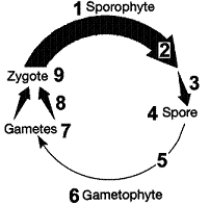
Refer to Figure 10-2.The process occurring at arrow 3 in the associated figure is:
A) fertilization.
B) G1.
C) meiosis.
D) mitosis.
E) fusion.
Use the figure to answer the corresponding question(s).
Refer to Figure 10-2.The process occurring at arrow 3 in the associated figure is:
A) fertilization.
B) G1.
C) meiosis.
D) mitosis.
E) fusion.
Question
Question
Question
Figure 10-1
Use the figure to answer the corresponding question(s).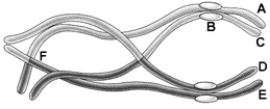
The formation of female gametes is termed:
A) oogenesis.
B) macrogenesis.
C) spermatogenesis.
D) ovogenesis.
E) microgenesis.
Use the figure to answer the corresponding question(s).
The formation of female gametes is termed:
A) oogenesis.
B) macrogenesis.
C) spermatogenesis.
D) ovogenesis.
E) microgenesis.
Question
Question
Question
Question
Question
Question
Figure 10-2
Use the figure to answer the corresponding question(s).
Refer to Figure 10-2.The chromosome complement of item 6 in the life cycle is:
A) twenty.
B) haploid.
C) diploid.
D) forty-eight.
E) four.
Use the figure to answer the corresponding question(s).
Refer to Figure 10-2.The chromosome complement of item 6 in the life cycle is:
A) twenty.
B) haploid.
C) diploid.
D) forty-eight.
E) four.
Question
Question
Question
Figure 10-1
Use the figure to answer the corresponding question(s).
Refer to Figure 10-1.Which of the following combinations of letters accurately represents two sister chromatids?
A) A and B
B) A and C
C) A and D
D) A and E
E) B and F
Use the figure to answer the corresponding question(s).
Refer to Figure 10-1.Which of the following combinations of letters accurately represents two sister chromatids?
A) A and B
B) A and C
C) A and D
D) A and E
E) B and F
Question
Question
Figure 10-2
Use the figure to answer the corresponding question(s).
Gametophyte plants produce gametes using:
A) mitosis.
B) meiosis.
C) fertilization.
D) polyploidy.
E) sporogenesis.
Use the figure to answer the corresponding question(s).
Gametophyte plants produce gametes using:
A) mitosis.
B) meiosis.
C) fertilization.
D) polyploidy.
E) sporogenesis.
Question
Figure 10-1
Use the figure to answer the corresponding question(s).
Refer to Figure 10-1.Which of the following combinations of letters accurately represents two homologous chromatids?
A) A and B
B) A and C
C) A and D
D) B and F
E) D and E
Use the figure to answer the corresponding question(s).
Refer to Figure 10-1.Which of the following combinations of letters accurately represents two homologous chromatids?
A) A and B
B) A and C
C) A and D
D) B and F
E) D and E
Question
Question
Question
Question
Question
Question
Question
Question
Question
Question
Question
Question
Question
Question
Question
Question
Question
Question
Question
Question
Question
Question
Question

Unlock Deck
Sign up to unlock the cards in this deck!
Unlock Deck
Unlock Deck
1/91

Play

Full screen (f)
Deck 10: Chromosomes, Mitosis, and Meiosis
1
Nucleosomes are organized into large coiled loops held together by:
A) histones.
B) centromeres.
C) kinetochore proteins.
D) scaffolding proteins.
E) condensins.
A) histones.
B) centromeres.
C) kinetochore proteins.
D) scaffolding proteins.
E) condensins.
D
2
During prophase, __________ is(are) compacted into visible chromosomes.
A) chromatin
B) centrioles
C) centromeres
D) kinetochores
E) colchicine
A) chromatin
B) centrioles
C) centromeres
D) kinetochores
E) colchicine
A
3
The M phase of the cell cycle involves two main processes:
A) mitosis and cytokinesis.
B) meiosis I and meiosis II.
C) homologous pairing and crossing-over.
D) interphase and mitosis.
E) mitosis and meiosis.
A) mitosis and cytokinesis.
B) meiosis I and meiosis II.
C) homologous pairing and crossing-over.
D) interphase and mitosis.
E) mitosis and meiosis.
A
4
Which of the following represents the overall sequence of events during mitosis?
A) prophase - metaphase -anaphase -telophase
B) interphase - metaphase-anaphase -telophase
C) anaphase - telophase -metaphase-interphase
D) interphase - prophase - anaphase -metaphase
E) metaphase - telophase -anaphase - prophase
A) prophase - metaphase -anaphase -telophase
B) interphase - metaphase-anaphase -telophase
C) anaphase - telophase -metaphase-interphase
D) interphase - prophase - anaphase -metaphase
E) metaphase - telophase -anaphase - prophase
Unlock Deck
Unlock for access to all 91 flashcards in this deck.
Unlock Deck
k this deck
5
The cell cycle of a typical somatic cell consists of __________ and M phase.
A) interphase
B) meiosis I
C) crossing-over
D) meiosis II
E) mitosis
A) interphase
B) meiosis I
C) crossing-over
D) meiosis II
E) mitosis
Unlock Deck
Unlock for access to all 91 flashcards in this deck.
Unlock Deck
k this deck
6
The mitotic spindle is made of:
A) collagen.
B) condensin.
C) histones.
D) keratin.
E) microtubules.
A) collagen.
B) condensin.
C) histones.
D) keratin.
E) microtubules.
Unlock Deck
Unlock for access to all 91 flashcards in this deck.
Unlock Deck
k this deck
7
__________ contain identical DNA sequences and are held together by __________ during mitosis.
A) Daughter chromosomes; hydrogen bonding
B) Daughter chromosomes; ionic bonding
C) Sister chromatids; spindle fibers
D) Sister chromosomes; histone proteins
E) Sister chromatids; centromeres
A) Daughter chromosomes; hydrogen bonding
B) Daughter chromosomes; ionic bonding
C) Sister chromatids; spindle fibers
D) Sister chromosomes; histone proteins
E) Sister chromatids; centromeres
Unlock Deck
Unlock for access to all 91 flashcards in this deck.
Unlock Deck
k this deck
8
If a cell is in G2:
A) it has twice the amount of DNA present in a telophase nucleus.
B) it has visibly distinct chromosomes.
C) it lacks a visible nuclear membrane.
D) it is in mitosis.
E) it is in cytokinesis.
A) it has twice the amount of DNA present in a telophase nucleus.
B) it has visibly distinct chromosomes.
C) it lacks a visible nuclear membrane.
D) it is in mitosis.
E) it is in cytokinesis.
Unlock Deck
Unlock for access to all 91 flashcards in this deck.
Unlock Deck
k this deck
9
The __________ is responsible for the separation of the chromosomes during __________ of mitosis.
A) cell wall; anaphase
B) flagellum; metaphase
C) mitotic spindle; anaphase
D) kinetochore; prophase
E) centromere; telophase
A) cell wall; anaphase
B) flagellum; metaphase
C) mitotic spindle; anaphase
D) kinetochore; prophase
E) centromere; telophase
Unlock Deck
Unlock for access to all 91 flashcards in this deck.
Unlock Deck
k this deck
10
Each nucleosome has __________ base pairs of DNA wrapped around a disc-shaped core of eight histone molecules.
A) 146
B) 28
C) 18
D) 10,000
E) 456
A) 146
B) 28
C) 18
D) 10,000
E) 456
Unlock Deck
Unlock for access to all 91 flashcards in this deck.
Unlock Deck
k this deck
11
Chromosomes are duplicated during __________ of the cell cycle.
A) G1 phase
B) G2 phase
C) S phase
D) metaphase
E) prophase
A) G1 phase
B) G2 phase
C) S phase
D) metaphase
E) prophase
Unlock Deck
Unlock for access to all 91 flashcards in this deck.
Unlock Deck
k this deck
12
Nucleosomes are best described as:
A) eukaryotic DNA associated with histone proteins.
B) prokaryotic DNA associated with nonhistone proteins.
C) eukaryotic DNA associated with nonhistone proteins.
D) prokaryotic DNA associated with histone proteins.
E) eukaryotic DNA associated with scaffolding proteins.
A) eukaryotic DNA associated with histone proteins.
B) prokaryotic DNA associated with nonhistone proteins.
C) eukaryotic DNA associated with nonhistone proteins.
D) prokaryotic DNA associated with histone proteins.
E) eukaryotic DNA associated with scaffolding proteins.
Unlock Deck
Unlock for access to all 91 flashcards in this deck.
Unlock Deck
k this deck
13
All of the following events occur during prometaphase EXCEPT:
A) the nuclear envelope breaks down.
B) the nucleoli disappear.
C) the mitotic spindle is completely assembled.
D) the spindle fibers "capture" chromosomes.
E) the duplicated chromosomes become visible with the light microscope.
A) the nuclear envelope breaks down.
B) the nucleoli disappear.
C) the mitotic spindle is completely assembled.
D) the spindle fibers "capture" chromosomes.
E) the duplicated chromosomes become visible with the light microscope.
Unlock Deck
Unlock for access to all 91 flashcards in this deck.
Unlock Deck
k this deck
14
What is the function of nucleosomes?
A) To prevent DNA strands from tangling.
B) To help DNA replicate.
C) To make RNA synthesis possible.
D) To prevent RNA from tangling with DNA during transcription.
E) To prevent histones from tangling.
A) To prevent DNA strands from tangling.
B) To help DNA replicate.
C) To make RNA synthesis possible.
D) To prevent RNA from tangling with DNA during transcription.
E) To prevent histones from tangling.
Unlock Deck
Unlock for access to all 91 flashcards in this deck.
Unlock Deck
k this deck
15
Eukaryotic chromosomes consist of:
A) circular DNA molecules complexed with positively charged nonhistone proteins.
B) circular DNA molecules complexed with negatively charged histone proteins.
C) linear DNA molecules complexed with positively charged histone proteins.
D) linear DNA molecules complexed with negatively charged histone proteins.
E) circular DNA molecules.
A) circular DNA molecules complexed with positively charged nonhistone proteins.
B) circular DNA molecules complexed with negatively charged histone proteins.
C) linear DNA molecules complexed with positively charged histone proteins.
D) linear DNA molecules complexed with negatively charged histone proteins.
E) circular DNA molecules.
Unlock Deck
Unlock for access to all 91 flashcards in this deck.
Unlock Deck
k this deck
16
Once nerve cells become mature, they don't usually undergo cell division.Based on your knowledge of the cell cycle, you would predict that mature nerve cells become arrested in the __________ of the cell cycle.
A) G0 phase
B) S phase
C) prophase
D) G1 phase
E) G2 phase
A) G0 phase
B) S phase
C) prophase
D) G1 phase
E) G2 phase
Unlock Deck
Unlock for access to all 91 flashcards in this deck.
Unlock Deck
k this deck
17
A bacterial chromosome consists of:
A) a linear DNA molecule many times larger than the cell.
B) a circular DNA molecule many times larger than the cell.
C) a circular DNA molecule smaller than the cell.
D) a linear DNA molecule smaller than the cell.
E) a linear or circular DNA molecule smaller than the cell.
A) a linear DNA molecule many times larger than the cell.
B) a circular DNA molecule many times larger than the cell.
C) a circular DNA molecule smaller than the cell.
D) a linear DNA molecule smaller than the cell.
E) a linear or circular DNA molecule smaller than the cell.
Unlock Deck
Unlock for access to all 91 flashcards in this deck.
Unlock Deck
k this deck
18
A cell is in metaphase if:
A) the chromosomes are visible as threadlike structures.
B) the nuclear envelope is clearly visible.
C) the chromosomes are aligned at the midplane of the cell.
D) the chromosome are separated into distinct groups at opposite poles of the cell.
E) cytokinesis is occurring.
A) the chromosomes are visible as threadlike structures.
B) the nuclear envelope is clearly visible.
C) the chromosomes are aligned at the midplane of the cell.
D) the chromosome are separated into distinct groups at opposite poles of the cell.
E) cytokinesis is occurring.
Unlock Deck
Unlock for access to all 91 flashcards in this deck.
Unlock Deck
k this deck
19
Duplicated centrioles move to opposite poles of a dividing __________ cell during __________ of the cell cycle.
A) plant; metaphase
B) plant; anaphase
C) prokaryotic; metaphase
D) animal; interphase
E) animal; prophase
A) plant; metaphase
B) plant; anaphase
C) prokaryotic; metaphase
D) animal; interphase
E) animal; prophase
Unlock Deck
Unlock for access to all 91 flashcards in this deck.
Unlock Deck
k this deck
20
The kinetochore serves which of the following functions?
A) Kinetochores anchor spindle fibers to the centrioles.
B) Kinetochores are the site of DNA synthesis.
C) Kinetochores regulate the length of the cell cycle.
D) Kinetochores attach to microtubules during mitosis.
E) Kinetochores are involved in cytokinesis.
A) Kinetochores anchor spindle fibers to the centrioles.
B) Kinetochores are the site of DNA synthesis.
C) Kinetochores regulate the length of the cell cycle.
D) Kinetochores attach to microtubules during mitosis.
E) Kinetochores are involved in cytokinesis.
Unlock Deck
Unlock for access to all 91 flashcards in this deck.
Unlock Deck
k this deck
21
What evolutionary advantage is provided by sexual reproduction?
A) increased genetic diversity
B) making clones
C) making diploidy possible
D) making polyploidy possible
E) being able to work with chromosomes
A) increased genetic diversity
B) making clones
C) making diploidy possible
D) making polyploidy possible
E) being able to work with chromosomes
Unlock Deck
Unlock for access to all 91 flashcards in this deck.
Unlock Deck
k this deck
22
Cytokinesis in animal cells involves contraction of a ring of __________ microfilaments.
A) tubulin plus actin
B) actin plus myosin
C) cyclin plus myosin
D) keratin plus actin
E) cyclin plus actin
A) tubulin plus actin
B) actin plus myosin
C) cyclin plus myosin
D) keratin plus actin
E) cyclin plus actin
Unlock Deck
Unlock for access to all 91 flashcards in this deck.
Unlock Deck
k this deck
23
The chromosome makeup of an individual organism is called a:
A) kinetochore.
B) chromosome plot.
C) centromere.
D) karyotype.
E) centriole.
A) kinetochore.
B) chromosome plot.
C) centromere.
D) karyotype.
E) centriole.
Unlock Deck
Unlock for access to all 91 flashcards in this deck.
Unlock Deck
k this deck
24
If a cell is dividing by binary fission then you know that:
A) mitosis has taken place without cytokinesis.
B) homologous chromosomes have already paired.
C) the cyclin-Cdk complex is no longer phosphorylating enzymes.
D) the cell cycle is out of control.
E) the cell is prokaryotic.
A) mitosis has taken place without cytokinesis.
B) homologous chromosomes have already paired.
C) the cyclin-Cdk complex is no longer phosphorylating enzymes.
D) the cell cycle is out of control.
E) the cell is prokaryotic.
Unlock Deck
Unlock for access to all 91 flashcards in this deck.
Unlock Deck
k this deck
25
During which phase does crossing-over occur?
A) interphase
B) prophase I
C) metaphase I
D) prophase II
E) metaphase II
A) interphase
B) prophase I
C) metaphase I
D) prophase II
E) metaphase II
Unlock Deck
Unlock for access to all 91 flashcards in this deck.
Unlock Deck
k this deck
26
Cytokinesis in plant cells occurs via the formation of a(n):
A) aster.
B) mitotic spindle.
C) Golgi complex.
D) cell wall.
E) cell plate.
A) aster.
B) mitotic spindle.
C) Golgi complex.
D) cell wall.
E) cell plate.
Unlock Deck
Unlock for access to all 91 flashcards in this deck.
Unlock Deck
k this deck
27
Chromosomes are condensed to their greatest extent during __________ of mitosis.
A) metaphase
B) prophase
C) telophase
D) interphase
E) anaphase
A) metaphase
B) prophase
C) telophase
D) interphase
E) anaphase
Unlock Deck
Unlock for access to all 91 flashcards in this deck.
Unlock Deck
k this deck
28
A maternal homologue and a paternal homologue synapse to form:
A) a tetrad.
B) a parental pair.
C) a paternal pair.
D) sister chromatids.
E) a maternal pair.
A) a tetrad.
B) a parental pair.
C) a paternal pair.
D) sister chromatids.
E) a maternal pair.
Unlock Deck
Unlock for access to all 91 flashcards in this deck.
Unlock Deck
k this deck
29
Homologous chromosomes undergo synapsis during:
A) anaphase I.
B) prophase I.
C) anaphase II.
D) telophase II.
E) prophase II.
A) anaphase I.
B) prophase I.
C) anaphase II.
D) telophase II.
E) prophase II.
Unlock Deck
Unlock for access to all 91 flashcards in this deck.
Unlock Deck
k this deck
30
Plant hormones known as __________ stimulate mitosis.
A) gametophytes
B) kinesin and dynein
C) cytokinins
D) colchicines
E) kinetochores
A) gametophytes
B) kinesin and dynein
C) cytokinins
D) colchicines
E) kinetochores
Unlock Deck
Unlock for access to all 91 flashcards in this deck.
Unlock Deck
k this deck
31
Generation time refers to:
A) the number of years it takes for a generation to die.
B) the amount of time required to replicate the DNA in a cell.
C) the time it takes to complete one cell cycle.
D) the time required for an individual in a species to achieve sexual maturity.
E) the time it takes for a new mitotic spindle to form.
A) the number of years it takes for a generation to die.
B) the amount of time required to replicate the DNA in a cell.
C) the time it takes to complete one cell cycle.
D) the time required for an individual in a species to achieve sexual maturity.
E) the time it takes for a new mitotic spindle to form.
Unlock Deck
Unlock for access to all 91 flashcards in this deck.
Unlock Deck
k this deck
32
Plant clones can be produced by:
A) sexual reproduction.
B) fertilization.
C) gamete production.
D) asexual reproduction.
E) binary fission.
A) sexual reproduction.
B) fertilization.
C) gamete production.
D) asexual reproduction.
E) binary fission.
Unlock Deck
Unlock for access to all 91 flashcards in this deck.
Unlock Deck
k this deck
33
A zygote contains the __________ complement of chromosomes.
A) haploid
B) diploid
C) polyploid
D) spermatogenesis
E) none of these
A) haploid
B) diploid
C) polyploid
D) spermatogenesis
E) none of these
Unlock Deck
Unlock for access to all 91 flashcards in this deck.
Unlock Deck
k this deck
34
To prevent disastrous consequences, the eukaryotic cell cycle is controlled by:
A) the mitochondria.
B) helper viruses.
C) environmental signals.
D) a very detailed, rigid genetic program.
E) a series of cell cycle checkpoints.
A) the mitochondria.
B) helper viruses.
C) environmental signals.
D) a very detailed, rigid genetic program.
E) a series of cell cycle checkpoints.
Unlock Deck
Unlock for access to all 91 flashcards in this deck.
Unlock Deck
k this deck
35
Most human somatic cells are:
A) polyploid.
B) diploid.
C) aneuploid.
D) tetraploid.
E) haploid.
A) polyploid.
B) diploid.
C) aneuploid.
D) tetraploid.
E) haploid.
Unlock Deck
Unlock for access to all 91 flashcards in this deck.
Unlock Deck
k this deck
36
Which of the following statements concerning the cell cycle is FALSE?
A) The activity of Cdks increases and decreases during the cell cycle.
B) Cyclins fluctuate during the cell cycle.
C) Cdks are active only when they bind to cyclins.
D) The anaphase-promoting complex stimulates the separation of sister chromatids
E) M-Cdk inhibits mitosis.
A) The activity of Cdks increases and decreases during the cell cycle.
B) Cyclins fluctuate during the cell cycle.
C) Cdks are active only when they bind to cyclins.
D) The anaphase-promoting complex stimulates the separation of sister chromatids
E) M-Cdk inhibits mitosis.
Unlock Deck
Unlock for access to all 91 flashcards in this deck.
Unlock Deck
k this deck
37
The correct number of chromosomes is maintained during sexual reproduction by:
A) a process by which one half of the chromosomes in gametes are removed.
B) chromosome doubling in the newly formed zygote.
C) meiosis, which reduces the chromosome number by half.
D) mitosis, which maintains the original chromosome number.
E) replication of chromosomes twice during meiosis.
A) a process by which one half of the chromosomes in gametes are removed.
B) chromosome doubling in the newly formed zygote.
C) meiosis, which reduces the chromosome number by half.
D) mitosis, which maintains the original chromosome number.
E) replication of chromosomes twice during meiosis.
Unlock Deck
Unlock for access to all 91 flashcards in this deck.
Unlock Deck
k this deck
38
If meiosis did not occur in sexually reproducing organisms, then:
A) growth of the zygote would be halted.
B) mitosis would be sufficient.
C) gametes would remain haploid.
D) chromosome number would double in each generation.
E) eggs would be haploid, but sperm would be diploid.
A) growth of the zygote would be halted.
B) mitosis would be sufficient.
C) gametes would remain haploid.
D) chromosome number would double in each generation.
E) eggs would be haploid, but sperm would be diploid.
Unlock Deck
Unlock for access to all 91 flashcards in this deck.
Unlock Deck
k this deck
39
During prophase I of meiosis, homologous chromosomes lie side by side.This phenomeon is known as:
A) chromatid pairing.
B) divalent formation.
C) tetrad formation.
D) paternal pairing.
E) parental pairing.
A) chromatid pairing.
B) divalent formation.
C) tetrad formation.
D) paternal pairing.
E) parental pairing.
Unlock Deck
Unlock for access to all 91 flashcards in this deck.
Unlock Deck
k this deck
40
Animal cells are stimulated to divide by mitosis by:
A) colchicines.
B) magnetic fields.
C) mating.
D) growth factors.
E) nutrients.
A) colchicines.
B) magnetic fields.
C) mating.
D) growth factors.
E) nutrients.
Unlock Deck
Unlock for access to all 91 flashcards in this deck.
Unlock Deck
k this deck
41
An animal with a diploid number of 36 chromosomes will have __________ chromosomes in its gametes and __________ chromosomes in its somatic cells.
A) 18; 18
B) 18; 36
C) 36; 18
D) 36; 36
E) 36; 72
A) 18; 18
B) 18; 36
C) 36; 18
D) 36; 36
E) 36; 72
Unlock Deck
Unlock for access to all 91 flashcards in this deck.
Unlock Deck
k this deck
42
Figure 10-2
Use the figure to answer the corresponding question(s).
Refer to Figure 10-2.The process occurring at arrow 3 in the associated figure is:
A) fertilization.
B) G1.
C) meiosis.
D) mitosis.
E) fusion.
Use the figure to answer the corresponding question(s).
Refer to Figure 10-2.The process occurring at arrow 3 in the associated figure is:
A) fertilization.
B) G1.
C) meiosis.
D) mitosis.
E) fusion.
Unlock Deck
Unlock for access to all 91 flashcards in this deck.
Unlock Deck
k this deck
43
Draw a duplicated chromosome.Now, label each part of the chromosome with both its function and its identity.
Unlock Deck
Unlock for access to all 91 flashcards in this deck.
Unlock Deck
k this deck
44
During prophase I, each chiasma represents:
A) the remnants of the nuclear membrane.
B) the remnant of the nucleolus.
C) a newly formed haploid gamete.
D) a site of crossing-over.
E) the site where sister chromatids are connected.
A) the remnants of the nuclear membrane.
B) the remnant of the nucleolus.
C) a newly formed haploid gamete.
D) a site of crossing-over.
E) the site where sister chromatids are connected.
Unlock Deck
Unlock for access to all 91 flashcards in this deck.
Unlock Deck
k this deck
45
Figure 10-1
Use the figure to answer the corresponding question(s).
The formation of female gametes is termed:
A) oogenesis.
B) macrogenesis.
C) spermatogenesis.
D) ovogenesis.
E) microgenesis.
Use the figure to answer the corresponding question(s).
The formation of female gametes is termed:
A) oogenesis.
B) macrogenesis.
C) spermatogenesis.
D) ovogenesis.
E) microgenesis.
Unlock Deck
Unlock for access to all 91 flashcards in this deck.
Unlock Deck
k this deck
46
Compare and contrast the general processes of asexual and sexual reproduction.
Unlock Deck
Unlock for access to all 91 flashcards in this deck.
Unlock Deck
k this deck
47
A nucleosome consists of DNA wrapped around scaffolding proteins.
__________________
__________________
Unlock Deck
Unlock for access to all 91 flashcards in this deck.
Unlock Deck
k this deck
48
Draw two cells: one showing the arrangement of chromosomes at metaphase of mitosis, and the other showing the chromosomes at metaphase I of meiosis.What is the significance of this difference?
Unlock Deck
Unlock for access to all 91 flashcards in this deck.
Unlock Deck
k this deck
49
The sources of genetic variation during meiosis are:
A) crossing-over and the random assortment of maternal and paternal chromosomes.
B) crossing-over and random pairing of tetrads.
C) random pairing of tetrads and mutations.
D) polyploidy and random pairing of tetrads.
E) random pairing of tetrads and random assortment of maternal and paternal chromosomes.
A) crossing-over and the random assortment of maternal and paternal chromosomes.
B) crossing-over and random pairing of tetrads.
C) random pairing of tetrads and mutations.
D) polyploidy and random pairing of tetrads.
E) random pairing of tetrads and random assortment of maternal and paternal chromosomes.
Unlock Deck
Unlock for access to all 91 flashcards in this deck.
Unlock Deck
k this deck
50
List the stages in the eukaryotic cell cycle and identify the principal events characteristic of each stage.
Unlock Deck
Unlock for access to all 91 flashcards in this deck.
Unlock Deck
k this deck
51
Figure 10-2
Use the figure to answer the corresponding question(s).
Refer to Figure 10-2.The chromosome complement of item 6 in the life cycle is:
A) twenty.
B) haploid.
C) diploid.
D) forty-eight.
E) four.
Use the figure to answer the corresponding question(s).
Refer to Figure 10-2.The chromosome complement of item 6 in the life cycle is:
A) twenty.
B) haploid.
C) diploid.
D) forty-eight.
E) four.
Unlock Deck
Unlock for access to all 91 flashcards in this deck.
Unlock Deck
k this deck
52
In a human cell at prophase I, there are __________ tetrads.
A) 92
B) 46
C) 23
D) 2
E) 4
A) 92
B) 46
C) 23
D) 2
E) 4
Unlock Deck
Unlock for access to all 91 flashcards in this deck.
Unlock Deck
k this deck
53
Which of the following events does not occur in prophase II?
A) formation of the spindle
B) condensation of chromatin into chromosomes
C) formation of chiasmata
D) removal of the nuclear membrane
E) sister chromatids become visible when viewed with the light microscope.
A) formation of the spindle
B) condensation of chromatin into chromosomes
C) formation of chiasmata
D) removal of the nuclear membrane
E) sister chromatids become visible when viewed with the light microscope.
Unlock Deck
Unlock for access to all 91 flashcards in this deck.
Unlock Deck
k this deck
54
Figure 10-1
Use the figure to answer the corresponding question(s).
Refer to Figure 10-1.Which of the following combinations of letters accurately represents two sister chromatids?
A) A and B
B) A and C
C) A and D
D) A and E
E) B and F
Use the figure to answer the corresponding question(s).
Refer to Figure 10-1.Which of the following combinations of letters accurately represents two sister chromatids?
A) A and B
B) A and C
C) A and D
D) A and E
E) B and F
Unlock Deck
Unlock for access to all 91 flashcards in this deck.
Unlock Deck
k this deck
55
Sporophyte plants produce spores using:
A) mitosis.
B) meiosis.
C) fertilization.
D) macrogenesis.
E) microgenesis.
A) mitosis.
B) meiosis.
C) fertilization.
D) macrogenesis.
E) microgenesis.
Unlock Deck
Unlock for access to all 91 flashcards in this deck.
Unlock Deck
k this deck
56
Figure 10-2
Use the figure to answer the corresponding question(s).
Gametophyte plants produce gametes using:
A) mitosis.
B) meiosis.
C) fertilization.
D) polyploidy.
E) sporogenesis.
Use the figure to answer the corresponding question(s).
Gametophyte plants produce gametes using:
A) mitosis.
B) meiosis.
C) fertilization.
D) polyploidy.
E) sporogenesis.
Unlock Deck
Unlock for access to all 91 flashcards in this deck.
Unlock Deck
k this deck
57
Figure 10-1
Use the figure to answer the corresponding question(s).
Refer to Figure 10-1.Which of the following combinations of letters accurately represents two homologous chromatids?
A) A and B
B) A and C
C) A and D
D) B and F
E) D and E
Use the figure to answer the corresponding question(s).
Refer to Figure 10-1.Which of the following combinations of letters accurately represents two homologous chromatids?
A) A and B
B) A and C
C) A and D
D) B and F
E) D and E
Unlock Deck
Unlock for access to all 91 flashcards in this deck.
Unlock Deck
k this deck
58
During which of the following stages of meiosis do the sister chromatids separate?
A) metaphase I
B) anaphase I
C) metaphase II
D) anaphase II
E) telophase II
A) metaphase I
B) anaphase I
C) metaphase II
D) anaphase II
E) telophase II
Unlock Deck
Unlock for access to all 91 flashcards in this deck.
Unlock Deck
k this deck
59
Which of the following are NOT produced by meiosis?
A) polar bodies
B) animal eggs
C) animal sperm
D) plant spores
E) zygotes.
A) polar bodies
B) animal eggs
C) animal sperm
D) plant spores
E) zygotes.
Unlock Deck
Unlock for access to all 91 flashcards in this deck.
Unlock Deck
k this deck
60
Which of the following events does not occur during meiosis I?
A) DNA exchange
B) pairing of homologous chromosomes
C) separation of sister chromatids
D) separation of homologous chromosomes
E) crossing-over between homologous chromosomes
A) DNA exchange
B) pairing of homologous chromosomes
C) separation of sister chromatids
D) separation of homologous chromosomes
E) crossing-over between homologous chromosomes
Unlock Deck
Unlock for access to all 91 flashcards in this deck.
Unlock Deck
k this deck
61
A pair of centrioles is found at the center of the microtubule-organizing center in plant cells.
__________________
__________________
Unlock Deck
Unlock for access to all 91 flashcards in this deck.
Unlock Deck
k this deck
62
MATCHING
Match the stage of mitosis with the events that occur there.
a.metaphase
d.telophase
b.anaphase
e.prophase
c.prometaphase
single-stranded chromosomes move to opposite poles
Match the stage of mitosis with the events that occur there.
a.metaphase
d.telophase
b.anaphase
e.prophase
c.prometaphase
single-stranded chromosomes move to opposite poles
Unlock Deck
Unlock for access to all 91 flashcards in this deck.
Unlock Deck
k this deck
63
A zygote would most likely be a haploid cell.
__________________
__________________
Unlock Deck
Unlock for access to all 91 flashcards in this deck.
Unlock Deck
k this deck
64
MATCHING
Match the stage of mitosis with the events that occur there.
a.metaphase
d.telophase
b.anaphase
e.prophase
c.prometaphase
chromosomes decondense
Match the stage of mitosis with the events that occur there.
a.metaphase
d.telophase
b.anaphase
e.prophase
c.prometaphase
chromosomes decondense
Unlock Deck
Unlock for access to all 91 flashcards in this deck.
Unlock Deck
k this deck
65
The members of each homologous pair of chromosomes separate during meiosis I.
__________________
__________________
Unlock Deck
Unlock for access to all 91 flashcards in this deck.
Unlock Deck
k this deck
66
MATCHING
Match the stage of mitosis with the events that occur there.
a.metaphase
d.telophase
b.anaphase
e.prophase
c.prometaphase
nuclear envelope fragments
Match the stage of mitosis with the events that occur there.
a.metaphase
d.telophase
b.anaphase
e.prophase
c.prometaphase
nuclear envelope fragments
Unlock Deck
Unlock for access to all 91 flashcards in this deck.
Unlock Deck
k this deck
67
MATCHING
Match the stage of mitosis with the events that occur there.
a.metaphase
d.telophase
b.anaphase
e.prophase
c.prometaphase
spindle microtubules attach to kinetochores
Match the stage of mitosis with the events that occur there.
a.metaphase
d.telophase
b.anaphase
e.prophase
c.prometaphase
spindle microtubules attach to kinetochores
Unlock Deck
Unlock for access to all 91 flashcards in this deck.
Unlock Deck
k this deck
68
MATCHING
Match the stage of mitosis with the events that occur there.
a.metaphase
d.telophase
b.anaphase
e.prophase
c.prometaphase
cytokinesis generally begins
Match the stage of mitosis with the events that occur there.
a.metaphase
d.telophase
b.anaphase
e.prophase
c.prometaphase
cytokinesis generally begins
Unlock Deck
Unlock for access to all 91 flashcards in this deck.
Unlock Deck
k this deck
69
For each animal cell that begins oogenesis, the number of ova produced is four.
__________________
__________________
Unlock Deck
Unlock for access to all 91 flashcards in this deck.
Unlock Deck
k this deck
70
Enzymes required for DNA replication are synthesized during the G1 phase.
__________________
__________________
Unlock Deck
Unlock for access to all 91 flashcards in this deck.
Unlock Deck
k this deck
71
The nuclear envelope fragments during the prometaphase stage.
__________________
__________________
Unlock Deck
Unlock for access to all 91 flashcards in this deck.
Unlock Deck
k this deck
72
Microtubules of the mitotic spindle attach directly to each chromosome at the centromere.
__________________
__________________
Unlock Deck
Unlock for access to all 91 flashcards in this deck.
Unlock Deck
k this deck
73
MATCHING
Match the stage of mitosis with the events that occur there.
a.metaphase
d.telophase
b.anaphase
e.prophase
c.prometaphase
nucleoli reorganize
Match the stage of mitosis with the events that occur there.
a.metaphase
d.telophase
b.anaphase
e.prophase
c.prometaphase
nucleoli reorganize
Unlock Deck
Unlock for access to all 91 flashcards in this deck.
Unlock Deck
k this deck
74
MATCHING
Match the stage of mitosis with the events that occur there.
a.metaphase
d.telophase
b.anaphase
e.prophase
c.prometaphase
mitotic spindle forms
Match the stage of mitosis with the events that occur there.
a.metaphase
d.telophase
b.anaphase
e.prophase
c.prometaphase
mitotic spindle forms
Unlock Deck
Unlock for access to all 91 flashcards in this deck.
Unlock Deck
k this deck
75
Cell-cycle checkpoints temporarily block key events from being initiated during the cell cycle.
__________________
__________________
Unlock Deck
Unlock for access to all 91 flashcards in this deck.
Unlock Deck
k this deck
76
MATCHING
Match the stage of mitosis with the events that occur there.
a.metaphase
d.telophase
b.anaphase
e.prophase
c.prometaphase
sister chromatids separate at their centromeres
Match the stage of mitosis with the events that occur there.
a.metaphase
d.telophase
b.anaphase
e.prophase
c.prometaphase
sister chromatids separate at their centromeres
Unlock Deck
Unlock for access to all 91 flashcards in this deck.
Unlock Deck
k this deck
77
In animal cells, cytokinesis occurs via the formation of a cell plate.
__________________
__________________
Unlock Deck
Unlock for access to all 91 flashcards in this deck.
Unlock Deck
k this deck
78
In the cell cycle, DNA is replicated during the G2 phase.
__________________
__________________
Unlock Deck
Unlock for access to all 91 flashcards in this deck.
Unlock Deck
k this deck
79
Bacteria divide asexually by mitosis.
__________________
__________________
Unlock Deck
Unlock for access to all 91 flashcards in this deck.
Unlock Deck
k this deck
80
MATCHING
Match the stage of mitosis with the events that occur there.
a.metaphase
d.telophase
b.anaphase
e.prophase
c.prometaphase
chromatin condenses
Match the stage of mitosis with the events that occur there.
a.metaphase
d.telophase
b.anaphase
e.prophase
c.prometaphase
chromatin condenses
Unlock Deck
Unlock for access to all 91 flashcards in this deck.
Unlock Deck
k this deck
Unlock Deck
Unlock for access to all 91 flashcards in this deck.






