







 Chat with AI

Deck 12: Amines
Full screen (f)

Question
Instructions: Based on the following structures, name the compound.
Name: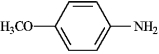
Name:

Question
Question
Circle any of the following that would be classified as a heterocyclic amine. 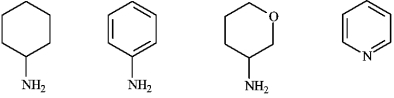
Question
Question
Instructions: Classify each of the nitrogen atoms in the compound shown below as primary, secondary, tertiary, or quaternary.
Classify: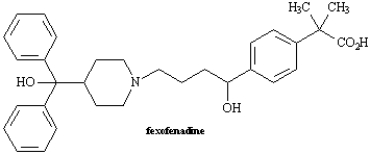
Classify:
Question
Rank the following compounds in order of increasing basicity. Label the least basic compound "1" and the most basic compound "4". Place the number corresponding to the compound's rank in the blank below the compound. 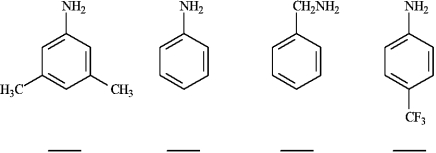
Question
In the following series of compounds, which is the most basic and the least basic? Explain your choices. 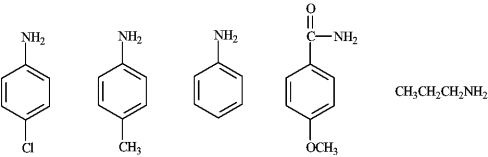
Question
Instructions: Consider the reaction below to answer the following question(s).
Methamphetamine can be synthesized by reacting phenyl-2-propanone with methylamine in the presence of H2/Ni.
Refer to instructions. Although the yield of methamphetamine is good, some unreacted phenyl-2-propanone remains after the reaction is complete. Describe how methamphetamine can be separated from phenyl-2-propanone.
Methamphetamine can be synthesized by reacting phenyl-2-propanone with methylamine in the presence of H2/Ni.
Refer to instructions. Although the yield of methamphetamine is good, some unreacted phenyl-2-propanone remains after the reaction is complete. Describe how methamphetamine can be separated from phenyl-2-propanone.
Question
Instructions: Classify each of the nitrogen atoms in the compound shown below as primary, secondary, tertiary, or quaternary.
Classify: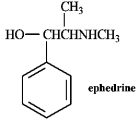
Classify:
Question
Instructions: Give the major organic product(s) of each of the following reaction or sequence of reactions. Show all relevant stereochemistry.
Give major product(s):
Give major product(s):
Question
Instructions: Give the major organic product(s) of each of the following reaction or sequence of reactions. Show all relevant stereochemistry.
Give major product(s):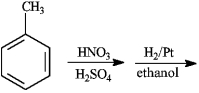
Give major product(s):
Question
Instructions: Based on the following structures, name the compound.
Name: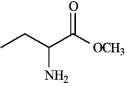
Name:
Question
Question
Instructions: Consider the reaction below to answer the following question(s).
Methamphetamine can be synthesized by reacting phenyl-2-propanone with methylamine in the presence of H2/Ni.
Refer to instructions. The synthesis of methamphetamine by reaction of 2-phenyl-2 propanone with methylamine in the presence of H2/Ni is referred to as:
A) reductive nitrogenation
B) reactive nitrogenation
C) reductive amination
D) reactive amination
Methamphetamine can be synthesized by reacting phenyl-2-propanone with methylamine in the presence of H2/Ni.
Refer to instructions. The synthesis of methamphetamine by reaction of 2-phenyl-2 propanone with methylamine in the presence of H2/Ni is referred to as:
A) reductive nitrogenation
B) reactive nitrogenation
C) reductive amination
D) reactive amination
Question
Instructions: Classify each of the nitrogen atoms in the compound shown below as primary, secondary, tertiary, or quaternary.
Classify: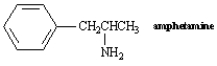
Classify:
Question
Instructions: Based on the following structures, name the compound.
Name: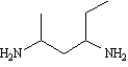
Name:
Question
Instructions: Classify each of the nitrogen atoms in the compound shown below as primary, secondary, tertiary, or quaternary.
Classify: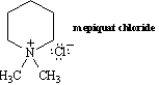
Classify:
Question
Instructions: Based on the following structures, name the compound.
Name: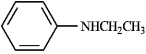
Name:
Question
Instructions: Consider the reaction below to answer the following question(s).
Methamphetamine can be synthesized by reacting phenyl-2-propanone with methylamine in the presence of H2/Ni.
Refer to instructions. Intermediate A is an example of:
A) an imine
B) an enamine
C) an iminium ion
D) an imide
Methamphetamine can be synthesized by reacting phenyl-2-propanone with methylamine in the presence of H2/Ni.
Refer to instructions. Intermediate A is an example of:
A) an imine
B) an enamine
C) an iminium ion
D) an imide
Question
Instructions: Consider the reaction below to answer the following question(s).
Methamphetamine can be synthesized by reacting phenyl-2-propanone with methylamine in the presence of H2/Ni.
Refer to instructions. Identify the nucleophile in the initial reaction of phenyl-2-propanone to yield intermediate A and classify the type of reaction that produces the final product from A.
Methamphetamine can be synthesized by reacting phenyl-2-propanone with methylamine in the presence of H2/Ni.
Refer to instructions. Identify the nucleophile in the initial reaction of phenyl-2-propanone to yield intermediate A and classify the type of reaction that produces the final product from A.
Question
Show how each of the following transformations might be best accomplished. More than one step may be required. Show all reagents and all intermediate structures.
Refer to instructions.
Refer to instructions.
Question
What is the major organic product obtained from the following reaction? 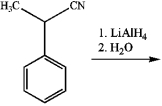
A)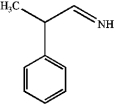
B)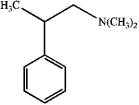
C)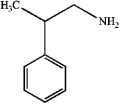
D)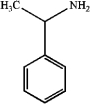
A)
B)
C)
D)
Question
Predict the major organic product obtained from the following sequence of reactions. 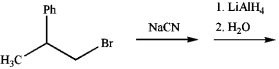
Question
Show how each of the following transformations might be best accomplished. More than one step may be required. Show all reagents and all intermediate structures.
Refer to instructions.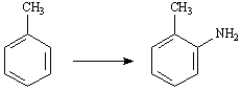
Refer to instructions.
Question
Instructions: Give the major organic product(s) of each of the following reaction or sequence of reactions. Show all relevant stereochemistry.
Give major product(s):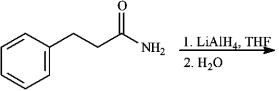
Give major product(s):
Question
What is the IUPAC name of the following compound? 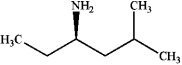
A) (R)-4-amino-2-methylhexane
B) (S)-4-amino-2-methylhexane
C) N-ethyl N-(3-methylpropyl) amine
D) (R)-3-amino-5-methylhexane
A) (R)-4-amino-2-methylhexane
B) (S)-4-amino-2-methylhexane
C) N-ethyl N-(3-methylpropyl) amine
D) (R)-3-amino-5-methylhexane
Question
Instructions: Give the major organic product(s) of each of the following reaction or sequence of reactions. Show all relevant stereochemistry.
Give major product(s):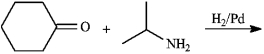
Give major product(s):
Question
Show how each of the following transformations might be best accomplished. More than one step may be required. Show all reagents and all intermediate structures.
Refer to instructions.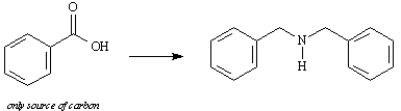
Refer to instructions.
Question
Instructions: Give the major organic product(s) of each of the following reaction or sequence of reactions. Show all relevant stereochemistry.
Give the major product(s).
Give the major product(s).
Question
Question
Which of the following compounds are primary (1 ) amines? 
A) 1 and 2
B) 1 and 3
C) 1, 2 and 3
D) 1, 2, 3 and 4
A) 1 and 2
B) 1 and 3
C) 1, 2 and 3
D) 1, 2, 3 and 4
Question
What is the major organic product obtained from the following reaction?

A)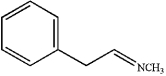
B)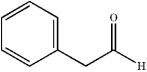
C)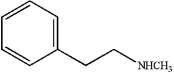
D)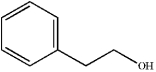
A)
B)
C)
D)

Unlock Deck
Sign up to unlock the cards in this deck!
Unlock Deck
Unlock Deck
1/32

Play

Full screen (f)
Deck 12: Amines
1
Instructions: Based on the following structures, name the compound.
Name:
Name:
p-methoxyaniline or 4-methoxyaniline
2
Instructions: Draw structures corresponding to each of the IUPAC names given in the following question(s).
Draw:
diisopropylamine
Draw:
diisopropylamine

3
Circle any of the following that would be classified as a heterocyclic amine.
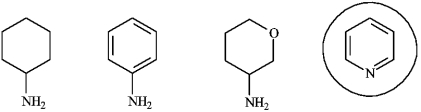
4
Instructions: Draw structures corresponding to each of the IUPAC names given in the following question(s).
Draw:
hexane-1,6-diamine
Draw:
hexane-1,6-diamine
Unlock Deck
Unlock for access to all 32 flashcards in this deck.
Unlock Deck
k this deck
5
Instructions: Classify each of the nitrogen atoms in the compound shown below as primary, secondary, tertiary, or quaternary.
Classify:
Classify:
Unlock Deck
Unlock for access to all 32 flashcards in this deck.
Unlock Deck
k this deck
6
Rank the following compounds in order of increasing basicity. Label the least basic compound "1" and the most basic compound "4". Place the number corresponding to the compound's rank in the blank below the compound.
Unlock Deck
Unlock for access to all 32 flashcards in this deck.
Unlock Deck
k this deck
7
In the following series of compounds, which is the most basic and the least basic? Explain your choices.
Unlock Deck
Unlock for access to all 32 flashcards in this deck.
Unlock Deck
k this deck
8
Instructions: Consider the reaction below to answer the following question(s).
Methamphetamine can be synthesized by reacting phenyl-2-propanone with methylamine in the presence of H2/Ni.
Refer to instructions. Although the yield of methamphetamine is good, some unreacted phenyl-2-propanone remains after the reaction is complete. Describe how methamphetamine can be separated from phenyl-2-propanone.
Methamphetamine can be synthesized by reacting phenyl-2-propanone with methylamine in the presence of H2/Ni.
Refer to instructions. Although the yield of methamphetamine is good, some unreacted phenyl-2-propanone remains after the reaction is complete. Describe how methamphetamine can be separated from phenyl-2-propanone.
Unlock Deck
Unlock for access to all 32 flashcards in this deck.
Unlock Deck
k this deck
9
Instructions: Classify each of the nitrogen atoms in the compound shown below as primary, secondary, tertiary, or quaternary.
Classify:
Classify:
Unlock Deck
Unlock for access to all 32 flashcards in this deck.
Unlock Deck
k this deck
10
Instructions: Give the major organic product(s) of each of the following reaction or sequence of reactions. Show all relevant stereochemistry.
Give major product(s):
Give major product(s):
Unlock Deck
Unlock for access to all 32 flashcards in this deck.
Unlock Deck
k this deck
11
Instructions: Give the major organic product(s) of each of the following reaction or sequence of reactions. Show all relevant stereochemistry.
Give major product(s):
Give major product(s):
Unlock Deck
Unlock for access to all 32 flashcards in this deck.
Unlock Deck
k this deck
12
Instructions: Based on the following structures, name the compound.
Name:
Name:
Unlock Deck
Unlock for access to all 32 flashcards in this deck.
Unlock Deck
k this deck
13
Instructions: Draw structures corresponding to each of the IUPAC names given in the following question(s).
Draw:
N,N-dimethylcyclopentylamine
Draw:
N,N-dimethylcyclopentylamine
Unlock Deck
Unlock for access to all 32 flashcards in this deck.
Unlock Deck
k this deck
14
Instructions: Consider the reaction below to answer the following question(s).
Methamphetamine can be synthesized by reacting phenyl-2-propanone with methylamine in the presence of H2/Ni.
Refer to instructions. The synthesis of methamphetamine by reaction of 2-phenyl-2 propanone with methylamine in the presence of H2/Ni is referred to as:
A) reductive nitrogenation
B) reactive nitrogenation
C) reductive amination
D) reactive amination
Methamphetamine can be synthesized by reacting phenyl-2-propanone with methylamine in the presence of H2/Ni.
Refer to instructions. The synthesis of methamphetamine by reaction of 2-phenyl-2 propanone with methylamine in the presence of H2/Ni is referred to as:
A) reductive nitrogenation
B) reactive nitrogenation
C) reductive amination
D) reactive amination
Unlock Deck
Unlock for access to all 32 flashcards in this deck.
Unlock Deck
k this deck
15
Instructions: Classify each of the nitrogen atoms in the compound shown below as primary, secondary, tertiary, or quaternary.
Classify:
Classify:
Unlock Deck
Unlock for access to all 32 flashcards in this deck.
Unlock Deck
k this deck
16
Instructions: Based on the following structures, name the compound.
Name:
Name:
Unlock Deck
Unlock for access to all 32 flashcards in this deck.
Unlock Deck
k this deck
17
Instructions: Classify each of the nitrogen atoms in the compound shown below as primary, secondary, tertiary, or quaternary.
Classify:
Classify:
Unlock Deck
Unlock for access to all 32 flashcards in this deck.
Unlock Deck
k this deck
18
Instructions: Based on the following structures, name the compound.
Name:
Name:
Unlock Deck
Unlock for access to all 32 flashcards in this deck.
Unlock Deck
k this deck
19
Instructions: Consider the reaction below to answer the following question(s).
Methamphetamine can be synthesized by reacting phenyl-2-propanone with methylamine in the presence of H2/Ni.
Refer to instructions. Intermediate A is an example of:
A) an imine
B) an enamine
C) an iminium ion
D) an imide
Methamphetamine can be synthesized by reacting phenyl-2-propanone with methylamine in the presence of H2/Ni.
Refer to instructions. Intermediate A is an example of:
A) an imine
B) an enamine
C) an iminium ion
D) an imide
Unlock Deck
Unlock for access to all 32 flashcards in this deck.
Unlock Deck
k this deck
20
Instructions: Consider the reaction below to answer the following question(s).
Methamphetamine can be synthesized by reacting phenyl-2-propanone with methylamine in the presence of H2/Ni.
Refer to instructions. Identify the nucleophile in the initial reaction of phenyl-2-propanone to yield intermediate A and classify the type of reaction that produces the final product from A.
Methamphetamine can be synthesized by reacting phenyl-2-propanone with methylamine in the presence of H2/Ni.
Refer to instructions. Identify the nucleophile in the initial reaction of phenyl-2-propanone to yield intermediate A and classify the type of reaction that produces the final product from A.
Unlock Deck
Unlock for access to all 32 flashcards in this deck.
Unlock Deck
k this deck
21
Show how each of the following transformations might be best accomplished. More than one step may be required. Show all reagents and all intermediate structures.
Refer to instructions.
Refer to instructions.
Unlock Deck
Unlock for access to all 32 flashcards in this deck.
Unlock Deck
k this deck
22
What is the major organic product obtained from the following reaction?
A)
B)
C)
D)
A)
B)
C)
D)
Unlock Deck
Unlock for access to all 32 flashcards in this deck.
Unlock Deck
k this deck
23
Predict the major organic product obtained from the following sequence of reactions.
Unlock Deck
Unlock for access to all 32 flashcards in this deck.
Unlock Deck
k this deck
24
Show how each of the following transformations might be best accomplished. More than one step may be required. Show all reagents and all intermediate structures.
Refer to instructions.
Refer to instructions.
Unlock Deck
Unlock for access to all 32 flashcards in this deck.
Unlock Deck
k this deck
25
Instructions: Give the major organic product(s) of each of the following reaction or sequence of reactions. Show all relevant stereochemistry.
Give major product(s):
Give major product(s):
Unlock Deck
Unlock for access to all 32 flashcards in this deck.
Unlock Deck
k this deck
26
What is the IUPAC name of the following compound?
A) (R)-4-amino-2-methylhexane
B) (S)-4-amino-2-methylhexane
C) N-ethyl N-(3-methylpropyl) amine
D) (R)-3-amino-5-methylhexane
A) (R)-4-amino-2-methylhexane
B) (S)-4-amino-2-methylhexane
C) N-ethyl N-(3-methylpropyl) amine
D) (R)-3-amino-5-methylhexane
Unlock Deck
Unlock for access to all 32 flashcards in this deck.
Unlock Deck
k this deck
27
Instructions: Give the major organic product(s) of each of the following reaction or sequence of reactions. Show all relevant stereochemistry.
Give major product(s):
Give major product(s):
Unlock Deck
Unlock for access to all 32 flashcards in this deck.
Unlock Deck
k this deck
28
Show how each of the following transformations might be best accomplished. More than one step may be required. Show all reagents and all intermediate structures.
Refer to instructions.
Refer to instructions.
Unlock Deck
Unlock for access to all 32 flashcards in this deck.
Unlock Deck
k this deck
29
Instructions: Give the major organic product(s) of each of the following reaction or sequence of reactions. Show all relevant stereochemistry.
Give the major product(s).
Give the major product(s).
Unlock Deck
Unlock for access to all 32 flashcards in this deck.
Unlock Deck
k this deck
30
Which of the following compounds are tertiary (3 ) amines?
1. (CH3)2CHN(CH3)2
2. CH3CH(CH3)N(CH2CH3)2
3. CH3CH2CH2NHCH3
4. CH3CH2CH2CH2CH2NH2
A) 1 and 2
B) 1 and 3
C) 1, 2 and 3
D) 1, 2, 3 and 4
1. (CH3)2CHN(CH3)2
2. CH3CH(CH3)N(CH2CH3)2
3. CH3CH2CH2NHCH3
4. CH3CH2CH2CH2CH2NH2
A) 1 and 2
B) 1 and 3
C) 1, 2 and 3
D) 1, 2, 3 and 4
Unlock Deck
Unlock for access to all 32 flashcards in this deck.
Unlock Deck
k this deck
31
Which of the following compounds are primary (1 ) amines?
A) 1 and 2
B) 1 and 3
C) 1, 2 and 3
D) 1, 2, 3 and 4
A) 1 and 2
B) 1 and 3
C) 1, 2 and 3
D) 1, 2, 3 and 4
Unlock Deck
Unlock for access to all 32 flashcards in this deck.
Unlock Deck
k this deck
32
What is the major organic product obtained from the following reaction?
A)
B)
C)
D)
A)
B)
C)
D)
Unlock Deck
Unlock for access to all 32 flashcards in this deck.
Unlock Deck
k this deck
Unlock Deck
Unlock for access to all 32 flashcards in this deck.






