







 Chat with AI

Deck 31: Sponges, Cnidarians, Ctenophores, and Protostomes
Full screen (f)

Question
Figure 31-1
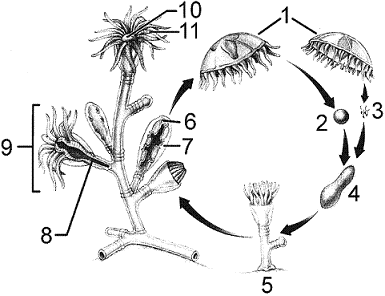
Refer to the accompanying figure. What is the structure labeled as 9?
A) medusa
B) planula
C) miracidium
D) feeding polyp
E) polyp colony
Refer to the accompanying figure. What is the structure labeled as 9?
A) medusa
B) planula
C) miracidium
D) feeding polyp
E) polyp colony

Question
Question
Question
Question
Figure 31-1
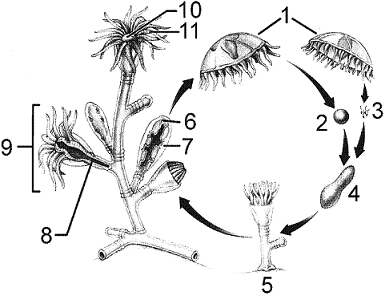
Refer to the accompanying figure. Asexual reproduction is occurring at which point?
A) 1
B) 3
C) 4
D) 7
E) 9
Refer to the accompanying figure. Asexual reproduction is occurring at which point?
A) 1
B) 3
C) 4
D) 7
E) 9
Question
Question
Figure 31-3
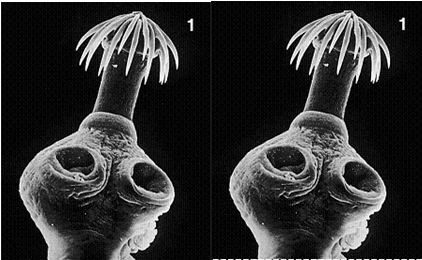
Refer to the accompanying figure. The structures labeled as 1 are used for:
A) feeding
B) reproduction
C) attachment
D) movement
E) protection
Refer to the accompanying figure. The structures labeled as 1 are used for:
A) feeding
B) reproduction
C) attachment
D) movement
E) protection
Question
Question
Question
Figure 31-3
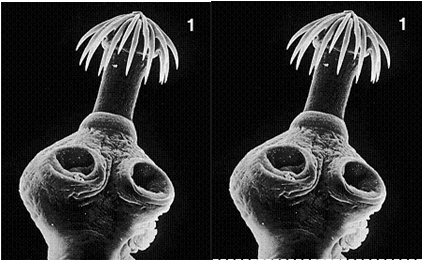
Which of the following is characteristic of nemerteans?
A) Most burrow in dry soil.
B) They have wide bodies.
C) They have no proboscis.
D) They are all less than 1 cm in length.
E) They have no heart.
Which of the following is characteristic of nemerteans?
A) Most burrow in dry soil.
B) They have wide bodies.
C) They have no proboscis.
D) They are all less than 1 cm in length.
E) They have no heart.
Question
Question
Question
Question
Question
Question
Question
Question
Question
Question
Question
Figure 31-6
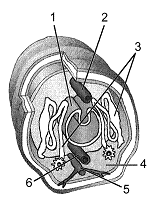
The cross section in the accompanying figure is representative of the internal structures found in:
A) phoronids
B) nemerteans
C) gastropods
D) flatworms
E) oligochaetes
The cross section in the accompanying figure is representative of the internal structures found in:
A) phoronids
B) nemerteans
C) gastropods
D) flatworms
E) oligochaetes
Question
Question
Question
Question
Question
Figure 31-4
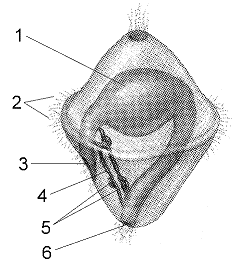
Refer to the accompanying figure. What is the structure labeled as 6?
A) anus
B) gills
C) cilia
D) mouth
E) digestive tract
Refer to the accompanying figure. What is the structure labeled as 6?
A) anus
B) gills
C) cilia
D) mouth
E) digestive tract
Question
Question
Question
Question
Question
Figure 31-6
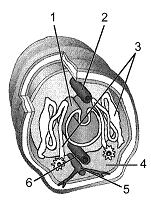
Refer to the accompanying figure. Which label denotes the nerve cord?
A) 1
B) 2
C) 3
D) 5
E) 6
Refer to the accompanying figure. Which label denotes the nerve cord?
A) 1
B) 2
C) 3
D) 5
E) 6
Question
Figure 31-4
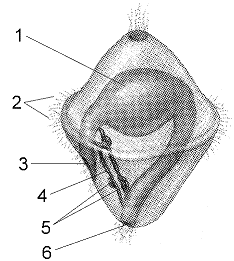
The larva in the accompanying figure is characteristic of which group of organisms?
A) mollusks
B) cnidarians
C) nematodes
D) arthropods
E) platyhelminthes
The larva in the accompanying figure is characteristic of which group of organisms?
A) mollusks
B) cnidarians
C) nematodes
D) arthropods
E) platyhelminthes
Question
Question
Question
Question
Figure 31-5
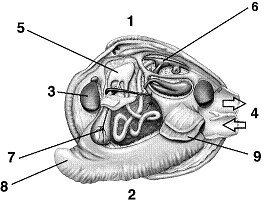
Refer to the accompanying figure. What is the structure labeled as 9?
A) foot
B) gills
C) heart
D) siphons
E) digestive tract
Refer to the accompanying figure. What is the structure labeled as 9?
A) foot
B) gills
C) heart
D) siphons
E) digestive tract
Question
Question
Question
Figure 31-5
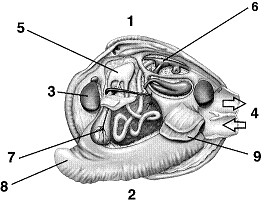
Refer to the accompanying figure. What is the function of the structure labeled as 8?
A) digestion
B) respiration
C) circulation
D) movement
E) reproduction
Refer to the accompanying figure. What is the function of the structure labeled as 8?
A) digestion
B) respiration
C) circulation
D) movement
E) reproduction
Question
Question
Question
Figure 31-2

Refer to the accompanying figure. What label designates the auricles on this organism?
A) 1
B) 2
C) 3
D) 4
E) 5
Refer to the accompanying figure. What label designates the auricles on this organism?
A) 1
B) 2
C) 3
D) 4
E) 5
Question
Question
Question
Question
Question
Question
Question
Question
Question
Question
Question
Question
Question
Question
Figure 31-2
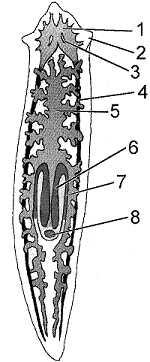
Refer to the accompanying figure. What is the structure labeled as 8 in the figure?
A) anus
B) mouth
C) ganglia
D) eyespots
E) pharynx
Refer to the accompanying figure. What is the structure labeled as 8 in the figure?
A) anus
B) mouth
C) ganglia
D) eyespots
E) pharynx
Question
Question
Question
Question
Question
Figure 31-7
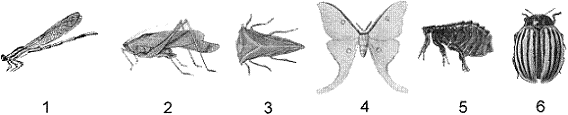
Which of the insects in the accompanying figure is a flea?
A) 1
B) 2
C) 3
D) 5
E) 6
Which of the insects in the accompanying figure is a flea?
A) 1
B) 2
C) 3
D) 5
E) 6
Question
Question
Question
Figure 31-7
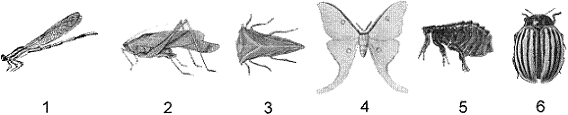
Which insect in the accompanying figure represents a group that parasitizes plants?
A) 1
B) 2
C) 3
D) 4
E) 5
Which insect in the accompanying figure represents a group that parasitizes plants?
A) 1
B) 2
C) 3
D) 4
E) 5
Question
Question
Question
Question
Question
Question
Question
Question
Question
Question
Question
Question
Question
Question
Question
Question

Unlock Deck
Sign up to unlock the cards in this deck!
Unlock Deck
Unlock Deck
1/114

Play

Full screen (f)
Deck 31: Sponges, Cnidarians, Ctenophores, and Protostomes
1
Figure 31-1
Refer to the accompanying figure. What is the structure labeled as 9?
A) medusa
B) planula
C) miracidium
D) feeding polyp
E) polyp colony
Refer to the accompanying figure. What is the structure labeled as 9?
A) medusa
B) planula
C) miracidium
D) feeding polyp
E) polyp colony
D
2
Which of the following is NOT a correct statement regarding collar cells?
A) They make up the inner layer of certain sponges.
B) The collar cell is an extension of the cell wall and consists of microvilli.
C) Collar cells create a water current that brings food and oxygen to the cells, and carries away carbon dioxide and other wastes.
D) Collar cells trap and phagocytize food particles.
E) Together, the collar cells of some sponges can pump a volume of water equal to the volume of the sponge each minute.
A) They make up the inner layer of certain sponges.
B) The collar cell is an extension of the cell wall and consists of microvilli.
C) Collar cells create a water current that brings food and oxygen to the cells, and carries away carbon dioxide and other wastes.
D) Collar cells trap and phagocytize food particles.
E) Together, the collar cells of some sponges can pump a volume of water equal to the volume of the sponge each minute.
B
3
Which of the following is NOT characteristic of cnidarians?
A) They are mostly marine.
B) They have radial symmetry.
C) They have one body shape, known as medusa.
D) They have cells that contain stinging organelles.
E) There is only one opening into the gastrovascular cavity.
A) They are mostly marine.
B) They have radial symmetry.
C) They have one body shape, known as medusa.
D) They have cells that contain stinging organelles.
E) There is only one opening into the gastrovascular cavity.
C
4
Which of the following is a correct statement regarding cnidarians?
A) They are less highly organized than sponges.
B) They have an ectoderm only (no endoderm).
C) They have a nerve net.
D) They have true muscle cells.
E) They do not have a hydrostatic skeleton.
A) They are less highly organized than sponges.
B) They have an ectoderm only (no endoderm).
C) They have a nerve net.
D) They have true muscle cells.
E) They do not have a hydrostatic skeleton.
Unlock Deck
Unlock for access to all 114 flashcards in this deck.
Unlock Deck
k this deck
5
Figure 31-1
Refer to the accompanying figure. Asexual reproduction is occurring at which point?
A) 1
B) 3
C) 4
D) 7
E) 9
Refer to the accompanying figure. Asexual reproduction is occurring at which point?
A) 1
B) 3
C) 4
D) 7
E) 9
Unlock Deck
Unlock for access to all 114 flashcards in this deck.
Unlock Deck
k this deck
6
Sponges are believed to have arisen from the choanoflagellates because they possess:
A) amebocytes
B) collar cells
C) spongin
D) spicules
E) oscula
A) amebocytes
B) collar cells
C) spongin
D) spicules
E) oscula
Unlock Deck
Unlock for access to all 114 flashcards in this deck.
Unlock Deck
k this deck
7
Figure 31-3
Refer to the accompanying figure. The structures labeled as 1 are used for:
A) feeding
B) reproduction
C) attachment
D) movement
E) protection
Refer to the accompanying figure. The structures labeled as 1 are used for:
A) feeding
B) reproduction
C) attachment
D) movement
E) protection
Unlock Deck
Unlock for access to all 114 flashcards in this deck.
Unlock Deck
k this deck
8
Which of the following is NOT a correct statement regarding ctenophores?
A) They are an important part of plankton.
B) They are distinct from the species known as comb jelly.
C) They are biradially symmetrical.
D) They do not have stinging nematocysts.
E) They have a nervous system.
A) They are an important part of plankton.
B) They are distinct from the species known as comb jelly.
C) They are biradially symmetrical.
D) They do not have stinging nematocysts.
E) They have a nervous system.
Unlock Deck
Unlock for access to all 114 flashcards in this deck.
Unlock Deck
k this deck
9
Which of the following is NOT an example of a cnidarian?
A) sea anemones
B) sponges
C) corals
D) sea fans
E) cubozoans
A) sea anemones
B) sponges
C) corals
D) sea fans
E) cubozoans
Unlock Deck
Unlock for access to all 114 flashcards in this deck.
Unlock Deck
k this deck
10
Figure 31-3
Which of the following is characteristic of nemerteans?
A) Most burrow in dry soil.
B) They have wide bodies.
C) They have no proboscis.
D) They are all less than 1 cm in length.
E) They have no heart.
Which of the following is characteristic of nemerteans?
A) Most burrow in dry soil.
B) They have wide bodies.
C) They have no proboscis.
D) They are all less than 1 cm in length.
E) They have no heart.
Unlock Deck
Unlock for access to all 114 flashcards in this deck.
Unlock Deck
k this deck
11
Where does digestion in a sponge takes place?
A) spicule
B) osculum
C) mesophyll
D) spongocoel
E) individual cells
A) spicule
B) osculum
C) mesophyll
D) spongocoel
E) individual cells
Unlock Deck
Unlock for access to all 114 flashcards in this deck.
Unlock Deck
k this deck
12
From an evolutionary perspective, true nerve cells are first seen in the phylum:
A) Porifera
B) Cnidaria
C) Ctenophora
D) Mollusca
E) Arthropoda
A) Porifera
B) Cnidaria
C) Ctenophora
D) Mollusca
E) Arthropoda
Unlock Deck
Unlock for access to all 114 flashcards in this deck.
Unlock Deck
k this deck
13
Ctenophores capture food:
A) with filter feeders
B) using adhesive glue cells that trap prey
C) with stinging hair cells that immobilize small invertebrates
D) by digging through the bottom mud for small invertebrates
E) with a sticky mucus on their tentacles that capture small invertebrates
A) with filter feeders
B) using adhesive glue cells that trap prey
C) with stinging hair cells that immobilize small invertebrates
D) by digging through the bottom mud for small invertebrates
E) with a sticky mucus on their tentacles that capture small invertebrates
Unlock Deck
Unlock for access to all 114 flashcards in this deck.
Unlock Deck
k this deck
14
The Portuguese man-of-war is a colony of hundreds to thousands of:
A) sea anemones
B) ctenophores
C) hydrozoans
D) jellyfish
E) sponges
A) sea anemones
B) ctenophores
C) hydrozoans
D) jellyfish
E) sponges
Unlock Deck
Unlock for access to all 114 flashcards in this deck.
Unlock Deck
k this deck
15
Which of the following is characteristic of flatworms?
A) They are acoelomate (have no body cavity).
B) They commonly have a complex nervous system.
C) They do not have eyespots.
D) They do not have statocysts (organs of balance).
E) They have organs for food and gas exchange.
A) They are acoelomate (have no body cavity).
B) They commonly have a complex nervous system.
C) They do not have eyespots.
D) They do not have statocysts (organs of balance).
E) They have organs for food and gas exchange.
Unlock Deck
Unlock for access to all 114 flashcards in this deck.
Unlock Deck
k this deck
16
Most mollusks are:
A) found in fresh water
B) terrestrial
C) parasitic
D) arboreal
E) marine
A) found in fresh water
B) terrestrial
C) parasitic
D) arboreal
E) marine
Unlock Deck
Unlock for access to all 114 flashcards in this deck.
Unlock Deck
k this deck
17
The body wall of cnidarians and ctenophores consist of:
A) three tissue layers
B) a single epidermal layer
C) loosely organized cells
D) two epidermal layers with scattered mesophyll cells in between
E) inner and outer cell layers separated by a jelly-like mesoglea
A) three tissue layers
B) a single epidermal layer
C) loosely organized cells
D) two epidermal layers with scattered mesophyll cells in between
E) inner and outer cell layers separated by a jelly-like mesoglea
Unlock Deck
Unlock for access to all 114 flashcards in this deck.
Unlock Deck
k this deck
18
Within the phylum Cnidaria, corals are most closely related to which organism?
A) Hydra
B) jellyfish
C) hydrozoans
D) sea anemones
E) Portuguese man-of-war
A) Hydra
B) jellyfish
C) hydrozoans
D) sea anemones
E) Portuguese man-of-war
Unlock Deck
Unlock for access to all 114 flashcards in this deck.
Unlock Deck
k this deck
19
What is the mode of nutrition for most Poriferans?
A) parasites
B) autotrophs
C) carnivores
D) herbivores
E) suspension feeders
A) parasites
B) autotrophs
C) carnivores
D) herbivores
E) suspension feeders
Unlock Deck
Unlock for access to all 114 flashcards in this deck.
Unlock Deck
k this deck
20
In cnidarians, nematocysts are housed within why type of specialized cell?
A) cnidocils
B) nerve nets
C) cnidocytes
D) choanocytes
E) pseudopodia
A) cnidocils
B) nerve nets
C) cnidocytes
D) choanocytes
E) pseudopodia
Unlock Deck
Unlock for access to all 114 flashcards in this deck.
Unlock Deck
k this deck
21
Figure 31-6
The cross section in the accompanying figure is representative of the internal structures found in:
A) phoronids
B) nemerteans
C) gastropods
D) flatworms
E) oligochaetes
The cross section in the accompanying figure is representative of the internal structures found in:
A) phoronids
B) nemerteans
C) gastropods
D) flatworms
E) oligochaetes
Unlock Deck
Unlock for access to all 114 flashcards in this deck.
Unlock Deck
k this deck
22
Which of the following species has been used for centuries to draw blood from areas swollen by poisonous stings and bites?
A) polychaetes
B) leeches
C) tapeworms
D) hookworms
E) earthworms
A) polychaetes
B) leeches
C) tapeworms
D) hookworms
E) earthworms
Unlock Deck
Unlock for access to all 114 flashcards in this deck.
Unlock Deck
k this deck
23
Segmentation is important in annelids as an aid in:
A) reproduction
B) locomotion
C) respiration
D) sensation
E) eating
A) reproduction
B) locomotion
C) respiration
D) sensation
E) eating
Unlock Deck
Unlock for access to all 114 flashcards in this deck.
Unlock Deck
k this deck
24
Which of the following is an adaptation that enables cephalopods to escape from their predators?
A) torsion
B) a hard shell
C) a modified radula
D) rapidly changing colors
E) poisonous salivary secretions
A) torsion
B) a hard shell
C) a modified radula
D) rapidly changing colors
E) poisonous salivary secretions
Unlock Deck
Unlock for access to all 114 flashcards in this deck.
Unlock Deck
k this deck
25
Which is a characteristic of all annelids?
A) They have a visceral mass.
B) They have a segmented body.
C) They move with a muscular foot.
D) They surround their body with a mantle.
E) They have an open circulatory system.
A) They have a visceral mass.
B) They have a segmented body.
C) They move with a muscular foot.
D) They surround their body with a mantle.
E) They have an open circulatory system.
Unlock Deck
Unlock for access to all 114 flashcards in this deck.
Unlock Deck
k this deck
26
Figure 31-4
Refer to the accompanying figure. What is the structure labeled as 6?
A) anus
B) gills
C) cilia
D) mouth
E) digestive tract
Refer to the accompanying figure. What is the structure labeled as 6?
A) anus
B) gills
C) cilia
D) mouth
E) digestive tract
Unlock Deck
Unlock for access to all 114 flashcards in this deck.
Unlock Deck
k this deck
27
Which structure do numerous mollusks use to scrape algae off rocks?
A) chelicerae
B) pupa
C) radula
D) beak
E) shell
A) chelicerae
B) pupa
C) radula
D) beak
E) shell
Unlock Deck
Unlock for access to all 114 flashcards in this deck.
Unlock Deck
k this deck
28
Which of the following terms is associated with polychaetes?
A) radula
B) mantle
C) parapodia
D) visceral mass
E) metamorphosis
A) radula
B) mantle
C) parapodia
D) visceral mass
E) metamorphosis
Unlock Deck
Unlock for access to all 114 flashcards in this deck.
Unlock Deck
k this deck
29
Which of the following animals helps to maintain fertile soil?
A) polychaetes
B) leeches
C) tapeworms
D) hookworms
E) earthworms
A) polychaetes
B) leeches
C) tapeworms
D) hookworms
E) earthworms
Unlock Deck
Unlock for access to all 114 flashcards in this deck.
Unlock Deck
k this deck
30
Which of the following is a marine species that is segmented and has many setae, a well-developed head, separate sexes, and trochophore larva?
A) sponges
B) sandworms and tubeworms
C) earthworms
D) leeches
E) mollusks
A) sponges
B) sandworms and tubeworms
C) earthworms
D) leeches
E) mollusks
Unlock Deck
Unlock for access to all 114 flashcards in this deck.
Unlock Deck
k this deck
31
Figure 31-6
Refer to the accompanying figure. Which label denotes the nerve cord?
A) 1
B) 2
C) 3
D) 5
E) 6
Refer to the accompanying figure. Which label denotes the nerve cord?
A) 1
B) 2
C) 3
D) 5
E) 6
Unlock Deck
Unlock for access to all 114 flashcards in this deck.
Unlock Deck
k this deck
32
Figure 31-4
The larva in the accompanying figure is characteristic of which group of organisms?
A) mollusks
B) cnidarians
C) nematodes
D) arthropods
E) platyhelminthes
The larva in the accompanying figure is characteristic of which group of organisms?
A) mollusks
B) cnidarians
C) nematodes
D) arthropods
E) platyhelminthes
Unlock Deck
Unlock for access to all 114 flashcards in this deck.
Unlock Deck
k this deck
33
Which of the mollusks have a closed circulatory system?
A) clams
B) slugs
C) snails
D) squids
E) chitons
A) clams
B) slugs
C) snails
D) squids
E) chitons
Unlock Deck
Unlock for access to all 114 flashcards in this deck.
Unlock Deck
k this deck
34
An animal found in the rocky intertidal zone has eight overlapping plates and is tightly adhering to the rock with a muscular foot. This animal is most likely a member of the class:
A) Polyplacophora
B) Cephalopoda
C) Polychaeta
D) Gastropoda
E) Bivalvia
A) Polyplacophora
B) Cephalopoda
C) Polychaeta
D) Gastropoda
E) Bivalvia
Unlock Deck
Unlock for access to all 114 flashcards in this deck.
Unlock Deck
k this deck
35
What is the mode of nutrition for clams and oysters?
A) autotrophy
B) herbivores
C) omnivores
D) carnivores
E) filter feeders
A) autotrophy
B) herbivores
C) omnivores
D) carnivores
E) filter feeders
Unlock Deck
Unlock for access to all 114 flashcards in this deck.
Unlock Deck
k this deck
36
Figure 31-5
Refer to the accompanying figure. What is the structure labeled as 9?
A) foot
B) gills
C) heart
D) siphons
E) digestive tract
Refer to the accompanying figure. What is the structure labeled as 9?
A) foot
B) gills
C) heart
D) siphons
E) digestive tract
Unlock Deck
Unlock for access to all 114 flashcards in this deck.
Unlock Deck
k this deck
37
Which is critical to polychaete and oligochaete locomotion?
A) jointed appendages
B) parapodia
C) tentacles
D) setae
E) Fins
A) jointed appendages
B) parapodia
C) tentacles
D) setae
E) Fins
Unlock Deck
Unlock for access to all 114 flashcards in this deck.
Unlock Deck
k this deck
38
One characteristic of class Bivalvia is that they:
A) are active swimmers
B) use a radula to feed on algae
C) possess two shells with a hinge
D) use their mantle for locomotion
E) possess shells of overlapping plates
A) are active swimmers
B) use a radula to feed on algae
C) possess two shells with a hinge
D) use their mantle for locomotion
E) possess shells of overlapping plates
Unlock Deck
Unlock for access to all 114 flashcards in this deck.
Unlock Deck
k this deck
39
Figure 31-5
Refer to the accompanying figure. What is the function of the structure labeled as 8?
A) digestion
B) respiration
C) circulation
D) movement
E) reproduction
Refer to the accompanying figure. What is the function of the structure labeled as 8?
A) digestion
B) respiration
C) circulation
D) movement
E) reproduction
Unlock Deck
Unlock for access to all 114 flashcards in this deck.
Unlock Deck
k this deck
40
The veliger larval form is unique to:
A) insects
B) annelids
C) molluscs
D) arthropods
E) crustaceans
A) insects
B) annelids
C) molluscs
D) arthropods
E) crustaceans
Unlock Deck
Unlock for access to all 114 flashcards in this deck.
Unlock Deck
k this deck
41
Which of the following groups use very long pedipalps as pinchers for capturing prey?
A) spiders
B) ticks
C) harvestmen
D) scorpions
E) mites
A) spiders
B) ticks
C) harvestmen
D) scorpions
E) mites
Unlock Deck
Unlock for access to all 114 flashcards in this deck.
Unlock Deck
k this deck
42
Figure 31-2
Refer to the accompanying figure. What label designates the auricles on this organism?
A) 1
B) 2
C) 3
D) 4
E) 5
Refer to the accompanying figure. What label designates the auricles on this organism?
A) 1
B) 2
C) 3
D) 4
E) 5
Unlock Deck
Unlock for access to all 114 flashcards in this deck.
Unlock Deck
k this deck
43
What is the purpose of protonephridia in flatworms?
A) to sense prey
B) to exchange gas
C) to respond to stimuli
D) to regulate fluid balance
E) to serve as a structure for sexual reproduction
A) to sense prey
B) to exchange gas
C) to respond to stimuli
D) to regulate fluid balance
E) to serve as a structure for sexual reproduction
Unlock Deck
Unlock for access to all 114 flashcards in this deck.
Unlock Deck
k this deck
44
You have a sample of cat emesis (vomit) and find worms in the sample. The cylindrical worms are long and slender, pointed at each end, with no other distinguishing characteristics. You conclude they are members of which phylum?
A) Platyhelminthes
B) Nematoda
C) Cnidaria
D) Annelida
E) Nemertea
A) Platyhelminthes
B) Nematoda
C) Cnidaria
D) Annelida
E) Nemertea
Unlock Deck
Unlock for access to all 114 flashcards in this deck.
Unlock Deck
k this deck
45
An elongate uniramid with many legs as well as poison claws is known as a(n):
A) mite
B) tick
C) insect
D) centipede
E) millipede
A) mite
B) tick
C) insect
D) centipede
E) millipede
Unlock Deck
Unlock for access to all 114 flashcards in this deck.
Unlock Deck
k this deck
46
Which of the following is NOT an adaptation that contributes to the biological success of insects?
A) diverse body plans that are adapted to many lifestyles
B) the ability to fly
C) high reproductive capacity
D) adaptations for offense and defense (e.g., cryptic coloration).
E) high intraspecific competition
A) diverse body plans that are adapted to many lifestyles
B) the ability to fly
C) high reproductive capacity
D) adaptations for offense and defense (e.g., cryptic coloration).
E) high intraspecific competition
Unlock Deck
Unlock for access to all 114 flashcards in this deck.
Unlock Deck
k this deck
47
The phylum name Arthropoda refers to:
A) the ability to fly
B) a hard exoskeleton
C) jointed appendages
D) a segmented coelom
E) respiratory capabilities
A) the ability to fly
B) a hard exoskeleton
C) jointed appendages
D) a segmented coelom
E) respiratory capabilities
Unlock Deck
Unlock for access to all 114 flashcards in this deck.
Unlock Deck
k this deck
48
The nervous system of many species of flatworms
A) consists of a single, large ganglion in the anterior end.
B) is sometimes referred to as tubelike.
C) includes two dorsal nerve cords.
D) is diffuse and netlike.
E) is a "ladder-type."
A) consists of a single, large ganglion in the anterior end.
B) is sometimes referred to as tubelike.
C) includes two dorsal nerve cords.
D) is diffuse and netlike.
E) is a "ladder-type."
Unlock Deck
Unlock for access to all 114 flashcards in this deck.
Unlock Deck
k this deck
49
The intermediate host for a blood fluke is a:
A) human
B) cow
C) dog
D) cat
E) snail
A) human
B) cow
C) dog
D) cat
E) snail
Unlock Deck
Unlock for access to all 114 flashcards in this deck.
Unlock Deck
k this deck
50
Which of the following is a difference between flatworms and nemerteans?
A) There are no species of parasitic flatworms.
B) Flatworm larvae burrow into the skin, whereas nemertean larvae are ingested.
C) There are no species of predacious flatworms.
D) Flatworms have a proboscis, whereas nemerteans do not.
E) Flatworms do not have a digestive system, whereas nemerteans do.
A) There are no species of parasitic flatworms.
B) Flatworm larvae burrow into the skin, whereas nemertean larvae are ingested.
C) There are no species of predacious flatworms.
D) Flatworms have a proboscis, whereas nemerteans do not.
E) Flatworms do not have a digestive system, whereas nemerteans do.
Unlock Deck
Unlock for access to all 114 flashcards in this deck.
Unlock Deck
k this deck
51
Which statement best describes a lophophore?
A) It is a ciliated ring of tentacles surrounding the mouth.
B) It is a structure used for locomotion in the Lophophorata.
C) It is the opening also referred to as the anus in the Ecdysozoa.
D) It is a larval stage found in the Lophotrochozoa and the Ecdysozoa.
E) It is one of the openings to the excretory system of phylum Platyhelminthes.
A) It is a ciliated ring of tentacles surrounding the mouth.
B) It is a structure used for locomotion in the Lophophorata.
C) It is the opening also referred to as the anus in the Ecdysozoa.
D) It is a larval stage found in the Lophotrochozoa and the Ecdysozoa.
E) It is one of the openings to the excretory system of phylum Platyhelminthes.
Unlock Deck
Unlock for access to all 114 flashcards in this deck.
Unlock Deck
k this deck
52
Which of the following produces a silken dragline that can be used to determine the sex and maturity level of the spinner?
A) harvestmen
B) ticks
C) spiders
D) scorpions
E) mites
A) harvestmen
B) ticks
C) spiders
D) scorpions
E) mites
Unlock Deck
Unlock for access to all 114 flashcards in this deck.
Unlock Deck
k this deck
53
Which is a characteristic of tapeworms?
A) Tapeworms have a simple life cycle.
B) Tapeworms have a complete digestive system.
C) Tapeworms have a closed circulatory system.
D) Tapeworms have a well developed sensory system.
E) Tapeworms have bodies that consist of hundreds of reproductive segments.
A) Tapeworms have a simple life cycle.
B) Tapeworms have a complete digestive system.
C) Tapeworms have a closed circulatory system.
D) Tapeworms have a well developed sensory system.
E) Tapeworms have bodies that consist of hundreds of reproductive segments.
Unlock Deck
Unlock for access to all 114 flashcards in this deck.
Unlock Deck
k this deck
54
The anterior end of a tapeworm is known as the:
A) protonephridia
B) proglottid
C) cnidocyte
D) auricle
E) scolex
A) protonephridia
B) proglottid
C) cnidocyte
D) auricle
E) scolex
Unlock Deck
Unlock for access to all 114 flashcards in this deck.
Unlock Deck
k this deck
55
Which are the animals with a crown of cilia that look like a spinning wheel?
A) rotifers
B) phoronids
C) bryozoans
D) ctenophores
E) platyhelminthes
A) rotifers
B) phoronids
C) bryozoans
D) ctenophores
E) platyhelminthes
Unlock Deck
Unlock for access to all 114 flashcards in this deck.
Unlock Deck
k this deck
56
Figure 31-2
Refer to the accompanying figure. What is the structure labeled as 8 in the figure?
A) anus
B) mouth
C) ganglia
D) eyespots
E) pharynx
Refer to the accompanying figure. What is the structure labeled as 8 in the figure?
A) anus
B) mouth
C) ganglia
D) eyespots
E) pharynx
Unlock Deck
Unlock for access to all 114 flashcards in this deck.
Unlock Deck
k this deck
57
How do leeches differ from other annelids?
A) They are aquatic.
B) They do not have segmentation.
C) They cannot reproduce sexually.
D) They do not have a nervous system.
E) They do not have setae or parapodia.
A) They are aquatic.
B) They do not have segmentation.
C) They cannot reproduce sexually.
D) They do not have a nervous system.
E) They do not have setae or parapodia.
Unlock Deck
Unlock for access to all 114 flashcards in this deck.
Unlock Deck
k this deck
58
Which arthropod has chelicerae, pedipalps, and silk glands?
A) tick
B) mite
C) spider
D) scorpion
E) barnacle
A) tick
B) mite
C) spider
D) scorpion
E) barnacle
Unlock Deck
Unlock for access to all 114 flashcards in this deck.
Unlock Deck
k this deck
59
The first animals to show cephalization have several characteristics. Which of the following is NOT one of them?
A) These animals were triploblastic.
B) These animals had a proboscis.
C) These animals were in phylum Platyhelminthes.
D) These animals are placed in the group Lophotrochozoa.
E) These animals followed the protostome pattern of embryonic development.
A) These animals were triploblastic.
B) These animals had a proboscis.
C) These animals were in phylum Platyhelminthes.
D) These animals are placed in the group Lophotrochozoa.
E) These animals followed the protostome pattern of embryonic development.
Unlock Deck
Unlock for access to all 114 flashcards in this deck.
Unlock Deck
k this deck
60
After embryonic development, members of the phylum Rotifera are incapable of:
A) reproduction
B) cell division
C) locomotion
D) excretion
E) ingestion
A) reproduction
B) cell division
C) locomotion
D) excretion
E) ingestion
Unlock Deck
Unlock for access to all 114 flashcards in this deck.
Unlock Deck
k this deck
61
Figure 31-7
Which of the insects in the accompanying figure is a flea?
A) 1
B) 2
C) 3
D) 5
E) 6
Which of the insects in the accompanying figure is a flea?
A) 1
B) 2
C) 3
D) 5
E) 6
Unlock Deck
Unlock for access to all 114 flashcards in this deck.
Unlock Deck
k this deck
62
Segmentation in arthropods differs from that of annelids because arthropod segments are:
A) smaller
B) superficial
C) more specialized
D) only present in adults
E) only present in larvae
A) smaller
B) superficial
C) more specialized
D) only present in adults
E) only present in larvae
Unlock Deck
Unlock for access to all 114 flashcards in this deck.
Unlock Deck
k this deck
63
A nauplius larva is characteristic of:
A) molluscs
B) gastropods
C) echinoderms
D) crustaceans
E) ctenophores
A) molluscs
B) gastropods
C) echinoderms
D) crustaceans
E) ctenophores
Unlock Deck
Unlock for access to all 114 flashcards in this deck.
Unlock Deck
k this deck
64
Figure 31-7
Which insect in the accompanying figure represents a group that parasitizes plants?
A) 1
B) 2
C) 3
D) 4
E) 5
Which insect in the accompanying figure represents a group that parasitizes plants?
A) 1
B) 2
C) 3
D) 4
E) 5
Unlock Deck
Unlock for access to all 114 flashcards in this deck.
Unlock Deck
k this deck
65
Biramous appendages in arthropods are only present in which organism?
A) insects
B) arachnids
C) centipedes
D) crustaceans
E) horseshoe crabs
A) insects
B) arachnids
C) centipedes
D) crustaceans
E) horseshoe crabs
Unlock Deck
Unlock for access to all 114 flashcards in this deck.
Unlock Deck
k this deck
66
Insects are vectors of many diseases that affect humans. List these diseases and their insect vectors.
Unlock Deck
Unlock for access to all 114 flashcards in this deck.
Unlock Deck
k this deck
67
Arthropods with mandibles, a single pair of antennae, and two legs on most body segments are:
A) ribbon worms
B) centipedes
C) millipedes
D) trilobites
E) mites
A) ribbon worms
B) centipedes
C) millipedes
D) trilobites
E) mites
Unlock Deck
Unlock for access to all 114 flashcards in this deck.
Unlock Deck
k this deck
68
Which class of animals has the largest number of species?
A) Arachnida
B) Insecta
C) Gastropoda
D) Bivalvia
E) Arthropoda
A) Arachnida
B) Insecta
C) Gastropoda
D) Bivalvia
E) Arthropoda
Unlock Deck
Unlock for access to all 114 flashcards in this deck.
Unlock Deck
k this deck
69
What is a disadvantage to having an exoskeleton?
A) Exoskeletons interfere with ingestion.
B) Exoskeletons severely limit locomotion.
C) Exoskeletons do not prevent desiccation.
D) Exoskeletons do not provide adequate protection from predators.
E) Exoskeletons must be shed when the animal grows, exposing the animal to predators.
A) Exoskeletons interfere with ingestion.
B) Exoskeletons severely limit locomotion.
C) Exoskeletons do not prevent desiccation.
D) Exoskeletons do not provide adequate protection from predators.
E) Exoskeletons must be shed when the animal grows, exposing the animal to predators.
Unlock Deck
Unlock for access to all 114 flashcards in this deck.
Unlock Deck
k this deck
70
Identify the distinguishing characteristics of phylum Cnidaria. Outline the classes within this phylum and their major characteristics. Include at least one representative for each class.
Unlock Deck
Unlock for access to all 114 flashcards in this deck.
Unlock Deck
k this deck
71
What specialized structure do crustaceans use to sense gravity?
A) antennae
B) maxillae
C) mandibles
D) statocysts
E) swimmerets
A) antennae
B) maxillae
C) mandibles
D) statocysts
E) swimmerets
Unlock Deck
Unlock for access to all 114 flashcards in this deck.
Unlock Deck
k this deck
72
Which arthropods have mandibles, gills, excretory glands, and statocysts?
A) mites
B) insects
C) spiders
D) scorpions
E) crustaceans
A) mites
B) insects
C) spiders
D) scorpions
E) crustaceans
Unlock Deck
Unlock for access to all 114 flashcards in this deck.
Unlock Deck
k this deck
73
List two characteristics that have contributed to the biological success of the insects, and briefly explain the adaptive value of each characteristic that you identified.
Unlock Deck
Unlock for access to all 114 flashcards in this deck.
Unlock Deck
k this deck
74
Gas exchange in terrestrial insects is accomplished through:
A) the use of gills
B) the use of tracheae
C) the use of book lungs
D) a closed circulatory system
E) diffusion across the epidermal layer
A) the use of gills
B) the use of tracheae
C) the use of book lungs
D) a closed circulatory system
E) diffusion across the epidermal layer
Unlock Deck
Unlock for access to all 114 flashcards in this deck.
Unlock Deck
k this deck
75
Choanocytes are a characteristic of members of the phylum Cnidaria .
Unlock Deck
Unlock for access to all 114 flashcards in this deck.
Unlock Deck
k this deck
76
Which of the following are exclusively terrestrial?
A) insects
B) crustaceans
C) arachnids
D) merostomes
E) chilopods and diplopods
A) insects
B) crustaceans
C) arachnids
D) merostomes
E) chilopods and diplopods
Unlock Deck
Unlock for access to all 114 flashcards in this deck.
Unlock Deck
k this deck
77
Which of the following statements about arthropods is FALSE ?
A) Arthropods have a true coelom.
B) Arthropods have an exoskeleton.
C) Arthropods display segmentation.
D) Arthropods have an open circulatory system.
E) Arthropods have an incomplete digestive tract.
A) Arthropods have a true coelom.
B) Arthropods have an exoskeleton.
C) Arthropods display segmentation.
D) Arthropods have an open circulatory system.
E) Arthropods have an incomplete digestive tract.
Unlock Deck
Unlock for access to all 114 flashcards in this deck.
Unlock Deck
k this deck
78
Which of the following are exclusively marine?
A) chilopods and diplopods
B) mirostomes
C) arachnids
D) crustaceans
E) insects
A) chilopods and diplopods
B) mirostomes
C) arachnids
D) crustaceans
E) insects
Unlock Deck
Unlock for access to all 114 flashcards in this deck.
Unlock Deck
k this deck
79
Describe what is known about the phylogeny of the ecdysozoans.
Unlock Deck
Unlock for access to all 114 flashcards in this deck.
Unlock Deck
k this deck
80
Which is a unique adaptation in insects not found in any other arthropod?
A) wings
B) cephalization
C) segmentation
D) hard exoskeletons
E) specialized mouthparts
A) wings
B) cephalization
C) segmentation
D) hard exoskeletons
E) specialized mouthparts
Unlock Deck
Unlock for access to all 114 flashcards in this deck.
Unlock Deck
k this deck
Unlock Deck
Unlock for access to all 114 flashcards in this deck.






