







 Chat with AI

Deck 49: Endocrine Regulation
Full screen (f)

Question
Figure 49-1
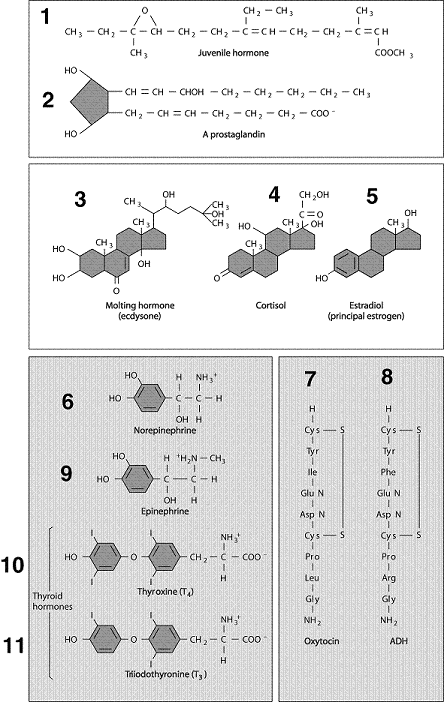
Refer to the accompanying figure. Which of the following hormones is secreted by the adrenal cortex?
A) 1
B) 2
C) 4
D) 6
E) 8
Refer to the accompanying figure. Which of the following hormones is secreted by the adrenal cortex?
A) 1
B) 2
C) 4
D) 6
E) 8

Question
Question
Figure 49-2

The second messenger for the hormone mechanism in the accompanying figure is
A) ATP.
B) G protein.
C) cAMP.
D) calmodulin.
E) Ca2+.
The second messenger for the hormone mechanism in the accompanying figure is
A) ATP.
B) G protein.
C) cAMP.
D) calmodulin.
E) Ca2+.
Question
Figure 49-1
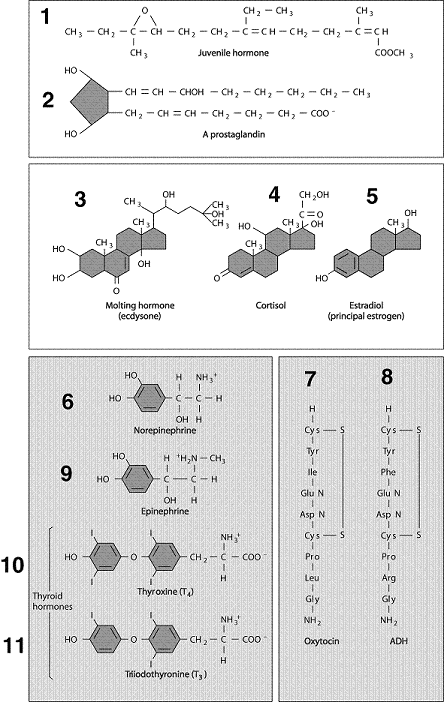
Refer to the accompanying figure. Which of the following is a steroid hormone?
A) 1
B) 3
C) 6
D) 8
E) 10
Refer to the accompanying figure. Which of the following is a steroid hormone?
A) 1
B) 3
C) 6
D) 8
E) 10
Question
Question
Question
Question
Question
Question
Question
Question
Question
Question
Question
Question
Figure 49-1
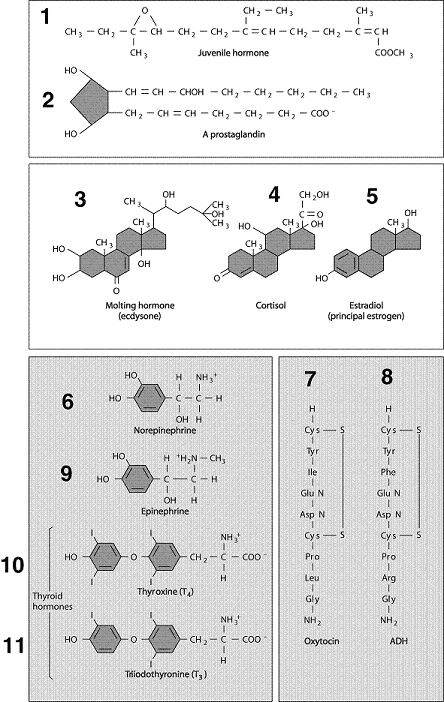
Refer to the accompanying figure. Insulin-like growth factor would be included with which of the following pairs?
A) 1, 2
B) 3, 4
C) 6, 9
D) 7, 8
E) 10, 11
Refer to the accompanying figure. Insulin-like growth factor would be included with which of the following pairs?
A) 1, 2
B) 3, 4
C) 6, 9
D) 7, 8
E) 10, 11
Question
Figure 49-2

The process illustrated in the accompanying figure is representative of
A) neuroendocrine signaling.
B) paracrine regulation.
C) cAMP as a second messenger.
D) classical endocrine signaling.
E) autocrine regulation.
The process illustrated in the accompanying figure is representative of
A) neuroendocrine signaling.
B) paracrine regulation.
C) cAMP as a second messenger.
D) classical endocrine signaling.
E) autocrine regulation.
Question
Question
Question
Question
Question
Question
Question
Question
Question
Question
Question
Question
Question
Question
Question
Question
Question
Question
Question
Question
Question
Question
Question
Question
Question
Question
Question
Question
Question
Question
Question
Question
Question
Question
Question
Question
Question
Question
Question
Question
Question
Question
Question
Question
Match between columns
Question
Match between columns
Question
Match between columns
Question
Match between columns
Question
Question
Match between columns
Question
Match between columns
Question
Question
Match between columns
Question
Match between columns
Question
Match between columns
Question
Match between columns
Question
Match between columns
Question
Question
Question
Question
Match between columns
Question
Match between columns
Question
Match between columns
Question

Unlock Deck
Sign up to unlock the cards in this deck!
Unlock Deck
Unlock Deck
1/87

Play

Full screen (f)
Deck 49: Endocrine Regulation
1
Figure 49-1
Refer to the accompanying figure. Which of the following hormones is secreted by the adrenal cortex?
A) 1
B) 2
C) 4
D) 6
E) 8
Refer to the accompanying figure. Which of the following hormones is secreted by the adrenal cortex?
A) 1
B) 2
C) 4
D) 6
E) 8
C
2
Compared to the nervous system, the endocrine system responds
A) more quickly but may have long-lasting effects.
B) more quickly and may have more short-term effects.
C) more slowly and may have long-lasting effects.
D) more slowly but may have more short-term effects.
E) about the same and has similar effects.
A) more quickly but may have long-lasting effects.
B) more quickly and may have more short-term effects.
C) more slowly and may have long-lasting effects.
D) more slowly but may have more short-term effects.
E) about the same and has similar effects.
C
3
Figure 49-2
The second messenger for the hormone mechanism in the accompanying figure is
A) ATP.
B) G protein.
C) cAMP.
D) calmodulin.
E) Ca2+.
The second messenger for the hormone mechanism in the accompanying figure is
A) ATP.
B) G protein.
C) cAMP.
D) calmodulin.
E) Ca2+.
C
4
Figure 49-1
Refer to the accompanying figure. Which of the following is a steroid hormone?
A) 1
B) 3
C) 6
D) 8
E) 10
Refer to the accompanying figure. Which of the following is a steroid hormone?
A) 1
B) 3
C) 6
D) 8
E) 10
Unlock Deck
Unlock for access to all 87 flashcards in this deck.
Unlock Deck
k this deck
5
The secretion of which hormone decreases when calcium blood levels increase?
A) Calcitonin
B) Parathyroid hormone
C) Thyroid hormone
D) Epinephrine
E) Norepinephrine
A) Calcitonin
B) Parathyroid hormone
C) Thyroid hormone
D) Epinephrine
E) Norepinephrine
Unlock Deck
Unlock for access to all 87 flashcards in this deck.
Unlock Deck
k this deck
6
Anabolic steroids
A) are removed from the body fairly quickly because of a low concentration of receptor sites.
B) decrease HDL concentration, thereby increasing the risk of cardiovascular disease.
C) are naturally produced hormones typically used by athletes for short-term performance enhancement.
D) have little or no effect on physiology or behavior at very low doses.
E) are metabolized and excreted from the body quickly.
A) are removed from the body fairly quickly because of a low concentration of receptor sites.
B) decrease HDL concentration, thereby increasing the risk of cardiovascular disease.
C) are naturally produced hormones typically used by athletes for short-term performance enhancement.
D) have little or no effect on physiology or behavior at very low doses.
E) are metabolized and excreted from the body quickly.
Unlock Deck
Unlock for access to all 87 flashcards in this deck.
Unlock Deck
k this deck
7
Which organ has both endocrine and exocrine gland functions?
A) Heart
B) Liver
C) Kidney
D) Thyroid gland
E) Pancreas
A) Heart
B) Liver
C) Kidney
D) Thyroid gland
E) Pancreas
Unlock Deck
Unlock for access to all 87 flashcards in this deck.
Unlock Deck
k this deck
8
Which types of hormones have intracellular receptors?
A) Steroid and peptide hormones
B) Steroid and thyroid hormones
C) Thyroid and peptide hormones
D) Peptide and phospholipid hormones
E) Steroid and phospholipid hormones
A) Steroid and peptide hormones
B) Steroid and thyroid hormones
C) Thyroid and peptide hormones
D) Peptide and phospholipid hormones
E) Steroid and phospholipid hormones
Unlock Deck
Unlock for access to all 87 flashcards in this deck.
Unlock Deck
k this deck
9
Why doesn't every cell in the body respond to every hormone circulating in the bloodstream?
A) Each cell has a limited number of protein channels that shuttle hormones through its membrane.
B) Not all hormones can diffuse through all cell membranes.
C) The concentration of some hormones is too low to stimulate every cell.
D) Each cell has specific surface receptors, which interact only with hormones that they recognize.
E) Although all hormones bind to all cell surfaces, some cells lack second messengers for expression.
A) Each cell has a limited number of protein channels that shuttle hormones through its membrane.
B) Not all hormones can diffuse through all cell membranes.
C) The concentration of some hormones is too low to stimulate every cell.
D) Each cell has specific surface receptors, which interact only with hormones that they recognize.
E) Although all hormones bind to all cell surfaces, some cells lack second messengers for expression.
Unlock Deck
Unlock for access to all 87 flashcards in this deck.
Unlock Deck
k this deck
10
Which of the following statements about paracrine regulation is TRUE?
A) The hormones released only stimulate the cells that secreted them.
B) The hormones released only inhibit the cells that secreted them.
C) The hormones released act on nearby target cells.
D) The hormones released are transported down axons.
E) The hormones released link the endocrine and nervous systems.
A) The hormones released only stimulate the cells that secreted them.
B) The hormones released only inhibit the cells that secreted them.
C) The hormones released act on nearby target cells.
D) The hormones released are transported down axons.
E) The hormones released link the endocrine and nervous systems.
Unlock Deck
Unlock for access to all 87 flashcards in this deck.
Unlock Deck
k this deck
11
Which of the following is a neuropeptide?
A) insulin
B) ACTH
C) progesterone
D) ADH
E) prostaglandin
A) insulin
B) ACTH
C) progesterone
D) ADH
E) prostaglandin
Unlock Deck
Unlock for access to all 87 flashcards in this deck.
Unlock Deck
k this deck
12
Hormones are ________ messengers transported by the ____.
A) electrical; blood
B) electrical; nerves
C) chemical; blood
D) chemical; nerves
E) Chemical; glands
A) electrical; blood
B) electrical; nerves
C) chemical; blood
D) chemical; nerves
E) Chemical; glands
Unlock Deck
Unlock for access to all 87 flashcards in this deck.
Unlock Deck
k this deck
13
Which of the following is a modified fatty acid?
A) Prostaglandin
B) Cyclic AMP
C) Thyroid hormone
D) Epinephrine
E) Melatonin
A) Prostaglandin
B) Cyclic AMP
C) Thyroid hormone
D) Epinephrine
E) Melatonin
Unlock Deck
Unlock for access to all 87 flashcards in this deck.
Unlock Deck
k this deck
14
Which of the following is the largest group of hormones?
A) Steroid hormones
B) Polysaccharide hormones
C) Amino acid derivatives
D) Peptide hormones
E) Fatty acid derivatives
A) Steroid hormones
B) Polysaccharide hormones
C) Amino acid derivatives
D) Peptide hormones
E) Fatty acid derivatives
Unlock Deck
Unlock for access to all 87 flashcards in this deck.
Unlock Deck
k this deck
15
In which type of regulation do hormones act on the cells that produce it?
A) Classical endocrine signaling
B) Neuroendocrine signaling
C) Paracrine signaling
D) Autocrine signaling
E) Pheromone signaling
A) Classical endocrine signaling
B) Neuroendocrine signaling
C) Paracrine signaling
D) Autocrine signaling
E) Pheromone signaling
Unlock Deck
Unlock for access to all 87 flashcards in this deck.
Unlock Deck
k this deck
16
Figure 49-1
Refer to the accompanying figure. Insulin-like growth factor would be included with which of the following pairs?
A) 1, 2
B) 3, 4
C) 6, 9
D) 7, 8
E) 10, 11
Refer to the accompanying figure. Insulin-like growth factor would be included with which of the following pairs?
A) 1, 2
B) 3, 4
C) 6, 9
D) 7, 8
E) 10, 11
Unlock Deck
Unlock for access to all 87 flashcards in this deck.
Unlock Deck
k this deck
17
Figure 49-2
The process illustrated in the accompanying figure is representative of
A) neuroendocrine signaling.
B) paracrine regulation.
C) cAMP as a second messenger.
D) classical endocrine signaling.
E) autocrine regulation.
The process illustrated in the accompanying figure is representative of
A) neuroendocrine signaling.
B) paracrine regulation.
C) cAMP as a second messenger.
D) classical endocrine signaling.
E) autocrine regulation.
Unlock Deck
Unlock for access to all 87 flashcards in this deck.
Unlock Deck
k this deck
18
When blood calcium levels are low, ____.
A) neurons may fire more slowly
B) the release of parathyroid hormone would increase
C) neurons may fire spontaneously
D) the release of parathyroid hormone would decrease
E) the reabsorption of calcium from the kidney tubules would increase
A) neurons may fire more slowly
B) the release of parathyroid hormone would increase
C) neurons may fire spontaneously
D) the release of parathyroid hormone would decrease
E) the reabsorption of calcium from the kidney tubules would increase
Unlock Deck
Unlock for access to all 87 flashcards in this deck.
Unlock Deck
k this deck
19
Chemically, the simplest hormones are the ____ group of hormones.
A) fatty acid derivatives
B) steroid
C) amino acid derivatives
D) peptide
E) protein
A) fatty acid derivatives
B) steroid
C) amino acid derivatives
D) peptide
E) protein
Unlock Deck
Unlock for access to all 87 flashcards in this deck.
Unlock Deck
k this deck
20
The products of an endocrine gland
A) only affect their own tissues.
B) can have a digestive function.
C) always stimulate the target tissue.
D) generally have to travel to reach the target tissue.
E) are not produced by cells in organs, such as the heart.
A) only affect their own tissues.
B) can have a digestive function.
C) always stimulate the target tissue.
D) generally have to travel to reach the target tissue.
E) are not produced by cells in organs, such as the heart.
Unlock Deck
Unlock for access to all 87 flashcards in this deck.
Unlock Deck
k this deck
21
Glucagon raises blood glucose levels by
A) stimulating the liver to take up glucose.
B) inhibiting gluconeogenesis.
C) stimulating gluconeogenesis.
D) inhibiting fatty acid mobilization.
E) inhibiting amino acid mobilization.
A) stimulating the liver to take up glucose.
B) inhibiting gluconeogenesis.
C) stimulating gluconeogenesis.
D) inhibiting fatty acid mobilization.
E) inhibiting amino acid mobilization.
Unlock Deck
Unlock for access to all 87 flashcards in this deck.
Unlock Deck
k this deck
22
Once a hormone activates the enzyme adenylyl cyclase, ATP is converted to cAMP, which in turn
A) activates protein kinase.
B) inhibits phosphodiesterase.
C) initiates more cAMP production.
D) initiates protein synthesis.
E) inhibits protein synthesis.
A) activates protein kinase.
B) inhibits phosphodiesterase.
C) initiates more cAMP production.
D) initiates protein synthesis.
E) inhibits protein synthesis.
Unlock Deck
Unlock for access to all 87 flashcards in this deck.
Unlock Deck
k this deck
23
After a steroid hormone binds its receptor, the hormone-receptor complex then
A) activates a G protein.
B) activates a protein kinase.
C) activates adenylyl cyclase.
D) activates calmodulin.
E) binds DNA.
A) activates a G protein.
B) activates a protein kinase.
C) activates adenylyl cyclase.
D) activates calmodulin.
E) binds DNA.
Unlock Deck
Unlock for access to all 87 flashcards in this deck.
Unlock Deck
k this deck
24
Calcium ions may act with phospholipid second messengers by binding to ____, which then regulates other proteins.
A) adenylyl cyclase
B) cyclic AMP
C) calmodulin
D) phosphodiesterase
E) protein kinase
A) adenylyl cyclase
B) cyclic AMP
C) calmodulin
D) phosphodiesterase
E) protein kinase
Unlock Deck
Unlock for access to all 87 flashcards in this deck.
Unlock Deck
k this deck
25
Arrange the following events in the correct sequence.
1) Thyroid gland secretes less hormone
2) Homeostasis
3) High concentration of thyroid hormones
4) Anterior pituitary secretes less TSH
A) 2 → 1 → 4 → 3
B) 2 → 3 → 4 → 1
C) 3 → 4 → 1 → 2
D) 4 → 3 → 1 → 2
E) 1 → 4 → 3 → 2
1) Thyroid gland secretes less hormone
2) Homeostasis
3) High concentration of thyroid hormones
4) Anterior pituitary secretes less TSH
A) 2 → 1 → 4 → 3
B) 2 → 3 → 4 → 1
C) 3 → 4 → 1 → 2
D) 4 → 3 → 1 → 2
E) 1 → 4 → 3 → 2
Unlock Deck
Unlock for access to all 87 flashcards in this deck.
Unlock Deck
k this deck
26
In a signal transduction pathway involving calcium as a second messenger, what binds the calcium to the effector?
A) Phospholipase C
B) Adenylyl cyclase
C) Calmodulin
D) Protein kinase
E) Diacylglycerol
A) Phospholipase C
B) Adenylyl cyclase
C) Calmodulin
D) Protein kinase
E) Diacylglycerol
Unlock Deck
Unlock for access to all 87 flashcards in this deck.
Unlock Deck
k this deck
27
Chronic stress
A) is associated with elevated levels of glucocorticoids.
B) may lead to the excessive stimulation of neurons.
C) increases blood flow to the brain, especially the hippocampus.
D) results in lower levels of epinephrine and norepinephrine.
E) promotes the linear growth of the skeleton.
A) is associated with elevated levels of glucocorticoids.
B) may lead to the excessive stimulation of neurons.
C) increases blood flow to the brain, especially the hippocampus.
D) results in lower levels of epinephrine and norepinephrine.
E) promotes the linear growth of the skeleton.
Unlock Deck
Unlock for access to all 87 flashcards in this deck.
Unlock Deck
k this deck
28
The principal mineralocorticoid is
A) ADH.
B) epinephrine.
C) growth hormone.
D) aldosterone.
E) ACTH.
A) ADH.
B) epinephrine.
C) growth hormone.
D) aldosterone.
E) ACTH.
Unlock Deck
Unlock for access to all 87 flashcards in this deck.
Unlock Deck
k this deck
29
Hypothyroidism during infancy and childhood can lead to a condition of retarded mental and physical development called
A) dwarfism.
B) gigantism.
C) acromegaly.
D) myxedema.
E) cretinism.
A) dwarfism.
B) gigantism.
C) acromegaly.
D) myxedema.
E) cretinism.
Unlock Deck
Unlock for access to all 87 flashcards in this deck.
Unlock Deck
k this deck
30
During stressful situations, epinephrine initiates
A) the dilation of the blood vessels to the kidneys.
B) the constriction of the blood vessels to the heart.
C) the dilation of the blood vessels to the brain.
D) the dilation of the blood vessels to the skin.
E) a decrease in blood glucose levels.
A) the dilation of the blood vessels to the kidneys.
B) the constriction of the blood vessels to the heart.
C) the dilation of the blood vessels to the brain.
D) the dilation of the blood vessels to the skin.
E) a decrease in blood glucose levels.
Unlock Deck
Unlock for access to all 87 flashcards in this deck.
Unlock Deck
k this deck
31
An adult who is suffering from hyperthyroidism
A) is always tired.
B) is often hungry.
C) is overweight.
D) is mentally slow.
E) shows a lack of emotions.
A) is always tired.
B) is often hungry.
C) is overweight.
D) is mentally slow.
E) shows a lack of emotions.
Unlock Deck
Unlock for access to all 87 flashcards in this deck.
Unlock Deck
k this deck
32
Insulin promotes the storage of glucose by
A) stimulating protein synthesis.
B) increasing the use of fatty acids as fuel.
C) promoting the liver to release glucose.
D) stimulating fatty acid release by adipose tissue.
E) inhibiting glycogen formation.
A) stimulating protein synthesis.
B) increasing the use of fatty acids as fuel.
C) promoting the liver to release glucose.
D) stimulating fatty acid release by adipose tissue.
E) inhibiting glycogen formation.
Unlock Deck
Unlock for access to all 87 flashcards in this deck.
Unlock Deck
k this deck
33
Which hormone stimulates insect growth and molting?
A) Ecdysiotropin
B) Juvenile hormone
C) Histamine
D) Pheromone
E) Ecdysone
A) Ecdysiotropin
B) Juvenile hormone
C) Histamine
D) Pheromone
E) Ecdysone
Unlock Deck
Unlock for access to all 87 flashcards in this deck.
Unlock Deck
k this deck
34
Insulin is produced by the
A) beta cells of the islets of Langerhans.
B) alpha cells of the islets of Langerhans.
C) cortical cells of the adrenal gland.
D) neurons in the hypothalamus.
E) lobules of the liver.
A) beta cells of the islets of Langerhans.
B) alpha cells of the islets of Langerhans.
C) cortical cells of the adrenal gland.
D) neurons in the hypothalamus.
E) lobules of the liver.
Unlock Deck
Unlock for access to all 87 flashcards in this deck.
Unlock Deck
k this deck
35
Type 2 diabetes is caused by
A) too much insulin in the blood.
B) too little insulin in the blood.
C) too much glucagon in the blood.
D) too little glucagon in the blood.
E) receptors being insensitive to insulin.
A) too much insulin in the blood.
B) too little insulin in the blood.
C) too much glucagon in the blood.
D) too little glucagon in the blood.
E) receptors being insensitive to insulin.
Unlock Deck
Unlock for access to all 87 flashcards in this deck.
Unlock Deck
k this deck
36
What is the difference between type 1 and type 2 diabetes?
A) One causes hyperglycemia, whereas the other causes hypoglycemia.
B) One demonstrates protein breakdown, whereas the other demonstrates protein synthesis.
C) One leads to blindness, whereas the other leads to kidney disorder.
D) One has insulin hypersecretion, whereas the other has insulin hyposecretion.
E) One has insulin deficiency, whereas the other has insulin resistance.
A) One causes hyperglycemia, whereas the other causes hypoglycemia.
B) One demonstrates protein breakdown, whereas the other demonstrates protein synthesis.
C) One leads to blindness, whereas the other leads to kidney disorder.
D) One has insulin hypersecretion, whereas the other has insulin hyposecretion.
E) One has insulin deficiency, whereas the other has insulin resistance.
Unlock Deck
Unlock for access to all 87 flashcards in this deck.
Unlock Deck
k this deck
37
In a signal transduction pathway involving phospholipid products as second messengers, after a G protein is activated, the activated G protein then activates
A) IP2.
B) IP3.
C) protein kinase C.
D) phospholipase C.
E) adenylyl cyclase.
A) IP2.
B) IP3.
C) protein kinase C.
D) phospholipase C.
E) adenylyl cyclase.
Unlock Deck
Unlock for access to all 87 flashcards in this deck.
Unlock Deck
k this deck
38
What is a symptom of Cushing's disease?
A) Loss of ability to cope with stress
B) Constant mild inflammatory response
C) Abnormally large face and hands
D) Fat deposition around the trunk
E) Intellectual disability
A) Loss of ability to cope with stress
B) Constant mild inflammatory response
C) Abnormally large face and hands
D) Fat deposition around the trunk
E) Intellectual disability
Unlock Deck
Unlock for access to all 87 flashcards in this deck.
Unlock Deck
k this deck
39
The function of corticotropin-releasing factor (CRF) is to stimulate
A) adrenocorticotropic hormone release.
B) gluconeogenesis.
C) adrenaline release.
D) glycogen synthesis.
E) inflammatory response.
A) adrenocorticotropic hormone release.
B) gluconeogenesis.
C) adrenaline release.
D) glycogen synthesis.
E) inflammatory response.
Unlock Deck
Unlock for access to all 87 flashcards in this deck.
Unlock Deck
k this deck
40
Which pair of hormones regulates the calcium levels of the blood?
A) Thyroxin and parathyroid hormone
B) Adrenocorticotropic hormone and thyroid stimulating hormone
C) Prolactin and oxytocin
D) Parathyroid hormone and calcitonin
E) Calcitonin and thyroxin
A) Thyroxin and parathyroid hormone
B) Adrenocorticotropic hormone and thyroid stimulating hormone
C) Prolactin and oxytocin
D) Parathyroid hormone and calcitonin
E) Calcitonin and thyroxin
Unlock Deck
Unlock for access to all 87 flashcards in this deck.
Unlock Deck
k this deck
41
G protein-linked receptors are transmembrane proteins that convert an extracellular hormone signal into an intracellular signal that affects certain cell processes.
Unlock Deck
Unlock for access to all 87 flashcards in this deck.
Unlock Deck
k this deck
42
Pituitary dwarfism is caused by
A) hypersecretion of thyroxine during childhood.
B) hyposecretion of thyroxine during childhood.
C) hypersecretion of growth hormone during childhood.
D) hyposecretion of growth hormone during childhood.
E) hypersecretion of epinephrine during childhood.
A) hypersecretion of thyroxine during childhood.
B) hyposecretion of thyroxine during childhood.
C) hypersecretion of growth hormone during childhood.
D) hyposecretion of growth hormone during childhood.
E) hypersecretion of epinephrine during childhood.
Unlock Deck
Unlock for access to all 87 flashcards in this deck.
Unlock Deck
k this deck
43
Prolactin is used to induce labor.
Unlock Deck
Unlock for access to all 87 flashcards in this deck.
Unlock Deck
k this deck
44
The anterior lobe of the pituitary gland releases hormones produced by the hypothalamus.
Unlock Deck
Unlock for access to all 87 flashcards in this deck.
Unlock Deck
k this deck
45
Insulin-like growth factors can induce which of the following?
A) Promote exponential growth of the skeleton
B) Stimulate degradation of cartilage
C) Promote protein synthesis
D) Promote mobilization of fat
E) Decrease organ size
A) Promote exponential growth of the skeleton
B) Stimulate degradation of cartilage
C) Promote protein synthesis
D) Promote mobilization of fat
E) Decrease organ size
Unlock Deck
Unlock for access to all 87 flashcards in this deck.
Unlock Deck
k this deck
46
Exocrine glands have no ducts and secrete their hormones into the surrounding interstitial fluid or blood.
Unlock Deck
Unlock for access to all 87 flashcards in this deck.
Unlock Deck
k this deck
47
The posterior lobe of the pituitary gland secretes
A) ADH.
B) ACTH.
C) TSH.
D) FSH.
E) LH.
A) ADH.
B) ACTH.
C) TSH.
D) FSH.
E) LH.
Unlock Deck
Unlock for access to all 87 flashcards in this deck.
Unlock Deck
k this deck
48
____ is produced by the anterior lobe of the pituitary.
A) Oxytocin
B) Melatonin
C) Growth hormone
D) ADH
E) Epinephrine
A) Oxytocin
B) Melatonin
C) Growth hormone
D) ADH
E) Epinephrine
Unlock Deck
Unlock for access to all 87 flashcards in this deck.
Unlock Deck
k this deck
49
Compare the mechanism of action of a steroid and a protein-type hormone at the cellular level.
Unlock Deck
Unlock for access to all 87 flashcards in this deck.
Unlock Deck
k this deck
50
Briefly explain how a negative feedback mechanism regulates the function of the parathyroid glands.
Unlock Deck
Unlock for access to all 87 flashcards in this deck.
Unlock Deck
k this deck
51
The ____ produce(s) ____, which influences biological rhythms and the onset of sleep.
A) pituitary gland; thyroid stimulating hormone
B) pituitary gland; adrenocorticotropic hormone
C) pineal gland; melatonin
D) adrenal cortex; cortisol
E) parathyroid glands; parathyroid hormone
A) pituitary gland; thyroid stimulating hormone
B) pituitary gland; adrenocorticotropic hormone
C) pineal gland; melatonin
D) adrenal cortex; cortisol
E) parathyroid glands; parathyroid hormone
Unlock Deck
Unlock for access to all 87 flashcards in this deck.
Unlock Deck
k this deck
52
Hypersecretion of growth hormone in adulthood leads to enlarged hands, face, and feet, a condition known as
A) dwarfism.
B) gigantism.
C) acromegaly.
D) goiter.
E) cretinism.
A) dwarfism.
B) gigantism.
C) acromegaly.
D) goiter.
E) cretinism.
Unlock Deck
Unlock for access to all 87 flashcards in this deck.
Unlock Deck
k this deck
53
The pituitary gland is regulated most directly by the
A) pineal gland.
B) hypothalamus.
C) thymus gland.
D) adrenal gland.
E) thyroid gland.
A) pineal gland.
B) hypothalamus.
C) thymus gland.
D) adrenal gland.
E) thyroid gland.
Unlock Deck
Unlock for access to all 87 flashcards in this deck.
Unlock Deck
k this deck
54
Which gland is considered to be the master gland of the body?
A) Pineal gland
B) Adrenal gland
C) Pituitary gland
D) Thyroid gland
E) Parathyroid gland
A) Pineal gland
B) Adrenal gland
C) Pituitary gland
D) Thyroid gland
E) Parathyroid gland
Unlock Deck
Unlock for access to all 87 flashcards in this deck.
Unlock Deck
k this deck
55
Neuroendocrine cells release neurohormones which are transported through contact or diffuse through interstitial fluid.
Unlock Deck
Unlock for access to all 87 flashcards in this deck.
Unlock Deck
k this deck
56
The ____ gland stores and releases hormones produced by the hypothalamus.
A) pancreas
B) pineal
C) pituitary
D) thyroid
E) parathyroid
A) pancreas
B) pineal
C) pituitary
D) thyroid
E) parathyroid
Unlock Deck
Unlock for access to all 87 flashcards in this deck.
Unlock Deck
k this deck
57
The function of oxytocin is to
A) stimulate uterine contractions.
B) stimulate the cells of the mammary glands to produce milk.
C) regulate the permeability of the collecting tubules of the kidney.
D) stimulate ovulation.
E) stimulate the growth of the ovarian follicles.
A) stimulate uterine contractions.
B) stimulate the cells of the mammary glands to produce milk.
C) regulate the permeability of the collecting tubules of the kidney.
D) stimulate ovulation.
E) stimulate the growth of the ovarian follicles.
Unlock Deck
Unlock for access to all 87 flashcards in this deck.
Unlock Deck
k this deck
58
Sketch a graph depicting the rising and falling levels of glucagon and insulin throughout the day. Include levels after fasting (i.e., upon waking), and after eating breakfast, lunch, and dinner.
Unlock Deck
Unlock for access to all 87 flashcards in this deck.
Unlock Deck
k this deck
59
Steroid hormones bind with G-protein linked receptors in plasma membranes of target cells.
Unlock Deck
Unlock for access to all 87 flashcards in this deck.
Unlock Deck
k this deck
60
Nonsteroid anti-inflammatory drugs such as aspirin and ibuprofen reduce fever and decrease inflammation and pain by directly inhibiting prostaglandin synthesis.
Unlock Deck
Unlock for access to all 87 flashcards in this deck.
Unlock Deck
k this deck
61
Match between columns
Unlock Deck
Unlock for access to all 87 flashcards in this deck.
Unlock Deck
k this deck
62
Match between columns
Unlock Deck
Unlock for access to all 87 flashcards in this deck.
Unlock Deck
k this deck
63
Match between columns
Unlock Deck
Unlock for access to all 87 flashcards in this deck.
Unlock Deck
k this deck
64
Match between columns
Unlock Deck
Unlock for access to all 87 flashcards in this deck.
Unlock Deck
k this deck
65
What effects do hypothyroidism and hyperthyroidism have on metabolism?
Unlock Deck
Unlock for access to all 87 flashcards in this deck.
Unlock Deck
k this deck
66
Match between columns
Unlock Deck
Unlock for access to all 87 flashcards in this deck.
Unlock Deck
k this deck
67
Match between columns
Unlock Deck
Unlock for access to all 87 flashcards in this deck.
Unlock Deck
k this deck
68
Because hormones are present in small amounts, how can their signals be amplified enough to regulate so many physiological processes?
Unlock Deck
Unlock for access to all 87 flashcards in this deck.
Unlock Deck
k this deck
69
Match between columns
Unlock Deck
Unlock for access to all 87 flashcards in this deck.
Unlock Deck
k this deck
70
Match between columns
Unlock Deck
Unlock for access to all 87 flashcards in this deck.
Unlock Deck
k this deck
71
Match between columns
Unlock Deck
Unlock for access to all 87 flashcards in this deck.
Unlock Deck
k this deck
72
Match between columns
Unlock Deck
Unlock for access to all 87 flashcards in this deck.
Unlock Deck
k this deck
73
Match between columns
Unlock Deck
Unlock for access to all 87 flashcards in this deck.
Unlock Deck
k this deck
74
Using an example, describe how the endocrine and nervous systems work together to regulate bodily processes.
Unlock Deck
Unlock for access to all 87 flashcards in this deck.
Unlock Deck
k this deck
75
When blood glucose concentration is high, pancreatic beta cells secrete insulin, and consequently blood glucose concentration is increased.
Unlock Deck
Unlock for access to all 87 flashcards in this deck.
Unlock Deck
k this deck
76
When thyroid hormone concentration is low, the anterior pituitary secretes less TSH.
Unlock Deck
Unlock for access to all 87 flashcards in this deck.
Unlock Deck
k this deck
77
Match between columns
Unlock Deck
Unlock for access to all 87 flashcards in this deck.
Unlock Deck
k this deck
78
Match between columns
Unlock Deck
Unlock for access to all 87 flashcards in this deck.
Unlock Deck
k this deck
79
Match between columns
Unlock Deck
Unlock for access to all 87 flashcards in this deck.
Unlock Deck
k this deck
80
Calcitonin works synergistically to parathyroid hormone.
Unlock Deck
Unlock for access to all 87 flashcards in this deck.
Unlock Deck
k this deck
Unlock Deck
Unlock for access to all 87 flashcards in this deck.






