Deck 4: The Carbohydrates: Sugar, Starch, and Fiberspotlight: Sweet Talk--Alternatives to Sugar

Full screen (f)
exit full mode
Question
People with hypoglycemia should eat several snacks throughout the day that are high in complex carbohydrates and lean protein.
Use Space or
up arrow
down arrow
to flip the card.
Question
Babies develop the ability to digest lactose when they are about six to nine months old.
Question
Complex carbohydrates are derived exclusively from plants.
Question
Sam is interested in eating more whole grains. Which lunch option should he avoid because it lacks a whole-grain component?

A) Ordering brown rice with his Chinese food
B) Eating baked potato chips in place of regular chips
C) Eating a low-fat apple bran muffin for dessert
D) Ordering mushroom barley soup for lunch
E) Ordering an egg salad sandwich on whole rye bread
Question
If a person uses up his or her reserve supply of glycogen and still does not eat, the body will break down ____ to provide glucose for the brain.

A) heart
B) liver
C) bloodstream
D) muscle
E) kidneys
Question
Insoluble fibers help to lower blood cholesterol levels.
Question
What is the unusable, or inedible, part of a wheat kernel that provides a protective coating around the kernel?

A) Bran
B) Germ
C) Endosperm
D) Husk
E) Nut
Question
What is the condition in which the body is unable or has difficulty digesting dairy products?

A) Lactose deficiency
B) Sugar allergy
C) Lactose intolerance
D) Hyperglycemia
E) Lactase persistence
Question
When a person is hungry and needs to replenish blood glucose, she/he should eat ____.

A) predominantly simple sugars
B) carbohydrates, protein, and fats
C) predominantly complex carbohydrates
D) protein only
E) a combination of natural and added sugars
Question
The primary role of carbohydrates in the diet is to provide quick energy.
Question
Which hormone raises levels of glucose in the blood by signaling to the liver to break down glycogen stores?

A) Glycogen
B) Insulin
C) Glucagon
D) Adrenaline
E) Dopamine
Question
What is the major storage form of carbohydrate in the body?

A) Starch
B) Sugar
C) Glucose
D) Glucagon
E) Glycogen
Question
Adding foods sweetened with sugar substitutes to the diet will ensure successful weight loss.
Question
What is another name for high blood glucose?

A) Hyperglycemia
B) Depression
C) Hypoglycemia
D) Dysphoria
E) Nephritis
Question
To feel energetic and alert throughout the day an individual should _______.

A) follow a low-carbohydrate eating plan
B) avoid all simple sugars
C) exercise in the morning
D) make an effort to eat so as to maintain blood glucose levels within the normal range
E) eat most carbohydrates in the first half of the day
Question
The protein in a meal stimulates glucagon secretion, which opposes insulin and prevents it from storing glucose.
Question
Glucagon can be broken down by the liver to maintain a constant blood glucose level when carbohydrates intake is inadequate.
Question
Foods rich in complex carbohydrates should be avoided when trying to lose weight.
Question
Fat is used efficiently as fuel by the brain and nerves.
Question
Carbohydrate absorption, as well as most carbohydrate digestion, takes place in the small intestine.
Question
Which of the following is a disaccharide?

A) Galactose
B) Glucose
C) Glycogen
D) Fructose
E) Maltose
Question
Individuals who consume diets rich in whole-grains have improved insulin sensitivity and are ________.

A) less likely to develop metabolic syndrome
B) more likely to develop hypoglycemia
C) less likely to develop lactose intolerance
D) more likely to develop hyperglycemia
E) more likely to develop ketosis
Question
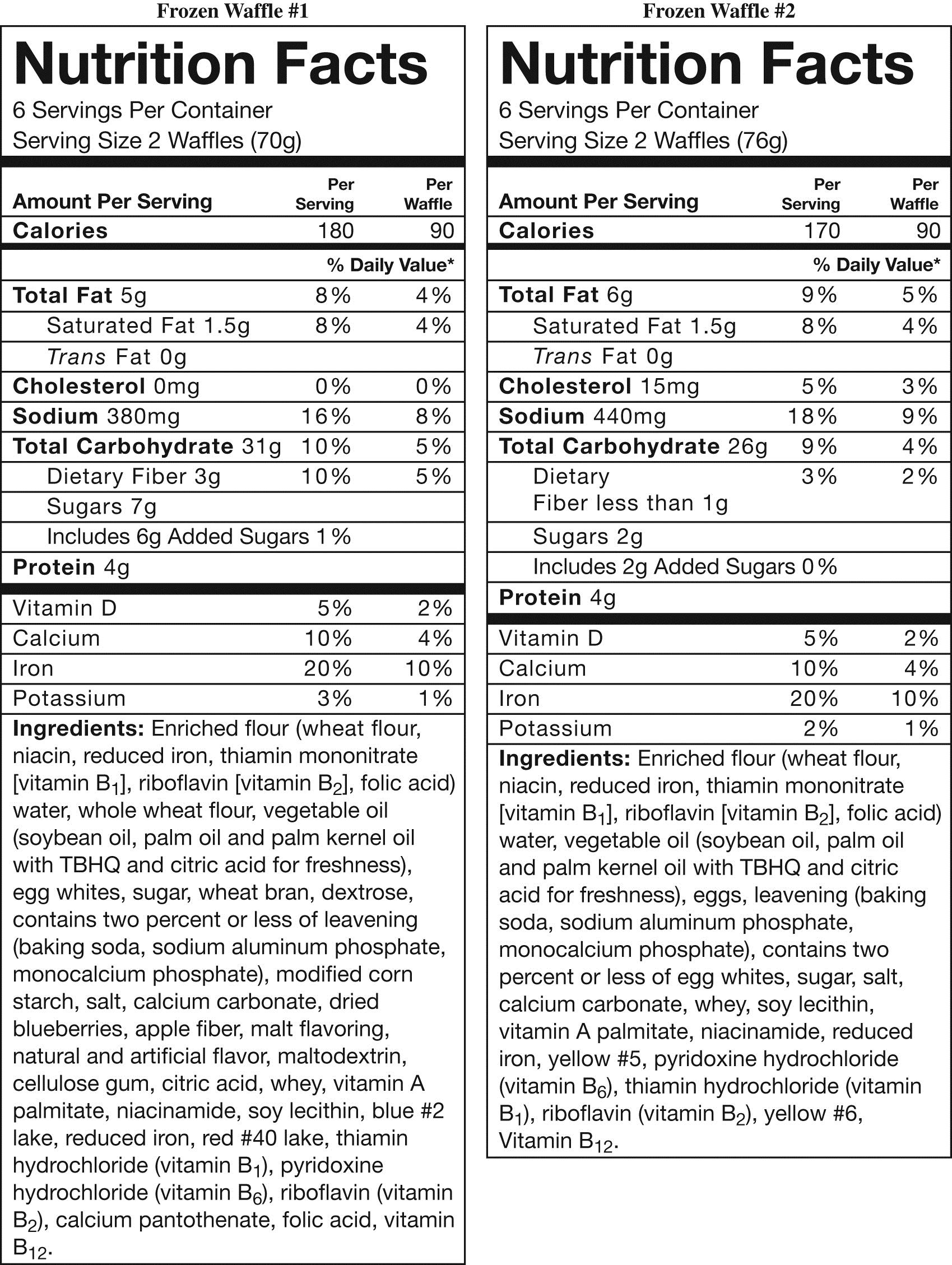
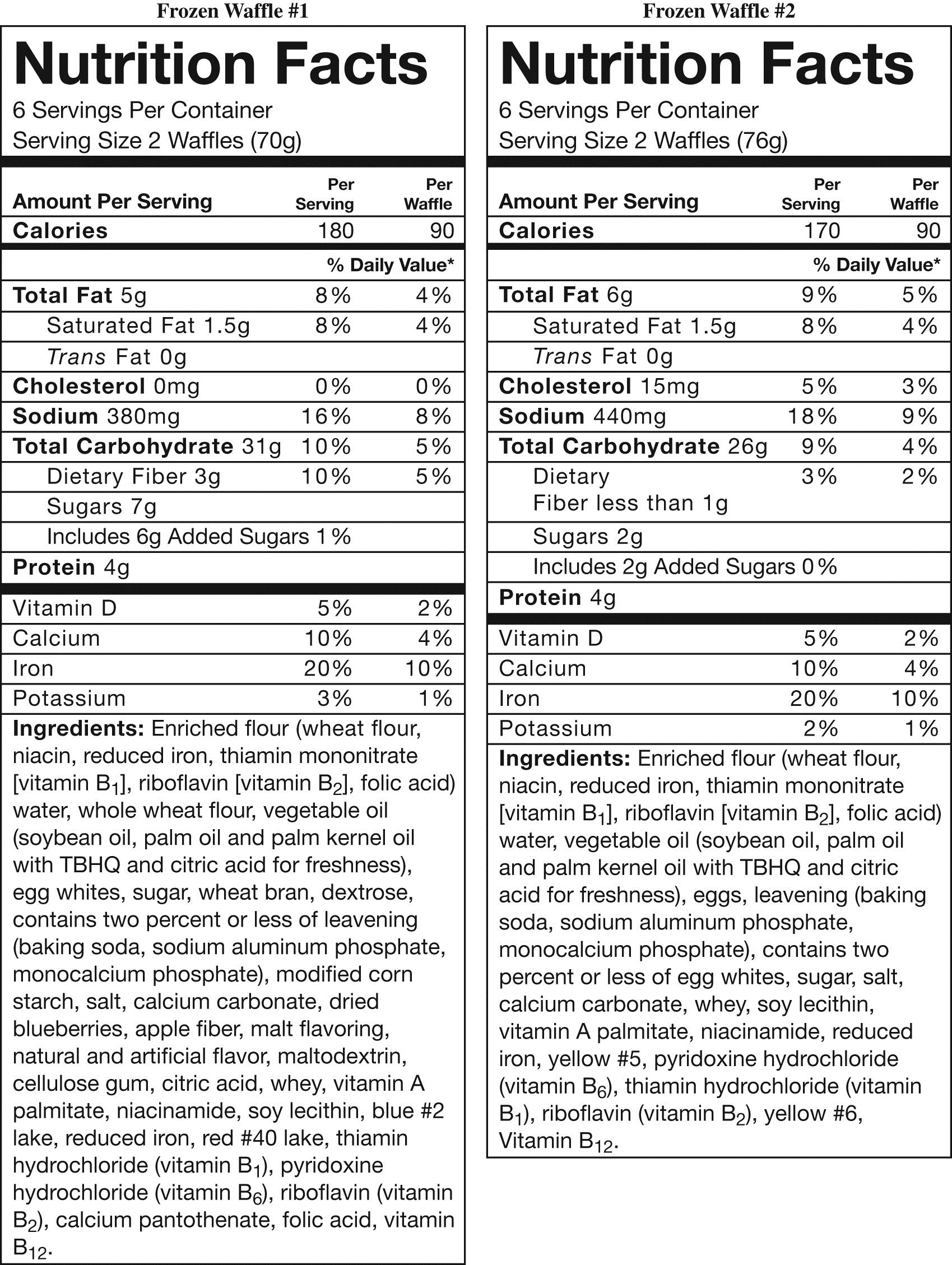
<strong>  Jack decides to purchase waffle #1 and eats three of the waffles for breakfast. Approximately, what amounts of total fat and total carbohydrates did the waffles contribute to his meal?</strong> A) 10 grams fat and 62 grams carbohydrates B) 5 grams fat and 62 grams carbohydrates C) 10 grams fat and 31 grams carbohydrates D) 8 grams fat and 46 grams carbohydrates E) 15 grams fat and 93 grams carbohydrates <div style=padding-top: 35px> Jack decides to purchase waffle #1 and eats three of the waffles for breakfast. Approximately, what amounts of total fat and total carbohydrates did the waffles contribute to his meal?

A) 10 grams fat and 62 grams carbohydrates
B) 5 grams fat and 62 grams carbohydrates
C) 10 grams fat and 31 grams carbohydrates
D) 8 grams fat and 46 grams carbohydrates
E) 15 grams fat and 93 grams carbohydrates
Question
Which product is a rich source of starch?

A) Apples
B) Beans
C) Cane sugar
D) Milk
E) Cheese
Question
<strong>  Jack is trying to choose foods that contain whole grains. Which whole grain ingredient is present in waffle #1 that is not found in waffle #2?</strong> A) Enriched flour B) Whole wheat flour C) Modified corn starch D) Maltodextrin E) Apple fiber <div style=padding-top: 35px> Jack is trying to choose foods that contain whole grains. Which whole grain ingredient is present in waffle #1 that is not found in waffle #2?

A) Enriched flour
B) Whole wheat flour
C) Modified corn starch
D) Maltodextrin
E) Apple fiber
Question
Eating more higher fiber foods is usually associated with _______.

A) lower intakes of starch
B) higher intakes of added sugars
C) lower intakes of added sugars
D) higher energy intakes
E) lower protein intakes
Question
Complex carbohydrates are found primarily in ____.

A) grains and dairy
B) grains and vegetables
C) fish and vegetables
D) dairy and fruit
E) vegetables and dairy
Question
What type of nutrient is starch?

A) Complex carbohydrate
B) Simple carbohydrate
C) Fiber
D) Gluten
E) Monosaccharide
Question
The only animal-derived food that contains significant amounts of carbohydrates is ______.

A) eggs
B) beef
C) milk
D) poultry
E) bacon
Question
Which component gives fruits their naturally sweet taste?

A) Glucose
B) Fructose
C) Galactose
D) Sucrose
E) Added sugars
Question
All of the following are health benefits associated with intake of insoluble fiber except ___.

A) helps with weight management
B) reduces risk of constipation and hemorroids
C) lowers risk of colon cancer
D) speeds transit time through intestines
E) slows glucose absorption
Question
Which carbohydrate type is mismatched with a major food source for that type?

A) fructose-peaches
B) sucrose-candy bars
C) maltose-barley
D) starch-strawberries
E) galactose-milk
Question
When two glucose units are bonded together they form ____.

A) sucrose
B) galactose
C) lactose
D) maltose
E) dextrose
Question
Maggie is shopping for a loaf of bread and takes time to review the terms on the label. Which term describes bread that is made using the most nutritious flour?

A) 100 percent wheat
B) Stone ground
C) Whole grain
D) Seven grain
E) Multigrain
Question
From a health perspective, fruits are better sources of sucrose and fructose than table sugar because they ____.

A) contain higher concentrations of these carbohydrates per unit of weight
B) are more quickly digested than table sugar
C) also provide protein
D) also provide fiber, vitamins, and minerals
E) provide these sugars in a more absorbable form than table sugar
Question
According to the Dietary Guidelines , what is the minimum amount of whole-grains that should be consumed if an individual's recommended grain intake each day is 6 ounces?

A) 6 ounces
B) 4 ounces
C) 3 ounces
D) 2 ounces
E) 1 ounce
Question
A refined grain product that is enriched is still lacking some ____ that was lost during processing.

A) iron
B) fiber
C) thiamin
D) folic acid
E) niacin
Question
Eating too many foods with added sugars usually means getting too many ____.

A) antioxidants
B) empty calories
C) fatty acids
D) complex carbohydrates
E) enzymes
Question
In the process of refining wheat into white flour, what part of the kernel is retained?

A) Chaff
B) Endosperm
C) Bran
D) Germ
E) Husk
Question
Diverticulosis is closely associated with a lack of ______ in the diet.

A) starch
B) simple sugars
C) fiber
D) carbohydrates
E) protein
Question
If Steven needs 2400 calories per day to maintain his weight, what is the recommended maximum upper limit of added sugars he should consume each day?

A) 180 calories
B) 240 calories
C) 480 calories
D) 600 calories
E) 750 calories
Question
Many nutrition professionals recommend emphasizing "good carbohydrates" in the diet. What does this mean?

A) Choosing foods high in fiber but low in added sugars
B) Avoiding foods with a glycemic index above 70
C) Avoiding foods with a glycemic index below 55
D) Choosing small portions of low-calorie foods
E) Choosing foods that quickly raise blood glucose
Question
In general, changing one's diet by substituting complex carbohydrates in place of refined foods with added sugars typically results in a diet that is ________.

A) higher in calories
B) lower in vitamins and minerals
C) higher in fat
D) higher in fiber
E) lower in natural sugars
Question
Foods with a low glycemic index number are digested slowly which may increase ______.

A) satiety
B) hunger
C) glucagon
D) appetite
E) weight gain
Question
Jasmine is too busy for lunch and needs a pick-me-up to help her remain alert during her two afternoon classes. Which snack would you recommend?

A) Half a ham and Swiss cheese sandwich on enriched bread
B) Fresh peach with low-fat Greek yogurt and rolled-oat granola
C) Wheat toast with trans fat-free margarine and jelly
D) Baked apple with brown sugar, cinnamon, and canola oil
E) Pretzels and a sport drink
Question
Marta tries to avoid sugar because she believes it is responsible for making her overweight, giving her husband diabetes, and causing hyperactivity in her grandchildren. What condition has verifiably been linked to sugar by research studies?

A) Diabetes
B) Heart disease
C) Tooth decay
D) Hyperactivity in children
E) Hyperactivity in some adults
Question
A general principle that can help in choosing carbohydrates (and foods in general) is to choose foods that are __________.

A) whole-food and plant-based
B) high-protein and low-fat
C) enriched-food and varied
D) sugar-free and processed-food
E) low-carbohydrate and nutrient-dense
Question
The _____ secretes glucagon and insulin in response to changing blood glucose levels.

A) appendix
B) pituitary gland
C) liver
D) pancreas
E) hypothalamus
Question
High intakes of the sugar alternatives sorbitol and mannitol can result in ____.

A) tooth decay
B) diarrhea
C) increased blood cholesterol
D) hypoglycemia
E) increased heart rate
Question
When milling whole wheat flour, what components of the wheat kernel are retained?

A) The endosperm and germ
B) The endosperm, germ, and husk
C) The endosperm, germ, and bran
D) The germ
E) The endosperm
Question
What is the source of stevia?

A) A combination of two amino acids
B) A modification of sucrose molecules
C) A derivative of aspartic acid and phenylalanine
D) A derivative of a plant native to Brazil and Paraguay
E) A modified version of fructose
Question
Sabina is concerned about her children's teeth after their first dental checkups. Her 2-year old already has a cavity and her four-year old needs to brush better. What else should Sabina's children do to prevent tooth decay?

A) Only drink 100 percent fruit juices
B) Eat candy only between meals and not with them
C) Eat crackers and pretzels as snacks and not candy bars
D) Rinse their mouths with water after eating
E) Eat raisins as snacks in place of chocolate candies
Question
The ______ regulates the amount of glucose circulating in the blood by either synthesizing glycogen or breaking down glycogen.

A) kidneys
B) gallbladder
C) appendix
D) thyroid
E) liver
Question
Which statement is true about hypoglycemia?

A) It is treated with insulin injections.
B) It is aggravated by high-fiber foods.
C) It is classified as a pre-diabetic condition.
D) It is aggravated by high-sugar foods.
E) It is common in teenagers but less so in adults and older adults.
Question
Fletcher's dietary analysis reveals that he is deriving 30% of calories from simple sugars, and he decides to try to cut back. Which item from his food record should Fletcher omit?

A) 1 banana
B) 1/2 cup green grapes
C) 32 fl oz root beer
D) 8 oz orange juice
E) 1/2 cup cooked dried beans
Question
What factor plays the greatest role in the increase of type 2 diabetes in children and adolescents?

A) Type 2 diabetes is hereditary.
B) Children and adolescents are eating more dairy products.
C) Children and adolescents are becoming obese at an earlier age.
D) Vaccination rates among poor people are very low.
E) Today's diets lack proper levels of vitamins and minerals.
Question
How does a balanced meal help keep blood glucose from rising or dropping too quickly?

A) Soluble fibers slow down the rate of digestion so a steady stream of glucose is received.
B) Protein provides a quick source of glucose for the body's cells.
C) Protein stimulates insulin secretion, which prevents rapid glucose storage.
D) Fats accelerate the rate of digestion so that glucose is more quickly received.
E) Starches provide quick energy to the brain, which slows glucose absorption by other body cells.
Question
Ketone bodies are produced from the incomplete breakdown of ____ when ____ is unavailable for the brain and nerve cells.

A) fat; glucose
B) carbohydrate; fat
C) glucose; protein
D) protein; glucose
E) fiber; glucose
Question
What term in the ingredients list indicates added sugars in the product?

A) Pectin
B) Hemicellulose
C) Fruit puree
D) Fruit juice concentrate
E) Vanillin
Question
The greatest single source of added sugars in the American diet is ____.

A) fruit drinks
B) cookies
C) candy
D) regular soft drinks
E) ice cream
Question
Vignette #2 Sam has been overweight since the eighth grade and is diagnosed with type 2 diabetes at his annual checkup. He tells his fiancée, Anna, who is now determined to learn as much as possible about this illness. Sam and Anna have found several reputable sites on the Internet in an attempt to help Sam reverse his condition. Let's ask several questions to see how much they have learned.
Which strategy will help Sam manage his diabetes?

A) Eating a healthful diet
B) Dieting to lose weight rapidly
C) Reducing his exercise level
D) Eating two large meals a day
E) Eliminating all sugar in his diet
Question
Match between columns
Hemorrhoids
Fibers that do not dissolve in water
Hemorrhoids
Compounds made of single sugars or multiple sugars and composed of carbon, hydrogen, and oxygen atoms
Hemorrhoids
Long chains of sugars arranged as starch or fiber
Hemorrhoids
Single and double sugars
Hemorrhoids
Gives honey its naturally sweet taste
Hemorrhoids
A single sugar that forms part of milk sugar
Hemorrhoids
The building block of carbohydrate; a single sugar
Hemorrhoids
Glucose and galactose bonded together
Hemorrhoids
Two glucose units bonded together
Hemorrhoids
A double sugar composed of glucose and fructose
Hemorrhoids
The indigestible residues of food, composed mostly of polysaccharides
Hemorrhoids
A long chain of ten or more glucose molecules linked together in straight or branched chains
Hemorrhoids
Fibers that either dissolve or swell when placed in water
Hemorrhoids
A plant polysaccharide composed of hundreds of glucose molecules, digestible by human beings
Hemorrhoids
A polysaccharide composed of chains of glucose, stored in liver and muscle
Hemorrhoids
Inability to digest lactose as a result of a lack of the necessary enzyme lactase
Hemorrhoids
Carrying excess body weight
Hemorrhoids
A type of cardiovascular disease characterized by the formation of fatty deposits in the inner walls of the arteries
Hemorrhoids
Cancer of the large intestine
Hemorrhoids
Hardness and dryness of bowel movements associated with discomfort in passing them
Hemorrhoids
Decay of the teeth, or cavities
Hemorrhoids
Swollen, hardened (varicose) veins in the rectum
Hemorrhoids
A disorder characterized by insufficiency or relative ineffectiveness of insulin, which renders a person unable to regulate blood glucose levels normally
Hemorrhoids
Outpockets of weakened areas of the intestinal wall
Hemorrhoids
A cluster of symptoms highly associated with the development of type 2 diabetes and heart disease
Hemorrhoids
Reduced ability of the hormone insulin to regulate blood glucose
Hemorrhoids
A situation that occurs when the body shifts into a fasting state and is forced to break down amino acids for glucose
Hemorrhoids
Inflammation or degeneration of the tissues that surround and support the teeth
Hemorrhoids
An inborn error of metabolism in which the body lacks the enzyme needed to convert the amino acid phenylalanine to the amino acid tyrosine
Ketosis
Fibers that do not dissolve in water
Ketosis
Compounds made of single sugars or multiple sugars and composed of carbon, hydrogen, and oxygen atoms
Ketosis
Long chains of sugars arranged as starch or fiber
Ketosis
Single and double sugars
Ketosis
Gives honey its naturally sweet taste
Ketosis
A single sugar that forms part of milk sugar
Ketosis
The building block of carbohydrate; a single sugar
Ketosis
Glucose and galactose bonded together
Ketosis
Two glucose units bonded together
Ketosis
A double sugar composed of glucose and fructose
Ketosis
The indigestible residues of food, composed mostly of polysaccharides
Ketosis
A long chain of ten or more glucose molecules linked together in straight or branched chains
Ketosis
Fibers that either dissolve or swell when placed in water
Ketosis
A plant polysaccharide composed of hundreds of glucose molecules, digestible by human beings
Ketosis
A polysaccharide composed of chains of glucose, stored in liver and muscle
Ketosis
Inability to digest lactose as a result of a lack of the necessary enzyme lactase
Ketosis
Carrying excess body weight
Ketosis
A type of cardiovascular disease characterized by the formation of fatty deposits in the inner walls of the arteries
Ketosis
Cancer of the large intestine
Ketosis
Hardness and dryness of bowel movements associated with discomfort in passing them
Ketosis
Decay of the teeth, or cavities
Ketosis
Swollen, hardened (varicose) veins in the rectum
Ketosis
A disorder characterized by insufficiency or relative ineffectiveness of insulin, which renders a person unable to regulate blood glucose levels normally
Ketosis
Outpockets of weakened areas of the intestinal wall
Ketosis
A cluster of symptoms highly associated with the development of type 2 diabetes and heart disease
Ketosis
Reduced ability of the hormone insulin to regulate blood glucose
Ketosis
A situation that occurs when the body shifts into a fasting state and is forced to break down amino acids for glucose
Ketosis
Inflammation or degeneration of the tissues that surround and support the teeth
Ketosis
An inborn error of metabolism in which the body lacks the enzyme needed to convert the amino acid phenylalanine to the amino acid tyrosine
Dental caries
Fibers that do not dissolve in water
Dental caries
Compounds made of single sugars or multiple sugars and composed of carbon, hydrogen, and oxygen atoms
Dental caries
Long chains of sugars arranged as starch or fiber
Dental caries
Single and double sugars
Dental caries
Gives honey its naturally sweet taste
Dental caries
A single sugar that forms part of milk sugar
Dental caries
The building block of carbohydrate; a single sugar
Dental caries
Glucose and galactose bonded together
Dental caries
Two glucose units bonded together
Dental caries
A double sugar composed of glucose and fructose
Dental caries
The indigestible residues of food, composed mostly of polysaccharides
Dental caries
A long chain of ten or more glucose molecules linked together in straight or branched chains
Dental caries
Fibers that either dissolve or swell when placed in water
Dental caries
A plant polysaccharide composed of hundreds of glucose molecules, digestible by human beings
Dental caries
A polysaccharide composed of chains of glucose, stored in liver and muscle
Dental caries
Inability to digest lactose as a result of a lack of the necessary enzyme lactase
Dental caries
Carrying excess body weight
Dental caries
A type of cardiovascular disease characterized by the formation of fatty deposits in the inner walls of the arteries
Dental caries
Cancer of the large intestine
Dental caries
Hardness and dryness of bowel movements associated with discomfort in passing them
Dental caries
Decay of the teeth, or cavities
Dental caries
Swollen, hardened (varicose) veins in the rectum
Dental caries
A disorder characterized by insufficiency or relative ineffectiveness of insulin, which renders a person unable to regulate blood glucose levels normally
Dental caries
Outpockets of weakened areas of the intestinal wall
Dental caries
A cluster of symptoms highly associated with the development of type 2 diabetes and heart disease
Dental caries
Reduced ability of the hormone insulin to regulate blood glucose
Dental caries
A situation that occurs when the body shifts into a fasting state and is forced to break down amino acids for glucose
Dental caries
Inflammation or degeneration of the tissues that surround and support the teeth
Dental caries
An inborn error of metabolism in which the body lacks the enzyme needed to convert the amino acid phenylalanine to the amino acid tyrosine
Maltose
Fibers that do not dissolve in water
Maltose
Compounds made of single sugars or multiple sugars and composed of carbon, hydrogen, and oxygen atoms
Maltose
Long chains of sugars arranged as starch or fiber
Maltose
Single and double sugars
Maltose
Gives honey its naturally sweet taste
Maltose
A single sugar that forms part of milk sugar
Maltose
The building block of carbohydrate; a single sugar
Maltose
Glucose and galactose bonded together
Maltose
Two glucose units bonded together
Maltose
A double sugar composed of glucose and fructose
Maltose
The indigestible residues of food, composed mostly of polysaccharides
Maltose
A long chain of ten or more glucose molecules linked together in straight or branched chains
Maltose
Fibers that either dissolve or swell when placed in water
Maltose
A plant polysaccharide composed of hundreds of glucose molecules, digestible by human beings
Maltose
A polysaccharide composed of chains of glucose, stored in liver and muscle
Maltose
Inability to digest lactose as a result of a lack of the necessary enzyme lactase
Maltose
Carrying excess body weight
Maltose
A type of cardiovascular disease characterized by the formation of fatty deposits in the inner walls of the arteries
Maltose
Cancer of the large intestine
Maltose
Hardness and dryness of bowel movements associated with discomfort in passing them
Maltose
Decay of the teeth, or cavities
Maltose
Swollen, hardened (varicose) veins in the rectum
Maltose
A disorder characterized by insufficiency or relative ineffectiveness of insulin, which renders a person unable to regulate blood glucose levels normally
Maltose
Outpockets of weakened areas of the intestinal wall
Maltose
A cluster of symptoms highly associated with the development of type 2 diabetes and heart disease
Maltose
Reduced ability of the hormone insulin to regulate blood glucose
Maltose
A situation that occurs when the body shifts into a fasting state and is forced to break down amino acids for glucose
Maltose
Inflammation or degeneration of the tissues that surround and support the teeth
Maltose
An inborn error of metabolism in which the body lacks the enzyme needed to convert the amino acid phenylalanine to the amino acid tyrosine
Diabetes
Fibers that do not dissolve in water
Diabetes
Compounds made of single sugars or multiple sugars and composed of carbon, hydrogen, and oxygen atoms
Diabetes
Long chains of sugars arranged as starch or fiber
Diabetes
Single and double sugars
Diabetes
Gives honey its naturally sweet taste
Diabetes
A single sugar that forms part of milk sugar
Diabetes
The building block of carbohydrate; a single sugar
Diabetes
Glucose and galactose bonded together
Diabetes
Two glucose units bonded together
Diabetes
A double sugar composed of glucose and fructose
Diabetes
The indigestible residues of food, composed mostly of polysaccharides
Diabetes
A long chain of ten or more glucose molecules linked together in straight or branched chains
Diabetes
Fibers that either dissolve or swell when placed in water
Diabetes
A plant polysaccharide composed of hundreds of glucose molecules, digestible by human beings
Diabetes
A polysaccharide composed of chains of glucose, stored in liver and muscle
Diabetes
Inability to digest lactose as a result of a lack of the necessary enzyme lactase
Diabetes
Carrying excess body weight
Diabetes
A type of cardiovascular disease characterized by the formation of fatty deposits in the inner walls of the arteries
Diabetes
Cancer of the large intestine
Diabetes
Hardness and dryness of bowel movements associated with discomfort in passing them
Diabetes
Decay of the teeth, or cavities
Diabetes
Swollen, hardened (varicose) veins in the rectum
Diabetes
A disorder characterized by insufficiency or relative ineffectiveness of insulin, which renders a person unable to regulate blood glucose levels normally
Diabetes
Outpockets of weakened areas of the intestinal wall
Diabetes
A cluster of symptoms highly associated with the development of type 2 diabetes and heart disease
Diabetes
Reduced ability of the hormone insulin to regulate blood glucose
Diabetes
A situation that occurs when the body shifts into a fasting state and is forced to break down amino acids for glucose
Diabetes
Inflammation or degeneration of the tissues that surround and support the teeth
Diabetes
An inborn error of metabolism in which the body lacks the enzyme needed to convert the amino acid phenylalanine to the amino acid tyrosine
soluble Fiber
Fibers that do not dissolve in water
soluble Fiber
Compounds made of single sugars or multiple sugars and composed of carbon, hydrogen, and oxygen atoms
soluble Fiber
Long chains of sugars arranged as starch or fiber
soluble Fiber
Single and double sugars
soluble Fiber
Gives honey its naturally sweet taste
soluble Fiber
A single sugar that forms part of milk sugar
soluble Fiber
The building block of carbohydrate; a single sugar
soluble Fiber
Glucose and galactose bonded together
soluble Fiber
Two glucose units bonded together
soluble Fiber
A double sugar composed of glucose and fructose
soluble Fiber
The indigestible residues of food, composed mostly of polysaccharides
soluble Fiber
A long chain of ten or more glucose molecules linked together in straight or branched chains
soluble Fiber
Fibers that either dissolve or swell when placed in water
soluble Fiber
A plant polysaccharide composed of hundreds of glucose molecules, digestible by human beings
soluble Fiber
A polysaccharide composed of chains of glucose, stored in liver and muscle
soluble Fiber
Inability to digest lactose as a result of a lack of the necessary enzyme lactase
soluble Fiber
Carrying excess body weight
soluble Fiber
A type of cardiovascular disease characterized by the formation of fatty deposits in the inner walls of the arteries
soluble Fiber
Cancer of the large intestine
soluble Fiber
Hardness and dryness of bowel movements associated with discomfort in passing them
soluble Fiber
Decay of the teeth, or cavities
soluble Fiber
Swollen, hardened (varicose) veins in the rectum
soluble Fiber
A disorder characterized by insufficiency or relative ineffectiveness of insulin, which renders a person unable to regulate blood glucose levels normally
soluble Fiber
Outpockets of weakened areas of the intestinal wall
soluble Fiber
A cluster of symptoms highly associated with the development of type 2 diabetes and heart disease
soluble Fiber
Reduced ability of the hormone insulin to regulate blood glucose
soluble Fiber
A situation that occurs when the body shifts into a fasting state and is forced to break down amino acids for glucose
soluble Fiber
Inflammation or degeneration of the tissues that surround and support the teeth
soluble Fiber
An inborn error of metabolism in which the body lacks the enzyme needed to convert the amino acid phenylalanine to the amino acid tyrosine
Insulin resistance
Fibers that do not dissolve in water
Insulin resistance
Compounds made of single sugars or multiple sugars and composed of carbon, hydrogen, and oxygen atoms
Insulin resistance
Long chains of sugars arranged as starch or fiber
Insulin resistance
Single and double sugars
Insulin resistance
Gives honey its naturally sweet taste
Insulin resistance
A single sugar that forms part of milk sugar
Insulin resistance
The building block of carbohydrate; a single sugar
Insulin resistance
Glucose and galactose bonded together
Insulin resistance
Two glucose units bonded together
Insulin resistance
A double sugar composed of glucose and fructose
Insulin resistance
The indigestible residues of food, composed mostly of polysaccharides
Insulin resistance
A long chain of ten or more glucose molecules linked together in straight or branched chains
Insulin resistance
Fibers that either dissolve or swell when placed in water
Insulin resistance
A plant polysaccharide composed of hundreds of glucose molecules, digestible by human beings
Insulin resistance
A polysaccharide composed of chains of glucose, stored in liver and muscle
Insulin resistance
Inability to digest lactose as a result of a lack of the necessary enzyme lactase
Insulin resistance
Carrying excess body weight
Insulin resistance
A type of cardiovascular disease characterized by the formation of fatty deposits in the inner walls of the arteries
Insulin resistance
Cancer of the large intestine
Insulin resistance
Hardness and dryness of bowel movements associated with discomfort in passing them
Insulin resistance
Decay of the teeth, or cavities
Insulin resistance
Swollen, hardened (varicose) veins in the rectum
Insulin resistance
A disorder characterized by insufficiency or relative ineffectiveness of insulin, which renders a person unable to regulate blood glucose levels normally
Insulin resistance
Outpockets of weakened areas of the intestinal wall
Insulin resistance
A cluster of symptoms highly associated with the development of type 2 diabetes and heart disease
Insulin resistance
Reduced ability of the hormone insulin to regulate blood glucose
Insulin resistance
A situation that occurs when the body shifts into a fasting state and is forced to break down amino acids for glucose
Insulin resistance
Inflammation or degeneration of the tissues that surround and support the teeth
Insulin resistance
An inborn error of metabolism in which the body lacks the enzyme needed to convert the amino acid phenylalanine to the amino acid tyrosine
Insoluble fiber
Fibers that do not dissolve in water
Insoluble fiber
Compounds made of single sugars or multiple sugars and composed of carbon, hydrogen, and oxygen atoms
Insoluble fiber
Long chains of sugars arranged as starch or fiber
Insoluble fiber
Single and double sugars
Insoluble fiber
Gives honey its naturally sweet taste
Insoluble fiber
A single sugar that forms part of milk sugar
Insoluble fiber
The building block of carbohydrate; a single sugar
Insoluble fiber
Glucose and galactose bonded together
Insoluble fiber
Two glucose units bonded together
Insoluble fiber
A double sugar composed of glucose and fructose
Insoluble fiber
The indigestible residues of food, composed mostly of polysaccharides
Insoluble fiber
A long chain of ten or more glucose molecules linked together in straight or branched chains
Insoluble fiber
Fibers that either dissolve or swell when placed in water
Insoluble fiber
A plant polysaccharide composed of hundreds of glucose molecules, digestible by human beings
Insoluble fiber
A polysaccharide composed of chains of glucose, stored in liver and muscle
Insoluble fiber
Inability to digest lactose as a result of a lack of the necessary enzyme lactase
Insoluble fiber
Carrying excess body weight
Insoluble fiber
A type of cardiovascular disease characterized by the formation of fatty deposits in the inner walls of the arteries
Insoluble fiber
Cancer of the large intestine
Insoluble fiber
Hardness and dryness of bowel movements associated with discomfort in passing them
Insoluble fiber
Decay of the teeth, or cavities
Insoluble fiber
Swollen, hardened (varicose) veins in the rectum
Insoluble fiber
A disorder characterized by insufficiency or relative ineffectiveness of insulin, which renders a person unable to regulate blood glucose levels normally
Insoluble fiber
Outpockets of weakened areas of the intestinal wall
Insoluble fiber
A cluster of symptoms highly associated with the development of type 2 diabetes and heart disease
Insoluble fiber
Reduced ability of the hormone insulin to regulate blood glucose
Insoluble fiber
A situation that occurs when the body shifts into a fasting state and is forced to break down amino acids for glucose
Insoluble fiber
Inflammation or degeneration of the tissues that surround and support the teeth
Insoluble fiber
An inborn error of metabolism in which the body lacks the enzyme needed to convert the amino acid phenylalanine to the amino acid tyrosine
Periodontal disease
Fibers that do not dissolve in water
Periodontal disease
Compounds made of single sugars or multiple sugars and composed of carbon, hydrogen, and oxygen atoms
Periodontal disease
Long chains of sugars arranged as starch or fiber
Periodontal disease
Single and double sugars
Periodontal disease
Gives honey its naturally sweet taste
Periodontal disease
A single sugar that forms part of milk sugar
Periodontal disease
The building block of carbohydrate; a single sugar
Periodontal disease
Glucose and galactose bonded together
Periodontal disease
Two glucose units bonded together
Periodontal disease
A double sugar composed of glucose and fructose
Periodontal disease
The indigestible residues of food, composed mostly of polysaccharides
Periodontal disease
A long chain of ten or more glucose molecules linked together in straight or branched chains
Periodontal disease
Fibers that either dissolve or swell when placed in water
Periodontal disease
A plant polysaccharide composed of hundreds of glucose molecules, digestible by human beings
Periodontal disease
A polysaccharide composed of chains of glucose, stored in liver and muscle
Periodontal disease
Inability to digest lactose as a result of a lack of the necessary enzyme lactase
Periodontal disease
Carrying excess body weight
Periodontal disease
A type of cardiovascular disease characterized by the formation of fatty deposits in the inner walls of the arteries
Periodontal disease
Cancer of the large intestine
Periodontal disease
Hardness and dryness of bowel movements associated with discomfort in passing them
Periodontal disease
Decay of the teeth, or cavities
Periodontal disease
Swollen, hardened (varicose) veins in the rectum
Periodontal disease
A disorder characterized by insufficiency or relative ineffectiveness of insulin, which renders a person unable to regulate blood glucose levels normally
Periodontal disease
Outpockets of weakened areas of the intestinal wall
Periodontal disease
A cluster of symptoms highly associated with the development of type 2 diabetes and heart disease
Periodontal disease
Reduced ability of the hormone insulin to regulate blood glucose
Periodontal disease
A situation that occurs when the body shifts into a fasting state and is forced to break down amino acids for glucose
Periodontal disease
Inflammation or degeneration of the tissues that surround and support the teeth
Periodontal disease
An inborn error of metabolism in which the body lacks the enzyme needed to convert the amino acid phenylalanine to the amino acid tyrosine
Galactose
Fibers that do not dissolve in water
Galactose
Compounds made of single sugars or multiple sugars and composed of carbon, hydrogen, and oxygen atoms
Galactose
Long chains of sugars arranged as starch or fiber
Galactose
Single and double sugars
Galactose
Gives honey its naturally sweet taste
Galactose
A single sugar that forms part of milk sugar
Galactose
The building block of carbohydrate; a single sugar
Galactose
Glucose and galactose bonded together
Galactose
Two glucose units bonded together
Galactose
A double sugar composed of glucose and fructose
Galactose
The indigestible residues of food, composed mostly of polysaccharides
Galactose
A long chain of ten or more glucose molecules linked together in straight or branched chains
Galactose
Fibers that either dissolve or swell when placed in water
Galactose
A plant polysaccharide composed of hundreds of glucose molecules, digestible by human beings
Galactose
A polysaccharide composed of chains of glucose, stored in liver and muscle
Galactose
Inability to digest lactose as a result of a lack of the necessary enzyme lactase
Galactose
Carrying excess body weight
Galactose
A type of cardiovascular disease characterized by the formation of fatty deposits in the inner walls of the arteries
Galactose
Cancer of the large intestine
Galactose
Hardness and dryness of bowel movements associated with discomfort in passing them
Galactose
Decay of the teeth, or cavities
Galactose
Swollen, hardened (varicose) veins in the rectum
Galactose
A disorder characterized by insufficiency or relative ineffectiveness of insulin, which renders a person unable to regulate blood glucose levels normally
Galactose
Outpockets of weakened areas of the intestinal wall
Galactose
A cluster of symptoms highly associated with the development of type 2 diabetes and heart disease
Galactose
Reduced ability of the hormone insulin to regulate blood glucose
Galactose
A situation that occurs when the body shifts into a fasting state and is forced to break down amino acids for glucose
Galactose
Inflammation or degeneration of the tissues that surround and support the teeth
Galactose
An inborn error of metabolism in which the body lacks the enzyme needed to convert the amino acid phenylalanine to the amino acid tyrosine
Lactose
Fibers that do not dissolve in water
Lactose
Compounds made of single sugars or multiple sugars and composed of carbon, hydrogen, and oxygen atoms
Lactose
Long chains of sugars arranged as starch or fiber
Lactose
Single and double sugars
Lactose
Gives honey its naturally sweet taste
Lactose
A single sugar that forms part of milk sugar
Lactose
The building block of carbohydrate; a single sugar
Lactose
Glucose and galactose bonded together
Lactose
Two glucose units bonded together
Lactose
A double sugar composed of glucose and fructose
Lactose
The indigestible residues of food, composed mostly of polysaccharides
Lactose
A long chain of ten or more glucose molecules linked together in straight or branched chains
Lactose
Fibers that either dissolve or swell when placed in water
Lactose
A plant polysaccharide composed of hundreds of glucose molecules, digestible by human beings
Lactose
A polysaccharide composed of chains of glucose, stored in liver and muscle
Lactose
Inability to digest lactose as a result of a lack of the necessary enzyme lactase
Lactose
Carrying excess body weight
Lactose
A type of cardiovascular disease characterized by the formation of fatty deposits in the inner walls of the arteries
Lactose
Cancer of the large intestine
Lactose
Hardness and dryness of bowel movements associated with discomfort in passing them
Lactose
Decay of the teeth, or cavities
Lactose
Swollen, hardened (varicose) veins in the rectum
Lactose
A disorder characterized by insufficiency or relative ineffectiveness of insulin, which renders a person unable to regulate blood glucose levels normally
Lactose
Outpockets of weakened areas of the intestinal wall
Lactose
A cluster of symptoms highly associated with the development of type 2 diabetes and heart disease
Lactose
Reduced ability of the hormone insulin to regulate blood glucose
Lactose
A situation that occurs when the body shifts into a fasting state and is forced to break down amino acids for glucose
Lactose
Inflammation or degeneration of the tissues that surround and support the teeth
Lactose
An inborn error of metabolism in which the body lacks the enzyme needed to convert the amino acid phenylalanine to the amino acid tyrosine
Sucrose
Fibers that do not dissolve in water
Sucrose
Compounds made of single sugars or multiple sugars and composed of carbon, hydrogen, and oxygen atoms
Sucrose
Long chains of sugars arranged as starch or fiber
Sucrose
Single and double sugars
Sucrose
Gives honey its naturally sweet taste
Sucrose
A single sugar that forms part of milk sugar
Sucrose
The building block of carbohydrate; a single sugar
Sucrose
Glucose and galactose bonded together
Sucrose
Two glucose units bonded together
Sucrose
A double sugar composed of glucose and fructose
Sucrose
The indigestible residues of food, composed mostly of polysaccharides
Sucrose
A long chain of ten or more glucose molecules linked together in straight or branched chains
Sucrose
Fibers that either dissolve or swell when placed in water
Sucrose
A plant polysaccharide composed of hundreds of glucose molecules, digestible by human beings
Sucrose
A polysaccharide composed of chains of glucose, stored in liver and muscle
Sucrose
Inability to digest lactose as a result of a lack of the necessary enzyme lactase
Sucrose
Carrying excess body weight
Sucrose
A type of cardiovascular disease characterized by the formation of fatty deposits in the inner walls of the arteries
Sucrose
Cancer of the large intestine
Sucrose
Hardness and dryness of bowel movements associated with discomfort in passing them
Sucrose
Decay of the teeth, or cavities
Sucrose
Swollen, hardened (varicose) veins in the rectum
Sucrose
A disorder characterized by insufficiency or relative ineffectiveness of insulin, which renders a person unable to regulate blood glucose levels normally
Sucrose
Outpockets of weakened areas of the intestinal wall
Sucrose
A cluster of symptoms highly associated with the development of type 2 diabetes and heart disease
Sucrose
Reduced ability of the hormone insulin to regulate blood glucose
Sucrose
A situation that occurs when the body shifts into a fasting state and is forced to break down amino acids for glucose
Sucrose
Inflammation or degeneration of the tissues that surround and support the teeth
Sucrose
An inborn error of metabolism in which the body lacks the enzyme needed to convert the amino acid phenylalanine to the amino acid tyrosine
Glucose
Fibers that do not dissolve in water
Glucose
Compounds made of single sugars or multiple sugars and composed of carbon, hydrogen, and oxygen atoms
Glucose
Long chains of sugars arranged as starch or fiber
Glucose
Single and double sugars
Glucose
Gives honey its naturally sweet taste
Glucose
A single sugar that forms part of milk sugar
Glucose
The building block of carbohydrate; a single sugar
Glucose
Glucose and galactose bonded together
Glucose
Two glucose units bonded together
Glucose
A double sugar composed of glucose and fructose
Glucose
The indigestible residues of food, composed mostly of polysaccharides
Glucose
A long chain of ten or more glucose molecules linked together in straight or branched chains
Glucose
Fibers that either dissolve or swell when placed in water
Glucose
A plant polysaccharide composed of hundreds of glucose molecules, digestible by human beings
Glucose
A polysaccharide composed of chains of glucose, stored in liver and muscle
Glucose
Inability to digest lactose as a result of a lack of the necessary enzyme lactase
Glucose
Carrying excess body weight
Glucose
A type of cardiovascular disease characterized by the formation of fatty deposits in the inner walls of the arteries
Glucose
Cancer of the large intestine
Glucose
Hardness and dryness of bowel movements associated with discomfort in passing them
Glucose
Decay of the teeth, or cavities
Glucose
Swollen, hardened (varicose) veins in the rectum
Glucose
A disorder characterized by insufficiency or relative ineffectiveness of insulin, which renders a person unable to regulate blood glucose levels normally
Glucose
Outpockets of weakened areas of the intestinal wall
Glucose
A cluster of symptoms highly associated with the development of type 2 diabetes and heart disease
Glucose
Reduced ability of the hormone insulin to regulate blood glucose
Glucose
A situation that occurs when the body shifts into a fasting state and is forced to break down amino acids for glucose
Glucose
Inflammation or degeneration of the tissues that surround and support the teeth
Glucose
An inborn error of metabolism in which the body lacks the enzyme needed to convert the amino acid phenylalanine to the amino acid tyrosine
Colon cancer
Fibers that do not dissolve in water
Colon cancer
Compounds made of single sugars or multiple sugars and composed of carbon, hydrogen, and oxygen atoms
Colon cancer
Long chains of sugars arranged as starch or fiber
Colon cancer
Single and double sugars
Colon cancer
Gives honey its naturally sweet taste
Colon cancer
A single sugar that forms part of milk sugar
Colon cancer
The building block of carbohydrate; a single sugar
Colon cancer
Glucose and galactose bonded together
Colon cancer
Two glucose units bonded together
Colon cancer
A double sugar composed of glucose and fructose
Colon cancer
The indigestible residues of food, composed mostly of polysaccharides
Colon cancer
A long chain of ten or more glucose molecules linked together in straight or branched chains
Colon cancer
Fibers that either dissolve or swell when placed in water
Colon cancer
A plant polysaccharide composed of hundreds of glucose molecules, digestible by human beings
Colon cancer
A polysaccharide composed of chains of glucose, stored in liver and muscle
Colon cancer
Inability to digest lactose as a result of a lack of the necessary enzyme lactase
Colon cancer
Carrying excess body weight
Colon cancer
A type of cardiovascular disease characterized by the formation of fatty deposits in the inner walls of the arteries
Colon cancer
Cancer of the large intestine
Colon cancer
Hardness and dryness of bowel movements associated with discomfort in passing them
Colon cancer
Decay of the teeth, or cavities
Colon cancer
Swollen, hardened (varicose) veins in the rectum
Colon cancer
A disorder characterized by insufficiency or relative ineffectiveness of insulin, which renders a person unable to regulate blood glucose levels normally
Colon cancer
Outpockets of weakened areas of the intestinal wall
Colon cancer
A cluster of symptoms highly associated with the development of type 2 diabetes and heart disease
Colon cancer
Reduced ability of the hormone insulin to regulate blood glucose
Colon cancer
A situation that occurs when the body shifts into a fasting state and is forced to break down amino acids for glucose
Colon cancer
Inflammation or degeneration of the tissues that surround and support the teeth
Colon cancer
An inborn error of metabolism in which the body lacks the enzyme needed to convert the amino acid phenylalanine to the amino acid tyrosine
Polysaccharide
Fibers that do not dissolve in water
Polysaccharide
Compounds made of single sugars or multiple sugars and composed of carbon, hydrogen, and oxygen atoms
Polysaccharide
Long chains of sugars arranged as starch or fiber
Polysaccharide
Single and double sugars
Polysaccharide
Gives honey its naturally sweet taste
Polysaccharide
A single sugar that forms part of milk sugar
Polysaccharide
The building block of carbohydrate; a single sugar
Polysaccharide
Glucose and galactose bonded together
Polysaccharide
Two glucose units bonded together
Polysaccharide
A double sugar composed of glucose and fructose
Polysaccharide
The indigestible residues of food, composed mostly of polysaccharides
Polysaccharide
A long chain of ten or more glucose molecules linked together in straight or branched chains
Polysaccharide
Fibers that either dissolve or swell when placed in water
Polysaccharide
A plant polysaccharide composed of hundreds of glucose molecules, digestible by human beings
Polysaccharide
A polysaccharide composed of chains of glucose, stored in liver and muscle
Polysaccharide
Inability to digest lactose as a result of a lack of the necessary enzyme lactase
Polysaccharide
Carrying excess body weight
Polysaccharide
A type of cardiovascular disease characterized by the formation of fatty deposits in the inner walls of the arteries
Polysaccharide
Cancer of the large intestine
Polysaccharide
Hardness and dryness of bowel movements associated with discomfort in passing them
Polysaccharide
Decay of the teeth, or cavities
Polysaccharide
Swollen, hardened (varicose) veins in the rectum
Polysaccharide
A disorder characterized by insufficiency or relative ineffectiveness of insulin, which renders a person unable to regulate blood glucose levels normally
Polysaccharide
Outpockets of weakened areas of the intestinal wall
Polysaccharide
A cluster of symptoms highly associated with the development of type 2 diabetes and heart disease
Polysaccharide
Reduced ability of the hormone insulin to regulate blood glucose
Polysaccharide
A situation that occurs when the body shifts into a fasting state and is forced to break down amino acids for glucose
Polysaccharide
Inflammation or degeneration of the tissues that surround and support the teeth
Polysaccharide
An inborn error of metabolism in which the body lacks the enzyme needed to convert the amino acid phenylalanine to the amino acid tyrosine
Carbohydrates
Fibers that do not dissolve in water
Carbohydrates
Compounds made of single sugars or multiple sugars and composed of carbon, hydrogen, and oxygen atoms
Carbohydrates
Long chains of sugars arranged as starch or fiber
Carbohydrates
Single and double sugars
Carbohydrates
Gives honey its naturally sweet taste
Carbohydrates
A single sugar that forms part of milk sugar
Carbohydrates
The building block of carbohydrate; a single sugar
Carbohydrates
Glucose and galactose bonded together
Carbohydrates
Two glucose units bonded together
Carbohydrates
A double sugar composed of glucose and fructose
Carbohydrates
The indigestible residues of food, composed mostly of polysaccharides
Carbohydrates
A long chain of ten or more glucose molecules linked together in straight or branched chains
Carbohydrates
Fibers that either dissolve or swell when placed in water
Carbohydrates
A plant polysaccharide composed of hundreds of glucose molecules, digestible by human beings
Carbohydrates
A polysaccharide composed of chains of glucose, stored in liver and muscle
Carbohydrates
Inability to digest lactose as a result of a lack of the necessary enzyme lactase
Carbohydrates
Carrying excess body weight
Carbohydrates
A type of cardiovascular disease characterized by the formation of fatty deposits in the inner walls of the arteries
Carbohydrates
Cancer of the large intestine
Carbohydrates
Hardness and dryness of bowel movements associated with discomfort in passing them
Carbohydrates
Decay of the teeth, or cavities
Carbohydrates
Swollen, hardened (varicose) veins in the rectum
Carbohydrates
A disorder characterized by insufficiency or relative ineffectiveness of insulin, which renders a person unable to regulate blood glucose levels normally
Carbohydrates
Outpockets of weakened areas of the intestinal wall
Carbohydrates
A cluster of symptoms highly associated with the development of type 2 diabetes and heart disease
Carbohydrates
Reduced ability of the hormone insulin to regulate blood glucose
Carbohydrates
A situation that occurs when the body shifts into a fasting state and is forced to break down amino acids for glucose
Carbohydrates
Inflammation or degeneration of the tissues that surround and support the teeth
Carbohydrates
An inborn error of metabolism in which the body lacks the enzyme needed to convert the amino acid phenylalanine to the amino acid tyrosine
Obesity
Fibers that do not dissolve in water
Obesity
Compounds made of single sugars or multiple sugars and composed of carbon, hydrogen, and oxygen atoms
Obesity
Long chains of sugars arranged as starch or fiber
Obesity
Single and double sugars
Obesity
Gives honey its naturally sweet taste
Obesity
A single sugar that forms part of milk sugar
Obesity
The building block of carbohydrate; a single sugar
Obesity
Glucose and galactose bonded together
Obesity
Two glucose units bonded together
Obesity
A double sugar composed of glucose and fructose
Obesity
The indigestible residues of food, composed mostly of polysaccharides
Obesity
A long chain of ten or more glucose molecules linked together in straight or branched chains
Obesity
Fibers that either dissolve or swell when placed in water
Obesity
A plant polysaccharide composed of hundreds of glucose molecules, digestible by human beings
Obesity
A polysaccharide composed of chains of glucose, stored in liver and muscle
Obesity
Inability to digest lactose as a result of a lack of the necessary enzyme lactase
Obesity
Carrying excess body weight
Obesity
A type of cardiovascular disease characterized by the formation of fatty deposits in the inner walls of the arteries
Obesity
Cancer of the large intestine
Obesity
Hardness and dryness of bowel movements associated with discomfort in passing them
Obesity
Decay of the teeth, or cavities
Obesity
Swollen, hardened (varicose) veins in the rectum
Obesity
A disorder characterized by insufficiency or relative ineffectiveness of insulin, which renders a person unable to regulate blood glucose levels normally
Obesity
Outpockets of weakened areas of the intestinal wall
Obesity
A cluster of symptoms highly associated with the development of type 2 diabetes and heart disease
Obesity
Reduced ability of the hormone insulin to regulate blood glucose
Obesity
A situation that occurs when the body shifts into a fasting state and is forced to break down amino acids for glucose
Obesity
Inflammation or degeneration of the tissues that surround and support the teeth
Obesity
An inborn error of metabolism in which the body lacks the enzyme needed to convert the amino acid phenylalanine to the amino acid tyrosine
Phenylketonuria
Fibers that do not dissolve in water
Phenylketonuria
Compounds made of single sugars or multiple sugars and composed of carbon, hydrogen, and oxygen atoms
Phenylketonuria
Long chains of sugars arranged as starch or fiber
Phenylketonuria
Single and double sugars
Phenylketonuria
Gives honey its naturally sweet taste
Phenylketonuria
A single sugar that forms part of milk sugar
Phenylketonuria
The building block of carbohydrate; a single sugar
Phenylketonuria
Glucose and galactose bonded together
Phenylketonuria
Two glucose units bonded together
Phenylketonuria
A double sugar composed of glucose and fructose
Phenylketonuria
The indigestible residues of food, composed mostly of polysaccharides
Phenylketonuria
A long chain of ten or more glucose molecules linked together in straight or branched chains
Phenylketonuria
Fibers that either dissolve or swell when placed in water
Phenylketonuria
A plant polysaccharide composed of hundreds of glucose molecules, digestible by human beings
Phenylketonuria
A polysaccharide composed of chains of glucose, stored in liver and muscle
Phenylketonuria
Inability to digest lactose as a result of a lack of the necessary enzyme lactase
Phenylketonuria
Carrying excess body weight
Phenylketonuria
A type of cardiovascular disease characterized by the formation of fatty deposits in the inner walls of the arteries
Phenylketonuria
Cancer of the large intestine
Phenylketonuria
Hardness and dryness of bowel movements associated with discomfort in passing them
Phenylketonuria
Decay of the teeth, or cavities
Phenylketonuria
Swollen, hardened (varicose) veins in the rectum
Phenylketonuria
A disorder characterized by insufficiency or relative ineffectiveness of insulin, which renders a person unable to regulate blood glucose levels normally
Phenylketonuria
Outpockets of weakened areas of the intestinal wall
Phenylketonuria
A cluster of symptoms highly associated with the development of type 2 diabetes and heart disease
Phenylketonuria
Reduced ability of the hormone insulin to regulate blood glucose
Phenylketonuria
A situation that occurs when the body shifts into a fasting state and is forced to break down amino acids for glucose
Phenylketonuria
Inflammation or degeneration of the tissues that surround and support the teeth
Phenylketonuria
An inborn error of metabolism in which the body lacks the enzyme needed to convert the amino acid phenylalanine to the amino acid tyrosine
Complex carbohydrates
Fibers that do not dissolve in water
Complex carbohydrates
Compounds made of single sugars or multiple sugars and composed of carbon, hydrogen, and oxygen atoms
Complex carbohydrates
Long chains of sugars arranged as starch or fiber
Complex carbohydrates
Single and double sugars
Complex carbohydrates
Gives honey its naturally sweet taste
Complex carbohydrates
A single sugar that forms part of milk sugar
Complex carbohydrates
The building block of carbohydrate; a single sugar
Complex carbohydrates
Glucose and galactose bonded together
Complex carbohydrates
Two glucose units bonded together
Complex carbohydrates
A double sugar composed of glucose and fructose
Complex carbohydrates
The indigestible residues of food, composed mostly of polysaccharides
Complex carbohydrates
A long chain of ten or more glucose molecules linked together in straight or branched chains
Complex carbohydrates
Fibers that either dissolve or swell when placed in water
Complex carbohydrates
A plant polysaccharide composed of hundreds of glucose molecules, digestible by human beings
Complex carbohydrates
A polysaccharide composed of chains of glucose, stored in liver and muscle
Complex carbohydrates
Inability to digest lactose as a result of a lack of the necessary enzyme lactase
Complex carbohydrates
Carrying excess body weight
Complex carbohydrates
A type of cardiovascular disease characterized by the formation of fatty deposits in the inner walls of the arteries
Complex carbohydrates
Cancer of the large intestine
Complex carbohydrates
Hardness and dryness of bowel movements associated with discomfort in passing them
Complex carbohydrates
Decay of the teeth, or cavities
Complex carbohydrates
Swollen, hardened (varicose) veins in the rectum
Complex carbohydrates
A disorder characterized by insufficiency or relative ineffectiveness of insulin, which renders a person unable to regulate blood glucose levels normally
Complex carbohydrates
Outpockets of weakened areas of the intestinal wall
Complex carbohydrates
A cluster of symptoms highly associated with the development of type 2 diabetes and heart disease
Complex carbohydrates
Reduced ability of the hormone insulin to regulate blood glucose
Complex carbohydrates
A situation that occurs when the body shifts into a fasting state and is forced to break down amino acids for glucose
Complex carbohydrates
Inflammation or degeneration of the tissues that surround and support the teeth
Complex carbohydrates
An inborn error of metabolism in which the body lacks the enzyme needed to convert the amino acid phenylalanine to the amino acid tyrosine
Constipation
Fibers that do not dissolve in water
Constipation
Compounds made of single sugars or multiple sugars and composed of carbon, hydrogen, and oxygen atoms
Constipation
Long chains of sugars arranged as starch or fiber
Constipation
Single and double sugars
Constipation
Gives honey its naturally sweet taste
Constipation
A single sugar that forms part of milk sugar
Constipation
The building block of carbohydrate; a single sugar
Constipation
Glucose and galactose bonded together
Constipation
Two glucose units bonded together
Constipation
A double sugar composed of glucose and fructose
Constipation
The indigestible residues of food, composed mostly of polysaccharides
Constipation
A long chain of ten or more glucose molecules linked together in straight or branched chains
Constipation
Fibers that either dissolve or swell when placed in water
Constipation
A plant polysaccharide composed of hundreds of glucose molecules, digestible by human beings
Constipation
A polysaccharide composed of chains of glucose, stored in liver and muscle
Constipation
Inability to digest lactose as a result of a lack of the necessary enzyme lactase
Constipation
Carrying excess body weight
Constipation
A type of cardiovascular disease characterized by the formation of fatty deposits in the inner walls of the arteries
Constipation
Cancer of the large intestine
Constipation
Hardness and dryness of bowel movements associated with discomfort in passing them
Constipation
Decay of the teeth, or cavities
Constipation
Swollen, hardened (varicose) veins in the rectum
Constipation
A disorder characterized by insufficiency or relative ineffectiveness of insulin, which renders a person unable to regulate blood glucose levels normally
Constipation
Outpockets of weakened areas of the intestinal wall
Constipation
A cluster of symptoms highly associated with the development of type 2 diabetes and heart disease
Constipation
Reduced ability of the hormone insulin to regulate blood glucose
Constipation
A situation that occurs when the body shifts into a fasting state and is forced to break down amino acids for glucose
Constipation
Inflammation or degeneration of the tissues that surround and support the teeth
Constipation
An inborn error of metabolism in which the body lacks the enzyme needed to convert the amino acid phenylalanine to the amino acid tyrosine
Fructose
Fibers that do not dissolve in water
Fructose
Compounds made of single sugars or multiple sugars and composed of carbon, hydrogen, and oxygen atoms
Fructose
Long chains of sugars arranged as starch or fiber
Fructose
Single and double sugars
Fructose
Gives honey its naturally sweet taste
Fructose
A single sugar that forms part of milk sugar
Fructose
The building block of carbohydrate; a single sugar
Fructose
Glucose and galactose bonded together
Fructose
Two glucose units bonded together
Fructose
A double sugar composed of glucose and fructose
Fructose
The indigestible residues of food, composed mostly of polysaccharides
Fructose
A long chain of ten or more glucose molecules linked together in straight or branched chains
Fructose
Fibers that either dissolve or swell when placed in water
Fructose
A plant polysaccharide composed of hundreds of glucose molecules, digestible by human beings
Fructose
A polysaccharide composed of chains of glucose, stored in liver and muscle
Fructose
Inability to digest lactose as a result of a lack of the necessary enzyme lactase
Fructose
Carrying excess body weight
Fructose
A type of cardiovascular disease characterized by the formation of fatty deposits in the inner walls of the arteries
Fructose
Cancer of the large intestine
Fructose
Hardness and dryness of bowel movements associated with discomfort in passing them
Fructose
Decay of the teeth, or cavities
Fructose
Swollen, hardened (varicose) veins in the rectum
Fructose
A disorder characterized by insufficiency or relative ineffectiveness of insulin, which renders a person unable to regulate blood glucose levels normally
Fructose
Outpockets of weakened areas of the intestinal wall
Fructose
A cluster of symptoms highly associated with the development of type 2 diabetes and heart disease
Fructose
Reduced ability of the hormone insulin to regulate blood glucose
Fructose
A situation that occurs when the body shifts into a fasting state and is forced to break down amino acids for glucose
Fructose
Inflammation or degeneration of the tissues that surround and support the teeth
Fructose
An inborn error of metabolism in which the body lacks the enzyme needed to convert the amino acid phenylalanine to the amino acid tyrosine
Metabolic syndrome
Fibers that do not dissolve in water
Metabolic syndrome
Compounds made of single sugars or multiple sugars and composed of carbon, hydrogen, and oxygen atoms
Metabolic syndrome
Long chains of sugars arranged as starch or fiber
Metabolic syndrome
Single and double sugars
Metabolic syndrome
Gives honey its naturally sweet taste
Metabolic syndrome
A single sugar that forms part of milk sugar
Metabolic syndrome
The building block of carbohydrate; a single sugar
Metabolic syndrome
Glucose and galactose bonded together
Metabolic syndrome
Two glucose units bonded together
Metabolic syndrome
A double sugar composed of glucose and fructose
Metabolic syndrome
The indigestible residues of food, composed mostly of polysaccharides
Metabolic syndrome
A long chain of ten or more glucose molecules linked together in straight or branched chains
Metabolic syndrome
Fibers that either dissolve or swell when placed in water
Metabolic syndrome
A plant polysaccharide composed of hundreds of glucose molecules, digestible by human beings
Metabolic syndrome
A polysaccharide composed of chains of glucose, stored in liver and muscle
Metabolic syndrome
Inability to digest lactose as a result of a lack of the necessary enzyme lactase
Metabolic syndrome
Carrying excess body weight
Metabolic syndrome
A type of cardiovascular disease characterized by the formation of fatty deposits in the inner walls of the arteries
Metabolic syndrome
Cancer of the large intestine
Metabolic syndrome
Hardness and dryness of bowel movements associated with discomfort in passing them
Metabolic syndrome
Decay of the teeth, or cavities
Metabolic syndrome
Swollen, hardened (varicose) veins in the rectum
Metabolic syndrome
A disorder characterized by insufficiency or relative ineffectiveness of insulin, which renders a person unable to regulate blood glucose levels normally
Metabolic syndrome
Outpockets of weakened areas of the intestinal wall
Metabolic syndrome
A cluster of symptoms highly associated with the development of type 2 diabetes and heart disease
Metabolic syndrome
Reduced ability of the hormone insulin to regulate blood glucose
Metabolic syndrome
A situation that occurs when the body shifts into a fasting state and is forced to break down amino acids for glucose
Metabolic syndrome
Inflammation or degeneration of the tissues that surround and support the teeth
Metabolic syndrome
An inborn error of metabolism in which the body lacks the enzyme needed to convert the amino acid phenylalanine to the amino acid tyrosine
Starch
Fibers that do not dissolve in water
Starch
Compounds made of single sugars or multiple sugars and composed of carbon, hydrogen, and oxygen atoms
Starch
Long chains of sugars arranged as starch or fiber
Starch
Single and double sugars
Starch
Gives honey its naturally sweet taste
Starch
A single sugar that forms part of milk sugar
Starch
The building block of carbohydrate; a single sugar
Starch
Glucose and galactose bonded together
Starch
Two glucose units bonded together
Starch
A double sugar composed of glucose and fructose
Starch
The indigestible residues of food, composed mostly of polysaccharides
Starch
A long chain of ten or more glucose molecules linked together in straight or branched chains
Starch
Fibers that either dissolve or swell when placed in water
Starch
A plant polysaccharide composed of hundreds of glucose molecules, digestible by human beings
Starch
A polysaccharide composed of chains of glucose, stored in liver and muscle
Starch
Inability to digest lactose as a result of a lack of the necessary enzyme lactase
Starch
Carrying excess body weight
Starch
A type of cardiovascular disease characterized by the formation of fatty deposits in the inner walls of the arteries
Starch
Cancer of the large intestine
Starch
Hardness and dryness of bowel movements associated with discomfort in passing them
Starch
Decay of the teeth, or cavities
Starch
Swollen, hardened (varicose) veins in the rectum
Starch
A disorder characterized by insufficiency or relative ineffectiveness of insulin, which renders a person unable to regulate blood glucose levels normally
Starch
Outpockets of weakened areas of the intestinal wall
Starch
A cluster of symptoms highly associated with the development of type 2 diabetes and heart disease
Starch
Reduced ability of the hormone insulin to regulate blood glucose
Starch
A situation that occurs when the body shifts into a fasting state and is forced to break down amino acids for glucose
Starch
Inflammation or degeneration of the tissues that surround and support the teeth
Starch
An inborn error of metabolism in which the body lacks the enzyme needed to convert the amino acid phenylalanine to the amino acid tyrosine
Glycogen
Fibers that do not dissolve in water
Glycogen
Compounds made of single sugars or multiple sugars and composed of carbon, hydrogen, and oxygen atoms
Glycogen
Long chains of sugars arranged as starch or fiber
Glycogen
Single and double sugars
Glycogen
Gives honey its naturally sweet taste
Glycogen
A single sugar that forms part of milk sugar
Glycogen
The building block of carbohydrate; a single sugar
Glycogen
Glucose and galactose bonded together
Glycogen
Two glucose units bonded together
Glycogen
A double sugar composed of glucose and fructose
Glycogen
The indigestible residues of food, composed mostly of polysaccharides
Glycogen
A long chain of ten or more glucose molecules linked together in straight or branched chains
Glycogen
Fibers that either dissolve or swell when placed in water
Glycogen
A plant polysaccharide composed of hundreds of glucose molecules, digestible by human beings
Glycogen
A polysaccharide composed of chains of glucose, stored in liver and muscle
Glycogen
Inability to digest lactose as a result of a lack of the necessary enzyme lactase
Glycogen
Carrying excess body weight
Glycogen
A type of cardiovascular disease characterized by the formation of fatty deposits in the inner walls of the arteries
Glycogen
Cancer of the large intestine
Glycogen
Hardness and dryness of bowel movements associated with discomfort in passing them
Glycogen
Decay of the teeth, or cavities
Glycogen
Swollen, hardened (varicose) veins in the rectum
Glycogen
A disorder characterized by insufficiency or relative ineffectiveness of insulin, which renders a person unable to regulate blood glucose levels normally
Glycogen
Outpockets of weakened areas of the intestinal wall
Glycogen
A cluster of symptoms highly associated with the development of type 2 diabetes and heart disease
Glycogen
Reduced ability of the hormone insulin to regulate blood glucose
Glycogen
A situation that occurs when the body shifts into a fasting state and is forced to break down amino acids for glucose
Glycogen
Inflammation or degeneration of the tissues that surround and support the teeth
Glycogen
An inborn error of metabolism in which the body lacks the enzyme needed to convert the amino acid phenylalanine to the amino acid tyrosine
Lactose intolerance
Fibers that do not dissolve in water
Lactose intolerance
Compounds made of single sugars or multiple sugars and composed of carbon, hydrogen, and oxygen atoms
Lactose intolerance
Long chains of sugars arranged as starch or fiber
Lactose intolerance
Single and double sugars
Lactose intolerance
Gives honey its naturally sweet taste
Lactose intolerance
A single sugar that forms part of milk sugar
Lactose intolerance
The building block of carbohydrate; a single sugar
Lactose intolerance
Glucose and galactose bonded together
Lactose intolerance
Two glucose units bonded together
Lactose intolerance
A double sugar composed of glucose and fructose
Lactose intolerance
The indigestible residues of food, composed mostly of polysaccharides
Lactose intolerance
A long chain of ten or more glucose molecules linked together in straight or branched chains
Lactose intolerance
Fibers that either dissolve or swell when placed in water
Lactose intolerance
A plant polysaccharide composed of hundreds of glucose molecules, digestible by human beings
Lactose intolerance
A polysaccharide composed of chains of glucose, stored in liver and muscle
Lactose intolerance
Inability to digest lactose as a result of a lack of the necessary enzyme lactase
Lactose intolerance
Carrying excess body weight
Lactose intolerance
A type of cardiovascular disease characterized by the formation of fatty deposits in the inner walls of the arteries
Lactose intolerance
Cancer of the large intestine
Lactose intolerance
Hardness and dryness of bowel movements associated with discomfort in passing them
Lactose intolerance
Decay of the teeth, or cavities
Lactose intolerance
Swollen, hardened (varicose) veins in the rectum
Lactose intolerance
A disorder characterized by insufficiency or relative ineffectiveness of insulin, which renders a person unable to regulate blood glucose levels normally
Lactose intolerance
Outpockets of weakened areas of the intestinal wall
Lactose intolerance
A cluster of symptoms highly associated with the development of type 2 diabetes and heart disease
Lactose intolerance
Reduced ability of the hormone insulin to regulate blood glucose
Lactose intolerance
A situation that occurs when the body shifts into a fasting state and is forced to break down amino acids for glucose
Lactose intolerance
Inflammation or degeneration of the tissues that surround and support the teeth
Lactose intolerance
An inborn error of metabolism in which the body lacks the enzyme needed to convert the amino acid phenylalanine to the amino acid tyrosine
Simple carbohydrates
Fibers that do not dissolve in water
Simple carbohydrates
Compounds made of single sugars or multiple sugars and composed of carbon, hydrogen, and oxygen atoms
Simple carbohydrates
Long chains of sugars arranged as starch or fiber
Simple carbohydrates
Single and double sugars
Simple carbohydrates
Gives honey its naturally sweet taste
Simple carbohydrates
A single sugar that forms part of milk sugar
Simple carbohydrates
The building block of carbohydrate; a single sugar
Simple carbohydrates
Glucose and galactose bonded together
Simple carbohydrates
Two glucose units bonded together
Simple carbohydrates
A double sugar composed of glucose and fructose
Simple carbohydrates
The indigestible residues of food, composed mostly of polysaccharides
Simple carbohydrates
A long chain of ten or more glucose molecules linked together in straight or branched chains
Simple carbohydrates
Fibers that either dissolve or swell when placed in water
Simple carbohydrates
A plant polysaccharide composed of hundreds of glucose molecules, digestible by human beings
Simple carbohydrates
A polysaccharide composed of chains of glucose, stored in liver and muscle
Simple carbohydrates
Inability to digest lactose as a result of a lack of the necessary enzyme lactase
Simple carbohydrates
Carrying excess body weight
Simple carbohydrates
A type of cardiovascular disease characterized by the formation of fatty deposits in the inner walls of the arteries
Simple carbohydrates
Cancer of the large intestine
Simple carbohydrates
Hardness and dryness of bowel movements associated with discomfort in passing them
Simple carbohydrates
Decay of the teeth, or cavities
Simple carbohydrates
Swollen, hardened (varicose) veins in the rectum
Simple carbohydrates
A disorder characterized by insufficiency or relative ineffectiveness of insulin, which renders a person unable to regulate blood glucose levels normally
Simple carbohydrates
Outpockets of weakened areas of the intestinal wall
Simple carbohydrates
A cluster of symptoms highly associated with the development of type 2 diabetes and heart disease
Simple carbohydrates
Reduced ability of the hormone insulin to regulate blood glucose
Simple carbohydrates
A situation that occurs when the body shifts into a fasting state and is forced to break down amino acids for glucose
Simple carbohydrates
Inflammation or degeneration of the tissues that surround and support the teeth
Simple carbohydrates
An inborn error of metabolism in which the body lacks the enzyme needed to convert the amino acid phenylalanine to the amino acid tyrosine
Atherosclerosis
Fibers that do not dissolve in water
Atherosclerosis
Compounds made of single sugars or multiple sugars and composed of carbon, hydrogen, and oxygen atoms
Atherosclerosis
Long chains of sugars arranged as starch or fiber
Atherosclerosis
Single and double sugars
Atherosclerosis
Gives honey its naturally sweet taste
Atherosclerosis
A single sugar that forms part of milk sugar
Atherosclerosis
The building block of carbohydrate; a single sugar
Atherosclerosis
Glucose and galactose bonded together
Atherosclerosis
Two glucose units bonded together
Atherosclerosis
A double sugar composed of glucose and fructose
Atherosclerosis
The indigestible residues of food, composed mostly of polysaccharides
Atherosclerosis
A long chain of ten or more glucose molecules linked together in straight or branched chains
Atherosclerosis
Fibers that either dissolve or swell when placed in water
Atherosclerosis
A plant polysaccharide composed of hundreds of glucose molecules, digestible by human beings
Atherosclerosis
A polysaccharide composed of chains of glucose, stored in liver and muscle
Atherosclerosis
Inability to digest lactose as a result of a lack of the necessary enzyme lactase
Atherosclerosis
Carrying excess body weight
Atherosclerosis
A type of cardiovascular disease characterized by the formation of fatty deposits in the inner walls of the arteries
Atherosclerosis
Cancer of the large intestine
Atherosclerosis
Hardness and dryness of bowel movements associated with discomfort in passing them
Atherosclerosis
Decay of the teeth, or cavities
Atherosclerosis
Swollen, hardened (varicose) veins in the rectum
Atherosclerosis
A disorder characterized by insufficiency or relative ineffectiveness of insulin, which renders a person unable to regulate blood glucose levels normally
Atherosclerosis
Outpockets of weakened areas of the intestinal wall
Atherosclerosis
A cluster of symptoms highly associated with the development of type 2 diabetes and heart disease
Atherosclerosis
Reduced ability of the hormone insulin to regulate blood glucose
Atherosclerosis
A situation that occurs when the body shifts into a fasting state and is forced to break down amino acids for glucose
Atherosclerosis
Inflammation or degeneration of the tissues that surround and support the teeth
Atherosclerosis
An inborn error of metabolism in which the body lacks the enzyme needed to convert the amino acid phenylalanine to the amino acid tyrosine
Diverticulosis
Fibers that do not dissolve in water
Diverticulosis
Compounds made of single sugars or multiple sugars and composed of carbon, hydrogen, and oxygen atoms
Diverticulosis
Long chains of sugars arranged as starch or fiber
Diverticulosis
Single and double sugars
Diverticulosis
Gives honey its naturally sweet taste
Diverticulosis
A single sugar that forms part of milk sugar
Diverticulosis
The building block of carbohydrate; a single sugar
Diverticulosis
Glucose and galactose bonded together
Diverticulosis
Two glucose units bonded together
Diverticulosis
A double sugar composed of glucose and fructose
Diverticulosis
The indigestible residues of food, composed mostly of polysaccharides
Diverticulosis
A long chain of ten or more glucose molecules linked together in straight or branched chains
Diverticulosis
Fibers that either dissolve or swell when placed in water
Diverticulosis
A plant polysaccharide composed of hundreds of glucose molecules, digestible by human beings
Diverticulosis
A polysaccharide composed of chains of glucose, stored in liver and muscle
Diverticulosis
Inability to digest lactose as a result of a lack of the necessary enzyme lactase
Diverticulosis
Carrying excess body weight
Diverticulosis
A type of cardiovascular disease characterized by the formation of fatty deposits in the inner walls of the arteries
Diverticulosis
Cancer of the large intestine
Diverticulosis
Hardness and dryness of bowel movements associated with discomfort in passing them
Diverticulosis
Decay of the teeth, or cavities
Diverticulosis
Swollen, hardened (varicose) veins in the rectum
Diverticulosis
A disorder characterized by insufficiency or relative ineffectiveness of insulin, which renders a person unable to regulate blood glucose levels normally
Diverticulosis
Outpockets of weakened areas of the intestinal wall
Diverticulosis
A cluster of symptoms highly associated with the development of type 2 diabetes and heart disease
Diverticulosis
Reduced ability of the hormone insulin to regulate blood glucose
Diverticulosis
A situation that occurs when the body shifts into a fasting state and is forced to break down amino acids for glucose
Diverticulosis
Inflammation or degeneration of the tissues that surround and support the teeth
Diverticulosis
An inborn error of metabolism in which the body lacks the enzyme needed to convert the amino acid phenylalanine to the amino acid tyrosine
Fibers
Fibers that do not dissolve in water
Fibers
Compounds made of single sugars or multiple sugars and composed of carbon, hydrogen, and oxygen atoms
Fibers
Long chains of sugars arranged as starch or fiber
Fibers
Single and double sugars
Fibers
Gives honey its naturally sweet taste
Fibers
A single sugar that forms part of milk sugar
Fibers
The building block of carbohydrate; a single sugar
Fibers
Glucose and galactose bonded together
Fibers
Two glucose units bonded together
Fibers
A double sugar composed of glucose and fructose
Fibers
The indigestible residues of food, composed mostly of polysaccharides
Fibers
A long chain of ten or more glucose molecules linked together in straight or branched chains
Fibers
Fibers that either dissolve or swell when placed in water
Fibers
A plant polysaccharide composed of hundreds of glucose molecules, digestible by human beings
Fibers
A polysaccharide composed of chains of glucose, stored in liver and muscle
Fibers
Inability to digest lactose as a result of a lack of the necessary enzyme lactase
Fibers
Carrying excess body weight
Fibers
A type of cardiovascular disease characterized by the formation of fatty deposits in the inner walls of the arteries
Fibers
Cancer of the large intestine
Fibers
Hardness and dryness of bowel movements associated with discomfort in passing them
Fibers
Decay of the teeth, or cavities
Fibers
Swollen, hardened (varicose) veins in the rectum
Fibers
A disorder characterized by insufficiency or relative ineffectiveness of insulin, which renders a person unable to regulate blood glucose levels normally
Fibers
Outpockets of weakened areas of the intestinal wall
Fibers
A cluster of symptoms highly associated with the development of type 2 diabetes and heart disease
Fibers
Reduced ability of the hormone insulin to regulate blood glucose
Fibers
A situation that occurs when the body shifts into a fasting state and is forced to break down amino acids for glucose
Fibers
Inflammation or degeneration of the tissues that surround and support the teeth
Fibers
An inborn error of metabolism in which the body lacks the enzyme needed to convert the amino acid phenylalanine to the amino acid tyrosine
Question
What are the potential hazards of consuming too much fiber?
Question
Explain what makes an added sugar different from natural sugars, and give two examples of foods that contain added sugars.
Question
Vignette #2 Sam has been overweight since the eighth grade and is diagnosed with type 2 diabetes at his annual checkup. He tells his fiancée, Anna, who is now determined to learn as much as possible about this illness. Sam and Anna have found several reputable sites on the Internet in an attempt to help Sam reverse his condition. Let's ask several questions to see how much they have learned.
Which of the following is not usually a recommendation for someone with Sam's condition?

A) Lose weight
B) Eat balanced meals at regular intervals
C) Exercise
D) Follow a high-protein diet
E) Choose complex carbohydrates
Question
Vignette #1 You and your friend Karen are having lunch out and you order an iced tea. Karen sees you reach for the pink packet of Sweet 'N Low, stops your hand, and says, "Don't you know that stuff is bad for you? I read that it causes cancer, and I also know people who say that Equal, another nonnutritive sweetener, gives them headaches." As your conversation continues, let's show Karen how well informed you are concerning nonnutritive sweeteners by answering the following questions:
The chemical name for the nonnutritive sweetener in the pink packet is _____, which the chemical name for the nonnutritive sweetener in the blue packet is ______.

A) aspartame; saccharin
B) saccharin; aspartame
C) neotame; aspartame
D) sucralose; saccharin
E) sorbitol; sucralose
Question
List four recommendations of the American Dental Association for optimal dental health.
Question
Eunice is a 60-year-old woman who is trying to increase the amount of fiber in her diet in order to meet the Dietary Guidelines . What change would be best for her to make?

A) Increase her intake of yogurt
B) Choose white rice or scalloped potatoes instead of beans to go with dinner
C) Eat pretzels made from wheat flour instead of fruit with her lunch
D) Replace her morning enriched-flour croissant with a wheat bagel
E) Eat air-popped popcorn in place of chips for an evening snack
Question
What are the nutrient advantages of using whole grains over enriched, refined grains?
Question
Vignette #2 Sam has been overweight since the eighth grade and is diagnosed with type 2 diabetes at his annual checkup. He tells his fiancée, Anna, who is now determined to learn as much as possible about this illness. Sam and Anna have found several reputable sites on the Internet in an attempt to help Sam reverse his condition. Let's ask several questions to see how much they have learned.
What problem is most responsible for Sam's type 2 diabetes?

A) Sam's kidneys don't excrete blood glucose efficiently.
B) A virus has triggered the destruction of pancreatic cells that produce insulin.
C) Sam's gallbladder fails to secrete bile when needed.
D) The cells in Sam's body do not respond to insulin secreted by his pancreas.
E) The pancreas is producing insufficient levels of glucagon.
Question
Discuss the difference between type 1 and type 2 diabetes in regard to incidence, risk factors, cause, and treatment.
Question
Vignette #2 Sam has been overweight since the eighth grade and is diagnosed with type 2 diabetes at his annual checkup. He tells his fiancée, Anna, who is now determined to learn as much as possible about this illness. Sam and Anna have found several reputable sites on the Internet in an attempt to help Sam reverse his condition. Let's ask several questions to see how much they have learned.
Anna is still confused about the difference between type 1 and type 2 diabetes. Which statement is characteristic of type 1 diabetes only?

A) It causes weight gain.
B) Treatment always involves insulin injections.
C) It is also called hyperglycemia.
D) It is typically associated with insulin resistance.
E) Its incidence is increasing in the United States.
Question
Vignette #1 You and your friend Karen are having lunch out and you order an iced tea. Karen sees you reach for the pink packet of Sweet 'N Low, stops your hand, and says, "Don't you know that stuff is bad for you? I read that it causes cancer, and I also know people who say that Equal, another nonnutritive sweetener, gives them headaches." As your conversation continues, let's show Karen how well informed you are concerning nonnutritive sweeteners by answering the following questions:
Neotame is a derivative of which two amino acids?

A) Alanine and cysteine
B) Aspartic acid and phenylalanine
C) Tryptophan and leucine
D) Lysine and glutamic acid
E) Asparagine and glutamine
Question
Vignette #1 You and your friend Karen are having lunch out and you order an iced tea. Karen sees you reach for the pink packet of Sweet 'N Low, stops your hand, and says, "Don't you know that stuff is bad for you? I read that it causes cancer, and I also know people who say that Equal, another nonnutritive sweetener, gives them headaches." As your conversation continues, let's show Karen how well informed you are concerning nonnutritive sweeteners by answering the following questions:
Which nonnutritive sweetener should be entirely avoided by individuals with phenylketonuria (PKU)?

A) Aspartame
B) Saccharin
C) Neotame
D) Sucralose
E) Xylitol
Question
Vignette #1 You and your friend Karen are having lunch out and you order an iced tea. Karen sees you reach for the pink packet of Sweet 'N Low, stops your hand, and says, "Don't you know that stuff is bad for you? I read that it causes cancer, and I also know people who say that Equal, another nonnutritive sweetener, gives them headaches." As your conversation continues, let's show Karen how well informed you are concerning nonnutritive sweeteners by answering the following questions:
Although some studies in the past may have found that saccharin can cause bladder cancer in lab rats, why would it be considered safe today to continue using it?

A) The research used extremely high doses of saccharin that are not relevant for humans.
B) What occurs in rats is unlikely to occur in humans.
C) The American Medical Association's Council on Scientific Affairs has stated that saccharin increases the risk of bladder cancer, but only if consumed in soft drinks.
D) There are known hazards that are more important to avoid if you want to reduce your risk of cancer.
E) Saccharin is allowed in other countries around the world, so should be considered safe in U.S. food products.
Question
The Dietary Guidelines for Americans recommend that you "reduce the intake of calories from added sugars." Identity the specific recommendation for added sugar consumption, and list six tips offered in the textbook that help with this task while still catering to the sweet tooth.
Question
Explain how the hormones insulin and glucagon regulate blood glucose in a healthy individual following digestion of a meal and then several hours after that meal when nothing additional has been consumed.
Question
Sucrose is composed of ______.

A) two fructose units
B) one glucose and one fructose unit
C) one glucose and one galactose unit
D) one galactose and one fructose unit
E) two galactose units
Question
Vignette #2 Sam has been overweight since the eighth grade and is diagnosed with type 2 diabetes at his annual checkup. He tells his fiancée, Anna, who is now determined to learn as much as possible about this illness. Sam and Anna have found several reputable sites on the Internet in an attempt to help Sam reverse his condition. Let's ask several questions to see how much they have learned.
Which statement is correct concerning type 2 diabetes?

A) Its incidence is decreasing due to greater awareness.
B) It is less common than type 1 diabetes.
C) It is characterized by too much glucose getting into the cells.
D) Generally insulin injections are not required.
E) Infrequent urination is a typical response.
Question
Your mother has been recently diagnosed with type 2 diabetes. She is now afraid to eat anything with sugar in it. What advice would you give her to help her understand her condition?
Unlock Deck
Sign up to unlock the cards in this deck!
Unlock Deck
Unlock Deck
1/82
auto play flashcards
Play
simple tutorial
Full screen (f)
exit full mode
Deck 4: The Carbohydrates: Sugar, Starch, and Fiberspotlight: Sweet Talk--Alternatives to Sugar
1
People with hypoglycemia should eat several snacks throughout the day that are high in complex carbohydrates and lean protein.
True
2
Babies develop the ability to digest lactose when they are about six to nine months old.
False
3
Complex carbohydrates are derived exclusively from plants.
True
4
Sam is interested in eating more whole grains. Which lunch option should he avoid because it lacks a whole-grain component?

A) Ordering brown rice with his Chinese food
B) Eating baked potato chips in place of regular chips
C) Eating a low-fat apple bran muffin for dessert
D) Ordering mushroom barley soup for lunch
E) Ordering an egg salad sandwich on whole rye bread
Unlock Deck
Unlock for access to all 82 flashcards in this deck.
Unlock Deck
k this deck
5
If a person uses up his or her reserve supply of glycogen and still does not eat, the body will break down ____ to provide glucose for the brain.

A) heart
B) liver
C) bloodstream
D) muscle
E) kidneys
Unlock Deck
Unlock for access to all 82 flashcards in this deck.
Unlock Deck
k this deck
6
Insoluble fibers help to lower blood cholesterol levels.
Unlock Deck
Unlock for access to all 82 flashcards in this deck.
Unlock Deck
k this deck
7
What is the unusable, or inedible, part of a wheat kernel that provides a protective coating around the kernel?

A) Bran
B) Germ
C) Endosperm
D) Husk
E) Nut
Unlock Deck
Unlock for access to all 82 flashcards in this deck.

Unlock Deck
k this deck
8
What is the condition in which the body is unable or has difficulty digesting dairy products?

A) Lactose deficiency
B) Sugar allergy
C) Lactose intolerance
D) Hyperglycemia
E) Lactase persistence
Unlock Deck
Unlock for access to all 82 flashcards in this deck.

Unlock Deck
k this deck
9
When a person is hungry and needs to replenish blood glucose, she/he should eat ____.

A) predominantly simple sugars
B) carbohydrates, protein, and fats
C) predominantly complex carbohydrates
D) protein only
E) a combination of natural and added sugars
Unlock Deck
Unlock for access to all 82 flashcards in this deck.
Unlock Deck
k this deck
10
The primary role of carbohydrates in the diet is to provide quick energy.
Unlock Deck
Unlock for access to all 82 flashcards in this deck.
Unlock Deck
k this deck
11
Which hormone raises levels of glucose in the blood by signaling to the liver to break down glycogen stores?

A) Glycogen
B) Insulin
C) Glucagon
D) Adrenaline
E) Dopamine
Unlock Deck
Unlock for access to all 82 flashcards in this deck.
Unlock Deck
k this deck
12
What is the major storage form of carbohydrate in the body?

A) Starch
B) Sugar
C) Glucose
D) Glucagon
E) Glycogen
Unlock Deck
Unlock for access to all 82 flashcards in this deck.
Unlock Deck
k this deck
13
Adding foods sweetened with sugar substitutes to the diet will ensure successful weight loss.
Unlock Deck
Unlock for access to all 82 flashcards in this deck.
Unlock Deck
k this deck
14
What is another name for high blood glucose?

A) Hyperglycemia
B) Depression
C) Hypoglycemia
D) Dysphoria
E) Nephritis
Unlock Deck
Unlock for access to all 82 flashcards in this deck.
Unlock Deck
k this deck
15
To feel energetic and alert throughout the day an individual should _______.

A) follow a low-carbohydrate eating plan
B) avoid all simple sugars
C) exercise in the morning
D) make an effort to eat so as to maintain blood glucose levels within the normal range
E) eat most carbohydrates in the first half of the day
Unlock Deck
Unlock for access to all 82 flashcards in this deck.
Unlock Deck
k this deck
16
The protein in a meal stimulates glucagon secretion, which opposes insulin and prevents it from storing glucose.
Unlock Deck
Unlock for access to all 82 flashcards in this deck.
Unlock Deck
k this deck
17
Glucagon can be broken down by the liver to maintain a constant blood glucose level when carbohydrates intake is inadequate.
Unlock Deck
Unlock for access to all 82 flashcards in this deck.
Unlock Deck
k this deck
18
Foods rich in complex carbohydrates should be avoided when trying to lose weight.
Unlock Deck
Unlock for access to all 82 flashcards in this deck.
Unlock Deck
k this deck
19
Fat is used efficiently as fuel by the brain and nerves.
Unlock Deck
Unlock for access to all 82 flashcards in this deck.
Unlock Deck
k this deck
20
Carbohydrate absorption, as well as most carbohydrate digestion, takes place in the small intestine.
Unlock Deck
Unlock for access to all 82 flashcards in this deck.
Unlock Deck
k this deck
21
Which of the following is a disaccharide?

A) Galactose
B) Glucose
C) Glycogen
D) Fructose
E) Maltose
Unlock Deck
Unlock for access to all 82 flashcards in this deck.
Unlock Deck
k this deck
22
Individuals who consume diets rich in whole-grains have improved insulin sensitivity and are ________.

A) less likely to develop metabolic syndrome
B) more likely to develop hypoglycemia
C) less likely to develop lactose intolerance
D) more likely to develop hyperglycemia
E) more likely to develop ketosis
Unlock Deck
Unlock for access to all 82 flashcards in this deck.
Unlock Deck
k this deck
23
<strong>  Jack decides to purchase waffle #1 and eats three of the waffles for breakfast. Approximately, what amounts of total fat and total carbohydrates did the waffles contribute to his meal?</strong> A) 10 grams fat and 62 grams carbohydrates B) 5 grams fat and 62 grams carbohydrates C) 10 grams fat and 31 grams carbohydrates D) 8 grams fat and 46 grams carbohydrates E) 15 grams fat and 93 grams carbohydrates Jack decides to purchase waffle #1 and eats three of the waffles for breakfast. Approximately, what amounts of total fat and total carbohydrates did the waffles contribute to his meal?

A) 10 grams fat and 62 grams carbohydrates
B) 5 grams fat and 62 grams carbohydrates
C) 10 grams fat and 31 grams carbohydrates
D) 8 grams fat and 46 grams carbohydrates
E) 15 grams fat and 93 grams carbohydrates
Unlock Deck
Unlock for access to all 82 flashcards in this deck.
Unlock Deck
k this deck
24
Which product is a rich source of starch?

A) Apples
B) Beans
C) Cane sugar
D) Milk
E) Cheese
Unlock Deck
Unlock for access to all 82 flashcards in this deck.
Unlock Deck
k this deck
25
<strong>  Jack is trying to choose foods that contain whole grains. Which whole grain ingredient is present in waffle #1 that is not found in waffle #2?</strong> A) Enriched flour B) Whole wheat flour C) Modified corn starch D) Maltodextrin E) Apple fiber Jack is trying to choose foods that contain whole grains. Which whole grain ingredient is present in waffle #1 that is not found in waffle #2?

A) Enriched flour
B) Whole wheat flour
C) Modified corn starch
D) Maltodextrin
E) Apple fiber
Unlock Deck
Unlock for access to all 82 flashcards in this deck.
Unlock Deck
k this deck
26
Eating more higher fiber foods is usually associated with _______.

A) lower intakes of starch
B) higher intakes of added sugars
C) lower intakes of added sugars
D) higher energy intakes
E) lower protein intakes
Unlock Deck
Unlock for access to all 82 flashcards in this deck.
Unlock Deck
k this deck
27
Complex carbohydrates are found primarily in ____.

A) grains and dairy
B) grains and vegetables
C) fish and vegetables
D) dairy and fruit
E) vegetables and dairy
Unlock Deck
Unlock for access to all 82 flashcards in this deck.
Unlock Deck
k this deck
28
What type of nutrient is starch?

A) Complex carbohydrate
B) Simple carbohydrate
C) Fiber
D) Gluten
E) Monosaccharide
Unlock Deck
Unlock for access to all 82 flashcards in this deck.
Unlock Deck
k this deck
29
The only animal-derived food that contains significant amounts of carbohydrates is ______.

A) eggs
B) beef
C) milk
D) poultry
E) bacon
Unlock Deck
Unlock for access to all 82 flashcards in this deck.
Unlock Deck
k this deck
30
Which component gives fruits their naturally sweet taste?

A) Glucose
B) Fructose
C) Galactose
D) Sucrose
E) Added sugars
Unlock Deck
Unlock for access to all 82 flashcards in this deck.
Unlock Deck
k this deck
31
All of the following are health benefits associated with intake of insoluble fiber except ___.

A) helps with weight management
B) reduces risk of constipation and hemorroids
C) lowers risk of colon cancer
D) speeds transit time through intestines
E) slows glucose absorption
Unlock Deck
Unlock for access to all 82 flashcards in this deck.
Unlock Deck
k this deck
32
Which carbohydrate type is mismatched with a major food source for that type?

A) fructose-peaches
B) sucrose-candy bars
C) maltose-barley
D) starch-strawberries
E) galactose-milk
Unlock Deck
Unlock for access to all 82 flashcards in this deck.
Unlock Deck
k this deck
33
When two glucose units are bonded together they form ____.

A) sucrose
B) galactose
C) lactose
D) maltose
E) dextrose
Unlock Deck
Unlock for access to all 82 flashcards in this deck.
Unlock Deck
k this deck
34
Maggie is shopping for a loaf of bread and takes time to review the terms on the label. Which term describes bread that is made using the most nutritious flour?

A) 100 percent wheat
B) Stone ground
C) Whole grain
D) Seven grain
E) Multigrain
Unlock Deck
Unlock for access to all 82 flashcards in this deck.
Unlock Deck
k this deck
35
From a health perspective, fruits are better sources of sucrose and fructose than table sugar because they ____.

A) contain higher concentrations of these carbohydrates per unit of weight
B) are more quickly digested than table sugar
C) also provide protein
D) also provide fiber, vitamins, and minerals
E) provide these sugars in a more absorbable form than table sugar
Unlock Deck
Unlock for access to all 82 flashcards in this deck.
Unlock Deck
k this deck
36
According to the Dietary Guidelines , what is the minimum amount of whole-grains that should be consumed if an individual's recommended grain intake each day is 6 ounces?

A) 6 ounces
B) 4 ounces
C) 3 ounces
D) 2 ounces
E) 1 ounce
Unlock Deck
Unlock for access to all 82 flashcards in this deck.
Unlock Deck
k this deck
37
A refined grain product that is enriched is still lacking some ____ that was lost during processing.

A) iron
B) fiber
C) thiamin
D) folic acid
E) niacin
Unlock Deck
Unlock for access to all 82 flashcards in this deck.
Unlock Deck
k this deck
38
Eating too many foods with added sugars usually means getting too many ____.

A) antioxidants
B) empty calories
C) fatty acids
D) complex carbohydrates
E) enzymes
Unlock Deck
Unlock for access to all 82 flashcards in this deck.
Unlock Deck
k this deck
39
In the process of refining wheat into white flour, what part of the kernel is retained?

A) Chaff
B) Endosperm
C) Bran
D) Germ
E) Husk
Unlock Deck
Unlock for access to all 82 flashcards in this deck.
Unlock Deck
k this deck
40
Diverticulosis is closely associated with a lack of ______ in the diet.

A) starch
B) simple sugars
C) fiber
D) carbohydrates
E) protein
Unlock Deck
Unlock for access to all 82 flashcards in this deck.
Unlock Deck
k this deck
41
If Steven needs 2400 calories per day to maintain his weight, what is the recommended maximum upper limit of added sugars he should consume each day?

A) 180 calories
B) 240 calories
C) 480 calories
D) 600 calories
E) 750 calories
Unlock Deck
Unlock for access to all 82 flashcards in this deck.
Unlock Deck
k this deck
42
Many nutrition professionals recommend emphasizing "good carbohydrates" in the diet. What does this mean?

A) Choosing foods high in fiber but low in added sugars
B) Avoiding foods with a glycemic index above 70
C) Avoiding foods with a glycemic index below 55
D) Choosing small portions of low-calorie foods
E) Choosing foods that quickly raise blood glucose
Unlock Deck
Unlock for access to all 82 flashcards in this deck.
Unlock Deck
k this deck
43
In general, changing one's diet by substituting complex carbohydrates in place of refined foods with added sugars typically results in a diet that is ________.

A) higher in calories
B) lower in vitamins and minerals
C) higher in fat
D) higher in fiber
E) lower in natural sugars
Unlock Deck
Unlock for access to all 82 flashcards in this deck.
Unlock Deck
k this deck
44
Foods with a low glycemic index number are digested slowly which may increase ______.

A) satiety
B) hunger
C) glucagon
D) appetite
E) weight gain
Unlock Deck
Unlock for access to all 82 flashcards in this deck.
Unlock Deck
k this deck
45
Jasmine is too busy for lunch and needs a pick-me-up to help her remain alert during her two afternoon classes. Which snack would you recommend?

A) Half a ham and Swiss cheese sandwich on enriched bread
B) Fresh peach with low-fat Greek yogurt and rolled-oat granola
C) Wheat toast with trans fat-free margarine and jelly
D) Baked apple with brown sugar, cinnamon, and canola oil
E) Pretzels and a sport drink
Unlock Deck
Unlock for access to all 82 flashcards in this deck.
Unlock Deck
k this deck
46
Marta tries to avoid sugar because she believes it is responsible for making her overweight, giving her husband diabetes, and causing hyperactivity in her grandchildren. What condition has verifiably been linked to sugar by research studies?

A) Diabetes
B) Heart disease
C) Tooth decay
D) Hyperactivity in children
E) Hyperactivity in some adults
Unlock Deck
Unlock for access to all 82 flashcards in this deck.
Unlock Deck
k this deck
47
A general principle that can help in choosing carbohydrates (and foods in general) is to choose foods that are __________.

A) whole-food and plant-based
B) high-protein and low-fat
C) enriched-food and varied
D) sugar-free and processed-food
E) low-carbohydrate and nutrient-dense
Unlock Deck
Unlock for access to all 82 flashcards in this deck.
Unlock Deck
k this deck
48
The _____ secretes glucagon and insulin in response to changing blood glucose levels.

A) appendix
B) pituitary gland
C) liver
D) pancreas
E) hypothalamus
Unlock Deck
Unlock for access to all 82 flashcards in this deck.
Unlock Deck
k this deck
49
High intakes of the sugar alternatives sorbitol and mannitol can result in ____.

A) tooth decay
B) diarrhea
C) increased blood cholesterol
D) hypoglycemia
E) increased heart rate
Unlock Deck
Unlock for access to all 82 flashcards in this deck.
Unlock Deck
k this deck
50
When milling whole wheat flour, what components of the wheat kernel are retained?

A) The endosperm and germ
B) The endosperm, germ, and husk
C) The endosperm, germ, and bran
D) The germ
E) The endosperm
Unlock Deck
Unlock for access to all 82 flashcards in this deck.
Unlock Deck
k this deck
51
What is the source of stevia?

A) A combination of two amino acids
B) A modification of sucrose molecules
C) A derivative of aspartic acid and phenylalanine
D) A derivative of a plant native to Brazil and Paraguay
E) A modified version of fructose
Unlock Deck
Unlock for access to all 82 flashcards in this deck.
Unlock Deck
k this deck
52
Sabina is concerned about her children's teeth after their first dental checkups. Her 2-year old already has a cavity and her four-year old needs to brush better. What else should Sabina's children do to prevent tooth decay?

A) Only drink 100 percent fruit juices
B) Eat candy only between meals and not with them
C) Eat crackers and pretzels as snacks and not candy bars
D) Rinse their mouths with water after eating
E) Eat raisins as snacks in place of chocolate candies
Unlock Deck
Unlock for access to all 82 flashcards in this deck.
Unlock Deck
k this deck
53
The ______ regulates the amount of glucose circulating in the blood by either synthesizing glycogen or breaking down glycogen.

A) kidneys
B) gallbladder
C) appendix
D) thyroid
E) liver
Unlock Deck
Unlock for access to all 82 flashcards in this deck.
Unlock Deck
k this deck
54
Which statement is true about hypoglycemia?

A) It is treated with insulin injections.
B) It is aggravated by high-fiber foods.
C) It is classified as a pre-diabetic condition.
D) It is aggravated by high-sugar foods.
E) It is common in teenagers but less so in adults and older adults.
Unlock Deck
Unlock for access to all 82 flashcards in this deck.
Unlock Deck
k this deck
55
Fletcher's dietary analysis reveals that he is deriving 30% of calories from simple sugars, and he decides to try to cut back. Which item from his food record should Fletcher omit?

A) 1 banana
B) 1/2 cup green grapes
C) 32 fl oz root beer
D) 8 oz orange juice
E) 1/2 cup cooked dried beans
Unlock Deck
Unlock for access to all 82 flashcards in this deck.
Unlock Deck
k this deck
56
What factor plays the greatest role in the increase of type 2 diabetes in children and adolescents?

A) Type 2 diabetes is hereditary.
B) Children and adolescents are eating more dairy products.
C) Children and adolescents are becoming obese at an earlier age.
D) Vaccination rates among poor people are very low.
E) Today's diets lack proper levels of vitamins and minerals.
Unlock Deck
Unlock for access to all 82 flashcards in this deck.
Unlock Deck
k this deck
57
How does a balanced meal help keep blood glucose from rising or dropping too quickly?

A) Soluble fibers slow down the rate of digestion so a steady stream of glucose is received.
B) Protein provides a quick source of glucose for the body's cells.
C) Protein stimulates insulin secretion, which prevents rapid glucose storage.
D) Fats accelerate the rate of digestion so that glucose is more quickly received.
E) Starches provide quick energy to the brain, which slows glucose absorption by other body cells.
Unlock Deck
Unlock for access to all 82 flashcards in this deck.
Unlock Deck
k this deck
58
Ketone bodies are produced from the incomplete breakdown of ____ when ____ is unavailable for the brain and nerve cells.

A) fat; glucose
B) carbohydrate; fat
C) glucose; protein
D) protein; glucose
E) fiber; glucose
Unlock Deck
Unlock for access to all 82 flashcards in this deck.
Unlock Deck
k this deck
59
What term in the ingredients list indicates added sugars in the product?

A) Pectin
B) Hemicellulose
C) Fruit puree
D) Fruit juice concentrate
E) Vanillin
Unlock Deck
Unlock for access to all 82 flashcards in this deck.
Unlock Deck
k this deck
60
The greatest single source of added sugars in the American diet is ____.

A) fruit drinks
B) cookies
C) candy
D) regular soft drinks
E) ice cream
Unlock Deck
Unlock for access to all 82 flashcards in this deck.
Unlock Deck
k this deck
61
Vignette #2 Sam has been overweight since the eighth grade and is diagnosed with type 2 diabetes at his annual checkup. He tells his fiancée, Anna, who is now determined to learn as much as possible about this illness. Sam and Anna have found several reputable sites on the Internet in an attempt to help Sam reverse his condition. Let's ask several questions to see how much they have learned.
Which strategy will help Sam manage his diabetes?

A) Eating a healthful diet
B) Dieting to lose weight rapidly
C) Reducing his exercise level
D) Eating two large meals a day
E) Eliminating all sugar in his diet
Unlock Deck
Unlock for access to all 82 flashcards in this deck.
Unlock Deck
k this deck
62
Match between columns
Hemorrhoids
Fibers that do not dissolve in water
Hemorrhoids
Compounds made of single sugars or multiple sugars and composed of carbon, hydrogen, and oxygen atoms
Hemorrhoids
Long chains of sugars arranged as starch or fiber
Hemorrhoids
Single and double sugars
Hemorrhoids
Gives honey its naturally sweet taste
Hemorrhoids
A single sugar that forms part of milk sugar
Hemorrhoids
The building block of carbohydrate; a single sugar
Hemorrhoids
Glucose and galactose bonded together
Hemorrhoids
Two glucose units bonded together
Hemorrhoids
A double sugar composed of glucose and fructose
Hemorrhoids
The indigestible residues of food, composed mostly of polysaccharides
Hemorrhoids
A long chain of ten or more glucose molecules linked together in straight or branched chains
Hemorrhoids
Fibers that either dissolve or swell when placed in water
Hemorrhoids
A plant polysaccharide composed of hundreds of glucose molecules, digestible by human beings
Hemorrhoids
A polysaccharide composed of chains of glucose, stored in liver and muscle
Hemorrhoids
Inability to digest lactose as a result of a lack of the necessary enzyme lactase
Hemorrhoids
Carrying excess body weight
Hemorrhoids
A type of cardiovascular disease characterized by the formation of fatty deposits in the inner walls of the arteries
Hemorrhoids
Cancer of the large intestine
Hemorrhoids
Hardness and dryness of bowel movements associated with discomfort in passing them
Hemorrhoids
Decay of the teeth, or cavities
Hemorrhoids
Swollen, hardened (varicose) veins in the rectum
Hemorrhoids
A disorder characterized by insufficiency or relative ineffectiveness of insulin, which renders a person unable to regulate blood glucose levels normally
Hemorrhoids
Outpockets of weakened areas of the intestinal wall
Hemorrhoids
A cluster of symptoms highly associated with the development of type 2 diabetes and heart disease
Hemorrhoids
Reduced ability of the hormone insulin to regulate blood glucose
Hemorrhoids
A situation that occurs when the body shifts into a fasting state and is forced to break down amino acids for glucose
Hemorrhoids
Inflammation or degeneration of the tissues that surround and support the teeth
Hemorrhoids
An inborn error of metabolism in which the body lacks the enzyme needed to convert the amino acid phenylalanine to the amino acid tyrosine
Ketosis
Fibers that do not dissolve in water
Ketosis
Compounds made of single sugars or multiple sugars and composed of carbon, hydrogen, and oxygen atoms
Ketosis
Long chains of sugars arranged as starch or fiber
Ketosis
Single and double sugars
Ketosis
Gives honey its naturally sweet taste
Ketosis
A single sugar that forms part of milk sugar
Ketosis
The building block of carbohydrate; a single sugar
Ketosis
Glucose and galactose bonded together
Ketosis
Two glucose units bonded together
Ketosis
A double sugar composed of glucose and fructose
Ketosis
The indigestible residues of food, composed mostly of polysaccharides
Ketosis
A long chain of ten or more glucose molecules linked together in straight or branched chains
Ketosis
Fibers that either dissolve or swell when placed in water
Ketosis
A plant polysaccharide composed of hundreds of glucose molecules, digestible by human beings
Ketosis
A polysaccharide composed of chains of glucose, stored in liver and muscle
Ketosis
Inability to digest lactose as a result of a lack of the necessary enzyme lactase
Ketosis
Carrying excess body weight
Ketosis
A type of cardiovascular disease characterized by the formation of fatty deposits in the inner walls of the arteries
Ketosis
Cancer of the large intestine
Ketosis
Hardness and dryness of bowel movements associated with discomfort in passing them
Ketosis
Decay of the teeth, or cavities
Ketosis
Swollen, hardened (varicose) veins in the rectum
Ketosis
A disorder characterized by insufficiency or relative ineffectiveness of insulin, which renders a person unable to regulate blood glucose levels normally
Ketosis
Outpockets of weakened areas of the intestinal wall
Ketosis
A cluster of symptoms highly associated with the development of type 2 diabetes and heart disease
Ketosis
Reduced ability of the hormone insulin to regulate blood glucose
Ketosis
A situation that occurs when the body shifts into a fasting state and is forced to break down amino acids for glucose
Ketosis
Inflammation or degeneration of the tissues that surround and support the teeth
Ketosis
An inborn error of metabolism in which the body lacks the enzyme needed to convert the amino acid phenylalanine to the amino acid tyrosine
Dental caries
Fibers that do not dissolve in water
Dental caries
Compounds made of single sugars or multiple sugars and composed of carbon, hydrogen, and oxygen atoms
Dental caries
Long chains of sugars arranged as starch or fiber
Dental caries
Single and double sugars
Dental caries
Gives honey its naturally sweet taste
Dental caries
A single sugar that forms part of milk sugar
Dental caries
The building block of carbohydrate; a single sugar
Dental caries
Glucose and galactose bonded together
Dental caries
Two glucose units bonded together
Dental caries
A double sugar composed of glucose and fructose
Dental caries
The indigestible residues of food, composed mostly of polysaccharides
Dental caries
A long chain of ten or more glucose molecules linked together in straight or branched chains
Dental caries
Fibers that either dissolve or swell when placed in water
Dental caries
A plant polysaccharide composed of hundreds of glucose molecules, digestible by human beings
Dental caries
A polysaccharide composed of chains of glucose, stored in liver and muscle
Dental caries
Inability to digest lactose as a result of a lack of the necessary enzyme lactase
Dental caries
Carrying excess body weight
Dental caries
A type of cardiovascular disease characterized by the formation of fatty deposits in the inner walls of the arteries
Dental caries
Cancer of the large intestine
Dental caries
Hardness and dryness of bowel movements associated with discomfort in passing them
Dental caries
Decay of the teeth, or cavities
Dental caries
Swollen, hardened (varicose) veins in the rectum
Dental caries
A disorder characterized by insufficiency or relative ineffectiveness of insulin, which renders a person unable to regulate blood glucose levels normally
Dental caries
Outpockets of weakened areas of the intestinal wall
Dental caries
A cluster of symptoms highly associated with the development of type 2 diabetes and heart disease
Dental caries
Reduced ability of the hormone insulin to regulate blood glucose
Dental caries
A situation that occurs when the body shifts into a fasting state and is forced to break down amino acids for glucose
Dental caries
Inflammation or degeneration of the tissues that surround and support the teeth
Dental caries
An inborn error of metabolism in which the body lacks the enzyme needed to convert the amino acid phenylalanine to the amino acid tyrosine
Maltose
Fibers that do not dissolve in water
Maltose
Compounds made of single sugars or multiple sugars and composed of carbon, hydrogen, and oxygen atoms
Maltose
Long chains of sugars arranged as starch or fiber
Maltose
Single and double sugars
Maltose
Gives honey its naturally sweet taste
Maltose
A single sugar that forms part of milk sugar
Maltose
The building block of carbohydrate; a single sugar
Maltose
Glucose and galactose bonded together
Maltose
Two glucose units bonded together
Maltose
A double sugar composed of glucose and fructose
Maltose
The indigestible residues of food, composed mostly of polysaccharides
Maltose
A long chain of ten or more glucose molecules linked together in straight or branched chains
Maltose
Fibers that either dissolve or swell when placed in water
Maltose
A plant polysaccharide composed of hundreds of glucose molecules, digestible by human beings
Maltose
A polysaccharide composed of chains of glucose, stored in liver and muscle
Maltose
Inability to digest lactose as a result of a lack of the necessary enzyme lactase
Maltose
Carrying excess body weight
Maltose
A type of cardiovascular disease characterized by the formation of fatty deposits in the inner walls of the arteries
Maltose
Cancer of the large intestine
Maltose
Hardness and dryness of bowel movements associated with discomfort in passing them
Maltose
Decay of the teeth, or cavities
Maltose
Swollen, hardened (varicose) veins in the rectum
Maltose
A disorder characterized by insufficiency or relative ineffectiveness of insulin, which renders a person unable to regulate blood glucose levels normally
Maltose
Outpockets of weakened areas of the intestinal wall
Maltose
A cluster of symptoms highly associated with the development of type 2 diabetes and heart disease
Maltose
Reduced ability of the hormone insulin to regulate blood glucose
Maltose
A situation that occurs when the body shifts into a fasting state and is forced to break down amino acids for glucose
Maltose
Inflammation or degeneration of the tissues that surround and support the teeth
Maltose
An inborn error of metabolism in which the body lacks the enzyme needed to convert the amino acid phenylalanine to the amino acid tyrosine
Diabetes
Fibers that do not dissolve in water
Diabetes
Compounds made of single sugars or multiple sugars and composed of carbon, hydrogen, and oxygen atoms
Diabetes
Long chains of sugars arranged as starch or fiber
Diabetes
Single and double sugars
Diabetes
Gives honey its naturally sweet taste
Diabetes
A single sugar that forms part of milk sugar
Diabetes
The building block of carbohydrate; a single sugar
Diabetes
Glucose and galactose bonded together
Diabetes
Two glucose units bonded together
Diabetes
A double sugar composed of glucose and fructose
Diabetes
The indigestible residues of food, composed mostly of polysaccharides
Diabetes
A long chain of ten or more glucose molecules linked together in straight or branched chains
Diabetes
Fibers that either dissolve or swell when placed in water
Diabetes
A plant polysaccharide composed of hundreds of glucose molecules, digestible by human beings
Diabetes
A polysaccharide composed of chains of glucose, stored in liver and muscle
Diabetes
Inability to digest lactose as a result of a lack of the necessary enzyme lactase
Diabetes
Carrying excess body weight
Diabetes
A type of cardiovascular disease characterized by the formation of fatty deposits in the inner walls of the arteries
Diabetes
Cancer of the large intestine
Diabetes
Hardness and dryness of bowel movements associated with discomfort in passing them
Diabetes
Decay of the teeth, or cavities
Diabetes
Swollen, hardened (varicose) veins in the rectum
Diabetes
A disorder characterized by insufficiency or relative ineffectiveness of insulin, which renders a person unable to regulate blood glucose levels normally
Diabetes
Outpockets of weakened areas of the intestinal wall
Diabetes
A cluster of symptoms highly associated with the development of type 2 diabetes and heart disease
Diabetes
Reduced ability of the hormone insulin to regulate blood glucose
Diabetes
A situation that occurs when the body shifts into a fasting state and is forced to break down amino acids for glucose
Diabetes
Inflammation or degeneration of the tissues that surround and support the teeth
Diabetes
An inborn error of metabolism in which the body lacks the enzyme needed to convert the amino acid phenylalanine to the amino acid tyrosine
soluble Fiber
Fibers that do not dissolve in water
soluble Fiber
Compounds made of single sugars or multiple sugars and composed of carbon, hydrogen, and oxygen atoms
soluble Fiber
Long chains of sugars arranged as starch or fiber
soluble Fiber
Single and double sugars
soluble Fiber
Gives honey its naturally sweet taste
soluble Fiber
A single sugar that forms part of milk sugar
soluble Fiber
The building block of carbohydrate; a single sugar
soluble Fiber
Glucose and galactose bonded together
soluble Fiber
Two glucose units bonded together
soluble Fiber
A double sugar composed of glucose and fructose
soluble Fiber
The indigestible residues of food, composed mostly of polysaccharides
soluble Fiber
A long chain of ten or more glucose molecules linked together in straight or branched chains
soluble Fiber
Fibers that either dissolve or swell when placed in water
soluble Fiber
A plant polysaccharide composed of hundreds of glucose molecules, digestible by human beings
soluble Fiber
A polysaccharide composed of chains of glucose, stored in liver and muscle
soluble Fiber
Inability to digest lactose as a result of a lack of the necessary enzyme lactase
soluble Fiber
Carrying excess body weight
soluble Fiber
A type of cardiovascular disease characterized by the formation of fatty deposits in the inner walls of the arteries
soluble Fiber
Cancer of the large intestine
soluble Fiber
Hardness and dryness of bowel movements associated with discomfort in passing them
soluble Fiber
Decay of the teeth, or cavities
soluble Fiber
Swollen, hardened (varicose) veins in the rectum
soluble Fiber
A disorder characterized by insufficiency or relative ineffectiveness of insulin, which renders a person unable to regulate blood glucose levels normally
soluble Fiber
Outpockets of weakened areas of the intestinal wall
soluble Fiber
A cluster of symptoms highly associated with the development of type 2 diabetes and heart disease
soluble Fiber
Reduced ability of the hormone insulin to regulate blood glucose
soluble Fiber
A situation that occurs when the body shifts into a fasting state and is forced to break down amino acids for glucose
soluble Fiber
Inflammation or degeneration of the tissues that surround and support the teeth
soluble Fiber
An inborn error of metabolism in which the body lacks the enzyme needed to convert the amino acid phenylalanine to the amino acid tyrosine
Insulin resistance
Fibers that do not dissolve in water
Insulin resistance
Compounds made of single sugars or multiple sugars and composed of carbon, hydrogen, and oxygen atoms
Insulin resistance
Long chains of sugars arranged as starch or fiber
Insulin resistance
Single and double sugars
Insulin resistance
Gives honey its naturally sweet taste
Insulin resistance
A single sugar that forms part of milk sugar
Insulin resistance
The building block of carbohydrate; a single sugar
Insulin resistance
Glucose and galactose bonded together
Insulin resistance
Two glucose units bonded together
Insulin resistance
A double sugar composed of glucose and fructose
Insulin resistance
The indigestible residues of food, composed mostly of polysaccharides
Insulin resistance
A long chain of ten or more glucose molecules linked together in straight or branched chains
Insulin resistance
Fibers that either dissolve or swell when placed in water
Insulin resistance
A plant polysaccharide composed of hundreds of glucose molecules, digestible by human beings
Insulin resistance
A polysaccharide composed of chains of glucose, stored in liver and muscle
Insulin resistance
Inability to digest lactose as a result of a lack of the necessary enzyme lactase
Insulin resistance
Carrying excess body weight
Insulin resistance
A type of cardiovascular disease characterized by the formation of fatty deposits in the inner walls of the arteries
Insulin resistance
Cancer of the large intestine
Insulin resistance
Hardness and dryness of bowel movements associated with discomfort in passing them
Insulin resistance
Decay of the teeth, or cavities
Insulin resistance
Swollen, hardened (varicose) veins in the rectum
Insulin resistance
A disorder characterized by insufficiency or relative ineffectiveness of insulin, which renders a person unable to regulate blood glucose levels normally
Insulin resistance
Outpockets of weakened areas of the intestinal wall
Insulin resistance
A cluster of symptoms highly associated with the development of type 2 diabetes and heart disease
Insulin resistance
Reduced ability of the hormone insulin to regulate blood glucose
Insulin resistance
A situation that occurs when the body shifts into a fasting state and is forced to break down amino acids for glucose
Insulin resistance
Inflammation or degeneration of the tissues that surround and support the teeth
Insulin resistance
An inborn error of metabolism in which the body lacks the enzyme needed to convert the amino acid phenylalanine to the amino acid tyrosine
Insoluble fiber
Fibers that do not dissolve in water
Insoluble fiber
Compounds made of single sugars or multiple sugars and composed of carbon, hydrogen, and oxygen atoms
Insoluble fiber
Long chains of sugars arranged as starch or fiber
Insoluble fiber
Single and double sugars
Insoluble fiber
Gives honey its naturally sweet taste
Insoluble fiber
A single sugar that forms part of milk sugar
Insoluble fiber
The building block of carbohydrate; a single sugar
Insoluble fiber
Glucose and galactose bonded together
Insoluble fiber
Two glucose units bonded together
Insoluble fiber
A double sugar composed of glucose and fructose
Insoluble fiber
The indigestible residues of food, composed mostly of polysaccharides
Insoluble fiber
A long chain of ten or more glucose molecules linked together in straight or branched chains
Insoluble fiber
Fibers that either dissolve or swell when placed in water
Insoluble fiber
A plant polysaccharide composed of hundreds of glucose molecules, digestible by human beings
Insoluble fiber
A polysaccharide composed of chains of glucose, stored in liver and muscle
Insoluble fiber
Inability to digest lactose as a result of a lack of the necessary enzyme lactase
Insoluble fiber
Carrying excess body weight
Insoluble fiber
A type of cardiovascular disease characterized by the formation of fatty deposits in the inner walls of the arteries
Insoluble fiber
Cancer of the large intestine
Insoluble fiber
Hardness and dryness of bowel movements associated with discomfort in passing them
Insoluble fiber
Decay of the teeth, or cavities
Insoluble fiber
Swollen, hardened (varicose) veins in the rectum
Insoluble fiber
A disorder characterized by insufficiency or relative ineffectiveness of insulin, which renders a person unable to regulate blood glucose levels normally
Insoluble fiber
Outpockets of weakened areas of the intestinal wall
Insoluble fiber
A cluster of symptoms highly associated with the development of type 2 diabetes and heart disease
Insoluble fiber
Reduced ability of the hormone insulin to regulate blood glucose
Insoluble fiber
A situation that occurs when the body shifts into a fasting state and is forced to break down amino acids for glucose
Insoluble fiber
Inflammation or degeneration of the tissues that surround and support the teeth
Insoluble fiber
An inborn error of metabolism in which the body lacks the enzyme needed to convert the amino acid phenylalanine to the amino acid tyrosine
Periodontal disease
Fibers that do not dissolve in water
Periodontal disease
Compounds made of single sugars or multiple sugars and composed of carbon, hydrogen, and oxygen atoms
Periodontal disease
Long chains of sugars arranged as starch or fiber
Periodontal disease
Single and double sugars
Periodontal disease
Gives honey its naturally sweet taste
Periodontal disease
A single sugar that forms part of milk sugar
Periodontal disease
The building block of carbohydrate; a single sugar
Periodontal disease
Glucose and galactose bonded together
Periodontal disease
Two glucose units bonded together
Periodontal disease
A double sugar composed of glucose and fructose
Periodontal disease
The indigestible residues of food, composed mostly of polysaccharides
Periodontal disease
A long chain of ten or more glucose molecules linked together in straight or branched chains
Periodontal disease
Fibers that either dissolve or swell when placed in water
Periodontal disease
A plant polysaccharide composed of hundreds of glucose molecules, digestible by human beings
Periodontal disease
A polysaccharide composed of chains of glucose, stored in liver and muscle
Periodontal disease
Inability to digest lactose as a result of a lack of the necessary enzyme lactase
Periodontal disease
Carrying excess body weight
Periodontal disease
A type of cardiovascular disease characterized by the formation of fatty deposits in the inner walls of the arteries
Periodontal disease
Cancer of the large intestine
Periodontal disease
Hardness and dryness of bowel movements associated with discomfort in passing them
Periodontal disease
Decay of the teeth, or cavities
Periodontal disease
Swollen, hardened (varicose) veins in the rectum
Periodontal disease
A disorder characterized by insufficiency or relative ineffectiveness of insulin, which renders a person unable to regulate blood glucose levels normally
Periodontal disease
Outpockets of weakened areas of the intestinal wall
Periodontal disease
A cluster of symptoms highly associated with the development of type 2 diabetes and heart disease
Periodontal disease
Reduced ability of the hormone insulin to regulate blood glucose
Periodontal disease
A situation that occurs when the body shifts into a fasting state and is forced to break down amino acids for glucose
Periodontal disease
Inflammation or degeneration of the tissues that surround and support the teeth
Periodontal disease
An inborn error of metabolism in which the body lacks the enzyme needed to convert the amino acid phenylalanine to the amino acid tyrosine
Galactose
Fibers that do not dissolve in water
Galactose
Compounds made of single sugars or multiple sugars and composed of carbon, hydrogen, and oxygen atoms
Galactose
Long chains of sugars arranged as starch or fiber
Galactose
Single and double sugars
Galactose
Gives honey its naturally sweet taste
Galactose
A single sugar that forms part of milk sugar
Galactose
The building block of carbohydrate; a single sugar
Galactose
Glucose and galactose bonded together
Galactose
Two glucose units bonded together
Galactose
A double sugar composed of glucose and fructose
Galactose
The indigestible residues of food, composed mostly of polysaccharides
Galactose
A long chain of ten or more glucose molecules linked together in straight or branched chains
Galactose
Fibers that either dissolve or swell when placed in water
Galactose
A plant polysaccharide composed of hundreds of glucose molecules, digestible by human beings
Galactose
A polysaccharide composed of chains of glucose, stored in liver and muscle
Galactose
Inability to digest lactose as a result of a lack of the necessary enzyme lactase
Galactose
Carrying excess body weight
Galactose
A type of cardiovascular disease characterized by the formation of fatty deposits in the inner walls of the arteries
Galactose
Cancer of the large intestine
Galactose
Hardness and dryness of bowel movements associated with discomfort in passing them
Galactose
Decay of the teeth, or cavities
Galactose
Swollen, hardened (varicose) veins in the rectum
Galactose
A disorder characterized by insufficiency or relative ineffectiveness of insulin, which renders a person unable to regulate blood glucose levels normally
Galactose
Outpockets of weakened areas of the intestinal wall
Galactose
A cluster of symptoms highly associated with the development of type 2 diabetes and heart disease
Galactose
Reduced ability of the hormone insulin to regulate blood glucose
Galactose
A situation that occurs when the body shifts into a fasting state and is forced to break down amino acids for glucose
Galactose
Inflammation or degeneration of the tissues that surround and support the teeth
Galactose
An inborn error of metabolism in which the body lacks the enzyme needed to convert the amino acid phenylalanine to the amino acid tyrosine
Lactose
Fibers that do not dissolve in water
Lactose
Compounds made of single sugars or multiple sugars and composed of carbon, hydrogen, and oxygen atoms
Lactose
Long chains of sugars arranged as starch or fiber
Lactose
Single and double sugars
Lactose
Gives honey its naturally sweet taste
Lactose
A single sugar that forms part of milk sugar
Lactose
The building block of carbohydrate; a single sugar
Lactose
Glucose and galactose bonded together
Lactose
Two glucose units bonded together
Lactose
A double sugar composed of glucose and fructose
Lactose
The indigestible residues of food, composed mostly of polysaccharides
Lactose
A long chain of ten or more glucose molecules linked together in straight or branched chains
Lactose
Fibers that either dissolve or swell when placed in water
Lactose
A plant polysaccharide composed of hundreds of glucose molecules, digestible by human beings
Lactose
A polysaccharide composed of chains of glucose, stored in liver and muscle
Lactose
Inability to digest lactose as a result of a lack of the necessary enzyme lactase
Lactose
Carrying excess body weight
Lactose
A type of cardiovascular disease characterized by the formation of fatty deposits in the inner walls of the arteries
Lactose
Cancer of the large intestine
Lactose
Hardness and dryness of bowel movements associated with discomfort in passing them
Lactose
Decay of the teeth, or cavities
Lactose
Swollen, hardened (varicose) veins in the rectum
Lactose
A disorder characterized by insufficiency or relative ineffectiveness of insulin, which renders a person unable to regulate blood glucose levels normally
Lactose
Outpockets of weakened areas of the intestinal wall
Lactose
A cluster of symptoms highly associated with the development of type 2 diabetes and heart disease
Lactose
Reduced ability of the hormone insulin to regulate blood glucose
Lactose
A situation that occurs when the body shifts into a fasting state and is forced to break down amino acids for glucose
Lactose
Inflammation or degeneration of the tissues that surround and support the teeth
Lactose
An inborn error of metabolism in which the body lacks the enzyme needed to convert the amino acid phenylalanine to the amino acid tyrosine
Sucrose
Fibers that do not dissolve in water
Sucrose
Compounds made of single sugars or multiple sugars and composed of carbon, hydrogen, and oxygen atoms
Sucrose
Long chains of sugars arranged as starch or fiber
Sucrose
Single and double sugars
Sucrose
Gives honey its naturally sweet taste
Sucrose
A single sugar that forms part of milk sugar
Sucrose
The building block of carbohydrate; a single sugar
Sucrose
Glucose and galactose bonded together
Sucrose
Two glucose units bonded together
Sucrose
A double sugar composed of glucose and fructose
Sucrose
The indigestible residues of food, composed mostly of polysaccharides
Sucrose
A long chain of ten or more glucose molecules linked together in straight or branched chains
Sucrose
Fibers that either dissolve or swell when placed in water
Sucrose
A plant polysaccharide composed of hundreds of glucose molecules, digestible by human beings
Sucrose
A polysaccharide composed of chains of glucose, stored in liver and muscle
Sucrose
Inability to digest lactose as a result of a lack of the necessary enzyme lactase
Sucrose
Carrying excess body weight
Sucrose
A type of cardiovascular disease characterized by the formation of fatty deposits in the inner walls of the arteries
Sucrose
Cancer of the large intestine
Sucrose
Hardness and dryness of bowel movements associated with discomfort in passing them
Sucrose
Decay of the teeth, or cavities
Sucrose
Swollen, hardened (varicose) veins in the rectum
Sucrose
A disorder characterized by insufficiency or relative ineffectiveness of insulin, which renders a person unable to regulate blood glucose levels normally
Sucrose
Outpockets of weakened areas of the intestinal wall
Sucrose
A cluster of symptoms highly associated with the development of type 2 diabetes and heart disease
Sucrose
Reduced ability of the hormone insulin to regulate blood glucose
Sucrose
A situation that occurs when the body shifts into a fasting state and is forced to break down amino acids for glucose
Sucrose
Inflammation or degeneration of the tissues that surround and support the teeth
Sucrose
An inborn error of metabolism in which the body lacks the enzyme needed to convert the amino acid phenylalanine to the amino acid tyrosine
Glucose
Fibers that do not dissolve in water
Glucose
Compounds made of single sugars or multiple sugars and composed of carbon, hydrogen, and oxygen atoms
Glucose
Long chains of sugars arranged as starch or fiber
Glucose
Single and double sugars
Glucose
Gives honey its naturally sweet taste
Glucose
A single sugar that forms part of milk sugar
Glucose
The building block of carbohydrate; a single sugar
Glucose
Glucose and galactose bonded together
Glucose
Two glucose units bonded together
Glucose
A double sugar composed of glucose and fructose
Glucose
The indigestible residues of food, composed mostly of polysaccharides
Glucose
A long chain of ten or more glucose molecules linked together in straight or branched chains
Glucose
Fibers that either dissolve or swell when placed in water
Glucose
A plant polysaccharide composed of hundreds of glucose molecules, digestible by human beings
Glucose
A polysaccharide composed of chains of glucose, stored in liver and muscle
Glucose
Inability to digest lactose as a result of a lack of the necessary enzyme lactase
Glucose
Carrying excess body weight
Glucose
A type of cardiovascular disease characterized by the formation of fatty deposits in the inner walls of the arteries
Glucose
Cancer of the large intestine
Glucose
Hardness and dryness of bowel movements associated with discomfort in passing them
Glucose
Decay of the teeth, or cavities
Glucose
Swollen, hardened (varicose) veins in the rectum
Glucose
A disorder characterized by insufficiency or relative ineffectiveness of insulin, which renders a person unable to regulate blood glucose levels normally
Glucose
Outpockets of weakened areas of the intestinal wall
Glucose
A cluster of symptoms highly associated with the development of type 2 diabetes and heart disease
Glucose
Reduced ability of the hormone insulin to regulate blood glucose
Glucose
A situation that occurs when the body shifts into a fasting state and is forced to break down amino acids for glucose
Glucose
Inflammation or degeneration of the tissues that surround and support the teeth
Glucose
An inborn error of metabolism in which the body lacks the enzyme needed to convert the amino acid phenylalanine to the amino acid tyrosine
Colon cancer
Fibers that do not dissolve in water
Colon cancer
Compounds made of single sugars or multiple sugars and composed of carbon, hydrogen, and oxygen atoms
Colon cancer
Long chains of sugars arranged as starch or fiber
Colon cancer
Single and double sugars
Colon cancer
Gives honey its naturally sweet taste
Colon cancer
A single sugar that forms part of milk sugar
Colon cancer
The building block of carbohydrate; a single sugar
Colon cancer
Glucose and galactose bonded together
Colon cancer
Two glucose units bonded together
Colon cancer
A double sugar composed of glucose and fructose
Colon cancer
The indigestible residues of food, composed mostly of polysaccharides
Colon cancer
A long chain of ten or more glucose molecules linked together in straight or branched chains
Colon cancer
Fibers that either dissolve or swell when placed in water
Colon cancer
A plant polysaccharide composed of hundreds of glucose molecules, digestible by human beings
Colon cancer
A polysaccharide composed of chains of glucose, stored in liver and muscle
Colon cancer
Inability to digest lactose as a result of a lack of the necessary enzyme lactase
Colon cancer
Carrying excess body weight
Colon cancer
A type of cardiovascular disease characterized by the formation of fatty deposits in the inner walls of the arteries
Colon cancer
Cancer of the large intestine
Colon cancer
Hardness and dryness of bowel movements associated with discomfort in passing them
Colon cancer
Decay of the teeth, or cavities
Colon cancer
Swollen, hardened (varicose) veins in the rectum
Colon cancer
A disorder characterized by insufficiency or relative ineffectiveness of insulin, which renders a person unable to regulate blood glucose levels normally
Colon cancer
Outpockets of weakened areas of the intestinal wall
Colon cancer
A cluster of symptoms highly associated with the development of type 2 diabetes and heart disease
Colon cancer
Reduced ability of the hormone insulin to regulate blood glucose
Colon cancer
A situation that occurs when the body shifts into a fasting state and is forced to break down amino acids for glucose
Colon cancer
Inflammation or degeneration of the tissues that surround and support the teeth
Colon cancer
An inborn error of metabolism in which the body lacks the enzyme needed to convert the amino acid phenylalanine to the amino acid tyrosine
Polysaccharide
Fibers that do not dissolve in water
Polysaccharide
Compounds made of single sugars or multiple sugars and composed of carbon, hydrogen, and oxygen atoms
Polysaccharide
Long chains of sugars arranged as starch or fiber
Polysaccharide
Single and double sugars
Polysaccharide
Gives honey its naturally sweet taste
Polysaccharide
A single sugar that forms part of milk sugar
Polysaccharide
The building block of carbohydrate; a single sugar
Polysaccharide
Glucose and galactose bonded together
Polysaccharide
Two glucose units bonded together
Polysaccharide
A double sugar composed of glucose and fructose
Polysaccharide
The indigestible residues of food, composed mostly of polysaccharides
Polysaccharide
A long chain of ten or more glucose molecules linked together in straight or branched chains
Polysaccharide
Fibers that either dissolve or swell when placed in water
Polysaccharide
A plant polysaccharide composed of hundreds of glucose molecules, digestible by human beings
Polysaccharide
A polysaccharide composed of chains of glucose, stored in liver and muscle
Polysaccharide
Inability to digest lactose as a result of a lack of the necessary enzyme lactase
Polysaccharide
Carrying excess body weight
Polysaccharide
A type of cardiovascular disease characterized by the formation of fatty deposits in the inner walls of the arteries
Polysaccharide
Cancer of the large intestine
Polysaccharide
Hardness and dryness of bowel movements associated with discomfort in passing them
Polysaccharide
Decay of the teeth, or cavities
Polysaccharide
Swollen, hardened (varicose) veins in the rectum
Polysaccharide
A disorder characterized by insufficiency or relative ineffectiveness of insulin, which renders a person unable to regulate blood glucose levels normally
Polysaccharide
Outpockets of weakened areas of the intestinal wall
Polysaccharide
A cluster of symptoms highly associated with the development of type 2 diabetes and heart disease
Polysaccharide
Reduced ability of the hormone insulin to regulate blood glucose
Polysaccharide
A situation that occurs when the body shifts into a fasting state and is forced to break down amino acids for glucose
Polysaccharide
Inflammation or degeneration of the tissues that surround and support the teeth
Polysaccharide
An inborn error of metabolism in which the body lacks the enzyme needed to convert the amino acid phenylalanine to the amino acid tyrosine
Carbohydrates
Fibers that do not dissolve in water
Carbohydrates
Compounds made of single sugars or multiple sugars and composed of carbon, hydrogen, and oxygen atoms
Carbohydrates
Long chains of sugars arranged as starch or fiber
Carbohydrates
Single and double sugars
Carbohydrates
Gives honey its naturally sweet taste
Carbohydrates
A single sugar that forms part of milk sugar
Carbohydrates
The building block of carbohydrate; a single sugar
Carbohydrates
Glucose and galactose bonded together
Carbohydrates
Two glucose units bonded together
Carbohydrates
A double sugar composed of glucose and fructose
Carbohydrates
The indigestible residues of food, composed mostly of polysaccharides
Carbohydrates
A long chain of ten or more glucose molecules linked together in straight or branched chains
Carbohydrates
Fibers that either dissolve or swell when placed in water
Carbohydrates
A plant polysaccharide composed of hundreds of glucose molecules, digestible by human beings
Carbohydrates
A polysaccharide composed of chains of glucose, stored in liver and muscle
Carbohydrates
Inability to digest lactose as a result of a lack of the necessary enzyme lactase
Carbohydrates
Carrying excess body weight
Carbohydrates
A type of cardiovascular disease characterized by the formation of fatty deposits in the inner walls of the arteries
Carbohydrates
Cancer of the large intestine
Carbohydrates
Hardness and dryness of bowel movements associated with discomfort in passing them
Carbohydrates
Decay of the teeth, or cavities
Carbohydrates
Swollen, hardened (varicose) veins in the rectum
Carbohydrates
A disorder characterized by insufficiency or relative ineffectiveness of insulin, which renders a person unable to regulate blood glucose levels normally
Carbohydrates
Outpockets of weakened areas of the intestinal wall
Carbohydrates
A cluster of symptoms highly associated with the development of type 2 diabetes and heart disease
Carbohydrates
Reduced ability of the hormone insulin to regulate blood glucose
Carbohydrates
A situation that occurs when the body shifts into a fasting state and is forced to break down amino acids for glucose
Carbohydrates
Inflammation or degeneration of the tissues that surround and support the teeth
Carbohydrates
An inborn error of metabolism in which the body lacks the enzyme needed to convert the amino acid phenylalanine to the amino acid tyrosine
Obesity
Fibers that do not dissolve in water
Obesity
Compounds made of single sugars or multiple sugars and composed of carbon, hydrogen, and oxygen atoms
Obesity
Long chains of sugars arranged as starch or fiber
Obesity
Single and double sugars
Obesity
Gives honey its naturally sweet taste
Obesity
A single sugar that forms part of milk sugar
Obesity
The building block of carbohydrate; a single sugar
Obesity
Glucose and galactose bonded together
Obesity
Two glucose units bonded together
Obesity
A double sugar composed of glucose and fructose
Obesity
The indigestible residues of food, composed mostly of polysaccharides
Obesity
A long chain of ten or more glucose molecules linked together in straight or branched chains
Obesity
Fibers that either dissolve or swell when placed in water
Obesity
A plant polysaccharide composed of hundreds of glucose molecules, digestible by human beings
Obesity
A polysaccharide composed of chains of glucose, stored in liver and muscle
Obesity
Inability to digest lactose as a result of a lack of the necessary enzyme lactase
Obesity
Carrying excess body weight
Obesity
A type of cardiovascular disease characterized by the formation of fatty deposits in the inner walls of the arteries
Obesity
Cancer of the large intestine
Obesity
Hardness and dryness of bowel movements associated with discomfort in passing them
Obesity
Decay of the teeth, or cavities
Obesity
Swollen, hardened (varicose) veins in the rectum
Obesity
A disorder characterized by insufficiency or relative ineffectiveness of insulin, which renders a person unable to regulate blood glucose levels normally
Obesity
Outpockets of weakened areas of the intestinal wall
Obesity
A cluster of symptoms highly associated with the development of type 2 diabetes and heart disease
Obesity
Reduced ability of the hormone insulin to regulate blood glucose
Obesity
A situation that occurs when the body shifts into a fasting state and is forced to break down amino acids for glucose
Obesity
Inflammation or degeneration of the tissues that surround and support the teeth
Obesity
An inborn error of metabolism in which the body lacks the enzyme needed to convert the amino acid phenylalanine to the amino acid tyrosine
Phenylketonuria
Fibers that do not dissolve in water
Phenylketonuria
Compounds made of single sugars or multiple sugars and composed of carbon, hydrogen, and oxygen atoms
Phenylketonuria
Long chains of sugars arranged as starch or fiber
Phenylketonuria
Single and double sugars
Phenylketonuria
Gives honey its naturally sweet taste
Phenylketonuria
A single sugar that forms part of milk sugar
Phenylketonuria
The building block of carbohydrate; a single sugar
Phenylketonuria
Glucose and galactose bonded together
Phenylketonuria
Two glucose units bonded together
Phenylketonuria
A double sugar composed of glucose and fructose
Phenylketonuria
The indigestible residues of food, composed mostly of polysaccharides
Phenylketonuria
A long chain of ten or more glucose molecules linked together in straight or branched chains
Phenylketonuria
Fibers that either dissolve or swell when placed in water
Phenylketonuria
A plant polysaccharide composed of hundreds of glucose molecules, digestible by human beings
Phenylketonuria
A polysaccharide composed of chains of glucose, stored in liver and muscle
Phenylketonuria
Inability to digest lactose as a result of a lack of the necessary enzyme lactase
Phenylketonuria
Carrying excess body weight
Phenylketonuria
A type of cardiovascular disease characterized by the formation of fatty deposits in the inner walls of the arteries
Phenylketonuria
Cancer of the large intestine
Phenylketonuria
Hardness and dryness of bowel movements associated with discomfort in passing them
Phenylketonuria
Decay of the teeth, or cavities
Phenylketonuria
Swollen, hardened (varicose) veins in the rectum
Phenylketonuria
A disorder characterized by insufficiency or relative ineffectiveness of insulin, which renders a person unable to regulate blood glucose levels normally
Phenylketonuria
Outpockets of weakened areas of the intestinal wall
Phenylketonuria
A cluster of symptoms highly associated with the development of type 2 diabetes and heart disease
Phenylketonuria
Reduced ability of the hormone insulin to regulate blood glucose
Phenylketonuria
A situation that occurs when the body shifts into a fasting state and is forced to break down amino acids for glucose
Phenylketonuria
Inflammation or degeneration of the tissues that surround and support the teeth
Phenylketonuria
An inborn error of metabolism in which the body lacks the enzyme needed to convert the amino acid phenylalanine to the amino acid tyrosine
Complex carbohydrates
Fibers that do not dissolve in water
Complex carbohydrates
Compounds made of single sugars or multiple sugars and composed of carbon, hydrogen, and oxygen atoms
Complex carbohydrates
Long chains of sugars arranged as starch or fiber
Complex carbohydrates
Single and double sugars
Complex carbohydrates
Gives honey its naturally sweet taste
Complex carbohydrates
A single sugar that forms part of milk sugar
Complex carbohydrates
The building block of carbohydrate; a single sugar
Complex carbohydrates
Glucose and galactose bonded together
Complex carbohydrates
Two glucose units bonded together
Complex carbohydrates
A double sugar composed of glucose and fructose
Complex carbohydrates
The indigestible residues of food, composed mostly of polysaccharides
Complex carbohydrates
A long chain of ten or more glucose molecules linked together in straight or branched chains
Complex carbohydrates
Fibers that either dissolve or swell when placed in water
Complex carbohydrates
A plant polysaccharide composed of hundreds of glucose molecules, digestible by human beings
Complex carbohydrates
A polysaccharide composed of chains of glucose, stored in liver and muscle
Complex carbohydrates
Inability to digest lactose as a result of a lack of the necessary enzyme lactase
Complex carbohydrates
Carrying excess body weight
Complex carbohydrates
A type of cardiovascular disease characterized by the formation of fatty deposits in the inner walls of the arteries
Complex carbohydrates
Cancer of the large intestine
Complex carbohydrates
Hardness and dryness of bowel movements associated with discomfort in passing them
Complex carbohydrates
Decay of the teeth, or cavities
Complex carbohydrates
Swollen, hardened (varicose) veins in the rectum
Complex carbohydrates
A disorder characterized by insufficiency or relative ineffectiveness of insulin, which renders a person unable to regulate blood glucose levels normally
Complex carbohydrates
Outpockets of weakened areas of the intestinal wall
Complex carbohydrates
A cluster of symptoms highly associated with the development of type 2 diabetes and heart disease
Complex carbohydrates
Reduced ability of the hormone insulin to regulate blood glucose
Complex carbohydrates
A situation that occurs when the body shifts into a fasting state and is forced to break down amino acids for glucose
Complex carbohydrates
Inflammation or degeneration of the tissues that surround and support the teeth
Complex carbohydrates
An inborn error of metabolism in which the body lacks the enzyme needed to convert the amino acid phenylalanine to the amino acid tyrosine
Constipation
Fibers that do not dissolve in water
Constipation
Compounds made of single sugars or multiple sugars and composed of carbon, hydrogen, and oxygen atoms
Constipation
Long chains of sugars arranged as starch or fiber
Constipation
Single and double sugars
Constipation
Gives honey its naturally sweet taste
Constipation
A single sugar that forms part of milk sugar
Constipation
The building block of carbohydrate; a single sugar
Constipation
Glucose and galactose bonded together
Constipation
Two glucose units bonded together
Constipation
A double sugar composed of glucose and fructose
Constipation
The indigestible residues of food, composed mostly of polysaccharides
Constipation
A long chain of ten or more glucose molecules linked together in straight or branched chains
Constipation
Fibers that either dissolve or swell when placed in water
Constipation
A plant polysaccharide composed of hundreds of glucose molecules, digestible by human beings
Constipation
A polysaccharide composed of chains of glucose, stored in liver and muscle
Constipation
Inability to digest lactose as a result of a lack of the necessary enzyme lactase
Constipation
Carrying excess body weight
Constipation
A type of cardiovascular disease characterized by the formation of fatty deposits in the inner walls of the arteries
Constipation
Cancer of the large intestine
Constipation
Hardness and dryness of bowel movements associated with discomfort in passing them
Constipation
Decay of the teeth, or cavities
Constipation
Swollen, hardened (varicose) veins in the rectum
Constipation
A disorder characterized by insufficiency or relative ineffectiveness of insulin, which renders a person unable to regulate blood glucose levels normally
Constipation
Outpockets of weakened areas of the intestinal wall
Constipation
A cluster of symptoms highly associated with the development of type 2 diabetes and heart disease
Constipation
Reduced ability of the hormone insulin to regulate blood glucose
Constipation
A situation that occurs when the body shifts into a fasting state and is forced to break down amino acids for glucose
Constipation
Inflammation or degeneration of the tissues that surround and support the teeth
Constipation
An inborn error of metabolism in which the body lacks the enzyme needed to convert the amino acid phenylalanine to the amino acid tyrosine
Fructose
Fibers that do not dissolve in water
Fructose
Compounds made of single sugars or multiple sugars and composed of carbon, hydrogen, and oxygen atoms
Fructose
Long chains of sugars arranged as starch or fiber
Fructose
Single and double sugars
Fructose
Gives honey its naturally sweet taste
Fructose
A single sugar that forms part of milk sugar
Fructose
The building block of carbohydrate; a single sugar
Fructose
Glucose and galactose bonded together
Fructose
Two glucose units bonded together
Fructose
A double sugar composed of glucose and fructose
Fructose
The indigestible residues of food, composed mostly of polysaccharides
Fructose
A long chain of ten or more glucose molecules linked together in straight or branched chains
Fructose
Fibers that either dissolve or swell when placed in water
Fructose
A plant polysaccharide composed of hundreds of glucose molecules, digestible by human beings
Fructose
A polysaccharide composed of chains of glucose, stored in liver and muscle
Fructose
Inability to digest lactose as a result of a lack of the necessary enzyme lactase
Fructose
Carrying excess body weight
Fructose
A type of cardiovascular disease characterized by the formation of fatty deposits in the inner walls of the arteries
Fructose
Cancer of the large intestine
Fructose
Hardness and dryness of bowel movements associated with discomfort in passing them
Fructose
Decay of the teeth, or cavities
Fructose
Swollen, hardened (varicose) veins in the rectum
Fructose
A disorder characterized by insufficiency or relative ineffectiveness of insulin, which renders a person unable to regulate blood glucose levels normally
Fructose
Outpockets of weakened areas of the intestinal wall
Fructose
A cluster of symptoms highly associated with the development of type 2 diabetes and heart disease
Fructose
Reduced ability of the hormone insulin to regulate blood glucose
Fructose
A situation that occurs when the body shifts into a fasting state and is forced to break down amino acids for glucose
Fructose
Inflammation or degeneration of the tissues that surround and support the teeth
Fructose
An inborn error of metabolism in which the body lacks the enzyme needed to convert the amino acid phenylalanine to the amino acid tyrosine
Metabolic syndrome
Fibers that do not dissolve in water
Metabolic syndrome
Compounds made of single sugars or multiple sugars and composed of carbon, hydrogen, and oxygen atoms
Metabolic syndrome
Long chains of sugars arranged as starch or fiber
Metabolic syndrome
Single and double sugars
Metabolic syndrome
Gives honey its naturally sweet taste
Metabolic syndrome
A single sugar that forms part of milk sugar
Metabolic syndrome
The building block of carbohydrate; a single sugar
Metabolic syndrome
Glucose and galactose bonded together
Metabolic syndrome
Two glucose units bonded together
Metabolic syndrome
A double sugar composed of glucose and fructose
Metabolic syndrome
The indigestible residues of food, composed mostly of polysaccharides
Metabolic syndrome
A long chain of ten or more glucose molecules linked together in straight or branched chains
Metabolic syndrome
Fibers that either dissolve or swell when placed in water
Metabolic syndrome
A plant polysaccharide composed of hundreds of glucose molecules, digestible by human beings
Metabolic syndrome
A polysaccharide composed of chains of glucose, stored in liver and muscle
Metabolic syndrome
Inability to digest lactose as a result of a lack of the necessary enzyme lactase
Metabolic syndrome
Carrying excess body weight
Metabolic syndrome
A type of cardiovascular disease characterized by the formation of fatty deposits in the inner walls of the arteries
Metabolic syndrome
Cancer of the large intestine
Metabolic syndrome
Hardness and dryness of bowel movements associated with discomfort in passing them
Metabolic syndrome
Decay of the teeth, or cavities
Metabolic syndrome
Swollen, hardened (varicose) veins in the rectum
Metabolic syndrome
A disorder characterized by insufficiency or relative ineffectiveness of insulin, which renders a person unable to regulate blood glucose levels normally
Metabolic syndrome
Outpockets of weakened areas of the intestinal wall
Metabolic syndrome
A cluster of symptoms highly associated with the development of type 2 diabetes and heart disease
Metabolic syndrome
Reduced ability of the hormone insulin to regulate blood glucose
Metabolic syndrome
A situation that occurs when the body shifts into a fasting state and is forced to break down amino acids for glucose
Metabolic syndrome
Inflammation or degeneration of the tissues that surround and support the teeth
Metabolic syndrome
An inborn error of metabolism in which the body lacks the enzyme needed to convert the amino acid phenylalanine to the amino acid tyrosine
Starch
Fibers that do not dissolve in water
Starch
Compounds made of single sugars or multiple sugars and composed of carbon, hydrogen, and oxygen atoms
Starch
Long chains of sugars arranged as starch or fiber
Starch
Single and double sugars
Starch
Gives honey its naturally sweet taste
Starch
A single sugar that forms part of milk sugar
Starch
The building block of carbohydrate; a single sugar
Starch
Glucose and galactose bonded together
Starch
Two glucose units bonded together
Starch
A double sugar composed of glucose and fructose
Starch
The indigestible residues of food, composed mostly of polysaccharides
Starch
A long chain of ten or more glucose molecules linked together in straight or branched chains
Starch
Fibers that either dissolve or swell when placed in water
Starch
A plant polysaccharide composed of hundreds of glucose molecules, digestible by human beings
Starch
A polysaccharide composed of chains of glucose, stored in liver and muscle
Starch
Inability to digest lactose as a result of a lack of the necessary enzyme lactase
Starch
Carrying excess body weight
Starch
A type of cardiovascular disease characterized by the formation of fatty deposits in the inner walls of the arteries
Starch
Cancer of the large intestine
Starch
Hardness and dryness of bowel movements associated with discomfort in passing them
Starch
Decay of the teeth, or cavities
Starch
Swollen, hardened (varicose) veins in the rectum
Starch
A disorder characterized by insufficiency or relative ineffectiveness of insulin, which renders a person unable to regulate blood glucose levels normally
Starch
Outpockets of weakened areas of the intestinal wall
Starch
A cluster of symptoms highly associated with the development of type 2 diabetes and heart disease
Starch
Reduced ability of the hormone insulin to regulate blood glucose
Starch
A situation that occurs when the body shifts into a fasting state and is forced to break down amino acids for glucose
Starch
Inflammation or degeneration of the tissues that surround and support the teeth
Starch
An inborn error of metabolism in which the body lacks the enzyme needed to convert the amino acid phenylalanine to the amino acid tyrosine
Glycogen
Fibers that do not dissolve in water
Glycogen
Compounds made of single sugars or multiple sugars and composed of carbon, hydrogen, and oxygen atoms
Glycogen
Long chains of sugars arranged as starch or fiber
Glycogen
Single and double sugars
Glycogen
Gives honey its naturally sweet taste
Glycogen
A single sugar that forms part of milk sugar
Glycogen
The building block of carbohydrate; a single sugar
Glycogen
Glucose and galactose bonded together
Glycogen
Two glucose units bonded together
Glycogen
A double sugar composed of glucose and fructose
Glycogen
The indigestible residues of food, composed mostly of polysaccharides
Glycogen
A long chain of ten or more glucose molecules linked together in straight or branched chains
Glycogen
Fibers that either dissolve or swell when placed in water
Glycogen
A plant polysaccharide composed of hundreds of glucose molecules, digestible by human beings
Glycogen
A polysaccharide composed of chains of glucose, stored in liver and muscle
Glycogen
Inability to digest lactose as a result of a lack of the necessary enzyme lactase
Glycogen
Carrying excess body weight
Glycogen
A type of cardiovascular disease characterized by the formation of fatty deposits in the inner walls of the arteries
Glycogen
Cancer of the large intestine
Glycogen
Hardness and dryness of bowel movements associated with discomfort in passing them
Glycogen
Decay of the teeth, or cavities
Glycogen
Swollen, hardened (varicose) veins in the rectum
Glycogen
A disorder characterized by insufficiency or relative ineffectiveness of insulin, which renders a person unable to regulate blood glucose levels normally
Glycogen
Outpockets of weakened areas of the intestinal wall
Glycogen
A cluster of symptoms highly associated with the development of type 2 diabetes and heart disease
Glycogen
Reduced ability of the hormone insulin to regulate blood glucose
Glycogen
A situation that occurs when the body shifts into a fasting state and is forced to break down amino acids for glucose
Glycogen
Inflammation or degeneration of the tissues that surround and support the teeth
Glycogen
An inborn error of metabolism in which the body lacks the enzyme needed to convert the amino acid phenylalanine to the amino acid tyrosine
Lactose intolerance
Fibers that do not dissolve in water
Lactose intolerance
Compounds made of single sugars or multiple sugars and composed of carbon, hydrogen, and oxygen atoms
Lactose intolerance
Long chains of sugars arranged as starch or fiber
Lactose intolerance
Single and double sugars
Lactose intolerance
Gives honey its naturally sweet taste
Lactose intolerance
A single sugar that forms part of milk sugar
Lactose intolerance
The building block of carbohydrate; a single sugar
Lactose intolerance
Glucose and galactose bonded together
Lactose intolerance
Two glucose units bonded together
Lactose intolerance
A double sugar composed of glucose and fructose
Lactose intolerance
The indigestible residues of food, composed mostly of polysaccharides
Lactose intolerance
A long chain of ten or more glucose molecules linked together in straight or branched chains
Lactose intolerance
Fibers that either dissolve or swell when placed in water
Lactose intolerance
A plant polysaccharide composed of hundreds of glucose molecules, digestible by human beings
Lactose intolerance
A polysaccharide composed of chains of glucose, stored in liver and muscle
Lactose intolerance
Inability to digest lactose as a result of a lack of the necessary enzyme lactase
Lactose intolerance
Carrying excess body weight
Lactose intolerance
A type of cardiovascular disease characterized by the formation of fatty deposits in the inner walls of the arteries
Lactose intolerance
Cancer of the large intestine
Lactose intolerance
Hardness and dryness of bowel movements associated with discomfort in passing them
Lactose intolerance
Decay of the teeth, or cavities
Lactose intolerance
Swollen, hardened (varicose) veins in the rectum
Lactose intolerance
A disorder characterized by insufficiency or relative ineffectiveness of insulin, which renders a person unable to regulate blood glucose levels normally
Lactose intolerance
Outpockets of weakened areas of the intestinal wall
Lactose intolerance
A cluster of symptoms highly associated with the development of type 2 diabetes and heart disease
Lactose intolerance
Reduced ability of the hormone insulin to regulate blood glucose
Lactose intolerance
A situation that occurs when the body shifts into a fasting state and is forced to break down amino acids for glucose
Lactose intolerance
Inflammation or degeneration of the tissues that surround and support the teeth
Lactose intolerance
An inborn error of metabolism in which the body lacks the enzyme needed to convert the amino acid phenylalanine to the amino acid tyrosine
Simple carbohydrates
Fibers that do not dissolve in water
Simple carbohydrates
Compounds made of single sugars or multiple sugars and composed of carbon, hydrogen, and oxygen atoms
Simple carbohydrates
Long chains of sugars arranged as starch or fiber
Simple carbohydrates
Single and double sugars
Simple carbohydrates
Gives honey its naturally sweet taste
Simple carbohydrates
A single sugar that forms part of milk sugar
Simple carbohydrates
The building block of carbohydrate; a single sugar
Simple carbohydrates
Glucose and galactose bonded together
Simple carbohydrates
Two glucose units bonded together
Simple carbohydrates
A double sugar composed of glucose and fructose
Simple carbohydrates
The indigestible residues of food, composed mostly of polysaccharides
Simple carbohydrates
A long chain of ten or more glucose molecules linked together in straight or branched chains
Simple carbohydrates
Fibers that either dissolve or swell when placed in water
Simple carbohydrates
A plant polysaccharide composed of hundreds of glucose molecules, digestible by human beings
Simple carbohydrates
A polysaccharide composed of chains of glucose, stored in liver and muscle
Simple carbohydrates
Inability to digest lactose as a result of a lack of the necessary enzyme lactase
Simple carbohydrates
Carrying excess body weight
Simple carbohydrates
A type of cardiovascular disease characterized by the formation of fatty deposits in the inner walls of the arteries
Simple carbohydrates
Cancer of the large intestine
Simple carbohydrates
Hardness and dryness of bowel movements associated with discomfort in passing them
Simple carbohydrates
Decay of the teeth, or cavities
Simple carbohydrates
Swollen, hardened (varicose) veins in the rectum
Simple carbohydrates
A disorder characterized by insufficiency or relative ineffectiveness of insulin, which renders a person unable to regulate blood glucose levels normally
Simple carbohydrates
Outpockets of weakened areas of the intestinal wall
Simple carbohydrates
A cluster of symptoms highly associated with the development of type 2 diabetes and heart disease
Simple carbohydrates
Reduced ability of the hormone insulin to regulate blood glucose
Simple carbohydrates
A situation that occurs when the body shifts into a fasting state and is forced to break down amino acids for glucose
Simple carbohydrates
Inflammation or degeneration of the tissues that surround and support the teeth
Simple carbohydrates
An inborn error of metabolism in which the body lacks the enzyme needed to convert the amino acid phenylalanine to the amino acid tyrosine
Atherosclerosis
Fibers that do not dissolve in water
Atherosclerosis
Compounds made of single sugars or multiple sugars and composed of carbon, hydrogen, and oxygen atoms
Atherosclerosis
Long chains of sugars arranged as starch or fiber
Atherosclerosis
Single and double sugars
Atherosclerosis
Gives honey its naturally sweet taste
Atherosclerosis
A single sugar that forms part of milk sugar
Atherosclerosis
The building block of carbohydrate; a single sugar
Atherosclerosis
Glucose and galactose bonded together
Atherosclerosis
Two glucose units bonded together
Atherosclerosis
A double sugar composed of glucose and fructose
Atherosclerosis
The indigestible residues of food, composed mostly of polysaccharides
Atherosclerosis
A long chain of ten or more glucose molecules linked together in straight or branched chains
Atherosclerosis
Fibers that either dissolve or swell when placed in water
Atherosclerosis
A plant polysaccharide composed of hundreds of glucose molecules, digestible by human beings
Atherosclerosis
A polysaccharide composed of chains of glucose, stored in liver and muscle
Atherosclerosis
Inability to digest lactose as a result of a lack of the necessary enzyme lactase
Atherosclerosis
Carrying excess body weight
Atherosclerosis
A type of cardiovascular disease characterized by the formation of fatty deposits in the inner walls of the arteries
Atherosclerosis
Cancer of the large intestine
Atherosclerosis
Hardness and dryness of bowel movements associated with discomfort in passing them
Atherosclerosis
Decay of the teeth, or cavities
Atherosclerosis
Swollen, hardened (varicose) veins in the rectum
Atherosclerosis
A disorder characterized by insufficiency or relative ineffectiveness of insulin, which renders a person unable to regulate blood glucose levels normally
Atherosclerosis
Outpockets of weakened areas of the intestinal wall
Atherosclerosis
A cluster of symptoms highly associated with the development of type 2 diabetes and heart disease
Atherosclerosis
Reduced ability of the hormone insulin to regulate blood glucose
Atherosclerosis
A situation that occurs when the body shifts into a fasting state and is forced to break down amino acids for glucose
Atherosclerosis
Inflammation or degeneration of the tissues that surround and support the teeth
Atherosclerosis
An inborn error of metabolism in which the body lacks the enzyme needed to convert the amino acid phenylalanine to the amino acid tyrosine
Diverticulosis
Fibers that do not dissolve in water
Diverticulosis
Compounds made of single sugars or multiple sugars and composed of carbon, hydrogen, and oxygen atoms
Diverticulosis
Long chains of sugars arranged as starch or fiber
Diverticulosis
Single and double sugars
Diverticulosis
Gives honey its naturally sweet taste
Diverticulosis
A single sugar that forms part of milk sugar
Diverticulosis
The building block of carbohydrate; a single sugar
Diverticulosis
Glucose and galactose bonded together
Diverticulosis
Two glucose units bonded together
Diverticulosis
A double sugar composed of glucose and fructose
Diverticulosis
The indigestible residues of food, composed mostly of polysaccharides
Diverticulosis
A long chain of ten or more glucose molecules linked together in straight or branched chains
Diverticulosis
Fibers that either dissolve or swell when placed in water
Diverticulosis
A plant polysaccharide composed of hundreds of glucose molecules, digestible by human beings
Diverticulosis
A polysaccharide composed of chains of glucose, stored in liver and muscle
Diverticulosis
Inability to digest lactose as a result of a lack of the necessary enzyme lactase
Diverticulosis
Carrying excess body weight
Diverticulosis
A type of cardiovascular disease characterized by the formation of fatty deposits in the inner walls of the arteries
Diverticulosis
Cancer of the large intestine
Diverticulosis
Hardness and dryness of bowel movements associated with discomfort in passing them
Diverticulosis
Decay of the teeth, or cavities
Diverticulosis
Swollen, hardened (varicose) veins in the rectum
Diverticulosis
A disorder characterized by insufficiency or relative ineffectiveness of insulin, which renders a person unable to regulate blood glucose levels normally
Diverticulosis
Outpockets of weakened areas of the intestinal wall
Diverticulosis
A cluster of symptoms highly associated with the development of type 2 diabetes and heart disease
Diverticulosis
Reduced ability of the hormone insulin to regulate blood glucose
Diverticulosis
A situation that occurs when the body shifts into a fasting state and is forced to break down amino acids for glucose
Diverticulosis
Inflammation or degeneration of the tissues that surround and support the teeth
Diverticulosis
An inborn error of metabolism in which the body lacks the enzyme needed to convert the amino acid phenylalanine to the amino acid tyrosine
Fibers
Fibers that do not dissolve in water
Fibers
Compounds made of single sugars or multiple sugars and composed of carbon, hydrogen, and oxygen atoms
Fibers
Long chains of sugars arranged as starch or fiber
Fibers
Single and double sugars
Fibers
Gives honey its naturally sweet taste
Fibers
A single sugar that forms part of milk sugar
Fibers
The building block of carbohydrate; a single sugar
Fibers
Glucose and galactose bonded together
Fibers
Two glucose units bonded together
Fibers
A double sugar composed of glucose and fructose
Fibers
The indigestible residues of food, composed mostly of polysaccharides
Fibers
A long chain of ten or more glucose molecules linked together in straight or branched chains
Fibers
Fibers that either dissolve or swell when placed in water
Fibers
A plant polysaccharide composed of hundreds of glucose molecules, digestible by human beings
Fibers
A polysaccharide composed of chains of glucose, stored in liver and muscle
Fibers
Inability to digest lactose as a result of a lack of the necessary enzyme lactase
Fibers
Carrying excess body weight
Fibers
A type of cardiovascular disease characterized by the formation of fatty deposits in the inner walls of the arteries
Fibers
Cancer of the large intestine
Fibers
Hardness and dryness of bowel movements associated with discomfort in passing them
Fibers
Decay of the teeth, or cavities
Fibers
Swollen, hardened (varicose) veins in the rectum
Fibers
A disorder characterized by insufficiency or relative ineffectiveness of insulin, which renders a person unable to regulate blood glucose levels normally
Fibers
Outpockets of weakened areas of the intestinal wall
Fibers
A cluster of symptoms highly associated with the development of type 2 diabetes and heart disease
Fibers
Reduced ability of the hormone insulin to regulate blood glucose
Fibers
A situation that occurs when the body shifts into a fasting state and is forced to break down amino acids for glucose
Fibers
Inflammation or degeneration of the tissues that surround and support the teeth
Fibers
An inborn error of metabolism in which the body lacks the enzyme needed to convert the amino acid phenylalanine to the amino acid tyrosine
Unlock Deck
Unlock for access to all 82 flashcards in this deck.
Unlock Deck
k this deck
63
What are the potential hazards of consuming too much fiber?
Unlock Deck
Unlock for access to all 82 flashcards in this deck.
Unlock Deck
k this deck
64
Explain what makes an added sugar different from natural sugars, and give two examples of foods that contain added sugars.
Unlock Deck
Unlock for access to all 82 flashcards in this deck.
Unlock Deck
k this deck
65
Vignette #2 Sam has been overweight since the eighth grade and is diagnosed with type 2 diabetes at his annual checkup. He tells his fiancée, Anna, who is now determined to learn as much as possible about this illness. Sam and Anna have found several reputable sites on the Internet in an attempt to help Sam reverse his condition. Let's ask several questions to see how much they have learned.
Which of the following is not usually a recommendation for someone with Sam's condition?

A) Lose weight
B) Eat balanced meals at regular intervals
C) Exercise
D) Follow a high-protein diet
E) Choose complex carbohydrates
Unlock Deck
Unlock for access to all 82 flashcards in this deck.
Unlock Deck
k this deck
66
Vignette #1 You and your friend Karen are having lunch out and you order an iced tea. Karen sees you reach for the pink packet of Sweet 'N Low, stops your hand, and says, "Don't you know that stuff is bad for you? I read that it causes cancer, and I also know people who say that Equal, another nonnutritive sweetener, gives them headaches." As your conversation continues, let's show Karen how well informed you are concerning nonnutritive sweeteners by answering the following questions:
The chemical name for the nonnutritive sweetener in the pink packet is _____, which the chemical name for the nonnutritive sweetener in the blue packet is ______.

A) aspartame; saccharin
B) saccharin; aspartame
C) neotame; aspartame
D) sucralose; saccharin
E) sorbitol; sucralose
Unlock Deck
Unlock for access to all 82 flashcards in this deck.
Unlock Deck
k this deck
67
List four recommendations of the American Dental Association for optimal dental health.
Unlock Deck
Unlock for access to all 82 flashcards in this deck.
Unlock Deck
k this deck
68
Eunice is a 60-year-old woman who is trying to increase the amount of fiber in her diet in order to meet the Dietary Guidelines . What change would be best for her to make?

A) Increase her intake of yogurt
B) Choose white rice or scalloped potatoes instead of beans to go with dinner
C) Eat pretzels made from wheat flour instead of fruit with her lunch
D) Replace her morning enriched-flour croissant with a wheat bagel
E) Eat air-popped popcorn in place of chips for an evening snack
Unlock Deck
Unlock for access to all 82 flashcards in this deck.
Unlock Deck
k this deck
69
What are the nutrient advantages of using whole grains over enriched, refined grains?
Unlock Deck
Unlock for access to all 82 flashcards in this deck.
Unlock Deck
k this deck
70
Vignette #2 Sam has been overweight since the eighth grade and is diagnosed with type 2 diabetes at his annual checkup. He tells his fiancée, Anna, who is now determined to learn as much as possible about this illness. Sam and Anna have found several reputable sites on the Internet in an attempt to help Sam reverse his condition. Let's ask several questions to see how much they have learned.
What problem is most responsible for Sam's type 2 diabetes?

A) Sam's kidneys don't excrete blood glucose efficiently.
B) A virus has triggered the destruction of pancreatic cells that produce insulin.
C) Sam's gallbladder fails to secrete bile when needed.
D) The cells in Sam's body do not respond to insulin secreted by his pancreas.
E) The pancreas is producing insufficient levels of glucagon.
Unlock Deck
Unlock for access to all 82 flashcards in this deck.
Unlock Deck
k this deck
71
Discuss the difference between type 1 and type 2 diabetes in regard to incidence, risk factors, cause, and treatment.
Unlock Deck
Unlock for access to all 82 flashcards in this deck.
Unlock Deck
k this deck
72
Vignette #2 Sam has been overweight since the eighth grade and is diagnosed with type 2 diabetes at his annual checkup. He tells his fiancée, Anna, who is now determined to learn as much as possible about this illness. Sam and Anna have found several reputable sites on the Internet in an attempt to help Sam reverse his condition. Let's ask several questions to see how much they have learned.
Anna is still confused about the difference between type 1 and type 2 diabetes. Which statement is characteristic of type 1 diabetes only?

A) It causes weight gain.
B) Treatment always involves insulin injections.
C) It is also called hyperglycemia.
D) It is typically associated with insulin resistance.
E) Its incidence is increasing in the United States.
Unlock Deck
Unlock for access to all 82 flashcards in this deck.
Unlock Deck
k this deck
73
Vignette #1 You and your friend Karen are having lunch out and you order an iced tea. Karen sees you reach for the pink packet of Sweet 'N Low, stops your hand, and says, "Don't you know that stuff is bad for you? I read that it causes cancer, and I also know people who say that Equal, another nonnutritive sweetener, gives them headaches." As your conversation continues, let's show Karen how well informed you are concerning nonnutritive sweeteners by answering the following questions:
Neotame is a derivative of which two amino acids?

A) Alanine and cysteine
B) Aspartic acid and phenylalanine
C) Tryptophan and leucine
D) Lysine and glutamic acid
E) Asparagine and glutamine
Unlock Deck
Unlock for access to all 82 flashcards in this deck.
Unlock Deck
k this deck
74
Vignette #1 You and your friend Karen are having lunch out and you order an iced tea. Karen sees you reach for the pink packet of Sweet 'N Low, stops your hand, and says, "Don't you know that stuff is bad for you? I read that it causes cancer, and I also know people who say that Equal, another nonnutritive sweetener, gives them headaches." As your conversation continues, let's show Karen how well informed you are concerning nonnutritive sweeteners by answering the following questions:
Which nonnutritive sweetener should be entirely avoided by individuals with phenylketonuria (PKU)?

A) Aspartame
B) Saccharin
C) Neotame
D) Sucralose
E) Xylitol
Unlock Deck
Unlock for access to all 82 flashcards in this deck.
Unlock Deck
k this deck
75
Vignette #1 You and your friend Karen are having lunch out and you order an iced tea. Karen sees you reach for the pink packet of Sweet 'N Low, stops your hand, and says, "Don't you know that stuff is bad for you? I read that it causes cancer, and I also know people who say that Equal, another nonnutritive sweetener, gives them headaches." As your conversation continues, let's show Karen how well informed you are concerning nonnutritive sweeteners by answering the following questions:
Although some studies in the past may have found that saccharin can cause bladder cancer in lab rats, why would it be considered safe today to continue using it?

A) The research used extremely high doses of saccharin that are not relevant for humans.
B) What occurs in rats is unlikely to occur in humans.
C) The American Medical Association's Council on Scientific Affairs has stated that saccharin increases the risk of bladder cancer, but only if consumed in soft drinks.
D) There are known hazards that are more important to avoid if you want to reduce your risk of cancer.
E) Saccharin is allowed in other countries around the world, so should be considered safe in U.S. food products.
Unlock Deck
Unlock for access to all 82 flashcards in this deck.
Unlock Deck
k this deck
76
The Dietary Guidelines for Americans recommend that you "reduce the intake of calories from added sugars." Identity the specific recommendation for added sugar consumption, and list six tips offered in the textbook that help with this task while still catering to the sweet tooth.
Unlock Deck
Unlock for access to all 82 flashcards in this deck.
Unlock Deck
k this deck
77
Explain how the hormones insulin and glucagon regulate blood glucose in a healthy individual following digestion of a meal and then several hours after that meal when nothing additional has been consumed.
Unlock Deck
Unlock for access to all 82 flashcards in this deck.
Unlock Deck
k this deck
78
Sucrose is composed of ______.

A) two fructose units
B) one glucose and one fructose unit
C) one glucose and one galactose unit
D) one galactose and one fructose unit
E) two galactose units
Unlock Deck
Unlock for access to all 82 flashcards in this deck.
Unlock Deck
k this deck
79
Vignette #2 Sam has been overweight since the eighth grade and is diagnosed with type 2 diabetes at his annual checkup. He tells his fiancée, Anna, who is now determined to learn as much as possible about this illness. Sam and Anna have found several reputable sites on the Internet in an attempt to help Sam reverse his condition. Let's ask several questions to see how much they have learned.
Which statement is correct concerning type 2 diabetes?

A) Its incidence is decreasing due to greater awareness.
B) It is less common than type 1 diabetes.
C) It is characterized by too much glucose getting into the cells.
D) Generally insulin injections are not required.
E) Infrequent urination is a typical response.
Unlock Deck
Unlock for access to all 82 flashcards in this deck.
Unlock Deck
k this deck
80
Your mother has been recently diagnosed with type 2 diabetes. She is now afraid to eat anything with sugar in it. What advice would you give her to help her understand her condition?
Unlock Deck
Unlock for access to all 82 flashcards in this deck.
Unlock Deck
k this deck
locked card icon
Unlock Deck
Unlock for access to all 82 flashcards in this deck.