







 Chat with AI

Deck 6: Genetics
Full screen (f)

Question
Geneticists are studying a malfunctioning protein that causes impaired endothelial cell migration and angiogenesis. They have noticed that the amino acid sequence of the protein is truncated compared to normal controls. The mutated mRNA strand is isolated, and analysis shows a nonsense mutation located near the 3' end of the coding region. The 3' terminal coding sequence of the abnormal mRNA strand is shown below.  Which of the following tRNA anticodons is responsible for adding the last amino acid to the truncated polypeptide during protein translation?
A)5'-AAC-3'
B)5'-AUC-3'
C)5'-CAA-3'
D)5'-GCU-3'
E)5'-UCG-3'
Which of the following tRNA anticodons is responsible for adding the last amino acid to the truncated polypeptide during protein translation?A)5'-AAC-3'
B)5'-AUC-3'
C)5'-CAA-3'
D)5'-GCU-3'
E)5'-UCG-3'

Question
Question
Question
Question
Question
Question
Question
Question
Question
Question
Question
Question
Question
Question
Question
Question
A 16-year-old boy is brought to the physician by his mother for a well-child examination. He recently stopped attending his swim classes. The patient is at the 97th percentile for height and the 50th percentile for weight. Examination shows decreased facial hair, bilateral breast enlargement, and long extremities. Genital examination shows scant pubic hair, small testes, and a normal-sized penis. Further evaluation will most likely show which of the following sets of findings in this patient? 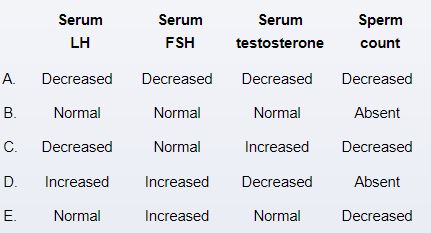
Question
Question
Question
Question
Question
Question
A genetic study performed on a 10-year-old boy reveals a single base substitution mutation involving a DNA segment that encodes a cellular protein, as shown in the image below.  This mutation is most likely to affect which of the following processes?
A)DNA methylation
B)Polypeptide folding following translation
C)Posttranscriptional RNA splicing
D)RNA elongation
E)Transcription initiation
F)Translation initiation
This mutation is most likely to affect which of the following processes?A)DNA methylation
B)Polypeptide folding following translation
C)Posttranscriptional RNA splicing
D)RNA elongation
E)Transcription initiation
F)Translation initiation
Question
Question
Question
Question
A 6-year-old girl with chronic anemia requiring repeated blood transfusions is undergoing genetic testing. The patient's mother and older sibling have a history of mild anemia. Her peripheral blood smear shows hypochromic, microcytic red blood cells, and hemoglobin electrophoresis reveals a predominance of hemoglobins F and A2. Sequencing of the Beta-globin gene is performed using the patient's erythroblast DNA. A schematic representation of the gene and its transcribed RNA is shown in the image below.  The base sequence indicated by the bold red arrow is responsible for which of the following functions?
A)Enhancement of transcription
B)Initiation of transcription
C)Initiation of translation
D)Repression of transcription
E)Termination of transcription
The base sequence indicated by the bold red arrow is responsible for which of the following functions?A)Enhancement of transcription
B)Initiation of transcription
C)Initiation of translation
D)Repression of transcription
E)Termination of transcription
Question
A 6-year-old girl with chronic anemia requiring repeated blood transfusions is undergoing genetic testing. The patient's mother and older sibling have a history of mild anemia. Her peripheral blood smear shows hypochromic, microcytic red blood cells, and hemoglobin electrophoresis reveals a predominance of hemoglobins F and A2. Sequencing of the Beta-globin gene is performed using the patient's erythroblast DNA. A schematic representation of the gene and its transcribed RNA is shown in the image below. The base sequence indicated by the bold red arrow is responsible for which of the following functions?
A)Enhancement of transcription
B)Initiation of transcription
C)Initiation of translation
D)Repression of transcription
E)Termination of transcription
The base sequence indicated by the bold red arrow is responsible for which of the following functions?A)Enhancement of transcription
B)Initiation of transcription
C)Initiation of translation
D)Repression of transcription
E)Termination of transcription
Question
Question
Question
Question
Question
Question
A 16-year-old girl with a history of anemia since childhood is evaluated for a genetic abnormality after several members of her family are also found to be anemic. It is determined that she has a point mutation in the beta globin gene, which has resulted in the substitution of guanine (G) with cytosine (C) in the mRNA sequence shown below (+1 position indicates start codon).  Which of the following cellular processes is most likely impaired due to this patient's gene mutation?
A)Co-translational protein targeting to endoplasmic reticulum
B)Initiation of translation
C)Peptide bond formation
D)Ribosomal translocation during polypeptide elongation
E)Termination of polypeptide synthesis
Which of the following cellular processes is most likely impaired due to this patient's gene mutation?A)Co-translational protein targeting to endoplasmic reticulum
B)Initiation of translation
C)Peptide bond formation
D)Ribosomal translocation during polypeptide elongation
E)Termination of polypeptide synthesis
Question
Question
Question
Question
Question
Question
Question
Question
Question
Question
Question
Question
Question
Question
Question
A 35-year-old woman, gravida 1, para 0, comes to the office to discuss abnormal laboratory results. The patient is at 18 weeks gestation based on her last menstrual period. She drank wine during the first trimester, as she initially did not realize she was pregnant. The patient is otherwise healthy with no medical problems. She takes prenatal vitamins and no other medications. Her immunizations are up-to-date. Results of the quadruple screen performed yesterday are as follows: 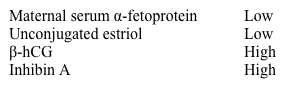 An ultrasound is scheduled to confirm the patient's gestational age and evaluate for fetal anomalies. Which of the following conditions is the most likely cause of this patient's analyte pattern?
A)Fetal alcohol syndrome
B)Gastroschisis
C)Myelomeningocele
D)Omphalocele
E)Trisomy 21
An ultrasound is scheduled to confirm the patient's gestational age and evaluate for fetal anomalies. Which of the following conditions is the most likely cause of this patient's analyte pattern?A)Fetal alcohol syndrome
B)Gastroschisis
C)Myelomeningocele
D)Omphalocele
E)Trisomy 21
Question
Question
Question
Question
Question
Question
A 26-year-old woman is being evaluated for a possible inherited disorder. She has a 6-year history of generalized tonic-clonic seizures, and a year ago, she had partial loss of vision due to an occipital infarction. Her mother has chronic intermittent muscle weakness and lactic acidosis, and her maternal uncle has hemiplegia. Skeletal muscle biopsy of the patient shows ragged-appearing muscle fibers. After further evaluation, all the affected family members are found to suffer from the same inherited disease. Pedigree analysis is shown in the image below. 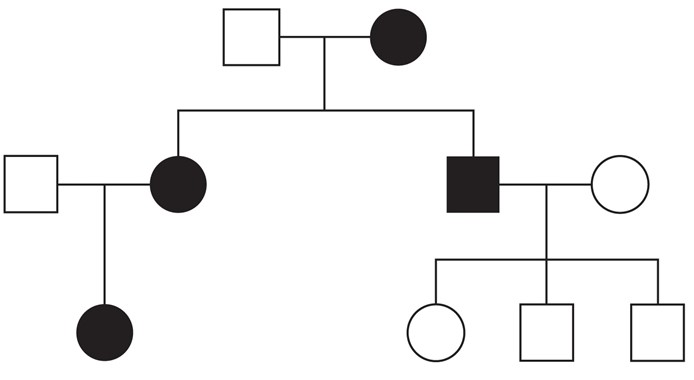 Which of the following is the most likely explanation for the variability of clinical manifestations in the affected family members?
A)Anticipation
B)Heteroplasmy
C)Incomplete penetrance
D)Mosaicism
E)Uniparental disomy
Which of the following is the most likely explanation for the variability of clinical manifestations in the affected family members?A)Anticipation
B)Heteroplasmy
C)Incomplete penetrance
D)Mosaicism
E)Uniparental disomy
Question
Question
Question
Question
Question
Question
Question
Question
Question
Question
Question
Question
A 13-year-old boy with growth retardation, microcephaly, sun sensitivity, and recurring infections is being examined for a hereditary genetic abnormality. The patient is the second kid born from a first cousin marriage. His parents and siblings are all OK, however two of his maternal relatives are experiencing identical indications and symptoms. The patient's genetic investigation indicates a deficiency in the BLM gene, which codes for DNA helicase. Which of the following is the enzyme's most likely place of action in the DNA replication fork depicted below? 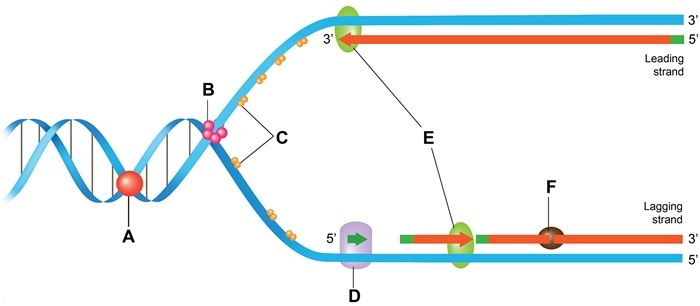
A)A
B)B
C)C
D)D
E)E
F)F
A)A
B)B
C)C
D)D
E)E
F)F
Question
A 35-year-old woman, gravida 1 para 0, arrives at the office for a regular prenatal appointment and fetal anatomy ultrasound at 20 weeks gestation. Several anomalies are discovered during the ultrasonography. A fetal karyotype analysis is ordered, and the findings are presented in the graphic below: 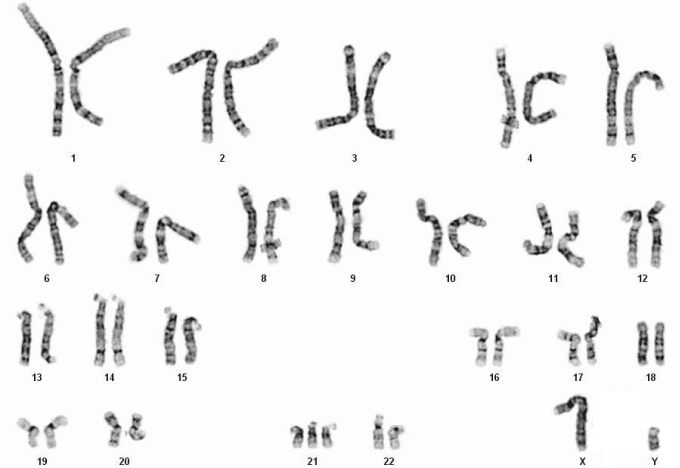 This fetus is at greatest risk for developing which of the following conditions after birth?
A)Acute lymphoblastic leukemia
B)Aplastic anemia
C)Chronic myelogenous leukemia
D)Germ cell tumor
E)Retinoblastoma
F)Rhabdomyosarcoma
This fetus is at greatest risk for developing which of the following conditions after birth?A)Acute lymphoblastic leukemia
B)Aplastic anemia
C)Chronic myelogenous leukemia
D)Germ cell tumor
E)Retinoblastoma
F)Rhabdomyosarcoma
Question
A scientist is investigating the pattern of gene expression. Messenger RNA is extracted from various tissues, electrophoresed, blotted, and probed with radiolabeled DNA containing exon 4 sequences from that gene. An x-ray film is then put over the blotting membrane, and the autoradiogram findings are presented below: 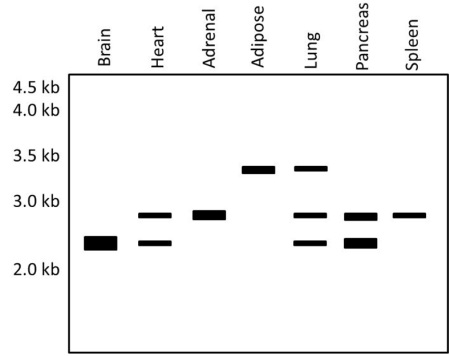 Which of the following best explains the autoradiogram findings in the different tissues?
A)Alternate RNA splicing
B)DNA rearrangement
C)DNA mutation
D)Enhancer effect
E)Transcription factor effect
Which of the following best explains the autoradiogram findings in the different tissues?A)Alternate RNA splicing
B)DNA rearrangement
C)DNA mutation
D)Enhancer effect
E)Transcription factor effect
Question
Certain drugs cause extreme intolerance in a 25-year-old man. His responses to various medicines have required hospitalization on two occasions. The following chart depicts his family lineage in relation to this ailment, with the red arrow denoting his place within the family. 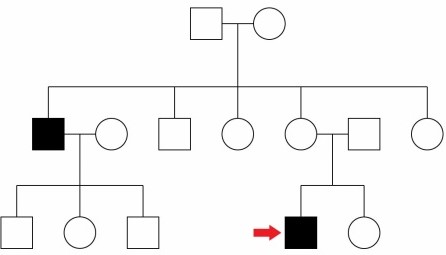 Assuming that the genetic condition demonstrates complete penetrance and is rare in the general population, which of the following inheritance patterns is most likely?
A)Autosomal dominant
B)Autosomal recessive
C)X-linked dominant
D)X-linked recessive
E)Mitochondrial
Assuming that the genetic condition demonstrates complete penetrance and is rare in the general population, which of the following inheritance patterns is most likely?A)Autosomal dominant
B)Autosomal recessive
C)X-linked dominant
D)X-linked recessive
E)Mitochondrial
Question
An hereditary disease is suspected in a patient. The following trend emerges from pedigree analysis: 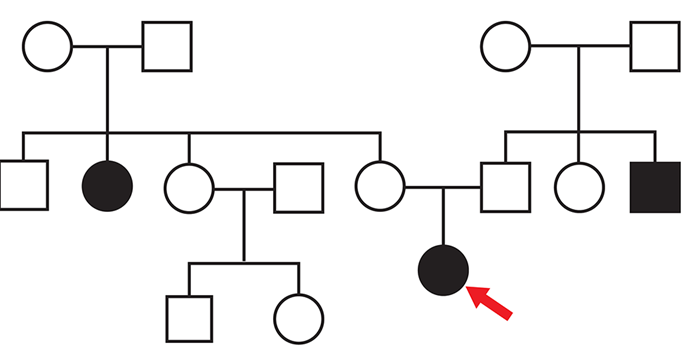 This patient most likely has which of the following conditions?
A)Classic galactosemia
B)Hemophilia B
C)Huntington disease
D)Leber hereditary optic neuropathy
E)Rett syndrome
This patient most likely has which of the following conditions?A)Classic galactosemia
B)Hemophilia B
C)Huntington disease
D)Leber hereditary optic neuropathy
E)Rett syndrome
Question
A young couple has successfully undergone in vitro fertilization. The father has cystic fibrosis, and the mother has a sibling who also has the disease. Both the father and the mother's sister have F508 mutations, but the mother's carrier status is unclear. Before deciding to have a child, the couple received thorough genetic counseling on the dangers of having a kid with cystic fibrosis. The unborn kid is indicated by the red arrow in the family tree below. 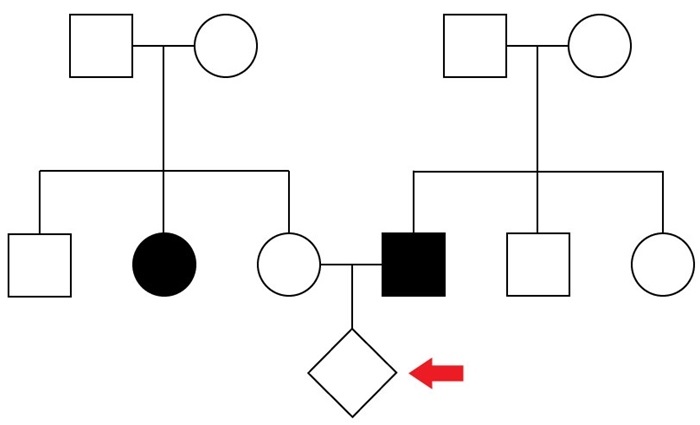 What is the probability that the unborn child will have cystic fibrosis?
A)1/16
B)1/8
C)1/4
D)1/3
E)2/3
F)3/4
What is the probability that the unborn child will have cystic fibrosis?A)1/16
B)1/8
C)1/4
D)1/3
E)2/3
F)3/4
Question
A 26-year-old woman and her spouse visit the office for genetic counseling. She is expecting their second kid, the gender of which is unknown. Both parents are asymptomatic, but their 3-year-old boy suffers from anemia, jaundice, and severe swelling of the hands and feet on a regular basis. A blood sample is taken from the youngster, and hemoglobin electrophoresis at alkaline pH is done. The outcomes are depicted in the graphic below. 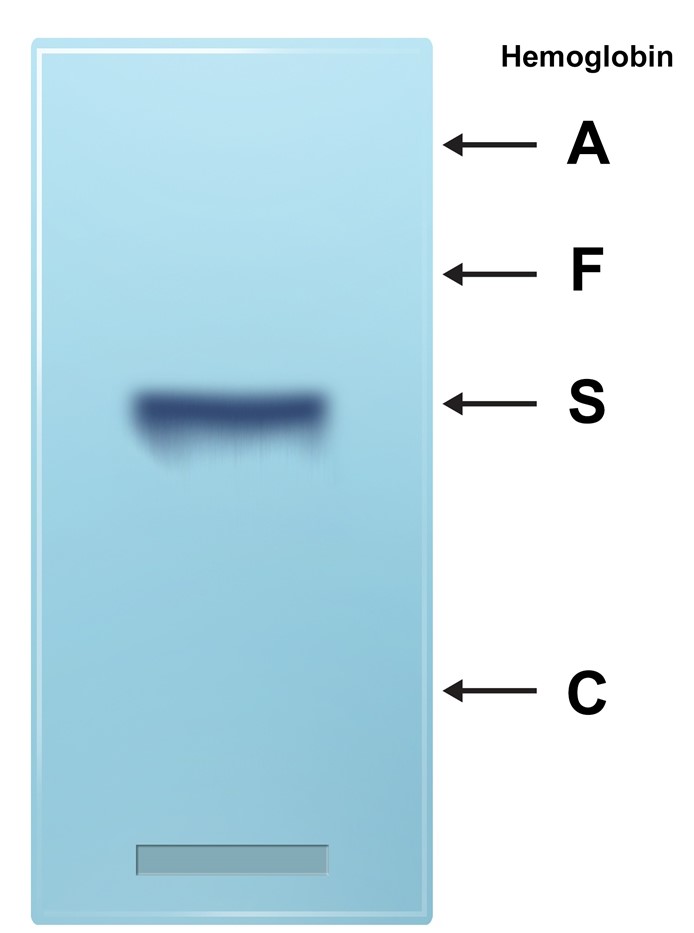 What is the probability that the unborn child will inherit one or more mutant alleles from the parents?
A)Near 0
B)25%
C)50%
D)75%
E)100%
What is the probability that the unborn child will inherit one or more mutant alleles from the parents?A)Near 0
B)25%
C)50%
D)75%
E)100%
Question
A 19-year-old girl is being tested for new-onset generalized tonic-clonic seizures. She has also had unpredictable jerks of her arms and legs, as well as occasional muscular weakness, for several years. The girl has other family relatives who have identical symptoms. A neurological examination indicates a broad-based gait and diminished feeling in the lower limbs. A skeletal muscle biopsy reveals ragged, red-colored muscular fibers. Further investigation revealed that the patient's symptoms are caused by a mutation that affects extranuclear DNA. Which of the following pedigrees best describes this patient's family history? (The arrow points to the patient.)
A)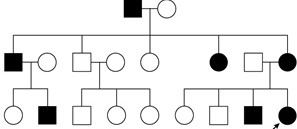
B)
C)
D)
E)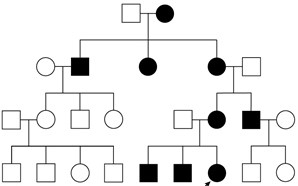
A)
B)
C)
D)
E)
Question
A three-year-old kid is being assessed for recurring respiratory infections. Five months after his birth, the patient's family emigrated to the United States. Since then, the boy has had many bouts of pneumonia and bronchitis, as well as a chronic cough and failure to grow. His older sibling is in good health. A genetic test finds a mutation in an exon of a gene encoding a transmembrane chloride channel. The aberrant mRNA is extracted from epithelial cells in culture, and its complementary DNA is produced. Base pair length is determined by analyzing amplified cDNA samples from both the patient and his healthy sister using gel electrophoresis and comparing them to DNA fragments of known size. The outcomes are presented below. 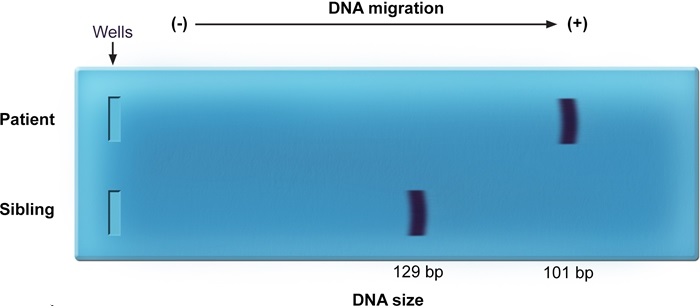 Which of the following is most likely responsible for this patient's condition?
A)Frameshift mutation
B)In-frame deletion
C)Missense mutation
D)Nonsense mutation
E)Silent mutation
F)Trinucleotide expansion
Which of the following is most likely responsible for this patient's condition?A)Frameshift mutation
B)In-frame deletion
C)Missense mutation
D)Nonsense mutation
E)Silent mutation
F)Trinucleotide expansion
Question
Non-coding RNA molecules are being studied for their functional importance by molecular biologists. They separate huge complexes including both protein and RNA from exocrine pancreatic cells throughout an experiment. The complexes can be observed floating freely in the cytoplasm as well as attached to the endoplasmic reticulum. Which of the following intracellular locations is the primary site of RNA synthesis identified inside these complexes? 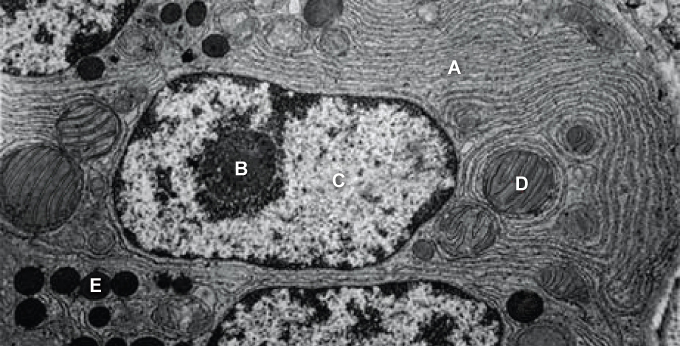
A)A
B)B
C)C
D)D
E)E
A)A
B)B
C)C
D)D
E)E
Question
An Ashkenazi Jewish 8-year-old kid is brought to the clinic after experiencing decreased pain sensitivity, poor tear formation, and orthostatic hypotension. Because of the patient's symptoms and family history, familial dysautonomia is suspected. The loss of function of the IKAP protein, which is required for the growth and survival of sensory and autonomic neurons, causes this illness. In the typical gene sequence given below, a single nucleotide substitution causes a guanine residue to be replaced by adenine at the highlighted location. Exon sequences are represented by capital letters, whereas intron sequences are represented by lowercase letters. 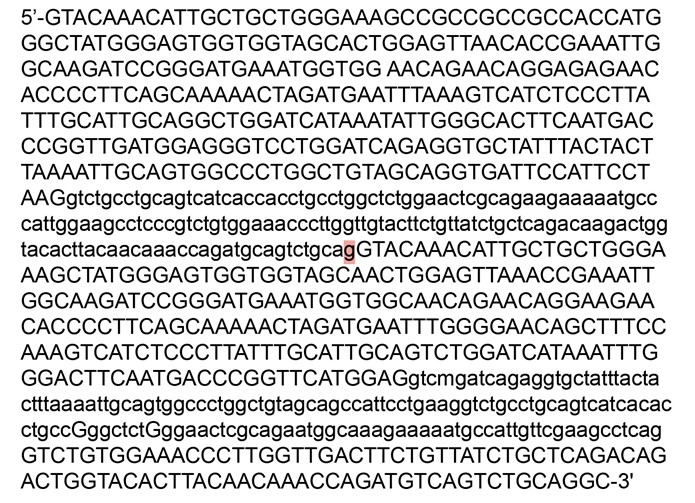 Which of the following is the most likely effect of this mutation?
A)Decreased mRNA export to the cytosol
B)Impaired ribosomal attachment to mRNA
C)Incorrect splicing of pre-mRNA
D)Increased degradation of mRNA by 5' exonucleases
E)Translation of the 3'-untranslated region of mRNA
Which of the following is the most likely effect of this mutation?A)Decreased mRNA export to the cytosol
B)Impaired ribosomal attachment to mRNA
C)Incorrect splicing of pre-mRNA
D)Increased degradation of mRNA by 5' exonucleases
E)Translation of the 3'-untranslated region of mRNA
Question
A pharmaceutical company researching novel therapeutic agents for the treatment of Burkitt lymphoma creates a 21-base pair double-stranded RNA molecule. The RNA molecule has a base pair sequence that is complementary to an mRNA region that encodes c-Myc. When the RNA molecule is introduced into tumor cells, cell proliferation is significantly reduced. The results of a Western blot examination of equal numbers of treated and untreated cells are displayed below. 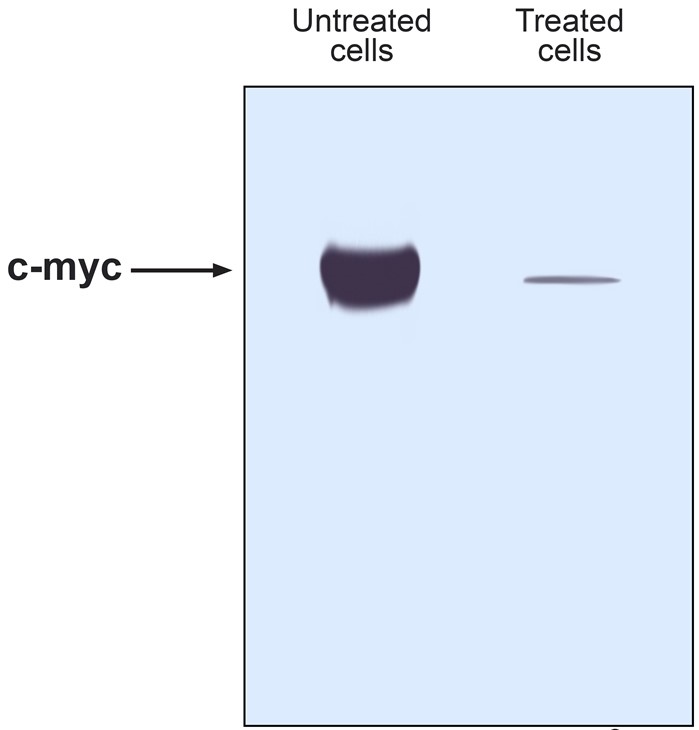 Which of the following processes was most likely directly interrupted in the cells exposed to the RNA molecule?
A)DNA replication
B)DNA transcription
C)mRNA translation
D)Proteasome activity
E)Splicing
Which of the following processes was most likely directly interrupted in the cells exposed to the RNA molecule?A)DNA replication
B)DNA transcription
C)mRNA translation
D)Proteasome activity
E)Splicing
Question
A 54-year-old man visits his doctor complaining of new onset minor headaches and left leg weakness. The lesions discovered during a physical examination are depicted in the figure below.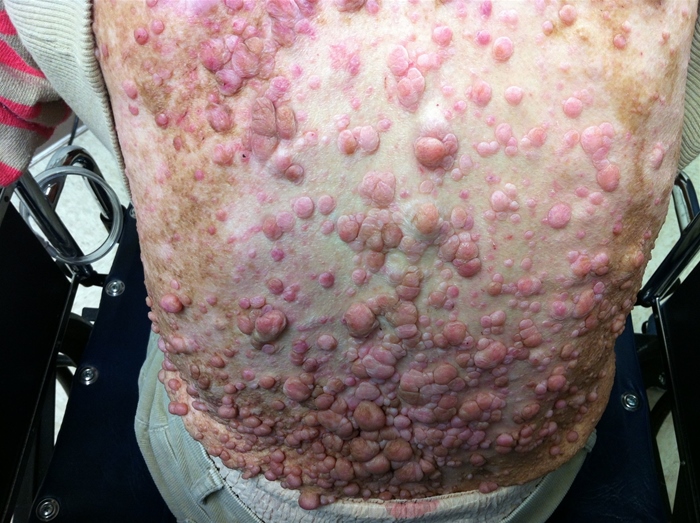 Which of the following inheritance patterns is most likely to be present in this patient's disorder?
A)Genomic imprinting
B)Mitochondrial
C)Multifactorial
D)Single-gene autosomal dominant
E)Single-gene autosomal recessive
F)Single-gene X-linked
Which of the following inheritance patterns is most likely to be present in this patient's disorder?A)Genomic imprinting
B)Mitochondrial
C)Multifactorial
D)Single-gene autosomal dominant
E)Single-gene autosomal recessive
F)Single-gene X-linked
Question
A 67-year-old man has been discovered dead in his house. The reason of death is unknown; he had a history of hypertension and had a myocardial infarction a year before. An autopsy is carried out. A physical examination of the heart reveals white scarring and left ventricle enlargement. Below are histologic results from a portion of the left ventricle. 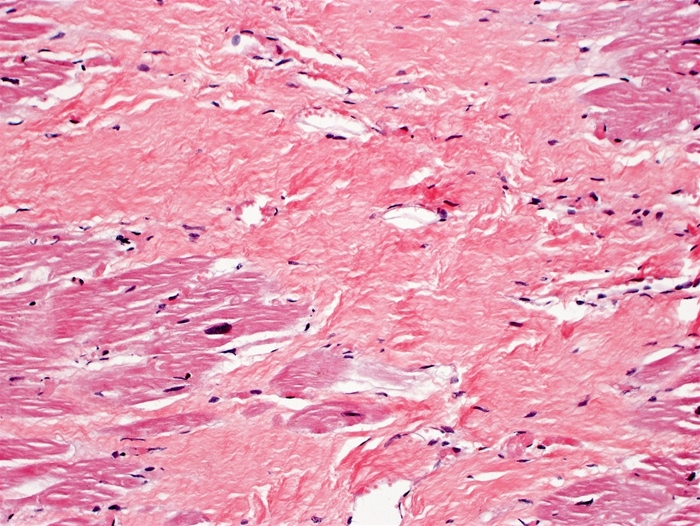 The type of collagen seen in the autopsy sample is most likely to be extensively found in which of the following normal body tissues?
A)Basement membrane
B)Granulation tissue
C)Hyaline cartilage
D)Nucleus pulposus
E)Tendon
The type of collagen seen in the autopsy sample is most likely to be extensively found in which of the following normal body tissues?A)Basement membrane
B)Granulation tissue
C)Hyaline cartilage
D)Nucleus pulposus
E)Tendon

Unlock Deck
Sign up to unlock the cards in this deck!
Unlock Deck
Unlock Deck
1/88

Play

Full screen (f)
Deck 6: Genetics
1
Geneticists are studying a malfunctioning protein that causes impaired endothelial cell migration and angiogenesis. They have noticed that the amino acid sequence of the protein is truncated compared to normal controls. The mutated mRNA strand is isolated, and analysis shows a nonsense mutation located near the 3' end of the coding region. The 3' terminal coding sequence of the abnormal mRNA strand is shown below. Which of the following tRNA anticodons is responsible for adding the last amino acid to the truncated polypeptide during protein translation?
A)5'-AAC-3'
B)5'-AUC-3'
C)5'-CAA-3'
D)5'-GCU-3'
E)5'-UCG-3'
Which of the following tRNA anticodons is responsible for adding the last amino acid to the truncated polypeptide during protein translation?A)5'-AAC-3'
B)5'-AUC-3'
C)5'-CAA-3'
D)5'-GCU-3'
E)5'-UCG-3'
5'-CAA-3'
2
A 14-year-old boy experiences severe, prolonged bleeding following a tooth extraction. He also has a history of multiple episodes of painful joint swelling following minor trauma. His parents have no bleeding problems. Evaluation shows that the patient has an inherited disorder and that one of his parents is a genetic carrier. His older sister, who does not have this condition, is pregnant. She does not know the sex of her child. She asks about the risk that her child will be affected. Which of the following is the best estimate that this child will have the disease?
A)Near 0
B)1/2
C)1/4
D)1/8
E)1/16
F)1/32
A)Near 0
B)1/2
C)1/4
D)1/8
E)1/16
F)1/32
1/8
3
A 26-year-old woman comes to the office for follow-up. The patient and her husband want to have a child, and she inquires about the risk of certain genetic conditions, including cystic fibrosis (CF). The patient is from a small city with a stable Caucasian population, where the carrier frequency for CF is 1/30 Caucasian individuals. Her husband is from a nearby community, where CF carrier frequency in individuals of Asian descent is 1/100. Both the patient, who is Caucasian, and her husband, who is of Asian descent, are healthy. What is the probability that a child born to a mother from the Caucasian community and a father from the Asian community will have the disease?
A)1/900
B)1/1,000
C)1/3,000
D)1/6,000
E)1/12,000
A)1/900
B)1/1,000
C)1/3,000
D)1/6,000
E)1/12,000
1/12,000
4
A 50-year-old previously healthy man is evaluated for progressive fatigue, weakness, and recurrent gingival bleeding. Laboratory studies reveal normocytic normochromic anemia, thrombocytopenia, and leukocytosis with circulating myeloblasts. Bone marrow biopsy establishes a diagnosis of acute myeloid leukemia. Induction chemotherapy followed by allogeneic hematopoietic cell transplantation (HCT) is planned. Molecular typing of human leukocyte antigen (HL A) -A, -B, -C, -DP, -DQ, and -DR is performed. The patient's biological sister, with whom he shares both parents, is eligible for stem cell donation and undergoes HLA typing. Which of the following is the most likely probability that the sibling will be an identical HLA match with this patient?
A)0
B)1/16
C)1/8
D)1/4
E)1/2
A)0
B)1/16
C)1/8
D)1/4
E)1/2
Unlock Deck
Unlock for access to all 88 flashcards in this deck.
Unlock Deck
k this deck
5
A 43-year-old man is evaluated for progressive neuropsychiatric symptoms. A year ago, he began feeling depressed and having hallucinations. Five months later, he developed intermittent paresthesias and progressively worsening choreiform movements, myoclonus, and ataxia. These symptoms have not improved despite multiple hospitalizations; an extensive workup has been unrevealing. The patient is a slaughterhouse worker with extensive exposure to bovine offal. As part of the evaluation for prion disease, a tissue sample digested with protease is processed via gel electrophoresis and transferred to filter paper. Antibodies to a specific prion protein are added to the filter. Next, a marked protein that combines with the antibody-protein complex is used to determine whether the test is positive. Which of the following best describes this test?
A)Microarray
B)Northern blot
C)Southern blot
D)Southwestern blot
E)Western blot
A)Microarray
B)Northern blot
C)Southern blot
D)Southwestern blot
E)Western blot
Unlock Deck
Unlock for access to all 88 flashcards in this deck.
Unlock Deck
k this deck
6
A 28-year-old man is evaluated for abnormal movements of the hands and face. The patient reports that he started experiencing involuntary grimacing a year ago, which has gradually worsened. He is taking a selective serotonin reuptake inhibitor for major depression but has not taken any antipsychotic medications. His 52-year-old father was diagnosed with an inherited movement disorder 2 months ago. Physical examination shows normal strength and normal deep tendon reflexes. No sensory deficits are noted. Which of the following best explains the difference in disease presentation between this patient and his father?
A)Anticipation
B)Genomic imprinting
C)Incomplete penetrance
D)Microdeletion
E)Mosaicism
F)Pleiotropy
A)Anticipation
B)Genomic imprinting
C)Incomplete penetrance
D)Microdeletion
E)Mosaicism
F)Pleiotropy
Unlock Deck
Unlock for access to all 88 flashcards in this deck.
Unlock Deck
k this deck
7
A study is undertaken to map the HLA-DQ loci in a population with a high incidence of celiac sprue. High-resolution HLA typing of the DQA1 and DQB1 loci is performed using polymerase chain reaction sequencing. The frequency of the DQA1*0501-DQB1*0201 haplotype, strongly implicated in autoimmunity, is found to be 0.2. However, in the same population, the frequency of the DQA1*0501 allele is 0.3 and the frequency of the DQB1*0201 allele is 0.2. Which of the following best explains the observed DQA1*0501-DQB1*0201 haplotype frequency in this population?
A)Heteroplasmy
B)Increased penetrance
C)Linkage disequilibrium
D)Pleiotropy
E)Segregation
A)Heteroplasmy
B)Increased penetrance
C)Linkage disequilibrium
D)Pleiotropy
E)Segregation
Unlock Deck
Unlock for access to all 88 flashcards in this deck.
Unlock Deck
k this deck
8
A 33-year-old woman, gravida 2 para 1, comes to the office for a prenatal visit at 20 weeks gestation. She feels well and reports experiencing fetal movements. The patient has no medical problems other than a history of cleft lip, which was repaired in childhood. Her husband is healthy, but her previous child was born with spina bifida. She takes a daily prenatal vitamin. Physical examination is unremarkable and uterine size is in accordance with ultrasound dates. The patient is worried that the fetus may develop the same birth defect as her previous child. Which of the following is the most likely mode of inheritance of this disorder?
A)Autosomal dominant
B)Autosomal recessive
C)Mitochondrial
D)Multifactorial
E)X-linked recessive
A)Autosomal dominant
B)Autosomal recessive
C)Mitochondrial
D)Multifactorial
E)X-linked recessive
Unlock Deck
Unlock for access to all 88 flashcards in this deck.
Unlock Deck
k this deck
9
A 28-year-old woman comes to the physician because of a 4-day history of lower abdominal pain and pain with urination. A urine sample is collected and sent for culture. Gram-negative bacteria isolated from the urine are found to form pink colonies on lactose-containing MacConkey agar. Several days later, bacterial isolates from a second urine sample are found to form white colonies when plated on the same type of medium. Genetic analysis shows that the more recent isolates have a single nucleotide deletion within the lac operon DNA sequence. This genomic change is most consistent with which of the following?
A)Conservative mutation
B)Frameshift mutation
C)Missense mutation
D)Nonsense mutation
E)Silent mutation
A)Conservative mutation
B)Frameshift mutation
C)Missense mutation
D)Nonsense mutation
E)Silent mutation
Unlock Deck
Unlock for access to all 88 flashcards in this deck.
Unlock Deck
k this deck
10
A 59-year-old woman comes to the physician because of worsening shortness of breath for the past two weeks. Physical examination shows decreased breath sounds at both lung bases. The abdomen is distended and there is shifting dullness with a positive fluid wave. Ultrasound of the abdomen shows a large collection of peritoneal fluid and a hypoechoic mass involving the left ovary. Molecular analysis of the malignant cells in ascitic fluid is performed, and these cells are found to have high telomerase activity. This enzyme promotes cell growth and malignancy by directly causing which of the following actions?
A)Enhancing tissue invasion and metastasis
B)Increasing transcription factor expression
C)Preventing chromosomal shortening
D)Promoting G1/S progression
E)Sustaining angiogenesis
A)Enhancing tissue invasion and metastasis
B)Increasing transcription factor expression
C)Preventing chromosomal shortening
D)Promoting G1/S progression
E)Sustaining angiogenesis
Unlock Deck
Unlock for access to all 88 flashcards in this deck.
Unlock Deck
k this deck
11
A healthy couple, who recently emigrated from Eastern Europe, bring their 3-year-old son to the office for evaluation of an eczematous rash. On examination, the child also shows signs of intellectual disability and gait abnormality and has a musty body odor. What is the likelihood that this couple's next child will be affected with the same disease?
A)Same as the general population
B)1/32
C)1/16
D)1/8
E)1/4
F)1/2
A)Same as the general population
B)1/32
C)1/16
D)1/8
E)1/4
F)1/2
Unlock Deck
Unlock for access to all 88 flashcards in this deck.
Unlock Deck
k this deck
12
A 10-year-old boy is brought to the emergency department for new swelling in his right leg. He has a history of lens dislocation and intellectual disability. Physical examination demonstrates moderate, pitting edema from his right calf to his right thigh and a normal left lower extremity. In addition, the patient has a caved-in appearing chest wall. He has no family members with similar conditions. Ultrasound reveals a deep venous thrombosis in his right femoral vein. Further genetic testing reveals a single missense mutation in the gene coding for cystathionine beta-synthase enzyme. Which of the following is the most likely explanation for this patient's genetic defect affecting multiple tissues?
A)Dominant negative mutation
B)Genetic linkage
C)Incomplete penetrance
D)Locus heterogeneity
E)Pleiotropy
F)Polyploidy
G)Segregation
A)Dominant negative mutation
B)Genetic linkage
C)Incomplete penetrance
D)Locus heterogeneity
E)Pleiotropy
F)Polyploidy
G)Segregation
Unlock Deck
Unlock for access to all 88 flashcards in this deck.
Unlock Deck
k this deck
13
In an experiment, cultured fibroblasts are mechanically lysed, and the membrane lipids and cellular proteins are chemically removed to isolate nucleic acids. The cellular extract containing the purified nucleic acids is incubated along with short sequences of repeated deoxythymidine residues fixed to latex beads. The solution is washed several times to remove unbound molecules. Which of the following types of nucleic acid is most likely to bind the strongest to the latex beads in this experiment?
A)Aminoacyl-tRNA
B)Mature mRNA
C)Promoter regions of DNA
D)Ribosomal RNA
E)Splice sites of pre-mRNA
F)Telomere regions of chromosomes
A)Aminoacyl-tRNA
B)Mature mRNA
C)Promoter regions of DNA
D)Ribosomal RNA
E)Splice sites of pre-mRNA
F)Telomere regions of chromosomes
Unlock Deck
Unlock for access to all 88 flashcards in this deck.
Unlock Deck
k this deck
14
A 23-year-old previously healthy man comes to the office after noticing a painless, hard mass in the left testis. Scrotal ultrasound shows a solid testicular mass, and CT scan of the abdomen and pelvis shows left paraaortic lymphadenopathy. Left orchidectomy is performed and postoperative histopathology reveals seminoma of the testis. External beam radiotherapy is administered to the paraaortic metastatic area. Several weeks later, the retroperitoneal nodes are observed to have markedly decreased in size. Which of the following is the most likely effect of the therapy used on the metastatic cells in this patient?
A)Demethylation of DNA
B)DNA cross-linking
C)Double-strand DNA breaks
D)Nucleotide mismatches
E)Pyrimidine dimers
A)Demethylation of DNA
B)DNA cross-linking
C)Double-strand DNA breaks
D)Nucleotide mismatches
E)Pyrimidine dimers
Unlock Deck
Unlock for access to all 88 flashcards in this deck.
Unlock Deck
k this deck
15
A researcher develops 2 functional mRNA sequences composed of CUC and CUU trinucleotide repeats, respectively. He subsequently incubates these mRNAs in a solution containing functional ribosomes and tRNAs charged with the appropriate amino acids. After several hours, it is found that both mRNA sequences produce polypeptide chains containing leucine repeats. This observed finding is due to which of the following genetic principles?
A)Ambiguity
B)No punctuation
C)Transition
D)Universality
E)Wobble
A)Ambiguity
B)No punctuation
C)Transition
D)Universality
E)Wobble
Unlock Deck
Unlock for access to all 88 flashcards in this deck.
Unlock Deck
k this deck
16
In an experiment, erythrocyte precursor cells are incubated in a medium containing radiolabeled cysteine. These radiolabeled cysteine residues are attached to their appropriate tRNAs by the enzyme aminoacyl-tRNA synthetase. The bound cysteine residues are then chemically modified to form alanine. The end product of this reaction is a tRNA molecule that contains the cysteine anticodon but is mischarged with alanine. Which of the following is most likely to occur to this alanine residue during polypeptide synthesis of alpha-hemoglobin?
A)It will be incorporated into the polypeptide chain at a site requiring alanine
B)It will be incorporated into the polypeptide chain at a site requiring cysteine
C)It will be randomly incorporated into the polypeptide chain, halting chain elongation
D)It will be rapidly cleaved off tRNA by the enzyme glycosylase
E)It will never be incorporated into the polypeptide chain and will remain attached to tRNA
A)It will be incorporated into the polypeptide chain at a site requiring alanine
B)It will be incorporated into the polypeptide chain at a site requiring cysteine
C)It will be randomly incorporated into the polypeptide chain, halting chain elongation
D)It will be rapidly cleaved off tRNA by the enzyme glycosylase
E)It will never be incorporated into the polypeptide chain and will remain attached to tRNA
Unlock Deck
Unlock for access to all 88 flashcards in this deck.
Unlock Deck
k this deck
17
A 16-year-old boy is brought to the physician by his mother for a well-child examination. He recently stopped attending his swim classes. The patient is at the 97th percentile for height and the 50th percentile for weight. Examination shows decreased facial hair, bilateral breast enlargement, and long extremities. Genital examination shows scant pubic hair, small testes, and a normal-sized penis. Further evaluation will most likely show which of the following sets of findings in this patient?
Unlock Deck
Unlock for access to all 88 flashcards in this deck.
Unlock Deck
k this deck
18
A 32-year-old man is recovering from extensive burns. Fibroblasts near the site of injury actively synthesize precursor mRNA to be used as templates for protein synthesis. After transcription, extensive processing of the precursor RNA occurs to form the finalized mRNA sequence. The finalized mRNA then exits the nucleus and undergoes translation by ribosome complexes before being degraded. Which of the following steps involving the processing and handling of mRNA occurs only within the cytoplasm of cells?
A)5'-terminal guanosine triphosphate addition
B)Methylation of the 5'-terminal guanine
C)Multiple adenine nucleotide attachment to the 3'-end
D)Interaction with snRNP
E)Removal of intervening sequences
F)Interaction with P bodies
A)5'-terminal guanosine triphosphate addition
B)Methylation of the 5'-terminal guanine
C)Multiple adenine nucleotide attachment to the 3'-end
D)Interaction with snRNP
E)Removal of intervening sequences
F)Interaction with P bodies
Unlock Deck
Unlock for access to all 88 flashcards in this deck.
Unlock Deck
k this deck
19
An 18-year-old man comes to the urgent care clinic due to painful erythema affecting his extremities, trunk, and face. He is vacationing in Florida and spent 5 hours at a Gulf coast beach earlier in the day. The patient did not apply any sunscreen as it was cloudy. The physician explains that cloud cover does not afford a high degree of protection against the sun, especially with prolonged exposure in highly reflective environments like the beach. He is advised to wear protective clothing and apply sunscreen to prevent recurrence. Which of the following is most likely to happen within the patient's skin cells as a result of his exposure?
A)Covalent bond formation between adjacent purine bases
B)End-joining repair of double-stranded DNA breaks
C)Endonuclease nicking of the damaged DNA strand
D)Hypermethylation of residues in the undamaged DNA strand
E)Removal of deaminated bases by glycosylase
A)Covalent bond formation between adjacent purine bases
B)End-joining repair of double-stranded DNA breaks
C)Endonuclease nicking of the damaged DNA strand
D)Hypermethylation of residues in the undamaged DNA strand
E)Removal of deaminated bases by glycosylase
Unlock Deck
Unlock for access to all 88 flashcards in this deck.
Unlock Deck
k this deck
20
A pharmaceutical researcher performs preclinical testing on a novel chemotherapeutic drug. When rat embryos are exposed to this drug during an early stage of organogenesis, they develop severe skeletal malformations. Further genetic analysis reveals that the drug causes mutations in numerous homeobox genes containing highly conserved 180 base pair DNA sequences. The genes affected by this drug most likely code for which of the following proteins?
A)Cell surface receptors
B)Cytoplasmic enzymes
C)DNA replication enzymes
D)Structural proteins
E)Transcription regulators
F)Transport proteins
A)Cell surface receptors
B)Cytoplasmic enzymes
C)DNA replication enzymes
D)Structural proteins
E)Transcription regulators
F)Transport proteins
Unlock Deck
Unlock for access to all 88 flashcards in this deck.
Unlock Deck
k this deck
21
A 12-year-old boy is evaluated in the clinic due to excessive bleeding following a tooth extraction. The patient also develops large bruises after only minor injury but has had no major bleeding episodes in the past. His maternal uncle died from an intracranial hemorrhage. Laboratory testing reveals decreased coagulation factor VIII activity levels. A referral is made to a clinical geneticist, who suspects that the patient has a deletion mutation in the enhancer sequence of the factor VIII gene. This mutation has resulted in decreased transcription of factor VIII by RNA polymerase II. Which of the following is the most accurate statement regarding the abnormal genetic sequence in this patient?
A)It can be located upstream, downstream, or within introns of the gene
B)It can function within only a short distance of the gene
C)It directly binds RNA polymerase and general transcription factors
D)It does not require protein binding to affect transcription
E)It is required to initiate transcription
A)It can be located upstream, downstream, or within introns of the gene
B)It can function within only a short distance of the gene
C)It directly binds RNA polymerase and general transcription factors
D)It does not require protein binding to affect transcription
E)It is required to initiate transcription
Unlock Deck
Unlock for access to all 88 flashcards in this deck.
Unlock Deck
k this deck
22
A 16-year-old boy is brought to the physician by his mother for a well-child examination. He recently stopped attending his swim classes. The patient is at the 97th percentile for height and the 50th percentile for weight. Examination shows decreased facial hair, bilateral breast enlargement, and long extremities. Genital examination shows scant pubic hair, small testes, and a normal-sized penis. Laboratory evaluation would most likely show which of the following findings?
A)Decreased estradiol
B)Increased androstenedione
C)Increased B-hCG
D)Increased creatinine
E)Increased FSH
F)Increased prolactin
G)Prolonged prothrombin time
A)Decreased estradiol
B)Increased androstenedione
C)Increased B-hCG
D)Increased creatinine
E)Increased FSH
F)Increased prolactin
G)Prolonged prothrombin time
Unlock Deck
Unlock for access to all 88 flashcards in this deck.
Unlock Deck
k this deck
23
A genetic study performed on a 10-year-old boy reveals a single base substitution mutation involving a DNA segment that encodes a cellular protein, as shown in the image below. This mutation is most likely to affect which of the following processes?
A)DNA methylation
B)Polypeptide folding following translation
C)Posttranscriptional RNA splicing
D)RNA elongation
E)Transcription initiation
F)Translation initiation
This mutation is most likely to affect which of the following processes?A)DNA methylation
B)Polypeptide folding following translation
C)Posttranscriptional RNA splicing
D)RNA elongation
E)Transcription initiation
F)Translation initiation
Unlock Deck
Unlock for access to all 88 flashcards in this deck.
Unlock Deck
k this deck
24
A 30-year-old man comes to the office because he has a concern regarding last semen analysis result. He has been married for 5 years and failed to concieve. A semen analysis shows a normal sperm count but completely immobile sperm due to abnormal tail function. Which of the following additional findings is most likely associated with this patient's condition?
A)Cleft lip
B)Coarctation of the aorta
C)Fat malabsorption
D)Hypertrophic cardiomyopathy
E)Liver cirrhosis
F)Persistent bronchial dilation
A)Cleft lip
B)Coarctation of the aorta
C)Fat malabsorption
D)Hypertrophic cardiomyopathy
E)Liver cirrhosis
F)Persistent bronchial dilation
Unlock Deck
Unlock for access to all 88 flashcards in this deck.
Unlock Deck
k this deck
25
A researcher is studying the Fas receptor (FasR), a protein widely expressed on cell surfaces. The signaling cascade of programmed cell death is initiated when FasR binds to its ligand (FasL), which is expressed on cytotoxic T cells. In an experiment, cancer cells that escaped elimination by the immune system were found to contain soluble Fas proteins that did not promote apoptosis. The soluble Fas proteins were shorter and lacked the transmembrane domain. DNA analysis of these cells revealed no FAS gene mutations. Which of the following is the most likely explanation for the formation of altered Fas proteins in these cancer cells?
A)Alternative splicing
B)Defective polyadenylation
C)DNA methylation
D)Polycistronic mRNA
E)Protein ubiquitination
A)Alternative splicing
B)Defective polyadenylation
C)DNA methylation
D)Polycistronic mRNA
E)Protein ubiquitination
Unlock Deck
Unlock for access to all 88 flashcards in this deck.
Unlock Deck
k this deck
26
A pharmaceutical researcher is evaluating a nuclear enzyme inhibitor for the treatment of an inherited disorder. During an experiment, he extracts and purifies nuclear enzymes from skin cells of an affected patient. One of these enzymes is found to catalyze the methylation of cytosine residues in DNA using S-adenosyl-methionine (SAM) as the methyl donor. This enzyme most likely plays a crucial role in which of the following genetic processes?
A)Aneuploidy
B)Epistasis
C)Imprinting
D)Meiotic nondisjunction
E)Pleiotropy
A)Aneuploidy
B)Epistasis
C)Imprinting
D)Meiotic nondisjunction
E)Pleiotropy
Unlock Deck
Unlock for access to all 88 flashcards in this deck.
Unlock Deck
k this deck
27
A 6-year-old girl with chronic anemia requiring repeated blood transfusions is undergoing genetic testing. The patient's mother and older sibling have a history of mild anemia. Her peripheral blood smear shows hypochromic, microcytic red blood cells, and hemoglobin electrophoresis reveals a predominance of hemoglobins F and A2. Sequencing of the Beta-globin gene is performed using the patient's erythroblast DNA. A schematic representation of the gene and its transcribed RNA is shown in the image below. The base sequence indicated by the bold red arrow is responsible for which of the following functions?
A)Enhancement of transcription
B)Initiation of transcription
C)Initiation of translation
D)Repression of transcription
E)Termination of transcription
The base sequence indicated by the bold red arrow is responsible for which of the following functions?A)Enhancement of transcription
B)Initiation of transcription
C)Initiation of translation
D)Repression of transcription
E)Termination of transcription
Unlock Deck
Unlock for access to all 88 flashcards in this deck.
Unlock Deck
k this deck
28
A 6-year-old girl with chronic anemia requiring repeated blood transfusions is undergoing genetic testing. The patient's mother and older sibling have a history of mild anemia. Her peripheral blood smear shows hypochromic, microcytic red blood cells, and hemoglobin electrophoresis reveals a predominance of hemoglobins F and A2. Sequencing of the Beta-globin gene is performed using the patient's erythroblast DNA. A schematic representation of the gene and its transcribed RNA is shown in the image below. The base sequence indicated by the bold red arrow is responsible for which of the following functions?
A)Enhancement of transcription
B)Initiation of transcription
C)Initiation of translation
D)Repression of transcription
E)Termination of transcription
The base sequence indicated by the bold red arrow is responsible for which of the following functions?A)Enhancement of transcription
B)Initiation of transcription
C)Initiation of translation
D)Repression of transcription
E)Termination of transcription
Unlock Deck
Unlock for access to all 88 flashcards in this deck.
Unlock Deck
k this deck
29
A series of experiments is being conducted to determine the structure and function of different types of bacterial RNA. Cultures of Staphylococcus aureus are exposed to chemicals that lyse the bacterial cells, and the RNA molecules are then extracted. A specific RNA consisting of 90 nucleotides is purified for further analysis. It is found to contain high amounts of chemically modified bases such as dihydrouridine, pseudouridine, and ribothymidine, and its secondary structure arises from base pairing within the chain. Which of the following is the most likely composition of the 3'-end of this molecule?
A)AUG
B)CCA
C)Methylguanosine triphosphate
D)Poly-A
E)TATA
F)UAG
A)AUG
B)CCA
C)Methylguanosine triphosphate
D)Poly-A
E)TATA
F)UAG
Unlock Deck
Unlock for access to all 88 flashcards in this deck.
Unlock Deck
k this deck
30
A 5-year-old girl is brought to the office by her mother because she is concerned that her daughter "sunburns too easily." The mother says the patient's skin becomes red and scaly with only minimal sun exposure. She first noticed the problem when her daughter was 7 months old during a trip to the beach. The mother has since avoided exposing her child to excess sunlight, but finds it difficult now that the patient has begun kindergarten. Physical examination shows thin and hyperpigmented skin. She also has a few nevi on her hands that have been enlarging rapidly. This patient's disorder is most likely due to a primary defect involving which of the following processes?
A)DNA mismatch repair
B)Nucleotide excision repair
C)Ras signal transduction
D)Regulation of apoptosis
E)Regulation of cell cycle
F)Repair of DNA crosslinks
A)DNA mismatch repair
B)Nucleotide excision repair
C)Ras signal transduction
D)Regulation of apoptosis
E)Regulation of cell cycle
F)Repair of DNA crosslinks
Unlock Deck
Unlock for access to all 88 flashcards in this deck.
Unlock Deck
k this deck
31
A 6-year-old boy is brought to the office due to a persistent facial ulcer for the past 2 months. His mother reports that the patient has extreme sensitivity to sunlight and has developed freckles on his face, neck, and limbs since infancy. On physical examination, the skin in sun-exposed areas is dry and rough with numerous freckles and erythematous macules. There is an ulcerated plaque on the left face; a biopsy reveals squamous cell carcinoma. Further testing leads to a diagnosis of xeroderma pigmentosum. A defect in which of the following enzymes is most likely causing this patient's condition?
A)3' to 5' exonuclease
B)DNA ligase
C)Endonuclease
D)Helicase
E)Topoisomerase
A)3' to 5' exonuclease
B)DNA ligase
C)Endonuclease
D)Helicase
E)Topoisomerase
Unlock Deck
Unlock for access to all 88 flashcards in this deck.
Unlock Deck
k this deck
32
A 7-year-old boy is admitted to the hospital after his adoptive parents brought him to the emergency department due to fatigue and pallor. Laboratory evaluation reveals pancytopenia with an absolute neutrophil count consistent with severe neutropenia. Bone marrow examination reveals signs of aplastic anemia, and subsequent genetic testing reveals a congenital genomic defect in DNA repair leading to chromosomal instability. A bone marrow transplant is required for treatment. The patient's only living relatives are an identical twin brother and older sister who were both adopted by the same parents. He also has stored umbilical stem cells that were harvested after birth. Which of the following is the best bone marrow transplantation method for this patient?
A)Freshly harvested autologous transplant
B)Matched unrelated donor
C)Stored umbilical cord stem cells from the patient
D)Twin sibling syngenetic transplant
E)Unmatched sibling allogeneic transplant
A)Freshly harvested autologous transplant
B)Matched unrelated donor
C)Stored umbilical cord stem cells from the patient
D)Twin sibling syngenetic transplant
E)Unmatched sibling allogeneic transplant
Unlock Deck
Unlock for access to all 88 flashcards in this deck.
Unlock Deck
k this deck
33
A 24-year-old African American woman comes to the office with her husband for prenatal counseling. She has a 3-year-old child with sickle cell anemia from a previous marriage, and the child's father died in a car accident. The patient remarried last year and is interested in having more children. She and her new husband do not have sickle cell anemia, and the patient's husband has no other children. However, the patient and her husband are worried that their future children could have sickle cell anemia. A urine pregnancy test is negative. Which of the following is the best initial test that can be offered to this couple?
A)Chorionic villous sampling during future pregnancy
B)Maternal hemoglobin electrophoresis
C)Northern blot analysis of paternal blood sample
D)Paternal hemoglobin electrophoresis
E)Paternal karyotype analysis
A)Chorionic villous sampling during future pregnancy
B)Maternal hemoglobin electrophoresis
C)Northern blot analysis of paternal blood sample
D)Paternal hemoglobin electrophoresis
E)Paternal karyotype analysis
Unlock Deck
Unlock for access to all 88 flashcards in this deck.
Unlock Deck
k this deck
34
A 16-year-old girl with a history of anemia since childhood is evaluated for a genetic abnormality after several members of her family are also found to be anemic. It is determined that she has a point mutation in the beta globin gene, which has resulted in the substitution of guanine (G) with cytosine (C) in the mRNA sequence shown below (+1 position indicates start codon). Which of the following cellular processes is most likely impaired due to this patient's gene mutation?
A)Co-translational protein targeting to endoplasmic reticulum
B)Initiation of translation
C)Peptide bond formation
D)Ribosomal translocation during polypeptide elongation
E)Termination of polypeptide synthesis
Which of the following cellular processes is most likely impaired due to this patient's gene mutation?A)Co-translational protein targeting to endoplasmic reticulum
B)Initiation of translation
C)Peptide bond formation
D)Ribosomal translocation during polypeptide elongation
E)Termination of polypeptide synthesis
Unlock Deck
Unlock for access to all 88 flashcards in this deck.
Unlock Deck
k this deck
35
Studies conducted following an influenza epidemic that affected the inhabitants of several countries determine that the cause is an antigenically novel virus strain carrying the animal-strain hemagglutinin and neuraminidase surface molecules. Further analysis reveals that reassortment of the genetic materials occurred during coinfection with human influenza virus and swine influenza virus, leading to the development of some progeny that contain genetic materials from both viruses. Which of the following viruses can undergo a similar process?
A)Hepatitis C virus
B)Human papillomavirus
C)Measles virus
D)Poliovirus
E)Rotavirus
A)Hepatitis C virus
B)Human papillomavirus
C)Measles virus
D)Poliovirus
E)Rotavirus
Unlock Deck
Unlock for access to all 88 flashcards in this deck.
Unlock Deck
k this deck
36
A 25-year-old Caucasian man is undergoing evaluation for azoospermia. The patient has been monogamous with his long-term girlfriend and does not use contraception during sexual intercourse. They have been trying to conceive for the past year with no success. The patient has a past medical history of recurrent pneumonia with frequent hospitalizations for antibiotic treatment. He takes no medications and does not use tobacco, alcohol, or illicit drugs. The patient has no allergies and his immunizations are up-to-date. His family history is unknown as he was adopted as an infant. Physical examination shows digital clubbing. A transrectal ultrasound shows bilateral absence of the vas deferens. Which of the following tests would most likely confirm the underlying diagnosis of this patient's condition?
A)Chloride level in the sweat
B)Cilia motility of the nasal epithelium
C)Serum alpha-1 antitrypsin level
D)Serum FSH and LH levels
E)Serum IgA levels
F)Serum testosterone levels
A)Chloride level in the sweat
B)Cilia motility of the nasal epithelium
C)Serum alpha-1 antitrypsin level
D)Serum FSH and LH levels
E)Serum IgA levels
F)Serum testosterone levels
Unlock Deck
Unlock for access to all 88 flashcards in this deck.
Unlock Deck
k this deck
37
A 15-year-old patient is referred to the physician by a teacher who is concerned about the patient's learning abilities and behavior. The patient's reading and writing skills are significantly impaired compared to other classmates, and the patient often misbehaves in class despite receiving numerous detentions. Neuropsychological assessment shows mild intellectual disability. Cytogenetic studies show a karyotype containing 47 chromosomes. Which of the following findings are most likely to be present on further evaluation?
A)Arachnodactyly, scoliosis, aortic root dilation
B)Macroorchidism, large jaw and ears
C)Short stature, broad chest, amenorrhea
D)Short stature, hypotonia, obesity
E)Tall stature, gynecomastia, azoospermia
A)Arachnodactyly, scoliosis, aortic root dilation
B)Macroorchidism, large jaw and ears
C)Short stature, broad chest, amenorrhea
D)Short stature, hypotonia, obesity
E)Tall stature, gynecomastia, azoospermia
Unlock Deck
Unlock for access to all 88 flashcards in this deck.
Unlock Deck
k this deck
38
A boy is admitted to the neonatal intensive care unit shortly after being born to a 28-year-old woman who had poor prenatal care. His temperature is 37.2 C (99 F), blood pressure is 70/30 mm Hg, pulse is 128/min, and respirations are 40/min. Pulse oximetry shows 85% on room air. Physical examination is significant for orbital hypertelorism, a submucous cleft palate, and bifid uvula. An echocardiogram reveals right ventricular hypertrophy, pulmonary stenosis with ventricular septal defect, and overriding aorta. The patient's diagnosis is eventually confirmed by fluorescence in situ hybridization. These findings are most consistent with which of the following mechanisms?
A)Abnormal ciliary motility
B)Chromosome microdeletion
C)Defect in fibrillin synthesis
D)Genomic imprinting
E)Mutation of tumor suppressor gene
F)Nucleotide repeat expansion
A)Abnormal ciliary motility
B)Chromosome microdeletion
C)Defect in fibrillin synthesis
D)Genomic imprinting
E)Mutation of tumor suppressor gene
F)Nucleotide repeat expansion
Unlock Deck
Unlock for access to all 88 flashcards in this deck.
Unlock Deck
k this deck
39
A 33-year old primigravida comes to the office to discuss results of prenatal testing. The patient is at 12 weeks gestation based on her last menstrual period. She has been taking prenatal vitamins inconsistently due to pregnancy-related nausea. Maternal alpha-fetoprotein level is reduced, and an ultrasound reveals increased nuchal translucency. Chorionic villous sampling shows a fetal karyotype of 47, XX, +21. The fetus is at greatest risk of developing which of the following conditions?
A)Duodenal atresia
B)Holoprosencephaly
C)Myelomeningocele
D)Nephroblastoma
E)Omphalocele
F)Pyloric stenosis
A)Duodenal atresia
B)Holoprosencephaly
C)Myelomeningocele
D)Nephroblastoma
E)Omphalocele
F)Pyloric stenosis
Unlock Deck
Unlock for access to all 88 flashcards in this deck.
Unlock Deck
k this deck
40
A small-for-gestational-age infant is born prematurely to a 38-year-old woman who had inconsistent prenatal care. Physical examination shows a small head and eyes as well as a cleft lip and palate. There is a small, round punched-out lesion with an overlying thin membrane on the patient's scalp. A small, membranous sac with a loop of bowel protrudes from the patient's abdominal midline. The infant is transferred to the neonatal intensive care unit for further workup and management. Which of the following is most likely responsible for this patient's condition?
A)Down syndrome
B)Edwards syndrome
C)Maternal nicotine use
D)Maternal phenytoin ingestion
E)Maternal rubella infection
F)Patau syndrome
G)Williams syndrome
A)Down syndrome
B)Edwards syndrome
C)Maternal nicotine use
D)Maternal phenytoin ingestion
E)Maternal rubella infection
F)Patau syndrome
G)Williams syndrome
Unlock Deck
Unlock for access to all 88 flashcards in this deck.
Unlock Deck
k this deck
41
A newborn is examined immediately after an induced vaginal delivery for fetal growth retardation. On visual inspection, the infant has low-set ears, a small mandible, and a prominent occiput. The neonate has a weak cry and increased tone of the extremities, including clenched hands with second and fifth digits on top of the third and fourth digits. Cardiac auscultation reveals a harsh, IV/VI holosystolic murmur heard best at the left sternal border. The infant is transferred to the neonatal intensive care unit for further workup and management. Which of the following is the most likely chromosomal abnormality in this infant?
A)5p deletion
B)22q11 deletion
C)47, XX, +13
D)47, XX, +18
E)47, XX, +21
A)5p deletion
B)22q11 deletion
C)47, XX, +13
D)47, XX, +18
E)47, XX, +21
Unlock Deck
Unlock for access to all 88 flashcards in this deck.
Unlock Deck
k this deck
42
A 23-year-old asymptomatic male participates in clinical research and is found to be homozygous for the apolipoprotein E-4 allele. In the future, this patient is most likely to suffer from which of the following?
A)Familial hypercholesterolemia
B)Hypertrophic cardiomyopathy
C)Diabetes mellitus, type 2
D)Peptic ulcer disease
E)Polycystic kidney disease
F)Alzheimer dementia
A)Familial hypercholesterolemia
B)Hypertrophic cardiomyopathy
C)Diabetes mellitus, type 2
D)Peptic ulcer disease
E)Polycystic kidney disease
F)Alzheimer dementia
Unlock Deck
Unlock for access to all 88 flashcards in this deck.
Unlock Deck
k this deck
43
A 41-year-old man with trisomy 21 is evaluated in the clinic due to cognitive decline. The patient has a history of moderate intellectual disability, but his higher cognitive functions have become progressively impaired in the past several years. He previously volunteered at a community library but recently lost his position as he could no longer perform his duties. The patient is now completely dependent on a caregiver for assistance with his activities of daily living such as getting dressed, bathing, and using the toilet. The patient keeps wandering in the group home and has become lost on several occasions. Which of the following is most likely to be increased in this patient?
A)Amyloid A protein
B)Amyloid precursor protein
C)Apolipoprotein E epsilon 4
D)CAG trinucleotide repeats
E)Islet amyloid polypeptide
A)Amyloid A protein
B)Amyloid precursor protein
C)Apolipoprotein E epsilon 4
D)CAG trinucleotide repeats
E)Islet amyloid polypeptide
Unlock Deck
Unlock for access to all 88 flashcards in this deck.
Unlock Deck
k this deck
44
A 12-year-old boy with mild intellectual disability is brought to the office by his adoptive parents for a routine physical examination. The parents say that the boy is adjusting well to a new school that has increased resources for children with learning disabilities. The patient was adopted as an infant and the birth family's history is unknown. His immunizations are up to date, and he has no allergies. Review of the patient's medical records is notable for cytogenetic studies that showed a small gap near the tip of the long arm of the X chromosome. Which of the following findings are likely to be present on this patient's physical examination?
A)Arachnodactyly, scoliosis, lens dislocation
B)Large ears, long face, macroorchidism
C)Short neck, low-set ears, epicanthic folds
D)Smooth philtrum, thin vermillion border
E)Tall stature, gynecomastia, infertility
A)Arachnodactyly, scoliosis, lens dislocation
B)Large ears, long face, macroorchidism
C)Short neck, low-set ears, epicanthic folds
D)Smooth philtrum, thin vermillion border
E)Tall stature, gynecomastia, infertility
Unlock Deck
Unlock for access to all 88 flashcards in this deck.
Unlock Deck
k this deck
45
A 3-year-old boy is brought to the office for follow-up on intellectual disability and speech delay. Review of his developmental screening questionnaire shows that the boy does not imitate his parents' activities, have a social smile, or show interest in other children. The patient has 8-10 words in his vocabulary and does not combine them into 2-word phrases. There is also concern that his verbal comprehension is poor, and a subsequent audiological evaluation was normal. The boy is up to date on all vaccinations and has no other significant medical history. Laboratory testing shows 226 CGG trinucleotide repeats in a gene located on the X chromosome. Which of the following is the most likely cause of this patient's clinical condition?
A)Exon deletion
B)Gene methylation
C)Impaired intron splicing
D)Imprinting
E)Mismatch repair defect
A)Exon deletion
B)Gene methylation
C)Impaired intron splicing
D)Imprinting
E)Mismatch repair defect
Unlock Deck
Unlock for access to all 88 flashcards in this deck.
Unlock Deck
k this deck
46
A 16-year-old boy with mild intellectual disability is brought to the office to be evaluated for attention deficit-hyperactivity disorder. The parents state that he has always been impulsive and inattentive and that teachers are concerned about his inattentiveness and poor grades. Review of medical records shows a history of gross motor and speech delay for which he received physical and speech therapies during childhood. On physical examination, the boy has a long and narrow face, a prominent mandible, and large testes. There is hyperlaxity of his finger and thumb joints. Which of the following is the most likely diagnosis in this patient?
A)Down syndrome mosaicism
B)Ehlers-Danlos syndrome
C)Fragile X syndrome
D)Klinefelter syndrome
E)Marfan syndrome
F)Prader-Willi syndrome
A)Down syndrome mosaicism
B)Ehlers-Danlos syndrome
C)Fragile X syndrome
D)Klinefelter syndrome
E)Marfan syndrome
F)Prader-Willi syndrome
Unlock Deck
Unlock for access to all 88 flashcards in this deck.
Unlock Deck
k this deck
47
A 45-year-old man comes to the physician because of involuntary movements and behavioral disturbance. He has frequent, jerky, irregular movements of his upper extremities that have progressively worsened over the past month. His family and friends also say that he has become increasingly irritable over the past year. Genetic testing shows a mutation affecting the huntingtin protein that causes transcriptional repression of a number of other genes. Which of the following mechanisms is most likely responsible for the decreased gene expression seen in this patient?
A)DNA hypomethylation
B)Histone deacetylation
C)Loss of normal huntingtin protein function
D)Mutation of homeodomain genes
E)Thymidine dimerization
A)DNA hypomethylation
B)Histone deacetylation
C)Loss of normal huntingtin protein function
D)Mutation of homeodomain genes
E)Thymidine dimerization
Unlock Deck
Unlock for access to all 88 flashcards in this deck.
Unlock Deck
k this deck
48
A 23-year-old man is being evaluated for myoclonic epilepsy of recent onset. The episodes are short-lived and triggered by startle. Physical examination reveals proximal muscle weakness. Gomori trichrome stain of a muscle biopsy specimen shows muscle fibers with a blotchy red appearance. No family history is available because the patient is adopted. What is the probability that this patient's one offspring will inherit the disease?
A)100%
B)75%
C)50%
D)25%
E)0%
A)100%
B)75%
C)50%
D)25%
E)0%
Unlock Deck
Unlock for access to all 88 flashcards in this deck.
Unlock Deck
k this deck
49
A 35-year-old woman, gravida 1, para 0, comes to the office to discuss abnormal laboratory results. The patient is at 18 weeks gestation based on her last menstrual period. She drank wine during the first trimester, as she initially did not realize she was pregnant. The patient is otherwise healthy with no medical problems. She takes prenatal vitamins and no other medications. Her immunizations are up-to-date. Results of the quadruple screen performed yesterday are as follows: An ultrasound is scheduled to confirm the patient's gestational age and evaluate for fetal anomalies. Which of the following conditions is the most likely cause of this patient's analyte pattern?
A)Fetal alcohol syndrome
B)Gastroschisis
C)Myelomeningocele
D)Omphalocele
E)Trisomy 21
An ultrasound is scheduled to confirm the patient's gestational age and evaluate for fetal anomalies. Which of the following conditions is the most likely cause of this patient's analyte pattern?A)Fetal alcohol syndrome
B)Gastroschisis
C)Myelomeningocele
D)Omphalocele
E)Trisomy 21
Unlock Deck
Unlock for access to all 88 flashcards in this deck.
Unlock Deck
k this deck
50
An infant born to a 26-year-old woman is evaluated shortly after delivery. Birth weight and length are at the 10th and 15th percentiles, respectively. Vital signs are normal. Physical examination shows a protruding tongue, excessive skin at the nape of the neck, and upslanting palpebral fissures. The startle reflex is symmetric and weak. Cardiac auscultation reveals a harsh, III/VI systolic murmur heard best over the lower left sternal border. The patient has normal external female genitalia. Review of maternal medical records shows a past history of 2 spontaneous abortions in the last 3 years. Echocardiography confirms the presence of a ventricular septal defect. Which of the following karyotypes is most likely to be found in this infant?
A)45,XO
B)46,XX, del(22)(q11)
C)46,XX, t(9;22)
D)46,XX, t(14;21)
E)47,XX, +18
A)45,XO
B)46,XX, del(22)(q11)
C)46,XX, t(9;22)
D)46,XX, t(14;21)
E)47,XX, +18
Unlock Deck
Unlock for access to all 88 flashcards in this deck.
Unlock Deck
k this deck
51
An infant born to a 26-year-old woman is evaluated shortly after delivery. Birth weight and length are at the 10th and 15th percentiles, respectively. Vital signs are normal. Physical examination shows a protruding tongue, excessive skin at the nape of the neck, and upslanting palpebral fissures. The startle reflex is symmetric and weak. Cardiac auscultation reveals a harsh, III/VI systolic murmur heard best over the lower left sternal border. The patient has normal external female genitalia. Review of maternal medical records shows a past history of 2 spontaneous abortions in the last 3 years. Echocardiography confirms the presence of a ventricular septal defect. Which of the following karyotypes is most likely to be found in this infant?
A)45,XO
B)46,XX, del(22)(q11)
C)46,XX, t(9;22)
D)46,XX, t(14;21)
E)47,XX, +18
A)45,XO
B)46,XX, del(22)(q11)
C)46,XX, t(9;22)
D)46,XX, t(14;21)
E)47,XX, +18
Unlock Deck
Unlock for access to all 88 flashcards in this deck.
Unlock Deck
k this deck
52
A 4-year-old boy is brought to the office due to a progressively worsening cough for the past 2 days that is productive of yellow sputum. A year ago, he was found to have bilateral lower-lobe pulmonary infiltrates on chest x-ray and was diagnosed with pneumonia. The patient has since had 2 additional episodes of pneumonia, each requiring antibiotics for improvement of symptoms. His current chest x-ray again reveals bilateral lower lobe infiltrates. Further testing shows a high chloride content in his sweat. Which of the following abnormalities is most likely to be seen in this patient?
A)Abnormal post-translational processing of a transmembrane protein
B)Decreased transcription of a transmembrane protein
C)Increased conductivity of a transmembrane chloride channel
D)Presence of a truncated transmembrane protein on the cell surface
E)Transmembrane protein with increased regulatory response to cAMP and ATP
A)Abnormal post-translational processing of a transmembrane protein
B)Decreased transcription of a transmembrane protein
C)Increased conductivity of a transmembrane chloride channel
D)Presence of a truncated transmembrane protein on the cell surface
E)Transmembrane protein with increased regulatory response to cAMP and ATP
Unlock Deck
Unlock for access to all 88 flashcards in this deck.
Unlock Deck
k this deck
53
A pharmaceutical researcher develops a therapy to treat a protein misfolding disorder. Specifically, a mutation in this disorder leads to abnormal protein folding and subsequent intracellular degradation of the protein before it can reach the cell membrane. With the new combination drug therapy, the first drug corrects the processing and trafficking of the protein, enabling it to reach the cell surface membrane. Once the protein has reached the cell surface, its function is enhanced by the second drug. This therapy is most likely to be helpful in which of the following conditions?
A)Alzheimer disease
B)Creutzfeldt-Jakob disease
C)Cystic fibrosis
D)Phenylketonuria
E)Sickle cell anemia
A)Alzheimer disease
B)Creutzfeldt-Jakob disease
C)Cystic fibrosis
D)Phenylketonuria
E)Sickle cell anemia
Unlock Deck
Unlock for access to all 88 flashcards in this deck.
Unlock Deck
k this deck
54
A 60-year-old man comes to the office due to dark, rusty-colored urine for the last 2 weeks. He reports no pain, urinary frequency, or urgency. The patient has no chronic medical conditions and takes no medications. He smoked a half pack of cigarettes daily for 10 years but quit 30 years ago. His father had hypertension and his mother has Alzheimer dementia. Urinalysis shows a large number of red blood cells. Renal ultrasound reveals a mass in the right kidney. Cytologic evaluation of the mass shows malignant cells with a chromosome 3p deletion. The deletion most likely involves which of the following genes?
A)c-MYC
B)NF-1
C)RB
D)VHL
E)WT-1
A)c-MYC
B)NF-1
C)RB
D)VHL
E)WT-1
Unlock Deck
Unlock for access to all 88 flashcards in this deck.
Unlock Deck
k this deck
55
A 26-year-old woman is being evaluated for a possible inherited disorder. She has a 6-year history of generalized tonic-clonic seizures, and a year ago, she had partial loss of vision due to an occipital infarction. Her mother has chronic intermittent muscle weakness and lactic acidosis, and her maternal uncle has hemiplegia. Skeletal muscle biopsy of the patient shows ragged-appearing muscle fibers. After further evaluation, all the affected family members are found to suffer from the same inherited disease. Pedigree analysis is shown in the image below. Which of the following is the most likely explanation for the variability of clinical manifestations in the affected family members?
A)Anticipation
B)Heteroplasmy
C)Incomplete penetrance
D)Mosaicism
E)Uniparental disomy
Which of the following is the most likely explanation for the variability of clinical manifestations in the affected family members?A)Anticipation
B)Heteroplasmy
C)Incomplete penetrance
D)Mosaicism
E)Uniparental disomy
Unlock Deck
Unlock for access to all 88 flashcards in this deck.
Unlock Deck
k this deck
56
A 9-year-old boy is brought to the physician for a well-child examination. His mother says his teachers report him being easily distracted, lagging behind his classmates in most of the subjects, and frequently falling asleep during class. She says that her son has complained of leg pain on multiple occasions. He is at the 45th percentile for height and 35th percentile for weight. Vital signs are within normal limits. Examination shows ptosis and a high-arched palate. Muscle strength is decreased in the face and hands. Muscle strength of the quadriceps and hamstrings is normal. Sensation is intact. Percussion of the thenar eminence causes the thumb to abduct and then relax slowly. The patient's condition is best described as which of the following?
A)Denervation muscle atrophy
B)Myotonic dystrophy
C)Inflammatory myopathy
D)Ion channel myopathy
E)Myasthenia gravis
F)Oxidative phosphorylation disease
A)Denervation muscle atrophy
B)Myotonic dystrophy
C)Inflammatory myopathy
D)Ion channel myopathy
E)Myasthenia gravis
F)Oxidative phosphorylation disease
Unlock Deck
Unlock for access to all 88 flashcards in this deck.
Unlock Deck
k this deck
57
A non-coding DNA sequence mutation is thought to alter the expression of the gene coding for a particular fetal enzyme. The fetus and his parents' liver and bone marrow cells are collected. Which of the following is the best approach for determining if this gene is being transcribed in isolated cell cultures?
A)Northern blot
B)Western blot
C)Southern blot
D)Southwestern blot
E)Enzyme-linked immunosorbent assay
A)Northern blot
B)Western blot
C)Southern blot
D)Southwestern blot
E)Enzyme-linked immunosorbent assay
Unlock Deck
Unlock for access to all 88 flashcards in this deck.
Unlock Deck
k this deck
58
A healthy 31-year-old woman arrives to the office because she and her husband want to have a second child. The patient's spouse is infertile, and her baby, conceived through donor insemination, was just diagnosed with glycogen storage disorder type II (Pompe disease). This uncommon autosomal recessive condition affects 1 in 40,000 people in the general population. Genetic testing validates the patient's status as a disease carrier. A sperm donor with no personal or family history of Pompe disease is chosen; nonetheless, his carrier status is unclear. What is the likelihood that the patient will have an afflicted kid with the new sperm donor?
A)1/4
B)1/240
C)1/400
D)1/800
E)1/40,000
F)1/160,000
A)1/4
B)1/240
C)1/400
D)1/800
E)1/40,000
F)1/160,000
Unlock Deck
Unlock for access to all 88 flashcards in this deck.
Unlock Deck
k this deck
59
A 20-year-old man falls while strolling across a college campus. A passerby notices him to be unresponsive and pulseless. Despite the efforts of emergency medical experts, the man cannot be revived. In the weeks immediately up to the tragedy, his acquaintances claim he seemed weary and mentioned palpitations and dyspnea with exercise. He had no known medical history and did not smoke, drink, or use illegal substances. The man's three younger siblings are all ok. His parents confirm a paternal grandfather's history of "early cardiac illness" and want an autopsy and genetic tests for further study. A deficiency in a TTN gene exon results in a shortened titin protein, according to genetic research. Autopsy findings are most likely to show which of the following phenotypes?
A)Arrhythmogenic right ventricular cardiomyopathy
B)Bicuspid aortic valve
C)Dilated cardiomyopathy
D)Hypertrophic cardiomyopathy
E)Restrictive cardiomyopathy
A)Arrhythmogenic right ventricular cardiomyopathy
B)Bicuspid aortic valve
C)Dilated cardiomyopathy
D)Hypertrophic cardiomyopathy
E)Restrictive cardiomyopathy
Unlock Deck
Unlock for access to all 88 flashcards in this deck.
Unlock Deck
k this deck
60
On physical examination, a 1-day-old child in the newborn nursery has a noisy, holosystolic murmur. The baby was delivered at 39 weeks to a 36-year-old mom who chose not to get prenatal screening. According to a review of medical data, there is no family history of genetic or chromosomal problems. The infant's vital signs are within normal limits for his age. The remainder of the physical exam reveals a flat face profile, a projecting tongue, and tiny ears. Which of the following events is most likely to have occurred prior to conception?
A)Chromosomal deletion
B)Chromosomal translocation
C)Gene inactivation
D)Meiotic nondisjunction
E)Trinucleotide repeat expansion
A)Chromosomal deletion
B)Chromosomal translocation
C)Gene inactivation
D)Meiotic nondisjunction
E)Trinucleotide repeat expansion
Unlock Deck
Unlock for access to all 88 flashcards in this deck.
Unlock Deck
k this deck
61
A 12-year-old girl is brought to the doctor by her parents, who are concerned about her lack of interest in school sports. She stepped off the field in the middle of a recent tournament, complaining about discomfort in her legs. There are no additional medical issues or drugs that the patient is taking. Her vaccinations are up to date. Physical examination reveals pulsatile vessels inside the intercostal gaps as well as decreased femoral pulses in comparison to brachial pulses. Which of the following disorders is most likely related with this patient's symptoms?
A)DiGeorge syndrome
B)Down syndrome
C)Friedreich ataxia
D)Kartagener syndrome
E)Marfan syndrome
F)Tuberous sclerosis
G)Turner syndrome
A)DiGeorge syndrome
B)Down syndrome
C)Friedreich ataxia
D)Kartagener syndrome
E)Marfan syndrome
F)Tuberous sclerosis
G)Turner syndrome
Unlock Deck
Unlock for access to all 88 flashcards in this deck.
Unlock Deck
k this deck
62
A 14-year-old girl arrives at the clinic for a normal health assessment. The patient will shortly begin her freshman year of high school. She is a clarinetist in the school band but does not participate in any sports. The patient claims to be sexually inactive and to not use cigarettes, alcohol, or illegal substances. Height is in the fifth percentile, while weight is in the twenty-fifth percentile. Her temperature is 36.7 degrees Celsius (98 degrees Fahrenheit), her blood pressure is 120/80 mm Hg, her pulse is 88 beats per minute, and her respirations are 16 beats per minute. Physical examination reveals a short and robust neck, a large chest, and bilaterally shortened fourth metacarpals. During cardiac auscultation, a murmur is heard. Which of the following is most likely to be found on an echocardiogram?
A)Atrial septal defect
B)Bicuspid aortic valve
C)Mitral stenosis
D)Mitral valve prolapse
E)Patent ductus arteriosus
F)Ventricular septal defect
A)Atrial septal defect
B)Bicuspid aortic valve
C)Mitral stenosis
D)Mitral valve prolapse
E)Patent ductus arteriosus
F)Ventricular septal defect
Unlock Deck
Unlock for access to all 88 flashcards in this deck.
Unlock Deck
k this deck
63
A 32-year-old woman arrives to the office, concerned that she may become bald. Her father began to have a receding hairline with apical baldness at the age of 20 and was entirely bald by the age of 35. The patient's paternal grandmother and several other relatives on her paternal side were likewise affected by early-onset baldness, but her father's siblings and the maternal side of her family were not affected. Physical examination reveals slight loss of hair at the temporal regions, with a normal hairline, thickness, and colour elsewhere. She has normal female pubic hair development and no excessive hair growth on her face or torso. Thyroid palpation is quite normal. Which of the following is the most likely inheritance pattern of the hair loss in this patient's family?
A)Autosomal dominant
B)Autosomal recessive
C)Mitochondrial
D)Polygenic
E)Sporadic
A)Autosomal dominant
B)Autosomal recessive
C)Mitochondrial
D)Polygenic
E)Sporadic
Unlock Deck
Unlock for access to all 88 flashcards in this deck.
Unlock Deck
k this deck
64
A primigravid lady in her 22nd week of pregnancy visits the clinic with her spouse to address a cleft lip and palate seen on prenatal ultrasound. The father seeks a fetal paternity test since no one on his father's side of the family has ever had a cleft lip or palate. You explain to the family during your conversation that children with cleft lip and palate generally have no family history of the issue since it is most usually caused by which of the following?
A)Autosomal recessive inheritance
B)Embryologic disruption
C)Mitochondrial mutations
D)Polygenetic and environmental interactions
E)Skewed X-inactivation
A)Autosomal recessive inheritance
B)Embryologic disruption
C)Mitochondrial mutations
D)Polygenetic and environmental interactions
E)Skewed X-inactivation
Unlock Deck
Unlock for access to all 88 flashcards in this deck.
Unlock Deck
k this deck
65
A 22-year-old woman who has recently relocated comes in for a new patient appointment. She has a slight intellectual handicap and has graduated from high school. The patient has no serious health issues, but he does have recurrent swelling in his hands and feet. She reached menarche at the age of 13, and she has regular menstrual periods. Short height and a webbed neck are revealed through physical examination. Karyotype examination of peripheral leukocytes reveals that 40% of the cells have a 45,X genotype and the remaining 60% have a 46,XX genotype. Which of the following is most likely to be the source of this patient's condition?
A)Chromosomal deletion
B)Complete monosomy X
C)Germline mosaicism
D)Somatic mosaicism
E)Uniparental disomy
F)X chromosome inactivation
A)Chromosomal deletion
B)Complete monosomy X
C)Germline mosaicism
D)Somatic mosaicism
E)Uniparental disomy
F)X chromosome inactivation
Unlock Deck
Unlock for access to all 88 flashcards in this deck.
Unlock Deck
k this deck
66
After a deadly car accident, an autopsy was done on a 17-year-old girl. On the surface, her ovaries seem tiny and undeveloped. A light microscopic examination reveals that the ovaries are mostly connective tissue, with no follicles. Which of the following additional anomalies is most likely to be discovered during a postmortem examination?
A)Bicuspid aortic valve
B)Inspissated pancreatic ducts
C)Lens displacement
D)Mitral valve prolapse
E)Vaginal adenosis
A)Bicuspid aortic valve
B)Inspissated pancreatic ducts
C)Lens displacement
D)Mitral valve prolapse
E)Vaginal adenosis
Unlock Deck
Unlock for access to all 88 flashcards in this deck.
Unlock Deck
k this deck
67
A 13-year-old boy with growth retardation, microcephaly, sun sensitivity, and recurring infections is being examined for a hereditary genetic abnormality. The patient is the second kid born from a first cousin marriage. His parents and siblings are all OK, however two of his maternal relatives are experiencing identical indications and symptoms. The patient's genetic investigation indicates a deficiency in the BLM gene, which codes for DNA helicase. Which of the following is the enzyme's most likely place of action in the DNA replication fork depicted below?
A)A
B)B
C)C
D)D
E)E
F)F
A)A
B)B
C)C
D)D
E)E
F)F
Unlock Deck
Unlock for access to all 88 flashcards in this deck.
Unlock Deck
k this deck
68
A 35-year-old woman, gravida 1 para 0, arrives at the office for a regular prenatal appointment and fetal anatomy ultrasound at 20 weeks gestation. Several anomalies are discovered during the ultrasonography. A fetal karyotype analysis is ordered, and the findings are presented in the graphic below: This fetus is at greatest risk for developing which of the following conditions after birth?
A)Acute lymphoblastic leukemia
B)Aplastic anemia
C)Chronic myelogenous leukemia
D)Germ cell tumor
E)Retinoblastoma
F)Rhabdomyosarcoma
This fetus is at greatest risk for developing which of the following conditions after birth?A)Acute lymphoblastic leukemia
B)Aplastic anemia
C)Chronic myelogenous leukemia
D)Germ cell tumor
E)Retinoblastoma
F)Rhabdomyosarcoma
Unlock Deck
Unlock for access to all 88 flashcards in this deck.
Unlock Deck
k this deck
69
A scientist is investigating the pattern of gene expression. Messenger RNA is extracted from various tissues, electrophoresed, blotted, and probed with radiolabeled DNA containing exon 4 sequences from that gene. An x-ray film is then put over the blotting membrane, and the autoradiogram findings are presented below: Which of the following best explains the autoradiogram findings in the different tissues?
A)Alternate RNA splicing
B)DNA rearrangement
C)DNA mutation
D)Enhancer effect
E)Transcription factor effect
Which of the following best explains the autoradiogram findings in the different tissues?A)Alternate RNA splicing
B)DNA rearrangement
C)DNA mutation
D)Enhancer effect
E)Transcription factor effect
Unlock Deck
Unlock for access to all 88 flashcards in this deck.
Unlock Deck
k this deck
70
Certain drugs cause extreme intolerance in a 25-year-old man. His responses to various medicines have required hospitalization on two occasions. The following chart depicts his family lineage in relation to this ailment, with the red arrow denoting his place within the family. Assuming that the genetic condition demonstrates complete penetrance and is rare in the general population, which of the following inheritance patterns is most likely?
A)Autosomal dominant
B)Autosomal recessive
C)X-linked dominant
D)X-linked recessive
E)Mitochondrial
Assuming that the genetic condition demonstrates complete penetrance and is rare in the general population, which of the following inheritance patterns is most likely?A)Autosomal dominant
B)Autosomal recessive
C)X-linked dominant
D)X-linked recessive
E)Mitochondrial
Unlock Deck
Unlock for access to all 88 flashcards in this deck.
Unlock Deck
k this deck
71
An hereditary disease is suspected in a patient. The following trend emerges from pedigree analysis: This patient most likely has which of the following conditions?
A)Classic galactosemia
B)Hemophilia B
C)Huntington disease
D)Leber hereditary optic neuropathy
E)Rett syndrome
This patient most likely has which of the following conditions?A)Classic galactosemia
B)Hemophilia B
C)Huntington disease
D)Leber hereditary optic neuropathy
E)Rett syndrome
Unlock Deck
Unlock for access to all 88 flashcards in this deck.
Unlock Deck
k this deck
72
A young couple has successfully undergone in vitro fertilization. The father has cystic fibrosis, and the mother has a sibling who also has the disease. Both the father and the mother's sister have F508 mutations, but the mother's carrier status is unclear. Before deciding to have a child, the couple received thorough genetic counseling on the dangers of having a kid with cystic fibrosis. The unborn kid is indicated by the red arrow in the family tree below. What is the probability that the unborn child will have cystic fibrosis?
A)1/16
B)1/8
C)1/4
D)1/3
E)2/3
F)3/4
What is the probability that the unborn child will have cystic fibrosis?A)1/16
B)1/8
C)1/4
D)1/3
E)2/3
F)3/4
Unlock Deck
Unlock for access to all 88 flashcards in this deck.
Unlock Deck
k this deck
73
A 26-year-old woman and her spouse visit the office for genetic counseling. She is expecting their second kid, the gender of which is unknown. Both parents are asymptomatic, but their 3-year-old boy suffers from anemia, jaundice, and severe swelling of the hands and feet on a regular basis. A blood sample is taken from the youngster, and hemoglobin electrophoresis at alkaline pH is done. The outcomes are depicted in the graphic below. What is the probability that the unborn child will inherit one or more mutant alleles from the parents?
A)Near 0
B)25%
C)50%
D)75%
E)100%
What is the probability that the unborn child will inherit one or more mutant alleles from the parents?A)Near 0
B)25%
C)50%
D)75%
E)100%
Unlock Deck
Unlock for access to all 88 flashcards in this deck.
Unlock Deck
k this deck
74
A 19-year-old girl is being tested for new-onset generalized tonic-clonic seizures. She has also had unpredictable jerks of her arms and legs, as well as occasional muscular weakness, for several years. The girl has other family relatives who have identical symptoms. A neurological examination indicates a broad-based gait and diminished feeling in the lower limbs. A skeletal muscle biopsy reveals ragged, red-colored muscular fibers. Further investigation revealed that the patient's symptoms are caused by a mutation that affects extranuclear DNA. Which of the following pedigrees best describes this patient's family history? (The arrow points to the patient.)
A)
B)
C)
D)
E)
A)
B)
C)
D)
E)
Unlock Deck
Unlock for access to all 88 flashcards in this deck.
Unlock Deck
k this deck
75
A three-year-old kid is being assessed for recurring respiratory infections. Five months after his birth, the patient's family emigrated to the United States. Since then, the boy has had many bouts of pneumonia and bronchitis, as well as a chronic cough and failure to grow. His older sibling is in good health. A genetic test finds a mutation in an exon of a gene encoding a transmembrane chloride channel. The aberrant mRNA is extracted from epithelial cells in culture, and its complementary DNA is produced. Base pair length is determined by analyzing amplified cDNA samples from both the patient and his healthy sister using gel electrophoresis and comparing them to DNA fragments of known size. The outcomes are presented below. Which of the following is most likely responsible for this patient's condition?
A)Frameshift mutation
B)In-frame deletion
C)Missense mutation
D)Nonsense mutation
E)Silent mutation
F)Trinucleotide expansion
Which of the following is most likely responsible for this patient's condition?A)Frameshift mutation
B)In-frame deletion
C)Missense mutation
D)Nonsense mutation
E)Silent mutation
F)Trinucleotide expansion
Unlock Deck
Unlock for access to all 88 flashcards in this deck.
Unlock Deck
k this deck
76
Non-coding RNA molecules are being studied for their functional importance by molecular biologists. They separate huge complexes including both protein and RNA from exocrine pancreatic cells throughout an experiment. The complexes can be observed floating freely in the cytoplasm as well as attached to the endoplasmic reticulum. Which of the following intracellular locations is the primary site of RNA synthesis identified inside these complexes?
A)A
B)B
C)C
D)D
E)E
A)A
B)B
C)C
D)D
E)E
Unlock Deck
Unlock for access to all 88 flashcards in this deck.
Unlock Deck
k this deck
77
An Ashkenazi Jewish 8-year-old kid is brought to the clinic after experiencing decreased pain sensitivity, poor tear formation, and orthostatic hypotension. Because of the patient's symptoms and family history, familial dysautonomia is suspected. The loss of function of the IKAP protein, which is required for the growth and survival of sensory and autonomic neurons, causes this illness. In the typical gene sequence given below, a single nucleotide substitution causes a guanine residue to be replaced by adenine at the highlighted location. Exon sequences are represented by capital letters, whereas intron sequences are represented by lowercase letters. Which of the following is the most likely effect of this mutation?
A)Decreased mRNA export to the cytosol
B)Impaired ribosomal attachment to mRNA
C)Incorrect splicing of pre-mRNA
D)Increased degradation of mRNA by 5' exonucleases
E)Translation of the 3'-untranslated region of mRNA
Which of the following is the most likely effect of this mutation?A)Decreased mRNA export to the cytosol
B)Impaired ribosomal attachment to mRNA
C)Incorrect splicing of pre-mRNA
D)Increased degradation of mRNA by 5' exonucleases
E)Translation of the 3'-untranslated region of mRNA
Unlock Deck
Unlock for access to all 88 flashcards in this deck.
Unlock Deck
k this deck
78
A pharmaceutical company researching novel therapeutic agents for the treatment of Burkitt lymphoma creates a 21-base pair double-stranded RNA molecule. The RNA molecule has a base pair sequence that is complementary to an mRNA region that encodes c-Myc. When the RNA molecule is introduced into tumor cells, cell proliferation is significantly reduced. The results of a Western blot examination of equal numbers of treated and untreated cells are displayed below. Which of the following processes was most likely directly interrupted in the cells exposed to the RNA molecule?
A)DNA replication
B)DNA transcription
C)mRNA translation
D)Proteasome activity
E)Splicing
Which of the following processes was most likely directly interrupted in the cells exposed to the RNA molecule?A)DNA replication
B)DNA transcription
C)mRNA translation
D)Proteasome activity
E)Splicing
Unlock Deck
Unlock for access to all 88 flashcards in this deck.
Unlock Deck
k this deck
79
A 54-year-old man visits his doctor complaining of new onset minor headaches and left leg weakness. The lesions discovered during a physical examination are depicted in the figure below. Which of the following inheritance patterns is most likely to be present in this patient's disorder?
A)Genomic imprinting
B)Mitochondrial
C)Multifactorial
D)Single-gene autosomal dominant
E)Single-gene autosomal recessive
F)Single-gene X-linked
Which of the following inheritance patterns is most likely to be present in this patient's disorder?A)Genomic imprinting
B)Mitochondrial
C)Multifactorial
D)Single-gene autosomal dominant
E)Single-gene autosomal recessive
F)Single-gene X-linked
Unlock Deck
Unlock for access to all 88 flashcards in this deck.
Unlock Deck
k this deck
80
A 67-year-old man has been discovered dead in his house. The reason of death is unknown; he had a history of hypertension and had a myocardial infarction a year before. An autopsy is carried out. A physical examination of the heart reveals white scarring and left ventricle enlargement. Below are histologic results from a portion of the left ventricle. The type of collagen seen in the autopsy sample is most likely to be extensively found in which of the following normal body tissues?
A)Basement membrane
B)Granulation tissue
C)Hyaline cartilage
D)Nucleus pulposus
E)Tendon
The type of collagen seen in the autopsy sample is most likely to be extensively found in which of the following normal body tissues?A)Basement membrane
B)Granulation tissue
C)Hyaline cartilage
D)Nucleus pulposus
E)Tendon
Unlock Deck
Unlock for access to all 88 flashcards in this deck.
Unlock Deck
k this deck
Unlock Deck
Unlock for access to all 88 flashcards in this deck.






