







 Chat with AI

Deck 10: Pathology
Full screen (f)

Question

Question
A 15-year-old girl comes to the office for follow-up. The patient was diagnosed with Wilson disease a year ago, at which time she began penicillamine therapy. Her dysarthria and academic performance have since improved. Vital signs are normal. Laboratory results are as follows:  Which of the following is the most likely explanation for this patient's laboratory findings?
A)Liver cirrhosis
B)Medication noncompliance
C)Membranous nephropathy
D)Renal interstitial inflammation
E)Renal tubular injury
Which of the following is the most likely explanation for this patient's laboratory findings?A)Liver cirrhosis
B)Medication noncompliance
C)Membranous nephropathy
D)Renal interstitial inflammation
E)Renal tubular injury
Question
Question
Question
Question
A 32-year-old woman comes to the emergency department with sudden-onset left flank pain and nausea. The pain radiates to the left groin and she is unable to find a comfortable position on the examination table. The pain is intermittent and waxes and wanes in severity. Temperature is 36.7 C (98 F), blood pressure is 140/90 mm Hg, and pulse is 92/min. She has mild tenderness to percussion over the left flank. Bowel sounds are hypoactive. Laboratory results are as follows: 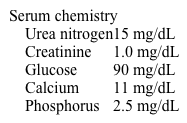 Which of the following is the most likely cause of this patient's current condition?
A)Appendicitis
B)Diverticulitis
C)Glomerulonephritis
D)Ovarian torsion
E)Renal cell carcinoma
F)Renal infarction
G)Ureterolithiasis
Which of the following is the most likely cause of this patient's current condition?A)Appendicitis
B)Diverticulitis
C)Glomerulonephritis
D)Ovarian torsion
E)Renal cell carcinoma
F)Renal infarction
G)Ureterolithiasis
Question
Question
A 25-year-old man is brought to the physician because of fatigue, lethargy, and lower leg swelling for 2 weeks. He also noticed that his urine appeared darker than usual and for the last 2 days he has passed only small amounts of urine. His temperature is 37.5°C (98.6°F), pulse is 88/min, respirations are 15/min, and blood pressure is 154/98 mm. Blood urea nitrogen is 38 mg/dL and serum creatinine is 4.5 mg/dL. The patient undergoes a kidney biopsy and the following microscopic changes are seen after silver staining to highlight the glomerular tuft: 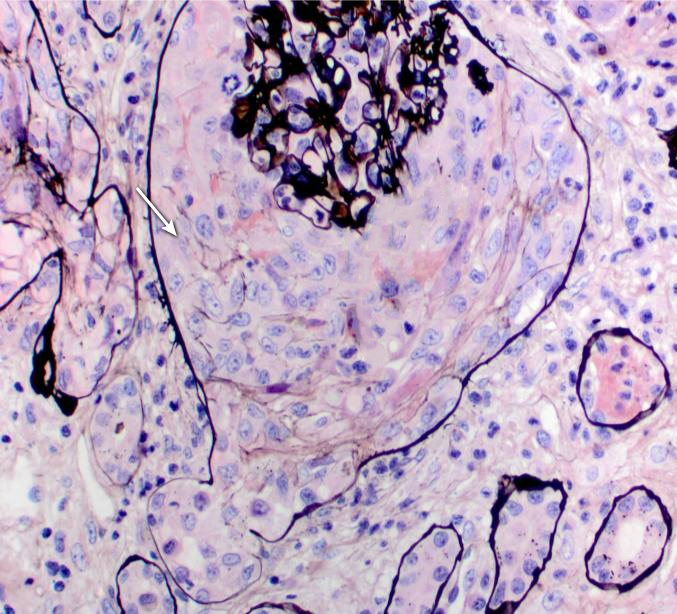 The area marked with an arrow is likely to have abnormal deposition of which of the following substances?
A)Amyloid
B)Fibrin
C)IgE
D)Lipid
E)Myoglobin
The area marked with an arrow is likely to have abnormal deposition of which of the following substances?A)Amyloid
B)Fibrin
C)IgE
D)Lipid
E)Myoglobin
Question
Question
A 28-year-old man comes to the physician because of a 2-day history of intermittent bloody urine. He has not had dysuria or abdominal pain. There has been no change in urine output or urinary frequency. He has also had a runny nose, dry cough, and a sore throat for the past 4 days. He has no history of serious illness and takes no medications. His temperature is 38.1°C (100.6°F), pulse is 70/min, respirations are 14/min, and blood pressure is 140/80 mm Hg. Cardiopulmonary and abdominal examinations show no abnormalities. There is flank tenderness to palpation bilaterally. Urinalysis results are as follows: 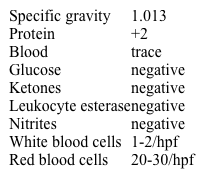 A renal biopsy is performed Which of the following findings is most likely to be seen on microscopic evaluation?
A)Apple-green birefringent mesangial deposits
B)Crescent formation with linear IgG deposits
C)Effacement of podocyte foot processes
D)Granular IgG and C3 deposits
E)Lamellated basement membrane
F)Mesangial deposition of IgA
G)Sclerosis of a portion of some glomeruli
H)Thin basement membrane
A renal biopsy is performed Which of the following findings is most likely to be seen on microscopic evaluation?A)Apple-green birefringent mesangial deposits
B)Crescent formation with linear IgG deposits
C)Effacement of podocyte foot processes
D)Granular IgG and C3 deposits
E)Lamellated basement membrane
F)Mesangial deposition of IgA
G)Sclerosis of a portion of some glomeruli
H)Thin basement membrane
Question
Question
Question
A 61-year-old man comes to the physician because of progressively worsening swelling of his ankles. He says he has felt exhausted lately. Over the past 3 months, he has gained 5 kg (11 lb). He has smoked one pack of cigarettes daily for 30 years. His pulse is 75/min and his blood pressure is 140/90 mm Hg. Examination shows 2+ pitting edema in the lower extremities. Neurologic examination shows diminished two-point discrimination over the fingers and toes. Laboratory studies show a serum creatinine concentration of 1.9 mg/dL. A urine sample is noted to be foamy. A kidney biopsy is performed; light microscopic findings following staining with hematoxylin and eosin are shown in the image below: 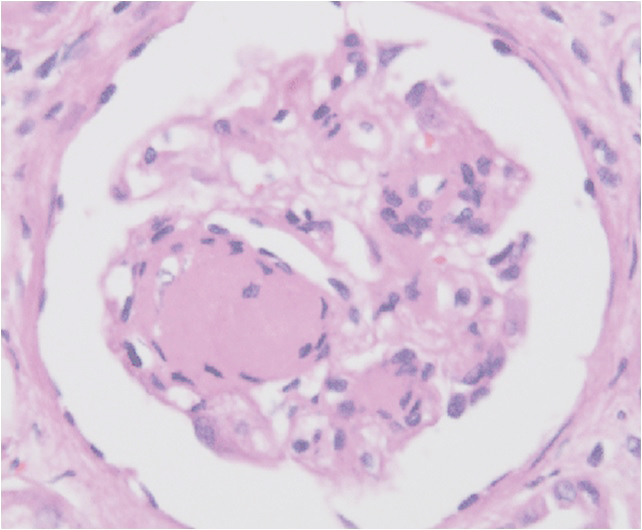 Which of the following is the most likely explanation for this patient's biopsy findings?
A)Bee sting with severe allergic reaction
B)Diabetes mellitus
C)Hepatitis C infection
D)HIV infection
E)Lung carcinoma
F)Recent streptococcal pharyngitis
G)Systemic lupus erythematosus
H)Treatment with procainamide
Which of the following is the most likely explanation for this patient's biopsy findings?A)Bee sting with severe allergic reaction
B)Diabetes mellitus
C)Hepatitis C infection
D)HIV infection
E)Lung carcinoma
F)Recent streptococcal pharyngitis
G)Systemic lupus erythematosus
H)Treatment with procainamide
Question
Question
Question
Question
Question
Question
Question
A 34-year-old woman visits her doctor complaining of frequent urination. She attempted to limit her fluid intake but found it difficult because she became extremely thirsty. The doctor evaluates her kidneys' water-saving function by administering a water restriction test, which reveals excessively dilute urine. Low vasopressin levels have been found in laboratory studies conducted during a period of water deprivation. The doctor diagnoses the patient with central diabetes insipidus and explains that her kidneys are unable to absorb enough water due to faulty hormone production. Which of the following nephron areas is normally water-impermeable regardless of serum vasopressin levels? 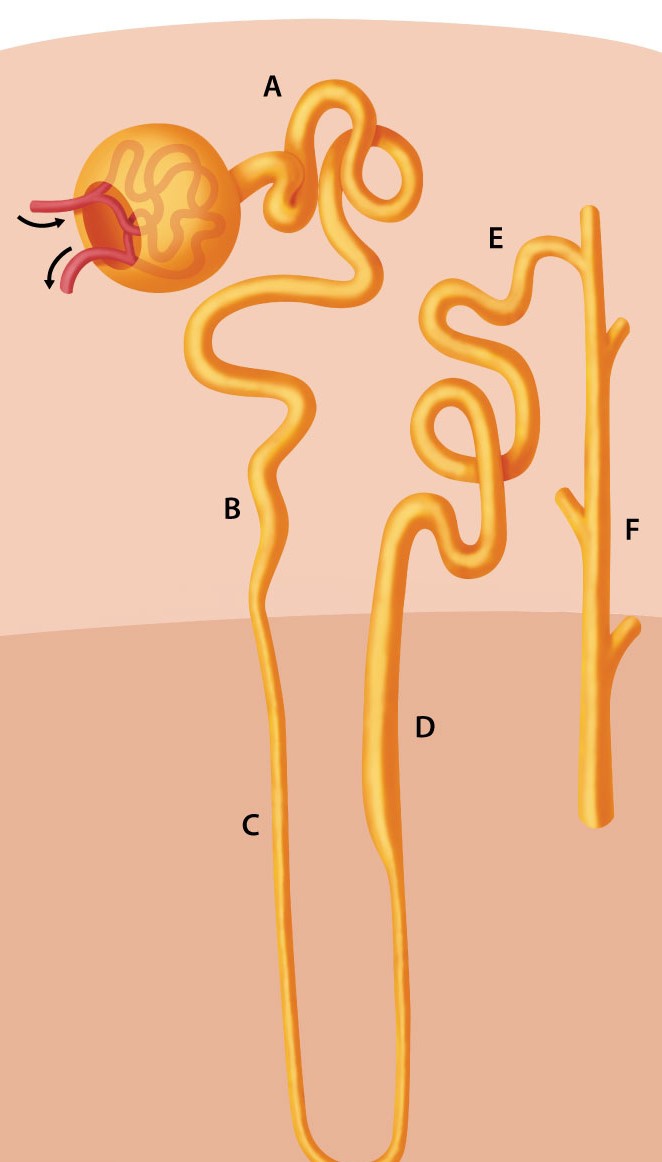
A)A
B)B
C)C
D)D
E)E
F)F
A)A
B)B
C)C
D)D
E)E
F)F
Question
Question
A68-year-old man is brought to the emergency department by because of worsening confusion for the past week. His wife says that he had a nagging cough that seemed to worsen over the past several months and that he began experiencing occasional dizziness earlier this week. He has a history of an ischemic stroke 4 months ago. Current medications are aspirin. He is lethargic and disoriented. His pulse is 78/min, and blood pressure is 135/88 mm Hg. Physical examination shows moist oral mucosa, normal skin turgor, and no peripheral edema. Laboratory results are as follows: 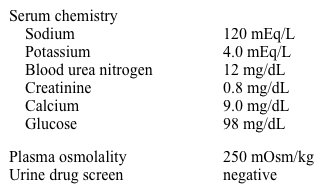 Chest x-ray reveals a mass in the right lung. Which of the following additional findings is most likely to be present in this patient?
A)Bilateral crackles at the lung bases
B)Elevated jugular venous pressure
C)Maximally dilute urine
D)Apparent euvolemia
E)Peripheral edema
Chest x-ray reveals a mass in the right lung. Which of the following additional findings is most likely to be present in this patient?A)Bilateral crackles at the lung bases
B)Elevated jugular venous pressure
C)Maximally dilute urine
D)Apparent euvolemia
E)Peripheral edema
Question
Question
Question
Question
Question
Question
Question
Question
Question
Question
Question
Question
Question
Question
Question
Question
Question
Question
Question
Question
Question
Question
Question
Question
A 45-year-old Caucasian female comes to the office due to progressive dyspnea. She also wears warm gloves indoors because her fingers turn blue when they are cold. She also complains of retrosternal burning and regurgitation, especially when supine. Cardiac examination reveals an accentuated S2 over the upper left sternal border. The abdomen is soft with mild hepatomegaly. Pulmonary function test results are as follows: 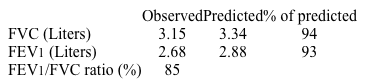 Which of the following is the most likely cause of this patient's dyspnea?
A)Hypoxia-induced vasoconstriction
B)Intimal thickening of pulmonary arterioles
C)Myocardial amyloid deposition
D)Pericardial thickening and fibrosis
E)Pulmonary interstitial fibrosis
F)Right-sided valvular heart disease
Which of the following is the most likely cause of this patient's dyspnea?A)Hypoxia-induced vasoconstriction
B)Intimal thickening of pulmonary arterioles
C)Myocardial amyloid deposition
D)Pericardial thickening and fibrosis
E)Pulmonary interstitial fibrosis
F)Right-sided valvular heart disease
Question
Question
A previously healthy 20-year-old girl is brought to the emergency department by her roommate because of abdominal pain, nausea, and vomiting for 6 hours. Over the past 6 weeks, she has also had increased frequency of urination, and she has been drinking more water than usual. She has lost 6 kg (13 lb) over the same time period despite having a good appetite. Her temperature is 37.8 C (100 F), blood pressure is 96/58 mm Hg, and pulse is 112/min She appears lethargic. Physical examination shows dry mucous membranes and her urine has a strong, fruity odor. Laboratory results are as follows: 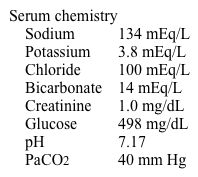 Based on the current laboratory findings, which of the following is most likely occurring in this patient?
A)Adrenal insufficiency
B)Increased renal bicarbonate loss
C)Low plasma renin activity
D)Renal tubular necrosis
E)Respiratory failure
Based on the current laboratory findings, which of the following is most likely occurring in this patient?A)Adrenal insufficiency
B)Increased renal bicarbonate loss
C)Low plasma renin activity
D)Renal tubular necrosis
E)Respiratory failure
Question
Question
Question
Question
Question
Question
Question
Question
Question
A 28-year-old woman is brought to the emergency department by her husband for increasing confusion over the past 12 hours. Her husband reports that she has a history of type 1 diabetes mellitus. She has had polyuria and excessive thirst for one day. She has not been able to refill her home insulin supply over the last 3 days because of insurance issues. Her temperature is 38.9°C (102.0°F), pulse is 94/min, respirations are 24/min, and blood pressure is 115/60 mm Hg . Physical examination shows tachycardia and dry mucous membranes. Laboratory results are as follows: 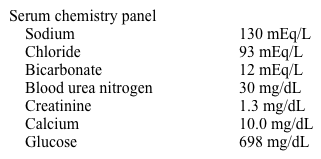 Which of the following electrolyte findings would most likely be seen in this patient?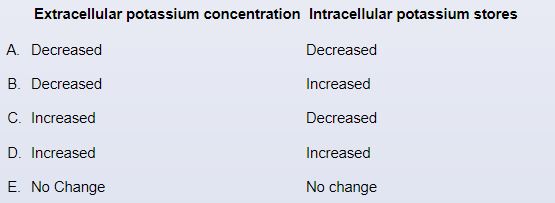
Which of the following electrolyte findings would most likely be seen in this patient? Question
A 60-year-old man comes to the emergency department because of nausea, headache, and generalized fatigue. He has smoked a pack of cigarettes daily for 30 years. He has a 3-month history of cough and weakness. Over the past month, he has had poor appetite and a 5-kg (11-lb) weight loss. Lung examination shows mildly prolonged expiration with end-expiratory wheezes. Laboratory results are as follows: 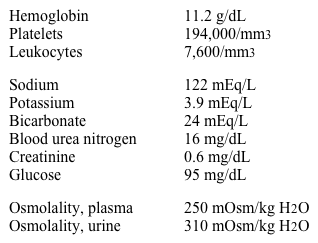 Chest x-ray reveals overinflated lung fields and a 2.5-cm left hilar mass. Biopsy of the mass would most likely show which of the following?
A)Carcinoid tumor
B)Lung adenocarcinoma
C)Lymphoma
D)Mesothelioma
E)Small cell lung cancer
F)Squamous cell lung carcinoma
Chest x-ray reveals overinflated lung fields and a 2.5-cm left hilar mass. Biopsy of the mass would most likely show which of the following?A)Carcinoid tumor
B)Lung adenocarcinoma
C)Lymphoma
D)Mesothelioma
E)Small cell lung cancer
F)Squamous cell lung carcinoma
Question
Question
Question
A 69-year-old man comes to the physician because of a cough for the past 3 months. The cough is mostly dry, but the patient recalls a recent episode in which he coughed up mucus with dark red streaks. He has felt tired for the past few months. Over the past month, he has had poor appetite and a 5-kg (11-lb) weight loss. He also has occasional back pain, which has worsened in recent weeks. He has no recent travel history. He has smoked a pack of cigarettes daily for 30 years. Physical examination shows scattered wheezes bilaterally. Chest CT scan reveals a mass in the right lung. Light microscopy of the mass is shown below: 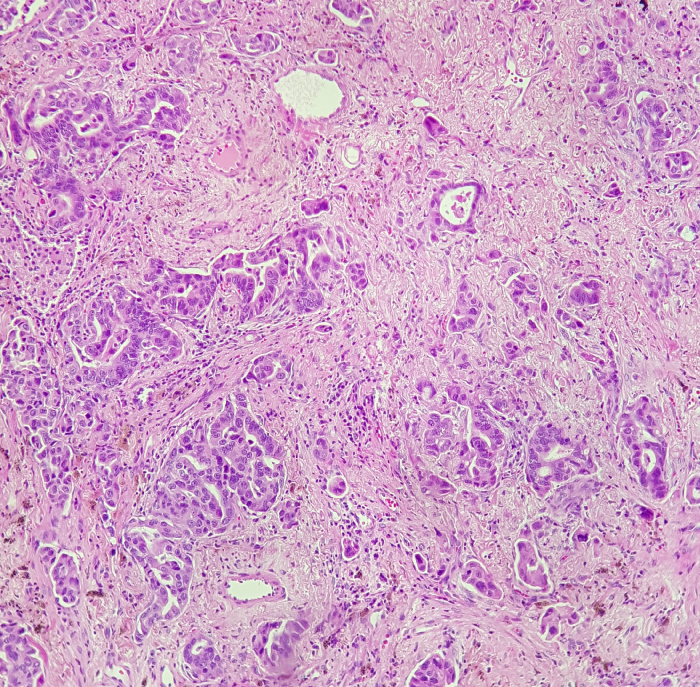 Which of the following is the most likely diagnosis?
A)Adenocarcinoma of the lung
B)Mesothelioma
C)Pulmonary tuberculosis
D)Small cell lung cancer
E)Squamous cell lung cancer
Which of the following is the most likely diagnosis?A)Adenocarcinoma of the lung
B)Mesothelioma
C)Pulmonary tuberculosis
D)Small cell lung cancer
E)Squamous cell lung cancer
Question
Question
Question
Question
Question
Question
Question
Question
Question
Question
A 27-year-old woman comes to the physician because of a 2-month history of increasing shortness of breath and a nonproductive cough. She has been unable to perform her daily activities. She has also had malaise and bilateral ankle pain during this period. Her temperature is 37.8°C (100.0°F), pulse is 100/min, respirations are 24/min, and blood pressure is 112/72 mm Hg. Pulse oximetry on room air shows an oxygen saturation of 94%. Chest x-ray is shown below. 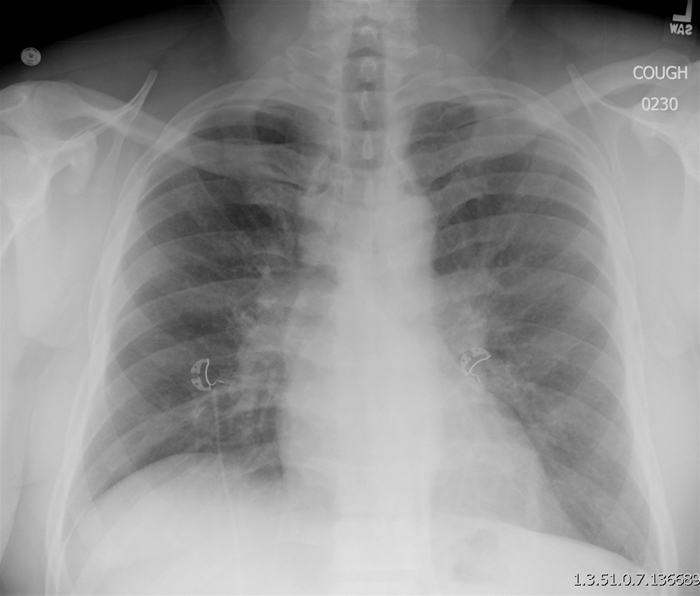 A palpable lymph node in the supraclavicular bed is biopsied and pathology reveals well-formed, noncaseating granulomas. Which of the following is the most likely diagnosis?
A)HIV infection
B)Hodgkin lymphoma
C)Metastatic adenocarcinoma of the lung
D)Metastatic squamous cell carcinoma of the lung
E)Mycobacterium avium complex
F)Mycobacterium tuberculosis
G)Sarcoidosis
A palpable lymph node in the supraclavicular bed is biopsied and pathology reveals well-formed, noncaseating granulomas. Which of the following is the most likely diagnosis?A)HIV infection
B)Hodgkin lymphoma
C)Metastatic adenocarcinoma of the lung
D)Metastatic squamous cell carcinoma of the lung
E)Mycobacterium avium complex
F)Mycobacterium tuberculosis
G)Sarcoidosis
Question
Question
Question
Question
A 43-year-old man comes to the office due to malaise, night sweats, and cough for the past several weeks. He also has chronic constipation with bowel movements once every two to three days. He has not had fevers, night sweats, or weight loss. Pulmonary examination shows normal air exchange with scattered crackles and no wheezes. The patient also has nontender cervical lymphadenopathy. Serum chemistry shows a calcium level of 12.0 mg/dL. Chest x-ray demonstrates scattered nodules and parenchymal infiltrates, as shown in the image below. 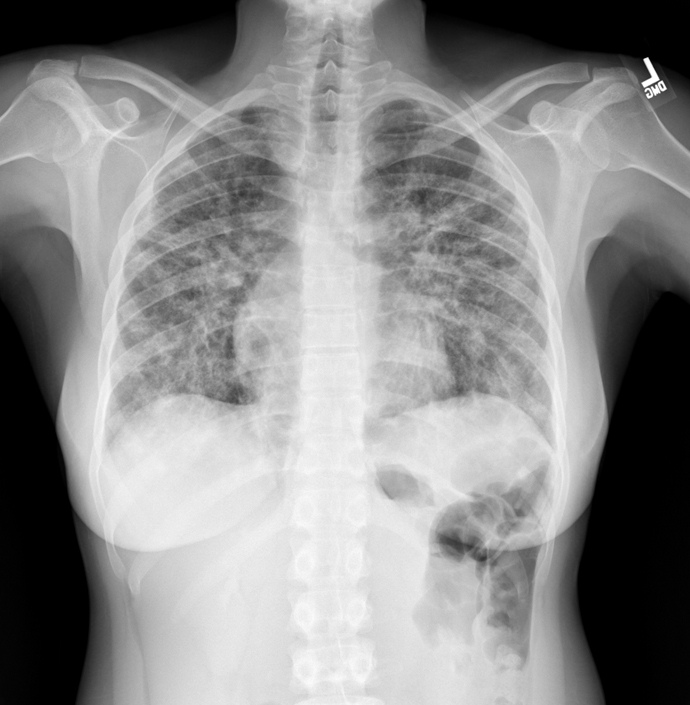 Lymph node biopsy reveals noncaseating granulomas. Which of the following is the most likely cause of the elevated calcium level in this patient?
A)Accelerated bone turnover
B)Activated macrophages
C)Destruction of bone tissue
D)Increased parathyroid hormone secretion
E)Phosphate retention
Lymph node biopsy reveals noncaseating granulomas. Which of the following is the most likely cause of the elevated calcium level in this patient?A)Accelerated bone turnover
B)Activated macrophages
C)Destruction of bone tissue
D)Increased parathyroid hormone secretion
E)Phosphate retention
Question
Question
Question
Question
Question

Unlock Deck
Sign up to unlock the cards in this deck!
Unlock Deck
Unlock Deck
1/817

Play

Full screen (f)
Deck 10: Pathology
1
A 20-year-old woman comes to the office due to dysuria, urgency and frequency. This symptoms started 2 days ago. She denied any fever or chills. She has recurrent episodes of cystitis and one epiosde of acute pyelonephritis over the past eight months. The symptoms tend to occur a few days following sexual intercourse. The patient has no other medical problems and takes no medications. Her temperature is 36.7 C (98 F), blood pressure is 110/70 mm Hg, respirations are 16/min, and pulse is 65/min. Abdominal and genitourinary examinations are normal. Which of the following is the most likely predisposing factor for pyelonephritis in this patient?
A)Frequent voiding
B)Hematogenous bacterial spread
C)Suppression of endogenous flora
D)Urethral colonization
E)Vesicoureteral urine reflux
A)Frequent voiding
B)Hematogenous bacterial spread
C)Suppression of endogenous flora
D)Urethral colonization
E)Vesicoureteral urine reflux
Vesicoureteral urine reflux
2
A 15-year-old girl comes to the office for follow-up. The patient was diagnosed with Wilson disease a year ago, at which time she began penicillamine therapy. Her dysarthria and academic performance have since improved. Vital signs are normal. Laboratory results are as follows: Which of the following is the most likely explanation for this patient's laboratory findings?
A)Liver cirrhosis
B)Medication noncompliance
C)Membranous nephropathy
D)Renal interstitial inflammation
E)Renal tubular injury
Which of the following is the most likely explanation for this patient's laboratory findings?A)Liver cirrhosis
B)Medication noncompliance
C)Membranous nephropathy
D)Renal interstitial inflammation
E)Renal tubular injury
Membranous nephropathy
3
A 28-year-old woman comes to the physician because she has not had a menstrual period for 3 months. Menarche occurred at the age of 12 years and menses have occurred at 45 to 90-day intervals. She is 155 cm (5 ft 1 in) tall and weighs 79 kg (174 lb); BMI is 33 kg/m2. Physical examination shows facial acne and excessive hair growth on the upper lip and chin. Which of the following pathologic findings is most likely to be seen in this patient?
A)Atrophic endometrium
B)Bilateral adrenal atrophy
C)Enlarged ovaries
D)Pituitary adenoma
E)Polycystic kidneys
A)Atrophic endometrium
B)Bilateral adrenal atrophy
C)Enlarged ovaries
D)Pituitary adenoma
E)Polycystic kidneys
Enlarged ovaries
4
A 25-year-old man is brought to the physician because of fatigue, lethargy, and lower leg swelling for 2 weeks. He also noticed that his urine appeared darker than usual and for the last 2 days he has passed only small amounts of urine. His temperature is 37.5°C (98.6°F), pulse is 88/min, respirations are 15/min, and blood pressure is 154/98 mm Hg. Examination shows 2+ pretibial edema bilaterally. A kidney biopsy is performed. Light microscopy reveals cellular proliferation, focal necrosis, and crescent formation of most of the glomeruli. On immunofluorescent microscopy, there are no immunoglobulin or complement deposits. Which of the following additional findings is most likely to be present in this patient?
A)Decreased serum C3 level
B)Decreased serum C4 level
C)Serum antiglomerular basement membrane antibodies
D)Serum antineutrophil cytoplasmic antibodies
E)Serum antiphospholipid antibodies
A)Decreased serum C3 level
B)Decreased serum C4 level
C)Serum antiglomerular basement membrane antibodies
D)Serum antineutrophil cytoplasmic antibodies
E)Serum antiphospholipid antibodies
Unlock Deck
Unlock for access to all 817 flashcards in this deck.
Unlock Deck
k this deck
5
A 70-year-old woman comes to the physician for the evaluation of loss of urine for the last several months. She loses small amounts of urine without warning after coughing or sneezing. The patient has type 2 diabetes mellitus and was recently diagnosed with chronic obstructive pulmonary disease after evaluation for a chronic cough. Her only surgeries were 2 cesarean deliveries in her 20s. BMI is 30 kg/m2. Pelvic examination shows leakage of urine from the urethra during the Valsalva maneuver. Postvoid residual volume and urinalysis are normal. Which of the following is the most likely cause of this patient's clinical presentation?
A)Decreased angle of the urethrovesical junction
B)Fistula formation between the bladder and vagina
C)Increased bladder sphincter sympathetic activity
D)Reduced detrusor parasympathetic activity
E)Weakened pelvic floor muscle support
A)Decreased angle of the urethrovesical junction
B)Fistula formation between the bladder and vagina
C)Increased bladder sphincter sympathetic activity
D)Reduced detrusor parasympathetic activity
E)Weakened pelvic floor muscle support
Unlock Deck
Unlock for access to all 817 flashcards in this deck.
Unlock Deck
k this deck
6
A 32-year-old woman comes to the emergency department with sudden-onset left flank pain and nausea. The pain radiates to the left groin and she is unable to find a comfortable position on the examination table. The pain is intermittent and waxes and wanes in severity. Temperature is 36.7 C (98 F), blood pressure is 140/90 mm Hg, and pulse is 92/min. She has mild tenderness to percussion over the left flank. Bowel sounds are hypoactive. Laboratory results are as follows: Which of the following is the most likely cause of this patient's current condition?
A)Appendicitis
B)Diverticulitis
C)Glomerulonephritis
D)Ovarian torsion
E)Renal cell carcinoma
F)Renal infarction
G)Ureterolithiasis
Which of the following is the most likely cause of this patient's current condition?A)Appendicitis
B)Diverticulitis
C)Glomerulonephritis
D)Ovarian torsion
E)Renal cell carcinoma
F)Renal infarction
G)Ureterolithiasis
Unlock Deck
Unlock for access to all 817 flashcards in this deck.
Unlock Deck
k this deck
7
A 22-year-old woman with polycystic ovarian syndrome comes to the emergency department because of 2 hours history of right lower abdominal pain that began suddenly while she was running. Her last menstrual period was 2 weeks ago. Abdominal examination shows tenderness in the right lower quadrant with guarding. Urine pregnancy test is negative. Pelvic ultrasound shows a large simple cyst on the right ovary. Right ovarian artery flow is detectable on Doppler, but there is no flow detected in the right ovarian vein. Which of the following is the most likely diagnosis?
A)Acute appendicitis
B)Ectopic pregnancy
C)Endometriosis
D)Ovarian torsion
E)Tuboovarian abscess
A)Acute appendicitis
B)Ectopic pregnancy
C)Endometriosis
D)Ovarian torsion
E)Tuboovarian abscess
Unlock Deck
Unlock for access to all 817 flashcards in this deck.
Unlock Deck
k this deck
8
A 25-year-old man is brought to the physician because of fatigue, lethargy, and lower leg swelling for 2 weeks. He also noticed that his urine appeared darker than usual and for the last 2 days he has passed only small amounts of urine. His temperature is 37.5°C (98.6°F), pulse is 88/min, respirations are 15/min, and blood pressure is 154/98 mm. Blood urea nitrogen is 38 mg/dL and serum creatinine is 4.5 mg/dL. The patient undergoes a kidney biopsy and the following microscopic changes are seen after silver staining to highlight the glomerular tuft: The area marked with an arrow is likely to have abnormal deposition of which of the following substances?
A)Amyloid
B)Fibrin
C)IgE
D)Lipid
E)Myoglobin
The area marked with an arrow is likely to have abnormal deposition of which of the following substances?A)Amyloid
B)Fibrin
C)IgE
D)Lipid
E)Myoglobin
Unlock Deck
Unlock for access to all 817 flashcards in this deck.
Unlock Deck
k this deck
9
A 42-year-old woman comes to the physician with a 6-month history of breast tenderness and menstrual irregularities. She also reports hot flashes and unintentional weight loss for the past few months. Physical examination shows no abnormalities. An ultrasound of the pelvis shows a right adnexal mass. TSH is low and a urine pregnancy test is negative. Pelvic ultrasound reveals a 6-cm right ovarian mass. The mass is surgically removed, and gross examination of the specimen shows a cystic lesion with an oily substance. Which of the following cell types is the most likely source of the neoplasm in this patient?
A)Ectopic endometrial cells
B)Germ cells
C)Granulosa cells
D)Ovarian fibroblasts
E)Theca cells
A)Ectopic endometrial cells
B)Germ cells
C)Granulosa cells
D)Ovarian fibroblasts
E)Theca cells
Unlock Deck
Unlock for access to all 817 flashcards in this deck.
Unlock Deck
k this deck
10
A 28-year-old man comes to the physician because of a 2-day history of intermittent bloody urine. He has not had dysuria or abdominal pain. There has been no change in urine output or urinary frequency. He has also had a runny nose, dry cough, and a sore throat for the past 4 days. He has no history of serious illness and takes no medications. His temperature is 38.1°C (100.6°F), pulse is 70/min, respirations are 14/min, and blood pressure is 140/80 mm Hg. Cardiopulmonary and abdominal examinations show no abnormalities. There is flank tenderness to palpation bilaterally. Urinalysis results are as follows: A renal biopsy is performed Which of the following findings is most likely to be seen on microscopic evaluation?
A)Apple-green birefringent mesangial deposits
B)Crescent formation with linear IgG deposits
C)Effacement of podocyte foot processes
D)Granular IgG and C3 deposits
E)Lamellated basement membrane
F)Mesangial deposition of IgA
G)Sclerosis of a portion of some glomeruli
H)Thin basement membrane
A renal biopsy is performed Which of the following findings is most likely to be seen on microscopic evaluation?A)Apple-green birefringent mesangial deposits
B)Crescent formation with linear IgG deposits
C)Effacement of podocyte foot processes
D)Granular IgG and C3 deposits
E)Lamellated basement membrane
F)Mesangial deposition of IgA
G)Sclerosis of a portion of some glomeruli
H)Thin basement membrane
Unlock Deck
Unlock for access to all 817 flashcards in this deck.
Unlock Deck
k this deck
11
A 65-year-old man presented to the emergency department complaining of severe tearing chest pain radiating to the back, unrelieved by analgesics. It started a few hours ago, with nausea, vomiting, and excessive sweating. The patient is a known case of essential hypertension since he was 25 years old. He is not compliant with his drugs. He has COPD with 35-pack-year smoking history. He has chronic kidney disease. On examination, BP 200/100, Heart rate 120 pulse/min, O2 sat 98%. ECG showed signs of left ventricular hypertrophy, with no ischemic changes. He has normal chest expansion bilaterally, with normal tactile fremitus and normal breath sounds. What is the most likely diagnosis? A- Myocardial Infarction
B-Diffuse Esophageal Spasm
C-Tension Pneumothorax
D-Aortic Dissection
B-Diffuse Esophageal Spasm
C-Tension Pneumothorax
D-Aortic Dissection
Unlock Deck
Unlock for access to all 817 flashcards in this deck.
Unlock Deck
k this deck
12
A 64-year-old woman gravida 2, para 2, comes to the physician because of fatigue and an increase in abdominal girth despite a 5-kg (11.0-lb) weight loss over the past 6 months. She takes no medications and has received all recommended vaccinations. BMI is 30kg/m2. Abdominal examination shows shifting dullness. There is tenderness to palpation of the left lower quadrant but no guarding or rebound. Bimanual palpation shows a small uterus and a left adnexal mass. Her blood work shows a marked elevation of CA-125. Which of the following most likely would have reduced the risk of this patient's condition?
A)Consistent condom use
B)Long-term antioxidant supplementation
C)Nulliparity
D)Use of oral contraceptives
E)Vaccination
A)Consistent condom use
B)Long-term antioxidant supplementation
C)Nulliparity
D)Use of oral contraceptives
E)Vaccination
Unlock Deck
Unlock for access to all 817 flashcards in this deck.
Unlock Deck
k this deck
13
A 61-year-old man comes to the physician because of progressively worsening swelling of his ankles. He says he has felt exhausted lately. Over the past 3 months, he has gained 5 kg (11 lb). He has smoked one pack of cigarettes daily for 30 years. His pulse is 75/min and his blood pressure is 140/90 mm Hg. Examination shows 2+ pitting edema in the lower extremities. Neurologic examination shows diminished two-point discrimination over the fingers and toes. Laboratory studies show a serum creatinine concentration of 1.9 mg/dL. A urine sample is noted to be foamy. A kidney biopsy is performed; light microscopic findings following staining with hematoxylin and eosin are shown in the image below: Which of the following is the most likely explanation for this patient's biopsy findings?
A)Bee sting with severe allergic reaction
B)Diabetes mellitus
C)Hepatitis C infection
D)HIV infection
E)Lung carcinoma
F)Recent streptococcal pharyngitis
G)Systemic lupus erythematosus
H)Treatment with procainamide
Which of the following is the most likely explanation for this patient's biopsy findings?A)Bee sting with severe allergic reaction
B)Diabetes mellitus
C)Hepatitis C infection
D)HIV infection
E)Lung carcinoma
F)Recent streptococcal pharyngitis
G)Systemic lupus erythematosus
H)Treatment with procainamide
Unlock Deck
Unlock for access to all 817 flashcards in this deck.
Unlock Deck
k this deck
14
The patient was suspected to have an aortic dissection, a transesophageal echocardiogram was done. It showed aortic dissection involving the descending aorta only. What is the origin of the dissected flap? A-Renal Arteries
B-Near the left subclavian artery
C-Thyrocervical Trunk
D-Brachicephalic Artery
B-Near the left subclavian artery
C-Thyrocervical Trunk
D-Brachicephalic Artery
Unlock Deck
Unlock for access to all 817 flashcards in this deck.
Unlock Deck
k this deck
15
A Female newborn is born at a gestation age of 32 weeks for a 25-year-old multigravida woman. The newborn is experiencing severe respiratory distress. The respiratory distress responds to treatment, the patient regained respiratory function at two weeks of age. Ophthalmoscopy later shows neovascularization in the retina, extending into the vitreous. Ophthalmoscopic findings are related to which of the following?
A)Maternal terbutaline treatment
B)Maternal corticosteroid therapy
C)Neonatal antibiotic treatment
D)Neonatal oxygen supplementation
E)Neonatal surfactant supplementation
A)Maternal terbutaline treatment
B)Maternal corticosteroid therapy
C)Neonatal antibiotic treatment
D)Neonatal oxygen supplementation
E)Neonatal surfactant supplementation
Unlock Deck
Unlock for access to all 817 flashcards in this deck.
Unlock Deck
k this deck
16
A 65-year-old woman with chronic obstructive pulmonary disease comes to the office for a follow-up appointment. The patient reports increasing shortness of breath that is not relieved by her inhalers. Her other medical conditions include osteoarthritis. She is a former smoker with a 45-pack-year history. Blood pressure is 120/70 mm Hg, pulse is 75/min, and respirations are 22/min. Oxygen saturation on room air is 91% at rest. On physical examination, jugular venous pressure is elevated. There is increased intensity of the pulmonic component of S2. Breath sounds are decreased bilaterally with scattered wheezes but no crackles. There is 2+ lower extremity edema. Which of the following hemodynamic parameters is most likely to be increased in this patient?
A)Left ventricular preload
B)Left ventricular stroke volume
C)Pulmonary arterial compliance
D)Pulmonary capillary wedge pressure
E)Right ventricular afterload
A)Left ventricular preload
B)Left ventricular stroke volume
C)Pulmonary arterial compliance
D)Pulmonary capillary wedge pressure
E)Right ventricular afterload
Unlock Deck
Unlock for access to all 817 flashcards in this deck.
Unlock Deck
k this deck
17
A 67-year-old man presented to the emergency with right-sided weakness. The patient has a history of hypertension. The patient was diagnosed with atrial fibrillation 3 years ago, but he did not seek medical advice, nor did he take any medication. On physical examination, BP 165/100 mm Hg and pulse are 150/min and irregular. On physical examination, he has right-sided hemiparesis, with a right-sided facial droop. Brain CT scan of the patient confirmed the diagnosis of ischemic stroke, with no evidence of hemorrhage. The stroke is believed to be caused by an embolic event that originated in?
A-Left Ventricular Cavity
B-Pulmonary Veins
C-Aortic Valve
D-Left Atrial Appendage
E-Right Atrial Appendage
A-Left Ventricular Cavity
B-Pulmonary Veins
C-Aortic Valve
D-Left Atrial Appendage
E-Right Atrial Appendage
Unlock Deck
Unlock for access to all 817 flashcards in this deck.
Unlock Deck
k this deck
18
A 55-year-old man with a seizure disorder is brought to the emergency department by a friend because of progressive confusion over the past two weeks. He is unable to provide any history. His vital signs are within normal limits. He appears lethargic and is only oriented to person. Oral mucosa is moist. There is no jugular venous distention. A basic metabolic panel shows a serum sodium concentration of 115 mEq/L but is otherwise normal. Which of the following is the most likely cause of this patient's hyponatremia?
A)Defective central thirst regulation
B)Impaired renal concentrating ability
C)Inadequate dietary sodium intake
D)Increased antidiuretic hormone secretion
E)Stress-induced excessive cortisol levels
A)Defective central thirst regulation
B)Impaired renal concentrating ability
C)Inadequate dietary sodium intake
D)Increased antidiuretic hormone secretion
E)Stress-induced excessive cortisol levels
Unlock Deck
Unlock for access to all 817 flashcards in this deck.
Unlock Deck
k this deck
19
Question: A 4-month-old girl is brought to the routine check-up by her father. It was found that she has left-sided absent red pupillary reflex. Her father was found to have retinal neoplasm in his right eye, and it was enucleated. This patient is at the greatest risk of developing which of the following neoplasms?
A)Acute lymphoblastic leukemia
B)Neuroblastoma
C)Ewing sarcoma
D)Osteosarcoma
E)Medulloblastoma
A)Acute lymphoblastic leukemia
B)Neuroblastoma
C)Ewing sarcoma
D)Osteosarcoma
E)Medulloblastoma
Unlock Deck
Unlock for access to all 817 flashcards in this deck.
Unlock Deck
k this deck
20
A 34-year-old woman visits her doctor complaining of frequent urination. She attempted to limit her fluid intake but found it difficult because she became extremely thirsty. The doctor evaluates her kidneys' water-saving function by administering a water restriction test, which reveals excessively dilute urine. Low vasopressin levels have been found in laboratory studies conducted during a period of water deprivation. The doctor diagnoses the patient with central diabetes insipidus and explains that her kidneys are unable to absorb enough water due to faulty hormone production. Which of the following nephron areas is normally water-impermeable regardless of serum vasopressin levels?
A)A
B)B
C)C
D)D
E)E
F)F
A)A
B)B
C)C
D)D
E)E
F)F
Unlock Deck
Unlock for access to all 817 flashcards in this deck.
Unlock Deck
k this deck
21
A 65-year-old patient presents to the emergency department complaining of palpitations of one-day duration. His medical history includes hypertension, his wife complains of his noncompliance with antihypertensive drugs. The patient had consumed multiple wine cups the previous night. On examination, Bp 160/90 mm Hg and pulse are 140/min and irregular. ECG showed irregularly irregular pulse with absent P waves and narrow QRS. What is the most likely diagnosis?
A-Atrial Flutter
B-Ventricular Tachycardia
C-Atrial Fibrillation
D-Ventricular Fibrillation
A-Atrial Flutter
B-Ventricular Tachycardia
C-Atrial Fibrillation
D-Ventricular Fibrillation
Unlock Deck
Unlock for access to all 817 flashcards in this deck.
Unlock Deck
k this deck
22
A68-year-old man is brought to the emergency department by because of worsening confusion for the past week. His wife says that he had a nagging cough that seemed to worsen over the past several months and that he began experiencing occasional dizziness earlier this week. He has a history of an ischemic stroke 4 months ago. Current medications are aspirin. He is lethargic and disoriented. His pulse is 78/min, and blood pressure is 135/88 mm Hg. Physical examination shows moist oral mucosa, normal skin turgor, and no peripheral edema. Laboratory results are as follows: Chest x-ray reveals a mass in the right lung. Which of the following additional findings is most likely to be present in this patient?
A)Bilateral crackles at the lung bases
B)Elevated jugular venous pressure
C)Maximally dilute urine
D)Apparent euvolemia
E)Peripheral edema
Chest x-ray reveals a mass in the right lung. Which of the following additional findings is most likely to be present in this patient?A)Bilateral crackles at the lung bases
B)Elevated jugular venous pressure
C)Maximally dilute urine
D)Apparent euvolemia
E)Peripheral edema
Unlock Deck
Unlock for access to all 817 flashcards in this deck.
Unlock Deck
k this deck
23
Question: A 26-year-old woman is evaluated due to lower abdominal pain and bloody diarrhea. The patient experiences low-grade fever and fatigue. On examination, the patient is found to have left lower quadrant tenderness. Radiological imaging shows thickening of the distal colon and the rectum. One of the laboratory tests is done by placing the patient's anticoagulated blood in an upright thin tube without any intervention. The red blood cells of the patient clumped at a fast rate of 48 mm/hr. Serum levels of which of the following explain the patient laboratory test findings?
A)Bradykinin
B)Erythropoietin
C)Interleukin (IL)-6
D)Leukotriene B4
E)Platelet-activating factor
F)Thromboxane A2
A)Bradykinin
B)Erythropoietin
C)Interleukin (IL)-6
D)Leukotriene B4
E)Platelet-activating factor
F)Thromboxane A2
Unlock Deck
Unlock for access to all 817 flashcards in this deck.
Unlock Deck
k this deck
24
A 27-year-old woman comes to the office due to exertional dyspnea over the past 3 months. The patient initially had shortness of breath during exercise but now becomes dyspneic with routine activities. She has had no cough, fever, or leg swelling but has noticed increased fatigue over this time. The patient does not use tobacco, alcohol, or illicit drugs. Vital signs are within normal limits. Physical examination reveals a loud pulmonic component of S2 but is otherwise unremarkable. Chest x-ray shows clear lungs. Which of the following is the most likely cause of this patient's findings?
A)Hypertensive heart disease
B)Hypertrophic cardiomyopathy
C)Left bundle branch block
D)Pulmonary hypertension
E)Pulmonic valve stenosis
A)Hypertensive heart disease
B)Hypertrophic cardiomyopathy
C)Left bundle branch block
D)Pulmonary hypertension
E)Pulmonic valve stenosis
Unlock Deck
Unlock for access to all 817 flashcards in this deck.
Unlock Deck
k this deck
25
The abnormal rhythm in this patinet most likely originated in?
A-Crista Terminalis
B-Left Atrial Appendage
C-Aortic Sinus
D-Near the pulmonary veins
E-The pulmonary Trunk
A-Crista Terminalis
B-Left Atrial Appendage
C-Aortic Sinus
D-Near the pulmonary veins
E-The pulmonary Trunk
Unlock Deck
Unlock for access to all 817 flashcards in this deck.
Unlock Deck
k this deck
26
A 6-year-old girl is brought to the office by her mother due to a concern about her rapid growth. She is the tallest student in her class. Physical examination reveals Tanner Stage 3 breast development and coarse pubic hair. The child's height is in the 96th percentile. You explain to her mother that, although this girl is very tall now, she will ultimately be shorter than average if she does not get treatment. Which of the following is the physiologic explanation for the information you provided?
A)Estrogen effect on the long bone diaphysis
B)Estrogen effect on the long bone epiphysis
C)Estrogen effect on the long bone epiphyseal plate
D)Somatomedin C effect on the long bone diaphysis
E)Somatomedin C effect on the long bone epiphyseal plate
A)Estrogen effect on the long bone diaphysis
B)Estrogen effect on the long bone epiphysis
C)Estrogen effect on the long bone epiphyseal plate
D)Somatomedin C effect on the long bone diaphysis
E)Somatomedin C effect on the long bone epiphyseal plate
Unlock Deck
Unlock for access to all 817 flashcards in this deck.
Unlock Deck
k this deck
27
Question: A 49-year-old woman is brought for the evaluation of a neck mass. The mass is attached to the surrounding tissues and feels stony hard on palpation. The patient is prescribed a chemotherapy combination based on the initial evaluation. A few months later, the mass size decreased significantly. Additionally, the biopsy shows shrunken eosinophilic cells within the tumor. The noticed cellular changes are caused by which of the cellular components?
A)Hemosiderin
B)Fas (CD95)
C)Cytochrome c
D)Succinate dehydrogenase
E)Superoxide dismutase
F)Lipoxygenase
A)Hemosiderin
B)Fas (CD95)
C)Cytochrome c
D)Succinate dehydrogenase
E)Superoxide dismutase
F)Lipoxygenase
Unlock Deck
Unlock for access to all 817 flashcards in this deck.
Unlock Deck
k this deck
28
A 65-year-old man presented to the emergency department complaining of severe tearing chest pain radiating to the back, unrelieved by analgesics. It started a few hours ago, with nausea, vomiting, and excessive sweating. The patient is a known case of essential hypertension since he was 25 years old. He is not compliant with his drugs. He has COPD with 35-pack-year smoking history. He has chronic kidney disease. On examination, BP 200/100, Heart rate 120 pulse/min, O2 sat 98%. ECG showed signs of left ventricular hypertrophy, with no ischemic changes. He has normal chest expansion bilaterally, with normal tactile fremitus and normal breath sounds. Transesophageal echocardigram was done and aortic dissection involving ascedning and descending aorta was detected . What is the origin of the intimal flap?
A)Renal Arteries
B)Near the left subclavian artery
C)Thyrocervical Trunk
D)Brachicephalic Artery
A)Renal Arteries
B)Near the left subclavian artery
C)Thyrocervical Trunk
D)Brachicephalic Artery
Unlock Deck
Unlock for access to all 817 flashcards in this deck.
Unlock Deck
k this deck
29
A 26-year-old woman presented to the office complaining of a lump in her left breast. Her maternal aunt died from ovarian cancer at age 36 and her mother died from breast cancer at age 32. The patient is diagnosed with breast cancer following appropriate therapy. The gene affected is most likely responsible for which of the following?
A)Angiogenesis
B)Apoptosis suppression
C)DNA repair
D)Intercellular adhesion
E)Signal transduction
A)Angiogenesis
B)Apoptosis suppression
C)DNA repair
D)Intercellular adhesion
E)Signal transduction
Unlock Deck
Unlock for access to all 817 flashcards in this deck.
Unlock Deck
k this deck
30
A 44-year-old woman comes to the emergency department because of a sudden midsternal chest pain, shortness of breath, and cough with bloody sputum for the past 3 hours. Medical history is significant for hypertension, hyperlipidemia, and chronic kidney disease. he patient takes multiple medications and has no drug allergies. She returned from a trip to Europe 2 days ago. Blood pressure is 115/75 mm Hg and pulse is 105/min. The lungs are clear on auscultation. ECG shows sinus tachycardia. Ventilation/perfusion scanning is ordered. Which of the following findings would help confirm the suspected diagnosis in this patient?
A)Absence of ventilation and perfusion abnormalities
B)An area showing both ventilation and perfusion defects
C)A perfusion defect without an associated ventilation defect
D)A ventilation defect without an associated perfusion defect
E)Several small areas of matched perfusion and ventilation defects
A)Absence of ventilation and perfusion abnormalities
B)An area showing both ventilation and perfusion defects
C)A perfusion defect without an associated ventilation defect
D)A ventilation defect without an associated perfusion defect
E)Several small areas of matched perfusion and ventilation defects
Unlock Deck
Unlock for access to all 817 flashcards in this deck.
Unlock Deck
k this deck
31
A 61-year-old man comes to the physician because of several episodes of dark urine over the past 2 weeks. He does not have dysuria or flank pain. He works in a factory that produces dyes. He takes no medications. He has smoked one pack of cigarettes daily for 29 years and drinks one alcoholic beverage daily. Vital signs are within normal limits. Physical examination shows no abnormalities. His urine is pink; urinalysis shows 80 RBC/hpf but no WBCs. Which of the following is most likely to be discovered on further workup of this patient's symptoms?
A)Bladder cancer
B)Glomerulonephritis
C)Interstitial cystitis
D)Polycystic kidney disease
E)Prostate cancer
F)Staghorn calculus
A)Bladder cancer
B)Glomerulonephritis
C)Interstitial cystitis
D)Polycystic kidney disease
E)Prostate cancer
F)Staghorn calculus
Unlock Deck
Unlock for access to all 817 flashcards in this deck.
Unlock Deck
k this deck
32
A 65-year-old woman is brought to the hospital due to progressive dyspnea and dry cough for 2 weeks. The patient was diagnosed with right breast cancer and completed radiation therapy 6 weeks ago. Temperature is 37.3 C (99.1 F), blood pressure is 115/70 mm Hg, pulse is 92/min, and respirations are 20/min. Oxygen saturation is 94% on room air. Examination reveals inspiratory crackles over the right lung anteriorly; the lungs are otherwise clear to auscultation. Chest radiograph shows ground-glass opacities in the right lung where radiation was delivered. Laboratory studies reveal no significant changes. Acute radiation-induced lung injury is suspected. Histopathologic examination would most likely reveal formation of which of the following?
A)Alveolar hyaline membranes
B)Hemosiderin-laden macrophages
C)Necrotizing vasculitis
D)Neutrophilic abscess
A)Alveolar hyaline membranes
B)Hemosiderin-laden macrophages
C)Necrotizing vasculitis
D)Neutrophilic abscess
Unlock Deck
Unlock for access to all 817 flashcards in this deck.
Unlock Deck
k this deck
33
A 35-year-old man comes to the physician because of a 4-month history of intermittent headaches. They have been getting progressively worse and no longer respond to ibuprofen. He also reports vision problems while driving. The patient has no prior medical conditions and takes no medications. He does not use tobacco, alcohol, or illicit drugs. Physical examination reveals deficits in the bilateral temporal visual fields. Extraocular movements are bilaterally intact, and the remainder of the neurological examination shows no abnormalities. Which of the following additional findings is most likely to be present in this patient?
A)Decreased libido
B)Enlarged jaw bone
C)Excessive urination
D)Heat intolerance
E)Skin hyperpigmentation
F)Skin thinning
A)Decreased libido
B)Enlarged jaw bone
C)Excessive urination
D)Heat intolerance
E)Skin hyperpigmentation
F)Skin thinning
Unlock Deck
Unlock for access to all 817 flashcards in this deck.
Unlock Deck
k this deck
34
A 72-year-old man comes to the physician because of urinary frequency and urgency for 2 weeks. He is especially concerned because last week he also noticed blood in his urine for the first time. He has smoked one pack of cigarettes daily for 44 years. Vital signs are within normal limits. Physical examination shows a nondistended, nontender abdomen; there is no costovertebral angle tenderness. Digital rectal examination shows a mildly enlarged, nontender prostate without palpable masses. Urinalysis shows 50 RBCs/hpf. Cystoscopy is planned for visualization and biopsy of suspected urinary tract cancer. Which of the following features would be most suggestive of a poor prognosis?
A)High-grade intraepithelial lesion
B)Involvement of the muscularis propria layer
C)Location at the anterior bladder wall
D)Papillary morphology
E)Tumor size >2 cm
A)High-grade intraepithelial lesion
B)Involvement of the muscularis propria layer
C)Location at the anterior bladder wall
D)Papillary morphology
E)Tumor size >2 cm
Unlock Deck
Unlock for access to all 817 flashcards in this deck.
Unlock Deck
k this deck
35
A 66-year-old man comes to the office because of a 2-day history of intermittent red urine. He has not had flank pain, fever, dysuria, or increased urinary frequency. He has no history of recent trauma. Medical history is remarkable for hypertension and atrial fibrillation. His medications include lisinopril and warfarin. He has smoked one pack of cigarettes daily for 44 years and drinks 2 shots of vodka every day. He works as an operations manager for a large beverage company and frequently travels to Mexico. Abdominal examination shows no abnormalities. Digital rectal examination shows a smooth, normal-sized prostate without any irregularities. Urinalysis is positive for >50 red blood cells/hpf; there are no casts or dysmorphic blood cells. Urine cytology is positive for malignant cells. Renal ultrasonogram reveals normal kidneys. Which of the following is a major risk factor for this patient's current condition?
A)Alcohol use
B)Occupation
C)Testosterone therapy
D)Tobacco smoking
E)Travel history
A)Alcohol use
B)Occupation
C)Testosterone therapy
D)Tobacco smoking
E)Travel history
Unlock Deck
Unlock for access to all 817 flashcards in this deck.
Unlock Deck
k this deck
36
A 59-year-old man comes to the physician because of a 3-month history of frequent urination. He has to urinate every 1-2 hours during the day and wakes up at least 2-3 times at night to urinate. His pulse is 72/min, and blood pressure is 158/105 mm Hg. Prostate-specific antigen concentration is higher than normal range level and urinalysis shows no abnormalities. Digital rectal examination reveals an indurated prostate with no palpable nodules. The remainder of the examination is normal. Prostate biopsy is planned. Which of the following is the best way to obtain a diagnosis in this patient?
A)Cystoscopy guided; multiple random biopsies of the prostate
B)Cystoscopy guided; single biopsy of the central portion of the prostate
C)Transperineal approach; fine-needle aspiration of the prostate
D)Transrectal route; multiple random biopsies of the prostate
E)Transrectal route; single biopsy from the center of the gland
A)Cystoscopy guided; multiple random biopsies of the prostate
B)Cystoscopy guided; single biopsy of the central portion of the prostate
C)Transperineal approach; fine-needle aspiration of the prostate
D)Transrectal route; multiple random biopsies of the prostate
E)Transrectal route; single biopsy from the center of the gland
Unlock Deck
Unlock for access to all 817 flashcards in this deck.
Unlock Deck
k this deck
37
A 27-year-old man comes to the physician because of a 4-month history of recurrent episodes of headaches, palpitations, and sweating. He does not know his biological parents because he was adopted. His pulse is 103/min and blood pressure is 160/105 mm Hg. Physical examination shows multiple soft, yellow papules on the tip of the tongue. There is a 2-cm, firm thyroid nodule. The patient is also found to be positive for a germline RET mutation. A total thyroidectomy is planned. Prior to the surgery, additional testing should be performed to evaluate for an abnormality in which of the following organs?
A)Adrenal cortex
B)Adrenal medulla
C)Anterior pituitary
D)Pancreatic islets
E)Thymus
A)Adrenal cortex
B)Adrenal medulla
C)Anterior pituitary
D)Pancreatic islets
E)Thymus
Unlock Deck
Unlock for access to all 817 flashcards in this deck.
Unlock Deck
k this deck
38
A 68-year-old man comes to the emergency department due to lower abdominal pain and nausea. His symptoms started the prior evening, when he began to feel abdominal fullness and discomfort. This progressed to pain over the lower abdomen and constant nausea without vomiting. The patient last urinated >24 hours ago. He has had difficulty initiating urination and a feeling of incomplete voiding for the last year but avoided seeing a physician. Temperature is 36.7 C (98 F), blood pressure is 150/90 mm Hg, and pulse is 95/min. Physical examination shows suprapubic tenderness and fullness without guarding or rebound. Rectal examination reveals an enlarged, smooth prostate. Serum creatinine is 2.6 mg/dL and blood urea nitrogen is 22 mg/dL. A urinary catheter is placed, with immediate collection of 800 mL of urine and relief of the patient's symptoms. The following day, serum creatinine is improved. This patient's condition is associated with increased risk for which of the following?
A)Bladder transitional cell carcinoma
B)Glomerulonephritis
C)Priapism
D)Prostatic adenocarcinoma
E)Urinary tract infection
A)Bladder transitional cell carcinoma
B)Glomerulonephritis
C)Priapism
D)Prostatic adenocarcinoma
E)Urinary tract infection
Unlock Deck
Unlock for access to all 817 flashcards in this deck.
Unlock Deck
k this deck
39
A 67-year-old man comes to the physician because of worsening lower back pain for 6 weeks. He reports that the pain is most intense with movement and that it sometimes occurs at night. Over the past 3 months, he has noticed a weakened urinary stream. He has not seen any blood in his urine. His only daily medication is ibuprofen, which does not provide adequate pain relief. Examination shows no spinal deformities. Digital rectal examination reveals a firm prostatic nodule. The patient undergoes transrectal prostate biopsy, and microscopy reveals sheets of tumor cells infiltrating the stroma with no glandular differentiation; the tumor cells have large vesicular nuclei and prominent nucleoli. Imaging shows enlargement of several iliac lymph nodes. Which of the following is the best description of this patient's tumor?
A)Higher-Gleason score and higher stage
B)Higher-Gleason score and lower-stage
C)Lower-Gleason score and higher-stage
D)Lower-Gleason score and lower-stage
A)Higher-Gleason score and higher stage
B)Higher-Gleason score and lower-stage
C)Lower-Gleason score and higher-stage
D)Lower-Gleason score and lower-stage
Unlock Deck
Unlock for access to all 817 flashcards in this deck.
Unlock Deck
k this deck
40
A 31-year-old man comes to the physician because of worsening abdominal pain, an inability to concentrate at work, and a general lack of motivation over the past several months. He has a history of spontaneous passage of two kidney stones. He was treated for a prolactinoma 5 years ago . This patient should be screened for which of the following tumors?
A)Adrenal
B)Bone
C)Breast
D)Colonic
E)Pancreatic
A)Adrenal
B)Bone
C)Breast
D)Colonic
E)Pancreatic
Unlock Deck
Unlock for access to all 817 flashcards in this deck.
Unlock Deck
k this deck
41
A 25-year-old man comes to the physician because of right-sided painless scrotal swelling that he noticed yesterday while taking a shower. He is currently sexually active with two female partners and uses condoms inconsistently. He has smoked one pack of cigarettes daily for the last 5 years. He is 170 cm (5 ft 7 in) tall and weighs 70 kg (154 lb); BMI is 24 kg/m2. He appears healthy and well-nourished. His temperature is 37.0°C (98.6°F), pulse is 72/min, and blood pressure is 125/75 mm Hg. On examination, the thyroid is mildly enlarged. Testicular examination reveals an enlarged, nontender right testicle. Laboratory testing shows elevated serum thyroxine and triiodothyronine levels. Scrotal ultrasonography demonstrates a hypoechoic mass within the right testicle. Elevated levels of which of the following substances would most likely explain this patient's symptoms?
A)Alpha-fetoprotein
B)Follicle-stimulating hormone
C)Human chorionic gonadotropin
D)Lactate dehydrogenase
E)Placenta-like alkaline phosphatase
A)Alpha-fetoprotein
B)Follicle-stimulating hormone
C)Human chorionic gonadotropin
D)Lactate dehydrogenase
E)Placenta-like alkaline phosphatase
Unlock Deck
Unlock for access to all 817 flashcards in this deck.
Unlock Deck
k this deck
42
A 35-year-old man comes to the physician because of a painless lump on his neck. Physical examination shows a firm, irregular swelling on the right side of the neck. Ultrasonography of the thyroid gland shows a 2-cm nodule with irregular margins and microcalcifications in the right thyroid lobe. There are multiple 4- to 8-mm soft papules on the lips and tongue. The arm span exceeds his height and the patient has long fingers. Serum calcitonin levels are elevated. Which of the following is most likely to develop in this patient?
A)Episodic headache
B)Hypercalcemia
C)Hypoglycemic episodes
D)Peripheral vision loss
E)Recurrent peptic ulcers
A)Episodic headache
B)Hypercalcemia
C)Hypoglycemic episodes
D)Peripheral vision loss
E)Recurrent peptic ulcers
Unlock Deck
Unlock for access to all 817 flashcards in this deck.
Unlock Deck
k this deck
43
A 28-year-old man comes to the physician because of a mass in his right scrotum. He has had mild lower abdominal discomfort for the past 3 weeks. Vital signs are within normal limits. There is no inguinal lymphadenopathy. There is a firm nontender nodule over the right testicle. When a light is held behind the scrotum, it does not shine through. When the patient is asked to cough, the nodule does not cause a bulge. The abdomen is soft and nontender. Which of the following is the most likely diagnosis?
A)Epididymitis
B)Hydrocele
C)Syphilitic gumma
D)Testicular cancer
E)Testicular hematoma
F)Varicocele
A)Epididymitis
B)Hydrocele
C)Syphilitic gumma
D)Testicular cancer
E)Testicular hematoma
F)Varicocele
Unlock Deck
Unlock for access to all 817 flashcards in this deck.
Unlock Deck
k this deck
44
A 34-year-old man comes to the physician because of a left testicular swelling. He has no pain. He appears healthy. His vital signs are within normal limits. Examination shows an enlarged, nontender left testicle. A scrotal ultrasound reveals a suspicious, partially necrotic mass. Serum lactate dehydrogenase and alpha-fetoprotein levels are markedly elevated. The patient undergoes a left radical inguinal orchiectomy. Which of the following is the most likely histologic diagnosis?
A)Leydig cell tumor
B)Nonseminomatous germ cell tumor
C)Sertoli cell tumor
D)Teratoma
E)Testicular lymphoma
A)Leydig cell tumor
B)Nonseminomatous germ cell tumor
C)Sertoli cell tumor
D)Teratoma
E)Testicular lymphoma
Unlock Deck
Unlock for access to all 817 flashcards in this deck.
Unlock Deck
k this deck
45
A 62-year-old woman comes to the physician because of a 3-month history of fatigue and weakness. Her blood pressure is 152/92 mm Hg. Examination shows lower extremity edema. The patient's fasting plasma glucose level is 160 mg/dL, although she has not been diagnosed previously with diabetes mellitus. Serum triglyceride level is elevated, and the HDL level is low. Which of the following additional findings would be most suggestive of increased insulin resistance in this patient?
A)Decreased hepatic glucose production
B)Elevated LDL level
C)High urine ketone concentration
D)Increased glycogen stores in skeletal muscles
E)Increased waist circumference
A)Decreased hepatic glucose production
B)Elevated LDL level
C)High urine ketone concentration
D)Increased glycogen stores in skeletal muscles
E)Increased waist circumference
Unlock Deck
Unlock for access to all 817 flashcards in this deck.
Unlock Deck
k this deck
46
A 45-year-old Caucasian female comes to the office due to progressive dyspnea. She also wears warm gloves indoors because her fingers turn blue when they are cold. She also complains of retrosternal burning and regurgitation, especially when supine. Cardiac examination reveals an accentuated S2 over the upper left sternal border. The abdomen is soft with mild hepatomegaly. Pulmonary function test results are as follows: Which of the following is the most likely cause of this patient's dyspnea?
A)Hypoxia-induced vasoconstriction
B)Intimal thickening of pulmonary arterioles
C)Myocardial amyloid deposition
D)Pericardial thickening and fibrosis
E)Pulmonary interstitial fibrosis
F)Right-sided valvular heart disease
Which of the following is the most likely cause of this patient's dyspnea?A)Hypoxia-induced vasoconstriction
B)Intimal thickening of pulmonary arterioles
C)Myocardial amyloid deposition
D)Pericardial thickening and fibrosis
E)Pulmonary interstitial fibrosis
F)Right-sided valvular heart disease
Unlock Deck
Unlock for access to all 817 flashcards in this deck.
Unlock Deck
k this deck
47
A mother of a 10-year-old girl comes to the office because she is concerned about a new genetic test result. Her daughter has a missense mutation in the VHL gene. Her examination is unremarkable. Periodic surveillance with which of the following is most likely to be of benefit in this patient?
A)Bone marrow evaluation
B)Chest radiography
C)Colonoscopy
D)Echocardiography
E)Plasma metanephrines
A)Bone marrow evaluation
B)Chest radiography
C)Colonoscopy
D)Echocardiography
E)Plasma metanephrines
Unlock Deck
Unlock for access to all 817 flashcards in this deck.
Unlock Deck
k this deck
48
A previously healthy 20-year-old girl is brought to the emergency department by her roommate because of abdominal pain, nausea, and vomiting for 6 hours. Over the past 6 weeks, she has also had increased frequency of urination, and she has been drinking more water than usual. She has lost 6 kg (13 lb) over the same time period despite having a good appetite. Her temperature is 37.8 C (100 F), blood pressure is 96/58 mm Hg, and pulse is 112/min She appears lethargic. Physical examination shows dry mucous membranes and her urine has a strong, fruity odor. Laboratory results are as follows: Based on the current laboratory findings, which of the following is most likely occurring in this patient?
A)Adrenal insufficiency
B)Increased renal bicarbonate loss
C)Low plasma renin activity
D)Renal tubular necrosis
E)Respiratory failure
Based on the current laboratory findings, which of the following is most likely occurring in this patient?A)Adrenal insufficiency
B)Increased renal bicarbonate loss
C)Low plasma renin activity
D)Renal tubular necrosis
E)Respiratory failure
Unlock Deck
Unlock for access to all 817 flashcards in this deck.
Unlock Deck
k this deck
49
A 67-year-old man comes to the physician because of a 6-month history of increasing shortness of breath on exertion, dry cough, and fatigue. He has not had any fevers or night sweats. He worked in a glass manufacturing factory for 15 years and retired 2 years ago. Pulmonary examination shows diffuse crackles bilaterally. An x-ray of the chest shows well-defined calcification of the rims of hilar lymph nodes and scattered nodules in both upper lung fields. Bronchoscopy with transbronchial biopsy of a calcified node is performed, and polarized microscopy shows birefringent particles surrounded by dense collagen fibers. This patient most likely has a history of exposure to which of the following substances?
A)Asbestos
B)Beryllium
C)Coal dust
D)Organic dust
E)Silica
A)Asbestos
B)Beryllium
C)Coal dust
D)Organic dust
E)Silica
Unlock Deck
Unlock for access to all 817 flashcards in this deck.
Unlock Deck
k this deck
50
A 5-year-old boy is brought by his mother because of a diffculty walking. He has multiple respiratory infections. Cultured cells from this patient demonstrate a high rate of radiation-induced genetic mutation. This patient is most likely to experience which of the following?
A)Neurofibrillary tangles in neocortex
B)Cerebellar atrophy
C)Loss of neurons in the substantia nigra
D)Atrophy of caudate nucleus
E)Posterior column degeneration
F)Presence of Lewy bodies
A)Neurofibrillary tangles in neocortex
B)Cerebellar atrophy
C)Loss of neurons in the substantia nigra
D)Atrophy of caudate nucleus
E)Posterior column degeneration
F)Presence of Lewy bodies
Unlock Deck
Unlock for access to all 817 flashcards in this deck.
Unlock Deck
k this deck
51
A 4800 g (10.6 lb) male newborn is delivered at term to a 35-year-old woman, gravida 1, para 1. The pregnancy was complicated by gestational diabetes treated with insulin. However, glycemic control remained suboptimal due to maternal noncompliance with insulin treatment and poor adherence to dietary recommendations. His blood glucose concentration was found to be 30 mg/dL. Examination of the neonate is unremarkable. Which of the following is the most likely primary mechanism responsible for this patient's low blood glucose concentration?
A)Decreased glycogen stores
B)Hyperfunctioning pancreas
C)Impaired hepatic glycogenolysis
D)Increased release of cortisol
E)Insulin resistance
A)Decreased glycogen stores
B)Hyperfunctioning pancreas
C)Impaired hepatic glycogenolysis
D)Increased release of cortisol
E)Insulin resistance
Unlock Deck
Unlock for access to all 817 flashcards in this deck.
Unlock Deck
k this deck
52
A 4-month-old African-American infant is brought to the pediatrician for a well-baby check-up. He was born at term through a normal vaginal delivery and has been well since. His 4-year old brother has sickle-cell disease. He is exclusively breastfed and receives vitamin D supplements. His immunizations are up-to-date. He appears healthy. His length is at the 70th percentile and weight is at the 75th percentile. Cardiopulmonary examination is normal. The patient's mother smokes a pack of cigarettes daily. Which of the following conditions is the infant at highest risk for developing from exposure to cigarette smoke?
A)Eczema
B)Food allergies
C)Obesity
D)Sudden infant death syndrome
E)Urinary tract infection
A)Eczema
B)Food allergies
C)Obesity
D)Sudden infant death syndrome
E)Urinary tract infection
Unlock Deck
Unlock for access to all 817 flashcards in this deck.
Unlock Deck
k this deck
53
A 45-year-old man comes to the clinic due to a 2-month history of increased left arm clumsiness and weakness. He has recently developed problems with his gait. The patient's symptoms have interfered with daily activities such as bathing and dressing. He has had no recent injury, headaches, or bowel/bladder symptoms. On physical examination, there is reduced muscle strength in the left upper extremity. Further evaluation with brain MRI reveals a lesion involving the corticospinal tract. Which of the following additional signs is most likely to been seen in this patient?
A)Hyperactive deep tendon reflexes
B)Muscle atrophy
C)Muscle fasciculation
D)Muscle hypotonia
E)Resting tremor
F)Sensory loss in the affected area
A)Hyperactive deep tendon reflexes
B)Muscle atrophy
C)Muscle fasciculation
D)Muscle hypotonia
E)Resting tremor
F)Sensory loss in the affected area
Unlock Deck
Unlock for access to all 817 flashcards in this deck.
Unlock Deck
k this deck
54
A 48-year-old woman is brought to the emergency department by her husband found her confused before meal time. She has a history of type 1 diabetes mellitus. She was preparing to eat her meal and took a preprandial insulin injection but her baby was starting crying and skept her meal. Her husband found her passed out in her bedroom and administered glucagon immediately. The patient recovered consciousness within 15 minutes. Metabolic changes in which of the following organs are most likely responsible for this patient's recovery?
A)Adipose tissue
B)Adrenals
C)Kidney
D)Liver
E)Pancreas
F)Skeletal muscles
G)Small intestine
A)Adipose tissue
B)Adrenals
C)Kidney
D)Liver
E)Pancreas
F)Skeletal muscles
G)Small intestine
Unlock Deck
Unlock for access to all 817 flashcards in this deck.
Unlock Deck
k this deck
55
A 4-month-old African-American infant is brought to the pediatrician for a well-baby check-up. He was born at term through a normal vaginal delivery and has been well since. His 4-year old brother has sickle-cell disease. He is exclusively breastfed and receives vitamin D supplements. His immunizations are up-to-date. He appears healthy. His length is at the 70th percentile and weight is at the 75th percentile. Cardiopulmonary examination is normal. The patient's mother smokes a pack of cigarettes daily. Which of the following conditions is the infant at highest risk for developing from exposure to cigarette smoke?
A)Eczema
B)Food allergies
C)Obesity
D)Sudden infant death syndrome
E)Urinary tract infection
A)Eczema
B)Food allergies
C)Obesity
D)Sudden infant death syndrome
E)Urinary tract infection
Unlock Deck
Unlock for access to all 817 flashcards in this deck.
Unlock Deck
k this deck
56
A 54-year-old man comes to the physician for the evaluation of difficulty swallowing solid food and liquids for 1 month. During the past 5 months, he has also had increased weakness of his hands and legs. He sails regularly and is unable to hold the ropes as tightly as before. Ten years ago, he was involved in a motor vehicle collision. Examination shows atrophy of the tongue. Muscle strength is decreased in the right upper and lower extremities. There is muscle stiffness in the left lower extremity. Deep tendon reflexes are 1+ in the right upper and lower extremities, 3+ in the left upper extremity, and 4+ in the left lower extremity. Plantar reflex shows an extensor response on the left foot. Sensation to light touch, pinprick, and vibration is intact. Which of the following is the most likely diagnosis?
A)Amyotrophic lateral sclerosis
B)Poliomyelitis
C)Rabies
D)Huntington disease
E)Friedreich ataxia
F)Vitamin B12 deficiency
A)Amyotrophic lateral sclerosis
B)Poliomyelitis
C)Rabies
D)Huntington disease
E)Friedreich ataxia
F)Vitamin B12 deficiency
Unlock Deck
Unlock for access to all 817 flashcards in this deck.
Unlock Deck
k this deck
57
A 28-year-old woman is brought to the emergency department by her husband for increasing confusion over the past 12 hours. Her husband reports that she has a history of type 1 diabetes mellitus. She has had polyuria and excessive thirst for one day. She has not been able to refill her home insulin supply over the last 3 days because of insurance issues. Her temperature is 38.9°C (102.0°F), pulse is 94/min, respirations are 24/min, and blood pressure is 115/60 mm Hg . Physical examination shows tachycardia and dry mucous membranes. Laboratory results are as follows: Which of the following electrolyte findings would most likely be seen in this patient?
Which of the following electrolyte findings would most likely be seen in this patient? Unlock Deck
Unlock for access to all 817 flashcards in this deck.
Unlock Deck
k this deck
58
A 60-year-old man comes to the emergency department because of nausea, headache, and generalized fatigue. He has smoked a pack of cigarettes daily for 30 years. He has a 3-month history of cough and weakness. Over the past month, he has had poor appetite and a 5-kg (11-lb) weight loss. Lung examination shows mildly prolonged expiration with end-expiratory wheezes. Laboratory results are as follows: Chest x-ray reveals overinflated lung fields and a 2.5-cm left hilar mass. Biopsy of the mass would most likely show which of the following?
A)Carcinoid tumor
B)Lung adenocarcinoma
C)Lymphoma
D)Mesothelioma
E)Small cell lung cancer
F)Squamous cell lung carcinoma
Chest x-ray reveals overinflated lung fields and a 2.5-cm left hilar mass. Biopsy of the mass would most likely show which of the following?A)Carcinoid tumor
B)Lung adenocarcinoma
C)Lymphoma
D)Mesothelioma
E)Small cell lung cancer
F)Squamous cell lung carcinoma
Unlock Deck
Unlock for access to all 817 flashcards in this deck.
Unlock Deck
k this deck
59
A 55-year-old man comes to the physician because of progressive weakness of his arms over the past 8 months. His temperature is 37.1°C (98.8°F), pulse is 88/min, and blood pressure is 118/70 mm Hg. Examination shows dysarthria. There is mild atrophy and twitching of the tongue. Muscle strength is decreased in all extremities. Muscle tone is decreased in the right lower extremity and increased in the other extremities. Deep tendon reflexes are absent in the right lower extremity and 4+ in the other extremities. Plantar reflex shows an extensor response on the left. Over the course of his illness, this patient will most likely develop which of the following?
A)Decreased left ventricular compliance
B)Decreased lung vital capacity
C)Degeneration of the cardiac conduction system
D)Inability to feel sensations below the neck
E)Refractory generalized tonic-clonic seizures
A)Decreased left ventricular compliance
B)Decreased lung vital capacity
C)Degeneration of the cardiac conduction system
D)Inability to feel sensations below the neck
E)Refractory generalized tonic-clonic seizures
Unlock Deck
Unlock for access to all 817 flashcards in this deck.
Unlock Deck
k this deck
60
A 21-year-old woman comes to the physician because of a 6-month history of fatigue and increased thirst. She has no history of serious medical illness and takes no medications. She states" I've been really thirsty and drinking lots of water lately too, and it's causing me to use the bathroom frequently" She is sexually active and has 1 lifetime partner. The patient's father was diagnosed with colon cancer at age 64. Which of the following studies would be the best next step to establish the diagnosis in this patient?
A)Colonoscopy
B)Hemoglobin A1c
C)HIV testing
D)Serum TSH level
E)Urinalysis
F)Urine drug
A)Colonoscopy
B)Hemoglobin A1c
C)HIV testing
D)Serum TSH level
E)Urinalysis
F)Urine drug
Unlock Deck
Unlock for access to all 817 flashcards in this deck.
Unlock Deck
k this deck
61
A 69-year-old man comes to the physician because of a cough for the past 3 months. The cough is mostly dry, but the patient recalls a recent episode in which he coughed up mucus with dark red streaks. He has felt tired for the past few months. Over the past month, he has had poor appetite and a 5-kg (11-lb) weight loss. He also has occasional back pain, which has worsened in recent weeks. He has no recent travel history. He has smoked a pack of cigarettes daily for 30 years. Physical examination shows scattered wheezes bilaterally. Chest CT scan reveals a mass in the right lung. Light microscopy of the mass is shown below: Which of the following is the most likely diagnosis?
A)Adenocarcinoma of the lung
B)Mesothelioma
C)Pulmonary tuberculosis
D)Small cell lung cancer
E)Squamous cell lung cancer
Which of the following is the most likely diagnosis?A)Adenocarcinoma of the lung
B)Mesothelioma
C)Pulmonary tuberculosis
D)Small cell lung cancer
E)Squamous cell lung cancer
Unlock Deck
Unlock for access to all 817 flashcards in this deck.
Unlock Deck
k this deck
62
A 54-year-old man comes to the physician because of progressive weakness in his upper extremities over the past 7 months. He initially noticed difficulty writing but now has difficulty performing his activities of daily living. He currently lives with his son. He has no personal or family history of serious illness and takes no medications. Vital signs are within normal limits. There is mild atrophy and twitching of the tongue. A diagnosis of amyotrophic lateral sclerosis is made and treatment with riluzole is initiated. If an autopsy is made to this pathient after death, it would most likely reveal which of the following additional findings?
A)Degeneration of dorsal spinal roots
B)Diaphragmatic atrophy
C)Diffuse brain atrophy
D)Inflammatory infiltrates in skeletal muscles
E)Plaques and gliosis in periventricular white matter
A)Degeneration of dorsal spinal roots
B)Diaphragmatic atrophy
C)Diffuse brain atrophy
D)Inflammatory infiltrates in skeletal muscles
E)Plaques and gliosis in periventricular white matter
Unlock Deck
Unlock for access to all 817 flashcards in this deck.
Unlock Deck
k this deck
63
A 4800 g (10.6 lb) male newborn is delivered at term to a 35-year-old woman, gravida 1, para 1. Significant lateral neck traction is required during delivery. Apgar scores are 9 and 9 at 1 and 5 minutes, respectively. He is found irritable and confused in the newborn nursery. The infant has not yet breastfed as his mother is still recovering from surgery. His serum glucose is 21 mg/dL. . Which of the following factors is the most likely cause of this neonate's hypoglycemia?
A)Beta cell hyperplasia
B)Glycogen storage disease
C)Hypothyroidism
D)Increased insulin-like growth factor 2 level
E)Placental transfer of insulin
A)Beta cell hyperplasia
B)Glycogen storage disease
C)Hypothyroidism
D)Increased insulin-like growth factor 2 level
E)Placental transfer of insulin
Unlock Deck
Unlock for access to all 817 flashcards in this deck.
Unlock Deck
k this deck
64
A 72-year-old woman comes to the office due to a persistent cough over the last 2 months that is occasionally associated with scant, white sputum. She has also lost 4.5 kg (10 lb) since the onset of her symptoms. The patient is an ex-smoker with a 25-pack-year history. . Examination shows an enlarged right supraclavicular lymph node. Imaging reveals a large mediastinal mass causing tracheal deviation. The enlarged node is biopsied, and microscopy demonstrates clusters of small, ovoid cells with scant cytoplasm and a high mitotic count. Immunohistochemical staining is positive for chromogranin. This patient most likely has which of the following conditions?
A)Adenocarcinoma
B)Hodgkin lymphoma
C)Papillary thyroid carcinoma
D)Small cell cancer
E)Squamous cell cancer
A)Adenocarcinoma
B)Hodgkin lymphoma
C)Papillary thyroid carcinoma
D)Small cell cancer
E)Squamous cell cancer
Unlock Deck
Unlock for access to all 817 flashcards in this deck.
Unlock Deck
k this deck
65
A 62-year-old man is brought to the emergency department after his wife found him unresponsive 1 hour ago. He had fallen from a flight of stairs the previous evening. He has hypertension and coronary artery disease. Current medications include aspirin, enalapril, metoprolol, and atorvastatin. On arrival, he is unconscious. His temperature is 37.3°C (99.1°F), pulse is 89/min, and blood pressure is 150/92 mm Hg. CT scan of the head without contrast demonstrates an acute hemorrhage in the left temporal lobe with compression of the anterior medial temporal lobe against the free margin of the tentorium cerebelli. Which of the following cranial nerves is most likely to be compromised in this patient?
A)Abducens
B)Facial
C)Oculomotor
D)Optic
E)Trigeminal
F)Trochlear
A)Abducens
B)Facial
C)Oculomotor
D)Optic
E)Trigeminal
F)Trochlear
Unlock Deck
Unlock for access to all 817 flashcards in this deck.
Unlock Deck
k this deck
66
A 65-year-old man comes to the office due to a persistent dry cough for 6 months. During this time period, he has also had fatigue and a 4.5-kg (10-lb) weight loss. The patient has no history of serious illness and does not take any medications. He has smoked one pack of cigarettes daily for 35 years. Physical examination reveals decreased breath sounds and dullness to percussion at the left lung base. Imaging studies show an irregular mass in the lower lobe of the left lung and a left pleural effusion. A diagnostic thoracocentesis is performed and the aspirated fluid is sent for cytological evaluation. If a malignancy is diagnosed, it is most likely to be which of the following types?
A)Adenocarcinoma
B)Bronchial carcinoid
C)Mesothelioma
D)Small cell carcinoma
E)Squamous cell carcinoma
A)Adenocarcinoma
B)Bronchial carcinoid
C)Mesothelioma
D)Small cell carcinoma
E)Squamous cell carcinoma
Unlock Deck
Unlock for access to all 817 flashcards in this deck.
Unlock Deck
k this deck
67
A 5-day-old infant is examined due to decreased arousal for the last day. The patient was delivered prematurely at 31-weeks of gestational age. On examination, he has bulging fontanelle. The nurse witnessed several episodes of seizures. Brain imagines shows hemorrhage in the lateral ventricle. Which of the following structures is the source of the bleeding?
A)Bridging cortical veins
B)Germinal matrix
C)Meningeal arteries
D)Sagittal sinus
E)Vessels of the circle of Willis
A)Bridging cortical veins
B)Germinal matrix
C)Meningeal arteries
D)Sagittal sinus
E)Vessels of the circle of Willis
Unlock Deck
Unlock for access to all 817 flashcards in this deck.
Unlock Deck
k this deck
68
A 51-year-old woman comes to the physician because of fatigue and progressive pain and stiffness in her hands for the past 3 months. She used to play tennis but stopped 1 month ago because of difficulties holding the racket and her skin becoming "very sensitive to sunlight." Her last menstrual period was 1 year ago. She has diabetes mellitus controlled with insulin. She does not smoke or drink alcohol. Vital signs are within normal limits. Skin examination shows increased pigmentation over the knuckles and face. The liver is palpable 3-4 cm below the right costal margin. Which of the following is most likely contributing to the development of the patient's symptoms?
A)Aortoiliac atherosclerosis
B)Autoimmune adrenalitis
C)Ectopic ACTH production
D)Fibrosis of the seminiferous tubules
E)Iron deposition in the pituitary gland
A)Aortoiliac atherosclerosis
B)Autoimmune adrenalitis
C)Ectopic ACTH production
D)Fibrosis of the seminiferous tubules
E)Iron deposition in the pituitary gland
Unlock Deck
Unlock for access to all 817 flashcards in this deck.
Unlock Deck
k this deck
69
A 65-year-old man is brought to the emergency department due to sudden loss of sensation in the left side of the body. The patient is knowns to have hypertension and diabetes mellitus. He has been smoking two packs of cigarettes for the last 20 years. Physical examinations show decreased touch, temperature, and vibratory sensation in the left side of the body and the face. The motor examination is normal. This patient is most likely having a stroke in which of the following structures?
A)Base of the pons
B)Caudate nucleus
C)Frontal cortex
D)Posterior limb of the internal capsule
E)Ventral posterior thalamus
A)Base of the pons
B)Caudate nucleus
C)Frontal cortex
D)Posterior limb of the internal capsule
E)Ventral posterior thalamus
Unlock Deck
Unlock for access to all 817 flashcards in this deck.
Unlock Deck
k this deck
70
A 20-day-old newborn is brought to the physician because of poor feeding and lethargy for one week. The child was delivered at term at home and has not yet been evaluated by a physician. He is at the 90th percentile for head circumference, 50th percentile for length, and 60th percentile for weight. Vital signs are within normal limits. Serum TSH above the normal range and serum thyroxine (T4) below the normal range for his age. Examination shows scleral icterus and an enlarged tongue. Which of the following is the most likely cause of these findings?
A)Central hypothyroidism
B)Generalized thyroid hormone resistance
C)Reduced thyroid-binding globulin
D)Thyroid dysgenesis
E)TSH receptor-stimulating antibodies
A)Central hypothyroidism
B)Generalized thyroid hormone resistance
C)Reduced thyroid-binding globulin
D)Thyroid dysgenesis
E)TSH receptor-stimulating antibodies
Unlock Deck
Unlock for access to all 817 flashcards in this deck.
Unlock Deck
k this deck
71
A 27-year-old woman comes to the physician because of a 2-month history of increasing shortness of breath and a nonproductive cough. She has been unable to perform her daily activities. She has also had malaise and bilateral ankle pain during this period. Her temperature is 37.8°C (100.0°F), pulse is 100/min, respirations are 24/min, and blood pressure is 112/72 mm Hg. Pulse oximetry on room air shows an oxygen saturation of 94%. Chest x-ray is shown below. A palpable lymph node in the supraclavicular bed is biopsied and pathology reveals well-formed, noncaseating granulomas. Which of the following is the most likely diagnosis?
A)HIV infection
B)Hodgkin lymphoma
C)Metastatic adenocarcinoma of the lung
D)Metastatic squamous cell carcinoma of the lung
E)Mycobacterium avium complex
F)Mycobacterium tuberculosis
G)Sarcoidosis
A palpable lymph node in the supraclavicular bed is biopsied and pathology reveals well-formed, noncaseating granulomas. Which of the following is the most likely diagnosis?A)HIV infection
B)Hodgkin lymphoma
C)Metastatic adenocarcinoma of the lung
D)Metastatic squamous cell carcinoma of the lung
E)Mycobacterium avium complex
F)Mycobacterium tuberculosis
G)Sarcoidosis
Unlock Deck
Unlock for access to all 817 flashcards in this deck.
Unlock Deck
k this deck
72
A 10-old boy is brought to the physician for a health examination. He is at the 60th percentile for length and weight. Vital signs are within normal limits. The abdomen is soft and nontender. The external genitalia appear normal. Examination shows a single palpable testicle in the right hemiscrotum. The scrotum is nontender and not enlarged. There is a palpable mass in the left inguinal canal. Biopsy of the mass shows marked fibrotic changes with prominent Leydig cells and hypoplastic Sertoli cells. The patient's parents are advised that the mass should be removed. Which of the following is the most likely explanation for the need for surgery in this patient?
A)Maintain adequate function of the contralateral organ
B)Preserve virilization
C)Prevent recurrent infections
D)Reduce the risk of future infertility
E)Reduce the risk of malignancy
A)Maintain adequate function of the contralateral organ
B)Preserve virilization
C)Prevent recurrent infections
D)Reduce the risk of future infertility
E)Reduce the risk of malignancy
Unlock Deck
Unlock for access to all 817 flashcards in this deck.
Unlock Deck
k this deck
73
A 35-year-old woman was brought to the emergency department after a severe motor vehicle collision. The patient is complaining of severe headaches and neck pain. She is not complaining of disturbed vision, dizziness, sensory or motor changes, or slurred speech. Imaging shows left transverse foramina fracture at the level of C2. During transportation, the patient suddenly developed left-sided facial tingling, hoarseness, and dizziness. . Temperature is 36.7 C (98.1 F), blood pressure is 160/90 mm Hg, the pulse is 82/min, and respirations are 13/min. Physical examination shows left-sided ptosis and miosis with nystagmus. The pain and temperature sensation is lost on the right side of the body and the left side of the face. The patient is ataxic, with an abnormal finger-to-nose test. This patient most likely has dissection in which of the following arteries?
A)Basilar
B)Common carotid
C)Internal carotid
D)Middle cerebral
E)Posterior cerebral
F)Vertebral
A)Basilar
B)Common carotid
C)Internal carotid
D)Middle cerebral
E)Posterior cerebral
F)Vertebral
Unlock Deck
Unlock for access to all 817 flashcards in this deck.
Unlock Deck
k this deck
74
A 34-year-old woman comes to the physician because of a 3-month history of fatigue and a 4.5-kg (10-lb) weight loss despite eating more than usual. Her pulse is 115/min and blood pressure is 140/60 mm Hg. She delivered a healthy baby boy 8 months ago and has not felt the same since. She has no prior medical problems and no drug allergies. She reports that her menstrual cycles have not returned yet. The thyroid is nontender. Laboratory results show decreased serum TSH and free thyroxine (T4) levels. Which of the following is the most likely diagnosis in this patient?
A)Chronic autoimmune (Hashimoto) thyroiditis
B)Graves disease
C)Postpartum thyroiditis
D)Secondary hyperthyroidism
E)Secondary hypothyroidism
F)Subacute granulomatous (de Quervain) thyroiditis
A)Chronic autoimmune (Hashimoto) thyroiditis
B)Graves disease
C)Postpartum thyroiditis
D)Secondary hyperthyroidism
E)Secondary hypothyroidism
F)Subacute granulomatous (de Quervain) thyroiditis
Unlock Deck
Unlock for access to all 817 flashcards in this deck.
Unlock Deck
k this deck
75
A 43-year-old man comes to the office due to malaise, night sweats, and cough for the past several weeks. He also has chronic constipation with bowel movements once every two to three days. He has not had fevers, night sweats, or weight loss. Pulmonary examination shows normal air exchange with scattered crackles and no wheezes. The patient also has nontender cervical lymphadenopathy. Serum chemistry shows a calcium level of 12.0 mg/dL. Chest x-ray demonstrates scattered nodules and parenchymal infiltrates, as shown in the image below. Lymph node biopsy reveals noncaseating granulomas. Which of the following is the most likely cause of the elevated calcium level in this patient?
A)Accelerated bone turnover
B)Activated macrophages
C)Destruction of bone tissue
D)Increased parathyroid hormone secretion
E)Phosphate retention
Lymph node biopsy reveals noncaseating granulomas. Which of the following is the most likely cause of the elevated calcium level in this patient?A)Accelerated bone turnover
B)Activated macrophages
C)Destruction of bone tissue
D)Increased parathyroid hormone secretion
E)Phosphate retention
Unlock Deck
Unlock for access to all 817 flashcards in this deck.
Unlock Deck
k this deck
76
A 10-old boy is brought to the physician for a health examination. He is at the 60th percentile for length and weight. Vital signs are within normal limits. The abdomen is soft and nontender. The external genitalia appear normal. Examination shows a single palpable testicle in the right hemiscrotum. The scrotum is nontender and not enlarged. There is a palpable mass in the left inguinal canal. Biopsy of the mass shows marked fibrotic changes with prominent Leydig cells and hypoplastic Sertoli cells. The patient's parents are advised that the mass should be removed. Which of the following is the most likely explanation for the need for surgery in this patient?
A)Maintain adequate function of the contralateral organ
B)Preserve virilization
C)Prevent recurrent infections
D)Reduce the risk of future infertility
E)Reduce the risk of malignancy
A)Maintain adequate function of the contralateral organ
B)Preserve virilization
C)Prevent recurrent infections
D)Reduce the risk of future infertility
E)Reduce the risk of malignancy
Unlock Deck
Unlock for access to all 817 flashcards in this deck.
Unlock Deck
k this deck
77
A 72-year-old woman is brought to the emergency department due to right lower extremity weakness. The patient developed difficulty with walking this morning. She does not complain of headaches, nausea, disturbed vision, or back pain. The patient has a medical history of hypertension, diabetes mellitus, and coronary disease. Temperature is 37 C (98.6 F), blood pressure is 150/95 mm Hg, pulse is 120/min, and irregularly irregular. On examination, right lower extremity power is 0/5, deep tendon reflex is +2. The Babinski sign is present. Otherwise, the left side examination is normal. A thrombus involving which of the following structures explains the patient's symptoms?
A)Anterior spinal artery of the lumbosacral region
B)Left posterior inferior cerebellar artery
C)Lumbosacral spinal neuroforamina
D)Right anterior cerebral artery
E)Right middle cerebral artery
A)Anterior spinal artery of the lumbosacral region
B)Left posterior inferior cerebellar artery
C)Lumbosacral spinal neuroforamina
D)Right anterior cerebral artery
E)Right middle cerebral artery
Unlock Deck
Unlock for access to all 817 flashcards in this deck.
Unlock Deck
k this deck
78
A 42-year-old woman comes to the physician because of a worsening muscle stiffness, myalgia, and a 7-kg (15-lb) weight gain. Her last menstrual period was 4 months ago. Physical examination shows cold, dry skin, and proximal muscle weakness. Deep tendon reflexes are 2+ bilaterally, with delayed relaxation. Blood pressure is 140/90 mm Hg and pulse is 56/min. BMI is 26 kg/m2. The serum creatine kinase concentration is 2,940 U/L. Which of the following tests is most likely to identify the cause of this patient's muscle weakness?
A)24-hour urinary cortisol excretion
B)Acetylcholine receptor antibody titers
C)CT scan of the chest
D)Muscle biopsy
E)Serum TSH level
A)24-hour urinary cortisol excretion
B)Acetylcholine receptor antibody titers
C)CT scan of the chest
D)Muscle biopsy
E)Serum TSH level
Unlock Deck
Unlock for access to all 817 flashcards in this deck.
Unlock Deck
k this deck
79
A 26-year-old woman is evaluated for joint pain affecting the elbows, knees, and ankles for the past month. For the past 4 weeks, the patient has had fatigue and malaise. She has also had a 4-kg (9-lb) weight loss during this time period despite having normal appetite. She also has a 1-year history of dry, nonproductive cough and mild exertional dyspnea. There is mild swelling and tenderness of the elbows, knees, and ankles. The lower extremities are tender to palpation and have scattered erythematous nodules. Chest x-ray reveals lung nodules and hilar fullness. Transbronchial biopsy shows large epithelioid cells, occasional giant cells, and no areas of necrosis. Which of the following pharmacotherapies is most appropriate for the initial treatment of this patient?
A)Ceftriaxone
B)Doxycycline
C)Etanercept
D)Penicillin
E)Prednisone
A)Ceftriaxone
B)Doxycycline
C)Etanercept
D)Penicillin
E)Prednisone
Unlock Deck
Unlock for access to all 817 flashcards in this deck.
Unlock Deck
k this deck
80
A 19-year-old man comes to the physician with right-sided, dull, throbbing scrotal pain for 12 hours. He has not had urethral discharge. He is sexually active with one female partner. Vital signs are within normal limits. Physical examination shows a tender right testicle; lifting it provides relief. The penis appears normal, with no discharge at the meatus. Urinalysis shows numerous leukocytes but no bacteria. Which of the following factors most likely contributed to this patient's current condition?
A)Inadequate childhood vaccination
B)Increased gonadal venous pressure
C)Lack of normal testicular fixation
D)Unprotected sexual intercourse
E)Urethral colonization by coliforms
A)Inadequate childhood vaccination
B)Increased gonadal venous pressure
C)Lack of normal testicular fixation
D)Unprotected sexual intercourse
E)Urethral colonization by coliforms
Unlock Deck
Unlock for access to all 817 flashcards in this deck.
Unlock Deck
k this deck
Unlock Deck
Unlock for access to all 817 flashcards in this deck.






