







 Chat with AI

Deck 18: The Art of Asia
Full screen (f)

Question

Question
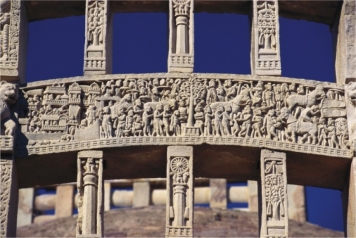 The gates of the Great Stupa at Sanchi (figure 18.9) feature a tree, footprints, and an umbrella, because these items:
A) Showed that the Buddha's preaching reached out in all directions
B) Depicted the Buddha without using a human form
C) Helped Buddhists appeal to those who looked to the old ways
D) Made the relief decorative
Question
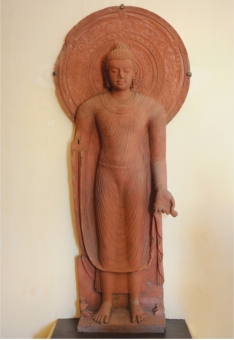 Why do depictions of the Buddha from the second century CE, such as one by Yasadinna showing a standing Buddha (figure 18.11), show him in bodily form?
A) Art needed to address the Indian love for sensuality and decoration
B) The Buddha needed an ushnisha to signal his understanding
C) Buddhists were hoping to appeal to those who looked to the old ways
D) People wanted images of the Buddha that they could worship
Question
Question
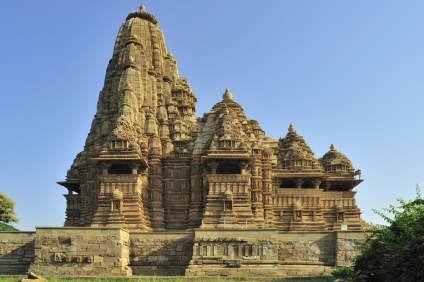 The form of a Hindu temple, such as the Kandarīya Mahādeva Temple (figure 18.15B), follows its function through:
A) Chambers that enable movement from the everyday to the sacred
B) Glue on the exterior that shows the connection to gods
C) A womb chamber that addresses an interest in fertility
D) A large, central space that enables worshippers to pray together
Question
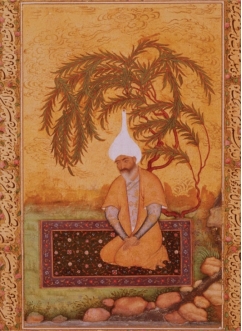 The use of shading and simulated texture in Sahifa Banu's portrait of Shah Tahmasp (figure 18.16) shows a/an:
A) Respect for enlightenment
B) Usage of oil paint
C) Sense of adornment
D) Inclination for realism
Question
Question
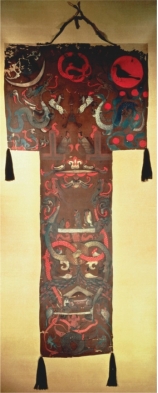
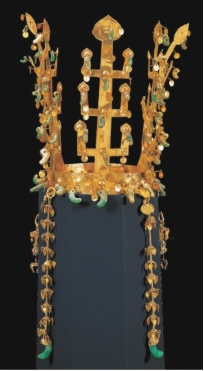 The banner from the Tomb of Lady Dai (figure 18.19) and the royal crown from the Gold Crown Tomb (figure 18.20) show that __________ was important in early art in China and Korea.
A) Shamanism
B) A need to express power
C) An interest in honoring the dead
D) An ornamented surface
Question
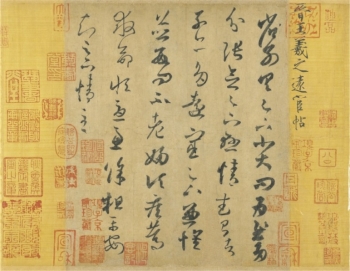 By using correct form and intense expression, Wang Xizhi's calligraphy (figure 18.21) reflects both ______ and ______ principles.
A) Confucian / Buddhist
B) Buddhist / Daoist
C) Daoist / Hindu
D) Confucian / Daoist
Question
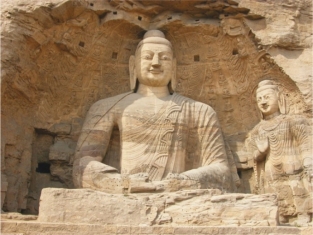 The colossal Buddha from the Yungang Caves (figure 18.22) shows the mixture of the Buddhist faith and the Northern Wei dynasty by:
A) Being an icon of the Buddhist faith
B) Making the Buddhas resemble the emperors
C) Including bodhisattvas
D) Creating an ordered and peaceful society
Question
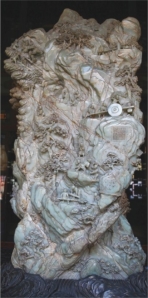 By commissioning works of art like Yu the Great Taming the Waters (figure 18.30), rulers of China sought to:
A) Use art to legitimize their rule
B) Create literati art
C) Associate themselves with the Buddha
D) Create an ordered and peaceful society
Question
Question
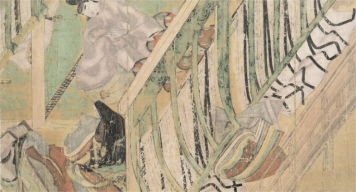 The detail from The Tale of Genji (figure 18.33) shows how during the Heian period:
A) People meditated by sitting in rooms with little furniture
B) Men wore a lot of armor
C) Safety was ensured through bars on windows
D) Conduct and clothing were controlled
Question
Question
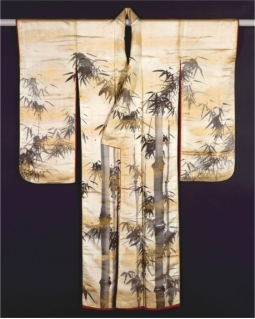 Gion Nankai's uchikake (figure 18.38) allows us to see that:
A) The lowest class was the wealthiest
B) Buddhist monks wore robes covered in bamboo
C) Fancy undergarments were worn by the upper class
D) The changes in society allowed all people to wear undergarments
Question
Question
Question
Question
Question
Question
Question
Question
Question
Question
Question
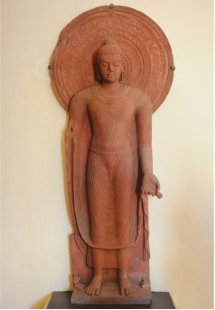 How does the representation of the Buddha that emerged in the second century CE, such as Yasadinna's standing Buddha (figure 18.11), to the use of recognizable attributes used to make figures in other religions always recognizable? Give specific examples, explaining how these attributes are similar and different. Why do you think different religions would have made certain figures recognizable with attributes? What does the fact that these similarities exist say about universal themes in art created by different people?
 Question
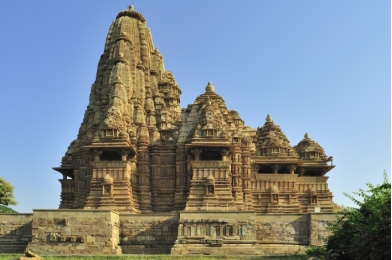 Explain how the form of Hindu temples, such as the Kandarīya Mahādeva Temple (figure 18.15B), reflect the function of the buildings and the beliefs of the religion.
 Question
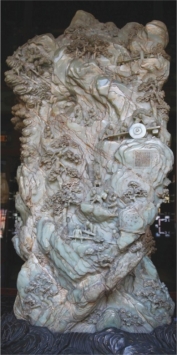 Why do you think foreign rulers of China turned to art, such as Yu the Great Taming the Waters (figure 18.30), to promote and legitimize their rule? Why does the fact that they did this show how art matters?
 Question
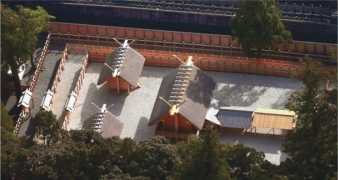 How does the Shinto shrine at Ise (figure 18.31) exemplify the aesthetic associated with Shinto beliefs?
 Question
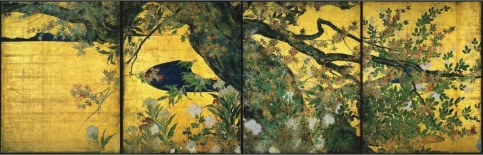
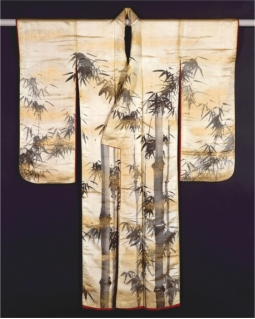 Hasegawa Tōhaku's Maple Tree (figure 18.37) with Gion Nankai's uchikake with bamboo design (figure 18.38) in terms of subject matters, purposes, forms, and patrons (the people who commissioned the works). How are these works similar and different? What aspect of the Japanese aesthetic do both works reference?
Unlock Deck
Sign up to unlock the cards in this deck!
Unlock Deck
Unlock Deck
1/30

Play

Full screen (f)
Deck 18: The Art of Asia
1
Vedic beliefs that would later influence later beliefs and art include:
A) Figures should be voluptuous and sensual
B) We can be reincarnated into a higher or lower state
C) The only way to end desire is to follow an eightfold path
D) Color and texture are important
A) Figures should be voluptuous and sensual
B) We can be reincarnated into a higher or lower state
C) The only way to end desire is to follow an eightfold path
D) Color and texture are important
B
2
The gates of the Great Stupa at Sanchi (figure 18.9) feature a tree, footprints, and an umbrella, because these items:A) Showed that the Buddha's preaching reached out in all directions
B) Depicted the Buddha without using a human form
C) Helped Buddhists appeal to those who looked to the old ways
D) Made the relief decorative
B
3
Why do depictions of the Buddha from the second century CE, such as one by Yasadinna showing a standing Buddha (figure 18.11), show him in bodily form?A) Art needed to address the Indian love for sensuality and decoration
B) The Buddha needed an ushnisha to signal his understanding
C) Buddhists were hoping to appeal to those who looked to the old ways
D) People wanted images of the Buddha that they could worship
D
4
What allows the faithful to connect with the divine in Hinduism?
A) Dry gardens
B) Depictions of gods
C) Shrines
D) Tea ceremonies
A) Dry gardens
B) Depictions of gods
C) Shrines
D) Tea ceremonies
Unlock Deck
Unlock for access to all 30 flashcards in this deck.
Unlock Deck
k this deck
5
The form of a Hindu temple, such as the Kandarīya Mahādeva Temple (figure 18.15B), follows its function through:A) Chambers that enable movement from the everyday to the sacred
B) Glue on the exterior that shows the connection to gods
C) A womb chamber that addresses an interest in fertility
D) A large, central space that enables worshippers to pray together
Unlock Deck
Unlock for access to all 30 flashcards in this deck.
Unlock Deck
k this deck
6
The use of shading and simulated texture in Sahifa Banu's portrait of Shah Tahmasp (figure 18.16) shows a/an:A) Respect for enlightenment
B) Usage of oil paint
C) Sense of adornment
D) Inclination for realism
Unlock Deck
Unlock for access to all 30 flashcards in this deck.
Unlock Deck
k this deck
7
Mughal art was typical of Indian art because:
A) It was Buddhist
B) It used Hindu imagery
C) It was made for religious use
D) It showed a love for decoration
A) It was Buddhist
B) It used Hindu imagery
C) It was made for religious use
D) It showed a love for decoration
Unlock Deck
Unlock for access to all 30 flashcards in this deck.
Unlock Deck
k this deck
8
The banner from the Tomb of Lady Dai (figure 18.19) and the royal crown from the Gold Crown Tomb (figure 18.20) show that __________ was important in early art in China and Korea.A) Shamanism
B) A need to express power
C) An interest in honoring the dead
D) An ornamented surface
Unlock Deck
Unlock for access to all 30 flashcards in this deck.
Unlock Deck
k this deck
9
By using correct form and intense expression, Wang Xizhi's calligraphy (figure 18.21) reflects both ______ and ______ principles.A) Confucian / Buddhist
B) Buddhist / Daoist
C) Daoist / Hindu
D) Confucian / Daoist
Unlock Deck
Unlock for access to all 30 flashcards in this deck.
Unlock Deck
k this deck
10
The colossal Buddha from the Yungang Caves (figure 18.22) shows the mixture of the Buddhist faith and the Northern Wei dynasty by:A) Being an icon of the Buddhist faith
B) Making the Buddhas resemble the emperors
C) Including bodhisattvas
D) Creating an ordered and peaceful society
Unlock Deck
Unlock for access to all 30 flashcards in this deck.
Unlock Deck
k this deck
11
By commissioning works of art like Yu the Great Taming the Waters (figure 18.30), rulers of China sought to:A) Use art to legitimize their rule
B) Create literati art
C) Associate themselves with the Buddha
D) Create an ordered and peaceful society
Unlock Deck
Unlock for access to all 30 flashcards in this deck.
Unlock Deck
k this deck
12
The focus on simplicity, imperfection, asymmetry, and nature in the native Japanese aesthetic is due to the influence of:
A) Buddhism
B) Shintoism
C) Daoism
D) Garden design
A) Buddhism
B) Shintoism
C) Daoism
D) Garden design
Unlock Deck
Unlock for access to all 30 flashcards in this deck.
Unlock Deck
k this deck
13
The detail from The Tale of Genji (figure 18.33) shows how during the Heian period:A) People meditated by sitting in rooms with little furniture
B) Men wore a lot of armor
C) Safety was ensured through bars on windows
D) Conduct and clothing were controlled
Unlock Deck
Unlock for access to all 30 flashcards in this deck.
Unlock Deck
k this deck
14
We see the following of Zen Buddhism in garden design through these aspects:
A) Importance of art, stability, and ritual
B) Walking, simplicity, and restraint
C) Simplicity, stillness, and imperfection
D) Symmetry, simplicity, and ritual
A) Importance of art, stability, and ritual
B) Walking, simplicity, and restraint
C) Simplicity, stillness, and imperfection
D) Symmetry, simplicity, and ritual
Unlock Deck
Unlock for access to all 30 flashcards in this deck.
Unlock Deck
k this deck
15
Gion Nankai's uchikake (figure 18.38) allows us to see that:A) The lowest class was the wealthiest
B) Buddhist monks wore robes covered in bamboo
C) Fancy undergarments were worn by the upper class
D) The changes in society allowed all people to wear undergarments
Unlock Deck
Unlock for access to all 30 flashcards in this deck.
Unlock Deck
k this deck
16
Early representations of the Buddha were symbolic.
Unlock Deck
Unlock for access to all 30 flashcards in this deck.
Unlock Deck
k this deck
17
Hindu temples are designed to accommodate large groups for worship.
Unlock Deck
Unlock for access to all 30 flashcards in this deck.
Unlock Deck
k this deck
18
When Buddhism spread across China, Buddhist architecture was likely constructed with bays and brackets.
Unlock Deck
Unlock for access to all 30 flashcards in this deck.
Unlock Deck
k this deck
19
The roots of the Japanese aesthetic valued decoration and ornament.
Unlock Deck
Unlock for access to all 30 flashcards in this deck.
Unlock Deck
k this deck
20
During the period when lords built fortified castles with thick defensive walls and tiny windows, artists created screens decorated in large amounts of gold leaf.
Unlock Deck
Unlock for access to all 30 flashcards in this deck.
Unlock Deck
k this deck
21
Upon the Buddha's bodily demise, his followers placed his cremated remains in places connected to important moments in his life and raised _______ , domed burial mounds, above his ashes.
Unlock Deck
Unlock for access to all 30 flashcards in this deck.
Unlock Deck
k this deck
22
Mughal painting is unusual among Islamic art traditions in that it is both decorative and ________ .
Unlock Deck
Unlock for access to all 30 flashcards in this deck.
Unlock Deck
k this deck
23
The most elaborate _____ ever found belonged to the first emperor of the Qin dynasty.
Unlock Deck
Unlock for access to all 30 flashcards in this deck.
Unlock Deck
k this deck
24
During the Ming dynasty, intellectuals shunned the court and created works known as _______ paintings.
Unlock Deck
Unlock for access to all 30 flashcards in this deck.
Unlock Deck
k this deck
25
The most introspective type of garden, known as a ________ garden, is meant to aid in contemplation during meditation.
Unlock Deck
Unlock for access to all 30 flashcards in this deck.
Unlock Deck
k this deck
26
How does the representation of the Buddha that emerged in the second century CE, such as Yasadinna's standing Buddha (figure 18.11), to the use of recognizable attributes used to make figures in other religions always recognizable? Give specific examples, explaining how these attributes are similar and different. Why do you think different religions would have made certain figures recognizable with attributes? What does the fact that these similarities exist say about universal themes in art created by different people? Unlock Deck
Unlock for access to all 30 flashcards in this deck.
Unlock Deck
k this deck
27
Explain how the form of Hindu temples, such as the Kandarīya Mahādeva Temple (figure 18.15B), reflect the function of the buildings and the beliefs of the religion. Unlock Deck
Unlock for access to all 30 flashcards in this deck.
Unlock Deck
k this deck
28
Why do you think foreign rulers of China turned to art, such as Yu the Great Taming the Waters (figure 18.30), to promote and legitimize their rule? Why does the fact that they did this show how art matters? Unlock Deck
Unlock for access to all 30 flashcards in this deck.
Unlock Deck
k this deck
29
How does the Shinto shrine at Ise (figure 18.31) exemplify the aesthetic associated with Shinto beliefs? Unlock Deck
Unlock for access to all 30 flashcards in this deck.
Unlock Deck
k this deck
30
Hasegawa Tōhaku's Maple Tree (figure 18.37) with Gion Nankai's uchikake with bamboo design (figure 18.38) in terms of subject matters, purposes, forms, and patrons (the people who commissioned the works). How are these works similar and different? What aspect of the Japanese aesthetic do both works reference? Unlock Deck
Unlock for access to all 30 flashcards in this deck.
Unlock Deck
k this deck
Unlock Deck
Unlock for access to all 30 flashcards in this deck.






