







 Chat with AI

Deck 16: The Art of Africa and Islam
Full screen (f)

Question
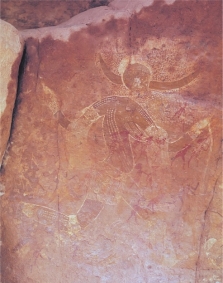 The running horned woman from Tassili n'Ajjer, Algeria (figure 16.6) is an example of:
A) Rock art
B) A reliquary figure
C) A spirit spouse
D) An adinkra pattern

Question
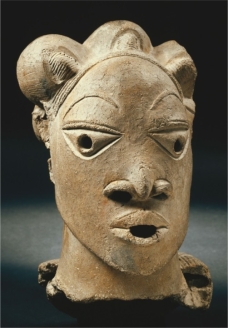 Nok heads (figure 16.7) are characterized by:
A) Bold, stylized forms in stone
B) Naturalistic forms with holes in the mouths and eyes
C) Painted abstract faces
D) Bold, stylized forms in clay
Question
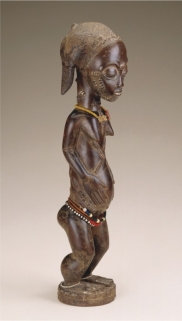 A Baule spirit spouse (figure 16.8) exhibits which characteristics of traditional African art?
A) Boldness of form, naturalism, and promotion of status
B) Power of art, boldness of form, and fascination with the human form
C) Promotion of status, predominance of certain methods, and use of wood
D) Diversity of media, promotion of status, and boldness of form
Question
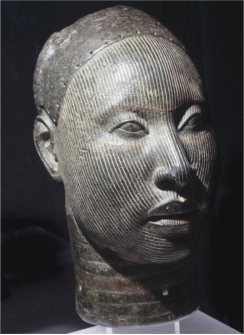 Naturalistic heads made by the Yoruba (figure 16.11) in cast bronze are examples of:
A) Promotion of status, predominance of certain methods, and fascination with the human form
B) Power of art, boldness of form, and fascination with human form
C) Promotion of status, diversity of media, and power of art
D) Fascination with human form, diversity of media, and idealization
Question
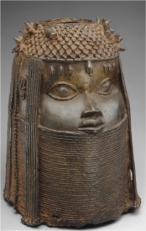 Sculptures of kings' heads (figure 16.13B) created by Benin artists were made using the ______ technique and allowed new obas to ______ .
A) Modeling / instill fear
B) Lost wax casting / communicate with ancestors
C) Carving / depict history
D) Bronze / ward off evil
Question
Question
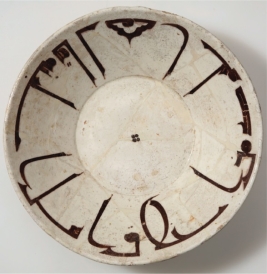 The four dots at the center of the bowl from Central Asia (figure 16.17) are typical of Islamic art because they:
A) Show boldness of form
B) Are part of the writing
C) Form an abstract symbol of heaven
D) Are a mathematical expression
Question
Question
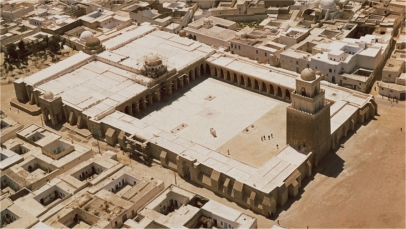 The Great Mosque of Kairouan (figure 16.19) was patterned after:
A) A Byzantine church
B) Muhammad's home
C) The Holy Sepulchre
D) A madrasa
Question
Question
Question
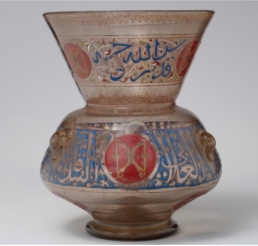 Mosque lamps, like the one from the Mausoleum of Amir Aydakin al-'Ala'i al-Bunduqdar (figure 16.21), were donated to promote status in society, but also contained what RELIGIOUS symbolism?
A) Enamel that symbolized calligraphy
B) Coats of arms that symbolized heaven
C) Light that symbolized God
D) Iwans that symbolized Muhammad
Question
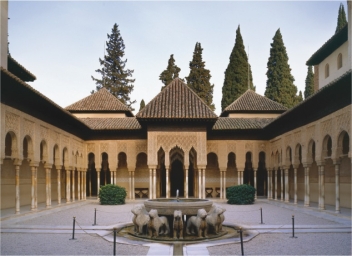 The Court of the Lions in the Alhambra (figure 16.22) created an earthly paradise in a dry, hot climate. What religious themes were also present?
A) The garden of paradise and the concept that nothing is everlasting except God
B) Nothing is everlasting except God and the direction of prayer toward Mecca
C) Calligraphy praising God and the power of water
D) The scent of orange trees in the nearby gardens and ordered designs
Question
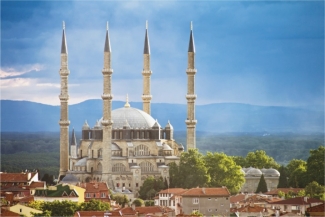 Sinan's Mosque of Sultan Selim II (figure 16.23) features a centrally planned space with a huge dome, influenced by Byzantine churches. What was the dome's meaning?
A) Reaching up to God
B) Immortalizing the power of the Ottoman Emperor
C) Outdoing the Byzantines
D) Triumphing over enemies
Question
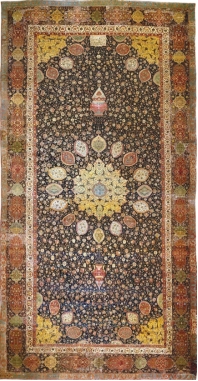 What is one interpretation for what the symbols on the design of the Ardabil Carpet (figure 16.24) represent?
A) The garden of Eden
B) The koran
C) The mihrab in a mosque
D) The ceiling of a mosque
Question
Question
Question
Question
Question
Question
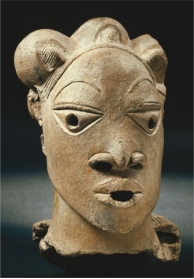 Early abstract sculptures of clay heads (figure 16.7) found in Nigeria are named after the town of _____.
 Question
Question
Question
Question
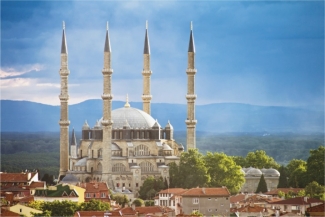 The _________ in Sinan's Mosque of Sultan Selim II (figure 16.23) reaches up toward God.
 Question
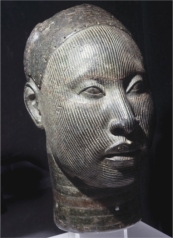 How is the head of an oni from the Yoruba culture (figure 16.11) both similar to other traditional African art and different?
 Question
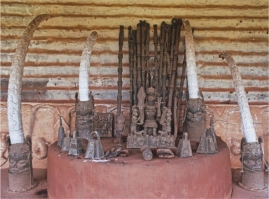
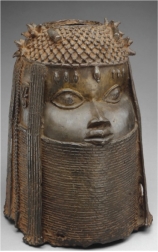 Explain how the shrine and head of an oba (figure 16.13A and B) illustrate the six characteristics frequently found in traditional African art.
 Question
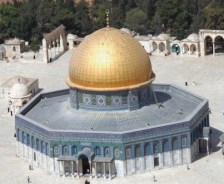
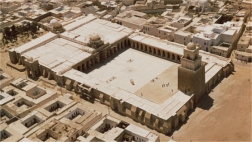 the meanings and appearances of the Dome of the Rock (figure 16.18) to the Great Mosque of Kairouan (figure 16.19). How do these structures show different architectural styles between the Umayyads and the Abbasids?
 Question
Question
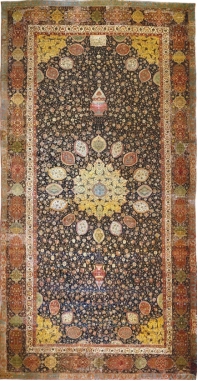 Explain how The Ardabil Carpet (figure 16.24) exhibits themes that are often evident in Islamic art. (Hint, you may not see all of the themes.)
Unlock Deck
Sign up to unlock the cards in this deck!
Unlock Deck
Unlock Deck
1/30

Play

Full screen (f)
Deck 16: The Art of Africa and Islam
1
The running horned woman from Tassili n'Ajjer, Algeria (figure 16.6) is an example of:A) Rock art
B) A reliquary figure
C) A spirit spouse
D) An adinkra pattern
A
2
Nok heads (figure 16.7) are characterized by:A) Bold, stylized forms in stone
B) Naturalistic forms with holes in the mouths and eyes
C) Painted abstract faces
D) Bold, stylized forms in clay
D
3
A Baule spirit spouse (figure 16.8) exhibits which characteristics of traditional African art?A) Boldness of form, naturalism, and promotion of status
B) Power of art, boldness of form, and fascination with the human form
C) Promotion of status, predominance of certain methods, and use of wood
D) Diversity of media, promotion of status, and boldness of form
B
4
Naturalistic heads made by the Yoruba (figure 16.11) in cast bronze are examples of:A) Promotion of status, predominance of certain methods, and fascination with the human form
B) Power of art, boldness of form, and fascination with human form
C) Promotion of status, diversity of media, and power of art
D) Fascination with human form, diversity of media, and idealization
Unlock Deck
Unlock for access to all 30 flashcards in this deck.
Unlock Deck
k this deck
5
Sculptures of kings' heads (figure 16.13B) created by Benin artists were made using the ______ technique and allowed new obas to ______ .A) Modeling / instill fear
B) Lost wax casting / communicate with ancestors
C) Carving / depict history
D) Bronze / ward off evil
Unlock Deck
Unlock for access to all 30 flashcards in this deck.
Unlock Deck
k this deck
6
One of the reasons that Islamic art shows a devotion to Arabic writing might be that calligraphy is:
A) Emotional
B) Nonrepresentational
C) Stylized
D) Formal
A) Emotional
B) Nonrepresentational
C) Stylized
D) Formal
Unlock Deck
Unlock for access to all 30 flashcards in this deck.
Unlock Deck
k this deck
7
The four dots at the center of the bowl from Central Asia (figure 16.17) are typical of Islamic art because they:A) Show boldness of form
B) Are part of the writing
C) Form an abstract symbol of heaven
D) Are a mathematical expression
Unlock Deck
Unlock for access to all 30 flashcards in this deck.
Unlock Deck
k this deck
8
One of the first significant buildings of the Islamic world is:
A) The Dome of the Rock
B) The Great Mosque of Kairouan
C) The Alhambra
D) The Sultan Hasan Madrasa-Mausoleum-Mosque
A) The Dome of the Rock
B) The Great Mosque of Kairouan
C) The Alhambra
D) The Sultan Hasan Madrasa-Mausoleum-Mosque
Unlock Deck
Unlock for access to all 30 flashcards in this deck.
Unlock Deck
k this deck
9
The Great Mosque of Kairouan (figure 16.19) was patterned after:A) A Byzantine church
B) Muhammad's home
C) The Holy Sepulchre
D) A madrasa
Unlock Deck
Unlock for access to all 30 flashcards in this deck.
Unlock Deck
k this deck
10
A mihrab:
A) Is a visual symbol of the presence of Islam
B) Fits the form to the function
C) Is modeled on a Byzantine church
D) Indicates the direction to face for prayers
A) Is a visual symbol of the presence of Islam
B) Fits the form to the function
C) Is modeled on a Byzantine church
D) Indicates the direction to face for prayers
Unlock Deck
Unlock for access to all 30 flashcards in this deck.
Unlock Deck
k this deck
11
What were Mamluk elites obsessed with that is evident in their art?
A) Having gardens in their buildings
B) Showing off their status
C) Covering their floors with carpets
D) Displaying representational art
A) Having gardens in their buildings
B) Showing off their status
C) Covering their floors with carpets
D) Displaying representational art
Unlock Deck
Unlock for access to all 30 flashcards in this deck.
Unlock Deck
k this deck
12
Mosque lamps, like the one from the Mausoleum of Amir Aydakin al-'Ala'i al-Bunduqdar (figure 16.21), were donated to promote status in society, but also contained what RELIGIOUS symbolism?A) Enamel that symbolized calligraphy
B) Coats of arms that symbolized heaven
C) Light that symbolized God
D) Iwans that symbolized Muhammad
Unlock Deck
Unlock for access to all 30 flashcards in this deck.
Unlock Deck
k this deck
13
The Court of the Lions in the Alhambra (figure 16.22) created an earthly paradise in a dry, hot climate. What religious themes were also present?A) The garden of paradise and the concept that nothing is everlasting except God
B) Nothing is everlasting except God and the direction of prayer toward Mecca
C) Calligraphy praising God and the power of water
D) The scent of orange trees in the nearby gardens and ordered designs
Unlock Deck
Unlock for access to all 30 flashcards in this deck.
Unlock Deck
k this deck
14
Sinan's Mosque of Sultan Selim II (figure 16.23) features a centrally planned space with a huge dome, influenced by Byzantine churches. What was the dome's meaning?A) Reaching up to God
B) Immortalizing the power of the Ottoman Emperor
C) Outdoing the Byzantines
D) Triumphing over enemies
Unlock Deck
Unlock for access to all 30 flashcards in this deck.
Unlock Deck
k this deck
15
What is one interpretation for what the symbols on the design of the Ardabil Carpet (figure 16.24) represent?A) The garden of Eden
B) The koran
C) The mihrab in a mosque
D) The ceiling of a mosque
Unlock Deck
Unlock for access to all 30 flashcards in this deck.
Unlock Deck
k this deck
16
Early African art contains both abstraction and realism.
Unlock Deck
Unlock for access to all 30 flashcards in this deck.
Unlock Deck
k this deck
17
Traditional African art emphasizes painting and other two-dimensional art forms.
Unlock Deck
Unlock for access to all 30 flashcards in this deck.
Unlock Deck
k this deck
18
Islamic art shows a preference for naturalism.
Unlock Deck
Unlock for access to all 30 flashcards in this deck.
Unlock Deck
k this deck
19
Some early mosques were styled after Muhammad's house.
Unlock Deck
Unlock for access to all 30 flashcards in this deck.
Unlock Deck
k this deck
20
Mamluk art could be both secular and religious.
Unlock Deck
Unlock for access to all 30 flashcards in this deck.
Unlock Deck
k this deck
21
Early abstract sculptures of clay heads (figure 16.7) found in Nigeria are named after the town of _____. Unlock Deck
Unlock for access to all 30 flashcards in this deck.
Unlock Deck
k this deck
22
The traditional African art form that incorporates costume and performance is referred to as _______ .
Unlock Deck
Unlock for access to all 30 flashcards in this deck.
Unlock Deck
k this deck
23
The devotion to Arabic writing in Islamic art means that many works are decorated with ________ .
Unlock Deck
Unlock for access to all 30 flashcards in this deck.
Unlock Deck
k this deck
24
A niche in a mosque that indicates the direction of prayer is called a ______ .
Unlock Deck
Unlock for access to all 30 flashcards in this deck.
Unlock Deck
k this deck
25
The _________ in Sinan's Mosque of Sultan Selim II (figure 16.23) reaches up toward God. Unlock Deck
Unlock for access to all 30 flashcards in this deck.
Unlock Deck
k this deck
26
How is the head of an oni from the Yoruba culture (figure 16.11) both similar to other traditional African art and different? Unlock Deck
Unlock for access to all 30 flashcards in this deck.
Unlock Deck
k this deck
27
Explain how the shrine and head of an oba (figure 16.13A and B) illustrate the six characteristics frequently found in traditional African art. Unlock Deck
Unlock for access to all 30 flashcards in this deck.
Unlock Deck
k this deck
28
the meanings and appearances of the Dome of the Rock (figure 16.18) to the Great Mosque of Kairouan (figure 16.19). How do these structures show different architectural styles between the Umayyads and the Abbasids? Unlock Deck
Unlock for access to all 30 flashcards in this deck.
Unlock Deck
k this deck
29
One of the characteristics of African art is a preference for certain media, including sculpture and performance. One type of art form similarly is prevalent in Islamic art, specifically architecture. Why is this and how does this structure fit with the themes of Islamic art?
Unlock Deck
Unlock for access to all 30 flashcards in this deck.
Unlock Deck
k this deck
30
Explain how The Ardabil Carpet (figure 16.24) exhibits themes that are often evident in Islamic art. (Hint, you may not see all of the themes.) Unlock Deck
Unlock for access to all 30 flashcards in this deck.
Unlock Deck
k this deck
Unlock Deck
Unlock for access to all 30 flashcards in this deck.






