







 Chat with AI

Deck 21: Industrialization and Social Ferment, 1830-1850
Full screen (f)

Question

Question
Question
Question
Question
Question
Question
Question
Question
Question
Question
Question
Question
Question
Question
Question
Question
Question
Question
Question
Question
According to this map, which of the following countries dominated in the mining of coal around 1850?
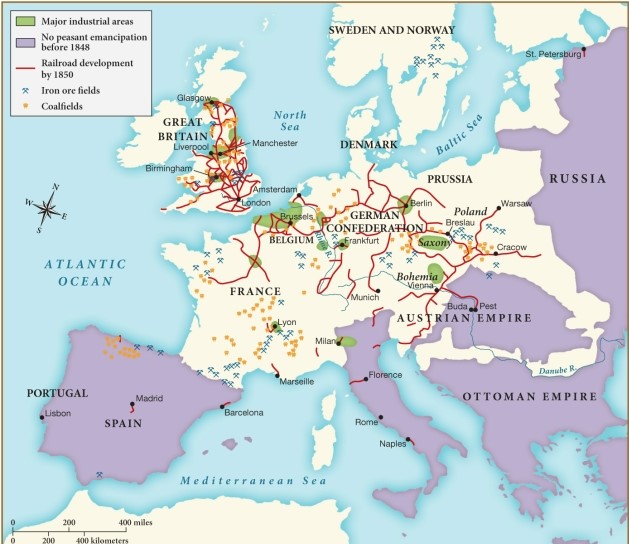
A) Prussia
B) Russia
C) Spain
D) Great Britain
A) Prussia
B) Russia
C) Spain
D) Great Britain
Question
This map portraying European industrialization in the middle of the nineteenth century indicates a strong geographic connection between
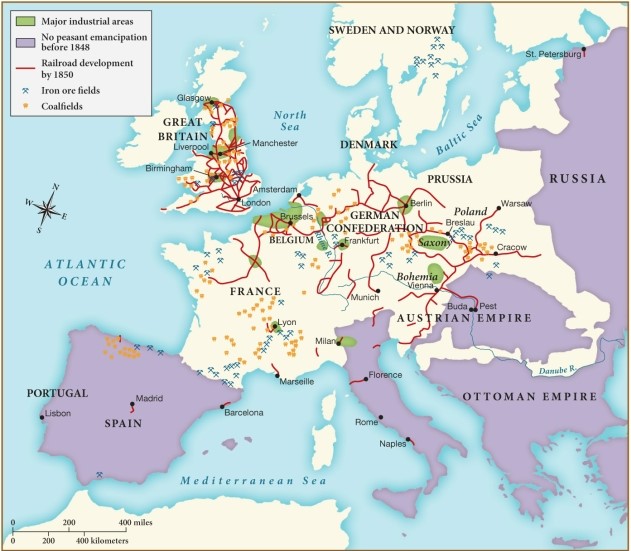
A) railroads and peasant emancipation.
B) industrialization and peasant emancipation.
C) peasant emancipation and coal production.
D) iron manufacture and railroads.
A) railroads and peasant emancipation.
B) industrialization and peasant emancipation.
C) peasant emancipation and coal production.
D) iron manufacture and railroads.
Question
Question
Question
Question
Question
Question
Question
According to this map, which region experienced cholera only during its second wave, from 1840 through 1855?
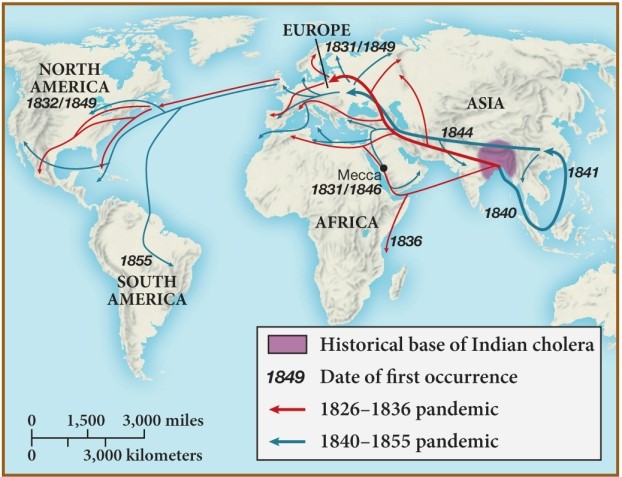
A) North America
B) Asia
C) South America
D) Africa
A) North America
B) Asia
C) South America
D) Africa
Question
Question
Question
Question
Question
Question
Question
Question
Question
Question
Question
Question
Question
Question
Question
The subject of the map reproduced here directly relates to the rise of what nineteenth-century phenomenon?
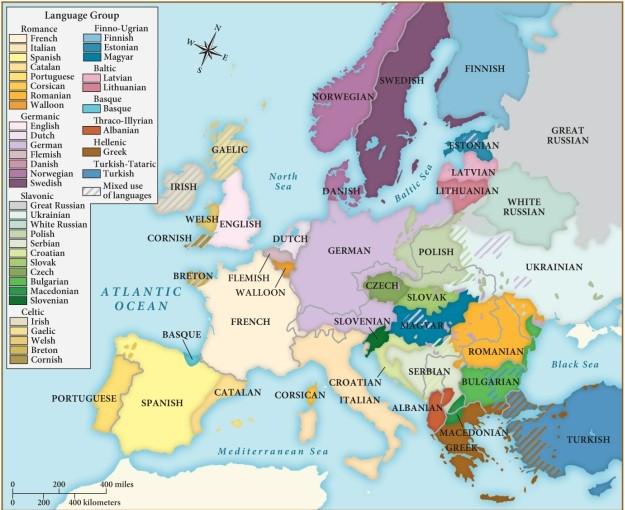
A) Nationalism
B) Liberalism
C) Socialism
D) Industrialization
A) Nationalism
B) Liberalism
C) Socialism
D) Industrialization
Question
Question
Question
Question
Question
Question
Question
Question
Question
Question
Question
Question
Question
Question
Question
Question
Question
Question
Question
Question
During the nineteenth century, industrialization often led to a significant increase in population in the region that had industrialized. Based on this map, which of the following European nations likely had very little, or very slow, industrial development during this time?
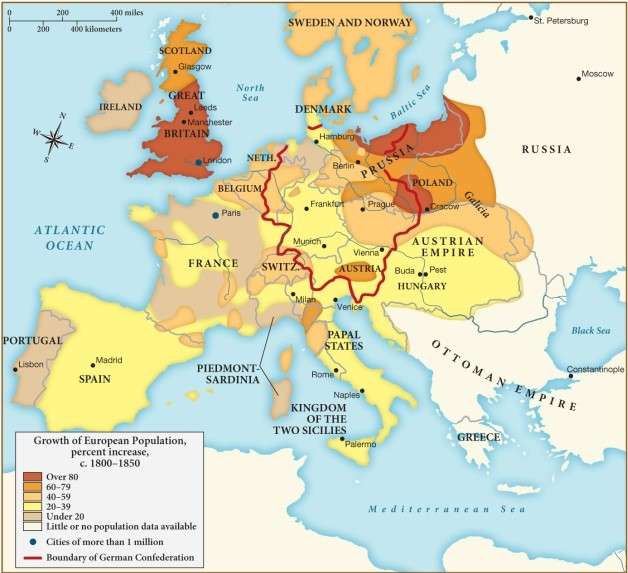
A) Poland
B) Prussia
C) Great Britain
D) Portugal
A) Poland
B) Prussia
C) Great Britain
D) Portugal

Unlock Deck
Sign up to unlock the cards in this deck!
Unlock Deck
Unlock Deck
1/64

Play

Full screen (f)
Deck 21: Industrialization and Social Ferment, 1830-1850
1
What caused the rapid growth of European cities in the early nineteenth century, and how did this affect the poor working classes who lived there?
Answer would ideally include the following. Although Europe did experience a population increase at this time, the rapid population growth in European cities in the early nineteenth century was the result of rural emigration, not natural increase through more births. People left the countryside because they were forced off the land by agricultural improvements, or they could no longer earn enough to support themselves and their families, or they were attracted to urban life and higher wages. They migrated to the cities in hopes of finding work. Housing and public services could not keep up with this dramatic urban expansion, and the poor and working classes faced drastic overcrowding. Sanitary services were either rudimentary or nonexistent, resulting in filthy conditions that bred epidemic and communicable diseases, such as cholera or tuberculosis, as well as causing widespread misery and despair.
2
Both Protestants and Catholics undertook a number of reform programs intended to change working-class behavior. What were some of these programs, and why did the reformers choose this method rather than simply encouraging the lower classes to go to church?
Answer would ideally include the following. Most of the programs backed by religious organizations sought to change behaviors that the middle and upper classes found threatening, undesirable, and potentially damaging to the social order. Rather than simply preaching the virtues of Christianity and church attendance, reformers attacked behaviors that they believed contributed to moral degeneracy in the working classes, such as drinking, cockfighting, and bearbaiting. Reformers also turned their attention to educating lower-class children in order to train them to be self-disciplined and religious. Many middle- and upper-class Catholic women joined new religious orders that provided services for the vulnerable, establishing schools, hospitals, leper colonies, insane asylums, and old-age homes. Protestant women formed Bible societies and female reform societies intended to help prostitutes find legitimate work.
3
What was Britain's goal in establishing a regular opium trade with China? How did this goal produce conflict with China, and how did the conflict end?
Answer would ideally include the following. Great Britain went to war with China in 1839 in order to force the Chinese emperor to open ports to the opium that Britain exported from India. China banned the sale of the drug because the recreational use of opium was increasing. British merchants smuggled opium in and bribed local officials to allow its sale, and when those merchants were expelled from China the British bombarded Chinese cities in retaliation. The Treaty of Nanking in 1842 opened four more ports to European traders, allowed trade in opium, and gave Hong Kong to the British. In the case of China, reform took a back seat to economic interest, despite the complaints of religious groups in Britain.
4
Who was Adam Mickiewicz, and how did he shape Polish nationalism in the early nineteenth century?
Unlock Deck
Unlock for access to all 64 flashcards in this deck.
Unlock Deck
k this deck
5
How did socialist and communist ideology develop and change from the time of Saint-Simon and Owen in the early nineteenth century to that of Marx and Engels in the mid-nineteenth century?
Unlock Deck
Unlock for access to all 64 flashcards in this deck.
Unlock Deck
k this deck
6
Who were Louis Blanc and Pierre-Joseph Proudhon, and how did they contribute to the development of a workers' movement in France?
Unlock Deck
Unlock for access to all 64 flashcards in this deck.
Unlock Deck
k this deck
7
What were the "hungry forties," and how did they contribute to political change?
Unlock Deck
Unlock for access to all 64 flashcards in this deck.
Unlock Deck
k this deck
8
What were the "June Days," and what do they reveal about divisions among those involved?
Unlock Deck
Unlock for access to all 64 flashcards in this deck.
Unlock Deck
k this deck
9
Why was King Charles Albert of Piedmont-Sardinia unable to capitalize on Italian nationalism in 1848 and create a unified Italy?
Unlock Deck
Unlock for access to all 64 flashcards in this deck.
Unlock Deck
k this deck
10
How did the reassertion of conservative rule after 1848 harden gender definitions?
Unlock Deck
Unlock for access to all 64 flashcards in this deck.
Unlock Deck
k this deck
11
What was "revolutionary" about the Industrial Revolution? In what ways did it alter the lives of Europeans and transform the social and political landscape of Europe? In your answer, be sure to consider factors like the shift in labor patterns, the impact of urbanization, and political responses to industrialization.
Unlock Deck
Unlock for access to all 64 flashcards in this deck.
Unlock Deck
k this deck
12
In the early nineteenth century, middle-class reformers were extremely concerned with the "social question," or, more specifically, the social changes arising from industrialization and urbanization. What were these changes, and how did the middle classes attempt to address them with social reforms?
Unlock Deck
Unlock for access to all 64 flashcards in this deck.
Unlock Deck
k this deck
13
Which nation became the first site of the Industrial Revolution? List at least three factors that fostered industrialization in that country. How did developments in technology contribute to the Industrial Revolution?
Unlock Deck
Unlock for access to all 64 flashcards in this deck.
Unlock Deck
k this deck
14
Why was nationalism a particularly complex and explosive issue in the Austrian Empire? What role did nationalism play in the attempted revolutions of 1848, and what was the government's response?
Unlock Deck
Unlock for access to all 64 flashcards in this deck.
Unlock Deck
k this deck
15
What major issues were at the root of the revolutions of 1848? Describe the similarities and differences between the causes and outcomes of the revolutions in France, Italy, Prussia, and Austria.
Unlock Deck
Unlock for access to all 64 flashcards in this deck.
Unlock Deck
k this deck
16
Key inventions in which industry drove the development of the Industrial Revolution?
A) Coal mining
B) Shipbuilding
C) Textile manufacturing
D) Glassware
A) Coal mining
B) Shipbuilding
C) Textile manufacturing
D) Glassware
Unlock Deck
Unlock for access to all 64 flashcards in this deck.
Unlock Deck
k this deck
17
Which of the following factors contributed to the emergence of England as the first site of the Industrial Revolution?
A) England had a good supply of private investment capital, ready access to raw cotton from its overseas plantations, and the necessary natural resources at home.
B) The English government invested directly in industrial factories in addition to developing an extensive social welfare system to cover employee health care costs.
C) The British mining industry, which was the lynchpin of the industrial system, was the most advanced in Europe, with a ready supply of labor and resources.
D) The population of England dropped steadily through the first half of the nineteenth century, meaning there were fewer mouths to feed and more jobs to go around.
A) England had a good supply of private investment capital, ready access to raw cotton from its overseas plantations, and the necessary natural resources at home.
B) The English government invested directly in industrial factories in addition to developing an extensive social welfare system to cover employee health care costs.
C) The British mining industry, which was the lynchpin of the industrial system, was the most advanced in Europe, with a ready supply of labor and resources.
D) The population of England dropped steadily through the first half of the nineteenth century, meaning there were fewer mouths to feed and more jobs to go around.
Unlock Deck
Unlock for access to all 64 flashcards in this deck.
Unlock Deck
k this deck
18
What does the "putting-out" system of the nineteenth century refer to?
A) Indigent mothers putting newborns "out" to be taken in by orphanages and hospitals
B) The process by which coal was burned to put out heat for steam engines
C) The payment of factory workers according to the amount of goods they produced in a day
D) Workers producing goods at home with raw materials supplied by outside contractors
A) Indigent mothers putting newborns "out" to be taken in by orphanages and hospitals
B) The process by which coal was burned to put out heat for steam engines
C) The payment of factory workers according to the amount of goods they produced in a day
D) Workers producing goods at home with raw materials supplied by outside contractors
Unlock Deck
Unlock for access to all 64 flashcards in this deck.
Unlock Deck
k this deck
19
What was the term used for English workers who wrecked machinery and burned mills in order to protest industrialization?
A) Anti-industrialists
B) Luddites
C) Marxists
D) Traitors
A) Anti-industrialists
B) Luddites
C) Marxists
D) Traitors
Unlock Deck
Unlock for access to all 64 flashcards in this deck.
Unlock Deck
k this deck
20
Beginning in the 1840s, what factory-produced good became increasingly important to industrial economies?
A) Iron
B) Steel
C) Wool
D) Glassware
A) Iron
B) Steel
C) Wool
D) Glassware
Unlock Deck
Unlock for access to all 64 flashcards in this deck.
Unlock Deck
k this deck
21
According to this map, which of the following countries dominated in the mining of coal around 1850?
A) Prussia
B) Russia
C) Spain
D) Great Britain
A) Prussia
B) Russia
C) Spain
D) Great Britain
Unlock Deck
Unlock for access to all 64 flashcards in this deck.
Unlock Deck
k this deck
22
This map portraying European industrialization in the middle of the nineteenth century indicates a strong geographic connection between
A) railroads and peasant emancipation.
B) industrialization and peasant emancipation.
C) peasant emancipation and coal production.
D) iron manufacture and railroads.
A) railroads and peasant emancipation.
B) industrialization and peasant emancipation.
C) peasant emancipation and coal production.
D) iron manufacture and railroads.
Unlock Deck
Unlock for access to all 64 flashcards in this deck.
Unlock Deck
k this deck
23
Between 1800 and 1840, many European countries began to close the industrial gap with Great Britain,
A) and most countries were able to completely close that gap by 1850 on their own initiative.
B) but by 1850, continental Europe was still almost twenty years behind Great Britain in industrialization.
C) thanks to Great Britain's eagerness to share its technical knowledge and industrial machinery.
D) and by 1850, key areas like Prussia had even surpassed Great Britain in industrial production.
A) and most countries were able to completely close that gap by 1850 on their own initiative.
B) but by 1850, continental Europe was still almost twenty years behind Great Britain in industrialization.
C) thanks to Great Britain's eagerness to share its technical knowledge and industrial machinery.
D) and by 1850, key areas like Prussia had even surpassed Great Britain in industrial production.
Unlock Deck
Unlock for access to all 64 flashcards in this deck.
Unlock Deck
k this deck
24
How did peasants in Europe generally respond to the spread of industrialization in the 1840s?
A) They quickly abandoned their farms and moved their families long distances to the cities in the hopes of striking it rich.
B) They kept their options open by combining factory or putting-out work with seasonal agricultural labor.
C) They held out on their farms for as long as possible but often ended up falling prey to the attractions of a steady salary.
D) They completely ignored the impact of industrialization, as it mainly affected urban areas, not the rural farmland.
A) They quickly abandoned their farms and moved their families long distances to the cities in the hopes of striking it rich.
B) They kept their options open by combining factory or putting-out work with seasonal agricultural labor.
C) They held out on their farms for as long as possible but often ended up falling prey to the attractions of a steady salary.
D) They completely ignored the impact of industrialization, as it mainly affected urban areas, not the rural farmland.
Unlock Deck
Unlock for access to all 64 flashcards in this deck.
Unlock Deck
k this deck
25
What was the significance of the Factory Act of 1833 in Great Britain?
A) It outlawed the employment of children under nine years of age in most textile mills and limited the number of days and hours older children could work.
B) It made it illegal for any child under thirteen years of age to work rather than go to school.
C) It outlawed the employment of children under thirteen years of age and limited the number of hours older children could work to eight hours a day.
D) It instituted the first workplace safety inspection system in Europe.
A) It outlawed the employment of children under nine years of age in most textile mills and limited the number of days and hours older children could work.
B) It made it illegal for any child under thirteen years of age to work rather than go to school.
C) It outlawed the employment of children under thirteen years of age and limited the number of hours older children could work to eight hours a day.
D) It instituted the first workplace safety inspection system in Europe.
Unlock Deck
Unlock for access to all 64 flashcards in this deck.
Unlock Deck
k this deck
26
Historians attribute the massive population growth of European cities in the mid-nineteenth century to
A) a natural increase in population resulting from technology-driven advances in agricultural productivity and manufacturing.
B) massive rural emigration, as overpopulation on the land made agriculture an unsustainable way of life for many people.
C) the improved standard of living created by the steadier employment and shorter hours of factory work.
D) technology-driven amenities such as police patrols, street lighting, waste disposal, and other social services.
A) a natural increase in population resulting from technology-driven advances in agricultural productivity and manufacturing.
B) massive rural emigration, as overpopulation on the land made agriculture an unsustainable way of life for many people.
C) the improved standard of living created by the steadier employment and shorter hours of factory work.
D) technology-driven amenities such as police patrols, street lighting, waste disposal, and other social services.
Unlock Deck
Unlock for access to all 64 flashcards in this deck.
Unlock Deck
k this deck
27
The rapid urbanization that developed as a result of industrialization caused European cities to
A) invest in major infrastructure projects such as building new sewage and water solutions and constructing massive housing blocks for industrial workers.
B) begin expanding city parks and wilderness spaces to combat the industrial pollution and noise of the industrial city.
C) become overcrowded and filthy, as the population expanded much more rapidly than the housing stock, and sanitation developed slowly.
D) create official segregated spaces that kept the classes separate from one another, heightening the class distinctions that were beginning to develop.
A) invest in major infrastructure projects such as building new sewage and water solutions and constructing massive housing blocks for industrial workers.
B) begin expanding city parks and wilderness spaces to combat the industrial pollution and noise of the industrial city.
C) become overcrowded and filthy, as the population expanded much more rapidly than the housing stock, and sanitation developed slowly.
D) create official segregated spaces that kept the classes separate from one another, heightening the class distinctions that were beginning to develop.
Unlock Deck
Unlock for access to all 64 flashcards in this deck.
Unlock Deck
k this deck
28
Which of the following diseases had the most devastating impact on cities in the first half of the nineteenth century?
A) Yellow fever
B) Typhus
C) Cholera
D) Smallpox
A) Yellow fever
B) Typhus
C) Cholera
D) Smallpox
Unlock Deck
Unlock for access to all 64 flashcards in this deck.
Unlock Deck
k this deck
29
According to this map, which region experienced cholera only during its second wave, from 1840 through 1855?
A) North America
B) Asia
C) South America
D) Africa
A) North America
B) Asia
C) South America
D) Africa
Unlock Deck
Unlock for access to all 64 flashcards in this deck.
Unlock Deck
k this deck
30
Middle-class reformers became concerned about what they perceived to be the urban working classes' increasing
A) moral degeneracy.
B) religious extremism.
C) nationalistic fervor.
D) lack of education.
A) moral degeneracy.
B) religious extremism.
C) nationalistic fervor.
D) lack of education.
Unlock Deck
Unlock for access to all 64 flashcards in this deck.
Unlock Deck
k this deck
31
In the early nineteenth century, in what way did peasant households fail to conform to notions of traditional family life?
A) Legal decisions and limited education caused a dramatic rise in illegitimate births in the countryside.
B) Poverty forced many peasant families to send their children off to work in factories at an early age.
C) Men frequently migrated seasonally to earn money in factories, leaving women at home to tend crops and animals.
D) Peasant families were likely to have only one or two children, whereas middle-class families generally had a large number of offspring.
A) Legal decisions and limited education caused a dramatic rise in illegitimate births in the countryside.
B) Poverty forced many peasant families to send their children off to work in factories at an early age.
C) Men frequently migrated seasonally to earn money in factories, leaving women at home to tend crops and animals.
D) Peasant families were likely to have only one or two children, whereas middle-class families generally had a large number of offspring.
Unlock Deck
Unlock for access to all 64 flashcards in this deck.
Unlock Deck
k this deck
32
How did Europeans in rural areas respond to the increasing population and pressures on traditional family life that accompanied the Industrial Revolution?
A) They emigrated, often to the United States.
B) They stopped getting married, as there was no longer any economic incentive.
C) They turned increasingly to radical politics.
D) They violently attacked large landowners and vandalized estates across Europe.
A) They emigrated, often to the United States.
B) They stopped getting married, as there was no longer any economic incentive.
C) They turned increasingly to radical politics.
D) They violently attacked large landowners and vandalized estates across Europe.
Unlock Deck
Unlock for access to all 64 flashcards in this deck.
Unlock Deck
k this deck
33
Charles Dickens (1812-1870) wrote with passion and insight about working-class men and women because he
A) had worked to gather data on working-class living conditions for a series of reports to the British Parliament.
B) came from a working-class background, both parents having been employed in textile manufacturing.
C) had to work in a shoe-polish factory as a child after his father was imprisoned for debt.
D) was the son of a factory owner and had seen working conditions firsthand.
A) had worked to gather data on working-class living conditions for a series of reports to the British Parliament.
B) came from a working-class background, both parents having been employed in textile manufacturing.
C) had to work in a shoe-polish factory as a child after his father was imprisoned for debt.
D) was the son of a factory owner and had seen working conditions firsthand.
Unlock Deck
Unlock for access to all 64 flashcards in this deck.
Unlock Deck
k this deck
34
What nineteenth-century novelist, writing under the male pseudonym George Sand, expressed her social criticism through both her writing and her independent lifestyle?
A) Charlotte Brontë
B) Auguste Comte
C) Amandine-Aurore-Lucile Dupin Dudevant
D) Ann Lamb
A) Charlotte Brontë
B) Auguste Comte
C) Amandine-Aurore-Lucile Dupin Dudevant
D) Ann Lamb
Unlock Deck
Unlock for access to all 64 flashcards in this deck.
Unlock Deck
k this deck
35
The advent of what new artistic medium in 1839 created enormous potential for portraying the social realities of the industrial age?
A) Panoramas
B) Serialized novels
C) Burlesque theater
D) Photography
A) Panoramas
B) Serialized novels
C) Burlesque theater
D) Photography
Unlock Deck
Unlock for access to all 64 flashcards in this deck.
Unlock Deck
k this deck
36
How did British religious reformers attempt to combat religious indifference among the working classes?
A) They pressured Parliament to pass laws requiring church attendance.
B) They banned popular recreations on Sundays.
C) They established Sunday schools for poor children.
D) They created factory-based Bible study groups.
A) They pressured Parliament to pass laws requiring church attendance.
B) They banned popular recreations on Sundays.
C) They established Sunday schools for poor children.
D) They created factory-based Bible study groups.
Unlock Deck
Unlock for access to all 64 flashcards in this deck.
Unlock Deck
k this deck
37
What concerns drove middle-class social reformers to form temperance societies throughout Europe and the United States?
A) Many advocated temperance because liquor and beer were often contaminated, as there were no government standards for food safety.
B) Temperance advocates saw drunkenness as a sign of moral weakness and a threat to social order.
C) Social reformers wanted to prevent election tampering whereby the votes of working-class people were bought while they were under the influence of alcohol.
D) Reformers believed that the enormous increase in criminal activity in cities was directly linked to alcohol-based organized crime.
A) Many advocated temperance because liquor and beer were often contaminated, as there were no government standards for food safety.
B) Temperance advocates saw drunkenness as a sign of moral weakness and a threat to social order.
C) Social reformers wanted to prevent election tampering whereby the votes of working-class people were bought while they were under the influence of alcohol.
D) Reformers believed that the enormous increase in criminal activity in cities was directly linked to alcohol-based organized crime.
Unlock Deck
Unlock for access to all 64 flashcards in this deck.
Unlock Deck
k this deck
38
What was the reasoning behind the 1834 passage of a new poor law in Great Britain, dubbed by its critics the "Starvation Act"?
A) That providing food subsidies to married women would reduce illegitimacy
B) That denying workhouse access to women under thirty years of age would force their families to care for them
C) That reducing the amount of food offered to urban workhouse residents would compel them to leave and return to the countryside
D) That the distress caused by the separation of family members from one another in workhouses would encourage the poor to move to areas of higher employment
A) That providing food subsidies to married women would reduce illegitimacy
B) That denying workhouse access to women under thirty years of age would force their families to care for them
C) That reducing the amount of food offered to urban workhouse residents would compel them to leave and return to the countryside
D) That the distress caused by the separation of family members from one another in workhouses would encourage the poor to move to areas of higher employment
Unlock Deck
Unlock for access to all 64 flashcards in this deck.
Unlock Deck
k this deck
39
According to the ideology that historians call domesticity, what role were women expected to play in society?
A) Women were to devote themselves to their family and their home, living their lives entirely within the domestic sphere.
B) Although they were expected to marry and raise a family, women also were encouraged to seek out higher education so that they could properly train their children.
C) Women were encouraged to become teachers and social workers so that they might use their innate maternal instincts for the greater good of society.
D) Women were educated and trained for careers in law and public service so that politics would be enhanced by women's innate virtue and morality.
A) Women were to devote themselves to their family and their home, living their lives entirely within the domestic sphere.
B) Although they were expected to marry and raise a family, women also were encouraged to seek out higher education so that they could properly train their children.
C) Women were encouraged to become teachers and social workers so that they might use their innate maternal instincts for the greater good of society.
D) Women were educated and trained for careers in law and public service so that politics would be enhanced by women's innate virtue and morality.
Unlock Deck
Unlock for access to all 64 flashcards in this deck.
Unlock Deck
k this deck
40
What was the main difference between colonialism and imperialism?
A) Peoples subject to imperialism developed an articulate and organized opposition, while colonized peoples seldom coordinated opposition movements.
B) Unlike colonialism, imperialism was a more aggressive and more directly exploitative form of political domination.
C) Colonialism typically involved settlers dependent on slave labor, whereas imperialism involved more indirect forms of economic exploitation and political domination.
D) Unlike colonialism, which was motivated by European greed, imperialism focused on exerting cultural rather than economic hegemony.
A) Peoples subject to imperialism developed an articulate and organized opposition, while colonized peoples seldom coordinated opposition movements.
B) Unlike colonialism, imperialism was a more aggressive and more directly exploitative form of political domination.
C) Colonialism typically involved settlers dependent on slave labor, whereas imperialism involved more indirect forms of economic exploitation and political domination.
D) Unlike colonialism, which was motivated by European greed, imperialism focused on exerting cultural rather than economic hegemony.
Unlock Deck
Unlock for access to all 64 flashcards in this deck.
Unlock Deck
k this deck
41
Why did slavery and the slave trade continue for several decades after Britain and France abolished its practice in their empires in the 1830s and 1840s?
A) Although slavery was abolished by national legislatures in Europe, few slave owners in the colonies recognized the legitimacy of those acts.
B) Spanish and Portuguese traders continued to trade slaves to Brazil, Cuba, and the United States, where the practice of slavery continued unabated.
C) Slavery continued in outlaw territories that were not under the control of any European government, as traders recaptured freed slaves from maroon communities.
D) Because European governments were so concerned with domestic issues, there was no regulation of the seas or enforcement of the ban on slavery in the affected colonies.
A) Although slavery was abolished by national legislatures in Europe, few slave owners in the colonies recognized the legitimacy of those acts.
B) Spanish and Portuguese traders continued to trade slaves to Brazil, Cuba, and the United States, where the practice of slavery continued unabated.
C) Slavery continued in outlaw territories that were not under the control of any European government, as traders recaptured freed slaves from maroon communities.
D) Because European governments were so concerned with domestic issues, there was no regulation of the seas or enforcement of the ban on slavery in the affected colonies.
Unlock Deck
Unlock for access to all 64 flashcards in this deck.
Unlock Deck
k this deck
42
The 1842 Treaty of Nanking forced China to permit a continuation of which of the following?
A) The slave trade
B) The work of Christian missionaries in China
C) The opium trade
D) The importation of British textiles
A) The slave trade
B) The work of Christian missionaries in China
C) The opium trade
D) The importation of British textiles
Unlock Deck
Unlock for access to all 64 flashcards in this deck.
Unlock Deck
k this deck
43
The road to German political unification in the nineteenth century began with which of the following?
A) The founding of the Confederation of the Rhine in 1806
B) The establishment of the Zollverein in 1834
C) The establishment of the German Confederation by the Congress of Vienna
D) The allied defeat of Napoleon at Leipzig in 1813
A) The founding of the Confederation of the Rhine in 1806
B) The establishment of the Zollverein in 1834
C) The establishment of the German Confederation by the Congress of Vienna
D) The allied defeat of Napoleon at Leipzig in 1813
Unlock Deck
Unlock for access to all 64 flashcards in this deck.
Unlock Deck
k this deck
44
The subject of the map reproduced here directly relates to the rise of what nineteenth-century phenomenon?
A) Nationalism
B) Liberalism
C) Socialism
D) Industrialization
A) Nationalism
B) Liberalism
C) Socialism
D) Industrialization
Unlock Deck
Unlock for access to all 64 flashcards in this deck.
Unlock Deck
k this deck
45
Young Italy, an Italian nationalist group, was founded in 1831 by what exiled nationalist?
A) Charles Albert
B) Giuseppe Garibaldi
C) Louis-Napoleon Bonaparte
D) Giuseppe Mazzini
A) Charles Albert
B) Giuseppe Garibaldi
C) Louis-Napoleon Bonaparte
D) Giuseppe Mazzini
Unlock Deck
Unlock for access to all 64 flashcards in this deck.
Unlock Deck
k this deck
46
Why did the 1846 Polish insurrection, in which Polish exiles tried to stir the province of Galicia to rise up against Austria, end in failure?
A) The local peasants attacked their noble Polish masters rather than the Austrian rulers.
B) Workers demanded a socialist constitution before they would attack Austria.
C) The Catholic church refused to endorse the rebellion.
D) Polish landowners believed that the Austrians would offer them fairer treatment and more protection than the revolutionaries.
A) The local peasants attacked their noble Polish masters rather than the Austrian rulers.
B) Workers demanded a socialist constitution before they would attack Austria.
C) The Catholic church refused to endorse the rebellion.
D) Polish landowners believed that the Austrians would offer them fairer treatment and more protection than the revolutionaries.
Unlock Deck
Unlock for access to all 64 flashcards in this deck.
Unlock Deck
k this deck
47
Where was the most significant nationalist movement in western Europe?
A) Ireland
B) Belgium
C) France
D) Scotland
A) Ireland
B) Belgium
C) France
D) Scotland
Unlock Deck
Unlock for access to all 64 flashcards in this deck.
Unlock Deck
k this deck
48
Unlike conservatives, nineteenth-century liberals supported the Enlightenment ideals of personal liberty and free trade because
A) they thought that all governments were inherently repressive and they wanted to restrict government intervention in their lives.
B) they saw Enlightenment ideals as crucial to a new political revolution that would be based on the capitalist economic system.
C) they believed that greater liberty in politics and economic matters would promote social improvement and economic growth.
D) they envisioned a society modeled after the ideals of the French Revolution, in which all men were equal and able to access the industrial economic structure.
A) they thought that all governments were inherently repressive and they wanted to restrict government intervention in their lives.
B) they saw Enlightenment ideals as crucial to a new political revolution that would be based on the capitalist economic system.
C) they believed that greater liberty in politics and economic matters would promote social improvement and economic growth.
D) they envisioned a society modeled after the ideals of the French Revolution, in which all men were equal and able to access the industrial economic structure.
Unlock Deck
Unlock for access to all 64 flashcards in this deck.
Unlock Deck
k this deck
49
The Economist was established in 1843 to promote the free-trade goals of what organization?
A) The Alliance Française
B) The Anti-Corn Law League
C) The British and Imperial Merchants Association
D) The Workers' Alliance for Fair Prices
A) The Alliance Française
B) The Anti-Corn Law League
C) The British and Imperial Merchants Association
D) The Workers' Alliance for Fair Prices
Unlock Deck
Unlock for access to all 64 flashcards in this deck.
Unlock Deck
k this deck
50
The Magyar nationalist Lajos Kossuth, who founded the Protective Association in 1844, was representative of the effort to promote what ideology in eastern Europe?
A) Communism
B) British liberalism
C) Conservatism
D) Chartism
A) Communism
B) British liberalism
C) Conservatism
D) Chartism
Unlock Deck
Unlock for access to all 64 flashcards in this deck.
Unlock Deck
k this deck
51
The Welsh-born manufacturer Robert Owen was known for founding what political movement?
A) British socialism
B) Chartism
C) Saint-Simonianism
D) Liberalism
A) British socialism
B) Chartism
C) Saint-Simonianism
D) Liberalism
Unlock Deck
Unlock for access to all 64 flashcards in this deck.
Unlock Deck
k this deck
52
In addition to forming worker cooperatives and agricultural communes, Saint-Simonians were known for their outspoken views on
A) temperance.
B) the emancipation of women.
C) the extension of universal manhood suffrage.
D) Catholic emancipation.
A) temperance.
B) the emancipation of women.
C) the extension of universal manhood suffrage.
D) Catholic emancipation.
Unlock Deck
Unlock for access to all 64 flashcards in this deck.
Unlock Deck
k this deck
53
Pierre-Joseph Proudhon (1809-1865), one of the most influential of the early socialists, argued in What Is Property? that property
A) lacked Christian value.
B) belonged to the state.
C) created political power.
D) was theft.
A) lacked Christian value.
B) belonged to the state.
C) created political power.
D) was theft.
Unlock Deck
Unlock for access to all 64 flashcards in this deck.
Unlock Deck
k this deck
54
In terms of their impact, what set Marx and Engels apart from other socialist and communist intellectuals?
A) They tried to suppress trade unions because they thought unions would slow the advance of socialism.
B) The Communist Manifesto became the foundation document for communist revolutions around the world.
C) They were willing to work with liberals and other reformers in England and Germany.
D) They put religion, and particularly early Christianity, at the heart of their ideology.
A) They tried to suppress trade unions because they thought unions would slow the advance of socialism.
B) The Communist Manifesto became the foundation document for communist revolutions around the world.
C) They were willing to work with liberals and other reformers in England and Germany.
D) They put religion, and particularly early Christianity, at the heart of their ideology.
Unlock Deck
Unlock for access to all 64 flashcards in this deck.
Unlock Deck
k this deck
55
What was the aim of the Chartist movement, which organized in Britain in the 1830s?
A) To promote liberal values of free trade and personal liberty
B) To ensure the continued power of the aristocracy in the face of popular challenges
C) To transform Britain into a democracy
D) To overthrow the government through popular revolution
A) To promote liberal values of free trade and personal liberty
B) To ensure the continued power of the aristocracy in the face of popular challenges
C) To transform Britain into a democracy
D) To overthrow the government through popular revolution
Unlock Deck
Unlock for access to all 64 flashcards in this deck.
Unlock Deck
k this deck
56
The crop failures of the mid-1840s not only drove up the price of food but also
A) led employers to demand that workers put in unpaid overtime to produce more goods to sell to overseas markets.
B) forced the military establishments of Europe to cut back on recruitment.
C) destroyed medicines based on plant products, making it harder to fight infections.
D) drove down demand for manufactured products, thereby creating widespread unemployment.
A) led employers to demand that workers put in unpaid overtime to produce more goods to sell to overseas markets.
B) forced the military establishments of Europe to cut back on recruitment.
C) destroyed medicines based on plant products, making it harder to fight infections.
D) drove down demand for manufactured products, thereby creating widespread unemployment.
Unlock Deck
Unlock for access to all 64 flashcards in this deck.
Unlock Deck
k this deck
57
Which candidate won the first presidential election after the French revolution of 1848?
A) Klemens von Metternich
B) Giuseppe Mazzini
C) Louis Blanc
D) Louis-Napoleon Bonaparte
A) Klemens von Metternich
B) Giuseppe Mazzini
C) Louis Blanc
D) Louis-Napoleon Bonaparte
Unlock Deck
Unlock for access to all 64 flashcards in this deck.
Unlock Deck
k this deck
58
Italian nationalists expelled the pope and declared Rome a republic until the pope was reinstalled by
A) the new Austrian emperor Francis Joseph.
B) the new French republican president Louis-Napoleon Bonaparte.
C) King Charles Albert of Piedmont-Sardinia, a more conservative nationalist.
D) Giuseppe Garibaldi, a consul of the new government.
A) the new Austrian emperor Francis Joseph.
B) the new French republican president Louis-Napoleon Bonaparte.
C) King Charles Albert of Piedmont-Sardinia, a more conservative nationalist.
D) Giuseppe Garibaldi, a consul of the new government.
Unlock Deck
Unlock for access to all 64 flashcards in this deck.
Unlock Deck
k this deck
59
What issue took precedence over social reform and constitutional changes in the German states in 1848?
A) Ongoing debates about religious tolerance
B) The threat of Russian invasion after its annexation of Poland
C) The legal status of ethnic minorities in German-speaking lands
D) The goal of German unification
A) Ongoing debates about religious tolerance
B) The threat of Russian invasion after its annexation of Poland
C) The legal status of ethnic minorities in German-speaking lands
D) The goal of German unification
Unlock Deck
Unlock for access to all 64 flashcards in this deck.
Unlock Deck
k this deck
60
Why did the 1848 revolution in Hungary ultimately fail to achieve political autonomy?
A) The Austrian government took advantage of ethnic and social divisions within the revolutionary movement to suppress the nationalist revolt.
B) The workers in Budapest failed to gain support from peasants in the countryside, so they remained a minority voice.
C) The working classes and the middle-class liberals disagreed on whether it was more essential to push for political reform or economic reform, and the revolution fell apart.
D) The new Hungarian government misjudged its political alliances and sold itself out by siding with Russia against the Austrian Empire.
A) The Austrian government took advantage of ethnic and social divisions within the revolutionary movement to suppress the nationalist revolt.
B) The workers in Budapest failed to gain support from peasants in the countryside, so they remained a minority voice.
C) The working classes and the middle-class liberals disagreed on whether it was more essential to push for political reform or economic reform, and the revolution fell apart.
D) The new Hungarian government misjudged its political alliances and sold itself out by siding with Russia against the Austrian Empire.
Unlock Deck
Unlock for access to all 64 flashcards in this deck.
Unlock Deck
k this deck
61
The failure of the 1848 uprisings in Italy, Germany, and the Austrian Empire had their individual causes, but they shared which major problem?
A) The reluctance of any leader to step forward and make decisions that were not universally popular
B) A lack of funds to undertake the necessary functions of government after seizing power
C) The rebels' failure to agree on goals beyond overthrowing the existing government
D) The refusal of the rebels to integrate unindustrialized peasants into their movements
A) The reluctance of any leader to step forward and make decisions that were not universally popular
B) A lack of funds to undertake the necessary functions of government after seizing power
C) The rebels' failure to agree on goals beyond overthrowing the existing government
D) The refusal of the rebels to integrate unindustrialized peasants into their movements
Unlock Deck
Unlock for access to all 64 flashcards in this deck.
Unlock Deck
k this deck
62
In 1848, the Chartists staged the largest demonstrations in their ten-year history, yet they failed to win their point because
A) many felt the government was already being responsive to their grievances.
B) the Chartist leaders disagreed over the need for trade unions, and the divided leadership let the movement fall apart.
C) conservatives were alarmed that many women workers were visibly active in the Chartist movement.
D) most workers felt that the movement was too moderate.
A) many felt the government was already being responsive to their grievances.
B) the Chartist leaders disagreed over the need for trade unions, and the divided leadership let the movement fall apart.
C) conservatives were alarmed that many women workers were visibly active in the Chartist movement.
D) most workers felt that the movement was too moderate.
Unlock Deck
Unlock for access to all 64 flashcards in this deck.
Unlock Deck
k this deck
63
After the revolutions of 1848, political power across most of Europe belonged to which of the following?
A) The new Communist Party
B) The rising liberal elite
C) The aristocracy
D) Factory workers and their union leaders
A) The new Communist Party
B) The rising liberal elite
C) The aristocracy
D) Factory workers and their union leaders
Unlock Deck
Unlock for access to all 64 flashcards in this deck.
Unlock Deck
k this deck
64
During the nineteenth century, industrialization often led to a significant increase in population in the region that had industrialized. Based on this map, which of the following European nations likely had very little, or very slow, industrial development during this time?
A) Poland
B) Prussia
C) Great Britain
D) Portugal
A) Poland
B) Prussia
C) Great Britain
D) Portugal
Unlock Deck
Unlock for access to all 64 flashcards in this deck.
Unlock Deck
k this deck
Unlock Deck
Unlock for access to all 64 flashcards in this deck.






